Categories
Nazrul Translations

Do Love My Songs

Nazrul’s lyrics translated by Professor Fakrul Alam

Painting by Jamini Ray (1887-1972)

DO LOVE MY SONGS


Dearest, even if you won’t love me,
Do love my songs.
Who remembers forest birds
When they cease singing and fly out of sight?
Whoever wants the moon by itself?
Everyone enthuses only about moonlight!
No one ever notices how wicks get burnt
When lamps emit their light!
Cut stems drip tear drops
But in time blossom as flowers.
But when plucking flowers and taking them away,
Do you ever think of helping the plant in any way?
All quench their thirsts with river water
But the act parches the riverbed so!
Seek, seek the river’s water in an ocean of sorrow…
But dearest, even if you won’t love me
Do love my songs!
A rendition of the original song in Bengali by the legendary singer, Feroza Begum(1930-2014)

Born in united Bengal, long before the Partition, Kazi Nazrul Islam (1899-1976) was known as the  Bidrohi Kobi, or “rebel poet”. Nazrul is now regarded as the national poet of Bangladesh though he continues a revered name in the Indian subcontinent. In addition to his prose and poetry, Nazrul wrote about 4000 songs.

Fakrul Alam is an academic, translator and writer from Bangladesh. He has translated works of Jibonananda Das and Rabindranath Tagore into English and is the recipient of Bangla Academy Literary Award (2012) for translation and SAARC Literary Award (2012). 

PLEASE NOTE: ARTICLES CAN ONLY BE REPRODUCED IN OTHER SITES WITH DUE ACKNOWLEDGEMENT TO BORDERLESS JOURNAL

Click here to access the Borderless anthology, Monalisa No Longer Smiles

Click here to access Monalisa No Longer Smiles on Amazon International
Categories
Nazrul Translations

Nazrul Translated by Niaz Zaman

Say Your Prayers in My House Today


O faithful one, say your prayers in my house today;

Below your feet I spread the jainamaz* of my heart.

I am a careless sinner,

Find no time to pray;

Touching your feet, may my sinful head be raised.

Wipe your ablution water with my garments,

Turn my house into a mosque by your touch today.

The Devil, through whose wiles

I do not find time to call upon God,

Will flee, hearing your call to pray.


*Jainamaz: A Prayer rug


The Passing of the Prophet


What an amazing scene is this! Even Azrael’s eyes well with tears.

His merciless heart trembles as at the onset of fever.

His stony fist, quick to kill, is still today.

His grasp is weak, his heart pierced,

His blue crown kisses the dust.

Gabriel’s fiery wings have shattered to pieces.

The world’s debt has been paid, but the heart is still in pain.

Mikhail ceaselessly pours

The salt water of the rivers

On all the lands; in the dark night, the pines sway.

Is this the same moon of the twelfth night?

The same Rabiul Awwal*?


In the north-east a dark flag flutters.

Israfil’s trumpet of destruction

Also sounds feeble today. The breast-shattering lightning weeps inconsolably.

Why does the devil Azazel stand at the Prophet’s door?

From his breast too tears flow, flooding the plains of Madina.

Borak raises his hooves above his head,

Tears through heaven and earth.

He weeps aloud, and, looking up towards

Heaven, neighs loudly.

Houris and fairies grieve,

Their eyes sparkling with tears.

Today the flaming rivers of hell have turned to water;

The narcissus and poppies of Paradise shed countless tears.


Mother Earth weeps, clasping the corpse of her son to her breast.

She carries the bier of her son, her body racked with sighs.

In the cave of hell, the jinns weep.

Will Solomon die a second death?

The doe forgets to nurse her young;

The sorrowful bird forgets to sing.

Flowers and leaves fall, a cold north wind blows.

The life of the earth is ebbing, her veins and arteries rent.

There is no end to mourning

In Makkah and Madina

It is the field of the Day of Judgement;

Everyone rushes about madly.

The Ka’aba trembles, and all Creation seems to gasp its last breath.


The herald’s bugle sounds sadly today.

Whose sharp sword slashes again and again at the distant moon?

Abu Bakr’s tears flow in an endless stream,

Mother Ayesha’s cries cause the heavenly stars to grow faint.

Maddened with grief, Omar violently twirls his dagger,

“I shall beat the life out of God,

I shall not spare Him today.”

The hero roars again and again,

“I will slash off the head of any one who dares to say

That the Prophet is no more – of anyone who tries to take him to the graveyard.”

In his mighty hand, his sword he whirls.


Who is that weeping inconsolably in every mosque today?

The grief-stricken muezzin’s call is faint;

There is no strength in him, in his empty heart.

Bilal’s voice breaks and falters as he calls the azan.

Who recites the heart-wrenching call for the funeral prayer?

Osman swoons, racked with pain, foam on his lips;

The brave Ali Haider has been subjugated by his grief;

His double-edged Zulfiqar

Is blunt with sorrow.

Alas, the Prophet’s beloved daughter Fatima weeps.


“Where are you, father,” she cries, her hair dishevelled and unbound.

Hasan and Husain writhe on the ground like slaughtered doves.

“Where are you, Nana?” they call and search for him everywhere.

The light of the day has gone out,

The moon and stars have faded.

The world has grown dark,

Every eye sheds drops of blood.

The seas crest and foam to drown the skies above,

Except for their salty tears, they will leave nothing behind on earth.

God Himself is helpless,

His seat itself has shattered.

He wishes to clasp His friend to His bosom,

But how can He wrench away the one for whom all creation weeps?


There is great festivity in Paradise today, great rejoicing.

The houris and angels sing in unison, “Sallallaho aleihe sallam*”.

Standing in rows, they sing praises of the Prophet.

Mother Earth weeps, unable to keep her son.

“Have Amina and Abdullah come? Is the virtuous Khadija here?”

Seeing the joy on the mother’s face as she sees her long-lost son,

The Lord of the Universe laughs.

“God, what injustice is this?”

Cry the children of the earth.

Today the bright lights of heaven grow brighter still;

There is increasing happy laughter there.

Only the light of Mother Earth is dimmed and darkness reigns.

The laughter of the heavens rings out above the tears of earth,

And from everywhere echoes the cry “Sallallaho aleihe sallam".


* Rabiul Awwal : The third month of the Islamic calendar
* Sallallaho aleihe sallam : May Allah honour him and grant him peace


Born in united Bengal, long before the Partition, Kazi Nazrul Islam (1899-1976) was known as the  Bidrohi Kobi, or “rebel poet”. Nazrul is now regarded as the national poet of Bangladesh though he continues a revered name in the Indian subcontinent. In addition to his prose and poetry, Nazrul wrote about 4000 songs.

Niaz Zaman is an academic, writer and translator from Bangladesh. She has published a selection of Kazi Nazrul Islam’s work in the two-volume Kazi Nazrul Islam: Selections. In 2016, she received the Bangla Academy Award for Translation. This translation was first published in Kazi Nazrul Islam Selections 1, edited by the translator and published by writers.ink in 2020.

.

PLEASE NOTE: ARTICLES CAN ONLY BE REPRODUCED IN OTHER SITES WITH DUE ACKNOWLEDGEMENT TO BORDERLESS JOURNAL

Click here to access the Borderless anthology, Monalisa No Longer Smiles

Click here to access Monalisa No Longer Smiles on Kindle Amazon International

Categories
Nazrul Translations

Equality by Kazi Nazrul Islam

Samya (Equality) by Nazrul, translated from Bengali by Niaz Zaman

I sing the song of equality – 

Of a country where fresh joy blossoms in every heart
And new life springs in every face.
Friend, there is no king or subject here,
No differences of rich and poor.
Some do not feast on milk and cream here,
While others grovel for leftovers and broken grains.
No one bows before the feet of horses here,
Or before the wheels of motor cars.
Disgust does not arise in white men’s minds here
At the sight of black bodies.
Here, in this land of equality,
Black and white are not buried in separate graveyards;
Nor do black and white pray in separate rooms and churches.
In this land there are no footmen or guards,
No policemen to evoke fear.
There are no conflicting religions here,
No cacophony of conflicting scriptures.
The priest and the padre, the mullah and the monk
Drink water from the same glass here.
The Creator’s house of prayer
Is contained in the human body and mind here;
Here His throne of sorrow
Is formed by human suffering.
He responds readily here
To whatever name He might be called,
Just as a mother responds readily
To whatever name her child might call.
No one comes to blows here
Over the different apparel one wears –
Payjama, trousers or dhoti.
Clad though in soiled or dusty garb,
All are happy here.

Born in united Bengal, long before the Partition, Kazi Nazrul Islam (1899-1976) was known as the  Bidrohi Kobi, or “rebel poet”. Nazrul is now regarded as the national poet of Bangladesh though he continues a revered name in the Indian subcontinent. In addition to his prose and poetry, Nazrul wrote about 4000 songs.

Niaz Zaman is an academic, writer and translator from Bangladesh. She has published a selection of Kazi Nazrul Islam’s work in the two-volume Kazi Nazrul Islam: Selections. In 2016, she received the Bangla Academy Award for Translation. This translation was first published in Kazi Nazrul Islam Selections 1, edited by the translator and published by writers.ink in 2020.

.

PLEASE NOTE: ARTICLES CAN ONLY BE REPRODUCED IN OTHER SITES WITH DUE ACKNOWLEDGEMENT TO BORDERLESS JOURNAL

Click here to access the Borderless anthology, Monalisa No Longer Smiles

Click here to access Monalisa No Longer Smiles on Kindle Amazon International

Categories
Nazrul Translations

Nazrul’s Response to Tagore

Nazrul’s response to Tagore’s 1400 Saal or The Year 1400” (1993 in the Gregorian calendar) written about 32 years after the first poem was published (1896), translated by Professor Fakrul Alam

1400 SAAL OR The YEAR 1993

A hundred years ago
O poet, you had thought of us
With such immense affection,
A hundred years ago!

Mystical one; child of mystery,
Taking off the cloak covering your eyes,
When did you arrive from some far-off haven?
Heading from the south and opening a window of our house,
O secret stroller into our dreams,
You came with the fragrance wafted by the spring breeze,
To where a hundred years later I was reading your poem
At nighttime.
An absent-minded butterfly, you saw us with pain-brightened and moist eyes—
With silent wings,
Fluttering casually, you went languidly away.
And we, a hundred years later,
Keep reading your poem, dyed in the tenderness of youth,
With rapt attention, affectionately.
In a reverie, and sleepy, with eyes drooping,
My beloved listens to your prophetic song
With tear-moistened eyes.

Alas, to this day,
The shut southern window
Opens again and again.
The restless spring breeze cries out in pent up pain.
In minds and forests and in murmuring blossoms,
Moist flowers shed from their braided beds,
Again and again.

The dark eyelids of the blossoms keep fluttering softly.
The female bee snatches honey from the beak of her mate.

The dark-eyed buds flutter in the gentle breeze.
Drenched in pollen, bees drink honey-sweetness fully.
The she-dove loses herself at the warbling of her mate.
The forest bride has decked herself in crimson robes of youthfulness.
Every now and then earth’s heart gasps
At the breeze’s passionate outbursts.

Immersed in the depth of your being, a hundred years later,
Oh sun-suffused one, I have been reading your poem,
With immense adoration.
At your gesture I wake up to your music,
O artful one, I’ve grasped your artfulness!
Stealthily you tiptoe
To our far away youthful beings,
In poetry, songs and in lush tones and colourful dreams.
All flowers that have bloomed today—all birdsongs,
All crimson hues,
Caressed by you, O ever-youthful poet,
Have become livelier!
In the morning hours of this spring festival,
You’ve become the song in our youthful festivities.
Once a darling child and now immortal in a bower
All of us youthful men and women await your nuptial hour.
Sing O dear one, sing again and again
The songs you would sing amidst blooming flowers,
Songs my beloved and I sing on our own or together,
Songs at whose end I slide into sleep, only to hear
In a dream appearing in a midnight hour,
My beloved weep, “Dearest poet, friend and wise one—“
Till my dream ends suddenly
And I view my beloved’s eyes moisten
Until tears trickle down her eyes.

I remember now, how a hundred years ago
You had stirred—and others too had awakened
In some far away cloistered state.
At your gesture a sad tune had spread its wings and flown.
Glancing back from the window momentarily,
It had caressed the tears lining your eyelids.
It had bent the curling tresses of flower buds.
And then vanished—leaving you sitting silently.
Moistened by the dewdrop of your eyes,
Your messages blossomed; some bloomed,
Some even resonated instantly,
And then were tucked away inside our dreams.

All of a sudden a door opened
In the spring morning your greeting came through.
The envoy of spring you’d sent a hundred years ago
Filled us youthful ones with intense yearnings.

O Emperor of all poets, though we haven’t seen you,
The Taj Mahal you created,
Sparkling like sandalwood on the forehead of time
Entrances us and we behold it breathlessly.
We curse our youth— “Why did it have to be a hundred years later?”
Alas, in this day and age,
We’ve never been able to glimpse Mumtaz and behold the Taj!

A thousand years later—O emperor of poets,
New poets keep coming to sing your praise
From sunrise to sunset songs celebrate your feats
And the tune that wandered away from you
Fill groves and forest shades with your message anew.

And in our time
A hundred tunes keep sounding from veenas in our homes
And yet the heart remains unfulfilled and the soul keeps yearning
Traversing a hundred years your song drifts into our dreams
Then it occurs to me our poet
You have settled in our horizon to light it up forever—
Our very own and eternal sun!

A hundred years ago,
You had greeted us -- young ones -- warmly,
Vibrantly and affectionately.
The same greeting is being sent to you this day
As a floral wreath to decorate your feet.

O perfect poet, it seems you’ve appeared in imperfect guise
Amidst us, softly, silently!
And with a trembling voice imperfect being that I am,
I sing your spring song in your spring bower
And send it to you a hundred years later!

(First published in Kazi Nazrul Islam: Selections 1, edited by Niaz Zaman, Dhaka: writers.ink, 2020)

Click here to read Tagore’s 1400 Saal, the poem that inspired this beautiful response from one of the greatest poetic voices of all times.

A rendition of Nazrul’s poem in response to Tagore’s 1400 Saal in Bengali

Born in united Bengal, long before the Partition, Kazi Nazrul Islam (1899-1976) was known as the  Bidrohi Kobi, or “rebel poet”. Nazrul is now regarded as the national poet of Bangladesh though he continues a revered name in the Indian subcontinent. In addition to his prose and poetry, Nazrul wrote about 4000 songs.

Fakrul Alam is an academic, translator and writer from Bangladesh. He has translated works of Jibonananda Das and Rabindranath Tagore into English and is the recipient of Bangla Academy Literary Award (2012) for translation and SAARC Literary Award (2012).

PLEASE NOTE: ARTICLES CAN ONLY BE REPRODUCED IN OTHER SITES WITH DUE ACKNOWLEDGEMENT TO BORDERLESS JOURNAL

Click here to access the Borderless anthology, Monalisa No Longer Smiles

Click here to access Monalisa No Longer Smiles on Amazon International
Categories
Nazrul Translations

Thorns & Flowers

Kazi Nazrul Islam’s Keno Dile E Kanta translated by Professor Fakrul Alam

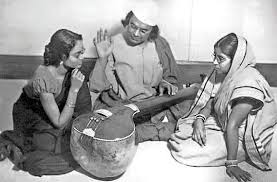
Nazrul: Courtesy: Creative Commons

Born in united Bengal, long before the Partition, Kazi Nazrul Islam (1899-1976) was known as the  Bidrohi Kobi, or “rebel poet”. Nazrul is now regarded as the national poet of Bangladesh though he continues a revered name in the Indian subcontinent. In addition to his prose and poetry, Nazrul wrote about 4000 songs.

WHY PROVIDE THORNS

Why provide thorns as well as flowers?
Wouldn’t lotuses bloom if thorns didn’t prick?

Why must fluttering eyes become moist with tears?
Why provide hearts if hearts won’t unite?

Why do cool wet clouds allure the swallow
Only to greet it with thunder and lightning?

Why allow buds to blossom if flowers wither?
Why stain the moon’s brow with a frown?

Why must desire for beauty be mired in lust?
Won’t faces look beautiful without the dark mole?

Poet, keep imaging bliss in this bower of thorns,
While restraining yourself within your moist eyes.   

(First published in the Daily Star, 2007)
Keno Dile E Kanta rendered in Bengali by Khairul Anam Shakil

Fakrul Alam is an academic, translator and writer from Bangladesh. He has translated works of Jibonananda Das and Rabindranath Tagore into English and is the recipient of Bangla Academy Literary Award (2012) for translation and SAARC Literary Award (2012).

PLEASE NOTE: ARTICLES CAN ONLY BE REPRODUCED IN OTHER SITES WITH DUE ACKNOWLEDGEMENT TO BORDERLESS JOURNAL

Click here to access the Borderless anthology, Monalisa No Longer Smiles

Categories
Poetry

Rows of Betelnut Trees by My Window

Written by Kazi Nazrul Islam in 1929 in Chittagong, translated from Bengali by Professor Fakrul Alam

Areca nut or betel nut trees. Courtesy: Creative Commons
Farewell, neighbours of my nightly vigil, 
Standing aloft next to my window,
Companions, the night of parting elapses.
From this day ceases our secret exchanges,
From this day ends our quiet conversations....

Putting its worn forehead on the porch of the setting sky
The moon cries, “Traveler awake, night is all but over”
Night spreads across the forest deep; overcome with sleep,
It glances back, clasping in its hand its dark disheveled hair!

Startled, I wake up, wondering: whose breath brushes my forehead?
Who fans my warm forehead, who wakes up by my bedside?
I rise seeing by my window the sentinel of my dreams,
Companions of my dark nights, the row of betel nut trees!

Hadn’t we once viewed each other through fluttering eyelids?
Friends, I recall what we said to each other all night long!
When tears flowed from weary eyes beginning to burn,
Your leaves appear to me to be like the cooling palms
Of my beloved. The rustling of your leaves reminded me
Of her plaintive voice, calling out mournfully.
I saw in your leaves the kohl-dark shape of her eyes.
Your bodies in silhouette suggested her slim shape.
The gentle breeze wafting by evoked her delicate air.
Your branches seem to be draped with her sari’s borders.
And you fanned me as tenderly as she did with her hands!

These thoughts troubled me as I entered sleep’s domain.
As I slept, I felt the frill of your dark blue dresses lying
Unfurled besides my pillow. I saw in my dream you entering,
Furtively and fervently kissing my warm forehead.

Perhaps in the dream I extended my hands to touch you
Only to touch the window. Then I clasped your hands shyly.
Companions, now that window will have to be shut.
The path beckons, fellow travelers shout, “time to depart!”

This day before I take my leave
I feel like revealing myself to you as well as knowing you.
I feel close to your feelings; yet why does my insatiable mind
Yearn to hear from you the thoughts lodged in your bosom?
I know—we will never get to know each other physically,
Our hearts will only keep playing a tune of pain mournfully! 
 Perhaps I’ve seen a vision of you that is not like you at all.
But how can that harm you, if it does enough to swell my heart?
If my tears transform you into a thing of beauty,
If I can build a monument stirred by love of someone
As the Taj Mahal was built from the pain of losing Mumtaz,
Tell me, what harm will that do to anyone?
I won’t adorn my room with you, won’t create a paradise.... 

Perhaps birds never lighted on your branches,
In your bower, amidst your foliage, cuckoos never sang. 
Looking up to the heavens in exaggerated appeal
You kept vigil in the dark, though none stayed up
To open the window. But I was always the first to arrive,
And look at you in rapt attention in the dark. Departing lovingly,
On your leaves I wrote my first letters of love.
Let that be my consolation, whether I meet her or not....

Companions, I’ll never wake up again to look at you
I won’t interrupt anyone’s trance after a tumultuous day.
Silently, all alone, I’ll burn the incense of my suffering.

I shouldn’t ask, but can’t help doing so before leaving today—
From behind your wooden screen, did you view me lovingly too?
Did you also take a look at me when I opened the window?
Was it the wind or my love that made your leaves sway?
When behind your green borders, the moon will go to sleep,
And I will have to repress all happy feelings—
In your joyous moments, will you recall this passerby’s brief visit?
Will your voice resound in this empty room in loud lamentations?
Will the moonlight become insipid in your vision then?
Will you open shutters and look at the formless world outside?
Or will you keep standing rapt in your thoughts all day long?

Tied to exhausted earth, you’ve become a row of helpless trees,
Your feet are soiled with dust, your heads enveloped in emptiness.
Your days scald in the sun’s heat, your night’s chill in the dew,
You lack the strength to cry, you seem to be in a deathlike stupor.
If your problems fail to arouse you, companions, and stir you,
What can I hope to gain by burdening you with my gift of pain?...

*                  *                  *                 *                 

If I come to your mind by mistake, try to forget me,
If by mistake my windows open again,
Please shut them again.... Don’t look out in the dark at all
Through your wooden screen—for the one no longer on earth

The poem recited by Nazrul’s son, Kazi Sabyasaachi, in Bengali

Born in united Bengal, long before the Partition, Kazi Nazrul Islam (1899-1976) was known as the  Bidrohi Kobi, or “rebel poet”. Nazrul is now regarded as the national poet of Bangladesh though he continues a revered name in the Indian subcontinent. In addition to his prose and poetry, Nazrul wrote about 4000 songs.

.

Fakrul Alam is an academic, translator and writer from Bangladesh. He has translated works of Jibonananda Das and Rabindranath Tagore into English and is the recipient of Bangla Academy Literary Award (2012) for translation and SAARC Literary Award (2012).

.Click here to access the Borderless anthology, Monalisa No Longer Smiles

PLEASE NOTE: ARTICLES CAN ONLY BE REPRODUCED IN OTHER SITES WITH DUE ACKNOWLEDGEMENT TO BORDERLESS JOURNAL

Categories
Nazrul Translations

Kazi Nazrul Islam’s Patriotic Poems

Translated by Professor Fakrul Alam

Courtesy: Creative Commons
ARISE, ARISE, O PATRIOT!

Arise, arise O patriot
India wants you — O endearing hero
Above funeral pyres and prison-shackle free, O hero arise
Shelter us, O one worth commemorating eternally! 
Saintly one, arise in a haven of pollen dust
Let your booming message ring across the heavens
And let your mantra of self-sacrifice reverberate
India cries out in boundless grief
Arise from your everlasting sleeplessness
Stirring beyond death, bring ambrosia to our souls 


HELMSMAN ATTENTION!

Travelers, take care, in thick darkness you must traverse
Rugged mountains, dreary deserts, and turbulent oceans.

The boat rocks, the waves swell, the sail are torn apart,
The sailor veers off course, who’ll take over, who has the guts?
Who has the gumption and can dare — the future summons!
Through this storm, you must steer, and row your craft home!

The night is dark, sentinels of the motherland, be on guard!
The pent-up desires of countless years hurl you forward!

Stirred by pain the neglected heart must now play its part. 
Bring all along, make them your own, give everyone his start! 

Hapless nations drown, ignorant of the art of survival,
Helmsman — redeem this day your pledge to free the motherland!
Who dares call out, “Are you Hindus or Muslims?” 
Helmsman — claim the drowning as the same mother’s offspring!

There is panic in the pass, travelers take fright, the sky quakes
The ones in the rear are full of fear and wary of what lies ahead.
Helmsman — halfway down the path can you forsake them?
Let them squabble, you must carry on, and bear your burden! 

Helmsman! Ahead of you lies the battlefield of Palashey*,
Where Clive’s sword crimsoned with the blood of Bangalis.
Nearby in the Ganges India’s sun set, seemingly forever.
Surely that sun will rise soaked in blood once again.

Those who sang songs of life’s victory even on the scaffold
Have come unnoticed to see us sacrifice ourselves in turn.
This day our nation must pass the test of redemption
Now is the time—the boat rocks, the sea swells, helmsman attention!


*Battle of Plassey, 1757
'Helmsman Attention!' was first Published in Daily Star, 2006

Born in united Bengal, long before the Partition, Kazi Nazrul Islam (1899-1976) was known as the  Bidrohi Kobi, or “rebel poet”. Nazrul is now regarded as the national poet of Bangladesh though he continues a revered name in the Indian subcontinent. In addition to his prose and poetry, Nazrul wrote about 4000 songs.

.

Fakrul Alam is an academic, translator and writer from Bangladesh. He has translated works of Jibonananda Das and Rabindranath Tagore into English and is the recipient of Bangla Academy Literary Award (2012) for translation and SAARC Literary Award (2012).

.

PLEASE NOTE: ARTICLES CAN ONLY BE REPRODUCED IN OTHER SITES WITH DUE ACKNOWLEDGEMENT TO BORDERLESS JOURNAL