By Sayan Sarkar

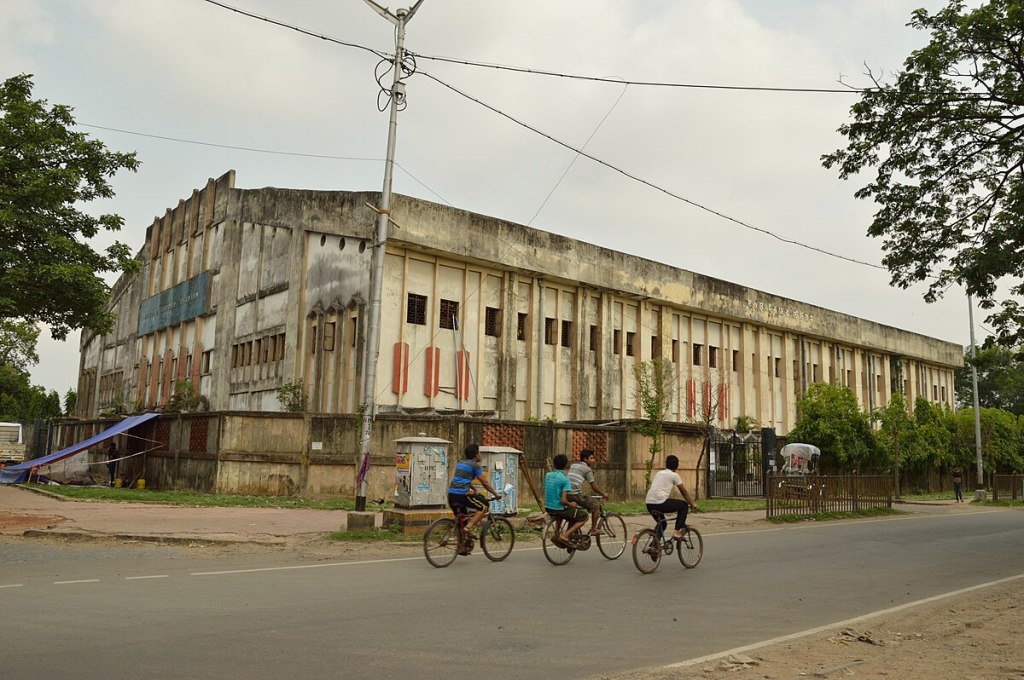
“Belepole, Santragachi, Dhulagarh! Belepole, Santragachi, Dhulagarh!”
The singsong voice of the conductor filled the air in the busy intersection of Rabindra Sadan.
Sanjib crossed the road hurriedly, raising his hand to attract the conductor’s attention lest the bus left the stand before he reached it. The conductor nodded assuredly, indicating they had no intention of leaving so soon.
Sanjib boarded the bus and occupied a window seat near the front. Flicking his wrist, he looked at his watch — 4:15pm. He had ample time to make the trip to Belepole and return by 9pm
After a couple more minutes of waiting at the stand, the engine revved and the bus slowly made its way towards the Second Hooghly Bridge. As the conductor made his customary gesture for the ticket, Sanjib handed him a 50 rupee note.
“Belepole,” he added with excitement.
Sanjib’s heart was fluttering in his chest. He was going to visit Belepole, the place where he was born, after almost two decades. He had spent fourteen years of his life in that place — almost his entire childhood. But when he was in grade 9, his father — a central government officer —got a posting in Delhi, and they moved there permanently after selling their house to a promoter. Things became very hectic after that. There was school, then college, then masters, then PhD, then a post-doc in Europe, and finally a teaching position in a reputed central government institute in the capital city. The years passed by like a whirlwind, starting and ending within the blink of an eye. Sanjib had come to Kolkata only a handful of times within that period but never found the time or opportunity of visiting his birthplace.
This time, however, was different.
This time, he had come to Rabindra Sadan to attend the inauguration of an art exhibition hosted by his school friend and renowned artist Pulak Banerjee. The interactions with his old friend brought back memories of his birthplace — which was only half an hour from the gallery on the other side of the Hooghly River — to his mind, and he was filled with an intense desire to pay a visit to the locality where his journey had started. Pulak supported this idea wholeheartedly, but he let Sanjib go on the sole condition that he be back for dinner at Peter Cat around 9 pm.
As the bus raced past the innumerable cables of the Second Hooghly bridge, countless fond memories of his youth flooded Sanjib’s mind. Memories of their three-storied house — which was almost a hundred years old, memories of the pond where he used to swim summer and winter, memories of his neighbors and their smiling faces, memories of all the childhood mischief and scoldings. They started appearing one after another, like hours-long video fast-forwarded to finish within only a few seconds.
But even amid this deluge, the memory of a single person stood out sharply against the rest. The memory of his childhood friend — Anil.
Anil, who was only one year his senior, had been his next-door neighbor. The two friends had grown up together and were almost inseparable. Not a single day had passed in those fourteen years that the two friends hadn’t played or spent some time together. Wherever one went, the other followed. Whatever one did, the other copied. They were up to all sorts of mischief together, and had become the terror of the locality for an extended period of time. Anil belonged to a relatively poor family, and could only afford education in a Bengali medium school. Sanjib, and his parents always welcomed him into their household with open arms, and he went on multiple trips with Sanjib and his family.
Anil wasn’t very good in studies, and barely passed his examinations is school. But what he lacked in intelligence, he more than made up for in athleticism. He was a great cricketer and an expert swimmer. He participated in many state level competitions and even won a few medals over the years. The two friends had a pact — Sanjib would help Anil with his studies, and Anil would help Sanjib improve his batting and swimming forms.
For fourteen long years, they had laughed and cried and fought and grown up together, until one day, Sanjib had to move away. It was the most difficult moment of their young lives, and a lot of tears were shed and promises were made. Anil didn’t have a landline at home at that time, so it was decided that he would visit a nearby shop every other day at a pre-determined time and Sanjib would call him there.
This ritual was followed religiously for nearly two years before Sanjib’s tuition timings and the pressure of his impending board and competitive examinations finally caught up with him. Slowly but surely, the two friends drifted apart. Pretty soon, Anil was relegated to Sanjib’s subconscious mind, waiting to be liberated again by some external stimulus.
That stimulus finally arrived nearly two decades later, and Sanjib’s mind was once again filled with the memories of his dear old friend and companion.
“Belepole is coming. Belepole is coming,” the conductor announced in his characteristic voice.
Sanjib got up from his seat.
Alighting from the bus, he slowly made his way towards the familiar by lane that led to his neighborhood — his para. As he walked along the alley, his mind was once again crowded with incidents from his childhood. These streets were once his playground, and there was a time when he knew every square inch of this locality like the back of his hand. Every nook and cranny of this place was filled with memories. Some of the old buildings he could still recognise, but many of the old ones had given way to more modern apartments. His para had undergone a transformation with time, confirming the old saying that change is the only constant in the universe.
Sanjib soon reached the location of his old house and found a modern four-storied apartment standing tall in its stead. He had seen pictures of this apartment in his father’s phone, but this was the first time he saw it with his own eyes. He stood rooted to the spot, mentally drawing the outline of his old house and comparing it with the present architecture.
He could still visualise every detail clearly against the modified backdrop — his bedroom, the living room, the kitchen, the dining room. It was as if he was seeing through the new apartment and staring into his long-lost past.
“Heyyy maaan. What’s your problem?”
A hoarse voice suddenly interrupted Sanjib’s reverie.
He turned around in surprise — a bit ashamed that he had been caught staring at a building for so long — and found a tramp sitting a little way off along the edge of the street. His clothes were in tatters, and it seemed like he hadn’t taken a bath in years. His long hair and beard had become matted with oil, dirt, and dead skin cells. His frail frame shook with every word he said. Even from afar, Sanjib could realise that he was inebriated by the intonations of his voice.
“Get outta hereee!” He shouted again. “What’re you doing standing and staring in the middle of the streeeetttt!”
Sanjib’s face filled with disgust. He felt an overwhelming sense of aversion towards the tramp. He quickly turned away from him and walked towards the new apartment.
Beyond the apartment was Anil’s house, and Sanjib had half expected to find his friend at home. It was, after all, a Sunday evening. So, chances were higher than usual.
But he was taken by surprise when he found Anil’s house barely standing at all. One of the walls had completely crumbled, and the rest were ready to follow suite. The entire plot had become a garbage heap with dogs and crows roamed around ravenously in search of leftovers. Nature had already started reclaiming the land and the dilapidated building was covered with creepers and crawlers.
The juxtaposition of the dazzling new apartment and the crumbling old house in such close proximity had a great effect on Sanjib’s mind and he stood dumbfounded in front of his friend’s former residence.
“Sanjib?” A second voice broke out in the background. “Is that you?”
There was uncertainty in the voice, but it sounded very familiar.
Sanjib’s brain had already started connecting the dots, and by the time he turned around, he had matched the voice with a face from his past.
“Bimal kaku[1]!” He nearly shouted with delight. “How are you?”
The warm and welcoming smile of Bimal Das felt very soothing to Sanjib’s eyes.
“I am fine, Sanjib.” The man replied with a touch of warmth and emotion. “How big you’ve grown! It’s been such a long time since I last saw you!”
Sanjib embraced his Bimal kaku lovingly.
Bimal Das used to own a grocery shop in the neighbourhood, and he had always been very fond of all the kids in the locality. He often used to give them free snacks below the counter, and invited them to his house whenever there was an occasion.
“Come,” Bimal led Sanjib by his arm. “We’ll sit and talk in my house.”
The next half an hour was spent in fond recollection.
Sanjib leant that Bimal’s shop was not running very smoothly ever since the advent of online shopping. His sons, however, had all gotten jobs outside the state, and they regularly sent him money to ensure he never lacked the basic amenities required to live a modest life. They had also suggested that he close the shop and stay with them, but Bimal had always felt a strong affection towards his shop and refused to shut it down.
He opened his shop regularly, sat behind the counter like old times, and spent most of the time chatting with the retired people of the locality.
“You see Sanjib, I will continue running the shop as long as my body permits,” he concluded with a defiant tone.
Sanjib looked admiringly at his Bimal kaku. He had aged significantly, but his vigour and liveliness were worthy of praise.
“Bimal kaku,” Sanjib spoke apprehensively. “What happened to Anil? His house is in ruins.”
A pall of gloom suddenly descended on Bimal’s smiling face. He looked down towards the floor and sat silently.
Sanjib’s heart sank. With each passing moment, his mind grew heavier with anxiety.
When Bimal started speaking again, Sanjib braced himself for the worst.
“Around five years after you left,” Bimal spoke softly. “Anil lost his mother — who was his biggest well-wisher and who loved him the most in the world.”
“Anil was heartbroken,” he continued.
“Still, he had his father to look after him, guide him, and reign in his emotions. The father-son duo clung onto each other and battled the storms of adversity. Anil gradually recovered from the shock and tried his best to live his life to the fullest.
“But alas. The fates had marked him as a child of misfortune. Five years later, his father passed away as well. Anil was all alone.
“Although all of us, his neighbours, tried our best to console him and help him in his time of need, he never recovered from this second shock. He left his house, started roaming about the streets aimlessly, got drunk, and all but lost his mind. We tried numerous times to bring him back to his senses, but it was not to be. Anil would be absent for weeks at an end, and then suddenly, one morning, we would find him sleeping unceremoniously near the edge of the main road.
“Those of us who felt sorry for him gave him food and clothes from time to time. While he ate and drank to sustain himself, he rarely touched the clothes. After a few years, he stopped recognising us completely. He just came and went as he pleased.”
Sanjib couldn’t believe his ears. Every word that Bimal spoke appeared to drive a nail through his heart. He felt an indescribable pain and sadness for his friend.
“Coincidentally,” Bimal continued morosely. “Anil is here now.”
“He came a couple of days ago. Just this afternoon, I found him sitting and blabbering at the intersection. I gave him some food and water. He was quite drunk. His clothes were in tatters, and he looked more dead than alive. Oh, how it pained me to see him in such a condition.”
Bimal covered his face to hide the tears that flooded his eyes.
Sanjib jolted upright, as if struck by lightning. His mind had already raced half an hour back into the past.
He recalled the hoarse voice that had interrupted his day dream.
He recalled the countenance of the tramp that had disgusted him so much.
He brought forth every feature of that haggard body in front of his mind’s eye. The unkempt hair and beard, the tattered clothes, the frail frame.
His friend had spoken to him after twenty years. And he had turned and walked away disgusted. His friend, who probably had a bright future as a cricketer or a swimmer, but was reduced to nothingness. His friend, who had lost his sanity thanks to the cruel workings of fate.
The image of the modern apartment and the crumbling house flashed in front of Sanjib’s eyes. He was the modern apartment, shining and well established in life. Anil was the crumbing house, battling against insanity and counting his days.
In the face of this incomprehensible truth, the contrast seemed even more cruel.
Sanjib sat still. His vision had become blurry and his cheeks were hot with the stream of tears that flowed down like water from a dam.
At the intersection, Anil was still sitting on the road, speaking gibberish, and cursing anyone who passed the street.
[1] uncle
Sayan Sarkar was born and raised in Kolkata. He is a passionate reader and lifelong learner who spends his leisure time immersed in books and new ideas.
.
PLEASE NOTE: ARTICLES CAN ONLY BE REPRODUCED IN OTHER SITES WITH DUE ACKNOWLEDGEMENT TO BORDERLESS JOURNAL.
Click here to access the Borderless anthology, Monalisa No Longer Smiles
Click here to access Monalisa No Longer Smiles on Kindle Amazon International
 Borderless