Categories
Musings

How Two Worlds Intersect

By Mohul Bhowmick

Sunset at Colaba, Bombay, which is currently referred to as Mumbai. From Public Domain

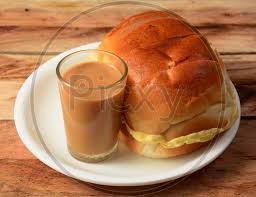
To think that Bombay is attainable is the first mistake of the rookie. And though this city attracts and repels in equal measure, it is the former that makes me want to linger all the more. And linger I do, over a cup (or was it two?) of piping hot Irani chai and bun maska at the Persian Cafe in Cuffe Parade. The rain starts just as soon as I step out of the metro station and make for the safer confines of the cafe, reminding me of home in more ways than one. It is only in Bombay that I am reminded that the culture of the Zoroastrians flourishes somewhere outside of Hyderabad as well.

Colaba lures me, but Kala Ghoda’s immense detachment from its suburban-esque walkways seems more pensive. With Mahatma Gandhi Road sweeping past the Fort and Dr Dadabhai Naoroji Road intersecting it at Flora Fountain, Bombay’s charm offensive lies bare. It is only much later, after I step into Kitaab Khana, the Bombay equivalent of Madras’ Higginbotham’s and Calcutta’s Oxford, that I strongly feel the Raj’s tentacles of reunion. On the other side of the road, the college named after Lord Mountstuart Elphinstone, who twice gave up the chance to be appointed governor-general of India, preferring to finish his two-volume work, History of India (1841) instead, is a reminder of the good that existed among our colonial masters.

*

But the second mistake that the rookie can make is by affirming that all of Bombay lies within the island of Colaba. While it did, in the days of the Raj, it no longer holds the sanctity of tradition as much as it does for the affluent who have no idea of when the last local leaves from Churchgate to Borivali. Versova, much a fishing village as Bandra had once been, is as far away from Colaba as Islamabad is from Vancouver, and Jogeshwari is a mere landing ground for the aristocrats of the north, for whom Thane is where the merely envious congregate and share stories over pav bhaji. A hint of Marathi wafts over the air, sprinkled generally with salt from the sea, and the Bambaiya of Parel and the Hindi of the island city are forgotten.
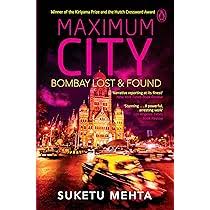
For what does a gentleman bred in the now-reclaimed Old Woman’s Island, fondly called Little Colaba, know of the fighting on the streets of Dadar? The Gateway of India, looming far beyond the ordinary, takes no part in the skyline of this Bombay, where political representatives of all hues and colours sell dreams just as kaleidoscopic as their ever-changing loyalties. Areas where no cars enter are not strictly unheard of in the Bombay of the north, and as Suketu Mehta so lovingly painted in Maximum City, it is a conurbation not afraid of its past, and one that is constantly stuck in an identity crisis. For there are more millionaires in Bombay than in any other city in the country, and they are only matched by the number of people who go to bed hungry. The Marine Drive becomes an elongated resting place for the unfortunate, the destitute or the merely curious once the lights on the Queen’s Necklace get turned on. I would have seen it had I known where to look.

*

To reclaim the days of the Raj, there are few places more apt to while away an evening than Colaba. There are certainly no places as germane as the cafes Mondegar and Leopold, which happily serve continental fare to their patrons after all these years without a trace of embarrassment at the culinary debaucheries they joyfully commit. Old men, with fedoras last seen in fashion in 1930 (before World War II took away the joys of wearing headgear, apart from sola topis, in a country where the sun has been awarded citizenship), and with shirts tucked into waistbands up to their lower chest, order bottles of grizzled beer with a side of mashed potatoes. Cholesterol and high blood sugar are forgotten when relieving one’s youth, especially with Spanish women gawking at the absurdity of it all in the flea market on the causeway outside. With the stroke of a pen, these men bring to life the jazz clubs of the early 1950s, recollecting the trumpeter Chris Perry at Alfred’s. And then they remember Lorna Cordeiro, of whom they speak as if she were a loved one.

The scarcity of vada pav in the vicinity of Kala Ghoda scares me until I remember that even autorickshaws are banned from this part of town. Much like a man seeking water from the desert atrophies of the Middle East, I lunge into a seller close to the Victoria Terminus. When he asks for a mere INR 30 for two vada pavs, I am shamed into submission, looking towards my shoes — coloured an extravagant yellow — and murmur notes of dissent that even my ears cannot pick up. A jet-black Mercedes-Benz skids past the puddle of water that has gathered around Flora Fountain, dousing me with dredges of obstinacy. There are two worlds that we live in, and Bombay may have achieved its supremacy over both yesterday.

Mohul Bhowmick is a national-level cricketer, poet, sports journalist, essayist and travel writer from Hyderabad, India. He has published four collections of poems and one travelogue so far. More of his work can be discovered on his website: www.mohulbhowmick.com.

PLEASE NOTE: ARTICLES CAN ONLY BE REPRODUCED IN OTHER SITES WITH DUE ACKNOWLEDGEMENT TO BORDERLESS JOURNAL. 

Click here to access the Borderless anthology, Monalisa No Longer Smiles

Click here to access Monalisa No Longer Smiles on Kindle Amazon International
Categories
Excerpt

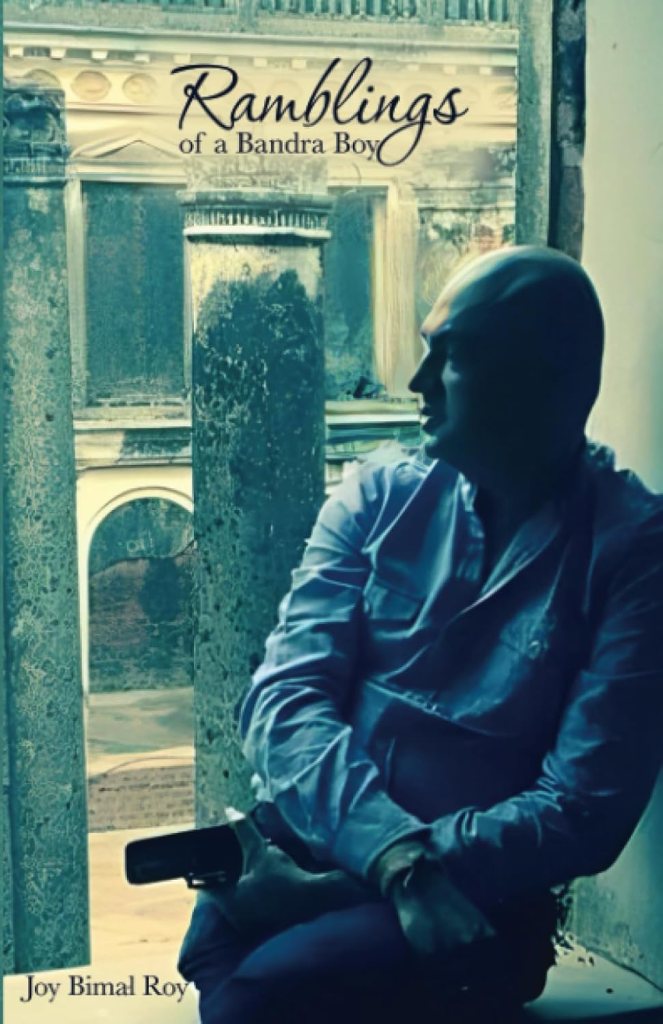
Ramblings of a Bandra Boy

Title: Ramblings of a Bandra Boy

Author: Joy Bimal Roy

(Excerpted from Ramblings of a Bandra Boy by Ratnottama Sengupta)

Joy Bimal Roy looks back at the many 21 Januarys, his birthday, that have dotted 70 calendars

On 6th February 1950 Baba and Nabendu Kaku arrived together in Bombay to work on Bombay Talkies’ Maa. I wasn’t born then, so I can only wonder if either of them, or their illustrious fellow travellers Hrishikesh Mukherjee and Asit Sen even imagined what a life changing experience that journey would be for each of them and, ultimately, for Indian Cinema.

This small but immensely talented and visionary team — Baba as director, Nabendu Kaku as screenplay writer and Hrishi Kaku as editor — created some of the best loved and most remembered classics of the golden ’50s and early ’60s: Do Bigha Zamin, Devdas, Madhumati, Sujata and Bandini.

When I was born on 21st January 1955, this team was already well established and feted in Bombay film industry. Co-incidentally (or perhaps not, because is there any such thing as coincidence?) six days after my birth, a daughter Ratnottama — Uttama to me — was born to Nabendu Kaku and Kanak Kakima in the same, Mandakini Nursing Home in Bandra. Uttama and I instinctively formed a bond which continues till today and seems to strengthen over the years. For me this became the link between our two families.

*

Some silly astrologer told my parents that they should not celebrate my first seven birthdays — else, ill-luck would befall me. So I grew up going to birthday parties of other children and wondering why I never had one.

That could explain why to date I hate my birthdays. It is a day of introspection and soul searching, assessing the past year of my life for gains and losses. No wonder I am more depressed than usual by the end of the day.

All that changed on my 40th birthday thanks to Sriram, my college classmate, and my sister, Aparajita, who was in Mumbai from Kolkata at that time. Together they conspired to have a small celebration at home. Sriram, ever generous, brought the champagne and glasses as well because he was not sure we had any.

Paradoxically it was possibly the worst time in our lives. We had lost the eviction suit our landlords had filed against us in the Small Causes Court, and had been given four months to vacate the premises, of which two months were already up. My birthday was on 21st January and three weeks after that, on 14th February, we were supposed to vacate our home of 46 years — unless we got a Writ Petition admitted in the High Court.

Plonk in the middle of this mess, the thought of celebrating my birthday had not even crossed my mind. But when Sriram entered holding the champagne bottle aloft like a trophy, along with his petite and demure wife Enakshi, and my classmates Divyakant and Ajay, their love and concern were so palpable that suddenly my spirit soared and I felt free as a bird. If I was blessed to have friends like them, Life couldn’t be so bad after all. 

It’s not that I celebrated every year after that but I was no longer traumatized on my birthdays.

*

The first birthday we celebrated after moving into our cottage was my 50th birthday. It doubled as a housewarming party, so it was a riotous affair. Everyone got high thanks to the ministrations of a bartender called Greenville and danced to blaring music like whirling dervishes. Our neighbours complained and the cops turned up. 

Not bad for someone who started out in life with no birthday celebrations at all, eh?

*

When my 60th birthday dawned I was not feeling particularly celebratory. But my sister was coming down, this time from Hyderabad, my niece from Dubai and my nephew from England, and I didn’t want to disappoint them.

Our home at that time was overrun with cats and the garden was a mess, so I looked for a more welcoming venue. The only place I could think of was Kekee Manzil, home to our old family friend Kekoo Gandhy, founder of Chemould, India’s first commercial Art Gallery — and his daughters Rashna, Behroz and Shireen. I asked hesitantly but they agreed enthusiastically and I will always be grateful for that.

Kekee Manzil is an elegant and gracious villa, a heritage structure overlooking the Arabian Sea at Bandstand. At one point of time the Gandhy family also owned the adjacent property which once went by the name of Ville Vienna and housed Baba’s mentor Nitin Bose — and now is famous as Mannat, owned by Shah Rukh Khan.

The venue was the hero on that evening filled with friends, food and fun, not me. Because I was feeling singularly ill at ease about my appearance.

I hadn’t had the time or the bandwidth to figure out what to wear for this milestone birthday, so I had to settle for the only new kurta I had. Unfortunately it looked like tent on me. To make matters worse I had burgeoned to 95 kilos, so I felt like a beached whale.

I made a mental resolution. I HAD to lose weight that year. But as they say, the way to hell is paved with good intentions. So my resolution remained just that — until months had gone by…

*

But before the year dovetailed into my 61st birthday, by sheer synchronicity I stumbled into the right dietician for me — and in eight months I lost 16 kg. Cereno, a trendy batch mate, told me about Zara and gave me a style tip for my hair. He said I would look much better if I had a very short haircut, like a crew cut. I didn’t like the idea of a crew cut but I realised I needed a makeover to go with my new clothes.

At the end of it all my reflection in the mirror was unrecognisable. A strange bald man looked back at me. My sister shrieked when she saw me but she was mollified by the favourable reaction of Cereno and other classmates.

The coup de grace was when a poker-faced Cereno borrowed my phone, fiddled with it, and handed it back to me saying he had put my profile on a dating app. “Just wait for five minutes,” he said, “and you’ll get your first hit.” Sure enough, after five minutes my phone went beep!

So in my 60th year I reinvented myself. Better late than never?

About the Book

Ramblings of a Bandra Boy is a compilation of Joy Bimal Roy’s posts on social media between 2017 and 2020. These slices of life “served without any extra seasoning or fancy garnish” as he puts it, have been described by Rachel Dwyer, professor of Indian Cultures and Cinema at SOAS, London, as jottings in kheror khata, the traditional cloth bound notebook that Satyajit Ray — and his father Sukumar Ray before him — used to pen down thoughts and visuals that are world’s treasure. It covers life in the glitzy Bandra where most of the Bollywood crowd resides… giving glimpses of real life of the giants peopling the cinema screens. 

About the Author

Joy Bimal Roy is the son of legendary Indian filmmaker, Bimal Roy, and one of India’s pioneer woman photographers, Manobina Roy. He started his filmmaking stint as an assistant director to Shyam Benegal.

.

Read the author’s interview by clickling on this link

PLEASE NOTE: ARTICLES CAN ONLY BE REPRODUCED IN OTHER SITES WITH DUE ACKNOWLEDGEMENT TO BORDERLESS JOURNAL. 

Click here to access the Borderless anthology, Monalisa No Longer Smiles

Click here to access Monalisa No Longer Smiles on Kindle Amazon International