Categories
Review

Safdar Hashmi: Towards Theatre for a Democracy

Book Review by Meenakshi Malhotra

Title: Safdar Hashmi: Towards Theatre for a Democracy

Author: Anjum Katyal

Publisher: Orient Blackswan

How do you write a biography of a man who was yet to reach the full expression of his multifaceted talents? How do you document his contribution to social action? Do you say that the tragedy of such a premature death is not only that he died young, but that his  life was cut short while his talents were still quivering on the cusp of flowering, struggling for full self-expression? As witnesses to this shocking and traumatic event, we can call it a critical event; a moment in time which is still out of it. It is a moment of reckoning which forces us to revisit our assumptions about theatre as entertainment, a Brechtian moment which alienates us from our previous experience and which forces on us “a new and shocking revelation/revaluation of all we have been.”

In a kind of tragic irony, Safdar Hashmi’s[1]story became front page news when he was brutally attacked by some goons who were trying to stop the Jana Natya Manch actors from enacting a street play in Sahibad, one of Delhi’s industrial suburbs, on the 2nd of January, 1989. At that time, he was barely 35 years old.

Born into a close-knit family in 1954, the youngest of four siblings, Safdar Hashmi grew up in Delhi and Aligarh. His first few years of initial schooling were Aligarh and then he moved to Delhi, where he graduated from St Stephens. While the family had to struggle financially, they had plenty of opportunities to be involved in the vibrant cultural scene of Delhi in the late 1960s and early 1970s.  Safdar Hashmi: Towards Theatre for a Democracy by Anjum Katyal, a writer, editor and translator, with a forward by the eminent actor Naseeruddin Shah, details the journey of Hashmi, his total dedication to and involvement with theatre. In his forward, Shah writes that Hashmi was an actor who was unconcerened with personal fame or celebritydom. He was a theatre activist who saw theatre as a means of social action and an instrument of change; he was so dedicated to his work that he was “willing to die for it”.

The book houses his early years, his stint in Kashmir, where he proved to be a catalyst in college and university theatre and drew students into it. He worked for the newly instituted television industry in Kashmir, which helped him earn some much needed money to sustain his passionate love for his own work with street theatre .

 The slim volume is a veritable treasure trove of anecdotes about theatre from one of its scholars and connoisseurs and the narrative of Safdar’s journey is interspersed with rich dollops of theatre history. Katyal tell us stories of theatre giants like Badal Sircar, Utpal Dutt, Vinod Nagpal and M.K.Raina, thespians whose life stories and work were closely entwined with the history of theatre in India.

To quote the author, “[T]here is little reliable scholarship on the history of theater in India and on Safdar Hashmi’s contribution to Indian theatre.” Katyal’s book on Hashmi addresses both the issues, covering a substantial chunk of post-independence theatre and specifically the 1960s and seventies. Thus, we get to hear about the contributions of Utpal Dutt and Badal Sircar, doyennes and trail blazers of people’s theatre.  Katyal examines the larger socio-political environment against which  activist theatre evolved within the country. Drawing from different folk traditions , this adumbrated the vision that was truly democratic in its scope and reach and which moved out of proscenium theatre to reach trade unions and factory workers, the streets, factories and the marketplace.

Utpal Dutt, the intrepid screen and theatre actor recalled that they were  “infected by the real IPTA[2]’s concern for the people’s political struggle” and he professed, “the exhilaration of direct political action…changed me completely”.  These actors also offered valuable insights into the nature of the street theatre, including its capacity for consciousness raising and revolutionary action. Many of the street plays with their specific critiques “gathered the dispersed rage (of the people); it rallied angry men into an angry mass.”

Apart from socio-economic issues like price rise and labour exploitation, street theatre also focused on  political issues like the Emergency  and the Naxalite movement. In terms of experiments with form, in 1972 Badal Sircar and his group, Satabdi[3], introduced their Third Theatre; pieces evolved through intensive workshops. The physical and even  “graphic body  language, the ensemble approach in which all actors formed a close part of the whole with interchangeable ‘roles’,  the simple uniform-like costumes, and the strategic props were all taken straight from the news or the actors’ lives, in many cases. The narrative was often non-linear, like a collage of facts , ideas and images”.

Non-proscenium theatre, which could be performed in intimate spaces or outdoors for larger audiences, inspired groups in other parts of the country to evolve performances, which were experimental and non-formal,  combining disparate styles. The Third Theatre enabled practitioners the flexibility to practise their art even if they had no access to funds or sponsors. However, state-sponsored violence and the imposition of the Emergency in 1975 clamped down on street and activist theatre in India.

From IPTA to the plays of Utpal Dutt and Badal Sircar, the book gives a dialogic account of history of theatre, both for the specialist and non-specialist alike. Safdar Hashmi himself has written quite extensively on the history of street theatre, stating that “street theatre as it is known today can trace its direct lineage no further than the years immediately after the Russian Revolution of 1917.” It was a basically a militant, political theatre of protest. As Katyal traces the history of street theatre, she writes, “The history of street theatre in India is usually traced back to the 1940s and to the IPTA. However, the attempt to use theatre in public spaces to communicate a political message to the common people began as early as the 1930s, when the SFI[4] started using it to spread the message of class struggle among the masses.”

JANAM or the Jana (People’s) Natya (Dramatics ) Manch (Stage)was founded by Safdar Hashmi in 1973. He poured himself into developing plays like Machine, From the Village to the City and Killers, which demonstrated the group’s commitment to workers’ rights and issues. The group also took up women’s causes to raise consciousness in a society which had normalised violence against women. Their play, Aurat (Woman), met with unprecedented success and had 2500 shows. Their theatre also dealt with sectarian or communal violence.

In her book, Katyal ultimately  locates the significance of Safdar Hashmi’s and the Jana Natya Manch’s work in its strengthening of democracy and democratic processes. Tragically and ironically, he paid a high price for it.

.

[1] Safdar Hashmi (1954-1989) was one of the most major proponents of street theatre in India.

[2] Indian People’s Theatre Association founded in 1943.

[3] Translates to mean century

[4] Student Federation of India

.

Dr Meenakshi Malhotra is Associate Professor of English Literature at Hansraj College, University of Delhi, and has been involved in teaching and curriculum development in several universities. She has edited two books on Women and Lifewriting, Representing the Self and Claiming the I, in addition  to numerous published articles on gender, literature and feminist theory.  Her most recent publication is The Gendered Body: Negotiation, Resistance, Struggle.

.

PLEASE NOTE: ARTICLES CAN ONLY BE REPRODUCED IN OTHER SITES WITH DUE ACKNOWLEDGEMENT TO BORDERLESS JOURNAL

Click here to access the Borderless anthology, Monalisa No Longer Smiles

Click here to access Monalisa No Longer Smiles on Amazon International
Categories
Stories

Final Hours

By Maliha Iqbal

In a tiny shop located within a narrow lane packed with people, sat Rakesh, in his late seventies, though he couldn’t say exactly. They didn’t keep proper records of birthdays back then. He sat staring outside as people pushed past one another, and over their heads, thick black electric cables coiled around one another and around long poles, forming a black canopy. He remained motionless, with glazed eyes.

Someone entered the shop, looked at him, and said something.

“What?” Rakesh muttered, coming out of his thoughts.

It was Nitesh, who had been running a food stall across the street for the past five months. It was called “Nitesh Snacks”.

“I came to have this watch repaired. It fell yesterday while I was going back home, and the glass broke.”

He put a watch on the counter. Rakesh picked it up and glanced thoughtfully at it. Then he nodded to himself and put it aside.

“I will give it to you tomorrow.”

Nitesh stood there hesitantly for a while, then said,
“Arun ji was a very nice man. It’s a pity that he…died.”

Rakesh nodded again and said nothing. His shoulders seemed to weigh him down. His head was covered with thick grey hair, dyed bright orange with henna. He wore an oversized faded blue shirt that hung over his thin frame, and it was clear that he had forgotten to shave that morning. Nitesh looked worriedly at him. Things weren’t going well, and now that Arun ji was dead, they would likely worsen.

*

Rakesh walked into his single-floor house, which was a short distance from his watch repair shop. He remembered how he had started that shop. He had painted it himself, had the shutters fitted, and then began repairing watches. It had cost him plenty to buy that tiny room on the main street, but it paid well. People came frequently, and soon he could start selling clocks and watches. The shop was named after his late father, “Narayan Watch Repairing”. He remembered covering every shred of the wall with clocks- all colours and shapes.

He went right towards the back of the house, down a long narrow corridor, to a room that was visibly separated from all the other rooms. He sat down on the bed, thinking about when it had all started—when he became like this. It was probably when Arun died…no, that happened two days ago…it was when his wife died. Or around that time, or perhaps even before. He couldn’t think straight. He sat motionless, with a deep feverish glow in his eyes.

Someone looked into the room. It was his son with a big smile on his face.
“How was work?”

Rakesh said nothing, and there was a pause.
“You must miss your friend.”

Again, nothing.

“We all have to go sometime.”

This time, Rakesh just looked at him thoughtfully. His son nodded to himself and then said, “Sold any clocks today?”

When there was no reply, he added, “Well, that business is no longer as good. A few clocks, that’s all we can sell nowadays. Everyone has clocks on their smartphones. Who needs them now? That’s why we decided to shut it down. You do remember that we have only got a month left? I hope you have started wrapping everything up.”

His son had an easy smile on his face ever since he had entered the room. He looked at him for a moment before adding, “If you need any help at all while closing down, you can always call me.”

Rakesh nodded but said nothing. His son kept talking and then left after a while. Yes, he remembered now. He remembered how it had all started. It had started soon after his son got married. They began quarrelling frequently, especially Rakesh’s wife and their son. It felt like they were always in their son’s way, like they were always doing things to disrupt his life. He remembered his wife crying all night because of their son. He didn’t say anything much until she died. He did not like quarrelling. Many things displeased him, but he learned to remain quiet or use very few words. It had still not been as bad. At least, he still had some respect around the house.

Then one day, his son had seemed to turn over a new leaf. He was always there for him suddenly. He took an interest in the shop. He sat and chatted with him in the evenings over a cup of tea. Rakesh liked this change. Over several months, he came to trust his son, feeling a sense of satisfaction when he looked at him. There were disagreements, of course, but his son invariably seemed to come to his senses and apologised.

Rakesh couldn’t remember how long this harmony continued, but he did remember when it came to an end. It was a short time after he signed the documents that transferred all his property to his son. After that, things began to change. His son no longer took an interest in the shop. They barely spoke anymore. Rakesh’s health also started to deteriorate. Instead of taking more care of him, his son had a room built at the far end of the house. This room was bare except for an old wooden bed and an attached bathroom. It was in this room that Rakesh spent most of his time while he was in the house. His food was sent to the room. It always looked like leftover food from yesterday. Whenever they quarrelled, his son would always end the argument by giving the example of their old neighbour, who was sent to live in a temple by his children because he became ‘too much of a burden.’

He had lived like that for about a year now, missing his wife terribly. No one spoke to him in the house. His only solace was his shop. He eagerly spoke to the customers, absorbing himself in his work. His closest friend, Arun, was a barber whose small salon was right next to the watch repair shop. They had known each other for forty years. Every day, after closing up, they sat and chatted for about an hour. Arun was the one person he could always talk to, the one person who always shared his sorrow, and now Arun was dead. He had no one. At night, he would lie in bed, hearing laughter drift from the house. There was no outlet for his sorrow. It was bottled up inside him, and he felt that it was slowly poisoning him. His feet felt heavy, his breathing was often laborious, and he sometimes heard his wife calling out to him in the middle of the night. Was he going mad? Perhaps he was, and this month, his son’s news had been the final nail in his coffin.

His son had come bustling into the dingy room with a smile and told him that he urgently needed some money, then he had abruptly began talking about the watch shop—how it was not doing well, how people no longer cared about watches anyway, and how Rakesh was getting old and needed some rest. Then he explained that these things had prompted him to sell the shop, and they were required to clear out within two months.

 There had been heated arguments between them. Rakesh had refused to speak to him for several days until one day, his son had assumed that his silence meant that the matter was settled. That there was no longer any need to discuss the issue anymore. Rakesh had become quieter than ever before. All he did was nod, as though if he was careful enough to maintain his stubborn silence, then perhaps someone out there would miss his words. Would miss them enough to make things right again. He would have a function in this world—a purpose. He would not be a burden on anyone. His son would miss speaking to him. They would once again sit in the evenings with a cup of tea and chat, not because he wanted his property, but for Rakesh’s sake. Because Rakesh would never be a burden. No one could make that happen to him.

*

Rakesh woke up and stared at the ceiling for several minutes before he realised that someone was in the room. Someone was speaking to him. He sat up and looked thoughtfully at his son. He was still too disoriented to hear him.

“You still haven’t done a thing…I can’t believe…we only have ten days left…do you realise how less time that is?” his son said.

Rakesh thought that he might be in a dream, but then he remembered that he hadn’t had a dream for years. He closed his eyes tightly and opened them again. It became clearer.

“You had two months to clear the shop. That’s more time than necessary in the first place, and today I went there in the morning to have a look, but not a thing has changed! I thought I could trust you with a simple task like this. How can I handle everything on my own? Haven’t I always taken proper care of you? But okay now, tomorrow I am coming down myself to start clearing things up. This has gone on for long enough. I know you have been handing over all the earnings from the shop to Arun’s old widow. I know that Arun was very poor, but we can’t really afford to be so generous if we are poor ourselves, can we? I tolerated all that, but you couldn’t even handle one small thing.”

Rakesh didn’t know how long his son had been speaking, but he understood what was being said. He did not reply at all and waited until his son stormed off.

He got his shirt off the hook and put it on. He stood in the middle of the room for a moment and then left the house. He walked for a long time to nowhere in particular. He had not eaten anything since the morning, but he didn’t feel hungry anyway.

He knew his son was lying. The shop had been doing just fine. His son just wanted to sell it off and get his hands on the money. Worst of all, Rakesh was powerless. Tomorrow, his son would come to start clearing up the shop, and after ten days, it would belong to someone else. He would probably spend the remainder of his days in the little cell his son had built as far away from their lives as possible, waiting for death. Waiting for time to pass.

He looked around and realised that he was near his shop. It was dusk now. In the deep orange sky, some birds were on their way home in a v-formation. How long had he walked? He felt drained, and his heart was fluttering slightly. He stared at the shop front for a while, waiting for his breathing to become normal again, but it didn’t. He then began to open the shutter, but it felt heavier than usual. By the time it was done, he was sweating profusely. Once inside, he collapsed into his chair behind the counter after locking the door from inside.

His mind was blank for a while. He was only aware of how tired his body was. Then he stared thoughtfully at each and every corner of the shop. He would leave this little space after ten days, and it would continue to exist without him. It might stand there for a hundred more years. He sometimes wished he could be a building. At least they were not a burden on anyone. They got to fulfil a certain function. He might leave, but this shop would continue to be a room. It might not be a watch repair shop, but it would still have a function. No one thought buildings were a burden. In fact, people fought with one another to get ownership. Wasn’t that what had happened to him? His son had lied and cheated to get his property, and it wasn’t even much at that.

He had thought that he would feel better after sitting down, but instead, his head had started spinning slightly. He looked at the walls. Each of them were covered with clocks from top to bottom. Normally, they would please him, the culmination of lifelong hard work. Now, looking at them, they all reminded him that time was passing. That the next day, he would have to pack each one of them. That ten days would pass soon, and  after that all he would ever do would be to wait for time to pass. He could not bear the thought of packing the clocks up.

He realised that these were the last few moments of his old life, and they were passing really fast. Placing his palms on the counter, he hoisted himself out of the chair and stood for a moment, breathing hard. Then he walked over to the first clock on the wall—a bright yellow square-shaped one—and took it down from the hook. He stared at the minute hand for a while and then smashed it violently on the floor. Then he began moving faster, even though he still felt weak, but his eyes gleamed with determination. He went around smashing every clock. They all reminded him that time was flying by, leaving him behind, and for once, he wanted it to stop at the threshold of his shop. For once, he wanted to be free from the burden of the next day.

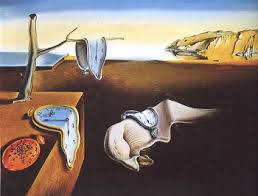
The Persistence of Memory by Salvador Dali (1904-1989). From Public Domain

Maliha Iqbal is a student and writer from Aligarh, India. Many of her short stories, write-ups, letters and poems have been published on platforms Live Wire (The Wire), Cerebration, Kitaab, Countercurrents, Freedom Review, ArmChair Journal, Counterview, Writers’ Cafeteria, Café Dissensus, Borderless Journal and Indian Periodical. She can be reached at malihaiqbal327@gmail.com.

.

PLEASE NOTE: ARTICLES CAN ONLY BE REPRODUCED IN OTHER SITES WITH DUE ACKNOWLEDGEMENT TO BORDERLESS JOURNAL

Click here to access the Borderless anthology, Monalisa No Longer Smiles

Click here to access Monalisa No Longer Smiles on Kindle Amazon International

Categories
Stories

Hope is the Dream of a Waking Man

By Shevlin Sebastian

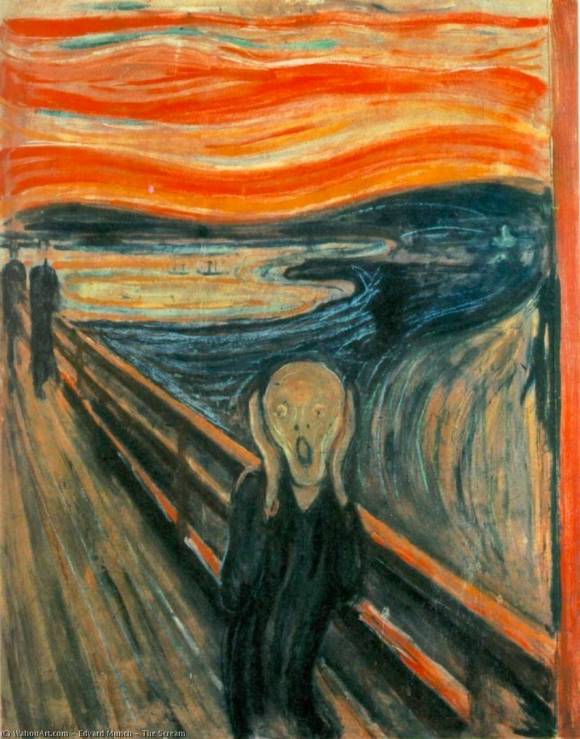
The Scream by Edvard Munch (1863-1944)

There is a large grey wave painted in the middle of the canvas. It is falling over a large group of people standing on the edge of a seashore. Many men wear skullcaps. The women have black burkas. The group has widened eyes and open mouths. Some have turned their backs to flee. Others have raised their arms and clenched their fists, as if they are about to break into a run.  

At the bottom of the canvas, on the left, there is another group of people. They are also standing on another seashore, with windswept hair. There is a woman with a large sindoor in the middle parting of her hair. A young man, in jeans, has a necklace with a gold crucifix. A boy stands with a placard showing a dove with a leaf in its beak. The words, ‘Let’s all live in peace,’ are written in bold, red letters. Others raise placards with slogans like ‘Say No to communalism’, ‘Syncretism is in our DNA’, and ‘We are all brothers and sisters in this great nation’.  

Painter Ashraf Mahmood steps back and stares at the image. A slight smile plays on his lips. He had woken up that morning and this image had come floating into his mental screen. Ashraf kept staring at it, eyes closed, lying on his back. His wife had got up and gone to the kitchen. Alia liked to make her tea using Tata Gold. He preferred Brooke Bond Red Label. So they made separate cups. 

When he entered his studio on Mira Road, in Mumbai, at 9 am, he got down to work, using an easel and grey paint. 

He worked steadily. It was silent inside. But Ashraf did register the outside sounds of a typical Mumbai street. The horns blowing. Tendrils of smoke from exhaust pipes floated in through the window. His nose twitched as he noticed a foul smell. It seemed as if somebody had thrown garbage on the street. Ashraf closed his nose with the tip of his fingers for a few seconds. “The crazy smells of Mumbai,” he thought. 

He grew up near Mandvi Beach in Ratnagiri (343 kms from Mumbai). The air was fresh, and the wind blew constantly. The only sound was the roar of the waves and the beautiful sight of seagulls making circles as they flew above the sea. Ashraf’s father, Mohammed, was a government school teacher. His mother was a homemaker. He had two elder brothers and three sisters. Ashraf was the youngest. He displayed artistic talent from his school days.

Unlike most fathers, Mohammed encouraged his son. His father took him to an art teacher, who taught him how to draw and paint. Ashraf’s major breakthrough happened when he got admitted to the JJ School of Art in Mumbai. After that, there was no looking back…  

It was evening when he finished the work. His soles ached. Ashraf had been standing for hours. 

This image reflected all that he felt. The grey resembled the growing intolerance towards Muslims. This seemed to be overwhelming especially in places like Uttar Pradesh and Madhya Pradesh. There was the rise of majoritarianism. And the fracturing of relations between people of different communities. And yet, Ashraf felt that the DNA of the people over centuries was syncretic. A ready acceptance of people of all faiths. 

It was only the hate campaigns, through speeches, social media, and songs, that had swayed the people. He was sure the fever would die one day. Syncretism would rise again. “After all,” he thought, “throughout human history, love always conquered hate. But it took time.” 

Ashraf wanted to tell the viewers of his work not to lose hope. And hence the pigeon and the symbol of peace. For the title, he used a quote by the Greek philosopher, Aristotle, “Hope is the dream of a waking man.”

Ashraf rubbed his chin a few times and walked to a table on one side. A packet of fresh buns lay on the table. Ashraf opened a fridge. He took out a container which contained butter and a bottle of strawberry jam. He sliced the bun into half with a stainless steel knife, placed butter and jam in between, and began eating it. These were fresh buns from a nearby bakery. Ashraf had bought them when he had stepped out for lunch. He made tea on the gas stove. Then he sat on a stool near the table and sipped it. 

This was his 35th year as a painter. Now, at 55, he could look back with reasonable pride. He took part in regular exhibitions and won a few awards and grants. Profiles of him appeared in the newspapers and on social media. His paintings sold, thanks to his realistic and simple style. An art sensibility was only gradually building up among the people. Ashraf knew that images drawn from his unconscious mind had a pulling power. Why this was so, he did not know. He remembered how one art critic described a David Hockney painting as having a ‘psychological charge’. Hockney was a renowned English painter. Ashraf realised that art needed to have a psychological charge if it had to have an impact.  

But Alia had already made an impact on him. He met her when she came to view his exhibition one day at the Jehangir Art Gallery. She was slim and tall, with curves that were accentuated by the chiffon saree she wore. Like Ashraf, she came from a small town. Through grit and perseverance, she passed competitive exams and got a government job. They went for dates. Ashraf was smitten. Within a year, he proposed and they got married. 

Alia was a superintendent in the sales tax department. She would earn a pension once her career got over. She had another ten years to go. Their two daughters had married and settled down in Aligarh and Delhi. Both had two children each, a boy and a girl. 

Alia wanted Ashraf to earn more money. But he was not a hustler or a man who liked to build a network. If a buyer came and offered a decent price, he sold it. Most of the time, he remained isolated. Sometimes, he met other artists at exhibitions and art seminars. He would chat with them. But that was all. 

He was not keen on extramarital flings or experimenting with drugs or drinking too much. Ashraf led a steady life. In many ways, he was happy with the way his life had turned out. 

He washed the cup and the pans. Ashraf placed the cup on a hook which hung on a wall. He had yet to finish the bun. 

He made his way back to the painting. It was 5.30 p.m. In half an hour, he would close his studio and walk back to his house, fifteen minutes away. The couple owned their apartment. Alia, with help from Ashraf, had cleared the bank loan over 15 years. 

At this moment, he heard a murmur of voices from outside the door. Ashraf wondered what it was. The sound arose. “Was there an emergency?” he thought. “Is the building on fire?” 

He came to the door. Ashraf saw that the lock was coming under strain. It seemed to be bulging backwards towards him. Somebody gave a violent kick and the door sprang open. Ashraf moved to one side.  

A group of young men rushed in. Some wore red bandanas. Many were in T-shirts and trousers. Some had thick, muscular arms. They were shouting. It seemed like slogans. In his shocked state, Ashraf could not register the words. They rushed to the canvas on the easel. One man, using a long knife, sliced the canvas into two. He pushed the easel.  It fell with a clattering sound to the floor.

There were a bunch of finished canvases placed on one side. Ashraf had been doing work to showcase in an upcoming solo exhibition. The group spotted it. They rushed there, pushed the canvases to the floor, and began ripping them one by one with their knives. Within a few minutes, the work of several months lay ripped out. Ashraf remained by the side of the door. He had not moved. 

“Hey you Muslim kutta (dog),” one of them said. “We will come again if you carry on working. No art for Muslims. Clean the sewers. That’s the only job you are good at.” 

Ashraf half-expected one of them to stab him. But they didn’t. They left as quickly as they came. 

Ashraf felt as if a large, round ball had settled at the base of his throat. He could not swallow it nor could he spit it out. 

He blinked many times. Ashraf wasn’t sure whether this event had actually happened. It took place so fast. But there was no doubt about the ripped canvases lying all over the floor.

He felt a pain in his heart. Ashraf rubbed the area. “I hope I am not having a heart attack,” he thought to himself, as he took in lungfuls of air to calm himself down. Employees from other offices on the same floor came to the door. They entered. Most had goggle-eyes. 

“Sir, what happened?” one young man said.

Ashraf shook his head. 

“I don’t know,” he said. 

“Who were these people?” a woman said. 

“No idea,” Ashraf said, as he surveyed the damage. 

“Sir, you will have to call the police,” another man said. 

“Yes, I will,” said Ashraf. 

A couple of men shook his hand. 

All of them surveyed the damage silently. Work was calling them. “All chained to their desks,” thought Ashraf. “At least, that way, I am free. No boss on top of me. No attendance marking every day. No targets to meet. No one shouting at me. But then, no steady income. And no camaraderie. Large amounts of time spent alone.”  

Then he returned to the stool, returned to the present, and placed his head in his hands. 

‘What’s happening to this country?’ he thought. ‘‘There seems to be a collective madness. Indians attacking Indians. And these young people were ruining their lives by working for political leaders. They will be used and discarded.”

He had not seen them before in the locality. They might have come from some other area. Was it a deliberate ploy to send a shock wave through him and the community? Who knew how they thought?  

What should he do now? 

Ashraf realised he had to think rationally. He stood up and went to the door. He realised immediately, he could not do anything immediately. A carpenter would have to be called tomorrow. 

He called Alia and informed her about what had happened. She said she would come directly to the studio from the office. Ashraf called up his media contacts, both in the print and visual media. They said they would arrive with their photographers and cameramen. Ashraf took several photos and videos on his mobile phone, documenting the damage. 

He would have to report the attack at the police station and file an FIR.     

Ashraf realised his work had been ruined, but he would recreate it. He had photos of all the canvases. 

To prove to himself, he had returned to normality, he went back to the table and finished the rest of the bun. He put the butter and the jam back into the fridge. He washed the plate and the knife. 

Fifteen minutes later, Alia arrived. 

In silence, she stared at the canvases lying on the floor. Ashraf saw her press her hand against her open mouth. He realised it was a silent scream. 

In the end, she came up to Ashraf and said, “They have tried to violate your dignity as an artist and a person.” 

The couple hugged. 

After a while they broke away. 

“Don’t keep the canvases here anymore,” she said. 

Ashraf rubbed his chin with his fingers. 

Finally, he nodded. 

“There was something strange about the attack,” he said. “They didn’t overturn the table or the fridge. And for some reason, they did not assault me. It seemed to me they had to leave in a hurry. So I got saved.”  

Alia said, “They are keeping a watch on everybody.” 

“Yes, I read online there is a pervasive deep state,” said Ashraf. “In every neighbourhood there are spies who report about all that is happening.” 

“What is the next step?” she said. 

“I am waiting for the media to come. After that, I will file the FIR,” he said. 

At that moment, a few print and TV journalists arrived. 

Ashraf spoke to the reporters. The photographers and cameramen began recording all that had happened. 

They left after half an hour. 

The couple then shut the door, as best as they could. But there was a small gap at one side. They went to the police station. The police allowed an FIR to be filed against ‘unknown persons’. He faced no hindrances because, as Ashraf surmised, the police were aware of his reputation as an artist. 

The couple took an autorickshaw and returned to their apartment.  

Alia changed into a nightgown. She washed her face, and informed their daughters about what had happened on her mobile phone. 

Ashraf changed into a T-shirt and shorts. He made a glass of whisky mixed with water for himself. Every night he had one peg. 

As he sat on the sofa, nursing his drink and staring at the TV screen, he felt the pain arise in him. It was an ache in the middle of the chest. To see his work treated in such a callous manner was a calamity. He wondered whether he would ever overcome this fear that had come into him. Work on a piece the whole day and in the evening, somebody could come in and rip it up. 

Closed doors did not offer any protection. It was a time of lawlessness. People with criminal behaviour could operate with impunity. Leaders wanted to instil fear in people. 

And would he be able to recreate these ripped-up paintings with the same intensity? He was not sure.  

On the screen, some leader was having his say. His eyes enlarged, he made violent movements with his hand, and spoke with a loud voice. “Horrific,” thought Ashraf. “How do you create art in this environment?”

Yes, indeed, how do you? 

But it did not take long for him to tell himself, “But we must, whatever be the cost. Art is the candle that brings light to the darkness.”

.

Shevlin Sebastian has worked for magazines like Sportsworld, belonging to the Ananda Bazar Patrika Group in Kolkata,​ The Week, belonging to the Malayala Manorama Group, ​in Kochi, the Hindustan Times ​in Mumbai, and the New Indian Express in Kochi. He has also briefly worked in DC Books at Kottayam. He has published about 4500 articles on subjects as varied as films, crime, humour, art, human interest, psychology, literature, politics, sports and personalities. Shevlin has also published four novels for children.

.

PLEASE NOTE: ARTICLES CAN ONLY BE REPRODUCED IN OTHER SITES WITH DUE ACKNOWLEDGEMENT TO BORDERLESS JOURNAL. 

Click here to access the Borderless anthology, Monalisa No Longer Smiles

Click here to access Monalisa No Longer Smiles on Kindle Amazon International

Categories
Independence Day Stories

Flash Fiction: The Best Word

By Maliha Iqbal

A solemn boy of seven was busily writing away without a thought about the world. He was perspiring and his clothes were damp. There were beads of sweat on his forehead as he knitted his brows in concentration.

Suddenly a woman in her thirties came into the room and looking at him said “Samad! Take a break! You ought to be tired by working like that since morning and that too with a power cut! It’s so hot!”

“Mother! Please don’t worry about me, the heat doesn’t bother me” replied the boy with an earnest look on his face.

His mother merely stared at him, mumbled “what a child!” and left.
She rushed to a quiet corner of the house with tears welling up in her eyes. Once she was out of earshot, she began weeping and muttering over and over again, “Oh! How the child loves to study! If only I could give him a better future! His books are his only solace from the grief and miseries of his life!” She soon stopped herself as she recalled her husband’s last words before he left the world. “You should be a source of inspiration, courage and love to Samad, never show your sorrow, face your troubles with a smile.” Yes! That’s what he said and that’s what I’ll do! She thought and smiled suddenly which lit up her face.

Samad lived in a war-torn country. Many had rebelled against the government and the country was at civil war. There was an epidemic of poverty, and all had fallen prey to this.

It was nearly 9 O’clock in the evening when Samad silently slipped out of the back door of his house and hurried through the lonely streets to a tiny, dilapidated building tucked away in a corner. A contented look came over his face as he entered the building and greeted his educator.

Ah! That was his school! How he loved going there! Samad went to school in the silence and aloofness of night — most children in the country did because of the fear of rebel attacks. Samad had few children in his school, only seven and he was the brightest among them.

They had recently started learning English and today their teacher had an interesting idea.

“All of you have to write your favourite word of English language on your slates and then one by one you will come out and tell the whole class why it’s your favourite. You have ten minutes,” announced Mr. Blake, their teacher. He wanted to test the children’s vocabulary and spellings.

Soon the room became silent as each child began to write. Samad finished his work much earlier than the given time and stared idly at the light bulb in the room which was flickering occasionally. It gave a dull glow and swarms of insects had gathered around it. Out of nowhere a loud explosion was heard followed by shouts of terror. The rebels!

The teacher shouted, “Keep calm! Don’t be frightened! Hold my hand and don’t let go of one another.”

Everyone slowly began walking out of the building in a single file but suddenly the lonely streets seemed to have come alive, and people bustled about. In the chaos and confusion, Samad was separated from everyone.

He did what any wise person would have done and began running towards his home which was nearby, the slate still grasped in his hands.

He was out of breath, but he wouldn’t stop at any cost. Finally, the front door of his house came into sight, and he ran faster still.

Suddenly there was a loud explosion and Samad saw large flames before he fell to the ground. Bruised and bleeding, he got up, limped a few steps and collapsed.

An agonized mother found her son the same night with a slate gripped in his lifeless hands. On the slate was the word “HOPE” written in a shaky handwriting. Isn’t it the best word? Doesn’t it provide you with the courage to strive towards your goal? Hopelessness itself is the end of life. Even insects are attracted towards a source of light for navigation and warmth, or should we say a source of hope?

Maliha Iqbal is a student and freelance writer based in Aligarh, India.

.

PLEASE NOTE: ARTICLES CAN ONLY BE REPRODUCED IN OTHER SITES WITH DUE ACKNOWLEDGEMENT TO BORDERLESS JOURNAL