Categories
The Observant Immigrant

The Paradox of Modern Communication

By Candice Louisa Daquin

Courtesy: Creative Commons

Microaggression is a relatively newly used term to describe less direct action that can cause offence. It is a term that has been setting the social media alight for the past few years, sometimes for good, sometimes not so much.

Having just attended another course on this buzz word du jour, it struck me how absurd some of the ‘lessons’ on identifying microaggression were. One could argue, it’s pop-psychology and political correctness, gone awry.

Before we get to the absurd scales over policing microaggression, it’s important to explain why acknowledgement of passive-aggression and gaslighting (confusing a victim with the perceived reality) does matter and should be discussed (if perhaps not exhaustively).

Think back to those days of old where eve teasing in offices was considered du rigor, where a woman of colour with an afro was told it wasn’t an acceptable ‘hairstyle’ and threatened with being fired if she didn’t ‘tone it down’. Think of a Muslim worker being told he couldn’t pray during work hours, a Jewish colleague not being given time off for Hannukah, a black footballer having bananas thrown at him whilst he played, or an Indian politician being called a ‘Paki.’

These all still happen despite being labelled as racism, bigotry, hate and microaggression in the workplace and beyond. They are intolerable and unacceptable and can lead to suicide, depression, financial insecurity and feelings of ostracisation. The laws protecting against these are sometimes hard to enforce. People who do follow through on a complaint, are considered ‘trouble-makers’ and their careers are thwarted by this unfair reputation.

Stereotyping is part of human nature, even as we try to rinse it out. When we are unfamiliar with a culture (sometimes when we are familiar with it), we reduce people to descriptors that can be stereotypical. In my case, I’m often assumed to be English because I have a slight English accent. In incorrectly assuming this, people often ask me if I would like ‘tea’ (I hate tea) or make fun of my accent. Friends from other parts of the world have the same experience. It’s annoying and a constant reminder that I’m not American. I’m an immigrant.

For people of colour, this is even more extreme. If you are light skinned you are ‘assumed’ not to be a person of colour though you might be (many are) whilst if you are dark skinned you are more likely to be ‘assumed’ a person of colour (though you might not be) and if you have African or Asian ‘features’ as considered by (a stereotype of what constitutes ‘being African’ or ‘being Asian’) you are assumed to be African or Asian though you might not be.

However, this is a complete minefield and I want to take a few scenarios to illustrate this point in relation to the trend toward calling out ‘micro aggressions’ – which if you let it go too far, can be every bit as exclusionary/judging/alienating as if we go in the other direction and return to a mass acceptance of bigotry.

Before I share some examples, I should say, there may be a middle ground where we can all be relatively certain of fair treatment, even if this cannot include historical bias and mistreatment of our ancestors in the past. I would say this is the place we want to aim for, but we’re not there yet. My issue with microaggression is it’s a dog whistle that is going off so often that we’re becoming blunted to real outrages in favour of a knee jerk response daily to little errors in our current way of communicating, that also by default, leave us fearful of saying/doing anything for fear of offence. Yes, it is possible to go too far. And before you say I’m coming from a position of privilege — that’s why I’m saying this — no I’m not. That’s an example of what I’m talking about — taking things so far with political correctness that none of us can say or do anything without fear of serious reprisal.

My friend attended the same course on micro aggression. We discussed it afterwards. She is African American. I am mixed-race but have white skin. She noticed the course tended to use examples of black/white characters and wondered why if race and ethnicity were not specifically mentioned in the course. The point of this microaggression course is to point out the varied ways you can be microaggressive without knowing it – and what you could do about it. However, as my friend pointed out, it’s almost a no-win situation.

The first scenario of microaggression is a (seemingly) white-blonde woman commenting on a (seemingly) black woman’s hair and saying “I like your hair”. Why? Because it’s culturally insensitive, it’s fetishising ‘exotic’ hair by the mainstream (white) which can cause the person being complimented, to feel embarrassed, self-conscious or that they’re being stigmatised or singled out for their (non-white) hair.

Ironically, if my friend were not African American could she even say what she thought without being criticised for being microaggressive herself? Fortunately, she is so, this is what she said and she cannot be called out for saying it because she’s African American herself.

“I thought it was a stupid scenario. A blonde woman is just as likely as a black woman to have people comment on her hair. She wouldn’t think it was racist/insensitive, unless the person went too far and started touching it or saying things that were sexually inappropriate like ‘You have really sexy hair’. Most of the black women I know would be happy if someone said they liked their hair and wouldn’t think it was culturally insensitive if that person wasn’t the same race/ethnicity – as much as anything because how can they be sure they’re not (of the same race/ethnicity?). Plenty of people who don’t look mixed-race, are, or their parent may be, and they might be a light-skinned person of colour saying to a darker-skinned person of colour ‘I like your hair’ in which case that cancels out the microaggression, which is assumptive at best. But even if it were a white person saying this, if their motive was simple, ‘I like your hair’ then assuming they mean anything more/less than that, is assumptive, and thus more of a micro-aggression than the original statement.”

My take on it (although by sharing this I can be accused of being micro aggressive because I have light colored skin) is:

“I have told friends of colour (all races/nationalities) ‘I like your hair.’ Never once did I mean anything less or more than that statement. Recently I saw a girl with hair down to her knees. I said ‘Wow! I like your hair!’ She was (seemingly) a white girl with brown hair (though I have no real idea of her ethnicity (nor did I think about this). She was really happy. But according to the microaggression lessons if I say the very same thing to a girl who does look (to me) to be African American or a ‘minority’ (which is kind of racist in its own right, and thus absurd, because how can any of us know for sure what someone ‘is’ and by thinking about it so much, I find this more potentially offensive than to not think of it) I would be being micro aggressive?”

My friend and I talked about this at length until we got to the impossible scenario which is this: two women meet and one says to the other, I like your hair. The other woman says “Thanks! I like your hair also.” One is microaggressive, but the other isn’t?

This is microaggressive because if one of the women is a person of colour (in any way) then the person saying to the (supposed person of colour) “I like your hair” is being micro aggressive because it’s insensitive for a person who is not of colour to say this to a person of colour.

But what if neither knows what the other person is because it’s not clear, or they don’t want to assume (which is a good thing). What if they’re both saying it for the same reason?

Well then according to the course, they could still be micro aggressive because one of the other concerns is someone ‘hitting’ on someone else in some way, or pointing out something ‘personal’ about them, which could make them feel uncomfortable.

Play the scenario again: Two white women (we’ve removed race for the time being because this was one of the ‘issues’ and we want to see if there are any other ‘issues’ in the scenario) meet, and one says to the other, “I like your hair” and the other woman says “Thanks! I like your hair also.” The one who initially said it, could be accused of being micro aggressive because they overstepped the work relationship which should be professional (meaning, no personal comments). The other person may have replied out of feeling they had no choice but had to respond. If one was a boss and one was not, then it could be microaggression of power and if one was richer than the other, it could be a subtle put-down of their income. So, the list goes on.

Find anything absurd yet?

Again, let me ratify this by saying I am all for equality, and treating people compassionately, with dignity and respect and cultural sensitivity. But I think like my friend said, this can go too far and become a minefield of absurdity.

We laughed and then said – what if the two women were wearing t-shirts that said ‘I am heterosexual’ so the issue of sexuality was removed, and both women were white or both women were black, so the issue of race was removed. Would it be okay to say it then? My friend cleverly pointed out that wearing a t-shirt that said I was heterosexual (as stupid as that is) would be deemed offensive to those who were not. So basically, the bottom line is, you cannot win, you cannot stop going down the rabbit hole.

Here’s the truth. If someone comes into work and touches your hair or your pregnant belly without you asking and makes a big fuss, then you might feel they have violated your space. But if they literally said, “I like your hair”, then it would not necessarily mean they were microaggressive. I know a lot of people of colour who compliment each other all the time. If we segregate races to their compliments, we’re dividing not bringing everyone together. If we say only a black woman can say to a white woman “I like your hair” but not vice-versa, we’re creating absurd rules.

Obviously, this is necessary sometimes. Using the “N” word is a word people of colour can and do sometimes use with each other but if person outside their race says it to them, it is racist. That’s true. It is a double standard that stands because of the history of racism and discrimination, murder and hate. I still think anyone using the “N” word, irrespective of their race, shouldn’t use it because of its history but that’s beside the point.

Sometimes a white woman might say something that is derogatory to a black woman and that statement will be wrapped up in a passive-aggressive “compliment” such as “I like your hair.” But until you know the motivation, isn’t assuming this, impossible to prove and thus, impossible to police? By shutting all such comments down, aren’t we dividing each other more? Segregating our language and what can and cannot be said to each other? How does this help if we then become so afraid of saying anything to anyone?

If my colleague who lives alone asks how my New Year was. I say, “Not bad, how was yours? Did you spend it alone?” This is a microaggression because I’m potentially ‘shaming’ my colleague for living alone, whereas in reality, I was asking because they had previously told me they spend New Year alone. Can you see how we’re increasingly walking on eggshells? How does it help relationships to be that stilted and self-conscious? Isn’t it true that we’ll likely offend everyone repeatedly in little ways, but if they ‘know’ us they will know we didn’t mean to and it was a blunder rather than something intentional?

So how do we police and protect when it is intentional? Someone I work with once said to me, “You are a very long-winded writer with lots of detail aren’t you, Candy?” I felt ‘hurt’ because I thought it wasn’t entirely true and a negative characterisation. But were they gaslighting me or simply stating their opinion about my writing? Does everyone I know have to think I’m a good writer? Is it wrong to offer that I could be more long-winded than them? Does it nullify my writing? Or is it simply an opinion? Not wrong, or right? I let it go because I suspected it was not intended to be gaslighting or passive-aggressive and at the same time I considered how I could avoid being too long-winded.

Surely the same can be done in any conversation/interaction without us having to police every single sentence or condemn people for things they may simply not have meant? I hate the statement “you are too sensitive” because it implies there is such a thing as being too sensitive, yet as we all know, there are times when we’re too sensitive to what is being said, and it’s our assumptions of (their assumptions) that hurt us more than what they actually said.

Yes, if someone says “I think people of colour need to comb their hair more and keep it straight” that’s obviously out-and-out racist and awful. It’s unacceptable. But if someone says “I like your hair” they may be saying I really like your hair, because maybe their hair isn’t thick or a nice colour or maybe their hair is lank and lifeless, and they perceive your hair to be beautiful. It may be nothing more than that and why should it be a statement only people in your ethic group can say? I get told “I like your hair” quite a lot, because I have very long hair. Granted I don’t have Afro hair, but my mom does, and she was told “I like your hair” a lot too. She didn’t think it was racist and it likely wasn’t.

Now if she were told “I like your hair and your chest, want to go to bed?” That wouldn’t be okay. Just like “I like your hair – how do you people with afro hair manage it” wouldn’t be acceptable. Are the nuances easy to remember or understand? Especially for the neurodiverse (those who accept diversities) they can be a confusing minefield, and this might be one reason we’re more likely to put rules than try to pick apart nuance, because so many of us are neurodiverse and modes of communication seem to have intricate layers to them that are hard to unpick. Isn’t it simpler then to put rules in place that call someone out for micro aggression? But in so doing, we shame good intentions as well as bad.

Maybe microaggression policing can go a little too far in its zeal to police everything and everyone and we’d be more cohesive if we didn’t impose a multitude of rules on conversation. I’d like to be able to talk to people without fear. I think we can do this again and I can be trusted not to deliberately gaslight or obfuscate or passively-aggressively shame or put down. I know the difference between someone who says, “Oh I like your hair” in a bitchy voice, and someone who simply says, “I like your hair!” I’m not going to treat them both like thought criminals. Or continually watch what I say, I’m going to trust myself to be conscious and listen to others, and in learning what their boundaries are, hopefully most of the time adhere to them. By treating us like we are in a nanny state, we lose the art of communication and coming together. I think we need to get it back – more now than ever before. 

.

Candice Louisa Daquin is a Psychotherapist and Editor, having worked in Europe, Canada and the USA. Daquins own work is also published widely, she has written five books of poetry, the last published by Finishing Line Press called Pinch the Lock. Her website is www thefeatheredsleep.com

.

PLEASE NOTE: ARTICLES CAN ONLY BE REPRODUCED IN OTHER SITES WITH DUE ACKNOWLEDGEMENT TO BORDERLESS JOURNAL.
Categories
The Observant Immigrant

To be or Not to be…

 Candice Louisa Daquin takes a close look at death and suicide.

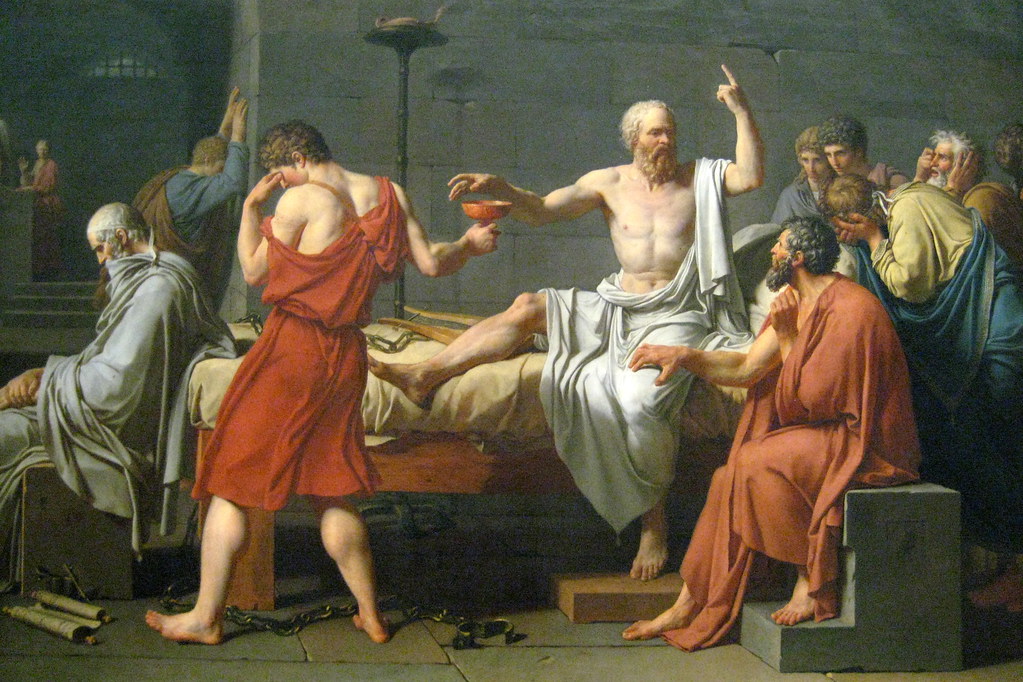
The Death of Socrates by Jacques-Louis David (1748-1825) Courtesy: Creative Commons

Recently I’ve been grappling with the imminent death of a very dear friend. She is very young. Maybe her youth or maybe my attachment to her, makes this particularly moving to me. I have dealt with death before and it is never something as simple as going softly into the night. Yet it is something we must all deal with, multiple times, often intimately and up-close-and-personal when it comes to our turn. This may be a macabre subject but, in a way, it shouldn’t be because it’s the one thing we will all are guaranteed to experience. Maybe it’s time to see death and dying differently?

In my friend’s case she wanted passionately to live. She didn’t want to get cancer in her thirties and have the rest of her days taken up with trying to survive. It’s unfair, it’s horrible, it’s what most of us fear. Despite this, her grace leading up to her death, including her time in the Hospice, had been startling for me. I saw a change in her, that I found unexpected and illuminating. One could have argued it was the hand of God touching her, those who do not believe might have mooted for inner peace. As much as I rail against her dying, and wish stupidly something could prevent it, what helps is knowing what I feel and think is nothing compared to what her family is experiencing, and it puts things in perspective and demands that I rein my feelings. By that, I don’t mean ignore the sadness, but put it in a context because everything is a context.

My context is: A few years back my beloved cat died, I was very upset. But I knew he was a cat who lived a long life, and he was ‘just a cat’ versus a human. For me, that context is different (despite ultimately believing us all equal). If my father passed on, it would devastate me more than say, a stranger, and that’s just being honest. When my grandparents died, I was very upset, but I put it in the context of expecting grandparents to die and whilst I still think of them and miss (some) of them, I’m able to cope. I think this is true with my clients, they rationalise by contextualising. It’s how we cope with grief and fear. When we cannot do this, we usually develop some type of imbalance and that can cause us to have unexpected responses like feeling as if it is the end of the world if your pet turtle has passed on. Everything is context-based. While it might seem insensitive to admit this, it’s what keeps us sane.

People can be dismissive of others pain. I have often heard people say things like: “Well her parents died more than a year ago, don’t you think she should be ‘over’ it by now?” Invariably when their time comes to lose their parents, they may finally understand why most people don’t get ‘over’ it when they lose parents, or siblings or their children. Others believe you are weak if you don’t ‘suck it up’ or that there is some time limit on grieving. In the faith I grew up in, we tend to give a year for grieving for parents (or close relatives) which allows the griever to not feel guilty (or guilted) for their emotions – it frees them. On the other hand, it could be negative if say, after a year they feel worse as many do because grief is not linear. Nothing is perfect. The important thing is to have empathy and realise we all process differently and there is nothing that is wrong or right, except for the individual.

If we all die, then we shouldn’t stigmatise illness or fear it but many people do. It is the great unknown. In modern times, a worse fear is suffering. We may not know what happens when we die, but we know suffering and nobody wants to suffer, but increasing numbers of people do. Why? We always suffered to some extent. In wars people would lie on battle fields for long periods of time dying of awful wounds. In modern times we harnessed the power of pain killers and believed ourselves free of pain and thus, suffering. Despite this quite the opposite phenomena has occurred. In some ways people suffer more.

Why? Because with the advent of ways to prolong life, came medication that extended life but it came with a price. When a person gets cancer say, it’s no longer a death sentence. Many recover fully and go on to live long healthy lives. For those who get a late diagnosis however, the cancer might have spread so much so that eventually it will take their life. This is where modern medicine seems to shine. There are a plethora of medications that prolong life. No, not cure but cause remission or sustain life for a period of time.

If you are someone with children or grandchildren, living an extra two years might be worth the astronomical sum it costs (if you can afford it) but at what cost? Many of these drugs cause horrible side-effects and do not reduce suffering, in fact it is the suffering (toward death) that becomes the experience. You could say, we have prolonged suffering in our attempts to give people ‘more time.’ The question then, is it worth more time and what do we mean by more time?

Whilst doctors want to offer hope, they do so more out of a stubborn desire to ‘try anything’ rather than because the six months they may give a dying person, is really beneficial when you consider the sheer backbreaking cost (bankruptcy from medical costs being the #1 reason) and very small gains (six months more of life and you have spent all your money on a treatment which only benefits Big Pharma, according to Dr. Azra Raza in her ground breaking book about death and dying, The First Cell). The unwillingness of doctors to give up, is admirable and very human (who wants to tell someone there is no hope?) but it brings with it, a false promise.

In the modern world, people have smaller families by and large, and as such, many of us when we get older and more likely to die, may have less obvious incentives to live if we get sick. It’s not so much a wish to die, but a pragmatism about death and dying. Easy in theory, perhaps less so in practice, we must all eventually deal with this issue. Better to consider it before the time comes, hence the increase of living wills, whereby we inform doctors and loved ones, what we want to happen should we get sick. Again, macabre maybe, but imminently sensible, and useful when doctors are not mind-readers and cannot predict what a patient coming into Emergency may wish by way of life sustaining treatment.

Speaking of life sustaining, one debate long held relates to dementia. Right now, if you were to write in a living will that should you get dementia you do not want any life sustaining treatment that would only include if something actually happened to you, such as a heart attack or your kidneys shutting down. For many with dementia though, it is the day-to-day living that is hard, both on the individual whom on some level knows they are not themselves, and on those who care for them. Whilst it seems inhumane to some, to consider letting people with dementia die, those lucid enough to know they have dementia will often wish to die rather than live, without any hope of recovery and the mental state of a child without any chance of growing up. Since dementia is so common place and we’re all living longer, this is a real issue and yet little is done to combat the increase in dementia patients who may often have nobody to look after them and no funds for full time care. What should be done?

Clients of mine with parents suffering from dementia will often describe the agonising decision to put them in care if they have the financial wherewithal or take care of them at home, often at great expense (loss of job, career). Some wish nothing more than the opportunity to care for their parents or loved ones, whilst others feel guilty for wishing it were anyone but them looking after their dementia patient. Both perspectives are understandable. For some there is a redemptive quality to caring, and it comes naturally. For others, financial or emotional reasons may make being a person who cares for others, incredibly hard. It is not surprising that older carers such as the husband of a woman with Alzheimer’s, often dies before the wife. The actual act of caring is exhausting as it may be redemptive, and nobody should be blamed for being unable to do it. Sometimes however, there is no choice, with rising costs for elder care, especially with dementia. It makes me wonder what will happen if the predicted number of elderly develop dementia. Will it be common place to see them walking the streets without anyone to look after them? Take me for example, should my father develop dementia and I live in a different continent, what would I do? This is something many of my client’s fear and yet little is done to resolve this issue by world Governments.

Some people believe dementia patients should be allowed to access euthanasia. As of now, all countries with some degree of access to euthanasia ask that the patient be ‘sound of mind’ – which would not apply to someone with dementia. But even if you write a living will stipulating that you wish to have euthanasia if you get dementia, this is a tricky situation because by the time that would apply, you would not be sound of mind, so it negates the ability to have euthanasia. Furthermore, what of unscrupulous relatives or friends, jockeying for inheritance or to financial gains? How can this be stopped from being misused? How can we gauge whether someone with full blown dementia really wants to die? The reason this matters, is by the time a woman is 80 she has a 1/3 chance of dementia of some kind and by the time she’s 90 that chance is 1/2. This is and is going to affect a huge swath of the population and as such, these conversations need to be had. The only way we do this is to consider what end of life means and how best to end life.

End of life conversations are common in therapy. Clients may be bereaved. They may have a partner dying of a terminal illness, they may have lost a child, parent, friend. Perhaps it is a relief to have counselors because many people don’t want to ‘go there’ and talk about death and dying as if it is contagious. It’s a hard subject, a sad subject, and difficult to put a positive spin on it. Life can be tough enough, without considering dying before it’s time, but that’s exactly what we should do to protect ourselves.

The other subject not discussed in depth is suicide. It’s one thing for us to die of disease, we know that’s a possibility but we’ve always struggled with the idea of suicide. For most of history, suicide has been variously unsanctioned by society-en-mass, but the question is why? Is it an ancient fear of the ‘unnatural’ impulse to die? That we work so hard to stay alive, it seems absolutely wrong to wish to die? Or something else? Whilst Emile Durkheim (1858-1917) wrote on suicide and many have questioned this, no one person that I’m aware of, has managed to figure out what our collective horror is in relation to suicide.

Let’s play devils advocate for a moment. What is it about the decision of another wishing to take their life that causes people to react so strongly? Is it the same as abortion? Pro-life over Pro-choice? Or the visceral horror we all have about dying? If the latter, why does it matter so much to us what others do? What right do we have to intervene? Yet we do, societally and individually. One might say we’re just trying to save lives, but do we put as much passion into feeding the starving or rescuing women from abusive relationships as we do banning abortion and making suicide illegal or socially frowned upon? When it’s not illegal, it’s considered ‘weak’ and a ‘cop out’ (to use an American term). The only society where suicide was really ‘embraced’ if such a thing can exist, is Japan, and nobody really knows why that singular country took the notion of suicide to such an artform.

Suicide bombers today may be Muslim fundamentalists protesting against the tyranny of an oppressive country. They are sold on the idea the after life will be a paradise, and much of what they are told is not from the Koran but from the machinations of those who impel them toward acts of terror. When a young person blows themselves up to destroy others, this is not the suicide we think we understand, but an act of anger, revenge, justice or ignorance. Suicide in its more common form is less about revenge or justice but can be about ignorance or anger. Ignorance in that many young people kill themselves almost upon an impulse, with little pre-thought or planning, just in a reactionary ‘of the moment’ way, that shocks loved ones who didn’t see it coming because it may not have been (coming). There is an element of ignorance to this act, they may be copying others, or reacting abruptly, and had they known more in that moment, they would possibly have looked back on the act and regretted it. As such the impulsive element of the act could be viewed as ignorance/nativity.

Anger is a very common reason for suicide, although probably the one everyone is most familiar with is despair (depression). Ironically anger is as much as incentive for suicide as despair, because of the heightened tendency to react with both those emotions. It is in that heightened state that many attempt or complete suicide and those who survive, often realize there were other options they wish they had taken. For the committed, then suicide is a personal decision, perhaps based on a terminal illness diagnosis or long-term suffering. Despite this people intervene and tell anyone who wishes to die rather than linger and suffer, that they are weak for taking this option. I have always found that fascinating and awful, because I see it exactly the way I would putting my cat to sleep. I did it out of mercy and love. I did not want my cat to suffer. A human being is not a cat but the same emotion applies. Where is the true difference?

The difference lies in religion. People who condemn people for taking their lives are not universally religious but many are. The tenants of a religion might dictate that someone should not take their life. I have always wondered why, because I believe most religions were written and created by humans and so it begs the question, why were they so intent on stopping people from taking their own lives? I can understand that if a God exists and says we should not take our lives, this would give pause to many. But it also creates a challenge, because what God would wish someone to suffer terribly?

This is a very personal decision and that’s my final word on whether someone should choose suicide if they are suffering. To some extent it should be the right of the individual and never anyone else, what they do with their life and death. I recall Brittany Maynard (1984-2014), a young woman with a terminal cancer in her 20’s talking of her right to end her life rather than brutally suffer and I felt then, even if I did believe in God, I would not strip her of that right, because I did not want her to suffer and I could not believe any God or human would. Again, if we have tools in place to deal with these issues, then people who are suffering terribly, do not have to battle through this, at their most vulnerable.

Many of us may not know this but suicide if we’re talking technically suicide, is incredibly common. Old people often stop eating and will themselves to die when they have had enough of life. Technically that’s suicide even if they do not see it that way. Maybe it’s more natural than we imagined? Likewise, hospices and long-term care facilities will medicate terminal patients at the end to hasten their death and relieve some of the suffering. Effectively causing a person to die before their ‘time’ if we think in God-given terms. I do not begrudge this because these carers are seeing people suffer in ways few of us can imagine, if there is not a mercy to ending a life of agony, then I don’t know what mercy really is.

The stigma of suicide is incredibly pervasive. Just like mental illness, suicide is seen as ‘not right in the head’ and a weakness. How sad that society believes judging those during their worst times is the right thing to do? How is that going to help someone choose anything else? And what of their right to end their suffering? This begs the question: Is it right to die before your time? And by right, what do we mean? Who is the judge of what is right and wrong? For some, it’s easy, it’s God and most Gods say suicide is ‘wrong’ but again, why? And at what cost? For those of us without God, then right and wrong become moral principles that we try to adhere to. Is there a downside to morality being the choice of humans rather than something more than us? Absolutely. We are flawed and liable to influence, but sometimes trying our best is all we can do. I would like to think I would be merciful before judging if someone I loved dearly wished to end their life. It would of course depend upon the circumstances, as it should.

Switzerland is the only country in the world where you can elect euthanasia for no specific reason. In America in the ten states that permit some degree of euthanasia, you need to be close to death and have a terminal illness.

Why is death sad?

Switzerland is testing a 3-D-printed pod that its creator says can painlessly end someone’s life in a matter of minutes. The device is called ‘Sarco’ and users can potentially end their lives at the push of a button. The advantage of this system is he pod becomes filled with nitrogen gas, which lowers oxygen in a person, until they fall unconscious and this occurs fast, within a minute. The idea of a truly painless death by euthanasia is why this was invented and users do not Sacro suffocate they die fast of oxygen deprivation after they’ve fallen asleep.

Some have argued a machine like this could glamorise suicide (although how, is not explained) and that it may be overly appealing to a mentally ill person seeking death. I don’t really agree. If there are checks and balances in place that work effectively, this won’t be an issue. The real issue is who wants to consider people taking their lives when death is sad? And how do we access without bias, who is ‘eligible’ for euthanasia and who can be helped another way, that doesn’t involve a premature death? After all, someone in the throes of depression, may wish legitimately to die, but what if a year later they are well enough to be glad they didn’t die? Those kinds of grey areas must be resolved before euthanasia could ever be expanded or wide-spread.

The Netherlands and Belgium permit assisted suicide for patients with unbearable physical or psychological suffering. Which differs from the USA where it can only be for terminal end stage physical illness. Switzerland has less qualms, making it a destination for ‘suicide tourism’ which again, is very sad, but perhaps what is sadder, is that they have to resort to this and what about those who don’t have the means? People assume those who are pro-euthanasia must be eugenicists or simply not care about others, but often the extreme opposite is true, just as it is with Pro-Choice advocates, who believe choice is freedom and the basic right of any woman.

Should we be able to die because we’re simply ‘tired of life’ or should we be expected to carry on to the ‘bitter’ end? This is such a cultural dilemma and maybe suicide became more acceptable in Japan because they reframed the concept of death, making it honourable to commit suicide (or as a means of regaining honor) just as suicide bombers find honour in the act. Should we need honour or some justification to believe suicide needs to be part of any argument about end of life? Maybe this is also connected to concepts of the death penalty. It is believed by many that America will not have the death penalty in years to come, that it’s a faded system that doesn’t work and scapegoats the most vulnerable. I see the death penalty as very different (a consequence for a bad act) than legally assisted suicide (to end suffering) and thus, when I consider arguments about end of life with clients, my considerations are about their quality of life and not, the myriad ways we can consider forms of dying.

In an ideal scenario nobody would wish to die, perhaps. Why? Because so much can be found in living and those who love us would not wish to lose us. Realistically however, people get sick, people get tired, people suffer. As long as we recognise this in ourselves and others, then debates about what end of life represents, will be part of a larger conversation and a necessary one. Perhaps if we cannot see anything positive in this, we can at least not shun it until it is too late. Likewise, we could consider that death is not the worst thing to happen to us, though suffering might be (or the suffering of those we love) and ways of alleviating suffering that are compassionate, should be part of the conversation.

.

Candice Louisa Daquin is a Psychotherapist and Editor, having worked in Europe, Canada and the USA. Daquins own work is also published widely, she has written five books of poetry, the last published by Finishing Line Press called Pinch the Lock. Her website is www thefeatheredsleep.com

.

PLEASE NOTE: ARTICLES CAN ONLY BE REPRODUCED IN OTHER SITES WITH DUE ACKNOWLEDGEMENT TO BORDERLESS JOURNAL.
Categories
The Observant Immigrant

The Changing Face of Family

By Candice Louisa Daquin


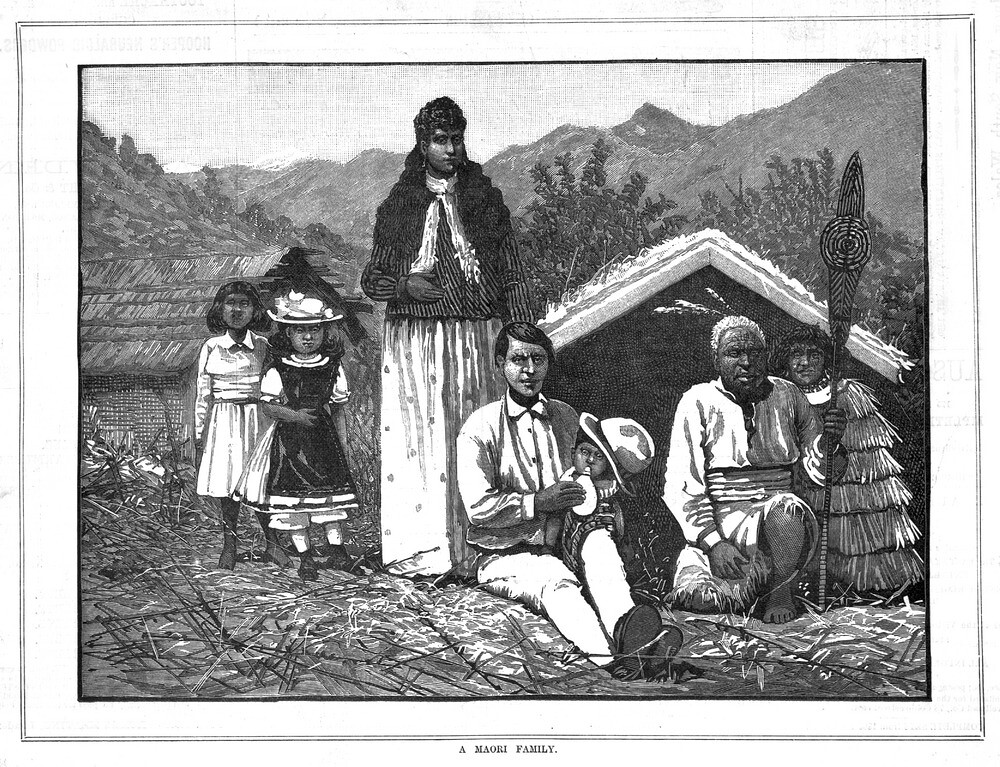
A Maori family in European dress (nineteenth century). Courtesy: Creative Commons

The indigenous Maori people of New Zealand, like many other first nation people including the Aboriginal tribes of Australia and Native Americans of North America, have a differing view of family to dominant mainstream Western culture. Maori culture prizes the family over the individual, a person gains the most respect through their commitment to their community, not through their individual accomplishments.

The Maori word: “Kaumatuatanga,” is concerned with keeping families and the Maori community together, and “Whakawhanaungatanga” relates to the Maori belief that family bonds should always precede other matters in life, and benefit the whole, again rather than the individual. A good friend, adopted by Anglo-New Zealanders but biologically Maori, and taught in the Maori ways, explained that; “Maori’s respect the White man’s ways, but have their own, especially where family is concerned. To Maori, family is history and future, the individual must work to strengthen their future collectively and respect their history, or their individuality has no value. In other words, family guides the individual and each individual Maori is made aware, irrespective of adoption or other circumstance of his/her history.”

My Maori friend, Esther explained that while she was adopted, given up by her birth mother who at sixteen did not feel she could care for her child, she was embraced by the Maori when she sought them out years later, and was taught of her ancestors, whose record of arriving in New Zealand, in minute detail, was recorded in the Maori tradition and passed on from generation to generation. Esther was able to find out the name of her specific tribe, the head of that tribe and the name of the boat her tribe took when they embarked for New Zealand from Polynesia, years prior to any Anglo settlers. Esther explained that; “Having such a rich history, knowing not only where I came from as an individual but as a people, gives me more security than any Anglo child I know, irrespective of my adoption. Even if my birth mother had not embraced me, my people, my extended family, did, and I have always felt accepted and welcomed by my culture. This leaves me feeling less dislocated and unaware of my history than most people and I find it impossible to be insecure with such a rich extended family.”

Contrast this with the story of Susanna from Toronto, a Canadian 33-year-old single-mother. Susanna’s family is of English/French descent. Her mother lives in Vancouver, she has never met her father who left her mother soon after Susanna was born. At 25, Susanna, in a relatively stable relationship at the time, became pregnant and had Emily. Soon after Emily was born, Susanna’s partner got a job offer in the US and chose to leave with another woman whom he had been seeing. Devastated by the loss of her partner both financially and emotionally, Susanna was unable to support herself and sank into depression. She continued to struggle financially and received little assistance from her mother who has remarried and her half-sister from that marriage.

“At times, it feels as if I have no family,” Susanna says, smiling at her daughter who she reports, has lots of friends at school and is doing well. “I fear for Emily’s future because she has no support network, she doesn’t see any of her grandparents, she has no brothers and sisters and if something were to happen to me, I really don’t know who would take care of Emily. I didn’t think in 2007 anyone would be as isolated as I feel, but then I talk to other single moms, and they tell me they’re struggling too. Sometimes I don’t think anyone really considers us, or the impact of our isolation and what effect that has on our kids. I know Emily is getting old enough to notice when I get depressed and be adversely affected by the state our finances. I want to give her so much more, but I never feel I have anyone to turn to for help. My social life died as soon as I had Emily because I couldn’t afford a babysitter. I’m only 33 but I don’t remember the last time I had a night out, sometimes my frustration gets really bad, and I lose my patience with Emily. It’s not her fault but it’s not mine either, I didn’t know I was going to be dumped, I didn’t think my lack of own family would impact me as negatively as it has, I used to have a lot of friends and now I only know other single parents who like me, struggle to make ends meet, we’re a lonely bunch.”

Susanna is only one of the roughly 1 million (Statistics Canada, 2001) single-mothers in Canada today, juggling a full-time job and full-time childcare with radically different support networks. No longer able to rely upon an extended family for baby-sitting; Susanna has had to adapt to the changing face of Canada’s traditional ‘family’.

It may be ironic that developed countries have significantly higher rates of single-parent family households, with the US leading the way at 34%[1] and Canada close behind at 22%. Historical reasons for single-parent families have been replaced with modern-world explanations linked to the evolving social and cultural demographic changes especially in the last 30 years. Despite cultural shifts, many negative connotations remain associated with single-parent families, and “non-traditional” families, despite this “non-traditional” model eclipsing the old normative two-parent, two-gender nuclear family. Today it seems, anyone can be a family, and the word “family” is associated more with an experience of (family) than a tightly fitting model. The question then becomes multifaceted; Have we identified what needs these new family structures have? Are those needs of the individual being met by the new family dynamic? And are the needs of these differing faces of family being met by social institutions?

Single Mothers by Choice (SMC) founded in the US is the largest advocate and networker for single mothers in North America. Statistics compiled by SMC show that many single-mothers are electively having babies by themselves, for a variety of reasons including a wish to have children outside of a marriage, by oneself, or in a same-sex coupling. Motherhood is, likewise, no longer restricted to marriage, nor do women have to abide to the old-fashioned concept of having their children in their twenties ‘just to be safe’. Career women in particular, are finding, motherhood later in life, fulfills their maternal instinct and equips them with greater financial resources to meet the needs of single motherhood. Many women are eclipsing their male partner’s earnings and as such, some men are opting to share if not take over the rearing of children, whilst other women find job-sharing roles with their counterparts a more practical way of meeting motherhood responsibilities while remaining in the work force. The 1980 comedy film, Nine-To-Five, exemplified the struggle that began in the 80’s with women entering the work place in increasing numbers due to emancipation, a wish for a career and financial necessity often the result of divorce. In the film, a character is fired because she misses work due to her child’s illness. Later on, she is reinstated by a female boss, and permitted to job-share so that she might work and have time for her children. This trend extended to childcare facilities being available onsite and special incentives for mothers.

Despite progress, women continue to earn less than men, typically being responsible for the children and often receiving little or sporadic financial support. While the French Government, concerned with falling birth rates, recently instituted a programme to incentivise women to have more children, paying them more per child and “rewarding” them for having children, as well as making it easier for them to work, this program and others like it do not cover the issue of a spartan or non-existent family network. Can we really hope to replace the extended family with social institutions?

Out-dated theories of the ‘ideal family’ continue to be quashed by the ever-evolving modern reality of today’s family structures. Kids born in the 1960’s and 70’s may have directly experienced divorce and thus, have different perspectives of what a family structure entails, and how best to form it. Laws in Canada allow same-sex couples to adopt, and prior to that, same-sex couples who had children from previous unions, did so anyway. The law cannot dictate a family, it can only work to support those families that emerge from its society and hope to be effective in meeting those changing needs. Stacy, growing up in the 70’s was reared by her father, at the time a very unusual move. Her mother, a die-hard careerist, had little interest in children and left Stacy in the care of her father. At the age of six, Stacy was questioned by school social workers who were concerned that Stacy might become the victim of sexual abuse, simply on the basis of her living with her father.

Stacy’s father never abused Stacy and she grew up to campaign for the rights of single fathers, who Stacy says, often receive unequal treatment at the hands of biased social institutions who favor a mother’s rights over her children. Adults like Stacy are the parents of 2007, bringing with them a different perspective of what is permissible and acceptable child-rearing. “I never felt like a boy just because I didn’t’ grow up with my mother. My father can still sew better than I can, and he wanted to parent me, my mother wasn’t interested. To me, an interested parent is far more valuable than a disinterested one, irrespective of gender,” says Stacy, now actively involved in the Canadian Equal Parenting Group, with her own family, Stacy decided not to marry because she prefers the; “Goldie and Kurt” model.

When Susanna found herself abandoned by her partner, pregnant and unable to hold down a well-paying job, she turned to online message boards and found that she was not alone. “I felt like such a failure but began to see that we condemn ourselves the worst and if we can believe we’re capable of doing a good job, maybe society will catch up and not condemn us. I wasn’t a 16-year-old ‘welfare mom’ as many young moms are called, but even if I had been, I’d like to think I’d have been given a chance, people are quick to judge but who is judging the fathers who leave? Or the social institutions that fail to provide?” In online communities, Susanna found groups of single mothers who networked to provide childcare and support, as well as a healthy dose of information about how to get through the sometimes-confusing system of healthcare and welfare available for single parents.

Recently Susanna has connected with single-parent camp organisers for Emily. Although most are private and can be expensive, there are reductions based on income and plenty of notice available for planning and saving. Likewise, the organisation Canadian Parents Without Partners (CPWP)[2] offers friendship and support for those parents like Susanna and also those parents who actively chose to become single parents. This said, in an article entitled: Navigating Family Transitions: Evidence from the General Social Survey (Beaupré, Pascale, Cloutier, Elisabeth)[3] points at both positive and negative consequences for changing families in Canada, including resources available to young families with less familial support than ever before and the economic consequences of divorce. In The Divorce Revolution: The Unexpected Social and Economic Consequences for Women and Children in America (1985) by Lenore J. Weitzman[4], studies confirmed societies worst fears, despite the liberising effect of divorce, women were suffering, with 14% of female divorcees seeking Welfare during the first year of divorce and divorced men seeing a 42% increase in their standard of living versus a 73% drop in living standards for the average divorced woman. Over ten years later, the same author wrote in the American Sociological Review an article named ‘The Economic Consequences of Divorce Are Still Unequal’ (1996)[5] and today they remain gender biased. What can Canada’s services do to support those families still falling through the cracks?

In the article, ‘Social Support and Education Groups for Single Mothers’[6], authors Lipman and Boyle report that one in eight Canadian children live in a family headed by a single mother, “vastly overrepresented by families living below the poverty line.” The studies exiting research showed an increased need for societal support and social assistance to improve the educational and mental-health outcomes of single-parent households. Further, it pointed to the vast improvement in status for those individuals who did receive adequate social support and education. This link between education, social support and family success for those headed by single women, only reiterates a pressing need for more resources and greater attention given to the needs of these family units. Human Resources and Social Development Canada (HRSDC) claims responsibility for Canadian citizens from the cradle to the grave and aims to improve the quality of life and skill set of every Canadian. This aim must continue to adapt with the changing face of family today, to ensure no Canadian is left behind, neglected by the slow turning wheels of a bureaucracy.

Few Canadian women today will believe their future will be that of housewife, not in the work force, unskilled for that work force, with children, while her husband supports them through a job. Many families today require a dual income, women want to work, husband’s might not, husband’s may not exist, couples may not marry, marriage does not guarantee safety! These and other considerations have factored into the evolution of the face of Canadian families today, we may have temporarily lost ourselves in this metamorphosis, as often happens when change is not matched with response to change, but as with any evolution, we will recreate the face of family in Canada and find new and continually evolving ways to meet the needs those new families present through programmes like JumpStart, a Canadian community-based charitable programme that helps kids in financial need participate in organized sport and recreation. The Government and its social bodies must be swift to anticipate the trends and directions Canadian families take, and in lea of such agency support, women make their own connections, online, in groups and through networks of like-minded women, doing what they do best, surviving and building.

Look around you. Women are doing it for themselves. Fathers are rearing children and joining together to have an informed parental voice, same-sex and transgender couples flourish as the rainbow families of diversity, mixed-race families continue to educate their children about discrimination and the pride of being multicultural. Studies indicate no harm to children brought up with the absence of one gender, or in mixed-race households. Much of what has historically held us back and limited acceptance is our own unwillingness to embrace change or try to understand it. Scores of children have lost parents for a variety of reasons, and will continue to, with the ravages of war, divorce, abandonment. Change is ever-increasing. We can never impede change. It is part of our biological destiny.

Children will continue to bear witness to ever-new forming families, with step-siblings, step-parents, different cultures, traditions and genders, complex extended families that cannot be measured in neat categories but are perhaps the building blocks of any social structure, the purpose being, for people to come together and support one another. The key is to find extension if not in our immediate family but those we make, and to avoid isolation, the real cause of depression and loss. Children can grow as long as they are loved and cared for. If we find ourselves lost it is our role to build a ship and invite others aboard. As Esther, my Maori friend, said: “My family is all around me, and my adopted family remains in my heart also. I can share my family with everyone because they share my pride in my heritage and where I came from. Everyone should have some pride about where they came from so that they may dream and have somewhere to place that dream so that it continues safe.”


[1] Reported in 1998, source: http://family.jrank.org/pages/1574/Single-Parent-Families-Demographic-Trends.html

[2] Parents Without Partners www.pwpcanada.com

[3]Evidence from the General Social Survey, Beaupré, Pascale, Cloutier, Elisabeth, http://cansim2.statcan.ca/cgi-win/cnsmcgi.pgm?Lang=E&SP_Action=Result&SP_ID=40004&SP_TYP=62&SP_Sort=-0

[4] Free Press (1985) New York.

[5] The Economic Consequences of Divorce Are Still Unequal, Lenore J. Weitzman, American Sociological Review, Vol. 61, No. 3 (Jun., 1996), pp. 537-538

[6] A Randomized and Controlled Trial of a Community-Based Program, Ellen L. Lipman, Michael H. Boyle, published at www.cmaj.ca November 17, 2005

Candice Louisa Daquin is a Psychotherapist and Editor, having worked in Europe, Canada and the USA. Daquins own work is also published widely, she has written five books of poetry, the last published by Finishing Line Press called Pinch the Lock. Her website is www thefeatheredsleep.com

.

PLEASE NOTE: ARTICLES CAN ONLY BE REPRODUCED IN OTHER SITES WITH DUE ACKNOWLEDGEMENT TO BORDERLESS JOURNAL.

Categories
The Observant Immigrant

When is a mental illness not a mental illness?

By Candice Louisa Daquin

Shakespeare’s King Lear: Was he mad or grief stricken? Courtesy: Creative commons

Depending upon the country you live in, you may have to think back a long time or not so long, to imagine a time when talking of mental illness wasn’t mainstream. For many countries mental illness is still a taboo, but the internet has made knowledge of mental illness more wide-spread. You could be forgiven for thinking most people suffer from some form of mental illness. In reality, statistically, the majority do not. Most of us however, go through hard times where we may exhibit behaviour shared with those suffering from mental illness.

Having just finished co editing a large book on mental illness, I began to think about how we swung from one extreme (never acknowledging mental illness) to another (talking about it all the time). As a psychotherapist this isn’t perhaps surprising but the extent to which we label and evoke mental illness as explanation, might be.

Sometimes atypical behavior isn’t mental illness.

Teens, the elderly, the dispossessed, so many groups may suffer what seems like a mental illness but it really a natural response to a challenging situation. The adjustment of growing up. The challenges of getting older. Losing partners. Losing parents. Hormone changes. Trauma. Treating these events, the same way you would someone with a long-term mental illness like schizophrenia is ignoring the difference between an illness and a causative episode. With health insurance companies demanding categorisation in order to approve insurance, there has been a gradual shift toward ever-increasing terminology and labels. The problem with this is someone going through depression because they lost a parent can be seen as mentally ill — just like someone suffering from severe schizophrenia. But the two are not the same. We must be careful not to confuse malaise and regular responses to trauma and challenges, with a deep-rooted illness that might not be as curable. Why? Because we’re no longer understanding crucial differences in what we deem mental illness.

Therapists and medical professionals can be far too quick to state unequivocally that someone is mentally ill. This matters because just as ignoring mental illness and not talking about it, is wrong, so is over diagnosing it. The reason being, when you label someone, you set into motion years sometimes of inaccurate diagnosis and treatment which can do more harm than good.

Before you dismiss this as a rare event, think again.

Here are some case studies (real names not used) I have come across in my work:

John was told he was bipolar and was sent to an outpatient ‘group’ in a local residential center for mentally ill people. This was on the basis of his arguing repeatedly at his place of work and finally being fired. He also had several car accidents that he put down to ‘feeling angry’ and he attacked his wife during an argument. He was prescribed high dose psychotropic medication and his insurance was charged for the expensive therapy he received daily.

His family were horrified to find out their father was ‘suddenly’ mentally ill with bipolar disorder ll in his late sixties. They didn’t question the authority of the doctors until it became obvious something else was going on. At that time, he had sunk into a deep depression and seemed to be losing his ability to drive. The family asked the psychiatrists whether he could have dementia, to which they were repeatedly told — no he’s mentally ill. Firstly, this is an erroneous way of describing a condition as blanket-diagnosing mental illness, and second, they were wrong. John had the beginning of Alzheimer’s and his delayed diagnosis caused great heartache for everyone involved.

The question of how any competent psychiatrist could have diagnosed John with Bipolar ll which rarely if ever ‘suddenly happens’ late in life, is but one example of how a system will fit a diagnosis to its dominant perspective, in this case an assumption that certain behaviours are always congruent with a mental illness. John like many with Alzheimer’s did share some symptomology but nobody bothered to consider an alternative diagnosis and thus, the incorrect medication, expense and uncertainty caused a sad diagnosis of Alzheimer’s to become even more protracted and painful. Equally it should be mentioned for the sake of fairness, that there is an over-abundance of dementia-related diagnosis of older people where other causes are not considered and this is the same shortsightedness.

Liza, was diagnosed with schizophrenia based on muted affect, spells of catatonia and trauma response as well as insomnia, severe anxiety and depression. She exhibited paranoia and fearfulness as well as despondency and out bursts of anger. Even if those symptoms could fit the diagnosis for schizophrenia, they are too generalized to be assumed as such. Nevertheless, Liza was given EST (Electric Shock Treatment) and institutionalised for years, without another diagnosis being considered. It turned out Liza had never had schizophrenia but after years of medication it was hard to tell what was causing her behaviour. It wasn’t until years later when she began to open up to a therapist who cared, that Liza found out her symptoms were the reactions of severe childhood abuse and sexual abuse. These had never been considered because she was not asked about sexual abuse, and did not volunteer about it (most sexual abuse survivors don’t). It was easier to medicate her and inflict EST on her, than really understand what was going on. Liza went on to live a full life, but with the scars of her experiences and a deep mistrust of the psychiatric field (rightfully!).

These are two of many, many stories I could share of clients with misdiagnosis histories that caused them and their families a great deal of suffering. Of course, there is the flipside of people not being diagnosed with a mental illness and equally suffering and I acknowledge that happens too. The purpose of this essay is to consider the epidemic of over-diagnosis and how, maybe with good intention, we’ve swung from one extreme (nobody is mentally ill) to another (if in doubt, it’s a mental illness).

Whilst I am the first person to say accurate diagnosis and treatment can save lives when it comes to the mental health field. I have seen how doctors and practitioners can be subject to the undue influence of social trends in diagnosis and medication and how this can influence the accuracy of their diagnosis. Psychotropic drugs can have life-long effects which if that’s your only choice compared to the misery of a mental illness, you will accept, but what of those who didn’t need them in the first place? My concern is the over-medication and over-diagnosis of certain kinds of mental illness set a cascading storm into motion.

A colleague of mine who works as a psychiatrist had her own experience of being on the ‘other side’ when she developed a sudden onset illness. The illness included heart palpitations. My colleague went to the ER with chest pains thinking she might be having a heart attack. The physicians on call determined she wasn’t and their next recourse was to suggest it was an anxiety related issue. They prescribed anxiety medication and recommended she saw a therapist. My colleague went another appointment only to find out she was sitting in front of a psychiatric nurse. Despite her own qualifications as a psychiatrist, she said at the time she felt vulnerable, unsure of what was happening and very afraid. She explained her feelings of fear to the nurse, alongside her concern that she had no definitive diagnosis. The nurse did not refer her to another medical doctor for further tests. She recommended heavy duty anti-anxiety medications.

Because my colleague is a psychiatrist, she had the presence of mind to decline but it got her wondering what would have happened had she not been clued into the failings of the system? She could easily have been taking strong medications for a ‘suspected’ case of anxiety, without really finding out what was wrong and caused her heart palpitations. It took my colleague a long time to finally get an answer. A rare disease. With treatment she recovered. The lesson she learned however, terrified her. She now understood how at the mercy of doctors most patients were and how often diagnosis wasn’t a precise science or even an educated guess, but more of a ‘by rote’ method that was deeply flawed.

She showed me the thirty something bottles of medications she was given with every appointment and explained that had she been truly suffering from a serious mental illness, she would have had more than enough to overdose with, even given the safety protocols of modern medicine. She also explained the ease with which she was given extremely powerful drugs, without a documented diagnosis and how many side-effects those medicines potentially had. She is now an advocate for change, hoping the medical industry and the pharmaceutical industries can be cautioned against rash diagnosis and over-medicating. It worries me that it takes an expert in the field to raise a red flag and I remain pessimistic about her success in changing a well-oiled system that earns billions in kick-backs and profit from the perpetuation of an illness rather than a cure.

Getting into hospital unless you have a heart attack or amputated limb isn’t easy any more. The model is more about treating patients and sending them home. This works for many, and expands on the ‘care in the community’ concept with mental health (which has floundered since inception, creating huge groups of homeless mentally ill) but does not work for everyone, especially those with harder diagnosis. Consequently, many of us have learned what it feels like to be a patient going through a broken system, what you had to do to get what you needed and how hard that would be if say, you were in the throes of a serious illness (be it mental or physical). Some doctors are responsive, caring and compassionate, whilst others merely check a box. The inadequacy of systems set up to help both the physically and mentally ill is underfunded and the level of treatment often fractured, in favour of cost-saving protocols that were often unapplicable to those they served. How challenging must it be for patients to seek good help during some of the hardest times of their lives?

I have sympathy for the over-worked/under-paid GP/family doctor who is restricted by insurance protocols and limited in what they’re able to offer their patients. I understand how it may seem easier to offer an anxiety medication or label someone bipolar, than spend weeks trying to get to the real cause. But you don’t heal anyone with a wrong diagnosis, and you mar the field of psychiatry by misdiagnosis. It’s no wonder I’m often mistrusted as a mental health worker, because so many of my patients have had negative experiences of being judged, marginalised and labeled, by previous psychotherapists and doctor. It only takes one person to assume you’re not coping and must be clinically depressed, to set into motion a whole chain of events. What if that practitioner had looked beyond the obvious and considered the evidence more closely? But sometimes it’s easier to reach for the prescription pad. You are doing someone a disservice if you medicate a vulnerable person on the basis of basic symptoms rather than looking at the whole picture. It’s a catch-22 situation with such short appointment times and a burgeoning patient load.

In prisons, where a high number of inmates have mental illness that are not treated through accessible programmes, drugs have become the surrogate for competent therapy. It is simply cheaper to drug a patient than offer 1-1 therapy. Whilst it may not be fiscally possible to offer low-cost or free therapy to everyone who needs it, we shouldn’t use drugs as a substitute if they’re not the answer. Most psychotropic drugs were designed to be used short-term but many people take them for years. If you imagine some of those people could be misdiagnosed or not really suffering from a mental illness so much as a hard time that will resolve, then you’re responsible for drugging people who shouldn’t have ever been drugged. How is this an answer to anything?

In nursing homes, patients with dementia and other diseases often take over ten medications that ultimately won’t cure anything but will make the pharmaceutical industries rich. The reason? To keep them compliant and calm. So they won’t bite, make a fuss or tax the underpaid staff. Again, I can sympathise with wanting to medicate a troublesome patient, but in shrugging everything off to mental illness we lose touch with the real cause and effect and shirk our responsibility to accurately treat people. Maybe with fewer doctors and ever-increasing medical costs this is no longer possible, in which case as more of us age and get dementia or alzheimer’s, expect to see a steady increase in the use of psychotropic medication as a means of management.

I have met many who have had similar sudden onset, long lasting catastrophic illnesses. Many of them were told by doctors that these illnesses were psychosomatic or psychiatric in origin when it turned out to be a hundred percent physical. Whilst I don’t deny that some illnesses can be psychiatric in origin, many are not and women are far more likely to be told their illness is ‘in their head’ or ‘an issue of nerves’ – and this not just from the medical industry, but their families and friends. Like anything, when you’re in a dark place it’s very easy to convince yourself, the doctor is right, which can further exacerbate misdiagnosis and unnecessary suffering and stigma.

For the seriously physically ill, this is as bad as having a heart attack and being told ‘you are anxious you need to calm down’. It is counterproductive and often causes people who need help not to seek it. The blurring between the physical and the mental is unacceptable. Whilst there is clearly a mind-body link, assuming everyone with anxiety must be mentally ill (rather than anxious for a good reason) is short-sighted and potentially damaging. Likewise, labeling every woman histrionic because she’s panicking about something, is using mental illness categories as a weapon.

The gender divide between how doctors treat female versus male patients is a long-standing inequality, based upon the old concepts of hysteria (a female term applied toward women only) and the link between mental instability and the female body. Whilst it is true that menstruation, hormones and menopause can definitely change a person’s mood, this is not the same as true mental illness and it is high time we understand the difference between feeling anxious or depressed and suffering from clinical depression or anxiety. The only way we achieve this is by quitting our tendency to label certain groups without further enquiry. This includes women, people of colour and lower-income persons — all of whom are more often assumed to be mentally ill than other groups.  

The harm of a misdiagnosis is, as I said earlier, as bad as no diagnosis. The rush to come to a conclusion is something that turns into a scarlet letter for the bearer. Despite our best attempts, mental illness is still stigmatised, and as such, once diagnosed, this can affect everything from future job prospects, marriage, friendships to even housing. In the information age, medical privacy is constantly under assault, and even future employers are able to find out about people’s private lives. Should they discover that person has a mental illness that they stereotype as being negative, this could reduce a person’s equal chances. The old adage, ‘crying wolf’ also applies because we over-diagnose and popularise in unhealthy ways. That causes people to shirk when someone really does need help.

Why do we stigmatize the mentally ill? I often hear from clients who are overmedicated and some who are undermedicated, both extremes existing because one provokes the other. A lot of psychotropic medication is not effective and placebo at best, leaving the medical industry with a big question mark as to how to help the mentally ill. Whilst I don’t have all the answers either, I would say, ensuring someone is really mentally ill before acting on it, is one positive step toward reforming a broken system. Currently so much money is spent on mental illness but people are not getting better, they are getting sicker. That means something really isn’t working. I’m not convinced the recent move to online psychiatry is the answer either, given the danger of powerful medications. I’m also not convinced strong medications like Ketamine and Ecstasy should be given without close monitoring. I’m all for creative thinking in medicine, but not without caution.

Finally … when is a mental illness not a mental illness? We should be open to alternative diagnosis rather than the category of mental illness as a catch all for when we’ve no better answer. Just because something isn’t apparent, doesn’t mean it’s a mental illness. There is so much the medical industry doesn’t know and often it takes patience and commitment to discover a rare disease. If we didn’t spit people out and try hard to see as many people as we could, we might have time to discover the real cause and not send people home with incorrect medication. It’s damaging and it further stigmatises those who really need mental health treatment. On the other hand, sometimes feeling anxious is just feeling anxious, and not something to pathologise. We will all feel depressed or anxious at times, it doesn’t mean we need a category and our current system doesn’t seem to have another option. How about we start with asking the patient – what do you think is going on? Often, we learn the most from our patients, and they will help us know whether they have a mental illness or are just going through a hard time. The difference between providing short-term supportive care and getting someone on a life-time of strong medication is huge and we need to have our eyes wide open.

Candice Louisa Daquin is a Psychotherapist and Editor, having worked in Europe, Canada and the USA. Daquins own work is also published widely, she has written five books of poetry, the last published by Finishing Line Press called Pinch the Lock. Her website is www thefeatheredsleep.com

.

PLEASE NOTE: ARTICLES CAN ONLY BE REPRODUCED IN OTHER SITES WITH DUE ACKNOWLEDGEMENT TO BORDERLESS JOURNAL.
Categories
The Observant Immigrant

Is Sensitivity a Strength or a Weakness?

By Candice Louisa Daquin

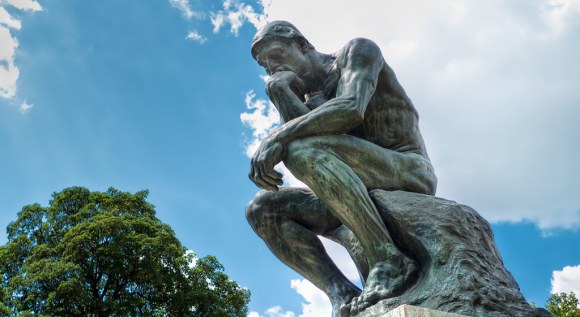
Rodin’s The Thinker. Courtesy: Creative Commons
“I may be a dreamer, 
 But I’m not the only one.” 
 -- John Lennon (Imagine). 

As a child I remember understanding on a very basic level the concept of cruelty. I recall vaguely thinking in the simple way children think; “Why is that person so mean?” It wasn’t because I wasn’t getting what I wanted and stomping my foot, it was more observing a cruelty and trying to make sense of it. Bottom line, children understand these things pretty early on and it forms what becomes their moral compass.

We can and do change over time but those early lessons tend to stick around. My early lesson was that I recognised that I cared. I observed that some other people did care too and some other people did not. I think ever since then I have wondered why some people are cruel.

More recently there has been a debate of sorts over the ‘value’ of being sensitive. Can you be too sensitive? Is there value in being sensitive? The issue is split. Some believe sensitivity is a weakness. Others recognise it makes life harder. Some think sensitivity is related to mental illness, whilst some believe we need more sensitivity in this world.

As a therapist I am often asked this question. I have also asked it of myself. I tend to berate myself when I am ‘too’ sensitive, but this is a learned behavior, based on being shamed for being sensitive in the past. The truth is I think you can literally speaking be too sensitive (for your own good, because it’s you who is hurt most by it) but most people who are told ‘you are too sensitive’ are being gaslighted or manipulated.

Through my life I have been told so a few times. Predictably, I felt ashamed because society perceives sensitivity as weakness. I consider myself a strong person, a resilient person, but I know the way I’m perceived by those who know I’m (also) sensitive, is weaker. This has never been truer than since moving to America, where the ‘bad ass’ mentality rules and women over-compensate by being emotionless and ‘strong’ as a rebuke against sensitivity.

Sensitivity is out of fashion; it has been for a long time. Maybe, by rejecting sensitivity, people believe they are automatically stronger (and perceived by others to be) we hold up role-models of impossibly strong people who are not depicted as sensitive. None of us seem to revere sensitive, kind people. On the contrary, we usually suspect them. We admire the person who is sarcastic, quick-witted, a little ruthless, and undefeatable. Therefore, I will seem like a sensitive person trying to justify sensitivity by writing this. And you wouldn’t be wrong. I think sensitivity has a bad rap and I’m personally tired of how insensitive people are. I don’t think this is commendable, cooler or something to aspire to, but sometimes I feel I’m in the minority.

Most recently I had two conversations within a day of each other, where I was told ‘maybe you’re being too sensitive’ and shortly after that I talked to a good friend of mine about this. Her answer got me thinking about the way sensitivity is perceived and how wrong-headed we are. She said ‘well maybe more people should be sensitive’ and those simple words were a bombshell. Exactly! We wouldn’t have to go around covered in armor if people were more sensitive! We wouldn’t have to be ‘bad ass’ if others were kind and thoughtful!

When did we become a people who worshipped coldness over warmth and compassion?

I might sound like a spiritual evangelist writing this, and ironically, I don’t believe in God, but many of my concepts are in keeping with those you might see in the Bible. Treat others as you would wish to be treated. Be compassionate and kind to those who need it. Those are not concepts we enact, instead we admire the person who is rude, emotionless, ruthless even. What happened to make this happen?

When I left university the first time, armed with my degrees I thought (naively) I could go out into the world and get a good job. Why shouldn’t I have thought that? I had worked hard I deserved it, didn’t I? When I recall how I thought back then, I was really a naïve person (though I thought I knew everything) with no comprehension of how hard the world could be. Not only was the job-market seemingly impenetrable, but nobody was impressed with anything I had to offer, and I felt utterly deflated within a short period of time.

Some would say bringing down a peg or two is a rite most young people go through when they get into the real world. But I still recall that time as being one of deep despair and sadness, to imagine a world that wasn’t fair or kind. I had genuinely thought it could be! The struggle to establish myself financially was uphill and took a long time. During which I experienced repeated knocks to my confidence and was told over and over that I was nothing/nobody. It seemed like colleagues, bosses, etc. thrived on putting down the young people who got on the first rung of the ladder.

I have never forgotten that. I ask people even now if they had the same experience(s); Some say yes, some say no. Initially I took it personally because it felt personal, but I came to realise it was a rite of passage, where young people were put down and put in their place by those who had come before them. It remains a horrible practice with no real value, after all, we need to believe in ourselves, not be trashed and put down. For some, it may be easier to get over than others. I was in the latter camp. I had grown up being put down, so the last thing I needed was for it to happen again.

This is when the idea of grin and bear it, muscle through, take it or leave it, man up, comes into play. This is but one of many times in life where the emphasis is on being ‘strong enough to endure it’ and to put aside one’s true feelings about a situation (outrage, hurt, confusion) in favor of ‘sucking it up.’ Given that I had not joined the military, I found the urge to react this way very strange. I wanted instead to ask why it had to be this way, why people let it be this way?

This relates back to my earliest understanding that some people are cruel. But our response to some people being cruel is weird. Instead of calling them out and doing something collectively about it so that they do not continue to have the power to be cruel, we seem to want to join them? The shaming of those who are sensitive seems a way to a line with those who would be cruel, even as logically all those who a line with the cruel, might once have been sensitive.

Why do we think being sensitive is such a weakness when it is far weaker to be a hard-nosed uncaring person who doesn’t give to anyone, than to be a caring person who wants to treat others as they would wish to be treated? I can’t say I understand it now any better than I did years ago. When my clients ask me, I remain as perplexed at people’s cruelty as I ever have. There simply seems no good justification for it. And moreover, why people glorify cruelty and think kindness is ‘suspect’ ‘insincere’ or ‘weak’ baffles me.

Sensitivity means you notice when someone is upset and you care. Insensitivity means you don’t care to notice what happens to anyone and you don’t give a damn. When you put that bluntly, I find it hard to understand why someone would wish to be the latter, other than it’s easier, and might be less work. But what about conscience and morality? For many of us, we have that prickling of conscience if we have mistreated someone, we want to be a good person. We try to help others, so how could we ever want to align ourselves with someone who didn’t give a damn?

Yet how often, from the schooldays onward, do we see the popular kid is the mean kid, or the most liked child is the one who does nothing for others, but is considered ‘cool’ or the boss who is mean but somehow respected, or the adult who has lots of friends though they never do a thing to help others? It’s not always the kind, sensitive person who is popular, in fact their motivations are often suspected, and they might be considered weak and cloying.

Moving to America I struggled with this considerably. I tend to wear my heart on my sleeve, if I like someone, I do go out of my way to be a good friend to them. I think that’s how it should be. But my good intentions were often suspected, people would even say to me (as an insult) “you’re so NICE” (meaning: Boring) or they wouldn’t believe my kindness was genuine. As to being sensitive, I was told I was ‘too’ sensitive if I stepped over the formality people had with each other, where people didn’t really ask how someone was doing, or follow up and care enough to get closer.

In fact, I didn’t understand how people got close, because everything was so superficial and formal. I began to see that many friendships were just that, convenience based. Those who had children hung out with others who had children, and car pooled. Those who went to the gym talked to others who worked out a lot and maybe met on weekends to work out, etc. But the moment you no longer had that in common, you rarely kept in touch. The deep friendships I had sustained back home, seemed rarer.

I was told this was because you made those kinds of friendships in childhood and once you were an adult you didn’t make friends like that. I wondered why not? All the rules of friendship baffled me and the difficulty of getting meaningfully close to people seemed incredibly hard all of a sudden. With colleagues a work — those I had known for years and whom I worked with closely — I wrongly assumed we were also friends. But they saw me only as a tool for the job I did. They invested no more in me as a person as they would in someone they had just met, even if we worked side-by-side for years.

To this day that strikes me as strange. I’m not standing on a moral high horse saying that I can’t fathom these things, I think I’m just stating a fact. I find it difficult to understand why someone would be cruel. Why someone would make someone else feel bad (deliberately) or why someone would put someone else down for being ‘weak’ just because they’re sensitive and care. Since when were those ever-bad attributes? Could it be in our rejection of older morals, we have adopted ones that cut our nose off to spite our face?

Having been told people do not trust ‘nice’ people I began to understand what that meant. Sometimes socially when you meet someone who is initially really friendly, they turn out to be less than you imagined, whereas someone else, who was perhaps initially aloof, can turn out to be a great person. I have learned friendliness doesn’t always equate to good people. Sometimes it is a front or an act. However, if you are a genuine person and sensitive to others, this is more than just initial friendliness and yet, you might be suspected because of people’s previous experience with ‘kind or friendly’ people.

When did it become rare to be kind and when did we begin to be suspicious of kindness? Intellectually I understand it but emotionally it’s so strange. I have had conversations about related subjects such as why women don’t like other women (they think they are backstabbers) or why women aren’t feminists (their experience has been women are often worse to them than men, so why would they be a feminist?) and I think they’re all related themes.

When we can’t trust the motivations of others, we might suspect the worst if that is our prior experience. Nowadays we’re more liable to mistrust a kind person than someone who is aloof or sarcastic. We’ve got things around the wrong way. And all because some of us are cruel and delight in hurting others, which includes warping the truth. Because the truth hasn’t changed. Being sensitive means caring about others, and this should never be something to ridicule or deride. Nor is it weak.

If after reading this you conclude I’m writing this to justify my own sensitivity, then you wouldn’t be wrong. I hope you see it’s leading to a much bigger picture too. I also hope you know I am not justifying sensitivity emotionally but defending it based on reason and fact. After all, sensitivity isn’t all emotional. We have often mistaken sensitivity for some kind of mental illness but it’s nothing of the kind. True, some mentally ill people may be sensitive, but that’s all. Sensitivity, unless it’s pathological in its extremity, is a natural human response. But still those who wear their heart on their sleeve are humiliated by those who are still in the school yard.

I would love a world that embraced the idea you can be sensitive and strong, because I truly believe you can. I also like the idea of a world where people’s past experiences wouldn’t close them to trusting someone’s kindness, or suspecting kindness of motivation. Do we really want a world where we’re all so removed from each other we no longer care? Is that the world you want to live in? It’s not the world I want to live in. I want my boss to care if I’m struggling, I think on a logical, emotional and realistic level this will improve our relationship. I don’t think humans are robots or unconnected. I think caring is how we connect and I want to. Living in a disconnected world where nobody cares what happens to anyone else, seems a dystopian nightmare. As we grow in numbers this is logistically more likely to occur. Let’s at least let those who are sensitive, flourish rather than shut them down and shame them.

Candice Louisa Daquin is a Psychotherapist and Editor, having worked in Europe, Canada and the USA. Daquins own work is also published widely, she has written five books of poetry, the last published by Finishing Line Press called Pinch the Lock. Her website is www thefeatheredsleep.com

.

PLEASE NOTE: ARTICLES CAN ONLY BE REPRODUCED IN OTHER SITES WITH DUE ACKNOWLEDGEMENT TO BORDERLESS JOURNAL.