Categories
Poetry

Least Resistance

By Ryan Quinn Flanagan

‘All along the path of least resistance’

	
All along the path of least resistance  
suppurate crab apples mirror various imprecisions, 
oft-movement brought to staggering halt, 
indolent loafers, a patchwork of mismatched cobbles, 
the fustiness of well-furrowed brow, 
neglected outgrowth sprung from tweezer absentia, 
retired overturned tub stop in a murphy-bed of moss – 
about that letter you promised to send last month, 
nothing yet, but I must admit an infrequent search, 
fits of distraction, a surreptitious lack of mettle bordering  
on dereliction; what can be lost in due course beyond present  
purview when dockyard slat meets slapping barnacled hull: 
something shared not knowledge, something roof-stuck  
to salty chattering roundabout mouths.

Ryan Quinn Flanagan is a Canadian-born author residing in Elliot Lake, Ontario, Canada with his wife and many bears that rifle through his garbage.  His work can be found both in print and online in such places as: Evergreen Review, The New York Quarterly, Setu, GloMag, Red Fez, and The Oklahoma Review.

.

PLEASE NOTE: ARTICLES CAN ONLY BE REPRODUCED IN OTHER SITES WITH DUE ACKNOWLEDGEMENT TO BORDERLESS JOURNAL

Categories
Poetry

Poetry from Bosnia & Herzegovina: The Right to Speak

Written in Bosnian & translated to English by Maid Corbic

THE RIGHT TO SPEAK

To be independent means to be free.
Look at the whole world of vibrant colours.
Even when others are wrong,
Being free is your choice.

Independence is given by clarity in speech.
The path to success is difficult.
Because with good people, anything is possible.
The right to speak is the right to freedom.

Each flower tells a story for itself.
People need to share knowledge with others
Because that's how they can create a more beautiful world,
Prosperous for your future.

Be just what you are,
Even if they call you crazy.
What do you care -- you are free --
Independent of other people's problems!

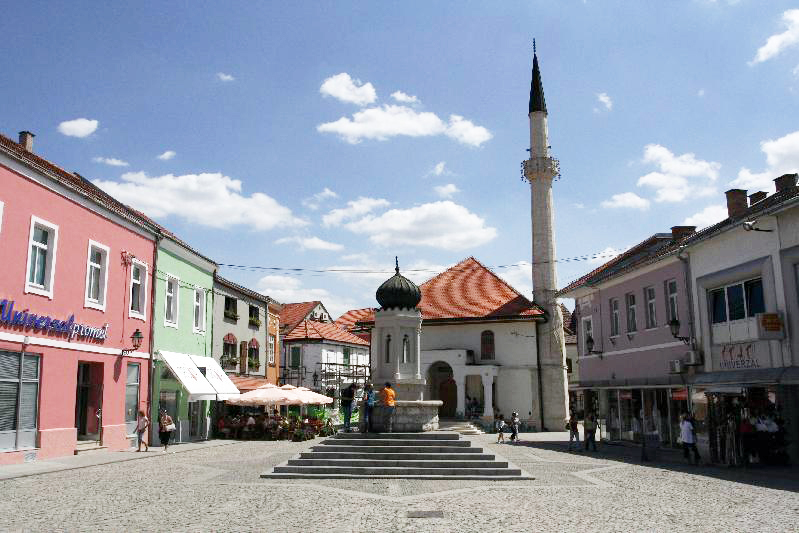
Maid Corbic is from Bosnia and Herzegovina. He lives in Tuzla and spends most of his free time writing. He is a global poet.

.

PLEASE NOTE: ARTICLES CAN ONLY BE REPRODUCED IN OTHER SITES WITH DUE ACKNOWLEDGEMENT TO BORDERLESS JOURNAL
Categories
Poetry

Attempt at Departure

By Shubham Raj

attempt at departure

winter night
and a full moon sky
the family asleep
in feckless snores
wander roam leave 
no step unstrayed
from their curlicued centre. 

fellows of forgetful sharpness
limbed with directionless dozing
I have questions: do I choose
or believe am chosen
do I increase as I’m moved
through face slapping wind
instrument to farther rains and how 
do I sustain this distrust
of the centre?

a woman is lying near
a fire enkindled from gathered
trash and sticks and paper
and leaves and we 
don’t speak a glance 
suffices.

Shubham Raj is a student of foreign languages at JNU, New Delhi, India. His poems can be found in the Third Lane Magazine.

.

PLEASE NOTE: ARTICLES CAN ONLY BE REPRODUCED IN OTHER SITES WITH DUE ACKNOWLEDGEMENT TO BORDERLESS JOURNAL
Categories
Poetry

Little Things

By Shahriyer Hossain Shetu

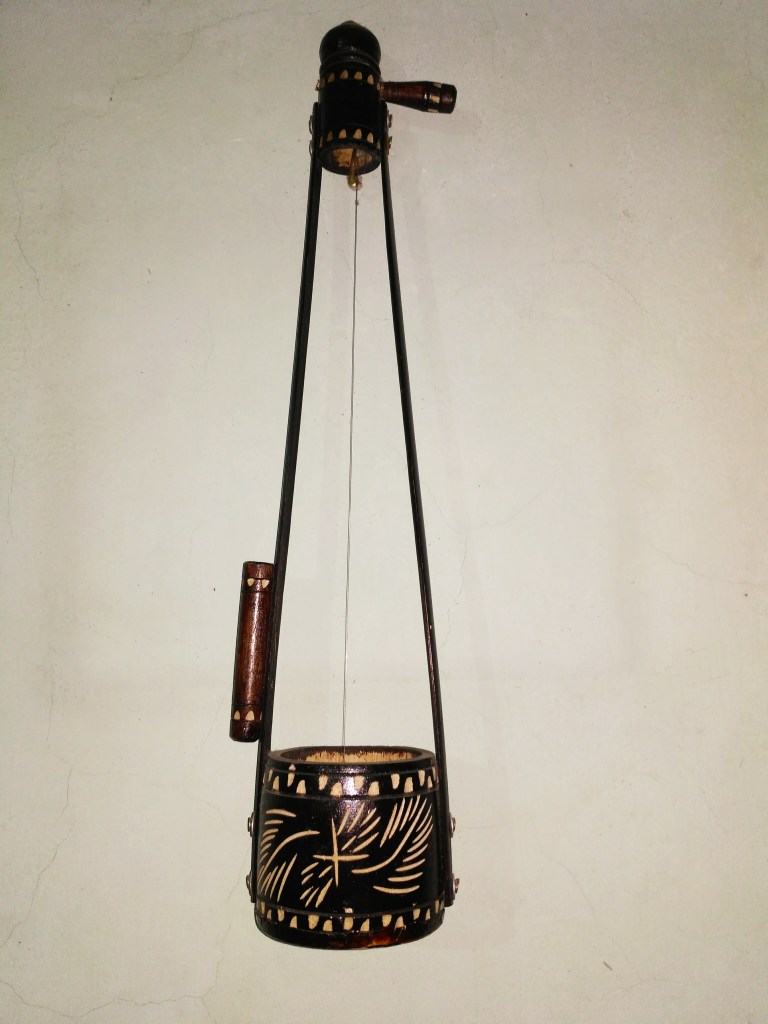
Ektara: A single stringed instrument that originated in Bengal and was used as musical instruments by singing minstrels called bauls who moved from place to place singing. Courtesy: Creative Commons
Little Things

I like a crisp apple,

The way the sunlight hits my bed sheet
in the morning in a perfect square.

I like the movement of the wind in the leaves,

The way the circumference of a circle 
is always equal to pi times the diameter,
no matter what numbers you put in.

I like the first sip of coffee in the morning,

The vision of birds flying in the sky,
towards the big egg-yolk sun
like a pointed triangular arrow.

I like to walk in the rain, 

The twinkling gazes of a baby
that resembles a thousand stars of happiness,
enough to cure the pain within. 

I like the smell of jasmines,

The way the ocean’s waves
meet each other like two separated souls,
and become one. 

I like the music of the ektara,

A peaceful good night's sleep after a long day.

Shahriyer Hossain Shetu is a student in the Department of English & Humanities, ULAB, Bangladesh.

.

PLEASE NOTE: ARTICLES CAN ONLY BE REPRODUCED IN OTHER SITES WITH DUE ACKNOWLEDGEMENT TO BORDERLESS JOURNAL
Categories
Poetry

A Field Most Rare

By John Herlihy

A Field Most Rare

Beyond the rim of the horizon lies a field,
We can enter thru a back door: thru prayer.
On certain days of our lives, we need a shield,
A safe place to go, no one else to meet there.

Beyond the relativity of the world, a paradise,
With differences, hardship, strife put to rest.
Released finally from the scourge of life’s vice,
An unknown land made available as blessed.

Beyond all the confusion of right and wrong,
Beyond all the differences that keep us apart.
A place where bird melodies become our song,
Two persons now bound together as one heart.

Beyond the rim of the world a field most rare,
A place to settle differences, I’ll meet you there.

John Herlihy has published 20 collections of essays and poetry, including a book of sonnets entitled Simply Sonnets. Retired now, he lives and continues to write poetry in Miami, Florida.

.

PLEASE NOTE: ARTICLES CAN ONLY BE REPRODUCED IN OTHER SITES WITH DUE ACKNOWLEDGEMENT TO BORDERLESS JOURNAL
Categories
Independence Day Poetry

Colours of Life

By Jared Carter

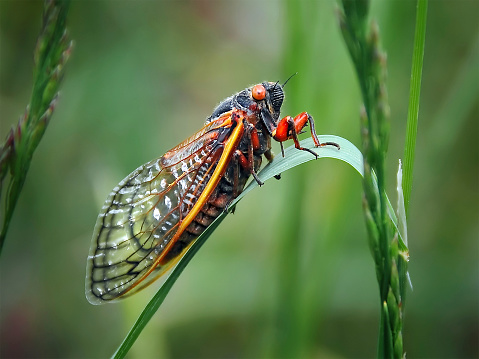
         Cicadas in the Rain

Only when it began to rain could I hear it,
in late summer, after they had all risen high
in the saucer magnolia tree – a soft, slow rain
at first, while the light still held in the west.

That sound so familiar, so unhesitant, but never
during a storm, and yet with drops plashing
and pelting through the leaves, their voices
coalesced in ways I had never heard before –

some strange harmonic of summer’s ending,
some last reinforcement or challenge – mounting
against the rain’s insistence, trying to outdo it,
seeking a pulse within the larger immensity,

and succeeding, as though a door had opened,
and I heard pure sound issuing forth, stately
and majestic, even golden, while all around it,
darkness, rain falling, trees bent by the wind.

(Excerpted from Darkened Rooms of Summer)


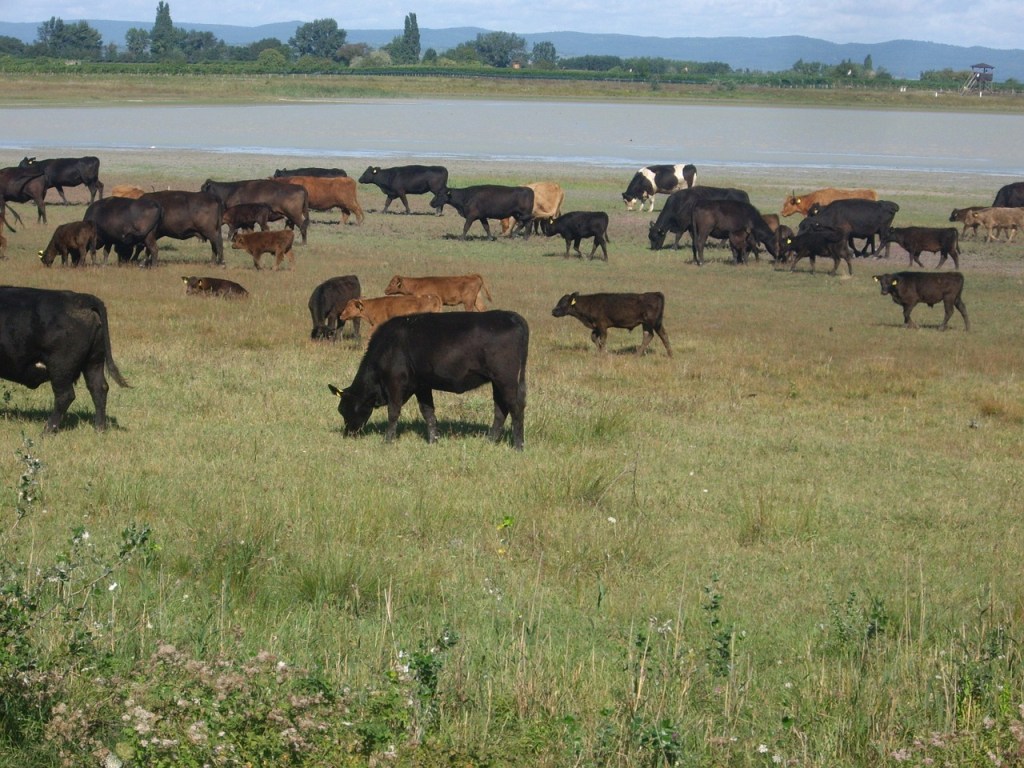
        Slaughterhouse

There were no cattle prods back then.
          We beat and whipped
The ones that broke away. The pens
          were re-equipped

To move them more efficiently.
          For some, a sheer
Incomprehensibility
          took over.Fear

Made them submit.Convulsed with pain,
          a few cried out
To something that could not explain
          or hear their shout.

Jared Carter’s most recent collection, The Land Itself, is from Monongahela Books in West Virginia. His Darkened Rooms of Summer: New and Selected Poems, with an introduction by Ted Kooser, was published by the University of Nebraska Press in 2014. A recipient of several literary awards and fellowships, Carter is from the state of Indiana in the U.S.

.

PLEASE NOTE: ARTICLES CAN ONLY BE REPRODUCED IN OTHER SITES WITH DUE ACKNOWLEDGEMENT TO BORDERLESS JOURNAL

Categories
Poetry

American Dreams

By Michael R Burch

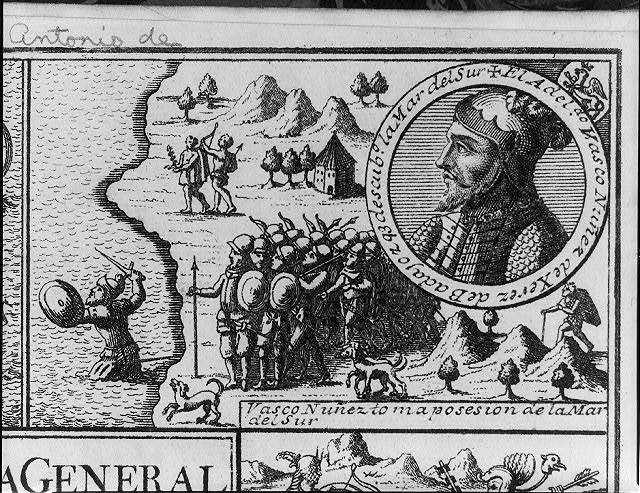
Vasco Nunez de Balboa, the first Spanish conquistador to sail the Pacific Ocean; with inset bust profile
America's Riches
 
Balboa's dream
was bitter folly—
no El Dorado near, nor far,
though seas beguiled
and rivers smiled
from beds of gold and silver ore.
 
Drake retreated
rich with plunder
as Incan fled Conquistador.
Aztecs died
when Spaniards lied,
then slew them for an ingot more.
 
The pilgrims came
and died or lived
in fealty to an oath they swore,
and bought with pain
the precious grain
that made them rich though they were poor.
 
Apache blood,
Comanche tears
were shed, and still they went to war;
they fought to be
unbowed and free—
such were Her riches, and still are.
 

Ali’s Song
 
They say that gold don’t tarnish. It ain’t so.
They say it has a wild, unearthly glow.
A man can be more beautiful, more wild.
I flung their medal to the river, child.
 
They hung their coin around my neck; they made
my name a bridle, “called a spade a spade.”
They say their gold is pure. I say defiled.
I flung their slave’s name to the river, child.
 
Ain’t got no quarrel with no Viet Cong
that never called me nigger*, did me wrong.
A man can’t be lukewarm, ’cause God hates mild.
I flung their notice to the river, child.
 
They said, “Now here’s your bullet and your gun,
and there’s your cell: we’re waiting, you choose one.”
At first I groaned aloud, but then I smiled.
I gave their “future” to the river, child.
 
My face reflected up, more bronze than gold,
a coin God stamped in His own image—Bold.
My blood boiled like that river—strange and wild.
I died to hate in that dark river, child.
Come, be reborn in this bright river, child.

(*This had been said by Muhammad Ali: “no Vietcong ever called me nigger” while referring to racial discrimination.)
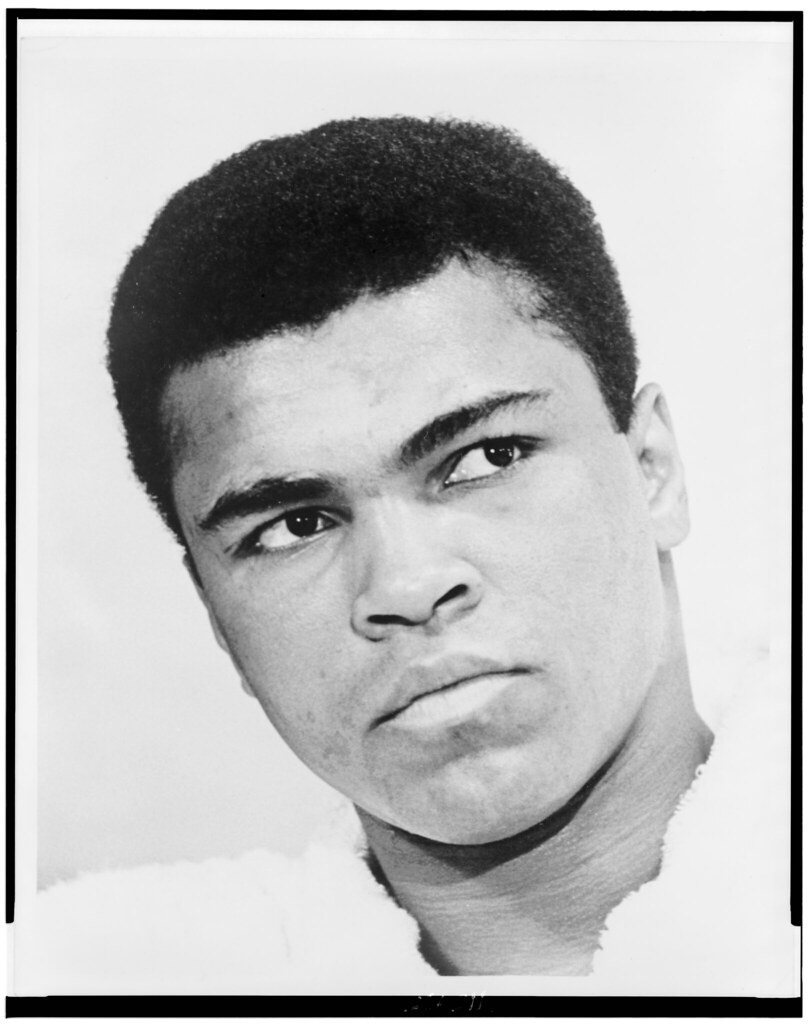
Muhammad Ali, The Greatest(1942- 2016) Courtesy: Creative Commons

Michael R. Burch has over 6,000 publications, including poems that have gone viral. His poems have been translated into fourteen languages and set to music by eleven composers. He also edits The HyperTexts (online at www.thehypertexts.com).

.

PLEASE NOTE: ARTICLES CAN ONLY BE REPRODUCED IN OTHER SITES WITH DUE ACKNOWLEDGEMENT TO BORDERLESS JOURNAL.

Categories
Humour Poetry

Carnival of Animals

By Rhys Hughes

 Silky Salathiel

Silky Salathiel was a travelling cat

with the taste of the Orient on the tip of his tongue.

He wandered the streets of Mandalay

enticed by the scents of ginger and lime,

where the oldest songs are sung

in the Rub-Al-Khali

he scratched at the rugs in Bedouin tents.

.

I knew him well when I was young.

We sailed the Brahmaputra in an old sea-chest,

lived in a basket in Kathmandu,

climbed the mountains of the Hindu Kush,

bathed in fountains of milk in Xanadu,

and I was the friend whom he loved best;

the oldest fish in the Caspian Sea.

.

But of course I lived longer than him

(now he is gone memories are all that remain).

He was not just a cat but a travelling cat

who danced flamenco in the castles of Spain,

licked the cheese in shady Provence

and drunk the ale in the snowy Ukraine.

Silky Salathiel the travelling cat

with the taste of the East on the tip of his tongue

and the taste of the West

on the tip of

his tail.


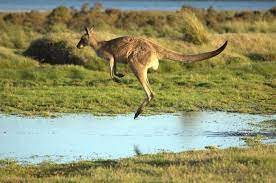
THE CASANOVA KANGAROO

The Casanova Kangaroo
    is a bounder
       but he’s no cad
    or utter rotter
(and if he was an otter
    he wouldn’t be
fishy either). He’s not a
        womaniser
who disguises his desire
as charm. In fact
the only thing he has in
      common with
the original Casanova is
that they both wrote
      their memoirs.

       Chapter One,
‘My Early Life in a Pouch’


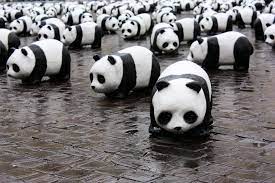
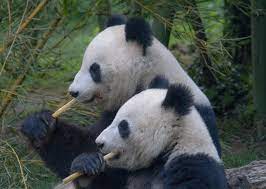
PANDEMONIUM

Pandemonium is
not a state of disorder
but a state ruled
by pandas. They
will try to bamboozle
you with booze
made from bamboo
shoots and seduce
you with the music
of bamboo flutes.

The capital of the state
of Pandemonium
is called Nebulosity
City but I don’t know
why. No one actually
lives there. Pandas
prefer the countryside.

.

Rhys Hughes has lived in many countries. He graduated as an engineer but currently works as a tutor of mathematics. Since his first book was published in 1995 he has had fifty other books published and his work has been translated into ten languages.

.

PLEASE NOTE: ARTICLES CAN ONLY BE REPRODUCED IN OTHER SITES WITH DUE ACKNOWLEDGEMENT TO BORDERLESS JOURNAL. 

Categories
Poetry

O Mother, O Father!

By Ruchi Acharya

Feeling trapped in the system
And heat from the burning pyres,
Beautiful lives come to an end.
Loss sighs, queued bodies wait for their turn
Like helpless wanderers. Another cries, ‘O Mother, O Father!’

Wading through submerged hearts at the crematorium,
Wet fodder exhausted over gloomy tombs,
Their names will grow obscure and wither away.
We will stay remembering their light -- ours has long gone.

Don’t jest with one’s fresh wounds.
Strip away your pride you filthy leaders,
Take away their crowns! Melt them down!
The Dead won’t return.
And another cries, ‘O Mother, O Father!’
Bloody urns and goblets of ashes,
Agony trapped in inescapable thralldom,

Mourning streaks the silent streets,
Death is dark and final.
‘Bones and muscles may char
but one day the Sun will rise
behind coal-smoked clouds.’

Embrace this life.
Our country still thrives.
We’ve got every reason to be afraid
but we never run from a fight.
‘Hold on -- dandelion,’ the wind is hoarse.
We won’t give up easily.
We will fight until the end.
In shrieking air,
Our lungs will learn to breathe.
Don’t give up -- 
One day the roses of hope will grow
Meeting the horizon,
Roses that, even plucked, will not die
But will bloom and bloom
Every single day that passes by.

Ruchi Acharya is an Indian poet and the founder of an international writing community called Wingless Dreamer. She is obsessed with Victorian literature. She thinks all worries are less with wine.

.

PLEASE NOTE: ARTICLES CAN ONLY BE REPRODUCED IN OTHER SITES WITH DUE ACKNOWLEDGEMENT TO BORDERLESS JOURNAL

Categories
Poetry

A Lament, A Prayer

By Bibek Adhikari

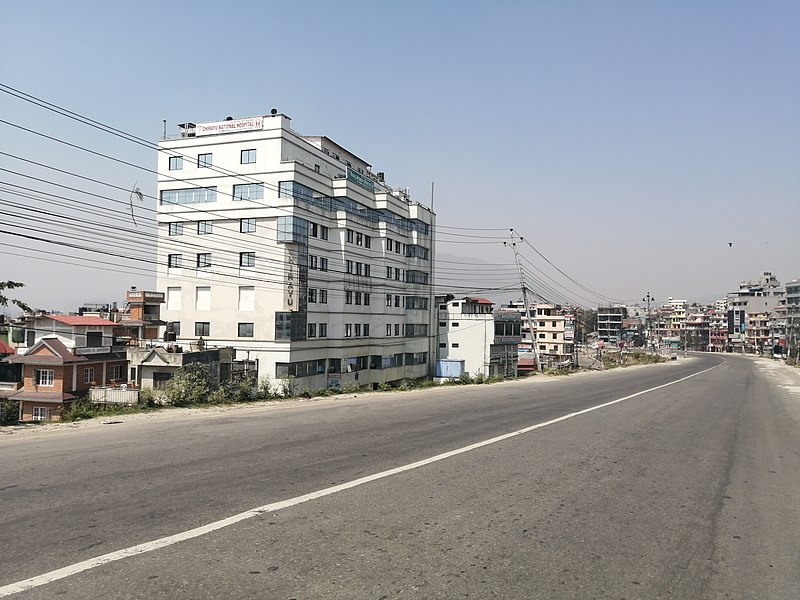
Kathmandu Ring Road during Lockdown. Courtesy: Creative Commons
A Lament, A Prayer


This slow sweltering summer day
the suburb seems to be sleeping,
succumbing to the heavy & humid daytime lull.
 
I walk from room to room 
with a glass of fizzy drink,
losing track of time 
with my multifarious musings.
 
I sit down to work 
amid the late afternoon susurrus sneaking 
in from the latticed windows.
 
I put my pen aside —
and there it rests on the table, 
too tired, too reluctant to write about 
all the paralyzing things happening
in the world.
 
My mushy brain throbs 
in its liquid room,
swimming in endless tragedies 
of faraway places.
 
At home, there’s birdsong
and a willful indifference,
though the heart is not impervious
to losing.
 
Days go by.
Sparrows cheep and flutter,
moths die on window panes,
nothing arrives—
not a single news of the ones 
who left us in these sleepy suburbs,
full of endless waiting.

Bibek Adhikari writes poetry and fiction. He lives in Kathmandu and works as a freelance technical writer and editor.