Categories
Notes from Japan

A Visit to the Isamu Noguchi Garden Museum

Visiting a museum is serious business in Japan. Suzanne Kamata visits a Museum dedicated to an American Japanese artist

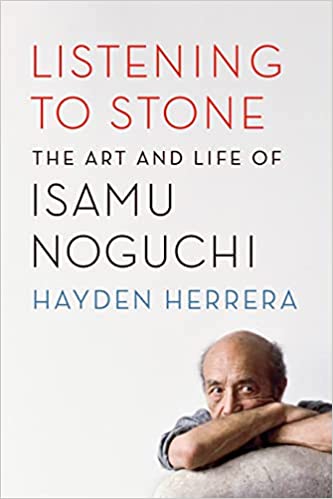
The famous American sculptor Isamu Noguchi (1904-1988) lived in the town of Mure, just fifty minutes by car from my house. Now it’s the site of an outdoor museum featuring his work. Although I was interested in seeing his stone sculptures, I had never been to the museum. I’d had just read Listening to Stone, Hayden Herrera’s fabulous new biography of the artist, which had reignited my interest in his life and his work. I knew that his mother, Leonie Gilmour, was American. His father, the poet Yone Noguchi, was Japanese.

I learned that he had once posed as the Confederate General Sherman for the sculptor originally commissioned to create the Civil War monument on Stone Mountain in Georgia. Also, I read that Noguchi volunteered to teach Japanese Americans interned during World War II. He was so handsome and charming that married women in the camp fought over him. I read about how he created his famous paper lanterns. I read of his tribute to Benjamin Franklin. I also learned of his affinity for the blue stones of Shikoku.

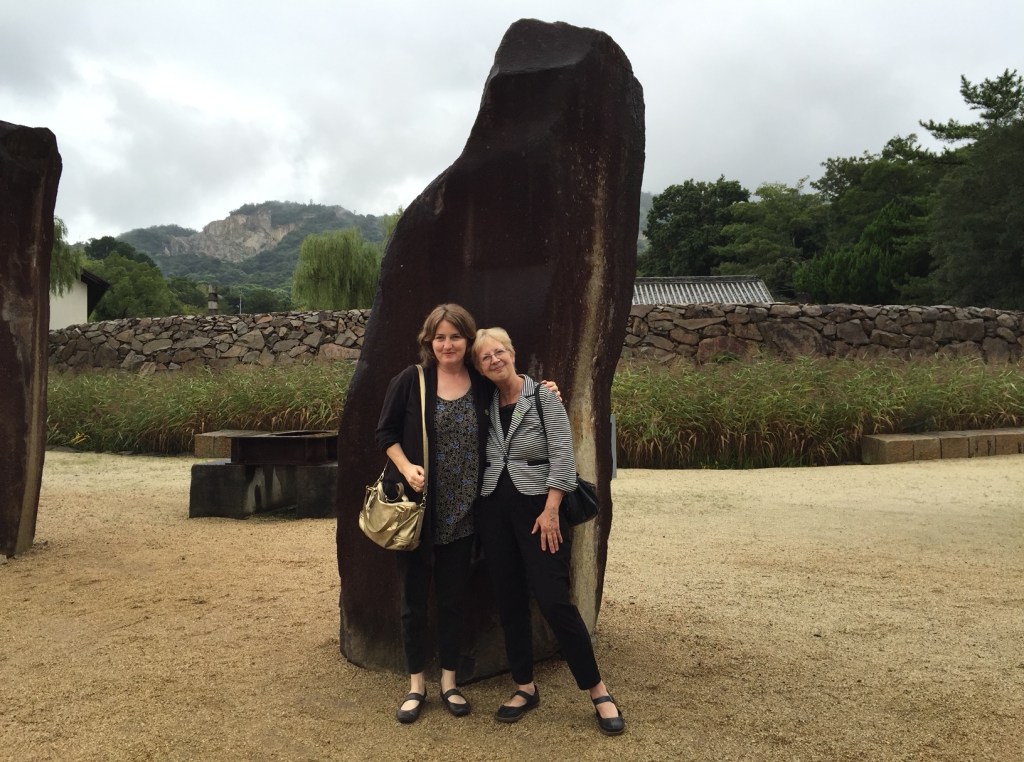
I decided that it was finally time to go to the museum. I invited my friend Wendy to go with me. She’s a college professor and a writer. Like me, she’s from the Midwest. She has also lived in Shikoku for over twenty years. Like me, she’s married to a Japanese man and has Japanese/American children. We often get together to discuss our writing, her pet goats, and other things. Wendy grew up in the town of Rolling Prairie, Indiana, which has a population of about 500 people. Coincidentally, when Isamu Noguchi was a boy, his mother sent him to an experimental boarding school in that very town. Wendy is also a fan of Noguchi. She had been to the Museum a few times before.

“I’ll ask Cathy to go with us,” she said.

Cathy is a Canadian translator who sometimes does work for the museum. She had translated a best-selling Japanese book about tidying up. This book was always popping up in my Facebook feed. The sight of this title always makes me feel as if I should be cleaning my house instead of writing books or reading Facebook updates. Housework is not my favorite thing. I had never met Cathy, but I’d heard of her. I worried that Cathy might be an extremely tidy person. She might not approve of me.

“That sounds great,” I said. “I’d love to meet Cathy.”

It takes some planning to visit the Isamu Noguchi Garden Museum Japan. For one thing, the village of Mure is not exactly a well-trodden spot. For another, the museum is only open three days a week — Tuesday, Thursday, and Saturday. Tours are held three times a day by appointment only. In order to make an appointment, potential visitors must write their preferred dates and times on a postcard and mail it. Email is not allowed, at least not for those living in Japan. Finally, the admission fee for adults is 2,160 yen (about $25), which is a bit pricey, as museums go. The barriers are intentional. They are meant to weed out people who are not serious about Noguchi’s art.

We made a reservation to visit on a Thursday at one p.m. Cathy suggested that we go out for udon[1] beforehand. The area is famous for its fat, doughy noodles served in broth. Cathy knew of a restaurant on a mountainside that we could reach by ropeway. I imagined slurping noodles while watching wild monkeys in the trees. We would have a leisurely lunch. Afterwards, we would admire the sculptures in the garden museum. How lovely!

The morning of our outing, a light rain was falling. I entered my destination in my cell phone’s navigation app and started the car’s engine.

“Turn right,” a woman’s calm voice said.

“Okay,” I replied, turning right.

The voice directed me onto the highway.

I drove and drove. I went past pine-covered mountains. I passed small villages nestled in valleys. The rain pattered against my windshield. A sign warned me to beware of wild boar which sometimes wandered onto the road. Off to the left, I glimpsed the Inland Sea, the tiny islands that seemed to be floating just offshore.

Although I knew that the village of Mure was only fifty minutes from my house, the voice on my app convinced me to keep going. When I was in the middle of a tunnel, far from any city, the woman’s voice said, “You have arrived at your destination.” Clearly, I was now lost.

I tried to send Wendy a message. She didn’t reply. After backtracking and driving around for another hour, I pulled over. I checked my phone. Foolishly, I had not given Cathy my phone number. Even so, she had managed to call me and gave me directions.

Time was ticking by. We wouldn’t be able to have lunch on the mountainside restaurant. We might even miss our long-awaited appointment at the museum. Why hadn’t I taken the bus? I scolded myself. Why hadn’t I studied a map? Why had I relied upon my stupid cell phone?

I got back on the road. As it turned out I was going in the wrong direction again. After another phone call, I turned around. I paid the man in the toll booth again, and drove on, finally arriving at our meeting place, a convenience store parking lot.

Wendy motioned me over to Cathy’s car. “Hurry.” She wasn’t smiling. Her voice was stern. “We are quite late.”

I climbed in the car, apologising profusely. Wendy seemed a bit angry. Who could blame her? She had arranged for me to meet the famous translator, who was probably an excellent housekeeper. Cathy had made a reservation at the exclusive museum. I was making a terrible impression.

“We’re just glad you made it,” Cathy said kindly. 

“We bought these for you,” Wendy said. She tossed a couple of rice balls and a sandwich into the back seat. They had already eaten lunch while waiting in the car. Once again, I regretted missing out on our ladies’ lunch in the restaurant on the side of the mountain.

Cathy called the museum and asked if it was okay to join the tour a bit late. She was on the board of the museum. She had even interpreted at the memorial service for Noguchi when he died in 1988. If she hadn’t been with us, I’m sure I would have been denied entrance.

“I’m so sorry,” I said again.

We pulled up in front of the building which housed the reception desk and gift shop. The rain had abated. Cathy parked the car. She went to buy our tickets. Our scheduled tour had already begun. We hurried to join the others who had made a reservation in the garden. As I followed Cathy, I noticed that there were piles of rocks everywhere. Somehow the grey sky and the wet stones made the scene all the more poignantly beautiful. 

First, we entered the Stone Circle sculpture space. There were many stone sculptures. Some were finished at the time of Noguchi’s death and signed with his initials, some were not. Although the sculptures had been named, they were not labeled.

We asked the guide about some of them. She told us that one tall sleek stack of blocks was made partly of stones imported from Brazil. The area has a history as a quarry. Noguchi sometimes used stones from the nearby island Shodoshima. He also sourced his materials in Italy and other far-off places. Imagine the shipping costs!

We peeked into his workspace, housed in a weathered wooden shed.

“He was very particular about his tools,” I said. I had read that in the book. Yes, here were his carving tools, carefully aligned. They were just as they had been when Noguchi was alive.

“Yes, he was,” Cathy agreed, raising her eyebrow.

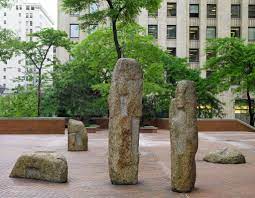
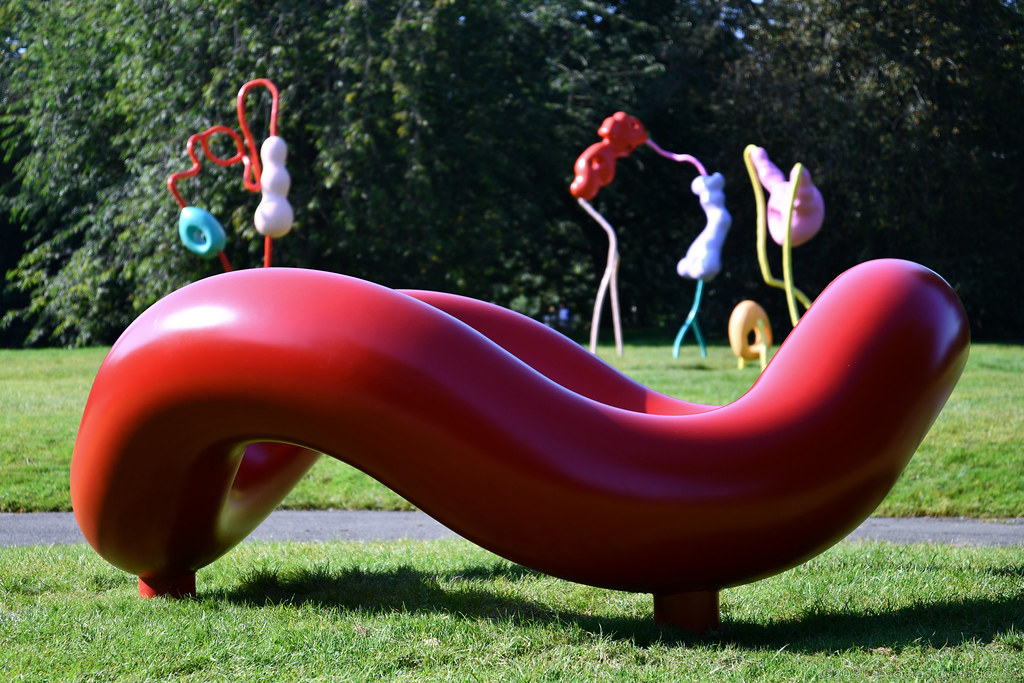
Red painted tubular-steel by Noguchi. At the 2021 Frieze Sculpture exhibition in Regent’s Park. London. Courtesy: Creative Commons
 

“Oh, and here is the model for his slide!” I recognised an image from the book I had just read. It was a white spiral, resembling a seashell. Noguchi believed that art should be part of daily life. He thought that art was for everyone, including children. He designed several playgrounds. Not all were constructed. This slide had been exhibited at the Whitney Biennial, one of the most prestigious art shows in the world.

We took a meditative stroll among the arranged rocks. Next, we climbed stone slab steps to a sculpted garden enclosed by a grove of bamboo trees. The space featured small grassy hills and a moon-viewing platform.

“I read that his ashes are in one of the stones here,” I said.

“Yes,” Cathy said, surprised at my font of Noguchi knowledge. “Up at the top of the hill. Shall we go pay our respects?”

As we climbed, Cathy explained how this space had been sculpted. Stones had been arranged to mimic the islands visible in the distance. Noguchi had been furious when someone had built a house higher up the mountain. Although it wasn’t on Noguchi’s property, it spoiled the view. Thus, it spoiled the work of art which was the garden. Traditional Japanese gardens often make use of “borrowed scenery.” Eventually, the house was bought by the museum’s caretaker and destroyed. Now, the view is as Noguchi intended it to be.

We paused for a moment before the giant egg-shaped rock at the top of the hill which had been cut in half. After Noguchi was cremated, some of his ashes were encased in the stone, and the stone was reassembled.

Next, we had a look at the house where he lived in the last years of his life. Inside, a paper lantern which resembled a jellyfish hung from the ceiling. The floors were made of straw mats. I knew from reading his biography that he had lived here with a Japanese woman who was married to a friend of his. Noguchi couldn’t speak much Japanese, and the woman couldn’t speak English. Even so, they were lovers. I imagined them sitting on the verandah, gazing out at the sculptures. Maybe they sat there sipping tea in silence. I thought of mentioning the lover to my companions, but I decided that it was too gossipy. I didn’t want them to think that I wasn’t serious about his art.

Afterwards, we decided to go to a café near Cathy’s house. We drank coffee and ate mango cheesecake. It occurred to me that my frustration from earlier that morning had disappeared. Wendy no longer seemed stressed and angry with me. Being in that beautiful, natural garden had made us all feel calm.

I was sure that I would be able to find my way back home.

Suzanne Kamata with her friend, Wendy, outside the museum in Mure, Japan. Photo Courtesy: Suzanne Kamata

[1] Thick noodle made of wheat, Japanese Cuisine.

Suzanne Kamata was born and raised in Grand Haven, Michigan. She now lives in Japan with her husband and two children. Her short stories, essays, articles and book reviews have appeared in over 100 publications. Her work has been nominated for the Pushcart Prize five times, and received a Special Mention in 2006. She is also a two-time winner of the All Nippon Airways/Wingspan Fiction Contest, winner of the Paris Book Festival, and winner of a SCBWI Magazine Merit Award.

PLEASE NOTE: ARTICLES CAN ONLY BE REPRODUCED IN OTHER SITES WITH DUE ACKNOWLEDGEMENT TO BORDERLESS JOURNAL
Categories
Notes from Japan

Marathon Blues

By Suzanne Kamata

Tokushima. Courtesy: Creative Commons

“Do you want to run the Tokushima Marathon with me?” my husband asked for the third year in a row.

The first time, three years before, I’d given him a flat-out refusal. The previous year, I’d promised to register, but then my brother had died suddenly, and I’d had to fly from our home on the island of Shikoku in Japan back to the United States for the funeral. My husband had run the race for the third time on his own. This year, though, I didn’t have an excuse. “Maybe,” I said.

To be honest, running a marathon has never been one of my life goals. Nor am I interested in bungee jumping, getting a tattoo, climbing Mt. Everest, or anything else that would cause pain or discomfort. I power walk four or five kilometers per day for my health, and I did run on my high school’s cross-country team, but I am not really into long-distance running any more. My New Year’s resolutions tend to be more aligned with pleasure: Try new wines. Read more poetry.

My husband, however, couldn’t understand why I wouldn’t want to run a marathon. He told me how satisfied I would feel afterwards. And we’d get swag – a T-shirt, a medal, a certificate worth framing. Maybe he also thought it was a fun activity that we could do together. He is a high school physical education teacher. He would think that.

The Tokushima Marathon course goes along the embankment of the Yoshino River right past our house. We live at the twelve-kilometer mark. In previous years, I’d used a tracking app to determine when he was about to run by. My daughter and I had then gone up the hill in time to cheer him on. Once, he’d shoved a jacket that he no longer needed into my hands as he’d dashed past us.

“What size T-shirt do you wear?” my husband asked.

I told him. I knew that he was registering me for the marathon, even though I had said, “maybe,” not “yes.” But perhaps I could just walk and run the first twelve kilometers, and then jog down the hill to our house. I could run that little bit as a tribute to my brother who had aspired to run a marathon himself. More than once, on my visits to see him, I’d found myself waiting at the finish line of some fun run or other. He had been such a devoted runner that he had been buried with his running shoes.

I started training. My husband usually didn’t put in any effort until a month in advance, and yet he still managed to complete the whole race. But I needed more time. I walked and ran and walked and ran instead of my usual regime. I did this at night after work. Then it started to get really cold, and my self-imposed training program started to fall apart.

Enter the new coronavirus. In January, we heard news of a deadly virus in Wuhan, and then a cruise ship full of afflicted passengers in Yokohama. Even though we were far away in Shikoku, by February local events were being cancelled. There would be no graduation ceremony at the university where I taught, no farewell party for professors who were leaving to teach elsewhere. Public schools began spring vacation a month early. I wondered if the Tokushima Marathon, which was scheduled for March, would be cancelled as well. I must confess that I secretly hoped it would be because I hadn’t kept up with my training and I didn’t want to disappoint my husband.

Of course, it was cancelled, like the 2020 Tokyo Summer Olympics and the national high school baseball tournament at Koshien Stadium and everything else. We were informed that there would be no refund of our registration fees, but we would get swag. I looked forward to receiving my Tokushima Marathon T-shirt, which I would wear ironically. I waited and waited for the package to arrive.

Finally, two bulky envelopes were delivered. Around this time, my husband and I were stuck together in the house with nothing to do. We’d already gotten rid of all of the stuff that didn’t spark joy. Our clothes were rolled neatly in our drawers. We were driving each other crazy. We opened the envelopes to find the finisher medals – ha! ha! – and no T-shirts, but an indigo-dyed handkerchief each.

“Let’s make these into masks,” my husband said.

At first, I protested. They were such nice handkerchiefs! But I already had a few indigo-dyed handkerchiefs which I never used, but which nevertheless sparked joy. If we cut them up and made them into handkerchiefs, at least they would serve a purpose.

My husband dragged our dining room table in front of the wide-screen TV in the living room. He found a mask-making tutorial on YouTube. He cut up the pieces, and I sewed them together. They turned out well! We wore them every day until the elastic started to lose its spring, and health experts declared that wearing paper masks was actually better than handmade cloth ones. And the medals? Well, maybe we will someday figure out something to do with those.

Masks stitched by Suzanne. Photo Courtesy: Suzanne Kamata

Suzanne Kamata was born and raised in Grand Haven, Michigan. She now lives in Japan with her husband and two children. Her short stories, essays, articles and book reviews have appeared in over 100 publications. Her work has been nominated for the Pushcart Prize five times, and received a Special Mention in 2006. She is also a two-time winner of the All Nippon Airways/Wingspan Fiction Contest, winner of the Paris Book Festival, and winner of a SCBWI Magazine Merit Award.

PLEASE NOTE: ARTICLES CAN ONLY BE REPRODUCED IN OTHER SITES WITH DUE ACKNOWLEDGEMENT TO BORDERLESS JOURNAL
Categories
Notes from Japan

An Encounter with the Monet on Naoshima

Suzanne Kamata writes of snacking on Claude Monet’s hundred year old recipes while savouring his art and that of the famed artist who makes bold art with polka-dots, Yayoi Kusama

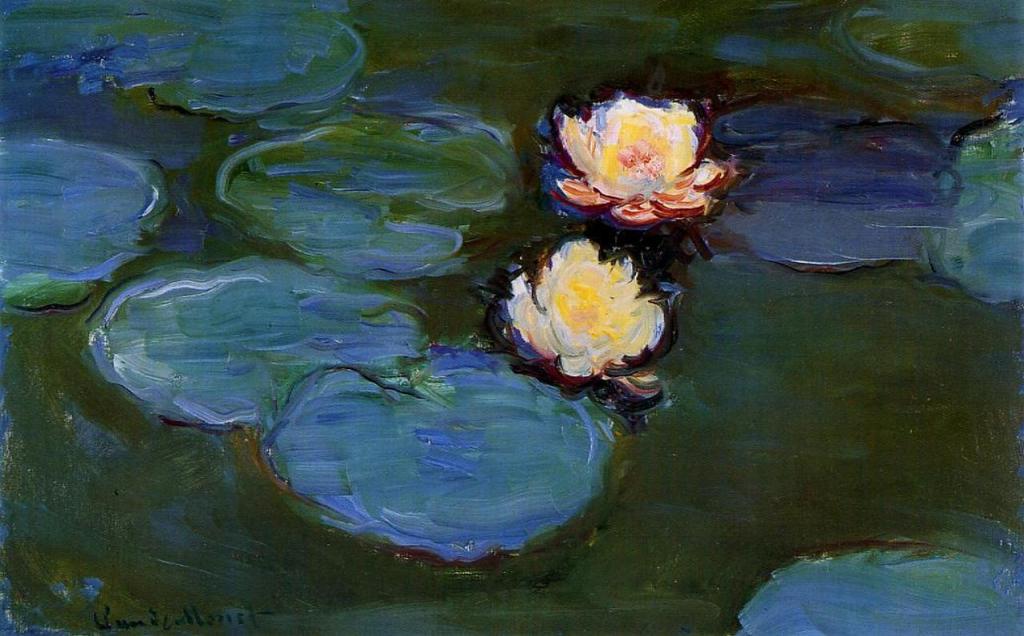
Water lilies by Claude Monet (1840-1926) Courtesy: Creative Commons

When I heard that the annual convention of the Association of Foreign Wives of Japanese would be held in nearby Takamatsu, I signed up. I would be able to meet other women with Japanese husbands and attend workshops in wine-tasting or yoga. At night, there would be a big banquet. During the day, there would time to visit the island Naoshima.

I’d heard about this island, once used primarily as a site to dump industrial waste. Now it was full of art museums, and part of the Setouchi Triennale, an art festival which takes place every three years, including this year. Among the permanent exhibitions is one of Claude Monet’s famous water lily paintings, housed in the Chichu Museum designed by world-renowned architect Tadao Ando.

Monet’s art has long been popular in Japan. The French artist had admired Japan. His garden in Giverny, France was designed in the Japanese garden style. A garden modeled after the one in France has been constructed farther south in Shikoku, but the painting was on Naoshima.

At the convention, I met up with my friend Michelle, an artist who sometimes works in coloured pencils, and sometimes in dust. She wanted to go to the island with all the art museums as much as I did. Michelle, Elana, an Italian woman whose husband is an art history professor, and I decided to visit Naoshima together. There are no bridges connecting Naoshima to Shikoku. The only way to get there is by ferry. We took a taxi to the ferry terminal and bought our tickets.

We decided to sit outside on the deck of the ferry. The wind whipped our hair and reddened our cheeks as we watched the city receding. The smaller islands scattered off the coast grew larger. Finally, we approached the dock at Naoshima. We could see the giant red polka-dotted pumpkin sculpture created by Yayoi Kusama, perhaps Japan’s most famous contemporary artists, known for her Kool-Aid colored wig and obsession with dots. Having been diagnosed with schizophrenia, Kusama has lived in a psychiatric hospital for many years. She continues to make art in her studio at the hospital.

Inside the giant red polka-dotted pumpkin by Yayoi Kusama. Photo Courtesy: Suzanne Kamata

Once off the ferry, we were confronted with a row of mom-and-pop restaurants. A bus runs from the harbour to the museums, but we decided to walk. It wasn’t far to our destination. Later that evening, we would be eating a lavish dinner and drinking wine. We needed the exercise.

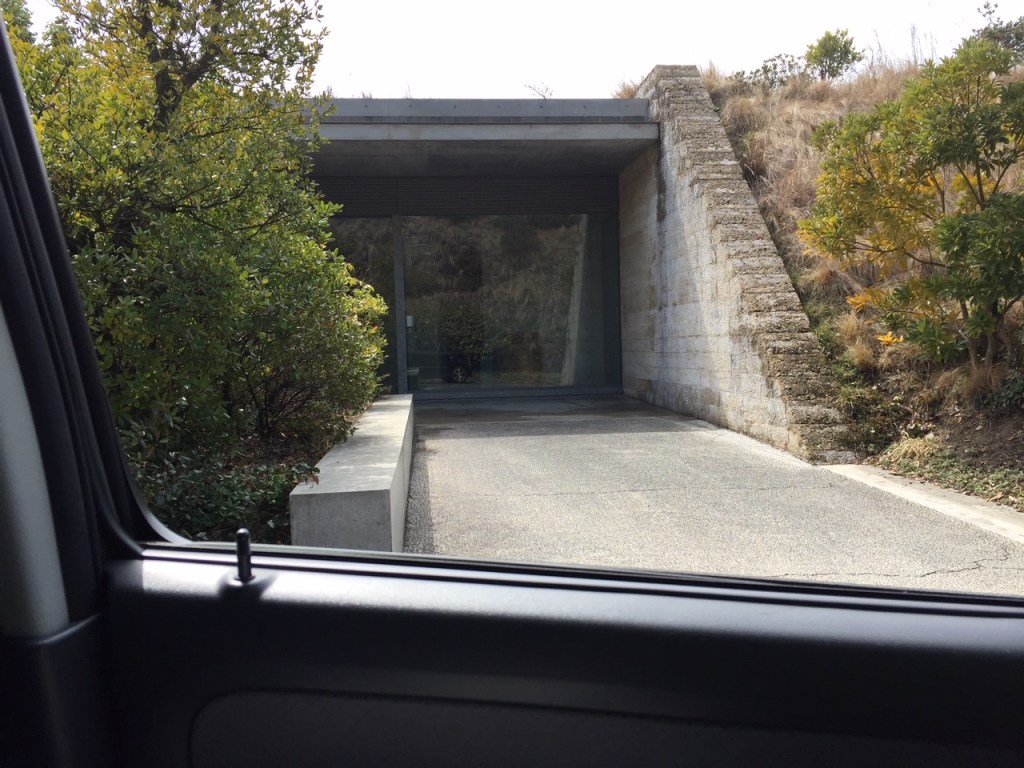
The entrance to the Chichu Museum. Photo Courtesy: Suzanne Kamata

The Chichu Museum was built into the side of a mountain, like a bunker, and lit only by whatever sunlight came in through the windows. The walls were grey concrete and most of the staff wore white lab coats. The brochure advised us to “maintain a quiet environment in the museum.”

As we were mainly there to see the Monet, we made that our first order of business. We descended an elevator to a dark hall and came upon a rack of slippers.

“Please change your shoes,” the docent said.

I removed my sneakers and slid my feet into a pair of vinyl slippers. Michelle and Elana did the same. Now we were ready to enter the hallowed space.

The room was circular, the walls blindingly white, offsetting the deep blues and purples of Monet’s sun-lit pond. We spent several seconds before each panel. The paintings were called “Water Lilies, Cluster of Grass,” “Water Lilies, Reflection of Weeping Willows,” and “Water Lily Pond.”

Michelle, who was a big fan of Monet, sighed happily. It was the off-season. We were the only ones in the gallery besides the docent. There were no other visitors in slippers waiting to shuffle in after us so we were allowed to take our time.

Michelle plopped down on the clean, white floor. Such irreverent behavior in this holy space! She leaned back and admired the paintings from this new perspective. Was she the first person to ever sit down on this floor?

“What the heck,” I thought. I admired her free spirit. I sat down on the floor beside her.

The docent stepped forward. Our unusual actions had clearly made her nervous. We weren’t touching the art or taking pictures. We weren’t doing anything bad. She had no reason to scold us, but she kept her eyes on us.

“Monet would laugh!” Michelle said. “He was messy. He would think it was funny that we had to change into slippers to look at his art.”

I was inclined to agree. I had seen photos of him. He had an unruly beard. His clothes were rumpled. Later, I would watch a video clip of Monet painting in his garden. He had a cigarette in his mouth even as he touched his brush to the canvas. Little dogs ran around at his feet. No smoking would ever again be allowed near his water lily paintings. Not these ones, at least. No dogs, either.

We visited the rest of the museum then had lunch in a café overlooking the sea which served desserts made from Monet’s recipes. In addition to painting food, he had enjoyed cooking it himself. I sampled his madeleines and apricot jam – delicious! — then bought a cookbook from the gift shop so that I could make them at home.

A madeleine made with Monet’s recipe. Photo Courtesy: Suzanne Kamata

Suzanne Kamata was born and raised in Grand Haven, Michigan. She now lives in Japan with her husband and two children. Her short stories, essays, articles and book reviews have appeared in over 100 publications. Her work has been nominated for the Pushcart Prize five times, and received a Special Mention in 2006. She is also a two-time winner of the All Nippon Airways/Wingspan Fiction Contest, winner of the Paris Book Festival, and winner of a SCBWI Magazine Merit Award.

PLEASE NOTE: ARTICLES CAN ONLY BE REPRODUCED IN OTHER SITES WITH DUE ACKNOWLEDGEMENT TO BORDERLESS JOURNAL
Categories
Notes from Japan

Owls in the Ginza

Suzanne Kamata visits an ‘owl café’ in Tokyo

The last time I had found myself in Tokyo with some free time and the freedom to move about, I had tried to drop in at an owl café. However, after making my way to such an establishment on the heels of a couple of Chinese tourists, I discovered that a reservation was necessary. The place was booked weeks in advance.

A few weeks ago, I again had some business in Tokyo, so I contacted an old friend and suggested we do a bit of sightseeing together.

“What do you want to do?” she asked me.

I replied that I wanted to visit an owl café. She messaged back that she didn’t like birds.

We had lunch in a sushi restaurant that normally had a queue as early as seven a.m. Due to the coronavirus, we waltzed right in and had a leisurely lunch. After that, we went to a museum that normally required reservations, or at least a long wait. And since there had been so little time wasted standing in line, my friend agreed to take me to an owl café. She found one by using her phone and called the place up. Sure, we could visit, the owner said. No reservations were needed.

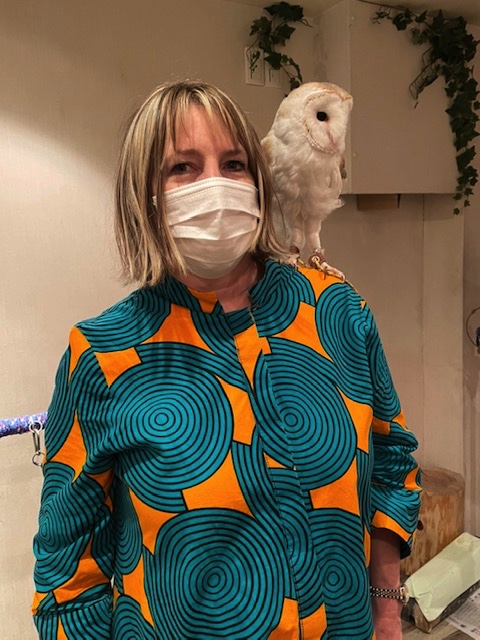
The Mofu Mofu Owl Café Ginza was down a side street in Tokyo’s tony shopping district, steps away from the likes of Louis Vuitton and Chanel. As we climbed the three flights of narrow stairs, I wondered what it would be like inside. It would be dark, I imagined, because owls are nocturnal. But no, when we pushed open the door, we were met with light.

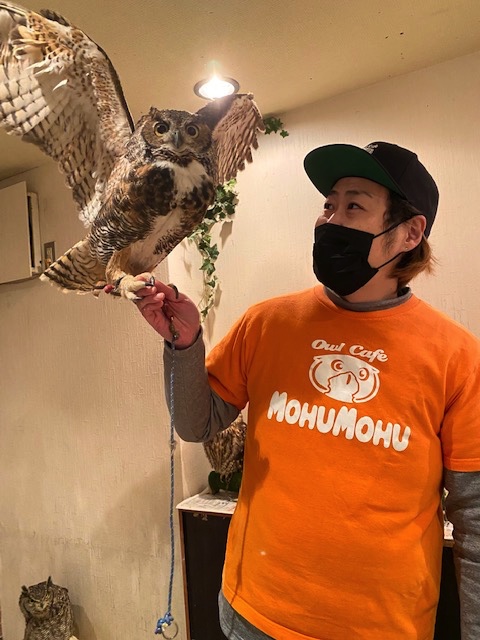
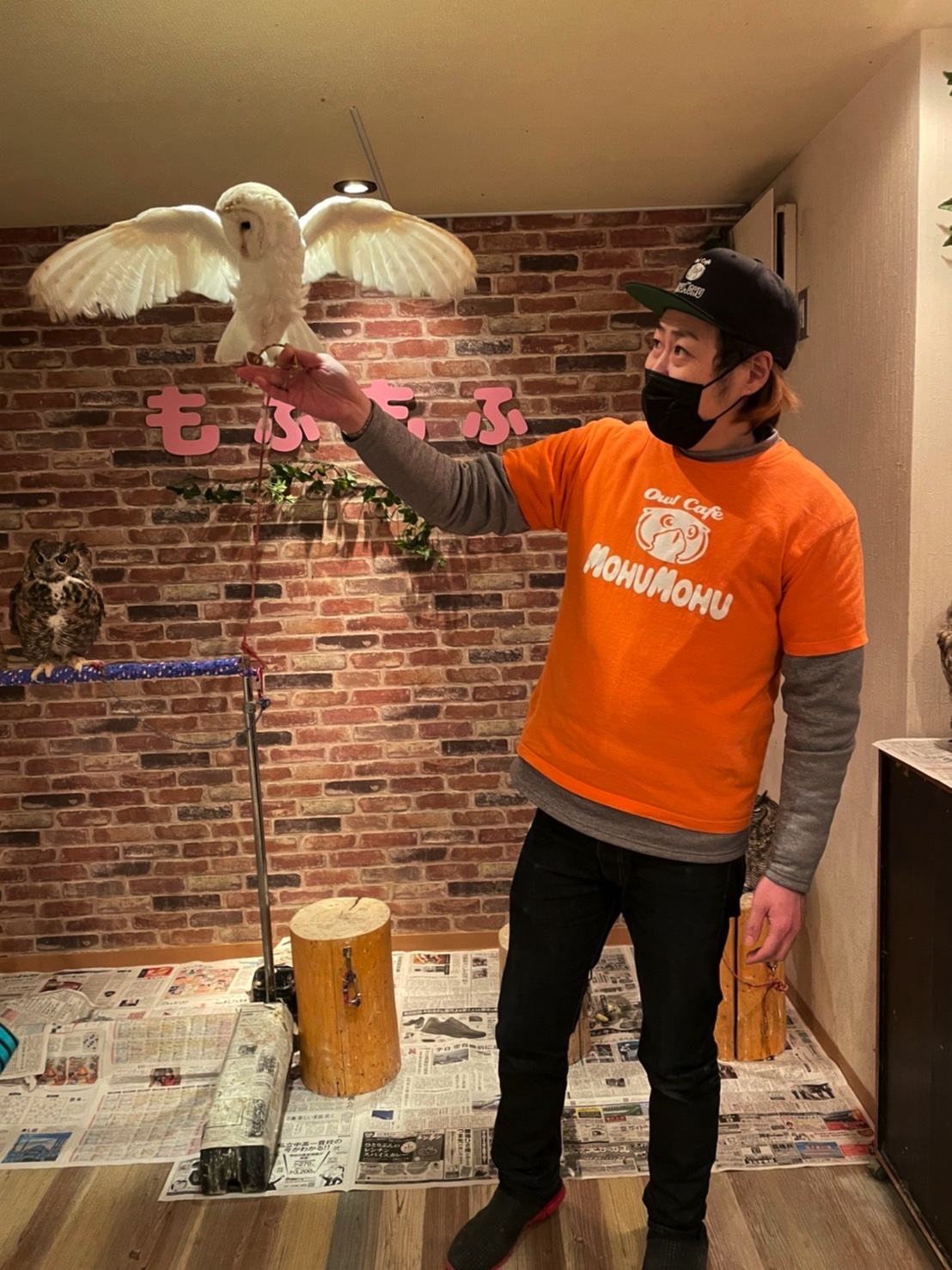
It’s a bit of a misnomer to call the place, and others like it, a café. Coffee is not served, nor is there cake or any other kind of food. There were no tables, no young women with aprons or maid costumes, just a guy wearing a T-shirt in a roomful of owls tethered to perches.

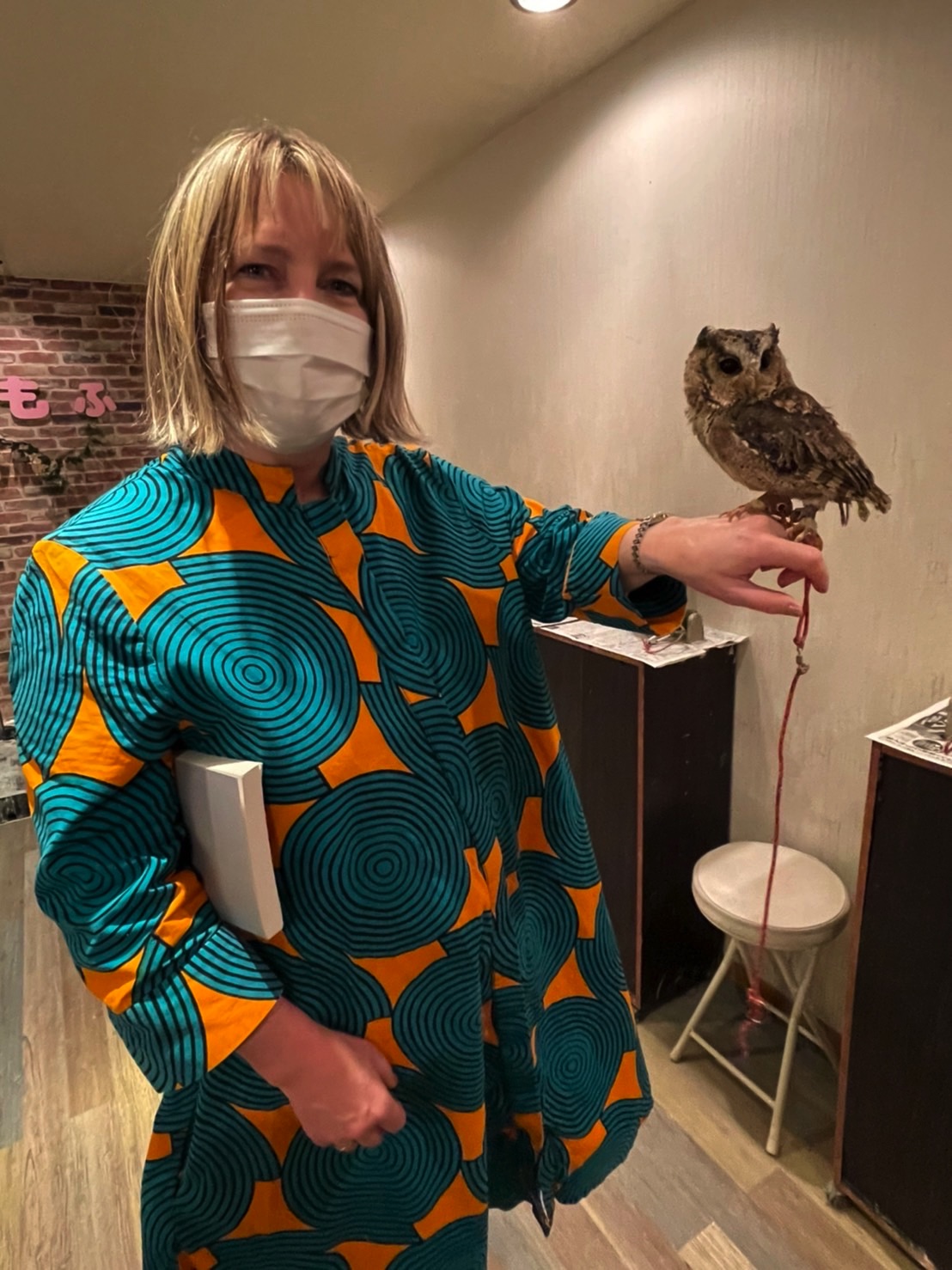
The owner seemed happy to see us. We were the only customers. He instructed us to disinfect our hands, and then showed us how to touch the owls – a gentle rub on the top of their heads, much in the way that my cat liked to be caressed. The owls were big and fluffy, like cats, and I wanted to hug them, but I figured they would probably try to bite me if I did.

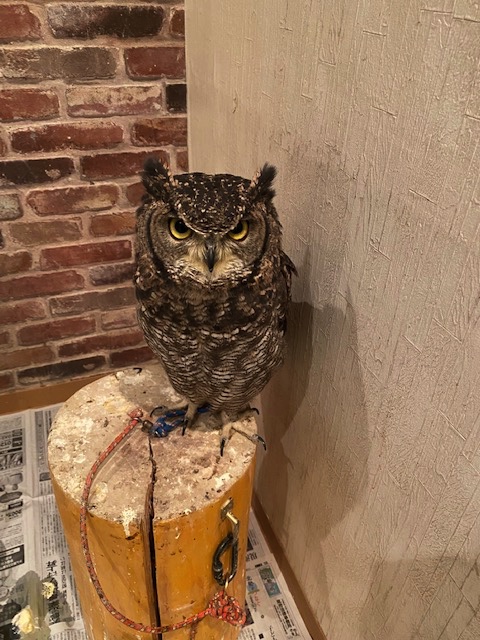
My friend, the bird-hater, hung back while I went around looking at each owl. They were of various species from around the world. I wondered if they were bored, sitting on their perches all day, with nothing to do. Maybe our being there was their entertainment.

“They wouldn’t survive in the wild,” the owner said. “They have been raised from eggs by humans.”

He told us that they might live for thirty years in captivity, but only half that in nature. What was worse, I wondered? Thirty years of boredom, or fifteen years of being stressed out about their next meal, and where they would build a nest? Was keeping owls in this room any worse that keeping a parakeet in a cage? Or not allowing my restless cats to go outside, even when they meowed pleadingly at the door? (Actually, I sometimes did allow them to go out, knowing full well that they might be dodging cars, picking up fleas, and murdering songbirds and mice.)

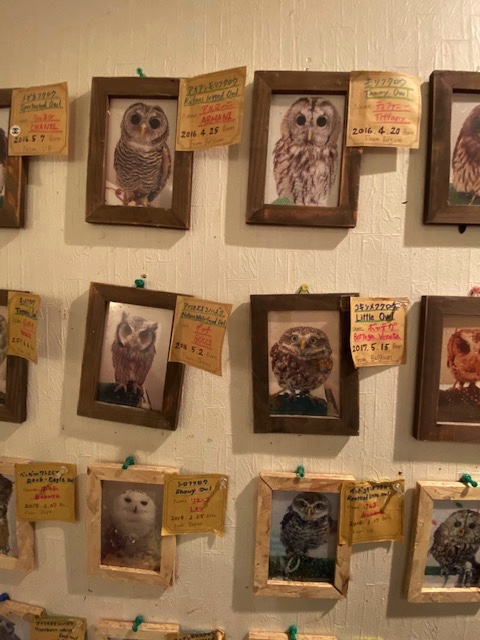
The owner explained that before the pandemic, he’d operated two cafes – this one, and another in Roppongi — but due to the travel restrictions which prevented tourists from overseas from visiting, he’d had to close that one. All the owls were now gathered here. They’d been given names of nearby shops. Gucci was a Japanese Northern White-faced Owl, while the Little Owl from Belgium was named Bottega Veneta. There was also a Tawny Owl, born in 2016, named Tiffany.

“Before the pandemic, a lot of foreigners came here,” the owner said. Some famous people, too. He showed us a photo of the singer Akiko Yano, ex-wife of internationally renowned musician Ryuichi Sakamoto, with one of the owls. Yano lives in New York City and had heard about the café while abroad. I looked around at the empty space. Apparently, Tokyoites didn’t have an urge to commune with owls. I worried about what would happen to them if the tourists weren’t welcomed back to Japan soon.

The owner let me pick out an owl and settled it on my hand. My friend finally got up the courage to stroke one of the owls between its eyes. The phone rang, and the owner went to answer it. I heard him booking another customer, and I felt a bit relieved. Apparently, this one would come at mealtime and watch the owls consume dead mice. That was probably an exciting part of the owls’ day.

Part of me thought that the birds might be happier in an atrium somewhere. But while they were here, I hoped they would be well looked after. I wanted to contribute as best as I could, so I loaded up on souvenirs – a pen encasing an owl feather, made by the owner’s wife; a handful of chopsticks with owl motifs; and a bottle of Hitachino Nest beer, which had an owl on the label. And I promised to post some photos on Instagram so that more tourists would come.

An owl in chains

Suzanne Kamata was born and raised in Grand Haven, Michigan. She now lives in Japan with her husband and two children. Her short stories, essays, articles and book reviews have appeared in over 100 publications. Her work has been nominated for the Pushcart Prize five times, and received a Special Mention in 2006. She is also a two-time winner of the All Nippon Airways/Wingspan Fiction Contest, winner of the Paris Book Festival, and winner of a SCBWI Magazine Merit Award.

Thanks to the columnist Suzanne Kamata for the photographs. 

PLEASE NOTE: ARTICLES CAN ONLY BE REPRODUCED IN OTHER SITES WITH DUE ACKNOWLEDGEMENT TO BORDERLESS JOURNAL
Categories
Notes from Japan

Imagining a Possible Future: Filmmaker Felicity Tillack

Suzanne Kamata brings to us people, experiences and cultures from Japan

Director and writer, Felicity Tillack, preparing a shot at Uji.  Photo courtesy : William Yagi Lewis

Before coming to Japan in 2006, Felicity Tillack had hoped to become a Japanese high school teacher in Australia. She had grown up in Mackay in West Queensland where Japanese was one of the languages taught in primary school. “I fell in love,” Tillack says. In spite of her passion for the language and culture, she concedes that she wasn’t very good at Japanese. She decided to drop education as a major. After earning a B.A. in literature, she got on a plane to Japan. Now based in Kyoto, Tillack teaches at an international school, writing and making films on the side.

Tillack started making videos in 2012 on her Youtube channel Where Next Japan. She eventually moved on to documentaries such as New Japanese Citizens and 3rd Culture Kids in Japan. These projects, she says, “really started me thinking more deeply about the concept of identity and how it is tied to the culture you grow up in as well as your ethnic roots and background. I’ve seen so many kids struggle with their identity. I taught many biracial kids, with one Japanese parent and one foreign parent who, in their struggle to feel legitimate and accepted within Japan, would often strongly reject their non-Japanese heritage. So, a lot of experiences and observations started to come together and slowly built into a story.”

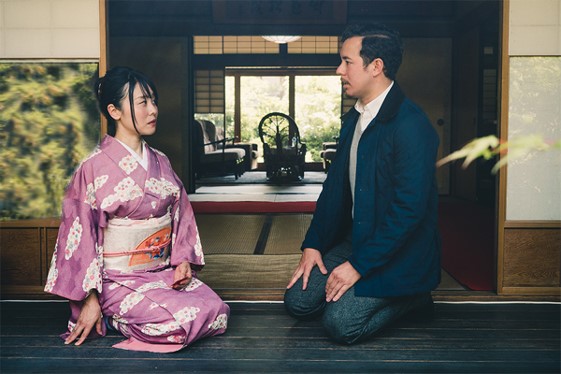
Impossible to Imagine, her debut narrative feature film is the story of Ami Shimizu (played by Yukiko Ito), a Kyoto woman doing her best to keep her mother’s kimono rental shop alive, and Hayato Arai (played by first-time actor William Yagi Lewis), the biracial Japanese business consultant that she hires for advice. It evolves into a romance, but it’s also an exploration of tradition versus change in one of Japan’s most traditional and impenetrable cities.

Although Tillack is Australian, the film is mostly in Japanese. “I felt that it was a story that needed to be told in Japanese with Japanese characters,” she says. “I wanted to start a conversation here in Japan.” She wrote the script initially in English and had it translated into Japanese. Tillack admits that the language barrier is “a big difficulty” when filmmaking in Japan, but both of the actors in the starring roles are bilingual. They were able to offer advice on cultural details and interpret, when necessary.

Tillack made the film on a shoestring budget of about a million yen (around US$10,000), financed out of her own pocket. The movie was shot in about ten days on the streets near her home. Although she wasn’t able to pay her actors and crew much, she said that she and her colleagues saw the making of the film as a “learning experience.”

Left to right: Felicity Tillack (director, writer), Yukiko Ito (main actress, Ami Shimizu) and William Yagi Lewis (main actor, Hayato Arai) at the Kyoto premiere of Impossible to Imagine.  Photo Courtesy: Morgan Lewis

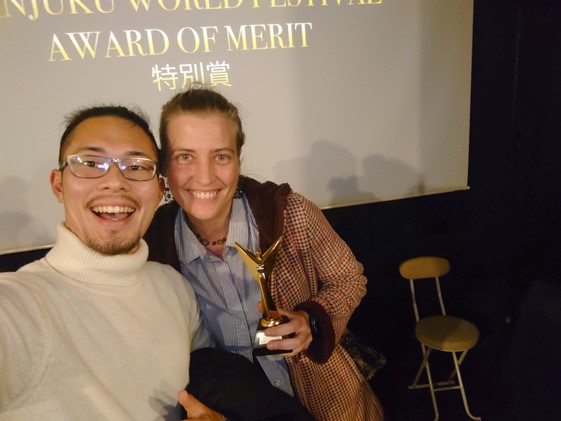
Impossible to Imagine has been shown at several film festivals, including the Paris Lift-Off Film Festival, and the Shinjuku World Film Festival in Tokyo. Tillack has also hosted screenings at various venues in Japan. At one such event held at a Buddhist temple in Kagawa Prefecture, the audience was mostly elderly and eager to discuss the issues brought up by the film. The movie is now streaming on Amazon, making it accessible to viewers all over the world.

Tillack, who cites Richard Linklater’s Before Sunrise series as an inspiration, had plans to start shooting a sequel: I had written the script, lined up financing, and everything.” But then the pandemic hit. Unable to make movies for the time being, she has started on another script, this one tentatively entitled Before Real Life Begins. It refers to the idea that foreigners often come to Japan after graduating from college intending to stay for a year or two before their “real life” starts. Tillack’s script contends that time spent in Japan is real life. Keeping in mind that Westerners experience Japan differently than Filipinos, for example, she hopes to explore this issue from various viewpoints. She is working on this story with two other writers who are based in Tokyo.

Tillack also had a hand in the forthcoming film Matcha and Vanilla, a love story written and directed by her friend Hamish Downie, who was the producer of Impossible to Imagine. Tillack is listed in the cast as “journalist” on the movie’s IMBD site, however she insists it’s only a bit part. Tillack’s future in filmmaking is off to a promising start.

In imagining a future for Japan, Felicity Tillack looks back at her own country’s history. “I was told when I was very young not to marry outside my culture,” she says – advice that she did not heed. She points out that in the 1970s, Australia was “95% white”, however, now, one in four in the country were born overseas. “Australia has changed culturally.” Through her work, both on this film and her other creative endeavors, Tillak suggests that her adopted country, too, may become more inclusive and accepting in the not-too-distant future.


Felicity Tillack (director, writer) and Shota Wanibe (sound mixer, boom operator) receiving an award at Shinjuku World Festival. Photo Courtesy: Shota Wanibe

.

Suzanne Kamata was born and raised in Grand Haven, Michigan. She now lives in Japan with her husband and two children. Her short stories, essays, articles and book reviews have appeared in over 100 publications. Her work has been nominated for the Pushcart Prize five times, and received a Special Mention in 2006. She is also a two-time winner of the All Nippon Airways/Wingspan Fiction Contest, winner of the Paris Book Festival, and winner of a SCBWI Magazine Merit Award.

Thanks to the columnist Suzanne Kamata for sourcing the photographs.

PLEASE NOTE: ARTICLES CAN ONLY BE REPRODUCED IN OTHER SITES WITH DUE ACKNOWLEDGEMENT TO BORDERLESS JOURNAL
Categories
Notes from Japan

Bridging Cultures Through Music

Suzanne Kamata brings to us people, experiences and cultures from Japan

Masaki Nakagawa. Photo provided by Suzanne Kamata

For Kobe native and YouTube sensation, Masaki Nakagawa, a university trip to Latvia turned out to be a life-changing experience.

Nakagawa was a student of international culture in the Integrated Arts and Sciences Department at Tokushima University. By his own admission, he wasn’t a great student – his TOEIC (Test of English for International Communication) score was around 200 – but he had an avid interest in other cultures. He first studied abroad in Korea, where he improved his English language skills, and later, in 2014, went with a Tokushima University professor to Riga for a summer seminar. He felt an immediate connection with the small, European country.

“I felt like this is the country I will live in in my future,” he says via webcam. From the very beginning, he loved the people, the language, the atmosphere, the many historical buildings, the food, and the drinks.

“Someone told me that maybe I was Latvian in a past life,” he jokes.

Although the university did not have an official exchange program with any Latvian university at that time, he decided that he would go there for foreign study. During his seven months abroad as a student at the University of Latvia, he discovered that while most Latvians knew quite a bit about Japan, few Japanese people had any idea about them. He made it his goal to create more links between the two countries. Kobe is already the sister city of Riga, but he created a project to promote a sister city relationship between Tokushima and Jelgava, which is ongoing.

From a young age, Nakagawa has also been a musician. His mother was a piano teacher, so naturally he began playing the piano at the age of three. However, when he was fourteen-years-old, he bought his first guitar. “I still have it,” he says. “It is my important thing.” In high school, he played guitar and sang vocals in a band.

During his visit to Latvia, he discovered the importance of music in that country. “Latvia is a musical country,” he says. “They love dancing with music, eating with nice music. The Latvian language is quite beautiful, and Latvian songs are very, very beautiful.” He also found that singing in Latvian was an effective way to study.

After graduating from university, he got a job at Mercedes, where he continues to work as a store manager, however his passion for Latvia remained. He decided to combine his loves for Latvia and music. “As a musician, I can connect countries,” he says.

In 2017, he learned “Mana dziesma” (“My song”), which was originally performed by Brainstorm, one Latvia’s most famous bands, and made a recording of himself singing it while playing the guitar. Then, he uploaded it to YouTube. The video received an astonishing 150,000 views. Nakagawa realized that he was onto something, and he continued to record and upload videos.

In some videos, he sings in Latvian against a Japanese background, such as along a river in Kyoto. In others, he sings in a combination of Latvian and Japanese in a Latvian setting. Recently, he has begun to add Japanese subtitles. While he continues to record Latvian favorites, he has also written and recorded original songs in both languages.

His popularity has continued to grow, leading to interviews in magazines, on the radio, and on Latvian television. By his estimate, he has appeared on television in that country “twenty or thirty times.”

When asked if he is perhaps the most famous Japanese person in Latvia, he laughs. “Maybe.”

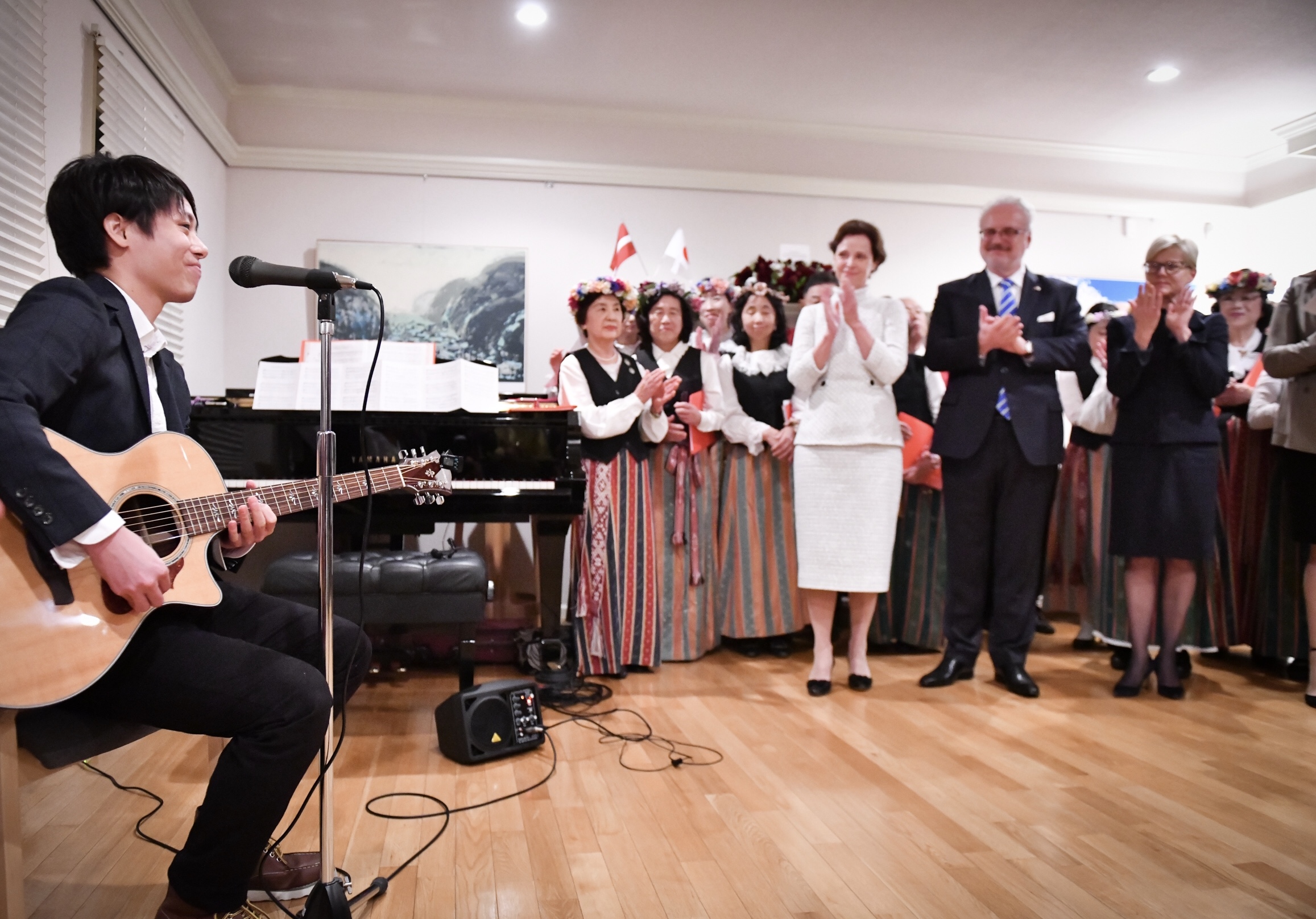
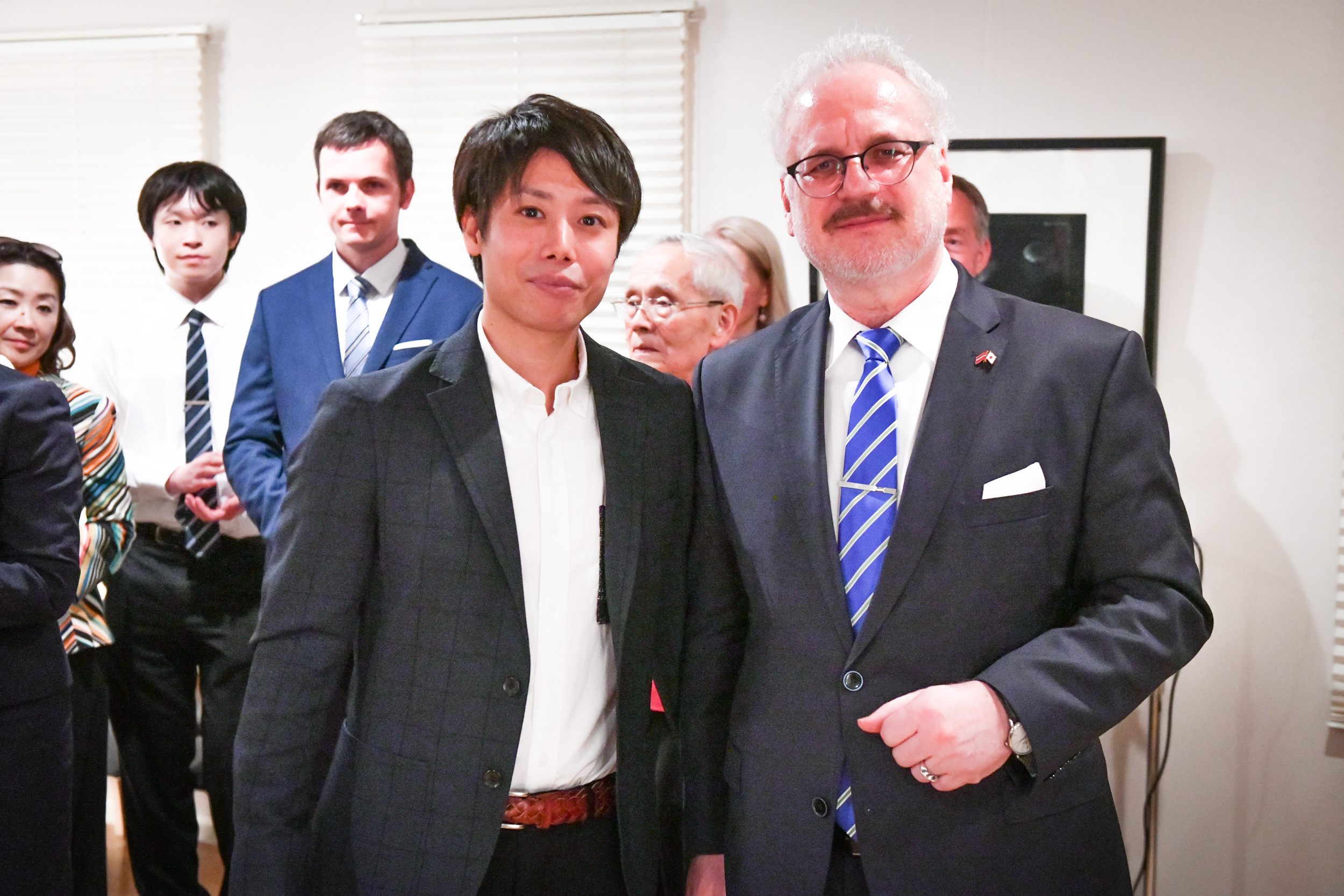
When the president of Latvia visited Japan for the coronation of the new emperor, Nakagawa was invited to perform at a closed reception at the Latvian Embassy in Tokyo. He had a chance to talk to the president and the first lady, who, as it turned out, was a big fan.

His most recent TV appearance, via Zoom, marked the occasion of his one millionth view on YouTube, the 100th year of Latvian-Japanese friendship, and of his latest single, “Es Lepojos Ar Tevi,” recorded with German musician Joran Steinhauer, another lover of Latvia. A few years ago, the two friends collaborated on a YouTube series called “Masaki Learns Latvian” in which Steinhauer taught Nakagawa two or three phrases per episode. “Es lepojos ar tevi”, which means “I’m proud of you,” is the first phrase that Nakagawa learned. This song in Latvian, uniquely created by two foreigners, premiered on the TV show “900 Seconds” in April of this year.

Nakagawa has been branching out a bit in his musical career, writing songs for aspiring idol groups in Japan, and singing on Japanese anime soundtracks. His vocals can be heard in the theme song for the anime “Dark Hero Yoshitsune” which will be released nationwide in Japan in fall 2021. Fans can follow his activities via Instagram at https://www.instagram.com/masaki.lv/.

He maintains, however, that developing relations between Latvia and Japan is his main priority. “As a musician, I really would love for people to know about Latvian culture.”


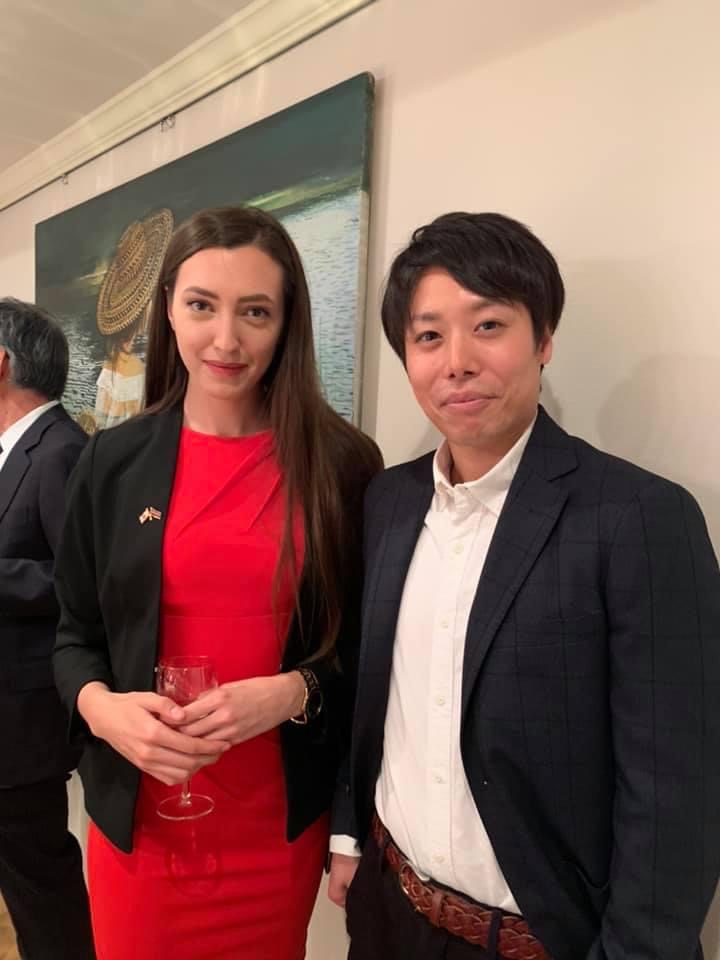
Nakagawa with his girlfriend Arta Voicehovska, who works as Coordinator for International Relations Latvia-Japan at Higashikawa Town Hall in Hokkaido

Suzanne Kamata was born and raised in Grand Haven, Michigan. She now lives in Japan with her husband and two children. Her short stories, essays, articles and book reviews have appeared in over 100 publications. Her work has been nominated for the Pushcart Prize five times, and received a Special Mention in 2006. She is also a two-time winner of the All Nippon Airways/Wingspan Fiction Contest, winner of the Paris Book Festival, and winner of a SCBWI Magazine Merit Award.

.

PLEASE NOTE: ARTICLES CAN ONLY BE REPRODUCED IN OTHER SITES WITH DUE ACKNOWLEDGEMENT TO BORDERLESS JOURNAL