Photographs and Narrative by Suzanne Kamata
On our third morning in the Lowveld, my travel companion and I woke up at 4:00 A.M. for our third game drive in Kruger National Park. We’d signed up for this over a year ago when we first booked ourselves on this group tour. We didn’t know then that it would be raining.
The other ten members of our group had chosen other options. Some were planning to hang out at the lodge, probably anticipating a day of lounging by the pool while kudu and impalas lingered nearby nibbling grass. Another cohort had signed up for a different sightseeing tour, involving waterfalls, with a later starting time. My friend and I were here, however, for the animals.
She and I had first met in Japan. We’d lived in the same town. Our kids had gone to the same schools, and we’d taught at the same universities. When she had moved back to Australia, we’d remained in touch. Both of us loved to travel, and both had dreamed of going on safari in Africa. Neither of us knew of anyone else who shared the same dream, so we vowed to go together. I had imagined that it would be years before I would be able to afford such a trip, but a little over a year ago, she’d come across a great deal. And now here we were, in South Africa.
Half-asleep, we quickly dressed, stuffed our sack-breakfasts into our backpacks, and stumbled out the heavy wooden door into the still dark morning. A light rain was falling. Although signs warned of roaming wild animals, and we’d seen plenty, it seemed safe to walk up to the office building to find our driver. His Toyota safari truck was already parked outside. After a few minutes, he appeared, and we climbed into the back middle seats of the open-sided truck, hoping to stay clear of the rain.
Our driver and guide, a local who drove 20-40 kilometers per hour over the speed limit and doled out one interesting animal fact per sighting, handed us lined ponchos to keep us warm on the forty-minute drive to the park. Then we zoomed off, passing pecan and macadamia groves, on the way to Numbi Gate. People were already waiting at bus stops along the way, probably on their way to work.
As the sky gradually lightened, we could make out the names of the shops along the road: Dragon Flame Car Wash, No Error Driving School, Drama’s Sneaker Wash, God is Able Beauty Salon, and an alarming number of small businesses offering funeral services.
When we finally reached the entrance to the game park, the guide parked and got out to register. Although the parking area had been crowded the previous two days, on this morning, we were the only ones there.
We had seen quite a few animals over the past two days, including elephants, giraffes, zebras, a rare white rhino, and a mama lion and cubs, albeit from a distance. We rattled off our wish list to the guide.
“A hippo out of the water,” my friend said. “And a male lion.”
I had been lucky enough to see both on a previous trip to Rwanda, but I had yet to see a leopard, one of the so-called “big five,” or a cheetah.
“When is the last time you saw a leopard or a cheetah?” I asked.
“I saw a leopard a week ago,” he said. “And a cheetah yesterday.”
He warned us, however, that because of the rain, we might not see anything at all. The animals might be seeking shelter. We understood and accepted that.
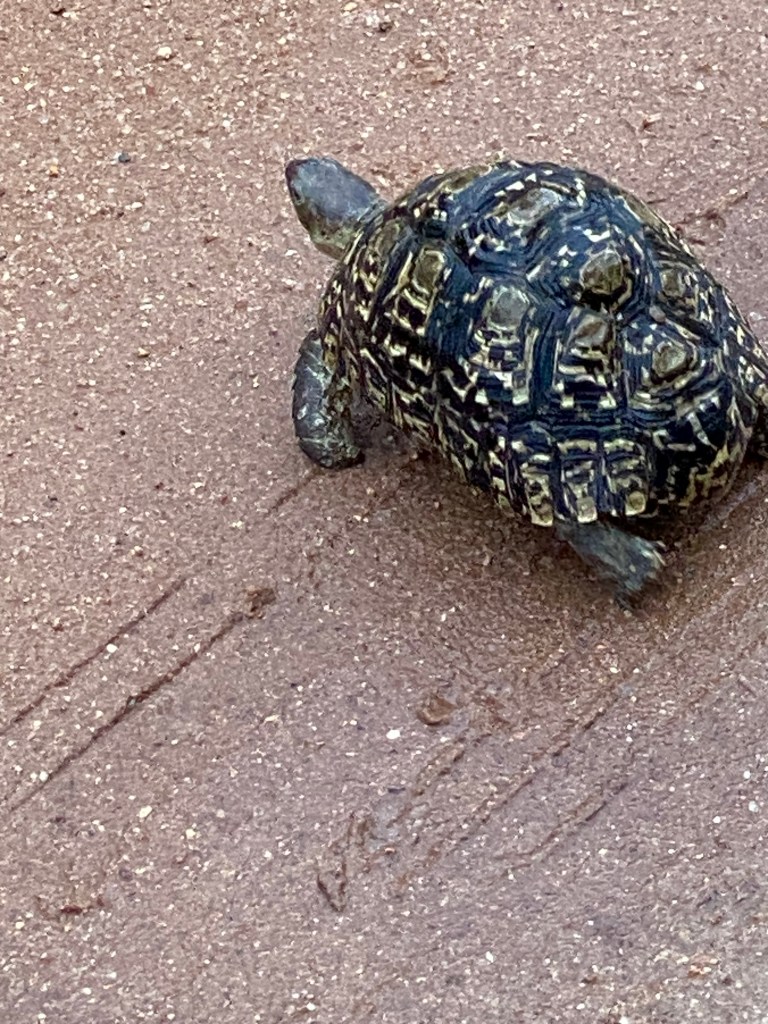
A few minutes into our drive, he braked the truck and pointed out a turtle making its way across the road. Understanding that this might be our biggest sighting of the day, I took a video of the creature with my smartphone. Soon after, we spotted some impalas. Although we’d seen so many the two days before that the guide no longer stopped for them, on this morning, we gave them our full attention.
And then we saw something unusual—a pack of African wild dogs alongside and in the middle of the road. I had never seen canines with such colouring. Their fur was brown and black, almost tortoiseshell. These dogs were featured on a signboard at the park entrance indicating the day’s sightings.
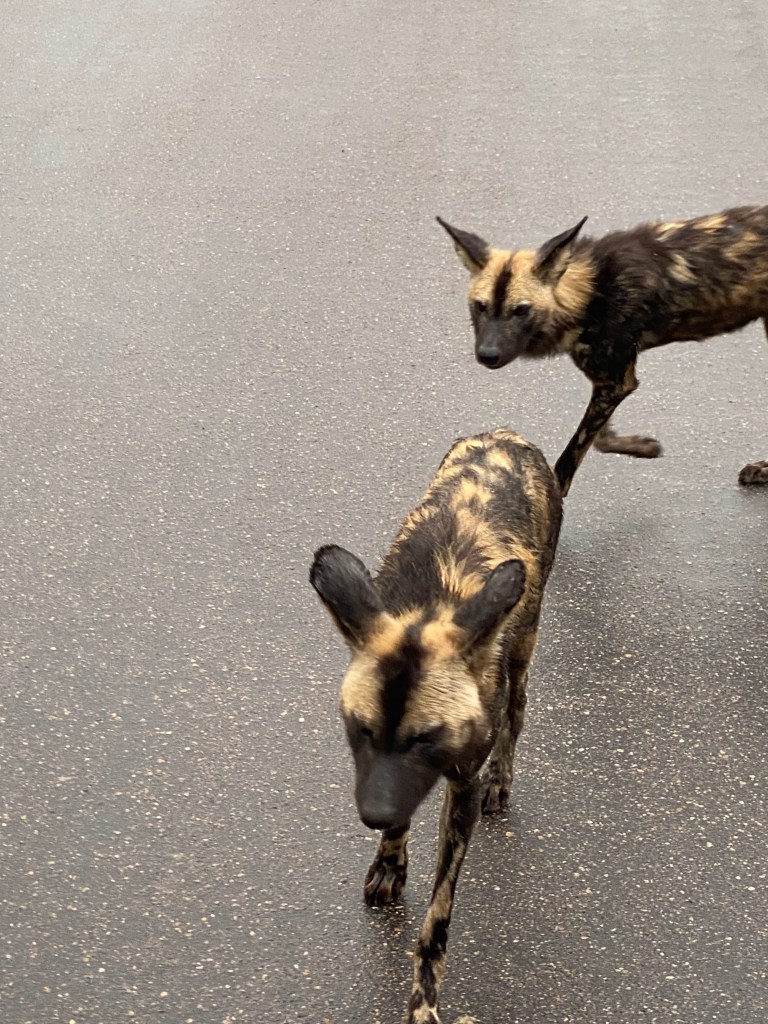
“There are only about 150 of these dogs in the park,” our guide told us. He mentioned that they were expert hunters, that they attacked in groups. Since Kruger National Park is vast, with an area of 19,485 square kilometers, much of the terrain being well away from the road, I realized how lucky we were to see these dogs. They trotted along, sniffing at the road, mindless of the truck slowly following them.
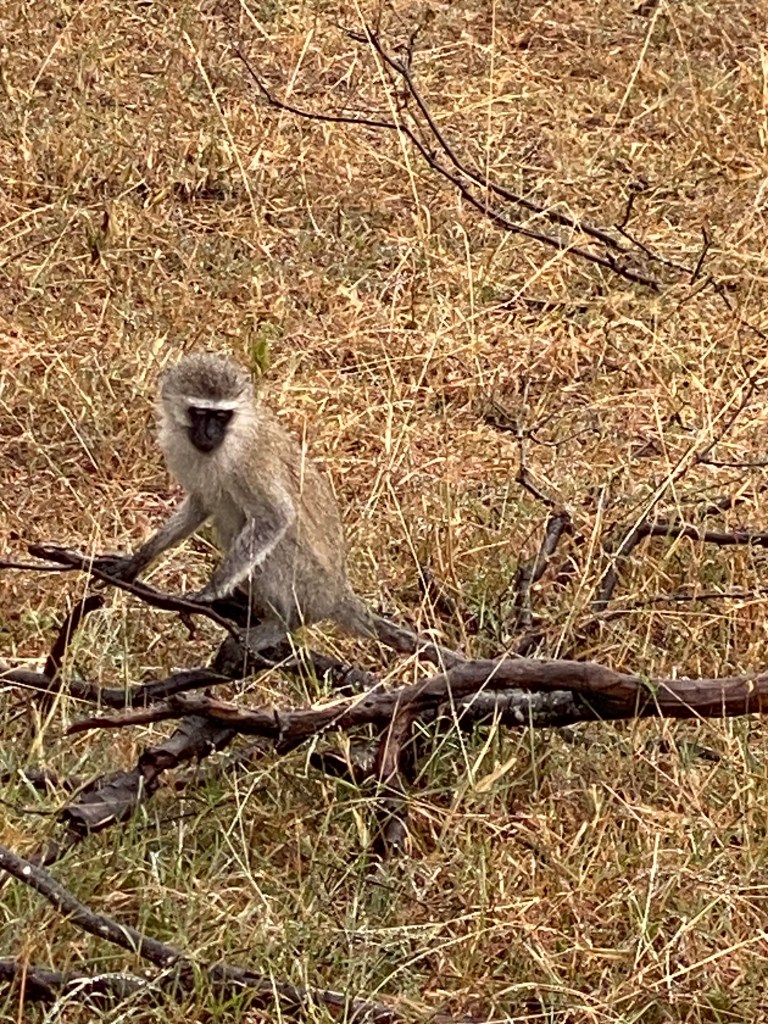
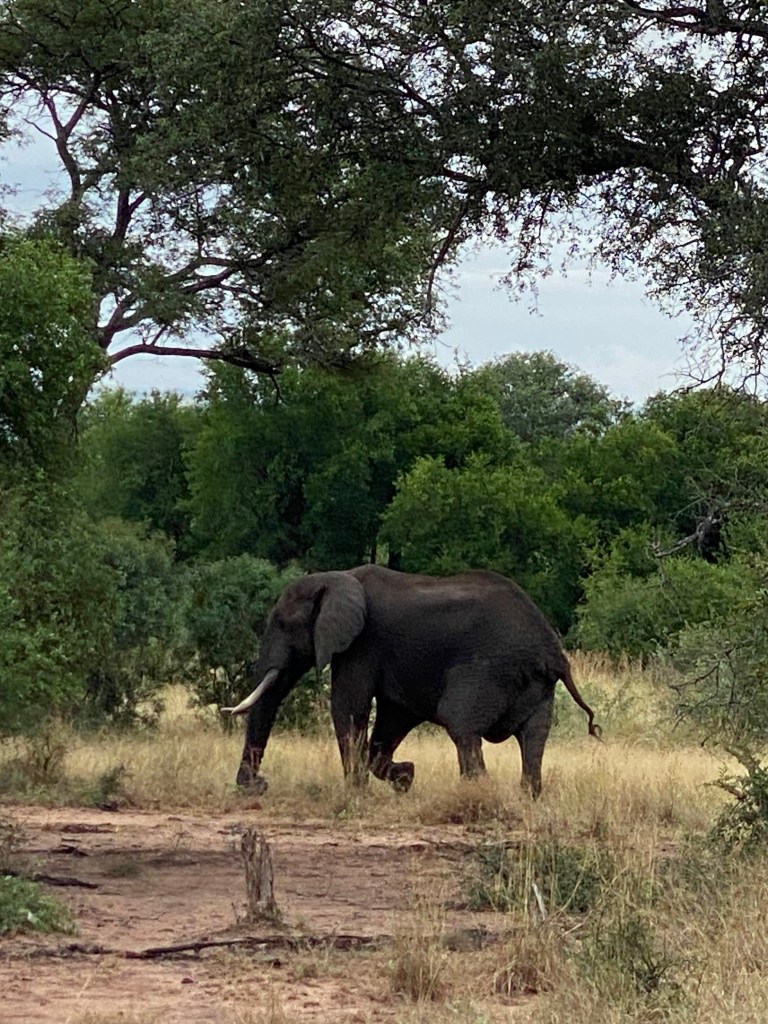
By this time, the rain had let up. Although we did not manage to see any hippos out of the water (they mostly come out at night to eat grass), we did see a herd of wildebeest, some vervet monkeys, an elephant, a water buffalo, baboons, and a Martial eagle perched on a high bare branch. And then our guide got a message on his phone and said, “From now, we’re not stopping for anything. Someone has spotted some cheetahs.”
As he sped ahead, we crossed our fingers and readied our cameras. I expected the cheetahs to be far off in the distance, where they wouldn’t be scared off by the sound of cars, as the lions were. Why else would they stay in one place long enough for us to reach them? As it turned out, however, five cheetah cubs were gathered together, sitting still, gazing intently into the bush. They were near the road, only about fifty meters away.
“They’re waiting for their mother,” the guide said. “Maybe she will come back while we are waiting.”
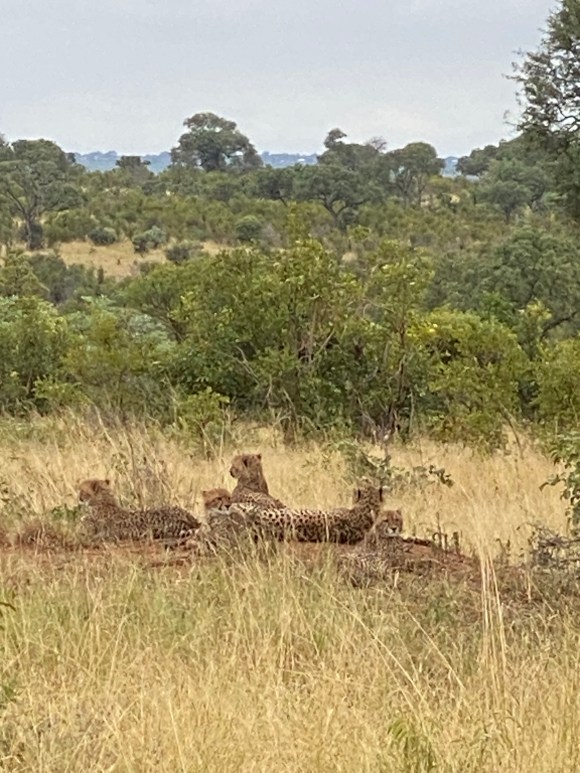
My friend and I took turns admiring them through binoculars. How patiently they watched the impalas nearby. How diligently they groomed themselves. They were gorgeous, leaving us breathless.
We waited awhile, but there were others eager to see them, so our guide suggested it was time to move on. “Are you happy?” he asked us.
“Yes, very,” we both said.
Later, as we returned to the lodge, we thought about how jealous the rest of the group would be when they heard about the cheetahs. The rain started to fall again.
Suzanne Kamata was born and raised in Grand Haven, Michigan. She now lives in Japan with her husband and two children. Her short stories, essays, articles and book reviews have appeared in over 100 publications. Her work has been nominated for the Pushcart Prize five times, and received a Special Mention in 2006. She is also a two-time winner of the All Nippon Airways/Wingspan Fiction Contest, winner of the Paris Book Festival, and winner of a SCBWI Magazine Merit Award.
PLEASE NOTE: ARTICLES CAN ONLY BE REPRODUCED IN OTHER SITES WITH DUE ACKNOWLEDGEMENT TO BORDERLESS JOURNAL
Click here to access the Borderless anthology, Monalisa No Longer Smiles
Click here to access Monalisa No Longer Smiles on Amazon International
 Borderless