By Devraj Singh Kalsi
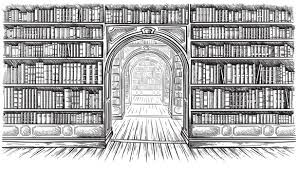
The school library was the place we were herded to once every week. Although a few of us were booklovers, the brief period of relief and relaxation inside the large, airy, and sunlit room stacked with books, bookshelves, and desks made us fake an immersive experience of reading bliss.
Contrary to the orders of Lobo Sir, our librarian who always emitted strange noises to remind us to maintain pin-drop silence, we occupied the window seats to gaze at the panoramic world outside and discuss what appeared in sight. It was more engaging, refreshing, and rewarding as an activity. I was not one of those smart, gifted fellows who focused on the brittle pages of the heavily borrowed titles to impress teachers.
Observing the lush green trees and the slow movement of traffic on the macadamised road outside the campus became the new pastime — punctuated with furtive, irksome glances at the middle-aged librarian who saw potential book thieves lurking within us. His long hands groping our pants and bellies during the mandatory exit check to locate books hiding inside never quite managed to reach the exact spot where books were hiding within some of us: inside our fecund, curious minds.
Most of the students were not fond of reading or stealing books when there were far more precious items like hearts waiting to get stolen outside the campus during those teenage years. Impressing the girls from the nearby convent with our natural gift of storytelling evinced an encouraging response and for us, it was a firm confirmation that holding a book in hand was less likely to catch their interest.
Keeping the library card was an obligation so we had to borrow at least one book in a month, get it stamped, and then return it within a week without further tears to avoid a hefty fine. It was wise to show the librarian the pages already torn, dog-eared, smeared with ink, or doodled with arrows piercing the hearts as his memory never failed to identify new signs of damage to the books and he would insist on replacement or recovery of its full monetary value at the given time.
Considering the perils of borrowing books from the library that made us careful about spilling tea or coffee or noodle (stuck between the pages) or tomato sauce dots ruining the cover, I decided that I should buy the book and then read it without any fear, even if it involved buying from a second-hand bookshop. With a strong sense of possession and freedom to toss and turn around, I felt free to place a tall glass of cold coffee on it and read it the way I liked. The sense of reading with a free mind had no substitute. Borrowing titles from the library did not inculcate this sense of freedom.
The possibility of forgetting a storybook inside the bus or train was high. Even tears would not convince the librarian to waive the costs if we lost it in transit even though its condition was nothing close to mint. Some of us took the library titles home, kept them in the safest custody of parents and then carried the titles back to school without reading a single page. Of what use was such trouble we could not fathom but negative thoughts resonated more, keeping us mired in anxiety.
Only the toppers borrowed classics to read and discuss with teachers what they grasped. The teachers agreed with their insights and analysis in a bid to sound encouraging even if what the high achievers said made little sense. It was a source of collective victory that some students showed the potential to read classics and match the wavelength of teachers whereas we could not go beyond the popular, readable titles.
The desire to read for fun and pleasure was stronger than the urge to read for knowledge during our school days. ‘Read more’ was the repetitive message from teachers even before it caught our attention as the tagline of a global publisher. Every teacher suggested serious reading to build our command over the language though we had no estimate of its utility except for those aiming for academics. Reaching college gave us a comforting truth — acquired from visiting bookstores in the neighbourhood: it is possible to become a writer without the ballistic power of vocabulary. Several successful authors wrote simple yet powerful prose even if their works were not considered fit for inclusion in school libraries.
Library trips made a comeback in my life at the university level due to my interest in spending more time in pursuit of a girlfriend who was fond of taking notes from various texts inside the library. While acquiring knowledge was not my goal, I chose to sit with a title and observed her fondness for the written word as she wanted her answers to be unique and well-researched. The slow, whirring fan turned the pages of the slim title for me, and I ended up turning twenty pages without having read a single sentence in an hour. My dedication and punctuality to visit the library around the time she reached was noticed by many others including the librarian though he never saw us talk or disturb others. Some weeks later, she said that it was futile for me to spend time in the library. But I contradicted her by saying it was always worthwhile to stay in the company of scholars. The peaceful environment inside the library – found nowhere else in the campus – allowed me to learn to focus on one thing even though it was not reading. She understood what I was referring to and her silence encouraged me to pursue this habit with greater concentration.
Everyday, I climbed the stairs to stare at this beautiful girl inside the library. I even suggested coffee inside the canteen. She declined but surprised me by suggesting a sip outside the campus. We came out of the library and allowed others to notice us together. The campus would be rife with speculation and to keep the world guessing was the first vital step to relish the taste of celebrity culture.
Within a few weeks, she distanced herself from me. I suspected someone must have poisoned her mind. I thought she had changed her timings to avoid me. I kept track of the library hours and noticed her regular absence. One afternoon, driven by the mad desire to check on her, I entered the library with a book purchased from a pavement stall. I scanned the room, but she was not there. The librarian came running as he saw me leaving the hall with a book in hand. Perhaps he thought I was a book thief – like Lobo Sir did in our school. He grabbed the book from my hand only to feel ashamed.
It was a romantic title with a suggestive cover that he took his bifocal eyes away from, assured that such books were not stored inside any library. Recovering from the embarrassment, he admonished me for bringing such dirty books inside the campus. He further disappointed me by saying the girl I came with had surrendered her library card without offering any reason, and I pretended as if it was not the information I was looking for, certainly not from him. My library trips came to an end with this bitter adventure, and I have not entered any library for more than a decade now.
The need to visit libraries has almost disappeared with the emergence of cafe cum bookstores where you can sit and read like you did inside the library, with a wide view of the world outside, but without the pesky librarian keeping track of the moves and ulterior motives. The book thieves are also taken care of by beeping machines installed at the exit point, thanks to advanced technology, and the innocent browsers do not have to suffer the indignity of groping hands of a security guard.
Devraj Singh Kalsi works as a senior copywriter in Kolkata. His short stories and essays have been published in Deccan Herald, Tehelka, Kitaab, Earthen Lamp Journal, Assam Tribune, and The Statesman. Pal Motors is his first novel.
PLEASE NOTE: ARTICLES CAN ONLY BE REPRODUCED IN OTHER SITES WITH DUE ACKNOWLEDGEMENT TO BORDERLESS JOURNAL
Click here to access the Borderless anthology, Monalisa No Longer Smiles
Click here to access Monalisa No Longer Smiles on Kindle Amazon International
 Borderless