By Devraj Singh Kalsi
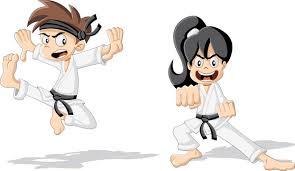

In the public park near my residence, a motley group of kids and teenagers gather after dusk to learn karate from a trainer who does not generate the impression of being an agile practitioner of the art of self-defence. He barely makes a move as he struggles to raise a leg or strike an aggressive pose in his demo lesson. Although his body seems to have lost visible signs of fitness, his body of experience helps him grow his client base. He depends on his stentorian voice to cast a grand impression and throw his weight around as the most experienced trainer in the town.
In the presence of guardians, mostly mothers, the instructor tries his best to sound confident and look smart, ready to provide feedback regarding the progress of young learners who grasp the moves and go home to try it out on their tired fathers unwilling to sponsor a weekend treat or buy them a fancy gift. Cowed down with threats of jabbing their delicate organs with trained fingers during sleep, they cave into submission. This is the most evident sign of triumph cheered by mothers, making one wonder if the ulterior motive to train in this martial art form is to teach stubborn dads a befitting lesson.
The lure of acquiring a black belt does not make kids eager to learn karate but the assurance that they can defend themselves in case of a kidnapping attempt or sexual assault acts as a trigger for them to indulge in the practice sessions. Only a few kids, mainly girls, look genuinely interested in learning the skill whereas the rest of them perform under compulsion, to find inclusion in their peer group and amplify the status of their mothers who post pictures of karate-learning kids on their social media handles. Even though they do not expect them to become famous like Bruce Lee, they need the satisfaction of providing their kids the best opportunity to hone their defence skills. Nobody bothers to ask kids whether they asked for this opportunity. Just because they keep fighting at home, it is not right to infer that they are going to be big fighters.
The trainer appears to be a good conversationalist as he takes small breaks to narrate anecdotes of his martial arts journey over the decades and infuses humour in his tales of dare-devilry to justify the steep fee he charges for his tutelage. Holding open-air classes three days a week, the instructor regales them with heart-warming, humorous tales that bring out the chronicler in him, fetching instant praise from the mixed crowd and free advice to compile them in the form of a book. Story-telling acumen ramps up his popularity as a karate teacher in the locality as he rides a heavy motorbike despite a problematic knee after surviving a life-threatening accident. Sympathy drips for him when he explains how he risked his life to save the life of a stray dog one night.
Many women admirers predict a better future for him as a successful writer without knowing the long, harrowing struggle behind it. He spends more time in the park and allows kids to practice a lot without interference while he engages in discussion with mothers who appear sympathetic to his sacrifices and dedication. When some of his students excel in the district-level championships, the credit goes to him for being an excellent mentor.
Almost a similar scene pans out in the housing society where the builder has constructed an indoor swimming pool as the chief attraction to sell the apartments. Considered a good exercise and a necessity to stay safe from drowning, parents and kids line up to learn to swim every evening. With mothers tagging along, kids in swimwear brace up to master new strokes. Men sit and dangle their legs by the poolside, sometimes taking a half dip as if bathing in a holy river, holding the rod for support. It gives a feeling of consolation that they use their time for exercise and also to showcase their responsibility towards young ones by teaching them swimming.
Talking about popular hobbies, the craze to attend a music school remains all-time high as there are multiple options to take up singing as a career. Kids learn Sa-Re-Ga-Ma[1] along with ABCD these days. When they trudge to the music academy to learn how to sing or dance, it reminds me of what I had been through during my childhood days. The shrill-voiced music teacher was so scary that I could not play the harmonium in her presence. Hitting the right notes always became a challenge. After a few months, she gave her verdict that my voice was good, but my singing was bad. The day I broke the reeds of her favourite harmonium, her patience also broke. She imposed a fine to compensate for the damaged instrument and asked me to leave.
Some years later, I got a chance to sing in front of my class on Teachers’ Day. The few lines I sang were liked but they added it was too fast paced, as if I was in a hurry to complete the song. I couldn’t say I tried to be peppy, but the truth is that in the presence of a teacher, you are reminded of alerts like quick or hurry. The lack of stillness and relaxation was palpable in the voice to suggest the singer was rushing through the singing exercise.
My maiden performance in front of the audience was lauded, and I was encouraged to practice more to get the chance to sing on Parents’ Day. Imagine singing a ghazal by Ghulam Ali or Mehndi Hasan[2] in front of a thousand people, and not being able to do justice to it. I chickened out as the pressure took a toll on my confidence to deliver. Even though some teachers encouraged me to take it up, I stayed out of it as the words of my music teacher kept haunting me. My tryst with singing began and ended with a film song from a Bollywood flick, Saagar[3]. Sometimes the wrong guide derails your interest. You develop a fear of the subject based on expert assessment by a person who is no expert of the subject. A fast paced ghazal performance would have been a hilarious idea as would be a new take on the ghazal format. It would have also become the iconic highlight and a major embarrassment in front of purists who would abhor the idea of a pop ghazal as a deliberate attempt to mar its purity.
There is a new visitor – a guitarist – who comes to the park with his son. He sits on a bench and practices Western numbers while his son goes playing with friends. Park joggers stop in their tracks and listen to his soulful singing. Recently, a senior uncle assured him of an audience during the cultural program in the festive season and he agreed to sing Bengali numbers before a few hundred people without charging a penny. It was a dream come true for an upcoming musician and he thanked the committee members.
The son started dancing right away, feeling happy for his father who was struggling to get a chance all these years. Most of the kids in school perform in front of their parents but it is a surprise when fathers perform on stage in front of their children. The joy parents get by encouraging kids to pursue a hobby is sometimes guided by their residual desire to see their kids learn what they couldn’t during their prime years. When kids see their parents fulfill their dreams, they also feel happy that they are not forced to realise the unfulfilled aspirations of their parents. While it is good to give kids the chance to pursue a hobby, it should be of their choice and not thrust upon them as a compulsion just because some kids in the locality or peer group are doing it. A hobby cannot become a passion if one is not obsessed with it.
[1] Indian notes for music
[2] Well known Indian singers
[3] Translates as Ocean, a 1985 Bollywood film
Devraj Singh Kalsi works as a senior copywriter in Kolkata. His short stories and essays have been published in Deccan Herald, Tehelka, Kitaab, Earthen Lamp Journal, Assam Tribune, and The Statesman. Pal Motors is his first novel.
PLEASE NOTE: ARTICLES CAN ONLY BE REPRODUCED IN OTHER SITES WITH DUE ACKNOWLEDGEMENT TO BORDERLESS JOURNAL
Click here to access the Borderless anthology, Monalisa No Longer Smiles
Click here to access Monalisa No Longer Smiles on Kindle Amazon International
 Borderless