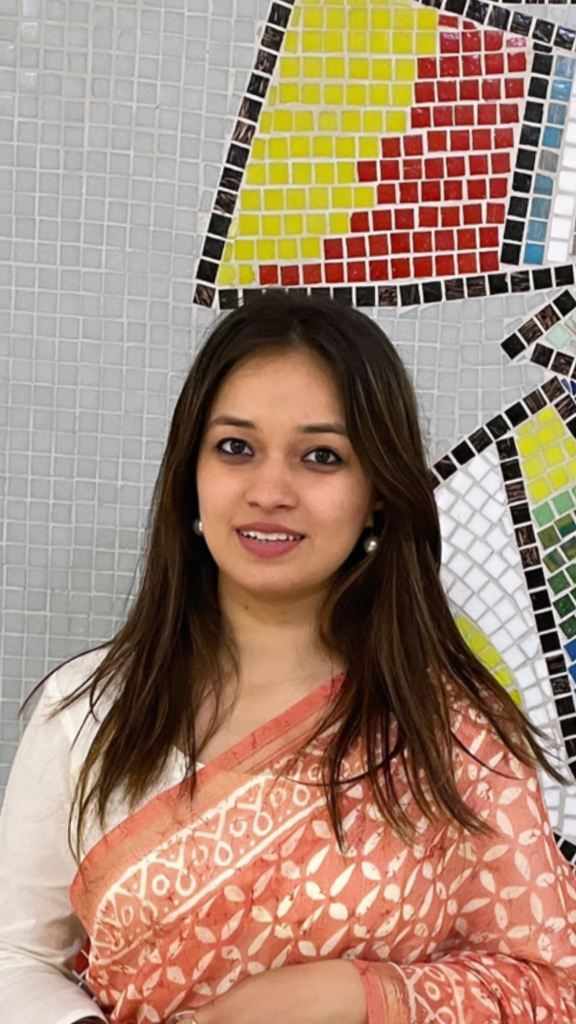
By Disha Dahiya
Humans are in a perpetual state of motion — be it intercity, interstate, or inter-country — and the relentless quest to assimilate commences. Embracing a new culture, blending seamlessly with the locals, and adopting regional slangs and accents become daily endeavours. In this race without a finish line, a persistent anxiety takes hold. “What if I don’t quite fit in?” “Will people forever perceive me as an outsider?” “Could I lose touch with my roots?” Trust me, this apprehension intensifies when one immigrates to a foreign land.
The inner conflict of belonging experienced in transcultural migrations casts light on the concept of cultural dysphoria. When I first encountered this term, it piqued my interest in how individuals navigate their daily lives while carrying this weight. Cultural dysphoria, a recent term, is an extension of the concept of dysphoria. EverydayFeminism defines cultural dysphoria as: “…the dissonance between the societal expectations for an individual’s broad cultural performance or identity and their desired embodiment of that culture, or uncertainty about where they fit into cultural categories.”
In simpler terms, someone experiencing cultural dysphoria feels like an alien in a new culture. They grapple with the space between two distinct cultures. While their mind urges them to embrace the tenets of the new cultural paradigm, their heart insists on preserving their native cultural heritage.
It was only recently that I comprehended how the concept of cultural dysphoria applied to both me and my family. This understanding took nearly two decades to crystallise, but as the adage goes, “better late than never.” Such realisation would not have dawned upon me without the pursuit of my Ph.D. thesis. Over time, I delved into novels penned by first-generation South Asian American writers such as Chitra Banerjee Divakaruni, Amulya Malladi, Naomi Munaveera, and Bapsi Sidhwa. These authors were born in South Asian countries and subsequently migrated to America. Their literary works often delve into the challenges faced by immigrant families in a foreign land. Reading allows us to explore the world, but essays and books also furnish a window through which we can empathise with someone’s narrative. Nevertheless, one’s own story offers a distinct and nuanced perspective. Indeed, first-hand experiences yield unique vantage points.
I was a mere eight-years-old when my father obtained Canada’s Permanent Residency Card, and our journey towards establishing roots in a foreign land began. As a second grader, comprehending that you’re about to traverse over 7,000 miles is no small feat. At times, the gravity of such a situation eluded me. On other occasions, I found excitement in the impending turbulence. It was exhilarating, even though questions like ‘why are we relocating?’ and ‘why must I leave my school?’ continually lingered in my mind, spanning the distance from Delhi to our future home in Calgary.
This is the nature of belongingness – it doesn’t instantaneously manifest if you’ve have never before contemplated the possibility of residing in a country far removed from your homeland. The initial step in transcultural migration involves recognition, transcendence, and integration. One must acknowledge the reality of transcending boundaries, leaving behind their original cultural heritage, and stepping foot in a foreign land with its own distinct cultural tapestry. I refer to this stage as ‘Acceptance’, as it encompasses a multitude of thoughts regarding one’s capacity to accept and be accepted within this new environment.
For my family, the journey of assimilation began the moment we exited YYC Calgary International Airport in November 2006. A friend of my maternal uncle’s son welcomed us—a network woven through connections—a common phenomenon in Indian culture. Connecting with familiar faces, who then introduce you to others, and this chain keeps expanding, is deeply ingrained in our cultural fabric. From being surrounded by individuals of a different ethnicity to grappling with the nuances of time zones, my family sought to adapt to our new Canadian milieu. Isn’t it peculiar how one day you’re in the tranquility of your home, and the very next day, you soaring through the skies, crossing international borders?
Recalling the sequence of events surrounding our immigration, nearly two decades later, is no simple task. Much has evolved, particularly my perspective on life. What once seemed normal has shifted, no longer aligning with my current perceptions. This is the natural progression of personal growth – forgetting, reminiscing, comprehending, and de-constructing. Each emotion makes sense in hindsight, guided by wisdom acquired over time.
At times, we relegate certain emotions to the shadows of our heart. We normalise the experience of residing in the in-between and the accompanying sense of non-belongingness, presuming it to be an idiosyncrasy. However, South Asian diaspora members share these particular sentiments of the in-between. We accept our role as outsiders among the locals, convinced that this is the way it should be, right?
Navigating the new environment while endeavouring to retain a strong connection to one’s roots becomes paramount when relocating to a foreign country. A part of me yearned to return to India to celebrate the Festival of Lights with those left behind, while another part was eager to explore innovative ways of preserving our culture and traditions amidst the bustling streets of a land predominantly inhabited by individuals of a different ethnicity.
During those years, Canada had not yet become the Mecca for Indian students pursuing higher education, as it is today. The immigrant community consisted mainly of those who had relocated in the ’70s or ’80s in pursuit of a brighter future for their children. Consequently, the Indian community was relatively smaller.
The question of belongingness emerged from as early as my first day at school. Where does one truly belong in a classroom of over twenty students with varied ethnicity? Among these students, four were of Indian descent, two hailed from Pakistan, one each from Australia and France, while the remainder were Canadian natives. Yet none of these students were unequivocally ‘Indian.’
The logical assumption might be that I belonged with the group of four Indian-origin students. However, this was not the case because, fundamentally, I was Indian. A subtle distinction lies between being Indian and being of Indian origin. It wasn’t a matter of passports; it ran deeper. I was too Indian to seamlessly integrate with non-Indians and just slightly more Indian than those of Indian origin. I existed as an ‘other’ amidst the ‘others,’ with the four Indian-origin students occasionally amused by my Indian accent. Emerging from a decent background, having received education in a convent school, initiating casual conversations with a simple ‘hey, what’s up?’ was effortless. Yet, adopting a foreign accent was not within my purview. My peers of the same age knew precisely when and how to employ phrases like ‘screw it,’ ‘for God’s sake’, I’m not interested,’ and ‘nahhhh…’ The only phrase that came to mind whenever I wished to express my lack of interest was ‘it doesn’t matter’. As a non-native English speaker, it was the most apt phrase I could muster. Apparently, seamless alignment in terms of accent, language, and communication is pivotal to establishing friendships in a foreign land. Failure to do so results in being cast aside as an outsider.
The nagging thought that permeated my family’s collective consciousness during those early days in Canada was this: Do we belong here among people who do not perceive us as one of themselves? We had successfully traversed the initial stage of transcultural migration. Consequently, the second stage — which I’ve labelled ‘Non-belongingness’ — became a pivotal moment, shedding light on our lack of alignment with both people of Indian origin and non-Indians. Our cultural identity remained a poignant question mark, casting a shadow over our Canadian experience.
For my father, commuting to work entailed a daily two-hour journey to and from his workplace. Occasional weekend outings, mostly for groceries, marked the extent of our excursions. Indian suits were my mother’s customary attire, but how long would that persist? After a few months, she transitioned to wearing jeans and long shirts. While Indian suits exude grace and elegance, she lamented the difficulty of blending in. “Passing by a row of foreigners while wearing a salwar kameez is a daunting task; one becomes the subject of unwarranted stares,” she confided. Her eyes betrayed a longing for the life she left behind in India, where she could choose her favourite salwar kameez and embellish it with the most exquisite dupatta in her wardrobe without attracting undue attention. I sensed her yearning for India, particularly when my maternal grandfather — whom I affectionately called Nanu — phoned. Each call filled her with joy, and her countenance radiated even more than usual. Perhaps Nanu sensed her yearning to return, which manifested as glistening tears on my mother’s cheeks.
Life in Canada was a far cry from what it used to be in India. As Diwali approached, I eagerly anticipated the deluge of sweets and gifts that would typically inundate our home in India. However, that year, those customary tokens of celebration were conspicuously absent, a stark reminder that we had yet to establish a substantial social network in Canada. Everything had changed. People in Canada appeared disinterested in the Festival of Lights. It was just another day for them. Some were engrossed in preparations for Christmas, while others seemed oblivious to the existence of Diwali, India’s most eagerly awaited festival. With no candles adorning our home, no gifts to fuel our excitement, and nothing resembling the grandeur of an Indian Diwali, our spirits plummeted upon realising that we had yet to sever our emotional ties to our culture. It was a perplexing sensation. While I yearned to embrace the festivities of Christmas, the absence of enthusiasm for Diwali contrasted starkly with my Canadian expectations. I believe my parents experienced a similar sentiment because on that day, an uncharacteristic sombreness shrouded our smiles. We smiled for each other, but the glint in our eyes bespoke our longing for our true home, India.
In this narrative, where did we truly belong? Some may argue that we belonged where we resided at that moment, while others might reflect on their immigrant experiences and ponder their sense of belonging. This is where the bitter realisation of cultural dysphoria takes root. The inability to fully integrate into a foreign land, the feeling of being an outsider, and the disconnect between cultural expectations and reality culminate in a dysphoric sensation, marking the onset of the third stage in an individual’s transcultural migration journey. At this juncture, it becomes imperative to recognise that while certain aspects of one’s former culture must be relinquished, others must be preserved. I refer to this third stage as the ‘In-Between.’
The third stage of the transcultural migration experience delineates the unique space an individual occupies, betwixt and between two cultures. As immigrants, we embraced certain facets of the new culture while shedding some of our own, and vice versa, to carve out a niche that could accommodate and harmonise both cultures. Within this ‘In-Between,’ a new persona emerged. We remained too Indian for the world outside, yet our hearts affirmed it was for the best.
That year in Canada unfolded with a plethora of surprises. And then, we returned to India. But that’s a story for another essay!
The feeling of cultural dysphoria is far from uncommon. A majority of migrants grapple with the turmoil of cultural conflicts when transitioning to a new country. While this narrative offers a glimpse into how transcultural migrations can affect an individual, there exist countless other stories waiting to be shared with the world. In the area of transcultural migration, each thread tells a unique story, and my narrative is but one strand in this rich fabric of human experience. As my family and I navigated the in-between of two cultures, I am reminded that our journey is a testament to resilience, adaptability, and the enduring power of cultural identity. While the road may be fraught with challenges, the experience has imbued us with a profound appreciation for new cultures. Cultural dysphoria may cast its shadow, but it also offers a canvas for personal growth and understanding. It is my hope that by sharing our story, we illuminate the path for others embarking on similar journeys and foster a deeper understanding of the intricate web of the transcultural in-between.
Disha Dahiya is a PhD Research Scholar in English Literature. She has a keen interest in exploring the South Asian narrative across borders and boundaries while focusing on the cultural aspect of transcultural migrations.
.
PLEASE NOTE: ARTICLES CAN ONLY BE REPRODUCED IN OTHER SITES WITH DUE ACKNOWLEDGEMENT TO BORDERLESS JOURNAL
Click here to access the Borderless anthology, Monalisa No Longer Smiles
Click here to access Monalisa No Longer Smiles on Kindle Amazon International
 Borderless