By Suzanne Kamata
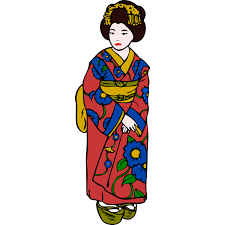
When I first came to Japan, it seemed as if people were always wanting to dress me up in traditional Japanese clothing and take my picture. The kimonos were bright, with embroidered cranes and flowers, and long furisode sleeves. I was 22 or 23. I would soon learn that such garments were only meant for young women. After marriage, Japanese women typically wore kimono with short sleeves in shades of gray.
Years later, I remember going to an event at my daughter’s school in a tunic and cardigan of light blue. One of the younger Japanese mothers commented on my outlandish fashion choice. Apparently, in Japan, I was too old for pastels. Also, it is unseemly to stand out.
Women tend to stay behind the scenes in this country. In fact, the word for wife, okusan, means “interior person.” This brings to mind someone who hides out in the depths of the house. Normally wives are not mentioned. Men do things without them. I have no idea what the wife of the current prime minister looks like.
As I became older, I could feel myself fading. For many years, I was conscious of the colour of my clothes. Wanting to be taken seriously and respected, I opted for the dark and somber. But recently I am less concerned with what other people think. This, too, comes with age.

I discovered that there is a stereotype concerning women of certain vintage in Osaka. They wear loud clothing, including leopard print, and say whatever they like. I admire that attitude. I am also a fan of Yayoi Kusama, she of the red wigs and huge polka dot dresses. Why not be iconic? Why not be a little weird?
I recently came across a call for models for a project called “40 over 40.” An American photographer in Tokyo named Tia Haygood had decided to make older women visible, to let them feel glamorous and have a good time. I volunteered to be a subject.
We had a consultation via Zoom in which I answered questions about my preferences and personality. I showed her my closet, and we talked about what I would wear. The champagne sequined dress that I bought for dinner with my daughter at the Eiffel Tower? Yes! And the four-inch heeled leopard print shoes that I had bought to go with the dress? Yes! My African print dresses? Yes! Businesslike black blazer? No!
The photo session would be fun, but I also needed a professional headshot. The author photo that I had been using, which had been hastily taken by my impatient husband in our backyard, was fifteen years old. Whenever someone asked me for a photo for a conference programme or a website, I panicked. All I had were some unsatisfactory selfies.
I packed a suitcase with clothes for the photo shoot and flew up to Tokyo. I spent the night in a hotel, and then took three trains to get to the photo studio. By the time I arrived, I was hot and sweaty.
Nobue, the makeup artist, greeted me when I peeked in the door. She ushered me into the breeze of the fan. When I had sipped some water and cooled off, I sat in a chair in front of a mirror and had my face made up.
“Don’t worry,” she kept saying, as she added colour. “Trust me.”
I did.
Tia and I talked about books and people that we knew in common and about the photo project. In December, there would be an exhibition in Tokyo featuring photos of the forty subjects. It would be a celebration, and also a networking opportunity. I vowed to be there.
For the next two or three hours, she took many photos of me in different outfits and poses. Music pumped out of the speakers. She told jokes to get me to laugh. It was fun, and it felt a tad self-indulgent, but I loved it.
While I was in that studio, no one was judging me and I wasn’t invisible. I sparkled.
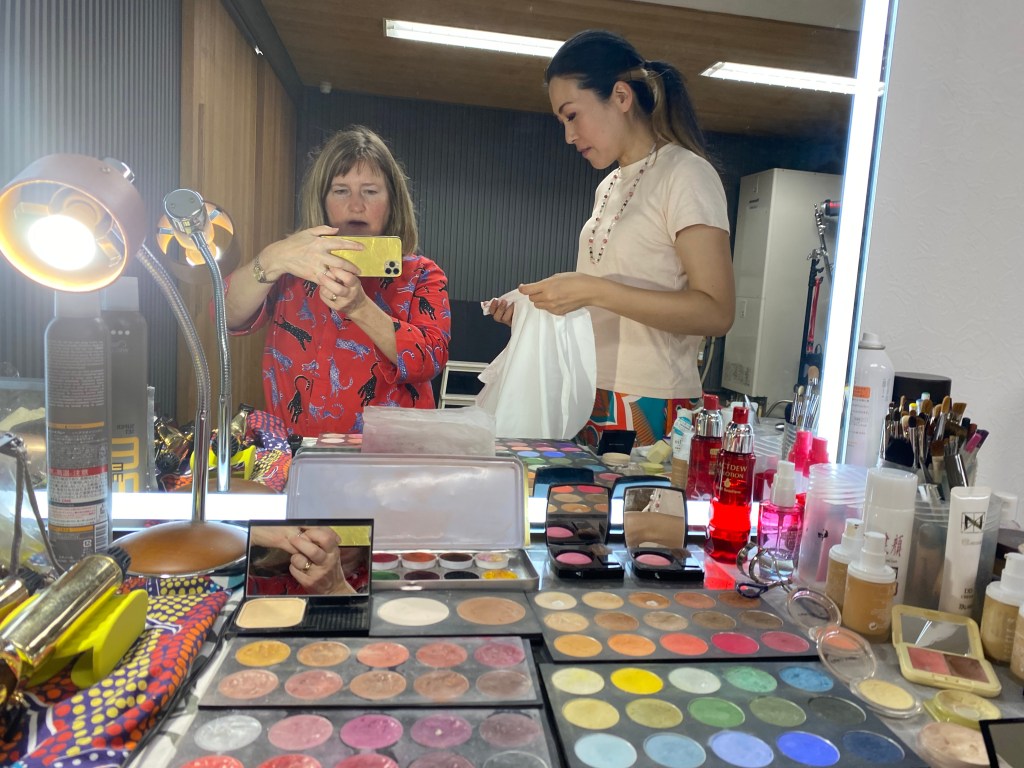
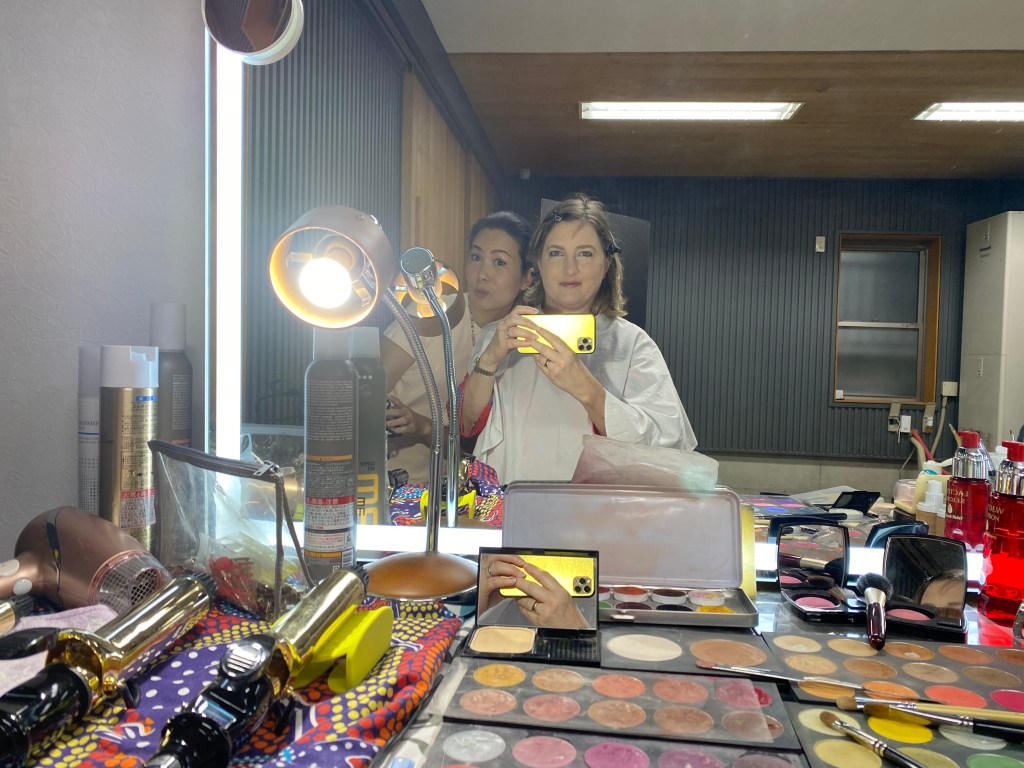
.
Suzanne Kamata was born and raised in Grand Haven, Michigan. She now lives in Japan with her husband and two children. Her short stories, essays, articles and book reviews have appeared in over 100 publications. Her work has been nominated for the Pushcart Prize five times, and received a Special Mention in 2006. She is also a two-time winner of the All Nippon Airways/Wingspan Fiction Contest, winner of the Paris Book Festival, and winner of a SCBWI Magazine Merit Award.
PLEASE NOTE: ARTICLES CAN ONLY BE REPRODUCED IN OTHER SITES WITH DUE ACKNOWLEDGEMENT TO BORDERLESS JOURNAL
Click here to access the Borderless anthology, Monalisa No Longer Smiles
Click here to access Monalisa No Longer Smiles on Kindle Amazon International


 Borderless