By Maliha Iqbal
In a tiny shop located within a narrow lane packed with people, sat Rakesh, in his late seventies, though he couldn’t say exactly. They didn’t keep proper records of birthdays back then. He sat staring outside as people pushed past one another, and over their heads, thick black electric cables coiled around one another and around long poles, forming a black canopy. He remained motionless, with glazed eyes.
Someone entered the shop, looked at him, and said something.
“What?” Rakesh muttered, coming out of his thoughts.
It was Nitesh, who had been running a food stall across the street for the past five months. It was called “Nitesh Snacks”.
“I came to have this watch repaired. It fell yesterday while I was going back home, and the glass broke.”
He put a watch on the counter. Rakesh picked it up and glanced thoughtfully at it. Then he nodded to himself and put it aside.
“I will give it to you tomorrow.”
Nitesh stood there hesitantly for a while, then said,
“Arun ji was a very nice man. It’s a pity that he…died.”
Rakesh nodded again and said nothing. His shoulders seemed to weigh him down. His head was covered with thick grey hair, dyed bright orange with henna. He wore an oversized faded blue shirt that hung over his thin frame, and it was clear that he had forgotten to shave that morning. Nitesh looked worriedly at him. Things weren’t going well, and now that Arun ji was dead, they would likely worsen.
*
Rakesh walked into his single-floor house, which was a short distance from his watch repair shop. He remembered how he had started that shop. He had painted it himself, had the shutters fitted, and then began repairing watches. It had cost him plenty to buy that tiny room on the main street, but it paid well. People came frequently, and soon he could start selling clocks and watches. The shop was named after his late father, “Narayan Watch Repairing”. He remembered covering every shred of the wall with clocks- all colours and shapes.
He went right towards the back of the house, down a long narrow corridor, to a room that was visibly separated from all the other rooms. He sat down on the bed, thinking about when it had all started—when he became like this. It was probably when Arun died…no, that happened two days ago…it was when his wife died. Or around that time, or perhaps even before. He couldn’t think straight. He sat motionless, with a deep feverish glow in his eyes.
Someone looked into the room. It was his son with a big smile on his face.
“How was work?”
Rakesh said nothing, and there was a pause.
“You must miss your friend.”
Again, nothing.
“We all have to go sometime.”
This time, Rakesh just looked at him thoughtfully. His son nodded to himself and then said, “Sold any clocks today?”
When there was no reply, he added, “Well, that business is no longer as good. A few clocks, that’s all we can sell nowadays. Everyone has clocks on their smartphones. Who needs them now? That’s why we decided to shut it down. You do remember that we have only got a month left? I hope you have started wrapping everything up.”
His son had an easy smile on his face ever since he had entered the room. He looked at him for a moment before adding, “If you need any help at all while closing down, you can always call me.”
Rakesh nodded but said nothing. His son kept talking and then left after a while. Yes, he remembered now. He remembered how it had all started. It had started soon after his son got married. They began quarrelling frequently, especially Rakesh’s wife and their son. It felt like they were always in their son’s way, like they were always doing things to disrupt his life. He remembered his wife crying all night because of their son. He didn’t say anything much until she died. He did not like quarrelling. Many things displeased him, but he learned to remain quiet or use very few words. It had still not been as bad. At least, he still had some respect around the house.
Then one day, his son had seemed to turn over a new leaf. He was always there for him suddenly. He took an interest in the shop. He sat and chatted with him in the evenings over a cup of tea. Rakesh liked this change. Over several months, he came to trust his son, feeling a sense of satisfaction when he looked at him. There were disagreements, of course, but his son invariably seemed to come to his senses and apologised.
Rakesh couldn’t remember how long this harmony continued, but he did remember when it came to an end. It was a short time after he signed the documents that transferred all his property to his son. After that, things began to change. His son no longer took an interest in the shop. They barely spoke anymore. Rakesh’s health also started to deteriorate. Instead of taking more care of him, his son had a room built at the far end of the house. This room was bare except for an old wooden bed and an attached bathroom. It was in this room that Rakesh spent most of his time while he was in the house. His food was sent to the room. It always looked like leftover food from yesterday. Whenever they quarrelled, his son would always end the argument by giving the example of their old neighbour, who was sent to live in a temple by his children because he became ‘too much of a burden.’
He had lived like that for about a year now, missing his wife terribly. No one spoke to him in the house. His only solace was his shop. He eagerly spoke to the customers, absorbing himself in his work. His closest friend, Arun, was a barber whose small salon was right next to the watch repair shop. They had known each other for forty years. Every day, after closing up, they sat and chatted for about an hour. Arun was the one person he could always talk to, the one person who always shared his sorrow, and now Arun was dead. He had no one. At night, he would lie in bed, hearing laughter drift from the house. There was no outlet for his sorrow. It was bottled up inside him, and he felt that it was slowly poisoning him. His feet felt heavy, his breathing was often laborious, and he sometimes heard his wife calling out to him in the middle of the night. Was he going mad? Perhaps he was, and this month, his son’s news had been the final nail in his coffin.
His son had come bustling into the dingy room with a smile and told him that he urgently needed some money, then he had abruptly began talking about the watch shop—how it was not doing well, how people no longer cared about watches anyway, and how Rakesh was getting old and needed some rest. Then he explained that these things had prompted him to sell the shop, and they were required to clear out within two months.
There had been heated arguments between them. Rakesh had refused to speak to him for several days until one day, his son had assumed that his silence meant that the matter was settled. That there was no longer any need to discuss the issue anymore. Rakesh had become quieter than ever before. All he did was nod, as though if he was careful enough to maintain his stubborn silence, then perhaps someone out there would miss his words. Would miss them enough to make things right again. He would have a function in this world—a purpose. He would not be a burden on anyone. His son would miss speaking to him. They would once again sit in the evenings with a cup of tea and chat, not because he wanted his property, but for Rakesh’s sake. Because Rakesh would never be a burden. No one could make that happen to him.
*
Rakesh woke up and stared at the ceiling for several minutes before he realised that someone was in the room. Someone was speaking to him. He sat up and looked thoughtfully at his son. He was still too disoriented to hear him.
“You still haven’t done a thing…I can’t believe…we only have ten days left…do you realise how less time that is?” his son said.
Rakesh thought that he might be in a dream, but then he remembered that he hadn’t had a dream for years. He closed his eyes tightly and opened them again. It became clearer.
“You had two months to clear the shop. That’s more time than necessary in the first place, and today I went there in the morning to have a look, but not a thing has changed! I thought I could trust you with a simple task like this. How can I handle everything on my own? Haven’t I always taken proper care of you? But okay now, tomorrow I am coming down myself to start clearing things up. This has gone on for long enough. I know you have been handing over all the earnings from the shop to Arun’s old widow. I know that Arun was very poor, but we can’t really afford to be so generous if we are poor ourselves, can we? I tolerated all that, but you couldn’t even handle one small thing.”
Rakesh didn’t know how long his son had been speaking, but he understood what was being said. He did not reply at all and waited until his son stormed off.
He got his shirt off the hook and put it on. He stood in the middle of the room for a moment and then left the house. He walked for a long time to nowhere in particular. He had not eaten anything since the morning, but he didn’t feel hungry anyway.
He knew his son was lying. The shop had been doing just fine. His son just wanted to sell it off and get his hands on the money. Worst of all, Rakesh was powerless. Tomorrow, his son would come to start clearing up the shop, and after ten days, it would belong to someone else. He would probably spend the remainder of his days in the little cell his son had built as far away from their lives as possible, waiting for death. Waiting for time to pass.
He looked around and realised that he was near his shop. It was dusk now. In the deep orange sky, some birds were on their way home in a v-formation. How long had he walked? He felt drained, and his heart was fluttering slightly. He stared at the shop front for a while, waiting for his breathing to become normal again, but it didn’t. He then began to open the shutter, but it felt heavier than usual. By the time it was done, he was sweating profusely. Once inside, he collapsed into his chair behind the counter after locking the door from inside.
His mind was blank for a while. He was only aware of how tired his body was. Then he stared thoughtfully at each and every corner of the shop. He would leave this little space after ten days, and it would continue to exist without him. It might stand there for a hundred more years. He sometimes wished he could be a building. At least they were not a burden on anyone. They got to fulfil a certain function. He might leave, but this shop would continue to be a room. It might not be a watch repair shop, but it would still have a function. No one thought buildings were a burden. In fact, people fought with one another to get ownership. Wasn’t that what had happened to him? His son had lied and cheated to get his property, and it wasn’t even much at that.
He had thought that he would feel better after sitting down, but instead, his head had started spinning slightly. He looked at the walls. Each of them were covered with clocks from top to bottom. Normally, they would please him, the culmination of lifelong hard work. Now, looking at them, they all reminded him that time was passing. That the next day, he would have to pack each one of them. That ten days would pass soon, and after that all he would ever do would be to wait for time to pass. He could not bear the thought of packing the clocks up.
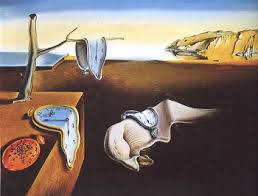
He realised that these were the last few moments of his old life, and they were passing really fast. Placing his palms on the counter, he hoisted himself out of the chair and stood for a moment, breathing hard. Then he walked over to the first clock on the wall—a bright yellow square-shaped one—and took it down from the hook. He stared at the minute hand for a while and then smashed it violently on the floor. Then he began moving faster, even though he still felt weak, but his eyes gleamed with determination. He went around smashing every clock. They all reminded him that time was flying by, leaving him behind, and for once, he wanted it to stop at the threshold of his shop. For once, he wanted to be free from the burden of the next day.
Maliha Iqbal is a student and writer from Aligarh, India. Many of her short stories, write-ups, letters and poems have been published on platforms Live Wire (The Wire), Cerebration, Kitaab, Countercurrents, Freedom Review, ArmChair Journal, Counterview, Writers’ Cafeteria, Café Dissensus, Borderless Journal and Indian Periodical. She can be reached at malihaiqbal327@gmail.com.
.
PLEASE NOTE: ARTICLES CAN ONLY BE REPRODUCED IN OTHER SITES WITH DUE ACKNOWLEDGEMENT TO BORDERLESS JOURNAL
Click here to access the Borderless anthology, Monalisa No Longer Smiles
Click here to access Monalisa No Longer Smiles on Kindle Amazon International

 Borderless