Categories
Musings

What is Great Anyway?

By Farouk Gulsara

It all started with a Facebook post which quoted Churchill and read, “If you are twenty and not a Communist[1], you don’t have a heart. But if you are forty and still a leftist, you do not have a brain.” That snowballed into a literary discourse on the word great and what constitutes greatness. The funny thing is that Churchill never said anything to that effect. The closest one gets to that quotation is Otto von Bismarck, the first Chancellor of Germany who may have uttered, “He who is not a socialist at 19, has no heart. He who is still a socialist at 30, has no brain.” By the way, Bismarck’s brand of politics earned him the title ‘Iron Chancellor’. How do we classify something or someone as great or otherwise?

As written by the victors, history also designates Churchill as a great leader and statesman. A towering figure, he stood steadfast with the people, with his oratory skills, during ‘The Darkest Hour[2], as London was bombarded by German fighter planes. Surprisingly, he was also voted out of office after World War II. He was mentioned to have said, “History will be kind to me, for I intend to write it.”[3] I do not think that the family members of the 1943 Bengal famine victims will consider him anything but great – a racist, a bigot and a white supremacist, maybe. 

Even then, many in the United Kingdom thought Churchill was not a statesman but a foul-mouthed drunkard. At a function, a female guest of aristocratic standing, obviously not his fan, berated him and his politics. She is said to have said, “Sir, if you were my husband, I’d poison your tea.” Without a single pause, the witty Churchill quipped, “Madame, if you were my wife, I’d drink it!” [4]

When Churchill was informed about the Bengal Famine, he was infamously quoted as saying, “Serves them right for breeding like rabbits and, by the way, why isn’t Gandhi dead yet?” [5]

My point is that one man’s great leader may be another’s mortal enemy. This is especially true in a world where power and wealth are used as a yardstick of prosperity. We often forget that these commodities are finite; the losses of one side exactly offset the gains of the other.

Alexander may be ‘Great’ for putting a small region called Macedonia on the world map. With all the carnage and misery he spread over the lands he and his army traversed, it took only the might of a tiny mosquito to bring him down. At least, that is one of the likely ways he died. Other contenders include alcoholic liver disease, depression and strychnine poisoning. 
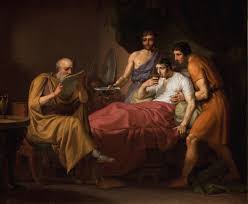
Alexander The Great On His Sickbed, By Christoffer Wilhelm Eckersberg (c. 1783 – 1853). From Public Domain

Like Alexander, many monarchs with the suffix ‘The Great’, such as Peter, Catherine, and Frederick II, left behind an enormous body count and a trail of devastation. 

The Great ‘state-of-the-art’ Titanic was marketed as ‘unsinkable’, and itself was a lifeboat with tight watertight compartments, giving ample time for ferry passengers to be rescued by rescue vessels. Hence, the need for an adequate number of lifeboats was deemed unnecessary. We all know about the irony of its disastrous maiden journey, which is still spoken about a century later as one of Man’s greatest miscalculations.[6]

Indians of the 20th century honoured Karamchand Mohandas Gandhi as a selfless soul who chose a life of poverty to stir the masses’ consciousness towards self-rule. The people thought it appropriate to address him as Mahatma (the Great Soul) or the Father of the Nation. Today, an increasing number of Indians are having second thoughts. Perhaps they may have been taken for a ride and got the short end of the stick from the British. It is amusing that Gandhi’s son, Harilal, despite the reverence of the people of the subcontinent towards his father, also did not hold his father in high regard. Disillusioned with the senior’s move to block his law scholarship to England, Harilal became a rebel, spiralling into alcoholism, eventually becoming a public nuisance and falling into oblivion.[7] 

The Great War, also known as World War I, was touted as a necessary battle to end all wars. We know it never ended anything, but its post-war deals remain a nidus for World War II and the turmoils that persist even today. 

The Great Gatsby exposes the fallacy of the American Dream and the notion of a successful life under capitalism. F. Scott Fitzgerald shows that success-based materialism and trying to relive a nostalgic past will not lead to fulfilment. Instead, it will lead to a decadent path and disappointment. [8]
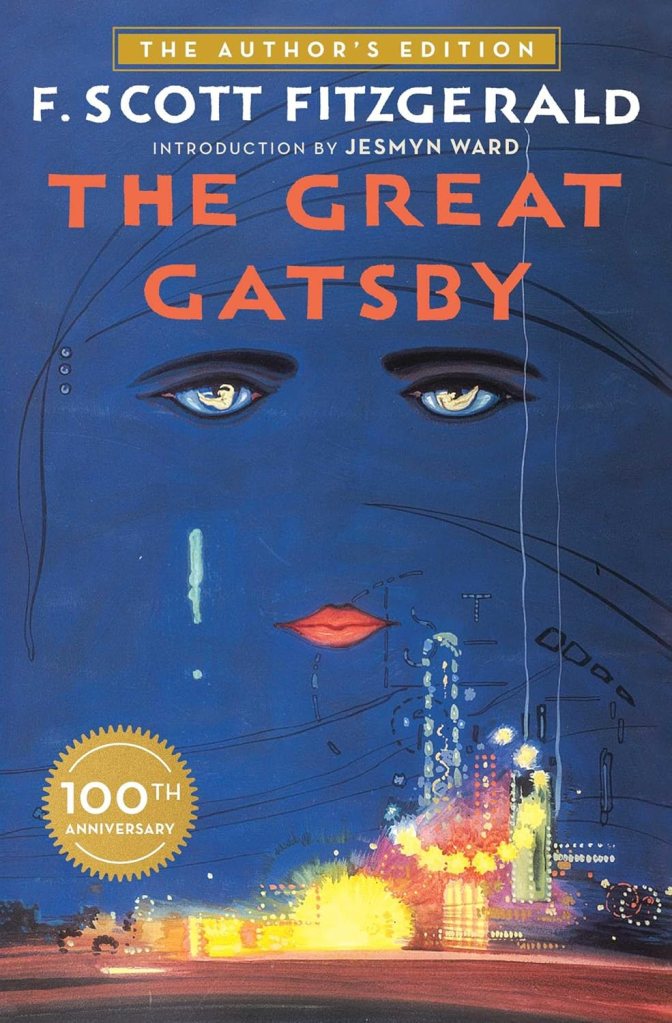
In a world so entrenched in wealth acquisition, we have heard of many families afflicted with the misfortune of striking it rich in the lottery and seeing their family spiral into an abyss.

The Great Train Robbery in 1963, the UK’s biggest heist, where the robbers scooted off with the present-day value of £62 million, ended with none of the culprits laying their hands on the loot, but mostly just behind bars. [9]

Just look at Trump and his track to the White House using the ticket which promises to ‘Make America Great Again (MAGA)’. The illusion of the blissful past only morphed into civil unrest, which required the deployment of National Guards and Marines to use flash-bang grenades and tear gas to squash down their own citizens. If that was not enough, now there is talk of MIGA — Make Iran Great Again, perhaps returning Iran to its glory days of the Persian Empire! [10]

When we describe something as great, we usually refer to it in a positive light, as something extraordinary pushing human abilities beyond normal boundaries. It is a subjective assessment. One man’s greatness is another’s failure. It can serve as a cautionary tale for those who have fallen. 

It’s just food for thought. After having a bad day at the office when nothing went right, we returned to find that we had forgotten the house key at work and had to go all the way back to the office to retrieve it. What do we say? “Great!”

.

[1] ). Even though this quote is often referred to as coming from Churchill, it may have  been originated from Otto von Bismarck, the first Chancellor of unified Germany between 1871 and 1890. He could have said, “he who is not a socialist at 19, has no  heart. He who is still a socialist at 30, has no brain.”

Katycarruther’s.com

https://en.wikiquote.org/wiki/Talk:Otto_von_Bismarck#Unsourced

[2] Speech and 2017 bmovie, which included the speech called ‘The Darkest Hour’

[3] https://www.goodreads.com/quotes/4611-history-will-be-kind-to-me-for-i-intend-to

[4] People probably put words into Churchill’s mouth. It may be a misquotation. The conversation may have taken place between Lady Astor and Churchill’s aide. 

https://www.smithsonianmag.com/history/illustrious-history-misquoting-winston-churchill-180953634/

[5] Churchill’s policies contributed to the 1943 Bengal famine – study.

https://www.theguardian.com/world/2019/mar/29/winston-churchill-policies-contributed-to-1943-bengal-famine-study

[6] Did Anyone Really Think the Titanic was Unsinkable? The makers probably oversold it.’

https://www.britannica.com/story/did-anyone-really-think-the-titanic-was-unsinkable

[7] Father to a nation, stranger to his son.

https://www.theguardian.com/film/2007/aug/10/india

[8] The reality was not what success for everyone in America.

https://www.ewadirect.com/proceedings/chr/article/view/9147

[9] The men behind the Great Train Robbery

https://www.bbc.co.uk/culture/article/20250410-the-men-behind-the-great-train-robbery

[10] MAGA to MIGA.

https://www.wionews.com/world/from-maga-to-miga-donald-trump-suggests-regime-change-to-make-iran-great-again-1750631822282/amp

.

Farouk Gulsara is a daytime healer and a writer by night. After developing his left side of his brain almost half his lifetime, this johnny-come-lately decided to stimulate the non-dominant part of his remaining half. An author of two non-fiction books, Inside the twisted mind of Rifle Range Boy and Real Lessons from Reel Life, he writes regularly in his blog, Rifle Range Boy.

Disclaimer: The opinions expressed are solely that of the author and not of Borderless Journal.

PLEASE NOTE: ARTICLES CAN ONLY BE REPRODUCED IN OTHER SITES WITH DUE ACKNOWLEDGEMENT TO BORDERLESS JOURNAL

Click here to access the Borderless anthology, Monalisa No Longer Smiles

Click here to access Monalisa No Longer Smiles on Kindle Amazon International

Categories
Musings

I am a Jalebi

By Arjan Batth

Frying Jalebis

A jalebi, with a name as eccentric as its appearance, is made by a halwai (or a confectionery maker) with skillful etchings of concentric circular shapes of a paste of flour in hot bubbling ghee like a discerning painter with a brush. Oil simmers in unison with Lata Mangeshkar’s filmi voice, price bargaining, and noisy traffic — a distinctly South Asian symphony. The jalebi becomes fully congealed, eventually submerged in syrup and infused with its sweetened spirit. This delicate confection is then put in a basket on the side of a narrow street or in the midst of a chaotic bazaar, appearing as a platter of petite suns, seducing the occasional child like a syrupy siren. There are other mithai or sweets among it — barfis, ladoos, gulab jamun and more besan (gram flour) progenies. But the jalebi, like me, is markedly different from the rest. While it may be quite odd to describe oneself as a confection, I have inevitably come to the realization that I am, quite indubitably, a jalebi.

I am a jalebi not because I am saccharine, nor because of my lingering unpalatable aftertaste, but rather, because I am different, with my intricately eccentric swirls and peculiar oddities — a disorderly collection of twists that spiral infinitely into oblivion. I remain a vibrant enigma that is overtly incongruous, out of place in the world around me, a spectacle that can’t quite be made sense of. Seeing myself as a jalebi seemed the only way to make sense of the various oddities I have exhibited from a young age. It finally offered an explanation for my differences which seemed to have no tangible cause or explicable origin. And while it was a peculiar explanation, it was an explanation nonetheless, one that temporarily ended a search for an answer and brought with it a certain equanimity. Although I may not be appealing in the way a jalebi is, I am indeed the confection — a twisted, swirly, and overly orange one.

It was self-evident from a young age that I was not like most others. It was this feeling of being different that later blossomed into a profound estrangement. Most people are products of their environment and are thus well adapted to their surroundings. However, I seem to be the product of some other, indefinable forces. I feel irrelevant, always having the urge to be somewhere else, where others are more similar to me in a place that would make me feel a little more relevant. I am under the impression that I was born into the wrong life, in the wrong circumstances or context, the subject of a divine blunder and ridiculed by probability. I should be this rather than that. There rather than here. I am frustrated by the immutability of it all, the permanence of the things you are born into — religion, culture, language, and time. While it may seem futile to be frustrated by such things, they didn’t seem to fit in with who I was.

Inevitably, I remain pierced by loneliness. It is a paradoxical loneliness, not one due to physical isolation, but one borne out of my ability to see the world differently than most and my inability to see the world conventionally. One of the most distressing things that I felt knew, or at least believed I knew, that there were others like me, but just that they weren’t where I was, as if they were deliberately staying hidden away from me. While I have had some relationships before, most lack the intimacy and closeness that comes with genuine friendship. Compared to others, my idiosyncrasies and differences seemed magnified to a microscopic level, making me feel that there was something wrong with me clinically. This estrangement created an opaque silence within me, when I could no longer make sense of what was happening around me. I felt completely different, the discomfort and incongruity in the air around me, almost seemingly tangible and graspable, as thick and viscous as sea water. It is this certain “off” feeling, a discomfort, a malaise of some sort, a feeling of deep irrelevance, that I often felt.

My condition seems to be mirrored by the big jalebi in the sky, the Sun, the suraj, who like me, exhibits much jalebi-ness. The Sun’s interstellar solitude reminds me of my own alienation. It is the only star of its kind in the solar system; the next nearest star is 4.25 light years (24.9 trillion miles) away. And quite significantly, both of us are seemingly encumbered by the weight of the universe.

While I may seem outwardly peaceful because of my superficial reticence, I actually remain quiet because of the turmoil within me. I am pensive while my thoughts attempt to make sense of the confusing world around me. My mind is a spiraling jalebi that tightens and tightens, swirls and swirls, twirls and twirls into neurotic rumination. I often feel disordered, like a faulty machine. I am anxious and apprehensive about some things, fastidious about minor aberrations, and often despondent.

Some days, everything seems to be tinged in a certain sadness. A certain understood, yet unspoken hopeless injustice. My melancholy springs from a fusillade of realisations about the world.  Being exposed to the world’s harshness and its lack of hope and reason, my reality seems to have a propensity, an innate tendency, to be brutal. I anachronistically experienced the Romantic ennui that French teenagers felt in the 19th century, trying to find meaning in our capitalistic, success driven world. Like Nick Carraway from The Great Gatsby, “I was within and without, simultaneously enchanted and repelled by the inexhaustible variety of life.” I am a ghost of sorts, a specter of vicarious and passive living. But beyond my nihilism, I am disturbed by the unfathomability of concepts that govern our universe: the concept of time, the size of the universe, death, the sun’s brightness, human consciousness. But as a single living organism, the universe has no obligation to make sense to me and holds no obligation of any other kind.

I am also a jalebi because of my South Asian background. Even though I have grown up thousands of miles away from India, it infuses itself into my life, an  every day, colouring of a distinct shade of Indianness. It is in the food I swallow. The thoughts I think. The genes that materialize my body. Yet, there is a disconnect to “my homeland” not only due to the seemingly interminable physical distance, but because I have spent my entire life in the West. As such, I perceive India and the world through a unique lens. I see it as a Westerner, yet also as an Indian, making sense of the world through a complicated, paradoxical mosaics. 

The boundaries of a culture are always delineated by an “us” and “them”. But I struggle to define the “us” and the “them”. In India, the borders between ethnic, linguistic, and religious identity all simultaneously converge and diverge. In the modern post-colonial era with the ancient civilization partitioned and shattered, the definition of Indian is constantly questioned and changing. As technically a minority in India’s extremely diverse cultural landscape, I feel like a decimal point, a fraction not a whole, in a country with over a billion people. And in the US, I am not just American, but an Indian American — another “doctor” trying to uphold the coveted model minority status.

I have long felt like an outsider, a conspicuous jalebi, in both places, perpetually stateless and displaced, like a refugee devoid of a nationality. As I don’t know what to think of my culture, I don’t know what to think of myself. There is no dictionary that contains my name as a word entry. No particular space to define me or explain who I am. It is absent. Unwritten. Blank. And so, in an attempt to define the indefinable, I define myself as a jalebi.

Rather than ponder upon my loneliness, I muse on the big jalebi in the sky, my constant companion. I try to find the sun in other things. The suraj meets me. Sometimes in the grass. In a busy city. Or near the ocean. On a windy day. Or on a walk. In my mind. In my dreams. Wherever really — sometimes among the surajmukhis (sunflowers)thatsprout out of the ground, with the grimming expression of the sun. The suraj is in the juicy, citrus fruits hanging off verdant trees. And of course, the sun is in every jalebi. I realize that because of the sun, all colours exist. Because of the sun, I am able to see. And while the sun does illuminate a brutal world, there are some things that my eyes can find worth looking at. I try not to think of the sadness that everything is tinged with, but rather the colours of our world. People wear sunglasses to dim the radiance of the sun, but I fully embrace its blinding light — I find solace in the sol. I sit there, a petite sun myself in the light of a large sun, wistfully wondering.   

And while I may feel quite alone right now, I think that other jalebis in other places are waiting for me. Somewhere on this spinning planet. Under the radiance of the big jalebi in the sky. Somewhere in this jalebi-shaped galaxy.

.

Arjan Batth is a student from California. He has recently written a children’s book, ‘Dear Humans’, that tackles the issue of climate change. As a young South Asian-American, he is determined to represent Asians more in the writing field and has a passion for writing and literature. He can be reached at arjanbatth@gmail.com

.

PLEASE NOTE: ARTICLES CAN ONLY BE REPRODUCED IN OTHER SITES WITH DUE ACKNOWLEDGEMENT TO BORDERLESS JOURNAL