By Christina Yin
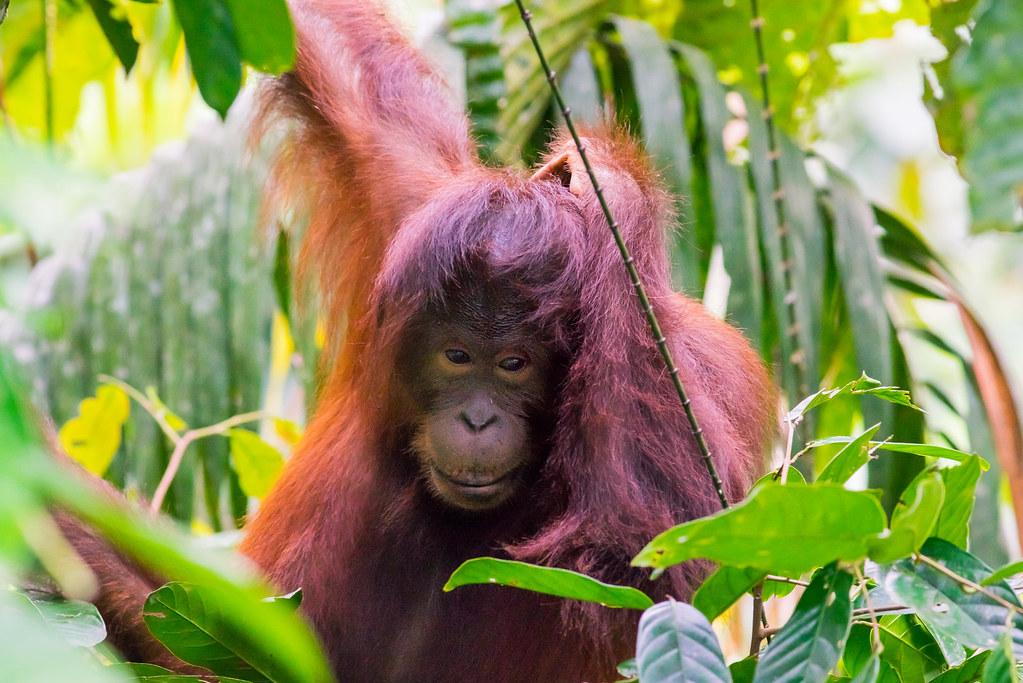
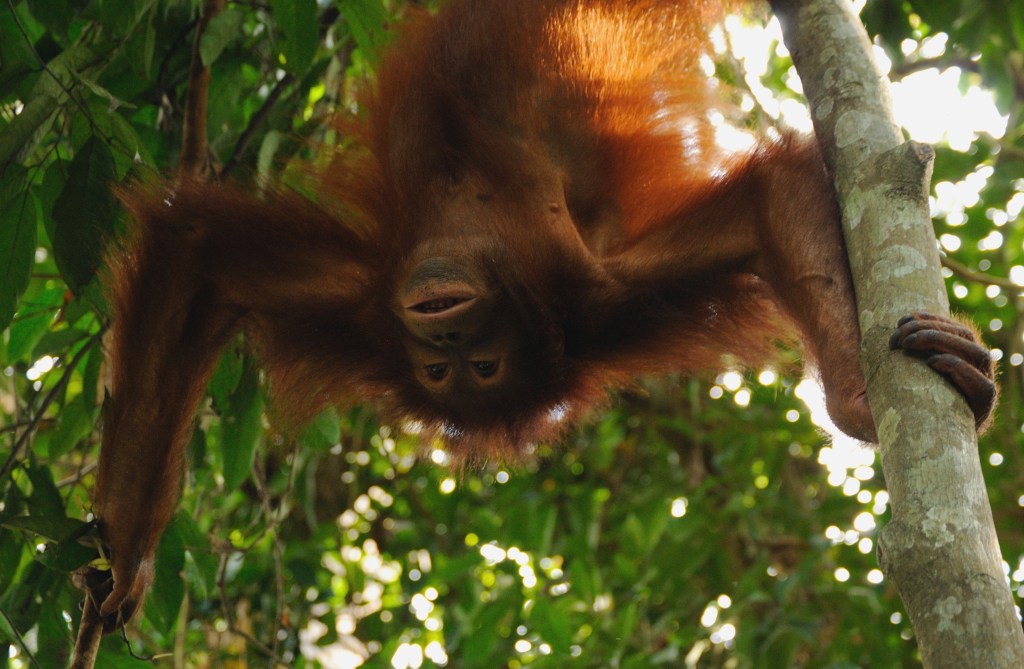
Up up, SK Nanga Delok, up!
“Up up, SK Nanga Delok, up!” Clambering up the steep steps from the jetty and over a windy pathway, we reach the administrative office to be greeted by the school’s cheerful motto pasted outside the wooden door. Our small team is made of conservationists from the Wildlife Conservation Society Malaysia Programme, a local artist and myself, a writer and university lecturer of English academic and communication skills. It’s taken five hours on the road from Kuching to Lubok Antu and forty minutes with the sun beating down on us on a longboat navigating the lake created by the Batang Ai Dam and the River Ai’s tributaries that feed it. We’ve arrived at Sekolah Kebangsaan Nanga Delok, a government boarding school where 41 children ranging from seven to twelve years come from homes scattered around the national park.
We are deep in Sarawak, Malaysian Borneo at the fringes of two contiguous protected areas, Lanjak Entimau Wildlife Sanctuary and Batang Ai National Park, where the state’s largest known population of orangutans live untroubled by human activity. Encouraging messages about knowledge, virtue and wisdom are painted in English and Malay on the wooden walls of the school buildings constructed on slopes overlooking the river. Their water dispenser is a simple two-litre plastic capped bottle on a wooden shelf and three green plastic cups hanging from hooks outside different classrooms. A simple message in Malay with a picture of a smiling teacher in a baju kurung, the national dress, says: “Sila basuh cawan selepas minum, Terima kasih.” (Please wash the cup after drinking. Thank you.)The national flower, hibiscus, is painted on the wall right by the water dispenser with the 14-pointed yellow star against the blue as well as the red and white stripes of the Malaysian flag within its petals.
The children are curious and excited to see us: conservation through art and English after-school activities! They are wondering what these could be. But the most stunning message comes to me when I see the t-shirts these young boys and girls are wearing deep in the Bornean tropical rainforest. The names on their backs are bold — foreign and yet familiar: Hazard, Torres, Messi, De Bruyne, Messi[1].
The Dining Hall at SK Nanga Delok
In the dining hall, there are many colourful pictures and messages in Malay and English on the walls. “Welcome to Dewan Sri Nadala” in beautiful calligraphy is posted prominently on the green wall above the open counter that separates the kitchen from the dining area. It’s Tuesday, we’re told in Malay and English. Iban is the mother tongue of most of the student population, but at school, the medium of instruction is Malay and the second language is English. Coming to the boarding school from homes scattered on the banks of the Ai and its tributaries, the children are learning the national language, Malay, and English, the acknowledged lingua franca and the language of the White Rajahs and the former British colonists. Happy smiling cartoons of children urge the pupils to wash their hands before eating. Prayers are posted up on laminated paper framed with attractive borders and cartoon tiger cubs perched above the lettering. There are no tigers to be found in Borneo. The largest indigenous cat is the clouded leopard, but the children learn about tigers from schoolbooks, cartoons, television and the national crest of Malaysia.
The children stand and recite prayers, giving thanks for sustenance before every meal. When they have eaten, they stand and say an after-meal prayer of thanks as well. Indeed, there is much sustenance at the boarding school — so many meals! Breakfast, morning tea, lunch, afternoon tea, dinner, supper are served on the wooden tables covered with red and yellow flower patterned cloths protected by plastic for easy cleaning. Red and white checked cloths skirt the tables, matching the blue and white curtains that shade the glass louvres windows.
It is no wonder that many parents are happy that their children attend school, even if it means they have to be away from home at such a young age. At SK Nanga Delok, the government supplies the children with books, pencils and erasers, mattresses and pillows, and meals. Especially meals; six times a day: milky tea, bread, crackers, eggs, chicken or fish, rice, vegetables, fruit, Milo.
Talking about Orangutans
Art and English activities take place after the children’s regular school lessons. So, they are out of their dark blue and white school uniforms and in shorts or light track suit pants and t-shirts. Their hair is damp from baths and they are eager to find out what we’re all up to. The artist Angelina is teaching the older Primary 4-6 children to cut out shapes to make collages of orangutans and forests in one half of the dining hall.
In the other half, with the Primary 1-3 children, I have a plush orangutan on my lap. I give it to the child on my right and it is passed on from one child to another. We are sitting in a circle, telling a story together about Lucy, the orangutan. Each child continues the story with one sentence in English. This is how the story goes: Lucy is lost, but a big kind orangutan helps her find her way back to her mother. Of course, they have a nice meal of fresh fruits together on the way. A little boy named Rio Ferdinand is the one I remember the best. With a name like that, how could I not remember him?
Then it’s my turn with the older children. The story they tell is darker. It is about a “saviour” who takes the orangutan to a new home in a zoo. The orangutan escapes, taking his son with him, but is brought back to the zoo. One day, a scientist comes to the zoo and takes the orangutan and his son back to the forest where they eat durians and rambutans. Students come to the forest and take photographs. They go back to the city telling people that the orangutans are happier in the forest because it is their natural home. We see that some of the children really think that the animals belong in zoos. Our orangutan research team explains that wildlife belongs to the wild, in their natural habitats. We hope they understand that animals don’t belong in zoos.
At that point, the children ask to be excused because they must bring their foam mattresses in. It’s going to rain and their mattresses are airing in the sun. When they come back, we write Cinquain poetry[2] about wildlife. Their English is minimal, but they are happy, excited to learn new things and to talk to us. We talk about orangutans with the help of the Iban-speaking conservationists. The children know about orangutans. One 12-year-old tells us he saw an orangutan when he was five. He was with his father who told him he must never kill orangutans because they are protected animals. Another speaks of a traditional story she knows about orangutans becoming humans. Some of the children have seen orangutans near their homes at Mawang, Nanga Jambu, Sumpa and in the hills at Palak Taong. What, we ask, is the orangutan’s favourite food? The children shout happily: Durians!
Orangutan Stories and the Children of Nanga Delok
There is a group photograph of our team with the 41 children and their teachers at SK Nanga Delok. It was taken shortly after we had arrived and had signed the Visitor’s Book at the school’s office. The children and teachers were proud to have us visiting their school in this remote part of the state and we were honoured to be welcomed as guests. It was a happy moment for all of us.
It’s been four years since the photograph was taken. The children in the four oldest classes, Primary 3, 4, 5 and 6, would have moved on to one of the boarding schools for secondary school-aged children nearby at Lubok Antu or Engkilili. The tiny ones would be moving up the scale, now considered seniors to the new pupils. I wonder about the children and their stories and collages of the orangutans, their Cinquain poems and their shirts honouring their favourite European football players.
Dominic Helan Eric, the Park Warden at Semenggoh Wildlife Centre twenty minutes from the capital city, Kuching, tells me that his colleagues at the Forest Office at Lubok Antu reported that the number of orangutans at the Batang Ai National Park has grown. This is good news. I hope that the stories the children have heard about orangutan ancestors and lessons they have learned from their parents about protecting the red great ape will continue to be passed down to the future generations. And I hope that they will remember our stories about the orangutan belonging in the tropical rainforest and not in the enclosures of a zoo.
We know that the young people are leaving the rural towns, lured by jobs and the modern lifestyle in the cities. It is a natural consequence of development and progress. In a way, this will be good for the wildlife because there will be fewer people competing for the land and the food that can be found among the flora and fauna in the forests. But I wonder, like others do, what might be lost when the young people no longer return to their villages and longhouses. We ask ourselves, is it worth the gain of modern life, technology and progress? But it’s not a question we can answer, we who are city folk, the so-called educated and modern ones. For we live in urban areas and have access to that progress and development, so it’s not for us to say what’s best for those who live in the villages and longhouses far from modern amenities and the hubs of technology.
Although European football superstars may have reached far into the Bornean rainforest, all the way to Nanga Delok, and the lure of the modern connected city life beckons, not all of the young people have left Batang Ai. Some remain to be guides and porters, boatmen and cooks for research teams that seek to study the elusive red ape and conservation education teams that come to meet the longhouse folk. Eco-tourism brings adventurous travelers to the area as well, so there is an alternative livelihood for the villagers who choose to live on their ancestral land. Hopefully, our visit and the stories of conservation and the orangutans help to remind the children of their primate neighbours and how they can live peacefully and safely in the shared habitat.
As we push off from the jetty and the longboat putters out onto the open water created for the Batang Ai Dam, I look back at the boarding school high up on the hill hidden by the trees. I remember the school’s motto, “Up, up, SK Nanga Delok, up!”. I see the children passing Lucy, the plush orangutan to one another, adding to the story of the young red ape. I see them creating collages of orangutans and writing their Cinquain poems. But clearest in my mind is the memory of the children in their incongruous football t-shirts, imitations of the jerseys of European football stars. We are leaving this area where humans created a dam to provide electricity for the modern world; a place where some of the Iban still live the way their ancestors did, but where their children are given an education in two foreign languages, with a glimpse of a world beyond the River Ai and its tributaries.
We are heading for Lubok Antu and the long drive back to the capital. Somewhere in the forest on the far side of the river or behind us, there are orangutans. We hope that the national park and the neighbouring wildlife sanctuary will stay protected and untouched by human avarice. And we hope that the children of Nanga Delok will live happy useful lives wherever they eventually settle, whether it’s near or far from their birthplace where the orangutans still live freely in the wild.
[1] Football players
[2] A five-line poem popular among children
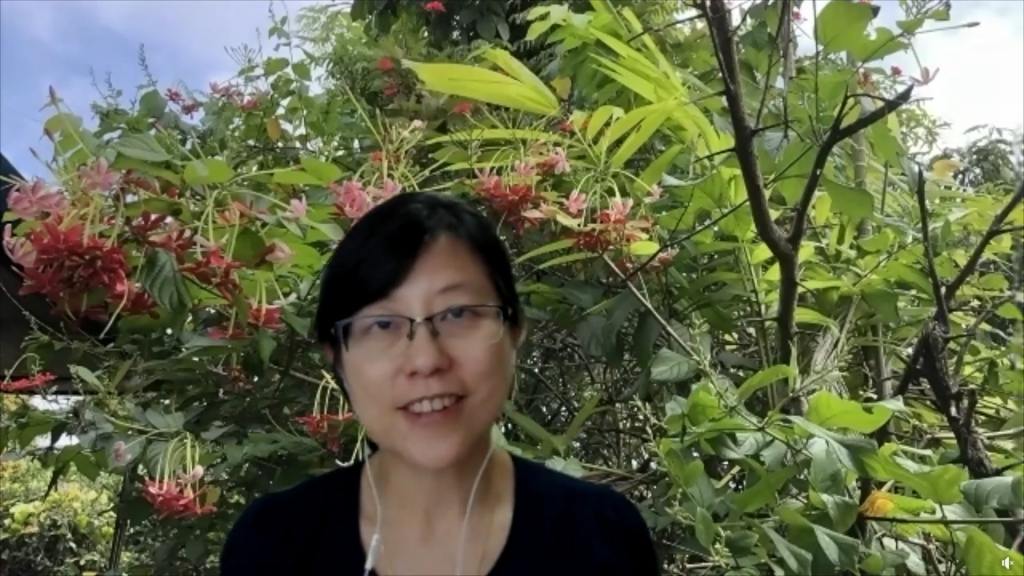
Christina Yin, PhD, is a Senior Lecturer at Swinburne University of Technology, Sarawak Campus. Her fiction and nonfiction writing have been published in eTropic, New Writing, and TEXT, among others.
PLEASE NOTE: ARTICLES CAN ONLY BE REPRODUCED IN OTHER SITES WITH DUE ACKNOWLEDGEMENT TO BORDERLESS JOURNAL
Click here to access the Borderless anthology, Monalisa No Longer Smiles


 Borderless