Categories
Review

Safdar Hashmi: Towards Theatre for a Democracy

Book Review by Meenakshi Malhotra

Title: Safdar Hashmi: Towards Theatre for a Democracy

Author: Anjum Katyal

Publisher: Orient Blackswan

How do you write a biography of a man who was yet to reach the full expression of his multifaceted talents? How do you document his contribution to social action? Do you say that the tragedy of such a premature death is not only that he died young, but that his  life was cut short while his talents were still quivering on the cusp of flowering, struggling for full self-expression? As witnesses to this shocking and traumatic event, we can call it a critical event; a moment in time which is still out of it. It is a moment of reckoning which forces us to revisit our assumptions about theatre as entertainment, a Brechtian moment which alienates us from our previous experience and which forces on us “a new and shocking revelation/revaluation of all we have been.”

In a kind of tragic irony, Safdar Hashmi’s[1]story became front page news when he was brutally attacked by some goons who were trying to stop the Jana Natya Manch actors from enacting a street play in Sahibad, one of Delhi’s industrial suburbs, on the 2nd of January, 1989. At that time, he was barely 35 years old.

Born into a close-knit family in 1954, the youngest of four siblings, Safdar Hashmi grew up in Delhi and Aligarh. His first few years of initial schooling were Aligarh and then he moved to Delhi, where he graduated from St Stephens. While the family had to struggle financially, they had plenty of opportunities to be involved in the vibrant cultural scene of Delhi in the late 1960s and early 1970s.  Safdar Hashmi: Towards Theatre for a Democracy by Anjum Katyal, a writer, editor and translator, with a forward by the eminent actor Naseeruddin Shah, details the journey of Hashmi, his total dedication to and involvement with theatre. In his forward, Shah writes that Hashmi was an actor who was unconcerened with personal fame or celebritydom. He was a theatre activist who saw theatre as a means of social action and an instrument of change; he was so dedicated to his work that he was “willing to die for it”.

The book houses his early years, his stint in Kashmir, where he proved to be a catalyst in college and university theatre and drew students into it. He worked for the newly instituted television industry in Kashmir, which helped him earn some much needed money to sustain his passionate love for his own work with street theatre .

 The slim volume is a veritable treasure trove of anecdotes about theatre from one of its scholars and connoisseurs and the narrative of Safdar’s journey is interspersed with rich dollops of theatre history. Katyal tell us stories of theatre giants like Badal Sircar, Utpal Dutt, Vinod Nagpal and M.K.Raina, thespians whose life stories and work were closely entwined with the history of theatre in India.

To quote the author, “[T]here is little reliable scholarship on the history of theater in India and on Safdar Hashmi’s contribution to Indian theatre.” Katyal’s book on Hashmi addresses both the issues, covering a substantial chunk of post-independence theatre and specifically the 1960s and seventies. Thus, we get to hear about the contributions of Utpal Dutt and Badal Sircar, doyennes and trail blazers of people’s theatre.  Katyal examines the larger socio-political environment against which  activist theatre evolved within the country. Drawing from different folk traditions , this adumbrated the vision that was truly democratic in its scope and reach and which moved out of proscenium theatre to reach trade unions and factory workers, the streets, factories and the marketplace.

Utpal Dutt, the intrepid screen and theatre actor recalled that they were  “infected by the real IPTA[2]’s concern for the people’s political struggle” and he professed, “the exhilaration of direct political action…changed me completely”.  These actors also offered valuable insights into the nature of the street theatre, including its capacity for consciousness raising and revolutionary action. Many of the street plays with their specific critiques “gathered the dispersed rage (of the people); it rallied angry men into an angry mass.”

Apart from socio-economic issues like price rise and labour exploitation, street theatre also focused on  political issues like the Emergency  and the Naxalite movement. In terms of experiments with form, in 1972 Badal Sircar and his group, Satabdi[3], introduced their Third Theatre; pieces evolved through intensive workshops. The physical and even  “graphic body  language, the ensemble approach in which all actors formed a close part of the whole with interchangeable ‘roles’,  the simple uniform-like costumes, and the strategic props were all taken straight from the news or the actors’ lives, in many cases. The narrative was often non-linear, like a collage of facts , ideas and images”.

Non-proscenium theatre, which could be performed in intimate spaces or outdoors for larger audiences, inspired groups in other parts of the country to evolve performances, which were experimental and non-formal,  combining disparate styles. The Third Theatre enabled practitioners the flexibility to practise their art even if they had no access to funds or sponsors. However, state-sponsored violence and the imposition of the Emergency in 1975 clamped down on street and activist theatre in India.

From IPTA to the plays of Utpal Dutt and Badal Sircar, the book gives a dialogic account of history of theatre, both for the specialist and non-specialist alike. Safdar Hashmi himself has written quite extensively on the history of street theatre, stating that “street theatre as it is known today can trace its direct lineage no further than the years immediately after the Russian Revolution of 1917.” It was a basically a militant, political theatre of protest. As Katyal traces the history of street theatre, she writes, “The history of street theatre in India is usually traced back to the 1940s and to the IPTA. However, the attempt to use theatre in public spaces to communicate a political message to the common people began as early as the 1930s, when the SFI[4] started using it to spread the message of class struggle among the masses.”

JANAM or the Jana (People’s) Natya (Dramatics ) Manch (Stage)was founded by Safdar Hashmi in 1973. He poured himself into developing plays like Machine, From the Village to the City and Killers, which demonstrated the group’s commitment to workers’ rights and issues. The group also took up women’s causes to raise consciousness in a society which had normalised violence against women. Their play, Aurat (Woman), met with unprecedented success and had 2500 shows. Their theatre also dealt with sectarian or communal violence.

In her book, Katyal ultimately  locates the significance of Safdar Hashmi’s and the Jana Natya Manch’s work in its strengthening of democracy and democratic processes. Tragically and ironically, he paid a high price for it.

.

[1] Safdar Hashmi (1954-1989) was one of the most major proponents of street theatre in India.

[2] Indian People’s Theatre Association founded in 1943.

[3] Translates to mean century

[4] Student Federation of India

.

Dr Meenakshi Malhotra is Associate Professor of English Literature at Hansraj College, University of Delhi, and has been involved in teaching and curriculum development in several universities. She has edited two books on Women and Lifewriting, Representing the Self and Claiming the I, in addition  to numerous published articles on gender, literature and feminist theory.  Her most recent publication is The Gendered Body: Negotiation, Resistance, Struggle.

.

PLEASE NOTE: ARTICLES CAN ONLY BE REPRODUCED IN OTHER SITES WITH DUE ACKNOWLEDGEMENT TO BORDERLESS JOURNAL

Click here to access the Borderless anthology, Monalisa No Longer Smiles

Click here to access Monalisa No Longer Smiles on Amazon International
Categories
Essay

Reflections on Nobel Laureate Bunin’s ‘Un Petit Accident’

Mike Smith reflects on a short fiction by Russia’s first Nobel Laureate, Ivan Bunin. Could it be a precursor to flash fiction?


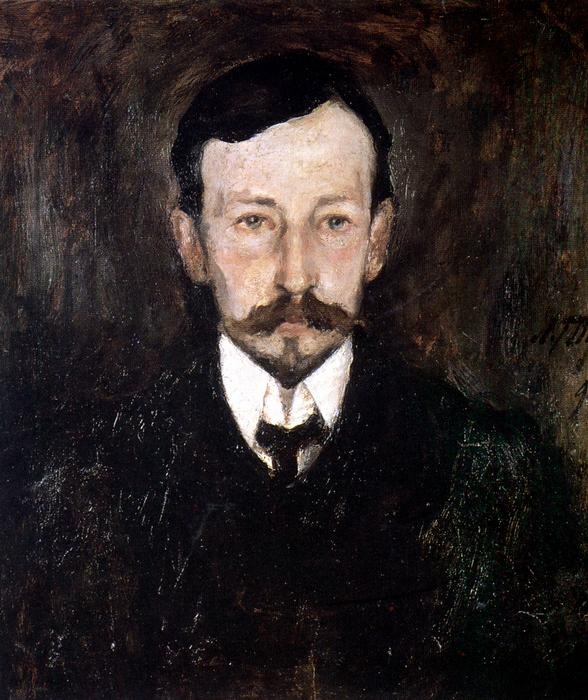
Portrait of Ivan Bunin by Leonard Turzhansky, 1905. Courtesy: Wiki

Un Petit Accident‘ (A small Accident) is one of those tales which will need more words to discuss than will be found in it.

First published in the late 1940s as part of a trio of short pieces this little tale might be seen as a forerunner of our present-day flash fictions and micro fiction. Yet it is in a tradition that stretches back through the prose poem or Illumination to the anecdotes and exemplars of much earlier times. Only recently cast into English, this translation is attributed to Maria Bloshteyn and dated 2017.

Ivan Bunin (1870-1953) fled to France in 1920 in the aftermath of the Russian Revolution but unlike many émigrés he was already an established writer and his work is not solely related to the experience of exile.

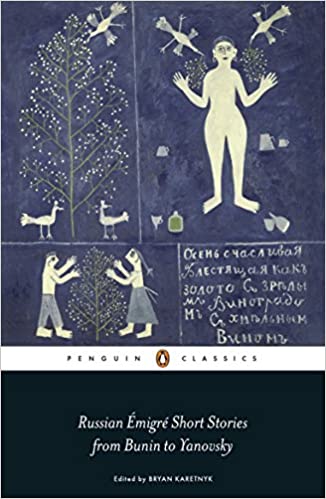
‘Un Petit Accident’ in my paperback copy of Russian Émigré Stories from Bunin to Yanovsky (ed. Bryan Karetnyk, Penguin Classics), runs to a mere 29 lines, yet it packs a punch you might think would need a much wordier arm behind it. For me it’s both a master work and a master class in the short story, illustrating perfectly Hemingway’s ‘iceberg’, and his advice to ‘take everything out that isn’t the story’.

Like a slow camera pan, it traverses the cityscape of Paris. It takes in the sunset, the Palais Bourbon, the Seine, the Place de la Concorde and the Eiffel Tower, before zooming in, near The Madelaine, on the rushing, choking traffic of a Parisian evening. The final shot, in what, to twist the metaphor slightly, might be thought of as a slideshow rather than a moving picture, focuses on a single detail, the significance of which we are left to consider.

There are no named characters, seemingly no protagonist and antagonist, no obvious cycles of increasing jeopardy. The ‘Inciting Incident’, if it is not that sunset, might be in our imaginations and for later. Or perhaps the ‘Obligatory Scene’, if it is that final image, must serve the function of both. It seems that everything that happens in this story has already happened by the time we see it. Yet there is no sequence of actions as such, only the sequence of images that we might mistake for mere setting.

As with much longer short stories, there is the vestige of that common structural oddity of placing the most striking event or revelation slightly ahead of the actual ending, making it part of the preparation and contextualisation of the true ending. And following that shock there is a little addition which poses the question, raises the issue, on which I believe the author wishes us to ponder; the view to which he has brought us.

The collection is furnished with a section of notes about both the writers and individual stories. What they say about this story reveals a lesson in the form. Bunin is quoted; “ ...even with the greatest writers, there are only isolated good passages, and between them – water…”

Karetnyk’s notes go on to say: “these miniatures are an attempt to distil prose into its purest form.” Presumably, that is by getting rid of all that water.

Earlier in the piece he has described Bunin’s tales as ‘terse’, but in this case I did not find it so. Rather the opposite. I’d want to use the word lush. That opening sunset, painted in a three and half line, verbless sentence – which a professor of English in the nineteen seventies categorized because of that lack as being a ‘label’ rather than a ‘message’– is rich with colour: “…the enormous panel of sky covered in strokes of murky colours, mellow and many hued…” The city too is awash with description: ‘Slim spikes of greenish gas flames are strewn throughout the pistachio haze of the city,’

It’s one of the most description packed little tales I’ve read. It brought to mind the startling contrast with an earlier and longer tale by Mary Mann, in which a bare half dozen words sprinkled throughout describe the rural Norfolk in which her story is set. It is sometimes averred that description kills story, disrupts the narrative, brings action to a halt, but here Bunin’s tale is almost all description, a colourful, noisy kaleidoscope of sights and sounds. “Now darkness falls, and the candelabra of the Place de la Concorde cast their reflective silvery glow, while up in the black summits the lugubriously flowing lights of the Eiffel Tower flicker like lightning.

The sequence is constructed of easily imaginable images, and when we have reached the ending and come to re-read the piece, we might pay more attention to the ambience of those sounds and sights. They are what make the context for our arrival at the final image. They are what prejudice our frame of mind for understanding and speculating about the deeper meaning of what we are being brought to encounter. The purpose of the story, and you might argue, the storyness of it, is in our reaction to what we ‘see’. Conrad is quoted as saying he wanted to “make us see” in his writing and Bunin here does just that. But it is up to us alone to grapple with the significance of what we have been told.

On closer inspection we might see that Bunin has given us more than just intense colour, form, and movement. That it is a single paragraph story is notable. In a story of thirty lines there is room for a handful of paragraphs, but the fact that Bunin uses one alone need be no ‘petit accident‘. It gives the story a structural unity, such as you might expect to find in a painting or photograph.

The painting has it for me, with those ‘murky’ and ‘many-hued’ colours, but a painting of what? Despite the lack of protagonist or antagonist, at first glance, there is the anonymous man on whom our gaze comes to rest at what might be called the ‘crisis’ of the action, and there is one other ‘character’, referred to rather than present, and whose ‘unseen hand is smoothly conducting’. At this change point in the story, as the traffic locks and our focus is narrowed down onto and into a single vehicle, it ‘seems as if the hand has flinched’.

Seems’ is one of those words that, in a short story especially, should set our radars tingling, because it usually denotes, or at least raises the possibility, that what seems is not what is. And whose hand might that be which might be doing something other than flinching? It certainly isn’t a human hand. Is it a hand that has acted decisively? And the ‘fiery Babylon’ that Bunin describes with its ‘spikes of greenish gas’, its ‘darkness’ blazing, might seem more Hellish than Heavenly. I was reminded of apocalyptic visions in John Martin’s paintings.

My last paragraph contains a ‘spoiler’, and those who read to find out what happens next might prefer to stop here!

When we reach the story’s end, we are told of a “fast little auto, vividly yet softly lit inside” where a man in evening dress is “slumped over his steering wheel“. The narrative thread is almost imperceptible. The movement, lights and sounds, have seemed random rather than directional. Bunin’s tale has been told in the present tense, yet here, at the sticking point of the end, we are seeing events not so much unfold as having already unfolded. The focus neatly closes in, with mention of ‘matte top hat’, then closer still: “His eyes are closed…” The final words pull back a little, as we have recoiled from what we have recognised: “his young, tritely classical face is already looking like a mask.”

It is a mask, we understand, from behind which the spirit of life has already withdrawn.

Russian commemorative coin issued on Bunin’s 125th birth anniversary. Courtesy: Wiki

Mike Smith lives on the edge of England where he writes occasional plays, poetry, and essays, usually on the short story form in which he writes as Brindley Hallam Dennis. His writing has been published and performed. He blogs at www.Bhdandme.wordpress.com 

.

PLEASE NOTE: ARTICLES CAN ONLY BE REPRODUCED IN OTHER SITES WITH DUE ACKNOWLEDGEMENT TO BORDERLESS JOURNAL