Categories
Musings

How Twins Revive Spiritual Heritage Throbbing Syncretism

Narrative and photographe by Prithvijeet Sinha
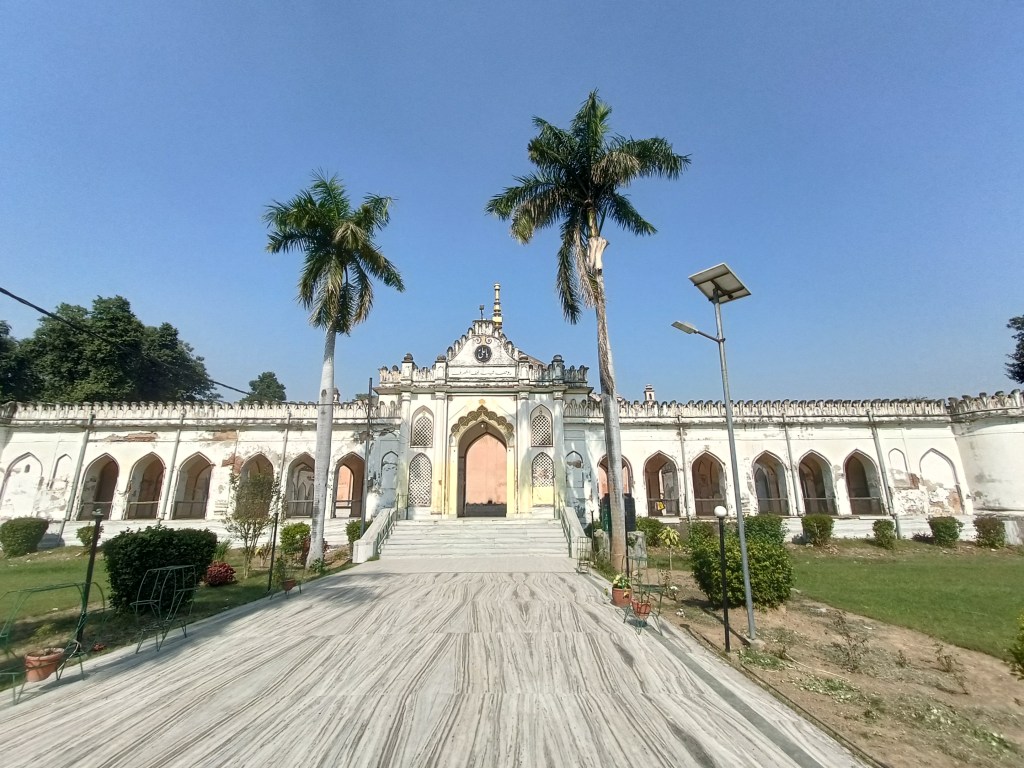
Lucknow bears the identity of an old soul always beholding glory and cultural heydays that have not altogether faded. The afterglow of its architecture, spiritual antecedents rarely misses the mark. After being pulverized by the lost revolution of the First War of Independence (1857), it transmuted its fearless legend to the present day, it’s hard not to think about the city’s twin children who breathe new life to it.
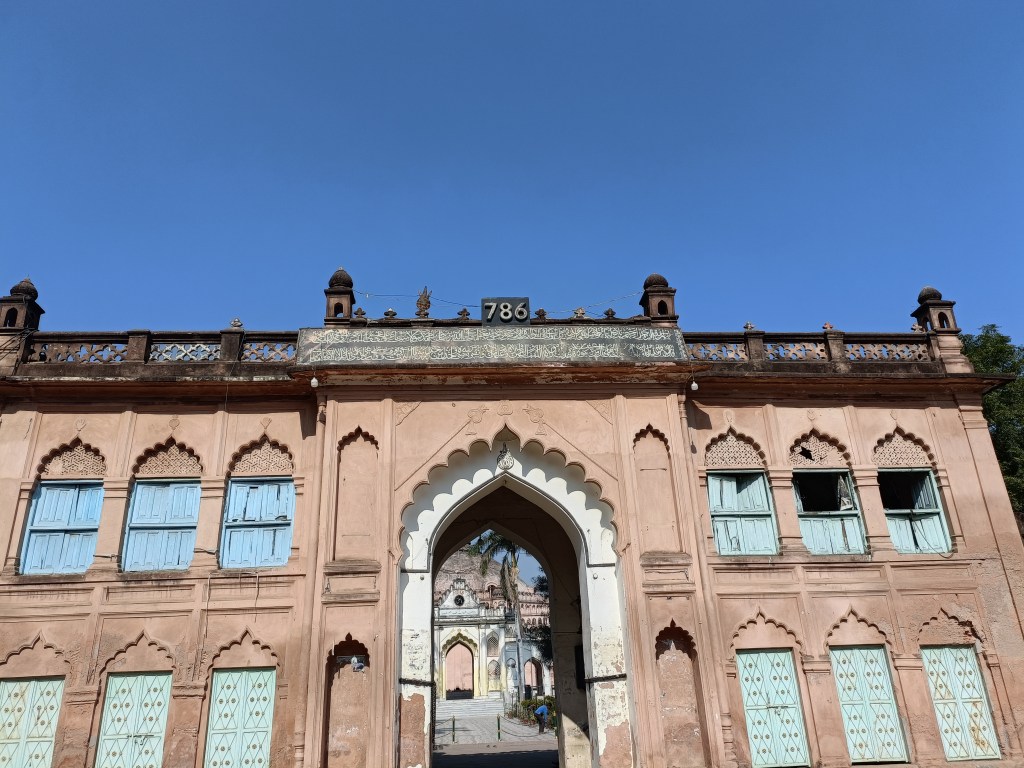
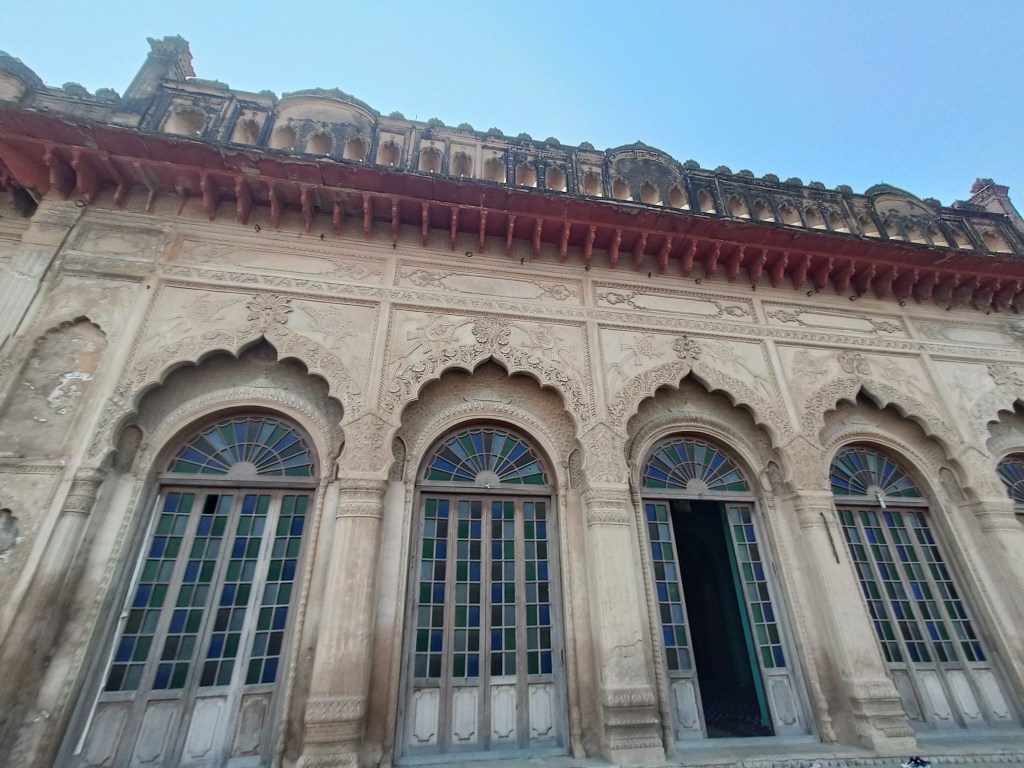
Shah Najaf Imambara and Sibtainabad Imambara are nestled just ten minutes away from each other within the historic and unmistakable centre of Lucknow- Hazratganj. But they cannot be summarised in pithy words. For if serenity draws us closer to our own tranquil and fuller selves, they play a huge part in orienting us towards a spiritual life that’s almost impressionistic.

Built under the aegis of Nawab Ghazi-ud-Din Haider in 1818, Shah Najaf Imambara derives its name from Shah-e-Najaf (King of Najaf), leaning towards its Shia origins and a place of spiritual importance in erstwhile Iran. Once again, these imambaras/ mausoleums were made in such formative fashion that the distinction between a royal estate and a resting place for architects of the region almost blurred. Today, it’s taken as the burial place of Nawab Ghazi-ud-Din Haider and some other pivotal family members. But on every occasion where the spirit meets holy chants and inner emotions especially during Muharram, Shah Najaf Imambara celebrates human valour to let the timeless strains stir those that need history to guide the present.
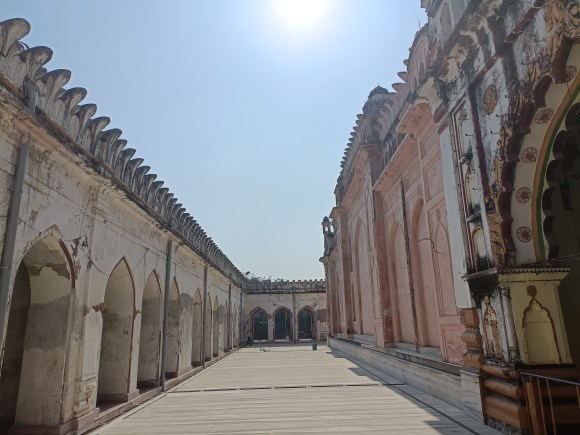
Two doorways usher us towards the main structure. The first has two lions almost standing as eternal sentinels while the second one has arched designs, windows in striking sky blue and turrets to welcome us. Then, past a garden and symbols of umbrellas and pillars on both sides, we enter the domed structure with a golden spire. The initial architectural framework has a miniature castle-like arrangement and pillars. Then the unique indoors open to wide verandahs, huge walls resembling those of a palace while stained glass windows and floral patterns catch our eyes.

We walk around and behold the sunshine. Pigeons make their passage like unobtrusive guides. It’s once we enter the main hall of the Imambara that its richness finds heft and visual import. Intricate doorways in black open the way to the sanctum where colours shimmer and add lustre to portraits of erstwhile kings.
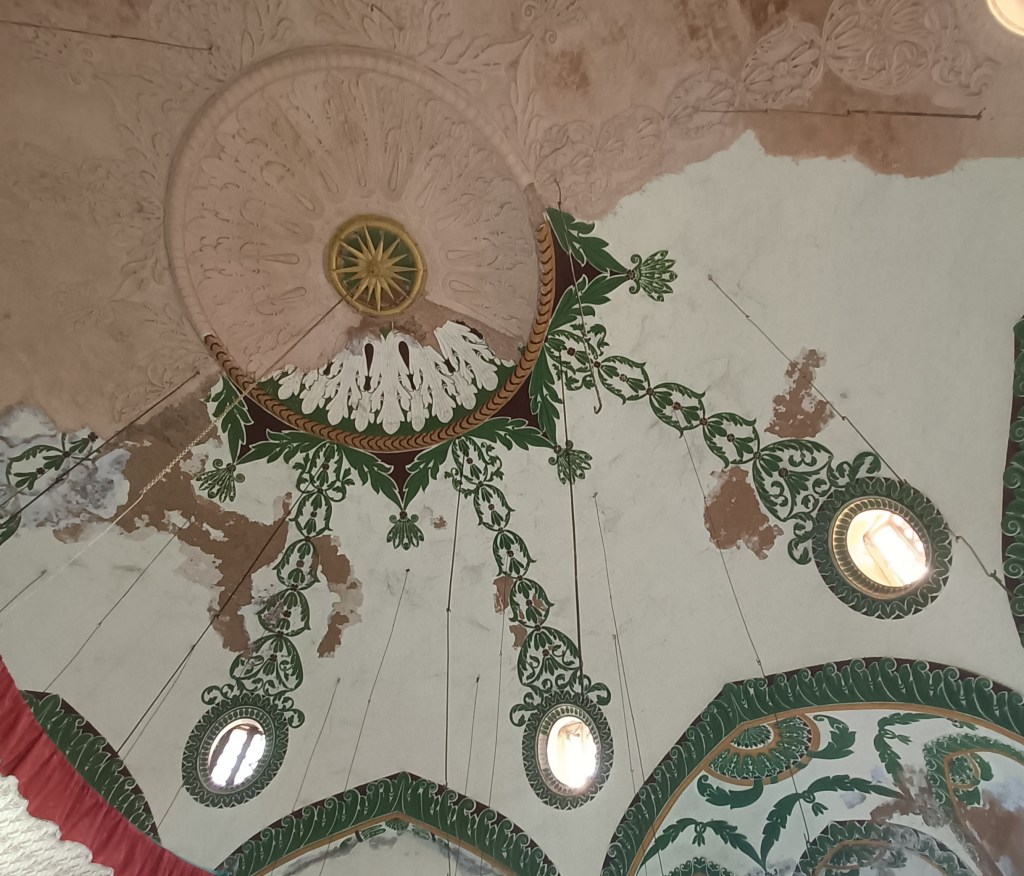
Here tazias (handmade religious symbols), chandeliers, gilded mirrors and clocks, tapestries, lanterns, Quranic verses engraved on walls and pillars evince an aura of holding everything in a single space. Yet they never overwhelm the assortment. From the high roof with circular vents, light floods this space as green and gold filigrees shimmer admiration for the craft. Gold, green, black, white are the prominent colours expediting a unique spiritual leadership. We come here to capture serenity in our pulses, quieting our anxious throb. Shah Najaf Imambara commences that sojourn in true humbling fashion. It’s said that the thick walls around the central mosque withstood the heavy gun fires of the Rebellion of 1857. Looking at this centre of secularism today, it’s obvious there’s some extraordinary strength that still radiates power and integrity.

Then walking towards the further center of Hazratganj which is bustling and still lively with the rhythms of an active day, we reach the other spiritual cousin which is the Sibtainabad Imambara. Here too, dual gateways, one that begins amid the main market area and the other that leads us further to the main structure, are attractions in their own individual right. Then commanding a centre surrounded by a few residences styled in an exquisite classical style is a white mosque, Sibtainabad Imambara, raised on an eight-foot platform navigated by steps. Its historical continuum is still intact and that is why it’s so fascinating.

It was Amjad Ali Shah(1801-1847), the fourth King of Awadh, who greenlit its construction as a place of majlis (mourning) in memory of Imam Hussain’s martyrdom in the Battle of Karbala. It was his son, the great Wajid Ali Shah, who completed the structure with his army of architects and other creative hands. Today, Sibtainabad Imambara houses Amjad Ali Shah’s tomb and bears the history of being under the eye of the storm during 1857. But since History and Time always have a unique way of restoring Lucknow’s architectural marvels, it has withstood the test of time despite changing administrative jurisdictions and the gradual passage of eras.
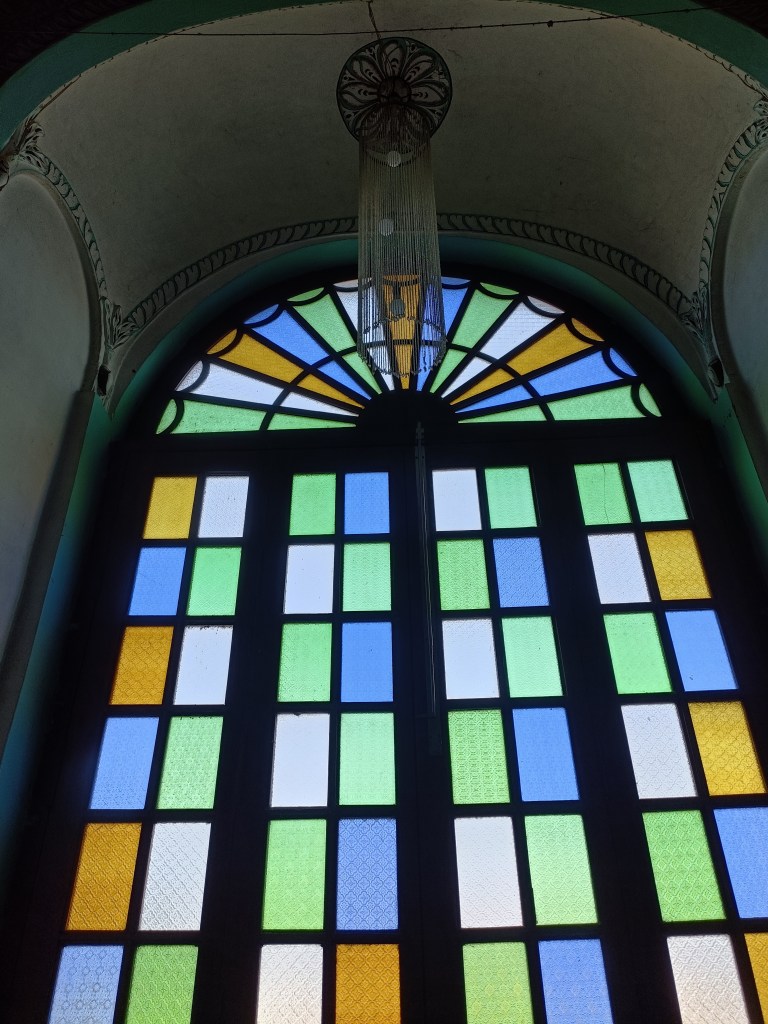
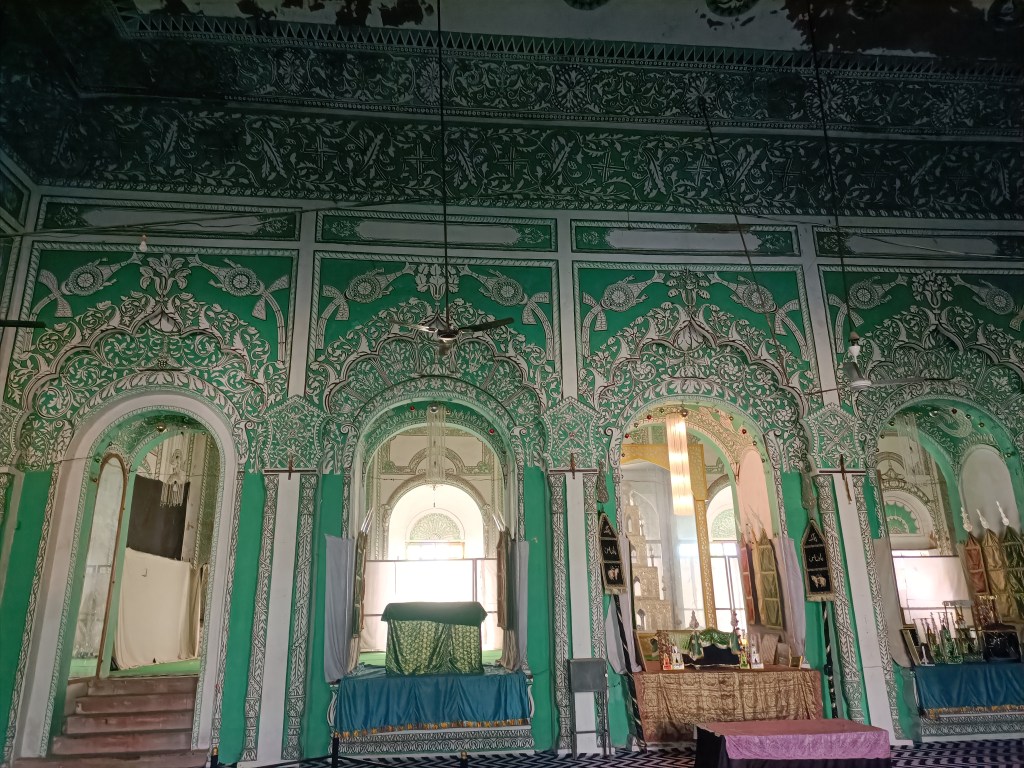
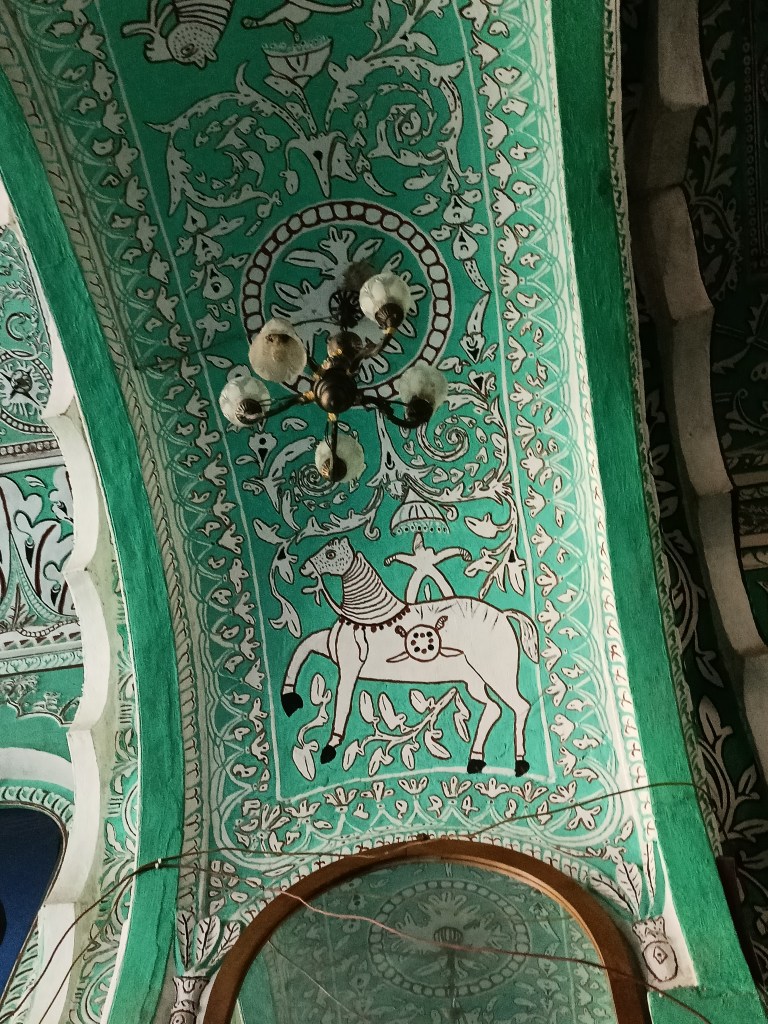
Its outer surface is one of arches, parapets, eaves, dome and stucco which makes it conjoin its formation with Shah Najaf Imambara. The interiors are adorned with beautiful green paint of the most impressive hue. The main hall enthralls with images of horses bearing coat of arms, floral designs, anthropomorphic beings, swords, angels harking to past riches and fish symbols central to the city.  Stained glass windows, huge mirrors on the walls and chandeliers complete a mosaic of colours that take the caravan of spiritual fulfillment further ahead, all the way from Shah Najaf Imambara.
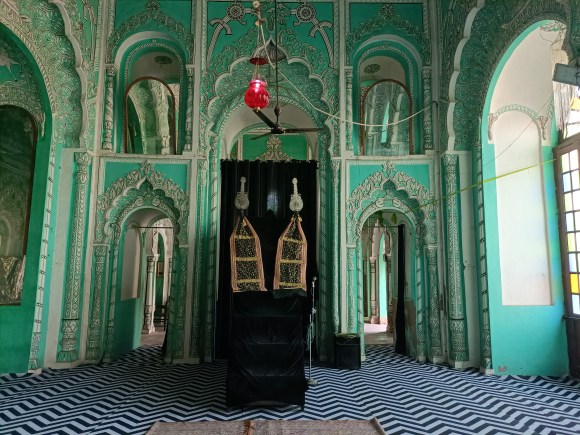
Tazias deck the main hall while a throne shrouded in black and zig-zagging floor designs create a most exquisite picture.

While many people, men and women say their prayers here in both these places of spirituality, religious exclusivity never even becomes a point of consideration. You can be anyone, belonging to any faith or religious background which are after all man-made labels. Both the Shahnajaf and Sibtainabad Imambaras let us become one with the light emanating from their natural structures and the tranquil air that counters the world of noise and everyday activity. We are encased or should we say delivered from the coves of our daily occupations to their cores of transformation simply by choosing to go there.

Spirituality and faith beckon private, internalised journeys. Both the Shahnajaf Imambara and Sibtainabad Imambara attest to those journeys, occupying the heart of Lucknow to let its bloodstream flow with due diligence, with an eye towards true serenity.

.

Prithvijeet Sinha  is an MPhil from the University of Lucknow, having launched his prolific writing career by self-publishing on the worldwide community Wattpad since 2015 and on his WordPress blog An Awadh Boy’s Panorama. Besides that, his works have been published in several journals and anthologies. 

.

PLEASE NOTE: ARTICLES CAN ONLY BE REPRODUCED IN OTHER SITES WITH DUE ACKNOWLEDGEMENT TO BORDERLESS JOURNAL

Click here to access the Borderless anthology, Monalisa No Longer Smiles

Click here to access Monalisa No Longer Smiles on Kindle Amazon International
Categories
Essay

This Garden Calls Out to Me: A Flaneur in Lucknow’s Sikandar Bagh

Photographs and Narrative by Prithvijeet Sinha

Sikandra Bagh

What if I tell you that History is my neighbour? It would sound like hyperbole to a lay person. But if you are a resident of the historic and expansively beautiful urban area of Hazratganj that is the heart of the city, it will seem a shorthand for reflections in time.

Hazratganj is a state of mind, not only a piece of land stretching across kilometres and hosting the best that humanity has to offer, whether natural or man-made, including the Imambaras, gardens and riverfronts and gateways that define Lucknow as also the mass of commercial institutions, cultural centres and culinary establishments elevating its profile as a diverse area of activity.

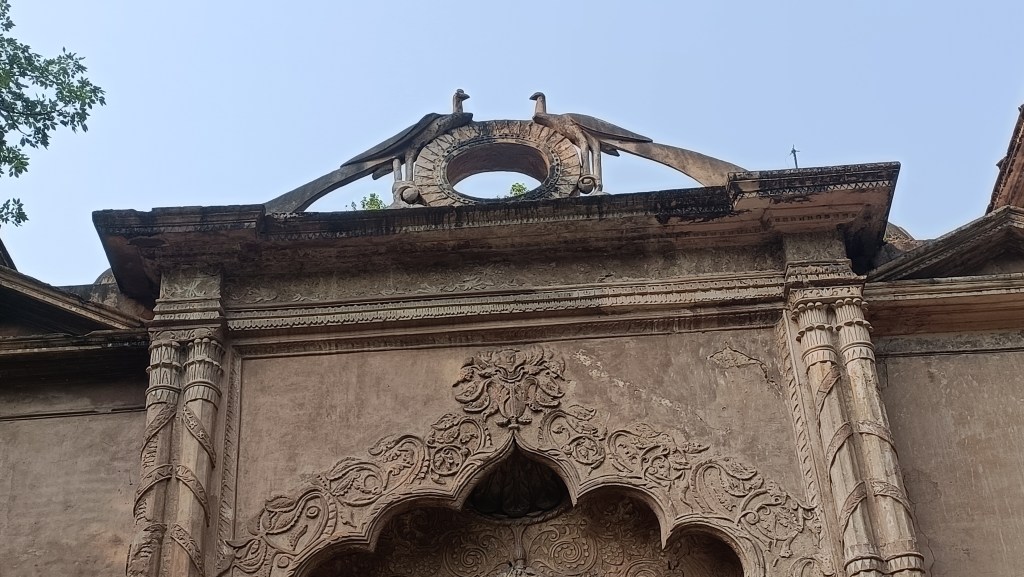
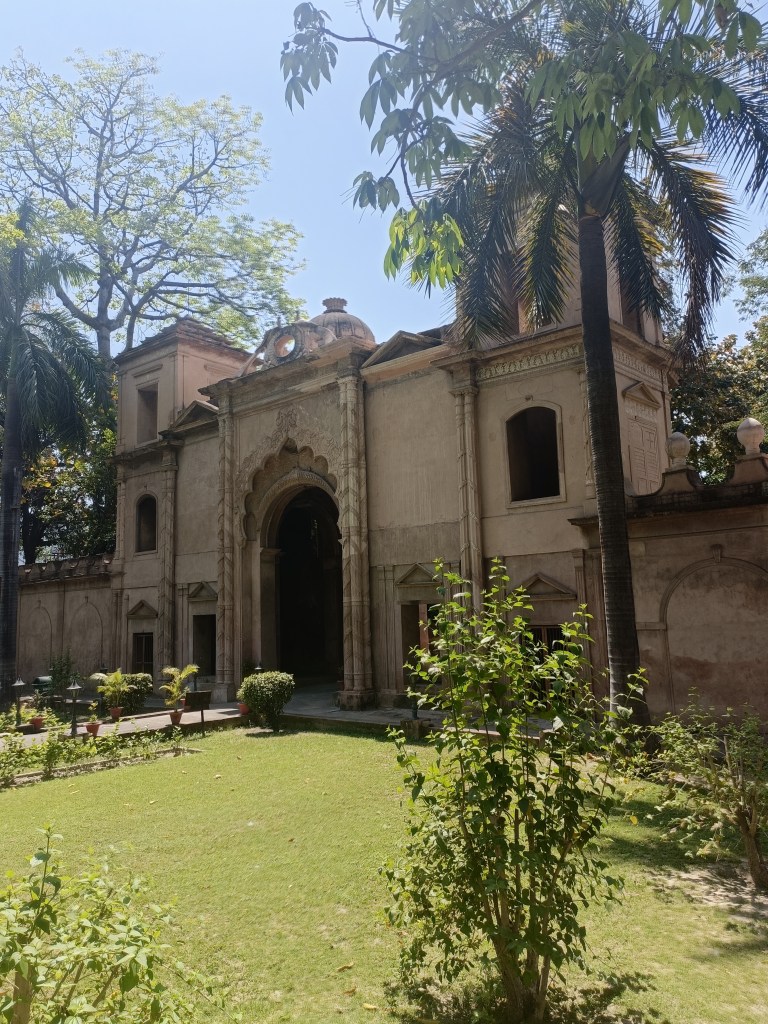
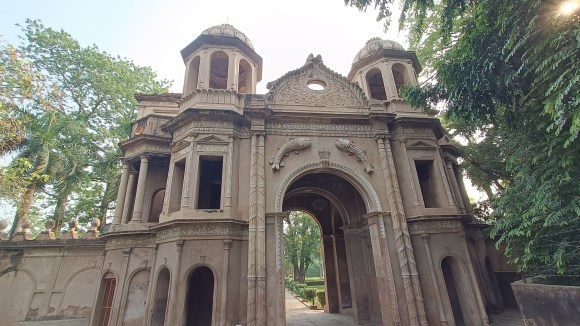
In this beautiful centre of a glorious city lives yours truly and one of the most evocative of the historic gardens dotting Hazratganj also happens to be a mere five-minute walk from his home. I’m talking about Sikandar Bagh, a garden complex that is a sight for sore eyes and retains history in its structure, with lime yellow walls of lakhauri[1], a beautiful gateway bearing the city’s fabled fish symbol and a pagoda style arch signifying the melange of influences in its multidimensional whole.

The domes and ramparts retain the haunting afterglow of history but also the dark days that led to its tragic unraveling.

Built around the mid 1840s by Nawab Wajid Ali Shah[2], the great aesthete and ruler of Lucknow, Sikandar Bagh was a private residence, a garden of elegance and a performance art venue made to honour his love for Sikandar Begum, his beloved wife. The intimacy of this saga of love and mutual respect shared between two life-partners is reflected in the way the place comes alive for any visitor. There’s nothing grand here. Yet there’s the gift of verdure, the protection of huge, dome-like trees and remnants of the original structure that reminds us of a place preserved in its handsome inception and prevalence down the ages.

But Sikandar Bagh is a cultural outlier because apart from its blessed beginnings and present serene state, it had also been scarred by the First War of Independence in 1857[3]. This was the site that was used by sepoys of Awadh (a hallowed title for the region comprising Lucknow and its neighbouring districts that continues to this date) to mount their rebellion against British supremacy. This was a private garrison and hiding place in those erstwhile days of November 1857 where the plotting of a historic rebellion took place. History was not kind to the rebels, and nearly all were slain by the colonial establishment. Knowing that the serenity here could hold so much ballast in its open space makes one ponder. To know about this is to understand that we are progeny of these brave and the remains of the walls facing this garden and continuing up till the Shahnajaf Imambara seem to take the toll of all that bloodshed and hurt that lies embedded within these bricks.

Of course, knowing the background is imperative but so is being inured to its beauty. I am an eternal walker, a flaneur, so for me Sikandar Bagh has been a favourite place to revel in the humbling and aesthetic aspects of Lucknow. Sikandar Bagh befits my desire to saunter and take in the bouquet of nature.

*

It’s been my morning ritual to be comforted by the breeze, swayed and lulled to satisfaction with the lullaby of the trees within its compound and behold a distant beehive in the tallest Goliath among these ancient trees, looking at nestling birds and squirrels in the lower branches of their trunks.

As I write this after a brief stroll in this garden on a pleasant Sunday afternoon, the summer seems to have been evoked to spread its sunny yellow carpet with mellow repose instead of scorching us with humid darts and blows.

The thing with Sikandar Bagh is that history is alive here but also a natural companion. Always the silent, sturdy type, an occasional morning walker or casual passers-by make for rare sights inside its premises in the early hours. It always makes me feel like the chosen one, allowed to roam its length and breadth, making it a regular haunt.

*

A lot of times while going from one place to another, I see young people seated on its green benches, relieving themselves of their pressures and sometimes enjoying a quiet meal here. I also look at people who, besotted by its unique beauty and structure, walk leisurely and photograph its stretches.  Their eyes register the special place it holds for them.

Today, Sikandar Bagh is overseen by the Archeological Survey of India. Around early 2022, it commissioned a refurbishment that restored its walls, ramparts with the lakhauri , a far cry from the concrete jungle that is an urban reality in the modern era.

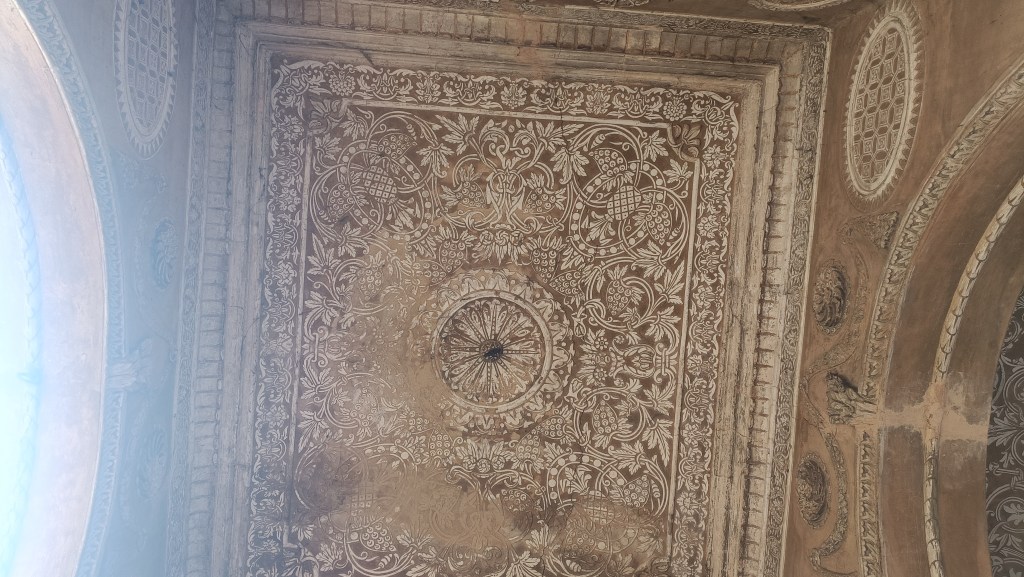
It always comes down to these columns, frescoes, ramparts, a humble mosque within this secular compound, the pavilion signifying what once was an open theatre and the palatial remains, all blended in the unique textures and colours of centuries; worn out by time but never denuded of glory, a stark yet humbling reminder that Sikandar Bagh is a labour of love. Writing this, I am enchanted by its gateway’s peacock iconography, how they seem to call out to the actual birds who visit from the neighbouring Botanical Gardens premises facing this little slice of verdure and architectural wonder.

I inhale the sights, simultaneously rattled by the annoyance of traffic outside its main gate intruding upon its peculiar, unique position within the heart of the city. Yet I know it’s sealed by a dignified reserve, as if these domes and the gateway spell quietude and ubiquity like the red eyes of the pigeons flying near the roof and peering down its height.

*

Honeybees on the tallest trees here go from the nectar of one season to the next and the sun shades this compound in moods invoking the spirit of a poet in me. It’s so easy to be wrapped in the peace and calm of this open space and its historical representation, so easy to know that creative inspiration fed by such a pleasant source is far from just a fictional device. It is a living, breathing ally to diurnal times.

Being in the lap of nature within cities can be a novel intervention. But my love affair with Sikandar Bagh – my own paradise — never waits for a distinct memento. It came to be from a place of love. It is my composite love for it that makes it stand out.

[1] lime paint and plaster

[2] Nawab Wajid Ali Shah was the eleventh and last nawab of Awadh. His kingdom was annexed by the East India Company in 1856 and he was exiled to Kolkata.

[3] Revolt of 1857: The sepoys – Hindus and Muslims – rose united in rebellion against the British Raj. As a result, the British adopted the weapon of Divide and Rule successfully, and the subcontinent continues to be scarred by the fanning of the same flame to this day.

Prithvijeet Sinha  is an MPhil from the University of Lucknow, having launched his prolific writing career by self-publishing on the worldwide community Wattpad since 2015 and on his WordPress blog An Awadh Boy’s Panorama. Besides that, his works have been published in several journals and anthologies. 

PLEASE NOTE: ARTICLES CAN ONLY BE REPRODUCED IN OTHER SITES WITH DUE ACKNOWLEDGEMENT TO BORDERLESS JOURNAL

Click here to access the Borderless anthology, Monalisa No Longer Smiles

Click here to access Monalisa No Longer Smiles on Kindle Amazon International