Categories
Excerpt

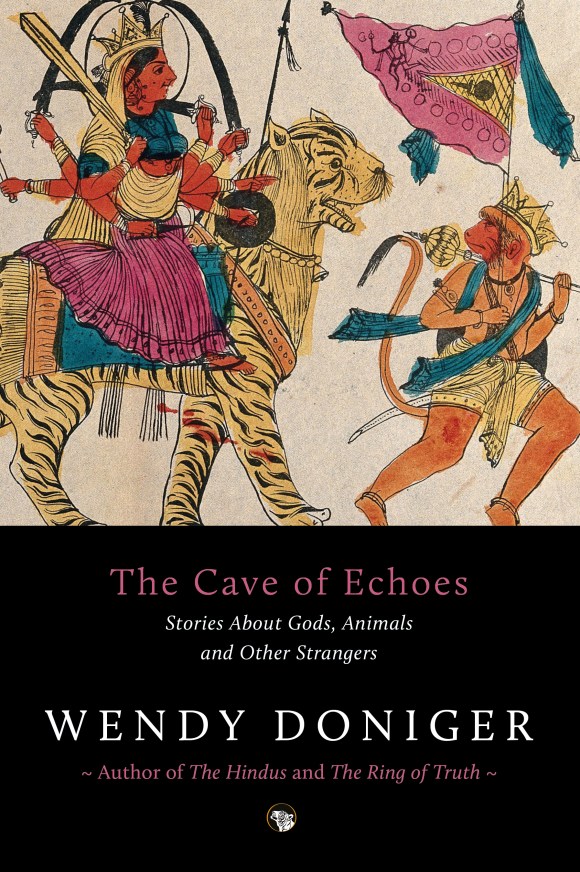
The Cave of Echoes

Title: The Cave of Echoes: Stories about Gods, Animals and Other Strangers

Author: Wendy Doniger

Publisher: Speaking Tiger Books

It is impossible to define a myth, but it is cowardly not to try. For me, the best way to not-define a myth is to look at it in action, which is what have tried to do throughout this book: to see what myth does, rather than what myth is. It seems to me that by the time you’ve defined your terms in an argument, you’ve lost interest in the problem. But at this point, as we begin to reexamine our own assumptions about myths, it might be useful to list some things that I think myths are not: myths are not lies, or false statements to be contrasted with truth or reality. 1bis usage is, perhaps, the most common meaning of myth in casual parlance today. Indeed, other cultures, too, call myths lies. The Malagasy end the recitation of any myth with a traditional tag-line: “It is not I that lie; this lie comes from olden times.” In our culture, in particular, myths are often given the shadowy status of what has been called an “inoperative truth,” when in fact they might better be characterized as operative fictions. Picasso called art a lie that tells the truth, and the same might be said of myths.

What a Myth Is and Is Not

The desecration of the word “myth” to mean “lie” began with Plato, who contrasted the fabricated myth with the true history. It is, I think, an irony that our word for myth in most European languages, together with our basic attitude to myths, comes from ancient Greece, one of the very few cultures in the world from which we have almost no example of real, live myths, of myths as a part of a vital tradition; by the time most of the Greek myths reach us, they have been so thoroughly reworked in artistic and philosophical forms that they are mythological zombies, the walking dead. Plato was, as Eliade pointed out long ago, the first great demythologizer; he “deconstructed” the myths of Homer and Hesiod. It was Plato who challenged, successfully, the status of the poetic myth-carvers and myth collectors and banished them from his Republic. We can see in Plato a spectrum of mythmakers: at one end are anonymous wet nurses, who transmit the old myths to helpless infants; at the other end are the poets, like Hesiod and Homer, the “mimetic clan” who cannot imitate the true forms since no one has ever seen the forms and the poets can only imitate what they have seen.

Plato warns us that we must not tell these poetic myths about the gods even if they are true; in this, I think, he affirms the power of myths to influence human life; for he fears that a bad myth will make a bad life. (We shall see, in chapter 6, other Greek arguments against the evil effects of the myths in Greek tragedies.) Moreover, it is hard to escape from this image of the bad life; the stories that we learn in childhood have a marvelous hold on our memory.

Yet it is necessary for people to believe in good myths, even if they are false; this is the argument that Plato advances for the “noble lie” (gennaion pseudos) in the Republic, the statement that distorts an outside surface in order to convey an inner truth. Some of these good myths come from the old days; Plato distrusts this sort of “mythologizing,” the stories about centaurs and Chimaeras and Pegasus and so forth, but he distrusts even more the people who analyze them away as metaphors for the North Wind and so forth ( anticipating Friedrich Max Miller by some twenty-four hundred years); such analyses are altogether too clever and waste an awful lot of time. 13 People do have to have myths, Plato concedes; if they don’t believe in the old ones, we must construct new ones for them, logically, and this is very difficult to do, for we must convince them, in the cold light of reason, of the truth of the myths in order to make them accept the laws that we wish to give them:

“How can one assert in cold blood that the gods exist? Because we must hate and find unbearable those who, today as in the past, due to having refused to allow themselves to be convinced by the myths related to them since earliest childhood by a mother or a nurse giving them the breast, have obliged us, and still do so, to develop the arguments which take up our time now.”

For this reason, despite his opposition to myths and mythmakers, Plato himself was also a great “remythologizer” who invented the drama of the philosophical soul and made it a new kind of myth, a reasonable, logical, “likely” myth, to challenge the old myths of centaurs and so forth. In this way, when it came to myth, Plato managed to hunt with the hounds and to run with the hare. As Marcel Detienne has put it: “Plato’s work marks the time when philosophy, while censuring tales of the ancients as scandalous fictions, sets about telling its own myths in a discourse on the soul, on the origin of the world, and on life in the hereafter.” It was Plato who transformed ancient mythic themes to make the myth of Er, the myth of Eros, and the myth of the creation of the universe. Though Plato’s “likely or resembling story” can be a myth in the sense of a narrative ( and in that sense is interchangeable with logos meaning “narrative”), it is not a myth in the negative sense of a bad copy, like the myths of Homer ( which are negatively contrasted with logos meaning “reason”).

Yet Plato does apply the word “myth” ( mutbos) to the story of the world that he creates in the Pbaedo, a myth that he says is “worth hearing,” though it is merely another “likely story”:

“Now, to assert vehemently that things like this are really so as I’ve narrated them, doesn’t befit any man of sense. But that this is so, or something pretty much like it, about our souls and their dwelling place, since it is clear that the soul is immortal-it is quite fitting that we say that. “

The likely story is not the truth; but it resembles the truth, and is as close as we can ever get to the truth about certain subjects. Plato confesses that he resorts to telling myths, despite the fact that such stories are not literally true, because there is no other way of using words to produce even the effect of truth.

Plato regards the myth that he constructs in the Pbaedo as an essential vehicle for salvation, a kind of religious or magic charm:

“It is well worth running the risk that these things are so for anybody who thinks them so. (For it’s a fair risk.) And he must recite these things over and over to himself like a magic charm, even as I at this moment and for a long time past have been drawing out this myth.”

Plato ends the Republic with his own myth, the myth of Er, which he certainly does not regard as a lie: “And so the myth was saved and was not lost, and it will save us, if we believe it, and we shall safely cross the river of Lethe and we will not sully the soul. “

For Plato admits that a myth says something that cannot be said in any other way, that cannot be translated into a logical or even a metaphysical statement. A myth says something that can only be said in a story.

Which brings me to what I think a myth is. Let me begin with a rather cumbersome and rather functional definition: A myth is a story that is sacred to and shared by a group of people who find their most important meanings in it; it is a story believed to have been composed in the past about an event in the past, or, more rarely, in the future, an event that continues to have meaning in the present because it is remembered; it is a story that is part of a larger group of stories.

The assertion that a myth is a story is basic to my argument; for I think that the myth is persuasive to us because the action itself is persuasive. Even when what happens in the myth is not physically possible in this world ( as when, for instance, a man turns into a fish), when the event is described in detail, as something that happened, we can see it happening, and so it enlarges our sense of what might be possible. Only a story can do this.

About the Book

The Cave of Echoes celebrates the universal art of storytelling, and the rich diversity of the stories—especially myths—that people live by. Drawing on Hindu and Greek mythology, Biblical parables, and the modern mythologies of Woody Allen and soap operas, Wendy Doniger—renowned scholar of the history of religions—encourages us to feel anew the force of myth and tradition in our lives, and in the lives of other cultures. She shows how the stories of mythology—whether of gods, sages, demons or humans—enable cultures to define themselves. She raises critical questions about how myths are interpreted and adapted, and the ways in which different cultures make use of central texts and traditions. Drawing connections across time and place, she proposes that myths are not static beliefs but evolving narratives, and that by entering into other cultures’ stories, we may unexpectedly rediscover our own.

Written with scholarly depth and characteristic wit, this is a landmark work in the comparative study of mythology. It’s essential reading for anyone interested in how we understand others—and ourselves—through the stories we tell.

About the Author

Wendy Doniger is the author of several acclaimed and bestselling works, among them, The Hindus: An Alternative History; Hindu Myths; The Ring of Truth; Women, Androgynes and Other Mythical Beasts; Dreams, Illusion and Other Realities; Winged Stallions and Wicked Mares; An American Girl in India; and translations of the Rig Veda and the Kamasutra (with Sudhir Kakar). She is Mircea Eliade Distinguished Service Professor Emerita of the History of Religions at theUniversity of Chicago, and has also taught at the School of Oriental and African Studies, University of London, and the University of California, Berkeley.

PLEASE NOTE: ARTICLES CAN ONLY BE REPRODUCED IN OTHER SITES WITH DUE ACKNOWLEDGEMENT TO BORDERLESS JOURNAL

Categories
Poetry

Poetry by Alex S. Johnson

Alex S. Johnson
Ratcheting of seizure-moves 
Across the doomy dancefloor

Blips and beats burning in our starry dynamos
laced through our spun-glass flow

The universal retina gored, flash-frozen whores descending the staircase of timespace
In a race to join the bottom feeders

We are fissures of men, vending bad medicine
The gaps in our gene-spliced minds morphing together in synesthetic waves

Grouped together in caves
we scrawl our appalling mysteries on the wall

Staking the mythic beast
with arrows of microplastic disease

Plato came a-calling
and called our ways appalling,
a pall on the earth that gave us birth

A shock to the systems of a downed saucer
we rock on our haunches
reaping the raw
holiday of decay

Driving our play beyond the body map
deep time elapses as a stellar footprint
carving snowed in angels
on the tombs of the atomic race

Alex S. Johnson is an anthologist, editor, journalist, teacher, author and publisher (Darkest Wine Media). His books include The Junk Merchants: A Literary Tribute to William S. Burroughs and We Are Gregor: A Disability Rights Anthology (forthcoming from Nocturnicorn Books).

PLEASE NOTE: ARTICLES CAN ONLY BE REPRODUCED IN OTHER SITES WITH DUE ACKNOWLEDGEMENT TO BORDERLESS JOURNAL

Click here to access the Borderless anthology, Monalisa No Longer Smiles

Click here to access Monalisa No Longer Smiles on Kindle Amazon International

Categories
Bhaskar's Corner

Oh, That Lovely Title: Politics

Bhaskar Parichha debuts his column with a witty collection of quotes that he has picked up with his wide reading, arranged in a way that they take the reader through a series of thought-provoking comments on contemporary issues

Cartoon by Mario Miranda in the November 8th,1987 issue of Illustrated Weekly.
Photo courtesy: Bhaskar Parichha

We, in India, are in the throes of a big political churning right now. No one knows who the victor and who the vanquished will be. But politics — and obviously elections in India — are as multi-hued as they are rancid.

Adore it or loathe it, politics has its own share of quotable quotes. From the funniest quotes to the dumbest one, here is an uplifting list of famous lines said by equally famous people. 

Niccolo Machiavelli, a fifteenth century florentine philospher, has a very pertinent line for the present day politics. He said, “Politics have no relation to morals.” Charles de Gaulle’s take on politicians is so sensible! “In order to become the master, the politician poses as the servant.” Two other famous literary figures — the Irish George Bernard Shaw and British novelist George Orwell — too were scornful of politicians. Shaw said, “He knows nothing and thinks he knows everything. That points clearly to a political career.”

Orwell remarked, “In our age there is no such thing as keeping out of politics. All issues are political issues, and politics itself is a mass of lies, evasions, folly, hatred and schizophrenia.” 

American comedian George Carlin had a terse remark on that country’s politicians: “Now, there’s one thing you might have noticed I don’t complain about: politicians. Everybody complains about politicians. Everybody says they suck. Well, where do people think these politicians come from? They don’t fall out of the sky. They don’t pass through a membrane from another reality. They come from American parents and American families, American homes, American schools, American churches, American businesses and American universities, and they are elected by American citizens. This is the best we can do folks. This is what we have to offer. It’s what our system produces: Garbage in, garbage out.”

There is so much of coaxing and wheedling to take part in elections. Plato, the great Greek philosopher, observed, “one of the penalties for refusing to participate in politics is that you end up being governed by your inferiors.” Elections in India have become so expensive that ordinary mortals like you and me can’t think of fighting them even in our dreams. Will Rogers said, “Politics has become so expensive that it takes a lot of money even to be defeated.” Gore Vidal has a different take on this issue: “Apparently, a democracy is a place where numerous elections are held at great cost without issues and with interchangeable candidates.” 

US President Calvin Coolidge once said, “Politics is not an end, but a means. It is not a product, but a process. It is the art of government. Like other values it has its counterfeits. So much emphasis has been placed upon the false that the significance of the true has been obscured and politics has come to convey the meaning of crafty and cunning selfishness, instead of candid and sincere service.”

What New York City writer Christian Nestell Bovee who relished the intimate friendship of Washington Irving, Longfellow, Emerson, and Oliver Wendell Holmes believed politics is interesting: “Political aspirants make too much of the people before election, and, if successful, too much of themselves after it. They use the people when they want to rise, as we treat a spirited horse when we want to mount him; — for a time we pat the animal upon the neck, and speak him softly; but once in the saddle, then come the whip and spur.”

Finding the right candidate in elections is next to impossible. Cartoonist Kin Hubbard too had the same dilemma when he said, “We would all like to vote for the best man but he is never a candidate.” Edmund Burke’s caution on gentlemen despising politics is worth the while. Eighteenth century statesman and thinker Burke said, “When bad men combine, the good must associate; else they will fall one by one, an unpitied sacrifice in a contemptible struggle.” NOTA (none of the above) has been added to the preference for voters in the EVMs (electronic voting machines) these elections. American comedian, WC Fields , once said, “Hell, I never vote for anybody, I always vote against.” 

Why there is widespread abhorrence of politics is easy to fathom. According to radio commentator, political commentator, author, columnist, Cal Thomas, “One of the reasons people hate politics is that truth is rarely a politician’s aim. Election and power are.” Lord Acton’s famous quote hardly needs mention. He said, “power corrupts and absolute power corrupts absolutely.” It was Henry A. Kissinger who rather pithily observed: “Ninety percent of the politicians give the other ten percent a bad reputation.” Groucho Marx , a humorist, opined, “Politics is the art of looking for trouble, finding it everywhere, diagnosing it incorrectly and applying the wrong remedies.”  

What essentially should a political party have? According to Dwight D. Eisenhower, “If a political party does not have its foundation in the determination to advance a cause that is right and that is moral, then it is not a political party; it is merely a conspiracy to seize power.”

Winston Churchill’s famous take is worth remembering today ever than before: “Politics are almost as exciting as war, and quite as dangerous … In war, you can only be killed once. But in politics many times.”

American Novelist Edgar Watson Howe thought, “If you have sense enough to realize why flies gather around a restaurant, you should be able to appreciate why men run for office.”

According to the former US president Barack Obama, “We’ve come to be consumed by a 24-hour, slash-and-burn, negative ad, bickering, small-minded politics that doesn’t move us forward. Sometimes one side is up and the other side is down. But there’s no sense that they are coming together in a common-sense, practical, nonideological way to solve the problems that we face.”

And, finally, Columnist and Editor Doug Larson has this warning against the political class: “Instead of giving a politician the keys to the city, it might be better to change the locks.”

.

Bhaskar Parichha is a journalist and author of No Strings Attached: Writings on Odisha and Biju Patnaik – A Political Biography. He lives in Bhubaneswar and writes bilingually. Besides writing for newspapers, he also reviews books on various media platforms.

.

PLEASE NOTE: ARTICLES CAN ONLY BE REPRODUCED IN OTHER SITES WITH DUE ACKNOWLEDGEMENT TO BORDERLESS JOURNAL

Categories
Essay

Mimesis and Movies: Plato, Kurusawa & Kiarostami

Karan Tekwani discusses Rashomon and Certified Copy in light of Platonic Philosophy

“…what questions this will to truth has already laid before us! What strange, wicked, questionable questions!”

“What in us really wants ‘truth’?”

“… we want truth: why not rather untruth?”

Beyond Good and Evil, 1886, Friedrich Wilhelm Nietzsche

Friedrich Wilhelm Nietzsche begins his book, Beyond Good and Evil, with a series of questions challenging the “will to truth”. “Will to truth” can be defined as the human tendency to attach overriding importance to the quest of true knowledge. Perplexed by this obsession with truth, Nietzsche takes up in his later works a fierce critique at the “unconditional will to truth”.

Beyond Good and Evil opens with two important questions challenging the centrality and value of truth. The first question, “What in us really wants ‘truth’?”, concerns the psychological ground of human commitment to truth. The second question —  “Why not rather untruth?”–  is regarding the moral value man ascribes to truth over untruth. 

Plato banished all the poets from his ideal society.

The locus of this dramatic gesture can be found in the dialogues of Book X of Republic, where Plato has Socrates conclude, “we can admit no poetry in our city save only hymns to the gods and the praises of good men” (471). The reasons poets cannot be admitted into the ideal society, “are both epistemological and moral, but whatever the reason they have a word in common: mimesis” (Melberg, 10). Poetry, argues Socrates delivers untrue knowledge, because it offers a second hand imitation of an already second hand imitation. When a carpenter makes his platonic bed, he takes a step away from the ideal form. When a painter paints this bed, he moves even further away. “This, then” settles Socrates, “will apply to the maker of tragedies also, if he is an imitator (mimetes) and is in his nature three removes from the king and the truth, as are all other imitator” (464). This theory of mimesis, that discredits the value of poetry, works at two ends. At the first end we have the assumption that a central “ideal truth” exists and at the final end we presume that an imitation is always of less value.

Nietzsche’s questions, that destabilize the authority and worth of truth, are in direct contrast with Plato’s assumptions, establishing the centrality and value of truth. The questions that Nietzsche asked challenge Plato’s assumptions, giving rise to a new set of possibilities. What if we do not want truth? What if there is no truth? What if untruth is the truth? What if untruth is as valuable as truth? The paper proposes to explore all of these possibilities.

This essay evaluates the fundamental assumptions of Plato’s theory of mimesis, in light of Nietzsche’s questions concerning the “will to truth”. It undertakes this examination through a discussion of two movies:  Rashomon (1950) and Certified Copy (2010). The use of films to critique the assumptions is in line with Plato’s use of the word mimesis “with a primarily visual significance; mimesis suggests image, a visual image related to imitation, re-presentation” (Melberg, 10). And concludes by discussing the influence that Plato’s assumptions have had throughout centuries since their conception.

The theory of mimesis rests on the idea that there exists an ideal form, that poetry cannot capture. This ideal truth is conceived by the God and every attempt of the artist, be it carpenter or painter or poet, takes him a step away from this true reality. This centrality of truth has had such a captive hold over human mind, that in the past few decades various search projects have been undertaken to ascertain the true form of numerous artistic imitations.

The British historian Geoffery Ashe in his The Discovery of King Arthur claims to have identified the “original Arthur” in the fifth-century King Riothamus. In his Robin Hood: An Historical Inquiry, John G. Bellamy argues that the prototype of Robin Hood can be traced to thirteenth-century Robert Hode, a valet to Edward II. Abert Boime, professor of art history, in his paper presented at American Astronomical Society, stated that the night sky in Van Gogh’s famous painting “Starry Night” corresponds to the astronomical facts of June 19, 1889. But what if all these search endeavours are futile? What if neither Riothamus nor Robert Hode nor the astronomical facts are the actual true forms? What if all these, supposedly, true forms are subjective versions of truth themselves? What if there is no central truth to hold authority? Building upon this lack of centrality of truth, Nietzsche in the section four of Beyond Good and Evil writes:

“…we are fundamentally inclined to claim that the falsest judgements are the most indispensable for us that without accepting the fictions of logic, without measuring reality against the purely invented world of the unconditional and self-identical, without a constant falsification of the world by means of numbers, man could not live — that renouncing false judgements would mean renouncing life and a denial of life.”

Nietzsche argues that most untrue forms occupy the positions of central truth. The evidence and argument mechanism, employed to verify facts, does not apply to these untrue truths because these untruths become the “conditions of life”. There is nothing like centrality of ideal truth, every real truth is just an unquestioned untruth. Therefore, Nietzsche questions, “What in us really wants ‘truth’?”

This absence of central truth is best exemplified by Akira Kurosawa’s movie Rashomon. Rashomon literalizes the possibility of multiple untruths contesting to be the central true version.

Brimming with action, Rashomon is Kurosawa’s exploration into the idea that there is no absolute truth. The movie is about a rape and murder, and five different versions of the same incident. Influenced by their subjective perspectives, a priest, a bandit, a wife, a samurai (through a medium) and a woodcutter (who initially offers false story, the correct version), narrate their individual experiences. In absence of any significant clues, the audience cannot tell whose version is true. Kurosawa does not want the audience to decide who is telling the truth, the point is: truth is not absolute, it is relative. The Stanford Encyclopaedia of Philosophy defines relativism as

“… the view that truth and falsity, right and wrong, standards of reasoning and procedures of justification are products of differing conventions and frameworks of assessment and that their authority is confined to the context giving rise to them.”

Each of the characters in the movie espouse truth relative to their ethical, moral, cultural and social backgrounds. In the bandit’s version of the events, he is presented as a skilful fighter. The wife makes sure that her narrative showcases her as a devoted loyal wife. In the samurai’s story, told through a medium, the samurai is portrayed as a heroic man who kills himself when he disgraced by his wife. Though initially in his account the woodcutter does not confess, he later informs that he picked up the lady’s dagger and sold it in the market. Through this relativity of truth Kurosawa highlights that there is no central truth. The fundamental idea of Plato’s theory of mimesis, that there is an ideal true form, collapses when viewed in light of Rashomon’s belief in relativity of truth.

Another idea fundamental to Plato’s concept of mimesis is that only originals are valuable. The conclusion of the theory of mimesis is that since imitative poetry is thrice removed from reality, it is not valuable. According to Plato, any art form divorced from the stamp of truth is not worthy of appreciation. This idea that truth and value are sacrosanct has become prominent in past few decades when means of replication are easily available.

In 2010, the National Gallery of London staged an exhibition entitled Close Examination: Fakes, Mistakes and Discoveries to showcase the various high-tech devices capable of attributing a work of art as authentic. But what if original work is missing? What if the value of fake is more than the original form? What if the fake displaces the original? Developing this argument regarding the value of fake, Nietzsche writes in section two of Beyond Good and Evil:

“For all the value that the true, the truthful, the selfless may deserve, it would be possible that a higher and more fundamental value for life might have to be ascribed to deception, selfishness and lust.”

Nietzsche’s challenges the supremacy sanctioned to truth, arguing that untruth may be equally valuable. The fake can exhibit quality deserving to an original. If untruth is as worthy as truth, “Why not rather untruth?”. This argument rings a scene from Abbas Kiarostami’s Certified Copy, when Elle takes James to see a painting in a museum, that had long been considered authentic but was eventually revealed as a copy. Similar to this painting, Kiarostami’s movie blurs the difference between the original and fake.

Certified Copy, released in the same year as the National Gallery exhibition on fakes, unmasks the absurdity of the dichotomy of original and copy. Certified Copy deals with a mysterious relationship between a British writer James Miller (played by William Shimell) and a French art gallery owner Elle (Elle is French for she, played by Juliette Binoche).

James is on a visit in Italy to promote his non-fiction art history book, also called, Certified Copy and Elle invites him to spend a day with her. Elle drives James to Tuscany museum to see a painting called “original copy” that is related to the subject of his book. The museum guide explains, “This is the famous Muse Polimnia, the portrait of a woman, whose dramatic story is told on the cartel next to the painting. For years, this painting was believed to be Roman Art. It wasn’t until the 20th century about 50 years ago, that it was revealed to be the work of a skilled forger from Naples. However, the museum decided to conserve this fabulous portrait as an original. It is actually as beautiful as the original.”

However, contrary to Elle’s expectations, James does not seem captivated. On being asked what did he earn James responds, “They say how much they adore the picture. But they say it is a copy and the original is somewhere around”. James is upset that the painting’s status as a copy, denies acknowledgement of its artistic merit. After this museum visit, James and Elle go for a coffee to café, where the film’s key moment in terms of narrative twist takes place. While James steps outside to attend a call a call, the café owner an old lady, addresses James and Elle as married and Elle does nothing to correct her. Elle keeps up the pretence as they talk of marriage, work and fidelity.

Eventually, a subtle but a meaningful gesture occurs, the old lady steps in front of the seated Elle, blocking her from audience’s view, bends over and whispers something into her ear. After this moment, the distinctions between the real and fake are blurred in the movie. When James returns, both James and Elle act as if they have been married for fifteen years.

It becomes nearly impossible to decipher if the couple are strangers pretending to be married or spouses role-playing strangers. Just as the fake painting had been considered original, the audience realises that what they had believed to be reality was pretence. And now seems to be pretence can be the true reality. Unlike Plato, who works with neat distinctions between the original and the fake to ascribe value to the original, Kiarostami merges the difference between the real and fake to illustrate that untruth can be equally valuable as truth.

Plato’s idea of mimesis marked a turning point in the history of Greek ideas. The assumptions made by Plato: the centrality of truth and the value of truth, were unprecedented in Western thought. Jean Pierre Vernant notes, “Prior to Plato Greek culture regarded images as an actualization or ‘presentification’ of what they represent. Archaic statues of Gods, for example, were understood not simply as illusionistic depictions of a deity but as an actual revelation of a divinity that otherwise be invisible” (Mathew).

This is similar to what James said in his lecture in the movie, “The copy leads us to a better understanding of the original” (Certified Copy). The ancient Greek art, before Plato, was not regarded as derogatory imitation but a means to achieve the immaterial. However, Plato’s idea of mimesis brings a fundamental shift in this trend, by introducing the central authority of truth. Art now becomes a periphery to this centre; whose value is always inferior to the true form.

The true form becomes the standard against which the merit of art is judged. In spite of these changes, the universal appeal of mimesis cannot be denied. Plato’s idea has been discussed, adopted and even challenged, both directly and indirectly, by writers, film directors and critics, throughout the centuries. Its universality is evident in the case studies of this paper: an Iranian director in his French movie of 2010, uses a concept discussed by a Japanese director in his 1950 movie. Plato’s concept of mimesis with its assumptions, has percolated centuries, nationalities and even art forms.

.

Acknowledgement

The idea of this paper came from the classroom discussions with Mr. Naveen Panniker in his Literary Criticism classes on Plato’s Book X.

.

Karan Tekwani is a postgraduate student at Delhi University. He is passionate about world cinema and wishes to pursue cinema studies in future. 

.

PLEASE NOTE: ARTICLES CAN ONLY BE REPRODUCED IN OTHER SITES WITH DUE ACKNOWLEDGEMENT TO BORDERLESS JOURNAL.