Categories
Essay

Chandigarh: A City with Spaces

By Ravi Shankar

I was apprehensive. I had spent time in New Delhi when I was very young. But after that, I had never travelled to the north of India. I was traveling by chair car on the Rajdhani Express to Delhi and from there, by bus to Chandigarh. Sleeping on a chair is difficult though the coach offers enough legroom, and the seats are wide. The time was December, and the weather would be cold. The bus journey to Chandigarh from New Delhi took a long time. I was moving through the flat plains of Haryana with fields on both sides of the road. The sun set early during winter in the north. By 5 pm, it was beginning to get dark. The sun had truly set by the time I reached Chandigarh.

The cold was a de novo experience. Using a quilt was something new though later I began the appreciate the gentle warmth provided using the body’s own heat. Coming from the claustrophobic confines of Mumbai, the wide-open spaces of Chandigarh were a welcome change. Some of the traffic circled the roundabouts that were larger in this city than apartment complexes in Mumbai. Space, space, and plenty of space was my first impression of the city.

Chandigarh is believed to have been named after the Goddess Chandi whose temple is located near the city. Garh means a fort. This was India’s first planned city. Various teams of architects had been commissioned and the Swiss-French artist, Le Corbusier was the last in the series. Le Corbusier designed several buildings in Chandigarh including the secretariat, the high court, and the Palace of Assembly. He created an open-hand sculpture like he had done in the other cities designed by him. He designed many structures at the Postgraduate Institute of Medical Education and Research (PGIMER) where I was a resident doctor. His influence was also seen in Panjab University across the road in Sector 14. One of the challenges with a sprawling low-density design was services were located far away and you required a vehicle to access services and go to different areas. In high-density areas like Mumbai, you can just step down to access shops and services. This was in the days before online ordering and e-commerce platforms.

The city is divided into sectors. I settled in the Old Doctor’s Hostel or ODH in Sector 12, where the institute was located. I eventually shifted to the D block of ODH, the newest to be constructed. This had the benefit of a wash basin within the room reducing your trips to the shared restrooms. The research blocks and the college canteens had the trademarks of Le Corbusier’s design. He was fond of using primary colours like blue, yellow, and red as evidenced in the bright hues of the doors and windows of the hostel. The original structure was good but was constructed in the 1960s. By the late 1990s, living standards had improved and the rooms began to feel inadequate. He was also fond of using curves in his buildings and each room had a curve and there was a specially made wooden table to fit into the curve. Most of these had been destroyed over the years. The hostel rooms were single occupancy. This was especially important for the residents in clinical departments as it allowed them to rest after long hours of duty.

Sector 17 was the main commercial hub of the town and had several high-end restaurants and shops. People were fashionably dressed though the cold weather during winter required a lot of clothing. Winter mornings could get very foggy. In those days air pollution levels were still low and winters were generally pleasant. The food was good — ranging from aloo parathas (Indian flatbread stuffed with a spicy potato mix), gobi parathas (made with a stuffing of cauliflower), mooli parathas (Indian flatbread stuffed with a spicy radish mix), tandoori chicken (chicken grilled in a clay oven called the tandoor), tikkis (a small cutlet made of potatoes, chickpeas and different spices), chole bhature (a type of chana masala and puris) and samosas (triangular fried pastry with a savoury filling). Punjabis love their food. The food is wholesome but may be high in saturated fats. There were several tandoori chicken restaurants and chicken was a perennial favourite. The tandoor is a great invention though it may be difficult for the person making rotis in the heat of peak summer. But tandoori rotis eaten piping hot dipped in a spicy gravy on a cold night are a pure delight.

The sector 11 market was the nearest to PGI and there were two or three dhabas (roadside eateries) serving Punjabi delicacies. There was also a more upscale restaurant serving variations of the dosa. These had been modified to north Indian tastes and this was my first introduction to chicken dosa. The taste was good, but the stuffing was very unconventional. The buses were old and had seen better days. I usually took the bus to Sector 17 and to The Tribune colony in Sector 29. Started in 1881, The Tribune is one of the oldest newspapers in North India and one of my father’s acquaintances worked at the newspaper.                 

The Panjab University had a sprawling campus just across the road at Sector 14. I loved to roam through the beautiful campus. The market at the university had shops selling delightful Punjabi samosas. These were large, the covering was crisp, and the stuffing of potatoes and chickpeas was spicy and tasty. Those days a samosa cost around one rupee and fifty paisa — light on the pocket though wages were lower those days.

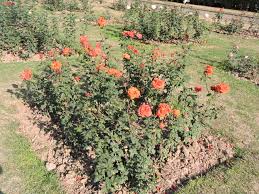
The northern sectors of the city including 12 where PGI was located were the older ones and more prosperous. The Zakir Hussain Rose Garden in sector 16 was named after India’s former president and had over 1600 species of roses. I used to visit occasionally, especially during the winters when the roses were in bloom. Summers in Chandigarh are hot but less than in many other places in the plains due to the closeness to the hills.
The Rock Garden is a major attraction. The garden was begun to be built by Nek Chand in 1957. The garden was built illegally but later became world famous. It is built entirely from discarded household and industrial waste. There is also a doll’s museum inside the garden. One of my fellow residents knew Nek Chand very well and he used to play with his son when he was young. Models of rock gardens have since been built in several Indian cities.

Summers in Chandigarh are difficult. The sun is relentless. The institution timings change. Before the onset of summer, one visits the desert cooler shops to buy new grass screens for the coolers. The cooler is a great invention with a water pump and screens moistened by water through which air is drawn to cool the room. They work well but when there were power outages in summer, they stopped functioning. The onset of the monsoon in late July makes things difficult. The humidity is high, and the temperature is still above 35 degrees celsius. October to December and March to April are usually pleasant. Late December, January, and February are cold and there is a threat of western disturbances that bring rain and cold damp weather. The city has two satellite townships, one in Punjab (Mohali) and the other in Haryana (Panchkula).

Chandigarh has one of the highest human development indicators in India. I enjoyed my three years in this planned city at the foothills of the Himalayas and I look forward to a visit in the future!  

Dr. P Ravi Shankar is a faculty member at the IMU Centre for Education (ICE), International Medical University, Kuala Lumpur, Malaysia. He enjoys traveling and is a creative writer and photographer.

.

PLEASE NOTE: ARTICLES CAN ONLY BE REPRODUCED IN OTHER SITES WITH DUE ACKNOWLEDGEMENT TO BORDERLESS JOURNAL

Click here to access the Borderless anthology, Monalisa No Longer Smiles

Click here to access Monalisa No Longer Smiles on Kindle Amazon International

Categories
Slices from Life

The Death of a Doctor

By Ravi Shankar

Zhi-Khro mandala, a part of the Bardo Thodol’s collection, a text known in the West as The Tibetan Book of the Dead, which comprises part of a group of bardo teachings which originated with guru Padmasambhava in the 8th Century. Courtesy: Creative Commons

My friend, Dr Ramesh Kumaran first shared the shocking news with me on WhatsApp. Along with a recent photo, the caption mentioned ‘Mourning the sudden and untimely of our dear Joseph Francis (6th batch). May his soul rest in peace. 6th October 2022.’ I felt sick in the pit of my stomach. This was the first mortality among our MBBS batch mates. One of our friends died when he was studying for MBBS, but he had left the course and was suffering from a prolonged illness. Some of our batch mates had close encounters with death during the ongoing COVID-19 pandemic.   

I was reminded of my own mortality and the fact that we often forget that our time on earth is limited. None of us know when exactly or how we will die. This I believe is a good thing. Movies have explored the sad state of people who knew or supposed they knew when and how they would die. Humans stride through life assuming their immortality. We kill fellow humans indiscriminately. We learn to hate each other. We pursue wealth and power. When we leave our material existence on Earth, we can take none of the accumulated wealth and power with us. The ancient Egyptians believed otherwise and buried their Pharaohs with all they would need in the afterlife. Ordinary people had no such privileges. We do not know much about the afterlife. Here science ends and we enter the realm of religion.

I facilitated a module on Death and Dying for medical and other students and our ignorance about death is profound. Modern medicine has the motto of preserving life regardless of its quality. We have not been trained to let go and make a person’s remaining time on Earth worthwhile. This is slowly changing but change is slow. We do not live life assuming that any moment can be our last on Earth. The Tibetan Book of the Dead (Bardo Thodol) tells us to live each moment in a spiritually fulfilling manner and mentions that we all have the potential to break free from the cycle of reincarnation and become spiritually enlightened beings.

I first met Joseph when I joined the Men’s hostel and the undergraduate medical (MBBS) course at Thrissur, Kerala, India. Our seniors were prowling around our floor abusing us and one of my friends was crying as he had just been forced to take off his moustache. Ragging still exists in India and students who were abused by their seniors wait for the new intake to take revenge. You are not able to take revenge on the powerful, so you take out your anger on the powerless. We see this all around in the modern world.   

Joseph stayed in a room near mine, and we became friends though not extremely close. One of the things I still remember about him is that he used to write with a fountain pen and used black ink. Even in those days when writing was still common most of us used ballpoint pens. He had impeccable handwriting. Joseph was always a perfect gentleman and willing to help others. I believe we did a few of our internship postings together. We collaborated on skits and other presentations during the college day celebrations. I still remember our college trip to Trivandrum Medical College for the Intermedicos festival and we stayed and slept in the badminton court inside the Men’s hostel. Life was simpler in those days. We were beginning to see the end of the MBBS doctor and specialisation, and super specialisation was becoming common. I feel this is a sad development and an MBBS doctor is competent to treat most illnesses. In fact, evidence shows that most illnesses can be handled by a trained paramedic. In most European countries, care is mostly delivered by general physicians while in the United States care is mostly provided by specialists. The amount spent and the health status of these countries/regions tell their own story.  

During those days, failure in MBBS examinations was common. Anatomy at the end of the first MBBS and Medicine at the end of the Final MBBS had the maximum casualties. Grading was arbitrary and there were no clear rubrics to guide the scoring. I was lucky to have squeaked through the anatomy dissection and the medicine courses. Joseph was unlucky and mentioned this often as due to his failures, he could not appear for the entrance exam of PGIMER[1], Chandigarh, one of the top postgraduate institutes in the country. One could not appear for the entrance exams failing the MBBS. A lot of effort has gone globally into changing the assessment system in MBBS and making it fairer and more objective.

Joseph used to join us for an occasional game of basketball. I next met him at Ollur, near Thrissur, when I was doing my post-graduation. St Vincent de Paul hospital was a multi-specialty hospital. I had come down to Kerala for a few days and stayed with Job and Joseph, both medical officers with who I shared a large apartment.

Over the years I lost touch with Joseph, and I next interacted with him in 2018 when I joined a WhatsApp group of my classmates. Joseph was very active in the group and was working as an anaesthesiologist in the United Kingdom. Many of my batchmates were working in National Health Service (NHS) and they often would mention how the NHS is being steadily starved of funds. The COVID pandemic hit the medical community hard. Doctors in practice seem to be especially vulnerable. We discussed this and postulated that it could be because they are exposed to repeated doses of the virus in high concentrations from multiple patients. Many doctors had lost their lives; many others I know were in the Intensive Care Unit for prolonged periods of time. Two of my classmates in the UK had serious illnesses requiring hospitalisation and prolonged intensive care.       

I next interacted with Joseph when I was unable to make a bank transfer to the UK to pay for membership fees of a professional organisation. The transfer was not going through and eventually, I asked Joseph if he could do the transfer from his account in the UK, and I would deposit the money in his account in India. He readily agreed. Joseph was always very helpful. During the last two years, I have lost several friends. Two academic collaborators, one in Malaysia and the other in Yemen passed away. Colleagues I knew in Nepal died due to COVID complications.

Death can be a celebration of a person’s life. An Irish wake is one last party to honour the deceased. Unknown diseases plagued the Irish countryside causing a person to appear dead. Hence a person would be waked in the deceased’s home for at least one night. I had the exact fear while certifying death. What if the person then woke up and disputed my certification? I was very careful and meticulous while writing out a death certificate.     

These deaths have underscored my own mortality. As someone once said, death and taxes are inevitable. Accepting one’s own mortality and coming to terms with our eventual demise makes you aware of the folly of chasing power and glory and can contribute toward a gentler, more decent world. Climate change is a testament to human greed and folly. We are still uncertain how liveable Earth will be during the next hundred years. As Mahatma Gandhi said, we can satisfy human needs, but we cannot satisfy human greed!  

.

[1] Postgraduate Institute of Medical Education and Research

.

Dr. P Ravi Shankar is a faculty member at the IMU Centre for Education (ICE), International Medical University, Kuala Lumpur, Malaysia. He enjoys traveling and is a creative writer and photographer.

.

PLEASE NOTE: ARTICLES CAN ONLY BE REPRODUCED IN OTHER SITES WITH DUE ACKNOWLEDGEMENT TO BORDERLESS JOURNAL