Categories
Review

The Oldest University in the World?

Book Review by Bhaskar Parichha
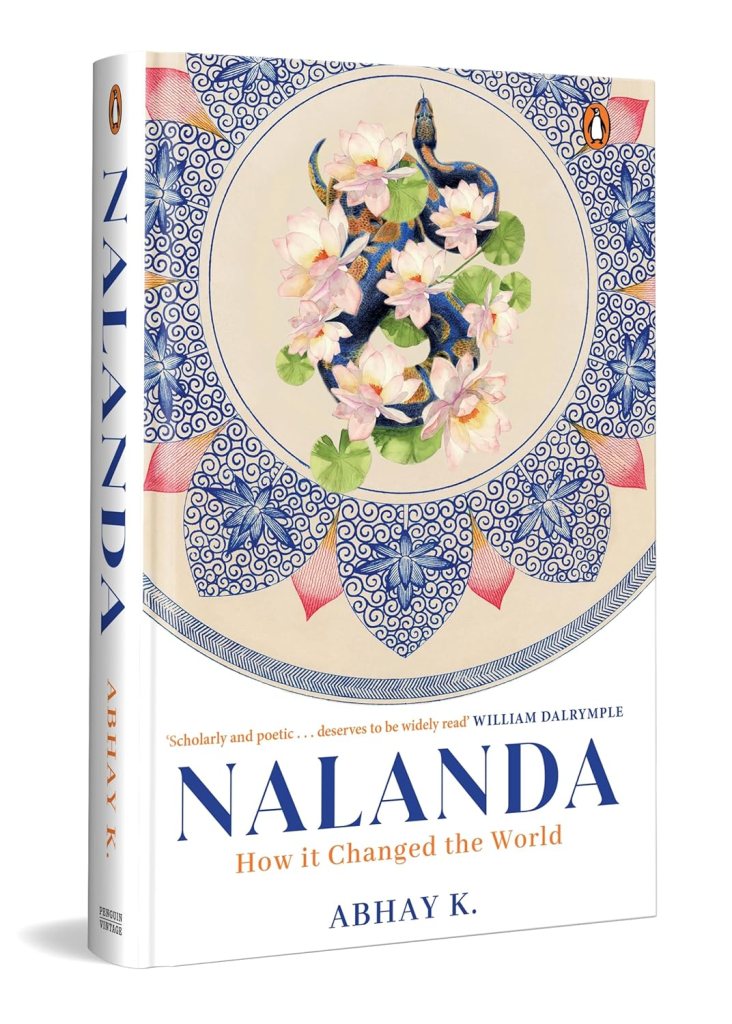
Title: Nalanda: How it Changed the World 

Author: Abhay K

Publisher: Penguin Vintage

Nalanda University, founded in 427 CE in ancient India, is considered the world’s first residential university. It attracted 10,000 students from across Eastern and Central Asia to study medicine, logic, mathematics, and Buddhist principles. The University flourished for over seven centuries, predating the universities of Oxford and Bologna by more than 500 years. Nalanda’s enlightened approach to philosophy and religion significantly shaped Asian culture long after its decline. The Gupta Empire, though Hindu, supported Buddhism, fostering a liberal environment that allowed it to blend intellectual Buddhism with multidisciplinary academics.

Nalanda was destroyed in the 1190s by Turko-Afghan military general Bakhtiyar Khilji, who sought to extinguish the Buddhist center of knowledge. The fire set by the attackers reportedly burned for three months. Today, the excavated site is a UNESCO World Heritage site.

Numerous aspects of Nalanda continue to be enveloped in an enigma. What is the date of its establishment? Who were its founders? Which individuals engaged in study and instruction at this institution? What disciplines were available for study? What was the population of students and educators? Can Nalanda be classified as a university by contemporary standards? What factors contributed to its eventual decline? Nalanda – How It Changed The World by Abhay K. unravels these questions.

Abhay K. has authored numerous poetry collections, such as Celestial, Stray Poems, Monsoon, The Magic of Madagascar, and The Alphabets of Latin America. Additionally, he serves as the editor for several notable works, including The Book of Bihari Literature, The Bloomsbury Book of Great Indian Love Poems, Capitals, New Brazilian Poems, and The Bloomsbury Anthology of Great Indian Poems.

Writes Abhay in the introduction to the book: “There is no clear and entirely reliable interpretation of Nalanda’s past or, for that matter, the past of just about anything. Rather, there are scattered ideas that we try to string together as history, an overview stitched from snippets. And there is no single interpretation of these snippets but rather competing and conflicting interpretations. Recognizing this slippery nature of the past and its documents is part of what makes scholarship such an exciting enterprise.

“Buddhist monasteries existed all over India, Central Asia, and East Asia. However, Nalanda became a celebrated monastery in comparison to its contemporaries. What might be the reason? One of the reasons was its proximity to Rajagriha (modern Rajgir), the first capital of Magadha. Rajagriha in those days was full of political intrigue and rivalries. It became a fertile ground for the birth of the Magadha Empire. Over the centuries, Magadha was ruled by a succession of dynasties, including the Brihdratha dynasty, the Pradotya dynasty, and the Haryanka dynasty. The Haryanka dynasty was the third ruling dynasty of Magadha. It was founded by Bimbisara (c. 558-c.491 BCE). He is considered to be a contemporary of both Mahavira (599-527 BCE) and Gautama Buddha (563-483 BCE). His son Ajatashatru further consolidated it after forcefully taking over Magadha from his father and imprisoning him. He fought a war against the Vajjika League, led by the Lichhavis, and conquered the republic of Vaishali.”

Divided into eight chapters – Nalanda the capital of Magadha, the legendary sons, the rise of Nalanda Mahavihara, luminaries, foreign scholars of Nalanda, Nalandas’s contributions and its global footprint – this is an exhaustive book. The narrative chronicles the ascendance, decline, and resurgence of Nalanda Mahavihara. It delves into Nalanda’s significant contributions to various fields, including science, mathematics, philosophy, art, architecture, and poetry, supported by thorough research. Additionally, it emphasises the distinguished scholars who enhanced its unmatched status as a leading center of learning, as well as the international scholars who frequented the renowned monastery.

Concludes Abhay K: “Nalanda’s footprints to be spreading to new territories in the twenty-first century, where they have not been strong before. As our planet faces the triple threats of climate change, biodiversity loss, and environmental pollution, humanity needs to make peace, both with its inner self as well as with its fellow species, rivers and lakes, oceans, and all entities that support life on our beautiful planet. Nalanda’s timeless tradition of imparting knowledge, wisdom, and kindness can guide humanity toward overcoming hatred, anger, frustration, and greed while fostering inner and outer peace.”

The core message of the book — with numerous photographs — is that the creation of institutions named after Nalanda around the world instills in him a sense of optimism that humanity will eventually resolve all its conflicts through the esteemed Nalanda tradition of dialogue and discourse, rejecting violence and warfare permanently. In this context, the ongoing legacy and revival of Nalanda, both in India and internationally, serves as a significant beacon of hope.

Nalanda, with its expansive scope and rich historical background, offers an engaging narrative that illuminates the evolution of this ancient institution over the course of thousands of years.

Bhaskar Parichha is a journalist and author of Cyclones in Odisha: Landfall, Wreckage and ResilienceUnbiasedNo Strings Attached: Writings on Odisha and Biju Patnaik – A Political Biography. He lives in Bhubaneswar and writes bilingually. Besides writing for newspapers, he also reviews books on various media platforms.

.

PLEASE NOTE: ARTICLES CAN ONLY BE REPRODUCED IN OTHER SITES WITH DUE ACKNOWLEDGEMENT TO BORDERLESS JOURNAL

Click here to access the Borderless anthology, Monalisa No Longer Smiles

Click here to access Monalisa No Longer Smiles on Amazon International
Categories
Review

Writings on Cinema by KA Abbas

Book review by Gracy Samjetsabam

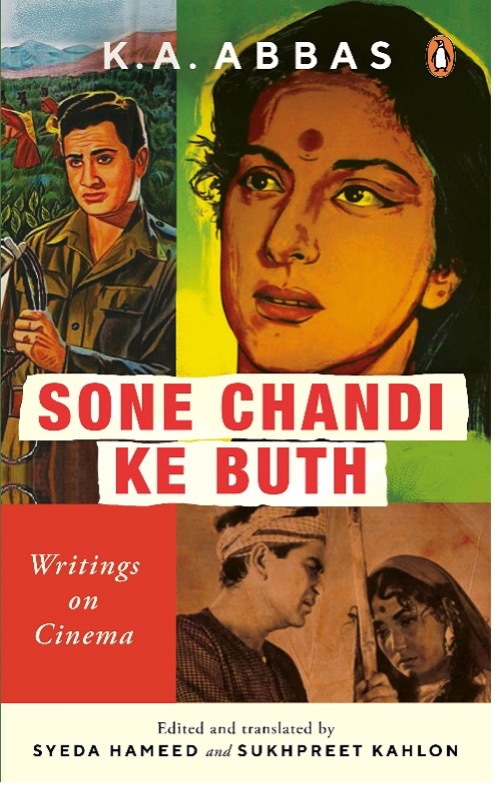
Title: Sone Chandi Ke Buth: Writings on Cinema

Author: K. A. Abbas

Editors and Translators: Syeda Hameed and Sukhpreet Kahlon

Publisher: Penguin Vintage

Khwaja Ahmed Abbas’s[1] Sone Chandi Ke Buth:[2]Writings on Cinema (2022), edited and translated by Syed Hameed and Sukhpreet Kahlon is truly, “an insider’s view of the ‘Sitaron Ki Duniya’[3]”.

The book is a constellation of Bollywood stories about moviemaking, film personalities, incidents, and fateful moments straight from the horse’s mouth. The book is divided into four sections – Funn Aur Funkaar[4], Kahaaniyaan[5], Articles, and Bombay Chronicle Articles. Abbas was often addressed as the “Human Dynamo” by his closest friends for his spontaneity and dexterity in churning out forms of expression such as short stories, novels, dramas, and films, which manifested whenever he pronounced, “Mujhe Kuch Kehna Hai[6]. He embodies a different time and sensibility, making the man and his work a treasure from the bygone days. Professor and scholar Ira Bhaskar aptly describes, “K. A. Abbas represents a crucial figure of the Indian modern who believed that critics and artists had a responsibility towards society.”      

K.A. Abbas, who was adept in Urdu, Hindi and English made the most of his multilingual skills to contribute thousands of articles on popular media including the longest-running weekly column, 46 years as a contributor in Blitz, writing for the Bombay Chronicle, 40 movies, short stories, and 74 books in 73 years. Sone Chandi ke Buth (2022) is Abbas’s last book on filmi duniya, the world of movies. The book throws a glimpse into Abbas’s journey from the young and aspiring journalist who wrote paltry salaried publicity blurbs to a scriptwriter, filmmaker and film critic of great repute  who made a tradition of his own offering “love” for the art and to everyone who lovingly called him “KAA”. Bollywood’s Big B, the Mahanayak[7], the megastar fondly admires Abbas’s “unrelenting spirit” and recalls, “K. A. Abbas gave me my first film, Saat Hindustani. I call him Mamujan.”

Syeda Hameed and Sukhpreet Kahlon labelled Sone Chandi ke Buth (2022) as “adhbudh[8]”, for the book is a testimony of the contribution of the man and his craftmanship. Coming from a family of poets and writers, Abbas walked along with the stars of the industries in its golden and the silver eras and yet was a man who could make jokes of himself, give sincere criticism on the quality of an artist’s work or the movie, speak of Bollywood as a unifying factor of pluralism in India, and suggest the importance of understanding truth for a greater cause. Intelligently and humorously, the book opens a window to fascinating instances and anecdotes of his life experiences and his encounters with the people who made history in the world of movies in India via Bollywood that were crucial to the industry or the personalities. With each turn of the pages, the narrative unravels interesting stories and junctures like how in writing about V Shantaram, whom he calls “Sadabahar” or evergreen, he goes on to describe his “crashing” into the world of film and becoming a film critic through film publicity, how his editor’s advice at the Bombay Chronicle opened his wings of  liberty to be critical but to do it prudently.

Drawing a fine veil between the reel life and the real life of the people with whom he manoeuvred in the film industry, the book “revealed more than concealed” the human aspects of greatness and flaws of each amidst their roles as heroes, villains or side characters in the movies. The book is filled with incredible stories of towering Bollywood personalities through Abbas’s eyes. Revelations in the section “Funn and Funkaar” captivatingly describe why he referred to V Shantaram as “The Evergreen Filmmaker”, Prithviraj Kapoor as “The Shahenshah[9]”, Raj Kapoor as “An extraordinary Karmayogi[10]”, Dilip Kumar as “Loss of a national treasure”, Meena Kumari as “The Muse of Ghazals”, Balraj Shani as “The People’s Artist”, Amitabh Bachchan as “Himmatwala[11]”, Sahir Ludhianvi as “The Lover and the Beloved”, Rajinder Singh Bedi as “The Guru”, and Satyajit Ray as “Mahapurush[12]”. The section “Kahaaniyan” sheds light on the ironies of the glamour and glitz in the film industry and on special days on the movie sets.

The section on “Articles” presents his thoughts on the relationship of filmmaking with business and its impact on society. Each article is a critical discussion of aspects of a good film, and he strongly opposes scripts that succumb to commercial sensibilities and powerfully voices the need for for “a good story” that “lies at the heart of a good film”. The section “Bombay Chronicles articles” compiles some of the finest articles of his passionate and flourishing days at the Bombay Chronicle in the 1930s as a film journalist. The articles in the concluding section continue to bring forth memorable facets of the world of films in India of the man and his times, and at the same time keep the spirit of enquiry burning in all movie enthusiasts and scholars to reflect on how much has changed over the years. Sone Chandi ke Buth brings into play Abbas, the man, the artiste and his style to showcase what a perfect blend of the head and the heart can do in film making.

If you are looking for a must-have book on Bollywood, filmmaking and movie criticism, then Sone Chandi ke Buth offers you an ample amount of it and more. Timeless memories of photos of the movies: Awara[13] (1951), written by him; Anhonee[14] (1952), a film he made on Nargis’s request; Rahi[15] (1953), a movie based on Mulk Raj Anand’s Two Leaves and a Bud starring Dev Anand and Nalini and Jaywant; Munna (1954), the first songless film of Indian cinema under the Naya Sansar banner; Pardesi [16](1957), the first Indo-Soviet production in a collaborative work of the Naya Sansar banner and Mosfilm Studio; Char Dil Char Rahein [17](1959), Abbas’s first multi-starrer movie; Chaar Shehar Ek Kahani[18] (1968), Abbas’s best-known political documentary; Saat Hindustani [19](1969), a movie on comradeship; and also, personal photos of Abbas’s self,  with his family and on film sets, enhances the aesthetic of the book.

The book has a phenomenally exciting set of stories about the famous and the lesser known faces of the movie industry in India, as people with ordinary life and circumstances amid their successes and failures. The translators and editors — his niece, Padmashri Syeda Hameed, an activist, educationist, writer and a former member of the Planning Commission of India, and Sukhpreet Kahlon, a researcher on cinema studies at the School of Arts and Aesthetics, Jawaharlal Nehru University — need to be thanked for collating these wonderful writings that touch our hearts while forging new bonds and links through the medium of films.

[1] Indian Film Director, 1914-1987

[2] Translates to: Statues of Gold and Silver

[3] World of stars

[4] Fun and Fun makers

[5] Stories

[6] I have to say something

[7] The great actor, refers to Amitabh Bachchan

[8] Amazing

[9] The Emperor

[10] A person who believes the ultimate panacea lies in devotion to work

[11] Courageous

[12] Superman

[13] The Vagabond

[14] The Untoward

[15] Traveler

[16] Foreigner

[17] Four Hearts, Four Paths

[18] Four towns, One story

[19] Seven Hindustanis

.

Gracy Samjetsabam  is a freelance writer and copy editor. Her interest is in Indian English Writings, Comparative Literature, Gender Studies, Culture Studies, and World Literature. 

.

PLEASE NOTE: ARTICLES CAN ONLY BE REPRODUCED IN OTHER SITES WITH DUE ACKNOWLEDGEMENT TO BORDERLESS JOURNAL

Click here to access the Borderless anthology, Monalisa No Longer Smiles