By Suzanne Kamata
I can still remember the address of my childhood home – the house number on North Shore Road in Spring Lake, Michigan, and the five digit zip code. Short, but sweet. Here in Japan, where I’ve lived for the past twenty three years, I’ve had four different addresses, each seemingly longer than the last. I can hardly remember how to write the location of my current domicile, let alone the complicated addresses of apartments past.
Given the chance to win a bag of rice or a free trip at my local supermarket lottery, I would rather pass than take up a pen. My hand starts to cramp as soon as I see a form to fill out. At the bank, in a doctor’s office, or when having to write in the corner of an envelope, I tend to recoil. It takes such a long time to jot down my address.
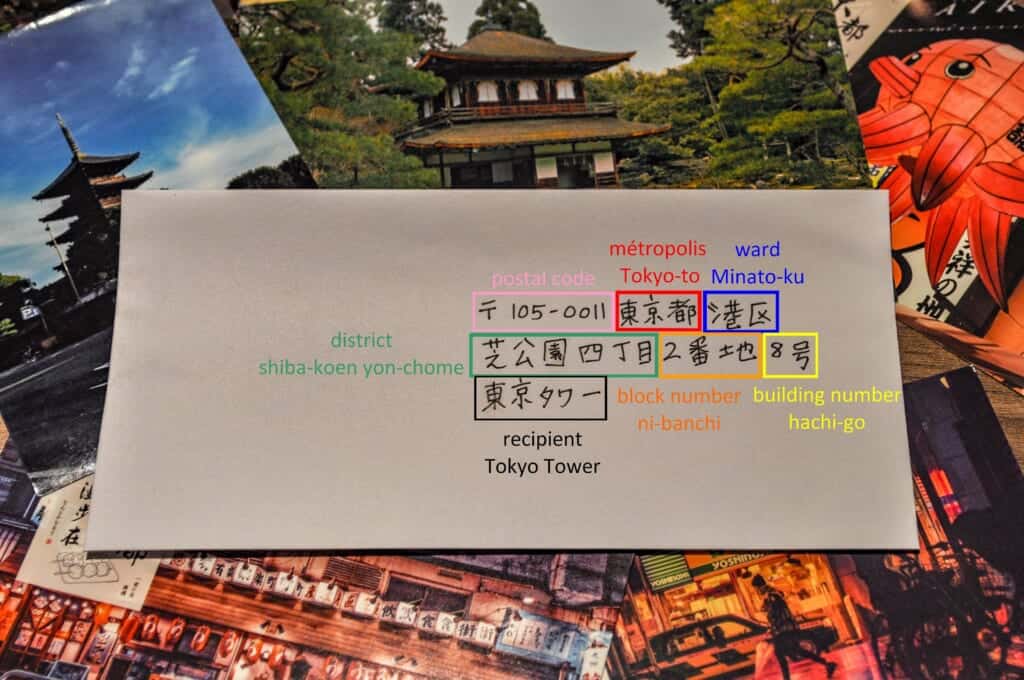
Written in the Japanese style, which dates back to the Meiji Period, my address starts out with the name of the prefecture, in this case, Tokushima, followed by the county name, the name of my town, the district, and eventually narrows down to a house number. The house numbers, however, are not in sequential order, but from oldest to newest. Our street, like most in Japan, doesn’t have a name.
Postal workers seem to be the only ones to whom addresses here have any meaning, and, to their credit, they generally get mail to the right place. When I first came to this country, however, I hardly ever got letters from my friends and relatives in America. My grandma, one of my most reliable correspondents, refused to write to me unless I sent her address labels. My address was simply too long for her to write. An editor once informed me that I had the most complicated address she’d ever seen in her life.
Cab drivers, on the other hand, can never find my house. I usually advise guests coming by taxi to get dropped off at the neighbourhood grocery store, and I go to meet them on foot. Not even satellites seem to be much help. Although most every year we are required to draw a detailed map from our children’s schools to our house to enable teachers to find us for the annual home visit, one teacher tried to find his way using his car navigation system. I watched for his car from the window as rain poured down outside. Finally, the phone rang. He was lost. He was near a shrine, he said. Could I come and get him? I dashed out with my umbrella and found him a few streets away.
For convenience, I had name cards printed up a few years ago. Now, when someone asks for my address, I simply hand over a card or, more often than not, my email address. It’s easy to remember and I can write it in six seconds.
.
Suzanne Kamata was born and raised in Grand Haven, Michigan. She now lives in Japan with her husband and two children. Her short stories, essays, articles and book reviews have appeared in over 100 publications. Her work has been nominated for the Pushcart Prize five times, and received a Special Mention in 2006. She is also a two-time winner of the All Nippon Airways/Wingspan Fiction Contest, winner of the Paris Book Festival, and winner of a SCBWI Magazine Merit Award.
PLEASE NOTE: ARTICLES CAN ONLY BE REPRODUCED IN OTHER SITES WITH DUE ACKNOWLEDGEMENT TO BORDERLESS JOURNAL
Click here to access the Borderless anthology, Monalisa No Longer Smiles
Click here to access Monalisa No Longer Smiles on Kindle Amazon International
 Borderless