Narratives and photographs by Ravi Shankar

Most passengers got down from the bus at Alor Setar, Kedah, north Malaysia. Binaya, my travel companion, shifted to the front seat of the double decker and later I followed him. It was after eight thirty in the evening and the road had become narrower. After driving on the six lane E1 expressway for most of the day, the narrower road looked confining. Traffic had also reduced. We got an excellent driver’s eye view of the road. One of the benefits of a double decker is the opportunity that you can pretend to be the driver. Malaysia’s northern most state of Perlis seemed different from the larger ones to the South. It was around nine-thirty at night when we reached the Kuala Perlis bus terminal. It was a short walk to our hotel near the jetty.
The Deepavali holidays had just begun and the exodus from Kuala Lumpur to various hometowns was in full swing. The expressway was packed with cars and our drive north was a slow crawl. The InterCity bus service (a private bus operator) used a double decker for this trip though the lower deck had been stripped of seats and used only for luggage and cargo. The seats were comfortable and the drive smooth though extremely slow due to the traffic.
Next morning, we had a traditional Malay breakfast of nasi lemak (rice cooked in coconut milk), fried anchovies and kueh (traditional cakes) along with teh tarikh (boiled and frothed tea). Pouring tea from a great height from one mug to another is a traditional South Indian way of cooling the drink and generating a thick head of foam. Tea shops do this with an extravagant flourish. We walked around the jetty and waited for our midday ferry to Langkawi.
The process of boarding the ferry was smooth and organised. We were seated right at the front. Roro ferries that could carry cars were approaching Kuala Perlis from Langkawi. The sea was calm, and the islands of Langkawi appeared after half an hour. The ferry went round the island and eventually approached the town of Kuah. Kuah is the district headquarters of Langkawi. There is the iconic Langkwai eagle statue near the jetty. The jetty was modern, and we took a taxi to our hotel located near Cenang Beach (Pantai Cenang in Malay).

The main island of Langkawi is surprisingly large, and taxis are the main means of transport. Cenang beach is popular with travellers. We were staying at the Cenang Langkwai House near Cenang beach. The room was spacious and well-equipped. Considerable thought had gone into the arrangements, and we had a pleasant stay. The first day I had noodles with prawns for lunch, and I was pleasantly surprised by their freshness and taste. Sea food was plentiful and enjoyable. Binaya was not comfortable with sea fish and preferred freshwater delicacies. I could understand his perspective as I always preferred sea fish and found freshwater fishes not very much to my liking. We dined in a large restaurant that was a few minutes’ walk from our hotel. One evening I tried mussels (delicious) while on another occasion I had laksa (Laksa is a spicy noodle dish popular in Southeast Asia. Laksa consists of various types of noodles, most commonly thick rice noodles, with toppings such as chicken, prawn, or fish).
My good friends, Naveen and Sunil, had recommended that we take the island-hopping tour. We booked the tour for the next morning. Langkawi is also famous for duty-free shopping and Binaya wanted to purchase a suitcase. The prices, however, were not lower than those in KL. Eventually I ended up purchasing some excellent chocolates at the Cenang Mall. Our stay was made sweeter!
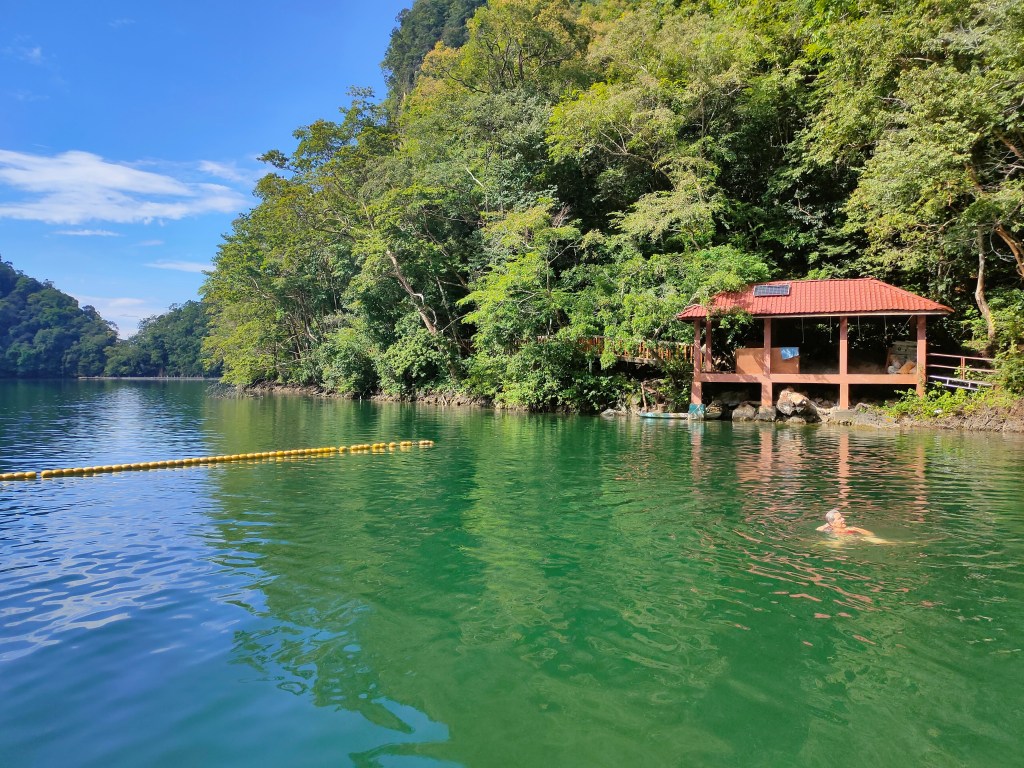
Early next morning we walked down to the main thoroughfare to have roti canai is a South Indian flatbread dish popular in Malaysia). We waited on the white sands of Cenang Beach for our transportation to the tour jetty. Each boat had about 24 passengers and was well organised. Everyone had to wear life jackets while on the boat. We had our photos taken and this was our introduction to this Langkawi custom. The tour lasts for around four hours and covers three main islands south of the main island. Our first stop was the Pulau Dayang Bunting, where we entered a geopark to hike up the hills to a lake. The trail was well maintained. Humidity was the main problem. After the mandatory photo, we continued to the lake. The tiles on the water, like elsewhere in Langkawi, were made of a floating material stays afloat on lakes and seas but depresses slightly under your weight. Both of us were quiet and we were missing the energy and dash of Sunil, our friend from Monash University, Malaysia.
We continued to Pulau Singa Besar to watch eagles feed from boats. Pulau means island in Malay though it brought images of the fragrant rice dish to our minds. We continued to Pulau Beras Basah and the sandy beaches and the turquoise waters took me back in time to one happy island, Aruba. There were colourful beach huts and paragliding was available for more adventurous souls. The ride back to the main island was short and we could see a docked cruise ship in the distance. Our photo had been converted into a souvenir (a small plate on which the photo was printed). We had lunch at our morning restaurant. Binaya had nasi goreng (fried rice) while I had the all-day breakfast. This was a good deal and consisted of two pieces of toast with butter, two fried eggs, a chicken sausage, and baked beans. Binaya tried out different geographical varieties of nasi goreng from Pattaya to Cina to USA.
After lunch we went to the Underwater World. The aquarium has themed sections like tropical rain forest, subantarctic climate, and marine life sections among others. The main attractions were the seal show and the penguins. The seal performed a variety of tasks and received a treat after completing each successful task. This is mentioned as the largest aquarium in Malaysia. The one at KL has a spectacular underwater tunnel and you can watch marine life swim by all around you.

Langkawi means reddish brown eagle in the Malay language and is believed to be the place of Garuda. The islands have been a part of the Kedah sultanate for over two millennia. The islands have a geological history going back to over 550 million years. Langkawi is thought to have been cursed for seven generations in the early 18th century by Mahsuri, a woman who was falsely accused of adultery and executed unjustly. Langkawi was occupied by the Kingdom of Siam and became a part of Malaysia after the Anglo-Siam treaty. The islands were a sleepy backwater and were developed into a major tourist destination by Dr Mahathir Mohamed.
The next morning, we travelled to the cable car toward the north of the island. The Deepavali holidays brought many to the island. The tourist infrastructure’s good, and we did not experience crowds and long waiting times. The Langkawi sky cab provides an aerial link from the Oriental Village at Teluk Burau to the peak of Gunung Machinchang, which is the location of the Langkawi Sky Bridge. The total length is 2.2 km, with a journey time from the base to the top of around 15 minutes. It was officially opened in 2003. We were comparing this to the Manakamana cable car in Nepal. This one is longer and steeper. The elevation between the base and the middle station is said to be the steepest in the world. There were delightful views of the bay and the surrounding islands as we moved slowly toward the top. The Skybridge is a major attraction and is among the longest free span and curved bridge in the world. There are a few glass sections that allow you to look down into the valley. The views were majestic, and the bridge is around 660m above sea level. There is also a sky glide option with a comfortable cabin style vehicle that carries visitors from the top station to the sky bridge.

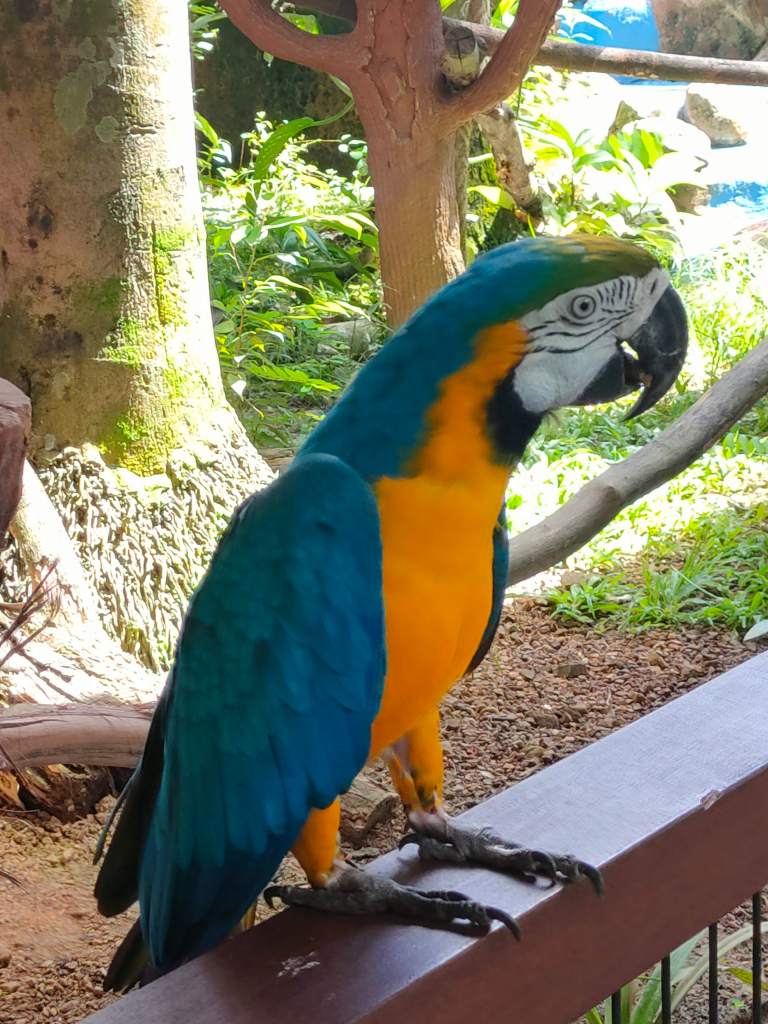
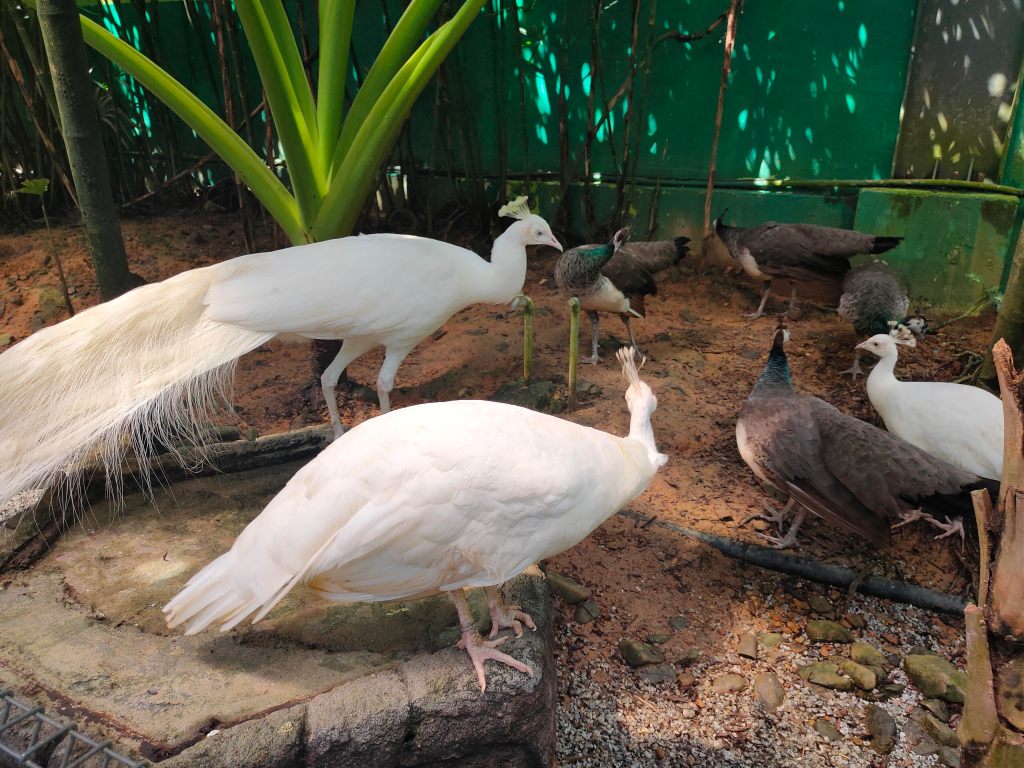
We took a taxi to the Langkawi Wildlife Park. Malaysia has some delightful animal parks and the one at Langkawi offers close encounters with animals. The animals are used to visitors and there are plenty of opportunities to touch, pet and feed them. Trained handlers were at hand. I was reminded of ‘Farm in the City’ at KL constructed around a similar theme. The covered walking path meanders through animal enclosures and the peafowls reminded me of the KL Bird Park. Feeding the small birds, the tortoises, deer, and the rabbits is a highlight of the visit. Like at other attractions there is a mandatory photo, and the exit is always through a duty-free shopping complex. That evening we had a spectacular thunderstorm. Being to the north the rains may be more seasonal at this tropical paradise.
The next morning, we had to depart back to routine life. We reached very early for our flight back to KL. We watched passengers boarding Air Asia, Malaysian Airlines and Scoot flights to Penang, KL and Singapore. Air Asia is a dominant player in the Southeast Asian market. The flights are cheap and usually fly on time. The aircrafts, however, may be older and the leg space is limited.
We had a pleasant break at one of Malaysia’s major tourist destinations. There are many attractions here that we are yet to experience. Time was limited and we did not want to rush ourselves from attraction to attraction during a leisurely break. We plan to return one day to the oldest land in Malaysia, 550 million years in the making as proudly proclaimed by the site Naturally Langkawi!
Dr. P Ravi Shankar is a faculty member at the IMU Centre for Education (ICE), International Medical University, Kuala Lumpur, Malaysia. He enjoys traveling and is a creative writer and photographer.
.
PLEASE NOTE: ARTICLES CAN ONLY BE REPRODUCED IN OTHER SITES WITH DUE ACKNOWLEDGEMENT TO BORDERLESS JOURNAL
Click here to access the Borderless anthology, Monalisa No Longer Smiles
Click here to access Monalisa No Longer Smiles on Kindle Amazon International



 Borderless