Japan is generally considered a safe country with a low crime rate. I feel comfortable walking around our neighbourhood alone, in the dark. In fact, I usually go for a walk in the evening after dinner, when night has already fallen. My walking course is mostly along sidewalks, generally well-lit, and the roads are well-traveled. Part of my usual course goes through a tunnel which is across the street from a large shopping mall.
I’d never had any concerns until a couple of months ago when I discovered a tent in the corner of the tunnel. How odd! Once or twice, I’d come across skateboarding teens, but never anyone who seemed to be living there. I couldn’t tell if anyone was inside, cuddled up within canvas. It was zipped shut, and malodourous. I hurried past, hoping it would be gone the next day, but it was still there.
While Japan is a very safe country, bad things sometimes do happen here. There was the guy who dressed up like the Joker and lit a fire on a Tokyo subway on Halloween. There was the woman who killed her neighbors by poisoned curry. Every now and then, some knife-wielding psycho starts slashing strangers in a crowd.
I mentioned the tent to my husband. He thought it was strange, too.
“But there is a camera in the tunnel,” I said.
‘It’s just for show,” he countered. “It’s probably not activated.”
“Maybe I should tell the police,” I said. After I had thought about it, though, I changed my mind. Maybe someone was fleeing an abusive home. Maybe an elderly person who couldn’t make rent was holed up inside. Even though I suspected the worst — some crazed criminal lying in wait — it was possible that there was a perfectly good explanation.
Nevertheless, I avoided going for a walk for the rest of the week. A few days later, I decided that it would probably be safe if I crossed the road instead of going through the tunnel. I set out after dark, as usual, but when I got to the crosswalk before the tunnel, I waited for the light. I saw a patrol car parked on the other side of the road, and two policemen waiting to cross. Maybe I should tell them about the tent, I thought. But I said nothing. We crossed paths without a word.
As I watched them, I realised that they already knew about the situation in the tunnel. That’s where they were headed. I observed as they made their way to the tent and peered at it. I felt sure that everything would be back to normal the next day.
But it wasn’t.
The next time I drove by, I noticed that the tent was still standing. Maybe no one had been inside of it when the police officers dropped by to check it out. Maybe they had left it standing out of consideration for the person who was using it for shelter. Or maybe it was more of a trap, so that they could catch the person when they came back.
At any rate, I was relieved that the police were aware of the tent, and that I no longer had to feel conflicted about whether or not I called them. I continued to cross the road instead of going through the tunnel.
A couple of weeks later, my husband and I had dinner with a friend who often went jogging. She knew about the tent, too, and remarked on how odd it was. No one seemed to know what was going on. I’d heard of out-of-work men sleeping on scraps of cardboard in a Tokyo park, but there were no homeless people in our small town. Not that I knew of, anyway.
Finally, my husband came back from a visit to the shopping mall one evening. He told me that he’d seen a police car and an ambulance near the tent. After that, it was gone. I scanned the local newspaper the next day and watched the evening news, but no one mentioned the tent in the tunnel. Maybe I would never find out what had happened.
I thought of other potentially scandalous events that had never been reported — a preschool teacher knifed by her ex-boyfriend on school grounds, a principal who’d hung himself in his office — and I realised that many things were kept under wraps.
I was reminded not to take my personal safety for granted. It also occurred to me that while people in small towns often complain that everyone knows everyone else’s business, the folks in the small town where I lived were good at keeping each other’s secrets, too.
.
Suzanne Kamatawas born and raised in Grand Haven, Michigan. She now lives in Japan with her husband and two children. Her short stories, essays, articles and book reviews have appeared in over 100 publications. Her work has been nominated for the Pushcart Prize five times, and received a Special Mention in 2006. She is also a two-time winner of the All Nippon Airways/Wingspan Fiction Contest, winner of the Paris Book Festival, and winner of a SCBWI Magazine Merit Award.
PLEASE NOTE: ARTICLES CAN ONLY BE REPRODUCED IN OTHER SITES WITH DUE ACKNOWLEDGEMENT TO BORDERLESS JOURNAL
When my twenty-three-year-old daughter Lilia, who is deaf, sent me a text saying that she wanted to attend the Osaka Comic Convention, I messaged back “Go ahead!” I figured she would want to go with her friends, fellow manga and anime and Marvel movie enthusiasts. I am more of a literary-novel-type person, unfamiliar with the DC universe. My idea of a good time is reading a book of poetry with a cat on my lap. However, a week or so later, she repeated her desire, along with a GIF of a crying cat, fountains of tears gushing from its eyes. This was followed by three attempted video phone calls while I was at work.
“Do you want me to go with you?” I texted.
“Yes,” she replied.
Well, I could do this for her. On our mother-daughter trip to Paris several years back, she had put up with my dragging her (okay, pushing; she is a wheelchair user) to the Orsay Museum, even though she would have rather gone to the Concierge to look at a lock of Marie Antoinette’s hair. She had made concessions for me, so I could make some for her. Besides, I had never been to a comic convention before. It might be fun. At the very least, I could write about it.
I put her in charge of buying the tickets from the Japanese website. She sent me a screen shot: 25,000 per ticket. What? “That’s really expensive,” I texted her. “I’ll pay for it,” she texted back.
I later found out that admission was only 3,610 yen. The extravagant fees were for a photo opportunity with one of the celebrities who would be headlining the event. One of them played the role of Lilia’s favourite character in her favourite TV series. She had watched all ten episodes of all thirteen seasons, and regularly posted related fan art on her Instagram feed. She had purchased the chance to be in close proximity to the actor.
Sure, it was expensive, but research has shown that experiences are often ultimately more satisfying than things. I know that to be true myself. In Paris, we had a never-to-be-forgotten dinner at the top of the Eiffel Tower. When we went to Hawaii, on our last trip together pre-pandemic, we had gone on an open-door helicopter ride. For Lilia, having her photo taken with the celebrity would probably be just as thrilling. She had also bought a ticket for me.
I didn’t know much about the celebrity. In fact, I knew nothing. I had glimpsed him onscreen, occasionally, when Lilia was bingeing episodes of the show on our widescreen TV. I looked him up on Wikipedia. He had an impressive background. He’d started out in politics, had probably met President Obama, and then transitioned into entertainment. He had kids, whom he was concerned about feeding well. His wife was a university professor, like me, and he’d published a book of poetry, which I immediately ordered.
I started thinking about how I could make the most of this opportunity. As the author of several novels published by small presses, I was always looking for ways to promote my books. I knew that a celebrity endorsement – or even having a famous person be photographed while holding one’s novel – could bring attention to a book. Maybe I could get the celebrity to hold my book during the photo-op, and then I could post it on Instagram.
But then I went to the website for the Comic Con. I came across a notice that one of the celebrities who had been scheduled to appear in Tokyo in 2022, would not be coming after all. The message read, “Due to a last-minute personal issue,” the celebrity “is unable to travel and had to postpone his appearance at this year’s Tokyo Comic Con. He was looking forward to coming back to Japan and seeing everyone. He is deeply sorry and looks forward to coming back to Japan next year.” But the actor was not attending this year either. He had been run over by a snow plow a few months before and was still in recovery. (This was not mentioned on the website.)
Elsewhere on the website, I came across a list of exhibitors, food vendors, celebrity guests (seven men, one woman), and rules regarding the autograph and photo sessions. So many rules! We would not be allowed to hug the celebrities or touch them at all. We would not be allowed to take selfies or other photos with our own smartphones, or bring props (like a book?), or wear masks, or give gifts to the celebrities. Okay, so maybe I wouldn’t be able to ask the TV star to hold my book.
Since the Comic Convention started relatively early, Lilia and I stayed overnight at a nice hotel in Osaka. The next morning, I put on make-up and a pretty dress. I helped Lilia with her hair. We went down to the dining room for a gorgeous buffet breakfast – made-to-order omelettes, tiny French pastries, a big bowl of fresh lychee fruits, and other delights. Although I had splurged on accommodations, I thought that we would take public transportation to the convention site to save money. But that morning, on the third day of the event, the day of our scheduled photo op, rain poured down. We had forgotten to bring waterproof ponchos and umbrellas. I decided we’d go by taxi.
We hopped into a cab at the hotel. The driver was surprised when I mentioned the destination. “We’ll have to go by highway,” he said. That would mean toll fees. But at least we would get there on time, and we would be relatively dry.
The venue, Intex Osaka, was over a bridge on a small island with lots of boxy warehouses. At first, I was amazed by the lack of cars. And people. Were we even in the right place? I didn’t have enough cash on me for a taxi ride back to Osaka Station, and this driver didn’t appear to take credit cards. At last, we reached the huge convention center.
“This is it!” the driver said. Still, no people. He continued to drive around the building, rain spattering his windshield, until, to my relief, we came across some men in uniform waving orange batons, and then to the front, where a long stream of young people holding umbrellas flowed toward the entrance.
Once inside, Lilia flashed our tickets. After a cursory bag check, red paper Comic Con bracelets were fastened to our wrists. I grabbed a map, and tried to get my bearings, but Lilia whipped out her tablet, wrote something on it in Japanese, and showed it to one of the many attendants, a young man wearing a white surgical mask. She’d asked, “Where do we go for the celebrity photos?”
“I’ll show you,” the attendant said. “Follow me.” We scurried past cosplayers dressed up like Spiderman and the Joker and one woman dressed in green carrying a huge candy cane. Some people, not in costume were slurping noodles at a table near a food booth.
Cosplayers. Courtesy: Suzanne Kamata
The attendant indicated an area at the back of the building. We still had a couple of hours before our photo session. “So, we just come here at one fifteen?” I asked. We had an appointment, after all.
“You should get here early,” he said. “At least an hour before.”
I nodded. “Now, where is the Celebrity Stage?”
According to the program, another actor, famous to this crowd, at least, for his role in a movie based on an American comic book, would be participating in a Q and A session onstage in another twenty minutes. I figured we had plenty of time to find a good spot, but when we entered the enormous hall, I saw that all of the seats were filled. We were late.
“This way,” another attendant said, lifting the chain to the wheelchair-accessible area, just to the left of the stage.
We had a good view, but I couldn’t help thinking that at such an event in my native country, the United States, there would probably be a sign language interpreter. In Japan, there was almost never one, unless it was requested in advance. I did my best to interpret for my daughter.
In the program, the celebrity was pictured as bald and sleek. With his dark glasses, he appeared to be the epitome of cool. The man who ambled onto the stage, however, looked a bit scruffy, as off-duty actors often do. He had a beard, glasses, and a leather newsboy cap over his frizzy grey hair. One of his teeth was missing. He greeted the crowd in Japanese and was met with applause.
The emcee tried to engage him in conversation, but he was hard to pin down. He wandered around the stage, joking around. When asked a fan’s earnest question, “What special thing did you have to do to prepare for your role in the film?” he replied, “Nothing.” Later, he was asked if he would appear in another superhero movie. He rubbed his fingers together to indicate it would depend on how much money he was offered, and then, to demonstrate how little most actors actually earn, he took out a one-thousand-yen bill and ripped a tiny corner off. I imagined the horror of all of the frugal, hard-working people in the audience who would never do such a thing. The emcee gently admonished him for tearing money.
Finally, in true Japanese fashion, the emcee asked him to deliver a “special message” to his fans. The celebrity avoided responding to the request, at first, hopping off the stage, and peering into the camera, pretending to check his teeth. Again, “A message for your fans, please?” He got back onstage and adjusted the interpreter’s mic, before, at last, delivering his “message,” one Japanese word: “Hai.”
In this country where everyone was always so orderly and polite, I couldn’t help but be a bit embarrassed by his behaviour. I mean, I wouldn’t have shown up to a writer’s festival or an academic conference without thinking about what I would say. Then again, maybe his performance – and he was performing – was better than him sitting calmly in the chair, giving straight answers. Maybe the unpredictability of this mad genius was entertaining. Maybe just seeing this man who had brought beloved characters to life onscreen, live and in-person, and to be able to pay homage to him, was enough for his fans.
At about 12:10, after we had checked out the exhibitors’ tables and a display of manga posters, I suggested that we get in line for the photo session. Lilia eagerly rolled herself back to the spot we’d been shown to upon arrival. This time, we were early. Not only that, we were first in line. As we waited, Lilia composed a message to the celebrity on her smartphone. I figured that since she was deaf, the convention organisers would allow her to use her phone as a communication device.
A young woman in an orange kimono filed in behind us. More and more people followed. There were other cordoned-off rows for the other celebrities who would be signing autographs and posing for photos, including a Norwegian actor who was known for his role as a cannibal.
When we got closer to the appointment time, an attendant led us to another room, cordoned off like the immigration area of an international airport. Because my daughter uses a wheelchair, we got to take a shortcut. We were still at the head of the line. We were told to put all of our possessions into baskets – again, like the security line at the airport.
“My daughter is deaf,” I explained. “Is it okay if she hangs on to her phone? She just wants to show a few words to the celebrity.”
The attendant shook his head. “Talking to the celebrity is NG.” No good. Prohibited.
Regretfully, I explained what he’d said to my daughter. Lilia, who had also read all the rules on the website, was nonplussed. She put her phone away without complaint.
We stood there, waiting. Although I had the addict’s urge to check my email and scroll through social media, I left my phone in my bag. But I did reach for a notebook and pen.
“What are you doing?” my daughter asked.
“I’m just going to make a few notes,” I told her. “I might write an essay about this.”
“No, you can’t write an essay.” She made an “X” with her arms. No selfies, no touching the celebrity, no talking to the celebrity, and probably no writing about the celebrity.
“I think it’s okay to write an essay,” I said. I scribbled a few words then put the notebook and pen back into my bag.
I asked the attendant where the nearest subway or train station was, already thinking about how we would get home. My daughter asked me what we were talking about and then became irritated. I understood that she wanted me to focus on the celebrity, to think only about him, and what would happen when he arrived. I tried.
More and more people, mostly Japanese women, lined up behind us. I began to realise why the organisers didn’t allow conversation. If the celebrity had to engage in small talk with a hundred or more people, he would become exhausted. As it was, he’d have to smile non-stop for an hour or so. His cheeks would ache. But he would probably make a lot of money from doing this. I wondered how much of a cut he would actually get from the photo-op fees. I thought about all the times I had sat at a table in a bookstore or at a book festival, hoping to sell my novels, and no one had come. Yes, I envied the celebrity.
We waited and waited. The celebrity was late to the photo op. He was probably still signing autographs. Finally, we were led, just a few of us, including the young woman in the orange kimono, into a tented area with a backdrop. A photographer and team stood at the ready. My daughter began to tremble. She indicated that her heart was pounding: doki doki. I thought she was going to hyperventilate. We waited some more.
I wondered if this guy would be scruffy and irreverent like the actor onstage. I hoped not, for my daughter’s sake. We had been planning to have our photo taken together, the three of us, but at the last minute, Lilia changed her mind. She wanted to be in the photo alone with the celebrity. Fine with me.
“He’s coming soon,” someone said. “Please be patient.”
And then…at last…he entered the tent. He was dressed nicely in a blue collared shirt and black pants, a bit of stubble peppering his handsome, now familiar face, his hair neatly groomed.
Lilia’s hands flew to her flaming cheeks. She let out a squeal. The celebrity, and everyone else, were amused by her extreme excitement. He smiled at her as she pulled up next to him in her wheelchair. A piece of tape served as a divider: fan on one side, celebrity on the other. He stood there towering over her, with his aura of fame.
And then, Lilia’s favourite actor, the man who brought her most beloved fictional character to life, crouched down so that their heads were at the same level. He put his arm firmly around her shoulders. The woman behind me, no doubt as aware of the “no touching” rule as I was, gasped. The photographer clicked the shutter, and just like that, it was over. Lilia wheeled out of the way.
Next was my turn. I stepped up to the screen. The celebrity put his arm around me, and I smiled for the camera. “Thank you,” I said in a low voice and exited the tent.
By the time we gathered our belongings, the photos were already printed and ready to be picked up. In the first one, Lilia and the celebrity grinned widely. She held both thumbs up. His body leaned toward hers. They both looked cute. In the second photo, my hands hung down, my posture was stiff, the celebrity’s smile was a tad dimmer, and…my eyes were closed.
But it was okay. The celebrity would probably never see this unflattering, awkward version of me, or the hundreds of other photos taken at this and other Comic Cons. And at least I got an essay out of it. For my daughter, though, this has been the thrill of a lifetime — expensive, yes, but more precious than gold!
A cosplayer holding Suzanne Kamata’s TheBaseball Widow. Courtesy: Suzanne Kamata
Suzanne Kamatawas born and raised in Grand Haven, Michigan. She now lives in Japan with her husband and two children. Her short stories, essays, articles and book reviews have appeared in over 100 publications. Her work has been nominated for the Pushcart Prize five times, and received a Special Mention in 2006. She is also a two-time winner of the All Nippon Airways/Wingspan Fiction Contest, winner of the Paris Book Festival, and winner of a SCBWI Magazine Merit Award.
PLEASE NOTE: ARTICLES CAN ONLY BE REPRODUCED IN OTHER SITES WITH DUE ACKNOWLEDGEMENT TO BORDERLESS JOURNAL
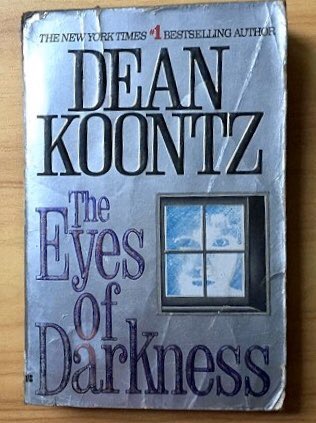
One of the passages from a thriller that has been circulating the social media circles during COVID 19 is how the Wuhan virus was evolved in a lab in the United States with a Chinese refugee’s help, one who had defected to US “carrying a diskette record of China’s most important and dangerous biological weapon in a decade.” The book, The Eyes of Darkness by Dean Koontz, is listed as a thriller, mystery, suspense and horror. It has been republished with a few changes in 1996, post-Glasnost and post-Tiananmen incident.
In the novel, the virus, called Wuhan 400, was said to have been developed in a lab in the outskirts of Wuhan. It “afflicted only human beings”. The fictitious virus had an incubation period of less than twenty-four hours. We are told, “It destroys part of the brain that controls the autonomic functions. The victim simply ceases to have a pulse, functioning organs, or any urge to breathe.” People died within a few hours of the infection.
The corona, luckily for mankind, does not affect the brain – only the lungs and most recover with mild flu-like symptoms and some have no symptoms at all.
The Wuhan 400 has been shown to be so infectious that one single panic-ridden, irresponsible, contaminated scientist infected a huge batch of boys and their teachers, who were on a trip that would teach the youngsters survival skills. Ironically, except for one child, the rest die. What gave the child the resilience to survive becomes the source of study for scientists in the middle of a deserted spot in Texas. The story revolves around how the child is rescued by his mother and her boyfriend who fly incognito all the way from Las Vegas to Reno and then into the wilds.
The book has a touch of the paranormal. The author tells us in an ‘Afterword’: “The Eyes of Darkness was one of my early attempts to write cross- genre novel mixing action, suspense, romance, and a touch of the paranormal.” And the title is based on the paranormal activity. The paranormal activity is a little eerie and the descriptions are just frightening to the right degree.
The Eyes of Darkness had been revised in 1996 and republished. This is the version that is doing the rounds of the social media platforms. The earlier 1981 version was authored by Dan Koontz under the pen name of Leigh Nichols. In the 1981 version, the virus was called Gorki 400 virus and developed in Russia. This was before Mikhail Gorbachev used the terms perestroika(restructuring) and glasnost to indicate an openness in the Soviet Union which was its first step towards democratisation. Then in 1991, Boris Yeltsin moved towards a loose federation of Russian states. In 1989, the terrifying incident of Tiananmen Square killed thousands of innocent protestors.
In the 1996 edition, Dombey, a scientist in the facility which housed the research tell us , “The Russians… they’re now supposed to be our new friends, but they keep developing bacteriological weapons, new and more virulent strains of viruses, because they are broke, and this is a lot cheaper than other weapons systems…” That the paranoid of weaponists and security experts obviously knows no bounds anywhere in the world is well borne out by the narrative. This has nothing of the conspiracy theories to wipe out the world. It is a thriller like a James Bond! It does not dwell on Machiavellian concepts quoted in Dan Brown’s thriller, Inferno:
“When every province of the world so teems with inhabitants that they can neither subsist where they are nor remove elsewhere, every region being equally crowded and over-peopled, and when human craft and wickedness have reached their highest pitch, it must needs come about that the world will purge herself in one or another of these three ways: floods, plague and famine”
Dan Brown has something similar in Inferno where the world is threatened by a conspiracy to decimate the population based on Machiavellian and Malthusian principles by a villain who is more colourful and dramatic than Koontz’s and weaves the story in the city of Florence.
The story of Inferno, located in Italy, is interesting and perhaps can be the subject of another review. I enjoy a Dan Brown thriller more because it is woven around history and philosophy.
The Eyes of Darkness is simpler lore — with shooting, bars, the glamorous world of casinos, racing from place to place, helicopter and fast car rides, homes getting blown up, strange paranormal activities that wreck a room and bomb blasts from which the protagonists escape. The villain is perhaps a little less colourful than Dan Brown’s or the Joker from Batman — but weird none the less. The plot is intriguing! Take a plunge and see — it is a good and easy read while you wait out the virulence of the real COVID 19!



 Borderless