Categories
Stories

Unspoken

By Spandan Upadhyay

The city hummed in the distance, a restless body of lights and shadows. From the 10th-floor balcony of an aging apartment building, the sound of honking cars, barking dogs, and occasional train whistles formed a chaotic symphony. The night air was thick with the scent of rain-soaked pavement, diesel exhaust, and something else, something old, unspoken, waiting: like the breath of a forgotten tomb.

Flat 10-B faced east. At dawn, sunlight strained through grime-caked windows, pooling weakly on floors that hadn’t seen polish since Madhavi’s husband died. The walls, once eggshell white, had yellowed like ancient newspaper clippings. Cracks branched across the ceiling in fractal patterns, mapping silent histories of monsoons absorbed and endured.

Madhavi Bose had lived in this apartment for twenty-seven years. She had moved in as a young bride, her heart brimming with the quiet satisfaction of middle-class security. Her husband had been a government officer with a voice like a rusted hinge and hands that smelled always of mustard oil and ink. She’d learned to love him through ritual: starching his shirts, packing his tiffin, listening to his stories of petty office politics. Her world contracted to the geometry of his needs, his nap times, his preference for fish on Thursdays, his mother’s backhanded compliments about Madhavi’s rice.

And then, suddenly, he was gone. A heart attack at forty-five, slumped over a stack of tax files. No time for goodbyes, no time for regrets. Just the scent of his hair oil lingering on pillowcases, and the pension that arrived every month like a condolence card.

Left with a sixteen-year-old daughter and a life halved, Madhavi had done what was expected of her. She survived. She woke each morning, brewed tea for one, and scrubbed the balcony tiles until her knuckles bled. She learned to kill cockroaches without flinching. She stopped wearing sindoor.

And then there was Riya.

Riya, now twenty-four, had been a bright, sharp-eyed child, full of questions, full of hunger. At eight, she’d torn maps from schoolbooks to tape above her bed. Patagonia! Istanbul! Marrakech! Places whose names rolled like marbles in her mouth. At fourteen, she wrote stories about women who rode motorcycles through deserts. Too restless for a city like this, too impatient for a life like her mother’s. She devoured novels as if they were contraband, hiding Rushdie under her mattress, scribbling poems in the margins of math notebooks.

University had been a brief reprieve. For three years, she’d rented a hostel bunk near campus, subsisting on muri[1]and the euphoria of all-night literary debates. She fell in love twice, once with a Marxist poet who quoted Faiz, once with a biology student who sketched ferns in her notebooks. Both left for Delhi. Both promised to write. Neither did.

Her first job interview had been at a glossy magazine office where the editor yawned while she spoke. The second, at a publishing house, ended when they asked her to fetch chai for a visiting author. “You’ll start as an intern,” they’d said, though she’d graduated top of her class. Soon, she found herself in a cubicle the colour of wet cement, editing corporate brochures about cement. The future is built on solid foundations. Her colleagues wore polyester saris and discussed baby formulas. At lunch, she hid in stairwells, nibbling canteen samosas gone cold, scrolling through friends’ Instagrams: New York! Berlin! — until her eyes burned.

And so, she returned to Flat 10-B. To her mother. To a house where the only real conversations happened in the spaces between words.

The apartment’s rhythm was metronomic. Madhavi rose at 5:30 AM, the click of her alarm clock splitting the dark like a dry twig. She brewed Assam tea, the pot whistling two precise notes. The newspaper arrived with a thud; she read it front to back, circling typos in red pen. By 6:45, she descended the ten flights (the elevator had died with her husband), her cane tapping each step like a metronome. She walked exactly three laps around the park, nodding at the same widows on the same benches, their saris fading to identical shades of ash.

Riya woke at 8:00 AM to the smell of cumin seeds burning, Madhavi’s eternal attempt at breakfast. She dressed in the dark, avoiding mirrors. The corridor to the front door felt longer every day, lined with family photos fossilized in time: her parents’ wedding portrait, Madhavi’s smile stiff as starched cotton, Riya’s fifth birthday, half the cake uneaten, her father’s garlanded graduation photo gathering dust.

Evenings condensed into separate silences. Madhavi parked herself before the television, absorbing soap operas where women wept over stolen inheritances and switched-at-birth babies. The flickering blue light etched her face into something statue-like, immovable. Riya retreated to her room, headphones blaring punk rock, rereading The Bell Jar [2] for the twelfth time. She’d marked a passage years ago, I saw my life branching out before me like the green fig tree, but now the figs seemed rotted, the tree petrified.

Dinner was a sacrament of avoidance. “There’s dal in the fridge.” “Okay.” They passed each other like shadows, careful not to touch. Once, Madhavi’s fingers brushed Riya’s wrist while handing her a plate. Both recoiled as if scalded.

They never argued. Arguments required collision, and collision required caring enough to crash.

Then the sleepwalking began.

It was Riya who noticed it first. She woke one morning with grit beneath her nails, the taste of soil sharp on her tongue. Her legs ached as if she’d climbed mountains. On a hunch, she checked her shoes, the soles caked with mud.

The next night, she hung her mobile around her neck. The footage, grainy and green-tinged, showed her move out at 2:17 AM. Her movements fluid as that of a marionette. She glided past the cracked full-length mirror, her reflection blurred, as if out of focus, turned the doorknob with eerie precision. Moments later, Madhavi emerged from her room, eyes milky in the dark, nightgown billowing like a sail. Together, they drifted into the hallway, bare feet soundless on cracked tiles.

Riya didn’t speak of it. Words would make it real. Instead, she began stealing glances at her mother, really looking, for the first time in years. Madhavi’s hands fascinated her: long fingers calloused from scrubbing, nails pared to the quick, a silver band still indenting her ring finger. Once, she caught Madhavi humming a Rabindra Sangeet tune while chopping onions, her voice girlish, almost playful. The sound froze Riya mid-step. By the time she exhaled, the humming had stopped.

One rain-heavy evening, Madhavi broke the unspoken rules. “I wanted to be a teacher,” she said abruptly, ladling dal onto Riya’s plate.

Riya’s thumb hovered over her phone screen. “What?”

“At Bethune College, I’d been accepted. History. Your grandfather said educated wives were headaches. So.” She shrugged, a single lift of the shoulder that contained a lifetime of folded dreams. “Your father preferred my fish curry to my opinions anyway.”

The admission hung between them, delicate as a cobweb. Riya thought of her own application to Columbia’s MFA program, buried under a strata of rejection emails. She wanted to ask, Were you angry? Did you ever scream? Instead, she muttered, “The dal’s good.”

Madhavi stared at her, eyes glinting with something that could’ve been pity. Or recognition.

The sleepwalking intensified. Riya began waking in strange tableaus: perched on the fire escape, her toes curled over the edge; kneeling in the building’s puja[3] room, marigold petals stuck to her knees; once, standing in the parking lot, arms outstretched as if awaiting crucifixion. Her phone footage revealed nightly pilgrimages, down ten flights, through the lobby’s broken turnstile, into the skeletal garden behind the building. Always, Madhavi followed.

Then came the monsoon night.

Rain sheeted the balcony grilles, the wind howling through gaps in the window seals. Riya was sleepwalking, mud squelching between her toes, her nightdress plastered to her skin. She stood in the garden’s center, lightning fracturing the sky. To her left, Madhavi hovered, drenched and spectral, her gaze locked on Riya.


A current passed between them, not a spark, but a surge.

Madhavi spoke first, her voice unspooling like smoke. “At last. At last, my enemy.”

Riya’s jaw clenched. The words came out involuntarily. “Hateful woman. Selfish and old. You want my life to be your epilogue.”

“You devoured my youth.” Madhavi’s hands flexed. Her eyes had a glassy look, but they were inanimate. Still. “You, who blames me for her cage.”

“You never fought! You just… folded.”

“And you?” Madhavi’s laugh was a dry leaf crushed underfoot. “You run, but only in circles. You think I don’t see your applications? Your hidden bank account?”

Riya’s breath hitched. The garden seemed to pulse, neem leaves trembling, earth exhaling decades of buried words.

“I could’ve left,” Madhavi whispered. “After he died. Gone back to school. But you-”

“Don’t.”

“– you needed stability. Security.”

“I needed a mother, not a martyr!”

Lightning flashed. For an instant, Madhavi’s face was a mask of cracks. Then, a dog barked, the neighbor’s irritating new resident, and the spell snapped.

Madhavi blinked, rain dripping from her lashes. “Is that you, darling?”

Riya hugged herself, shivering. “Yes, Ma.”

And then, as if nothing had happened, they went back inside. They climbed the stairs in silence, leaving wet footprints that evaporated by dawn.

.

[1] Puffed rice

[2] Novel by Sylvia Plath published in 1963 under the penname of Victoria Lucas

[3] Prayer


Spandan Upadhyay
 is a new writer whose work captures the vibrant nuances of everyday life. With a deep appreciation for the human experience, Spandan’s stories weave together subtle emotions and moments of introspection. Each of his stories invite readers into a world where ordinary occurrences reveal profound truths, leaving a lasting impact.

.

PLEASE NOTE: ARTICLES CAN ONLY BE REPRODUCED IN OTHER SITES WITH DUE ACKNOWLEDGEMENT TO BORDERLESS JOURNAL. 

Click here to access the Borderless anthology, Monalisa No Longer Smiles

Click here to access Monalisa No Longer Smiles on Kindle Amazon International
Categories
Review

What is the idea of India?


On the first anniversary of a movement that seems to be a reaffirmation of democratic processes in a nation torn with angst, Meenakshi Malhotra reviews Shaheen Bagh and the Idea of India

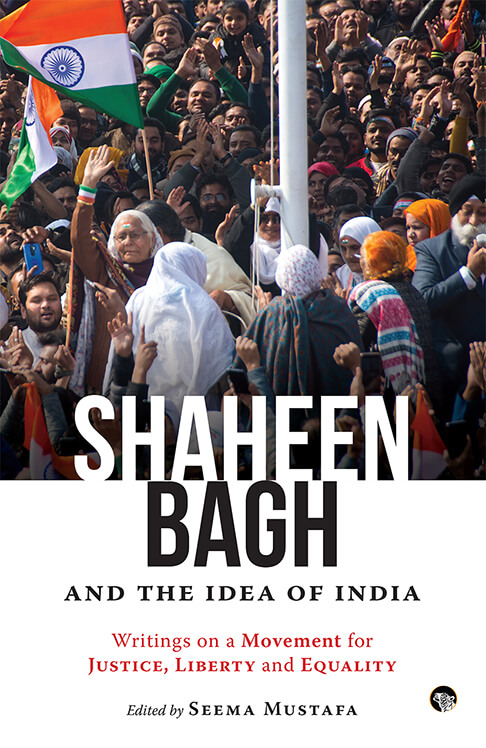
Title: Shaheen Bagh and the Idea of India: Writings on a Movement for Justice, Liberty and Equality

Editor: Seema Mustafa

Publisher: Speaking Tiger Books, 2020

Shaheen Bagh is a compendium of writings that document and comment on a watershed moment in India’s history, evoking memories of that other flashpoint in India’s history, the Partition. For Nayantara Sahgal, the nonagenarian writer, it is all too reminiscent of that other critical event in Indian history. Narrated and recounted by journalists, writers, social and political activists, it represents both the uniqueness of that moment when a movement propelled by one of the most dispossessed groups in Indian history took up cudgels on behalf of their communities, the men in their communities. It was a registering of both solidarity and political awareness, capturing moments of protest in a tone that was at times exhilarating, at times despairing.

The narrative incorporates the accounts of various women protestors who recount that significant moment when they were catapulted into assuming  unexpected and unlikely roles as torchbearers of democracy and custodians of democratic rights of citizenship. Shaheen Bagh, a Muslim neighbourhood in the capital city of Delhi in India became the epicentre of an unprecedented protest, an unbroken continuous sitting for over 70 days by citizens with Muslim women coming out in large numbers against the Citizenship Amendment Act adopted with a huge majority by the national parliament in December 2019 and also the National Register of Citizens, a notified national population register perceived rightly or wrongly to be hugely discriminatory against the Muslims and some marginalised groups. The CAA or the Citizenship Amendment Act is also perceived and presented by sections of the population as violating the spirit of the Indian Constitution adopted in 1950 as a sovereign democratic republic with the preamble adding the word ‘secular’, distinguishing it from a theocracy in 1976. The government however has refuted these claims and fears and with the counter claim that the CAA is only intended to grant citizenship to migrants, read as persecuted minorities, Hindu, Sikh, Buddhist, Christian and Parsi communities who came to the country from Pakistan, Bangladesh and Afghanistan on or before December 31st, 2014. Clearly the Muslims of all sects have been kept out of this particular dispensation. Just to remind us all, India has 11% of the world’s Muslim population around 16% of the Indian population , at least 226million of one billion population are Muslim. Interestingly the Supreme Court of India has refused to order a stay on its implementation which has been requested by about 144 petitioners and has granted the government time to come up with a response. It has also restrained other courts, the high courts for example from hearing please against the CAA till it arrives at a decision to take it forward.

Shaheen Bagh captured the imagination of the youth in India and of women’s groups in particular. India is still a young country, 50% of its population is below the age of 25, 65% below 35 years of age. The people that converge here everyday in large numbers are young women. Shaheen Bagh evokes memories of earlier resistances that the world has witnessed or known. US campuses against the Vietnam war, Occupy Wall Street, Tiananmen Square, Ken State University, Tahrir Square, the student uprising in Paris in the 60’s closer home to the US Montgomery March and Nashville Tennessee. But this was all that and more as many women  in burkhas and  hijabs crossed several boundaries, broke several barriers and some even stepped out of conservative homes and conventional customs and taboos for the first time in a civil disobedience vigil to uphold the values of equality and freedoms enshrined in articles 15 and 19 of the Indian Constitution. Placards that these women used often said: ‘Don’t be silent but don’t be violent’.

As the Introduction to the book Shaheen Bagh and the Idea of India pithily states: Shaheen Bagh became a “first in living memory. As the days passed, Shaheen Bagh acquired greater strength, for the women ,” brought no malice, no anger, no abuse into their protest, and countered every allegation hurled at them with a smile and an honest and forthright response. Moreover, “the idea of Shaheen Bagh ignited, and became, the idea of India for hundreds, because the women sitting in protest spoke a language that came from the compassion of the matriarch.   It was born of the love for children, and brought with it a smile and an embrace for the youth who spent the nights sitting and singing with the women.”

In the process, the protest empowered women. They played an agential role in the proceedings and the experience helped to develop their confidence in their own abilities, in their judgment and their decisions.  There was never any doubt that the women were in the lead. They were sitting on protest, they commanded the stage, they spoke to the media.

Shaheen Bagh became the site of a major exercise in the dance of democracy. It became a site which enabled and catalysed a kind of consciousness-raising for both the participants and the witnesses. While I would stop short of calling it a great leveller, it offered a kind of space for forging solidarities, of experiencing community and of practising democracy. Shaheen Bagh assumed a unique significance since it presented a vignette of inclusiveness from the start. “There was no religion or caste here. “

In a somewhat romanticised vein, a scholar who had spent a substantial chunk of time in Delhi , described it as a  “pilgrimage’’ for many Delhiites. A young professor from Delhi University  who spent time at the protest site said that “I come to Shaheen Bagh whenever the world outside depresses me. I find solace and peace here.” Whether to seek social salvation or rub shoulders with the Delhi literati, who were also here  from time to time, Shaheen Bagh represented an experience of democracy that few had imagined possible in the gloom and doom of our recent history. Many privileged youngsters also joined the milling groups around the protest site, preferring to savour this experience over their usual modes of entertainment. Some sat with the women as they collectively , and in solidarity, sang Faiz’s song, “Hum Dekhenge” ( “We shall see” in Urdu and Hindi) a stirring anthem raising a flag to unity and harmony .  All axes of identity — religion, castes, class — seemed to recede and fade in this space that helped  “Delhi find its conscience”. The moment seemed to resonate with other similar moments in the course of the freedom struggle. This laying claim to democracy and its variegated symbols by lower and lower middle class Muslim women, people  who were probably among the most dispossessed and marginalised groups, and among the most disaffiliated from the lineages of class and economic power, struck a chord. The question that had come up here was an enormously significant one: to whom does the nation belong?
The book captures the mood-defiant yet resolute-of the protest told in a racy journalistic idiom, conveying both its political implications and its historical significance. The mood of the nation — which was simmering with rabble — rousing hate speeches the order of the day and condoned and overlooked by the ruling dispensation, was brought to a boil by the unlikely protestors of Shaheen Bagh. Wearing their hijabs and burkhas in February 2020, the unlikely political actors of this moment were also making “history” or “herstory”. It was a unique moment of historical significance, as the women fought their numerous fears and limitations. It was also a moment of political and feminist assertion with women occupying the centre, not huddling on the margins or periphery.

The segment, ‘Timeline’ , covers the chronology and clarifies that it was the deliberately rigged  Delhi riots and then the lockdown in March 2020 that brought the gathering of crowds to a grinding halt. Seema Pasha’s chapter on ‘Women , Violence and Democracy’ presents witness and participant accounts as “Ground Reports from a Protest. “This engagement with people  and facts on the ground, the micro-histories of the protest constitutes one of the features which add to the readability of the book . Instead of an academic or theoretical approach, the book takes a lively “ankhon dekhi” (a vividly visual and engaging account, translated from Hindi) approach and this works well. In addition to this is the fact that the book brings in voices and narrative accounts  of some sane voices like that of Harsh Mander — of writers and activists– who represent a holistic and secular, democratic and not divisive, vision of Indian history and democracy. Collectively, these voices maybe said to articulate a vision which upholds an “idea of India” which is not idealised or utopic but reflects the vision of many of its founding fathers. It is in that vein that Seemi Pasha writes, that in spite of the terror unleashed in the run-up to the Delhi Assembly elections, “Shaheen Bagh endured, and continued to showcase the best of India’s tradition of secularism, liberalism and ethical, non-violent resistance.” It was a reminder that the idea of India was premised on a vision of democracy and freedom, which stands threatened  today. Shaheen Bagh was an attempt at reclaiming some of these affirmations which are in grave danger of erosion and violation.

Moving and poignant,the book is both a testimony and paean  to a beleaguered  idea  of India, as it is to the courage of  some of its marginalised citizens. It is also an interrogation of the protectors and ‘custodians’ of India and the idea of India.Till we all wake up to an awareness of our roles as active citizens, the idea of India continues to be a threatened and endangered  one.

Acknowledgements

The discussion of the CAA-NRC is drawn from Dr Meenakshi Gopinath’s observations as part of a feminist conversation on Shaheen Bagh and Citizenship, conducted under the aegis of the “International Feminist Journal of Politics.”

Dr Meenakshi Malhotra is Associate Professor in English at Hansraj College, University of Delhi. She  has edited two books on Women and Lifewriting, Representing the Self and Claiming the I, in addition  to numerous published articles on gender and/in literature and feminist theory. Some of her recent publications include articles on lifewriting as an archive for GWSS, Women and Gender Studies in  India: Crossings (Routledge,2019),on ‘’The Engendering of Hurt’’  in The State of Hurt, (Sage,2016) ,on Kali in Unveiling Desire,(Rutgers University Press,2018) and ‘Ecofeminism and its Discontents’ (Primus,2018). She has been a part of the curriculum framing team for masters programme in Women and gender Studies at Indira Gandhi National Open University(IGNOU) and in Ambedkar University, Delhi and has also been an editorial consultant for ICSE textbooks (Grades1-8) with Pearson publishers. She has recently taught a course as a visiting fellow in Grinnell College, Iowa. She has bylines in Kitaab and Book review.

.

PLEASE NOTE: ARTICLES CAN ONLY BE REPRODUCED IN OTHER SITES WITH DUE ACKNOWLEDGEMENT TO BORDERLESS JOURNAL.