Categories
Review

Manoranjan Byapari: “ Why did I even write?”

Book Review by Basudhara Roy
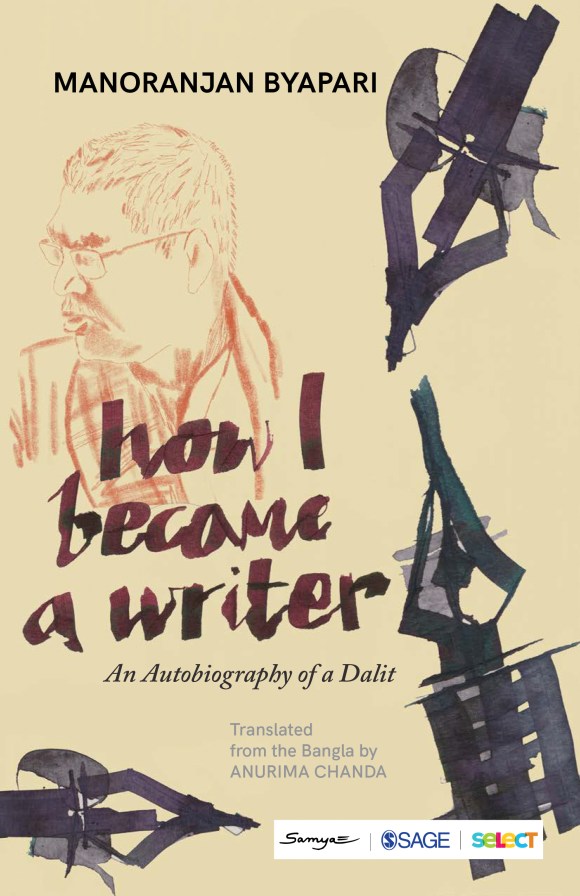
Title: How I Became a Writer: An Autobiography of a Dalit

Author: Manoranjan Byapari

Translator: Anurima Chanda

Publisher: SAGE Publications India and Samya under Samya SAGE Select imprint

The autobiography, as a literary genre, has a compound and far-reaching relevance. Among the many ways that it engages in a productive conversation with the world, is its staunch social impact. When and why does a person set out to write his or her life’s story? The answers to this could be numerous. Central, however, to each of them would be the perception of a threat to one’s experienced or imagined identity, the attempt to seize empowerment through the act of narration, and the identification of one’s individuality as having a widely referential social base that could encapsulate some meaning for humanity at large.

In the teeming, diverse and thoroughly spectacular life of writer, Manoranjan Byapari, an impulse towards all the three can be found. An unlettered rickshaw puller-turned indefatigable and award-winning fiction writer, and currently a member of the Legislative Assembly of West Bengal (Balagarh constituency) and the Chairperson of the Dalit Sahitya Akademi, West Bengal, Manoranjan Byapari’s How I Became a Writer: An Autobiography of a Dalit is the translation of the sequel to his Itibritte Chandal Jivan (Interrogating My Chandal Life) published in 2017 and winner of The Hindu Prize 2018 for non-fiction.

“I keenly believed that even though a life might be trivial, inferior or disgusting, there was something to learn from it which could come handy later. […] People who scavenged through dustbins would know that sometimes one might also find delicacies in the garbage,” writes the author (in the context of a particularly obnoxious character in the book), articulating a practical and philosophic doctrine that is hard to beat. If taken as a metaphor for his own life’s tireless trials, these words throw light on Byapari’s literary treatment of every little or mean episode in his life with sincerity, stubbornness and sagacity.

The sequel How I Became a Writer effectively takes off from where the first book ends – Byapari’s return to Calcutta from Dandakaranya and his taking up the job of a cook at the residential Helen Keller School for the Deaf and the Blind. Spanning a journey of around two decades, the book documents the arduous, painstaking, courageous and unrelinquishable labour of nurturing the ambition to write amidst the innumerable hazards-big and small-that threaten a Dalit’s dignified existence in India.

Comprising a series of thirty-four vignettes, the book is divided into two parts – ‘School Shenanigans’ and ‘The Right to Write’. The former section offers a close look at Byapari’s work-life – his workplace, duties, associates, and the systemic social inequities that are intended to steadily impoverish and dehumanize those who inhabit the lowest rungs of the class and caste hierarchies. The latter section focuses almost exclusively on his creative life, his intense literary and activist aspirations, and his relentless growth as a writer in the face of every obstacle to body, mind and spirit. The two sections, however, speak very intimately to one another with the result that they effectively build up one seamless narrative whole, animated, in each of its fibres, by “jijibisha” – the indomitable will to live that has characterised Byapari’s intellectual journey throughout.

In her ‘Foreword’ to the book, Sipra Mukherjee, the translator of Interrogating My Chandal Life, draws attention to the remarkable “non-marginality” of Byapari’s writing that, in the first part of his autobiography, exhibits and establishes itself in his choice of both language and geo-political space of creative exploration. In How I Became a Writer, Byapari’s marginal viewpoint on the history, narratives and psychology of the mainstream impresses further. His knowledge of the world is clearly staggering, his perception sharp, and his intuitive wisdom is matchless in its perspicacity. Alert, critical, and thoroughly versed in his Marxist epistemology, he understands the social dialogue of money and power and that of rights and denial, with deftness and insight. Most importantly, he is constantly aware of being not merely an individual but a representative of a social group – the proletariat who must attempt, by all means, to speak truth to power:

“Muttering furiously, she asked, ‘Royda asked you to make tea and you refused. Is that right?’

“I answered in the affirmative without an iota of tremor in my voice. I did what a representative of the working class would do had it been within the world of one of my own stories. The way Bordi, like one of the overlords, had called me forth to show off her positional power in front of her people, I too, was eager to show her that I was a knowledgeable and brave representative of my class of people.”

Throughout Byapari’s language, there is a quiet and determined authority intended to radically subvert the dense and intricate mainstream texts of injustice and victimization. One of his potent subversive tools is certainly his robust and well-toned satire, the other being his close reading of mythological material, folk tales, and indigenous wisdom located in anecdotes and proverbs. Bringing this local ontology and epistemology to bear on the mainstream knowledge involves a constant interrogation of the latter’s chosen socio-political and cultural texts, thus constituting a bottom-up view on social theory and praxis.

Glowing vividly in these pages is also Byapari’s unvanquished faith in literature as a means of social reform. He reiterates here, often, the necessity to take up the pen as a tool of protest, as a means of emancipation from indignity, and as the only method of scripting oneself into social discourse – “Somebody had said that a writer does not write with a pen, but with the spine.” But the act of writing which is often made to appear autonomous and independent of social interference, may not come as easily to everyone. To someone like himself, as Byapari insists, literacy itself has been a gift and the act of reading and writing, a liberation from his otherwise “insignificant, ugly and hateful life”.

In a society where writing has often been valorised as a private intellectual activity, Byapari strongly points out how privacy is, in itself, a privilege. Contrary to the fashionable notion of the writer as entitled to a ‘writing space’ both physically and temporally, Byapari’s autobiography projects him as accomplishing his writing in the oddest of spaces and hours, under the most threatening of conditions, and with the sole will to keep the fire in his soul alive. Both cathartic and revolutionary, his creative life becomes a valuable agency for him to wield his self-esteem against life’s diminishing forces.

But to be able to write and to, even, write well is not enough. To carve a niche for oneself in the writerly world, and to be heard and responded to is an enormous challenge in itself. There is, firstly, the significant handicap of financial investment in publishing a book; secondly, the apathy of prejudiced and non-discerning readers towards writers of the lower caste; and thirdly the entire nexus of publishers, marketing, reviewers and awards to negotiate with. To someone like Byapari, handicapped severely by both his caste and class, literary recognition has been very slow and unforthcoming.

It has, however, happened over the years, for as Byapari believes, in the world of literature, the way upward lies only through dedication, toil, perseverance, and the presence of an empathetic and like-minded literary community. But though the writer remains inordinately grateful for where he has arrived, there is also, at times in the book, a serious questioning of the practical outcome of meaningful literature in the world. Does it make a difference? Does it help transform the conscience of society? Does it lead to material improvement in a poor writer’s life circumstances? Byapari remains distinctly conscious of having been transformed from a writing person to a literary subject under the harsh glare of literary festivals, media and academics but his greatest fear of failure revolves around the possibility that his writing may have failed to make a dent on the world’s harsh indifference:

“Why did I even write? Would I be able to change this bloodsucking societal system standing atop the rotting thousand-year-old foundation with my pen alone? Would I be able to stop the inhumane religious brutality of the priestly class in the name of caste? The child lying on the footpath, who had curled up in the bitter cold, could I bring him a blanket? That child crying in his mother’s arms in hunger, would I be able to make him sit in front of a plate full of warm freshly made rice?

“I could not! I could not!”

However, as in the case of every true artist, Manoranjan Byapari’s love for writing triumphs over all misgivings. How I Became a Writer is a glowing celebration of his tribulations, grit, antagonisms, friendships and the generous support of many noble souls that helped pave his way to artistic maturity and fame.

For those who cannot read the book in Bengali, this translation by Anurima Chanda, an academic and translator,  arrives as a coveted gift. Organic, fluid, and maintaining the right balance between linguistic and semantic authenticity, this animated rendering of Byapari’s life introduces readers of English to a writer who remains etched in memory as much for his lyricism and humour as for his sheer honesty and brilliantly satirical social criticism.

.

Basudhara Roy teaches English at Karim City College affiliated to Kolhan University, Chaibasa. Drawn to gender and ecological studies, her four published books include a monograph and three poetry collections. Her recent works are available at Outlook India, The Dhaka Tribune, EPW, Madras Courier and Live Wire among others.

.

Click here to read the book excerpt from How I Became a Writer

PLEASE NOTE: ARTICLES CAN ONLY BE REPRODUCED IN OTHER SITES WITH DUE ACKNOWLEDGEMENT TO BORDERLESS JOURNAL

Click here to access the Borderless anthology, Monalisa No Longer Smiles

Categories
Review

Reconstructing a Broken World with Sufism

Book Review by Basudhara Roy

Title: Evening with a Sufi: Selected Poems

Poet: Afsar Mohammad

Translator: Afsar Mohammad and Shamala Gallagher

Publisher: Red River

I’m sorry, my Lord. 

My poem is not your slave,
it’s a sickle with its head to the sky. 

My poem is not a damsel timid in your moonlight,
it’s a tiger prowling in a shadowed forest. 

My poem won’t be your grand constitution, 
devoted to your happiness 
at all costs.

-	‘Outcast’s Grief’ from Evening with a Sufi

Not all poetry can be read with the same eye or ear. Certain poems demand to be seen and heard on their own terms, offering to the reader their own canons of understanding and appreciation in imaging an idea that, through them, has just been born into thought. Afsar Mohammad’s Evening with a Sufi sets out to be one such thought-provoking book of poems.

A slim collection of twenty-six verses selected and translated from Afsar Mohammad’s extensive oeuvre in Telugu by Shamala Gallagher and the poet himself, these are existential political poems that are as theoretically perspicacious as they are urgent and astounding in their overwhelming sincerity. Like Eliot’s The Waste Land, Afsar Mohammad’s Evening with a Sufi aesthetically documents a difficult world, especially one criss-crossed with systemic hegemony, and bereft of equality. An engagement with these poems is a direct invitation to the reader to embark on an epistemological tour into a sharp symbolic landscape that encapsulates visceral records of social meaning.

The title, to begin with, itself upholds a strong symbolism. Its ‘evening’ bespeaks the twilight of civilisation, the personal-social moment of the unleashing of despair, and a decadent global landscape thriving on inequity and deprivation. And yet, evening, in these poems, is also the transitional period of awareness, self-reflection, evaluation, and the collective envisioning of an egalitarian dawn. These poems, therefore, become investigations and articulations of both fatigue and rest, of falling apart and re-gathering, and of old failures and new beginnings, leading us to look at the idea of the Sufi or Sufism anew.

“For me, Sufism is nothing but a tool of resistance,” avers the poet, indicating how Sufism, as a philosophy, offers a vigorous counternarrative to transnational policies and practices of discrimination, marginalisation, disempowerment and exclusion. “In my village Sufism, I see how people of diverse colours and castes share food, rituals and stories. As a village person, it’s not a far-fetched utopia for me — but an everyday reality. My writings are nothing but reminders of that shared realm of life.”

In Afsar’s poems, Sufism becomes a political as well as existential search for a vision of oneness. This vision is, at the same time, philosophical and social, local and global, integrating and intimidating in the way that most revolutions are – “The drop that can swallow a desert” (‘Another Word’) or “Where walls are knocked down,/ we won’t need the splendour of curtains” (‘The Spectator is Dead’) or “I always speak the language of war.” (‘A Green Bird and the Nest of Light’)

Identity surfaces as a significant theme in this book. Most of the twenty-six poems in Evening with a Sufi embark on a complex exploration of identity on geographical, cultural, social, historical or linguistic terrains. However, the book’s conceptualisation of identity is far from monolithic. Germane to the vision of these poems is the essentially dialogic space of identity and its characterization as an ever-contingent work-in-progress.

Mark the first poem in the collection, for instance. Titled ‘Name Calling’, an ambiguous phrase that poignantly addresses the phenomenon of naming as an act of use and abuse, the poem captures the essential seamlessness of names and identities. The protagonist of the piece is a boyhood contemporary called Usman who is visibly an ‘other’ to the speaker of the poem, the difference between them marked out distinctly in class terms and perhaps also (less evidently) in terms of physical ability – “You scared all the children/ away from the river./ A body like a wound/ peeks from your torn shirt.” It is, however, to this social pariah – “the one street dog doggedly haunted by a ball” that the speaker feels affiliated in his later life:

Now I don’t see much difference between you and me. 
We are the same.[…]
Usman, times never change 
only the roles change.

Muslim, Telugu and Third-world migrant, the poet reads the theory and experience of otherness on a number of sociological axes and through a variety of cultural lenses. In ‘The Accented Word’, he uses the idea of accent to explore the complex genealogies of language on the intersections of purism and cultural hegemony, contemplating variously, through the three sections of the poem, on linguistic integrity, capitalist subordination, and postcolonial erasure:

Words 
are stillborn babies. 

Their blood has gone bad with white poison, 
their words have gone bad from the accent. 

I’ve been poured, shared, and bathed in white poison 
since I was little 
and now I want to speak out for myself. 

But my voice is in chains 
and my language is poisoned, 

and the language of my time is poisoned. 

We live on the brackish water of life.

While Shakespeare’s Caliban in The Tempest felt that the colonizer’s language profited him by teaching him “how to curse”, Afsar’s poems approach language with utmost caution, forever mindful of the possibility of trampling and obscuring buried histories of domination and betrayal. Many of the poems, here, are metapoetic in their thrust, assiduously exploring the value of meaningful postcolonial poetic creation from the inescapable inequities and ideological loopholes of language: “a market piles up words sounding like poetry” (‘The Accented Word’) or “How long this slavery to white poems?” (‘Outcast’s Grief’) or again as in “Poetry: / just one dried leaf.” (‘Walking’)

In ‘A Piece of Bread, a Country, and a Shehnai’, bread, music, war and pain – all come together to avow our subcontinent’s shared heritage of poverty and cultural intimacy brutally shredded by politico-religious separation. In ‘No Birthplace’, the speaker of the poem is as much the Indian subcontinent as its hapless postcolonial citizen faced with the inability to reconcile its historical legacy of cultural plurality with the blind spots in its mythological and ideological machinery:

Come, divide me by myself, I say. 
Not by forty-seven. 

My laughs, screams, harangues, deaths, and rapes — 
They’re all yours too! 

It is interesting to note how Afsar’s poems consistently invigorate and socially translate the idea of spirituality through sinewy sociological imagery with the result that spirituality is transformed from a closeted and socially-indifferent personal practice to a welfare-oriented everyday social ritual. In ‘Iftar Siren’, the idea of fasting as self-purification is ironically brought to bear on the understanding of the hunger-stricken socially dispossessed as perpetually cleansed while the overfed victimisers walk about unconcerned:

What a great life. 
In the holy month, 

do you see how you are all becoming pure? 
I’ve been like this for years 

burning in the divine fire. 
Unable to turn into ashes. 

I’m a fire-pit you try 
and try to stamp out. 

Yes, the fire-pit 
is tired too.

The haunting and incendiary metaphor of hunger as fire and the stomach/body as the fire-pit, tired of being stamped out or dispossessed, makes these poems powerful bandages for social injustices as well as flaming flags of protest. In ‘Qibla’, the posture of prayer, again, pivots on the stomach – “a belly turned deep/ into itself/ in which I obscure my body,/ feet, hands and everything/ for a long time” – suggesting the omnipotence of hunger as surpassing all acts of asocial faith. The poem concludes with considerable uncertainty of the efficacy of prayer and with an ideological pun on “arms” (arm/armament) as a means of erasing human hatred.

The stupendous yet composed energy of the book needs no forestatement. Every single word here is deftly chosen, well-placed, and tersely poised to make emotional leaps on command. The images are taut, the sentiments thoroughly grilled in the fire of creative originality, and everywhere, there is a sense of potential unruliness held firmly in check by a balanced and farsighted imagination.

In considering these poems, one must not forget, also, their complex linguistic history. Though translated from the original Telugu, the Telugu language itself includes, for the poet, “the entangled history of Urdu, Hindi and English — the languages that indeed shaped my emotional realm.” Arriving into English via such multi-layered linguistic travails and travels, these exceptionally well-translated poems infuse postcolonial English with a visceral depth, a spiritual profundity and a razor-sharp urgency that would be difficult to come by in the original English.

Accompanied by a very relevant author interview and insightful essays by the translator and  valuable first readers of this collection, Evening with a Sufi arrives, in its essential philosophy and call for humanitarian action, with a new theory and praxis for the world, determined to reconstruct rather than redeem it.

Basudhara Roy teaches English at Karim City College affiliated to Kolhan University, Chaibasa. Drawn to gender and ecological studies, her four published books include a monograph and three poetry collections. Her recent works are available at Outlook India, The Dhaka Tribune, EPW, Madras Courier and Live Wire among others.

.

Click here to read the book excerpt from Evening With a Sufi

PLEASE NOTE: ARTICLES CAN ONLY BE REPRODUCED IN OTHER SITES WITH DUE ACKNOWLEDGEMENT TO BORDERLESS JOURNAL

Categories
Interview

In Conversation with Anuradha Kumar

She has a strange mix of oeuvres. She flits between young and adult readers — writes for all ages across borders, across continents and across oceans, in newspaper, journals and in books. She has written thirty-one books in all (a number of them with Hachette India), has won the Commonwealth awards for short stories a couple of times, written under the pseudonym of Aditi Kay, worked in the Economic and Political Weekly for almost 9 years and now lives in USA weaving stories of people around her and the worlds she inhabits. Meet Anuradha Kumar, who has already released two books in 2021. One is called The Hottest Summer in Years and the other that held me mesmerised has been published with Weavers Press San Francisco and is called A Sense of Time and Other Stories.

The unique thing about A Sense of Time is that it stretches through different time zones, the past, the present and the future. It has stories that linger and leave an aftertaste of nostalgia and the past or encapsulate you in the future in a world where living and working in outer space is as much a reality as is the recurrence of pandemics. It carries you into a dimension that Kumar builds with words, a unique space where her perceptions evoke a sense of the unusual, the sensual and the real. A strange story about a bus journey of an American in India which uncovers the commonality of experiences of women across continents, of a man who trains to be Gandhi, of Indians in America, of a strange case in court, of friendship between a child and a wanted man, a murder in the train which travels in a strange way through time — the titular story — and many more.

What makes these stories riveting is they make you feel like you have tasted the manna from the land of  Lotus Eaters and for some time, you forget your own reality and live with the characters. They stay in your head even after you finish the stories. Reading her stories was a pleasurable experience and finishing all of them created a longing to read a few more from Kumar’s pen. Without more ado, let us plunge into a discussion on Anuradha Kumar’s wonderland.

Tell us Anuradha, what spurred the writer in you? When did you start writing and why?

It was quite an accident. I did write when asked for the school magazine, but the more serious kind of writing, like now, came later. I remember being very bored during my time in the corporate world and writing down something. And I found that quite a panacea for boredom. And soon, writing became more than just a panacea, and more than just a response to things other than boredom.

But your ‘why’ holds so much more, and I feel quite pompous answering that. But the more one writes, and reads, there are just more questions. So, while earlier writing meant getting things like character, plot and narrative arc in place—things a good writing programme can teach you—now it’s a bit more about the answers you are seeking to various things, and writing is one way toward that.

How many countries have you lived in and how has this impacted your writing? How long have you been away from India?

For a bit more than a decade. And we have lived in Singapore, and in the US, first in Maryland and now in New Jersey. I guess I must be bothered by questions of identity, and belonging, but also about how the self changes in response to alienation and isolation and movement. Changes that can at times not be visible and emerge years later or in entirely different circumstances.


At a point, you wrote as Aditi Kay. Were these all children’s books with Hachette India? Why did you take a pseudonym and what made you drop it? 

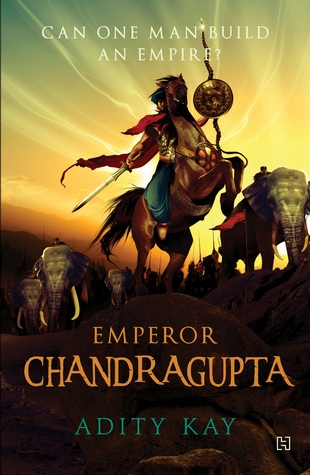
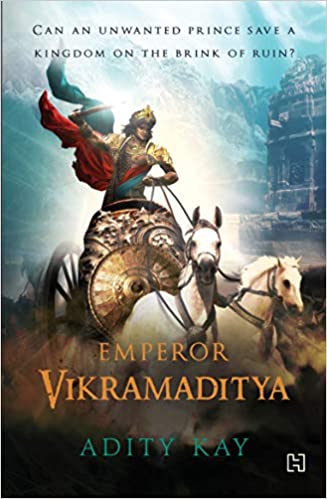
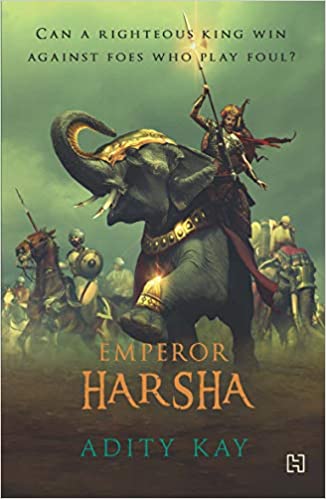
Adity Kay is how I write historical fiction; for older readers especially the three books on ancient India’s three ‘big kings’ (Chandragupta Maurya, Vikramaditya and Harshavardhana). These have been published by Hachette india and the last of the three came out only last year.
When I began writing these in 2012, I was already writing more children’s fiction as Anu Kumar. My editor advised that a different name would help in not bringing up any ‘association’ with the other name, and the series could be presented as something unique by a new writer. 

Recently, you have brought out an unusual collection of short stories, A Sense of Time. What spurred you to write such diverse stories — each one could be seen as a stand-alone that leaves a lingering after taste in one’s being?

These were written over the last decade. The oldest was, I think, the first one, ‘The Entomologist at the Trial’—I realised I was wackier then—and the most recent ones are the Pandemic love story, and ‘Comfort Food’ — both these set in worlds different from the ones I had known even a decade ago. I just had them and kept returning to these stories, revising them occasionally, and then early last year, Moazzam, my publisher, suggested I send him some stories, so I revised them again. And this book happened, all thanks to him.

You have a unique story set one hundred years from now. What spurred you to try a sci- fi in the middle of stories rooted in our times or the recent past. Did you research to write the sci-fi or is it fully from your imagination?

It partly rests on a historical coincidence. The influenza epidemic was just a century ago, and I read somewhere that pandemics similar to ours will never really go away. Neither will love, nor will our attempts to find it regardless of the differences that exist between us.  

What kind of research goes into writing all these stories?

I hope to learn from what other writers do. But it’s always a learning process. Every writing is a way to learning how to write for the first time. I (try and) read a lot of the writers I admire Alice Munro, William Trevor, Yiyun Li, Michael Ondaatje, Yoko Ogawa, and others, and reading must go simultaneous with the writing that one attempts. Looking back, as I gathered up and revised, and at times rewrote all these stories, what I found interesting was trying to remember where I was, what I was reading, when I wrote the initial version. For years and months later, how I looked at this story was different, and I wanted to now rewrite and revise it a different way.

Few of your stories leave the conclusion undefined and the reader wondering about how the aftermath links to the narrative. It is a distinctive style and unique. But what made you do it and why?

The conventional, old-fashioned story had a beginning, middle and end. I still hope that for my reader/s, my stories will linger in some way. That they will remain with the character, the story, for a while, maybe a long while. It’s much like what happens in real life. People we encounter, some of them linger on in our memories for various reasons. I’d like my stories to be that way too.

Most of your stories are outside a world caught in the pandemic, how do you see life beyond this virus? Do you think the future will be like the past?

I wish I had a ready answer to that.

I think this long isolation has made us reconsider and rethink various things, especially how we relate to one another. Questions about who and what really matter have always been important, and maybe this time has made us think on these things that much more.

Your stories are rooted in different issues that affect man. Do you see a commonality in the thread that runs through the stories, like you did in Coming Back to the City: Mumbai stories?

I can’t say quite so easily. I am curious about how people see the world, in everyone’s unique perspective, and also in trying to see the person under the skin. In fact, this latter thing, about trying to get under a person’s skin sometimes stopped me from writing a story, because I sort of got knotted up in all  the complexities within us, and sometimes not being judgemental isn’t a good thing when writing a short story, so I had to work  that out too. Am still working this out.

You don multiple hats in writing — switching between young adult and adult fiction and beautiful essays on history in online forums. How do you juggle your time to do all of it?

I just write, I don’t know anything else. And the good thing is, if you shut the world out, all the craving for attention, and just focus on what really matters, one does get better at it – at writing.

You moved your publisher from India to US with this book. Is there a reason for it?

I’ve lived in the US for around 9 years now. And I still am published in India. Am truly a borderless writer, Mitali!

So, your writing spans continents and the Pacific. Isn’t that wonderful! Your stories are based mainly in India. And yet you have been away for many years. How does that add up?

I think I answered this above. It’s that these stories were written over a decade. And I guess one can never really leave one’s country of origin. The more borders one crosses, memories of homes left behind seep in, and these change in texture over time. I found this while reliving my stories. I am still finding this out.

What are your future plans?

To be a better writer, a better person. Oh, and a better cook!

Thank you Anuradha for sharing your fabulous journey with us.

This has been an online interview conducted by Mitali Chakravarty.

Click here to read an excerpt from The Sense of Time and Other Stories.

PLEASE NOTE: ARTICLES CAN ONLY BE REPRODUCED IN OTHER SITES WITH DUE ACKNOWLEDGEMENT TO BORDERLESS JOURNAL