By Farouk Gulsara

I cringe every time I hear this line, during those countless times during my calls, placed amidst the robotic, psychosis-inducing loop of hold music. Funny, this ‘muzak’[1] was meant to create calmness.
“All our agents are extremely busy right now; you’ll be attended to shortly. Your call is important to us.” The robotic voice would go, trying to sound like how a hangman would place a hood over your head before pulling the lever.
“You are the number 999,999,999th customer in line!”
This is nothing new. Even when an alien concept called customer service was introduced in the old days, people had to wait in line to have their issues resolved. At least, the saving grace at the end of this endless queue was a human voice, not a chatbot. Now, after a zillion years of human experience in crisis management, the problem of waiting persists, and we still have to wait in line, twiddling our fingers.
Now that all transactions and dealings are conducted electronically, I wonder why the queue on the telephone line is never-ending. Is there a rush for something that I am unaware of? Are the customers so unimportant or irritating that the company believes it does not need to invest in more agents to handle the increasing demand? Whether it is a Monday or any other day of the week, you can tune in and listen to an hour or so of so-called soothing music, or until your patience runs out.
When you finally reach the end of the line and think it is all over, it is not. Here, you will be presented with a menu so extensive that you will be spoiled for choice. Press 1 for English, press 2 for …, press 1 for savings, press # to return to the main menu, yada yada. The fat lady never sings.
Along the way, you will be forewarned, “anything you say can be used against you in the court of law!”, but not in the exact words.
“Your call is important to us. It will be recorded and be used for training purposes!” Yeah, right.
For all you know, nobody is there at the other end. The single casual employee employed to man the line may be on sick leave with a sore throat or something. The customer line is just to hold a caring image. If a problem cannot be resolved online, how can it be sorted over the phone? The clients have to present themselves in person at the office anyway. Just give the callers some chill music and let them be zombified by the hold music. At a time when AI (artificial intelligence) is taking over mundane tasks, it is not cost-effective to hire dedicated staff for them. This is what the big companies seemingly offering call-in customer service seem to think.
They may have made a devilish deal with the telco companies. We hold the line while the telcos go laughing all the way to the bank on our account. That is why there are frequent dropped calls. It is not due to poor cellular network coverage or a system glitch. It is intentional.
Not to forget the flurry of self-aggrandising advertisements that get inserted while clients wait in anticipation or are doing their down-to-earth activities like cutting vegetables or watering the garden with the phone on speaker mode, realising the futility and wasted effort of holding the phone to the ear.
Customer service is a thing of the past. Now that there are so many online options to address the intended concerns, face-to-face interaction is quite dated. If the customer is too daft to use the services, they deserve to be taken for a ride. Increasingly, automation can handle most compelling transactional issues. If the customer’s problem is too big for the bots to handle, the customer still needs to go to the office.
The problem is that offices are virtual nowadays. Mailing addresses are in the cloud, and offices are shared by a zillion fly-by-night companies. There is a thin line between the modern way of doing business and being taken for a ride. Like the pleas of the stranded Nigerian princes and their stash of heirlooms, a legitimate transaction may turn out to be a scam, too.
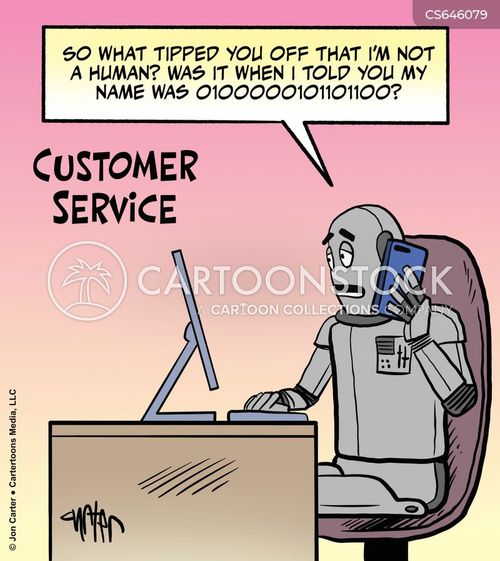
[1] Muzak- a brand of soft, instrumental, and smooth non-distracting music designed to create an atmosphere of calmness.
Farouk Gulsara is a daytime healer and a writer by night. After developing his left side of his brain almost half his lifetime, this johnny-come-lately decided to stimulate the non-dominant part of his remaining half. An author of two non-fiction books, Inside the twisted mind of Rifle Range Boy and Real Lessons from Reel Life, he writes regularly in his blog, Rifle Range Boy.
PLEASE NOTE: ARTICLES CAN ONLY BE REPRODUCED IN OTHER SITES WITH DUE ACKNOWLEDGEMENT TO BORDERLESS JOURNAL
Click here to access the Borderless anthology, Monalisa No Longer Smiles
Click here to access Monalisa No Longer Smiles on Kindle Amazon International
 Borderless