Categories
Stories

Healing in the Land of the Free

By Ravi Shankar

The wind blowing across the Long Island Sound chilled his bones. The day was cloudless and the sky blue, but the sun lacked warmth. New York. Dr Ram Bahadur had called the big apple home for over three decades. Winters were cold and snowy. There were cold snaps and the dreaded northeaster brought snow and freezing temperatures. Summers could be surprisingly warm. February in New York was the depth of winter.

Long Island was blanketed in snow. He had spent the morning clearing snow from the driveway of his home. The suburb of Woodbury was quiet and peaceful. The trees had lost their foliage and were waiting for the warmth of spring to put on a new coat of green. He had a large house with floor to ceiling picture windows. The house was two storied with an attic. There were two bedrooms on the ground and three on the first floor. He had done well in life and was now prosperous.

He still recalled his first days in the big apple. He had just come to the United States from Nepal after completing his postgraduation in Internal Medicine. The first years were tough. He had some seniors doing their residency in New York city. The state of New York offered the largest number of residencies in the country. He did his residency again in internal medicine and then a fellowship in endocrinology.

All his training was completed in New York. He worked for over two decades in large hospital systems. But, for the last five years he started his own private practice. Compared to most other countries medicine in the States paid well. Private practice was certainly lucrative, though the cost of living in New York was high.

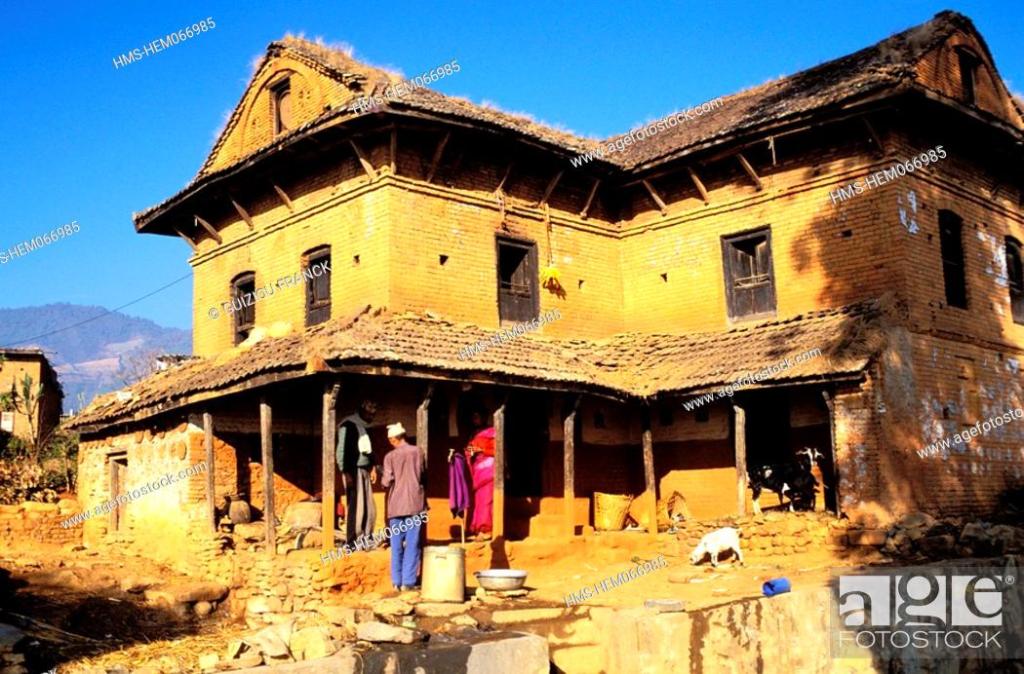
He did sometimes think about his home country of Nepal. The Kathmandu valley was still a beautiful place. His visits were few and far in between. Unplanned urbanisation had made the valley dusty and dirty. Winters in Kathmandu were cold but milder compared to New York. The Institute of Medicine (IOM) was the first medical school established in the country. The original intention was to create doctors for rural Nepal. The selection was tough and competitive. He still remembered his joy on learning that he had been selected for the medical course. During the closing decades of the twentieth century Nepal was in turmoil. The insurgency was ongoing, and blockades were the order of the day. Violence was rife and a lot of blood was spilled. 

Most doctors from IOM migrated in search of greener pastures. The others mostly practiced in the valley, the historic heartland of the country. Ram was originally from Gorkha, in the centre of the country but his family had migrated to the capital when he was a few years old. His father was a civil servant while his mother was a housewife. Civil servants did not make much and money was always in short supply. His father was a man of principle and never accepted bribes or tolerated corruption. He still remembered the argument he had with his father when he put forward the plan to migrate to the United States (US) to pursue his residency.   

His parents had both passed away and his siblings were also settled in North America. He rarely visited Nepal these days. The insurgency was followed by the overthrow of the monarchy and then a new constitution was promulgated. A federal structure was set up and while this did have benefits, the expenditures also increased. Each state had to set up an entirely new administrative machinery. He married an American academician who taught Spanish literature at the City University of New York. His wife’s family hailed from the country of Colombia.

New York had a substantial Hispanic population these days. He was now fluent in several languages: Nepali, his mother tongue; English, Spanish and Hindi. He also understood Newari, the language of the Newars, the original inhabitants of the Kathmandu valley. He did think on and off about his motherland. Many Nepali doctors left the country. Working conditions were hard and the pay was poor. To advance, you required political patronage. The frequent changes in government required you to be on good terms with several political parties.

He still missed the food of his childhood. New York was a very cosmopolitan place. There were several Indian restaurants and even a few Nepali ones. He was very fond of bara (a spiced lentil patty) and chatamari (Newari pizza), traditional Newari foods. These had earlier not been available in New York. Luckily for him, two years ago a Newari restaurant had opened in Queens. He was also particular to Thakali food. The Thakalis were an ethnic group who lived in the Kali Gandaki valley north of Pokhara. He particularly fancied green dal, sukuti (dried meat), kanchemba (buckwheat fries) and achar (pickle). Anil was a decent cook and had learned to cook a decent Nepali thali[1]and dhido (thick paste usually made from buckwheat or corn). He also made tasty momos (filled dumplings that are either steamed or fried) and these were much in demand among his companions.

Ram loved the professional opportunities that his adopted homeland provided. He had become a US citizen. Working in the US was more rewarding though the paperwork associated with medical care had steadily increased. Many of his batchmates and seniors lived and worked in New York state and across the state border in New Jersey.

Many of them did miss their homeland and had a vague feeling of guilt for not contributing their share to their original homeland. A few of them were working on a proposal of developing a hospital at the outskirts of Mahendranagar in the far west of Nepal. The Sudurpashchim province had a great need for quality medical care. The details were still being worked out. There were about twenty IOM graduates involved and they decided on an initial contribution of a million dollars each. Despite inflation twenty million dollars was still a substantial sum in Nepal. 

This group of friends collaborated on different social projects. They were also active in promoting a more liberal America where each citizen and resident had access to quality healthcare. The hospital would be their first project outside the US. A strong community outreach component was also emphasised in their project.

The US had made him wealthy. He was a proud American. However, he also owed a deep debt to his home country for educating him and creating a doctor. Now was the time for him to repay that debt, not wholly or in full measure but substantially to the best of his abilities! 

[1] Plate made of a few courses, completing the meal

.

Dr. P Ravi Shankar is a faculty member at the IMU Centre for Education (ICE), International Medical University, Kuala Lumpur, Malaysia. He enjoys traveling and is a creative writer and photographer.

.

PLEASE NOTE: ARTICLES CAN ONLY BE REPRODUCED IN OTHER SITES WITH DUE ACKNOWLEDGEMENT TO BORDERLESS JOURNAL

Click here to access the Borderless anthology, Monalisa No Longer Smiles

Click here to access Monalisa No Longer Smiles on Kindle Amazon International
Categories
Essay

A City for Kings

Narratives and photographs by P Ravi Shankar*1

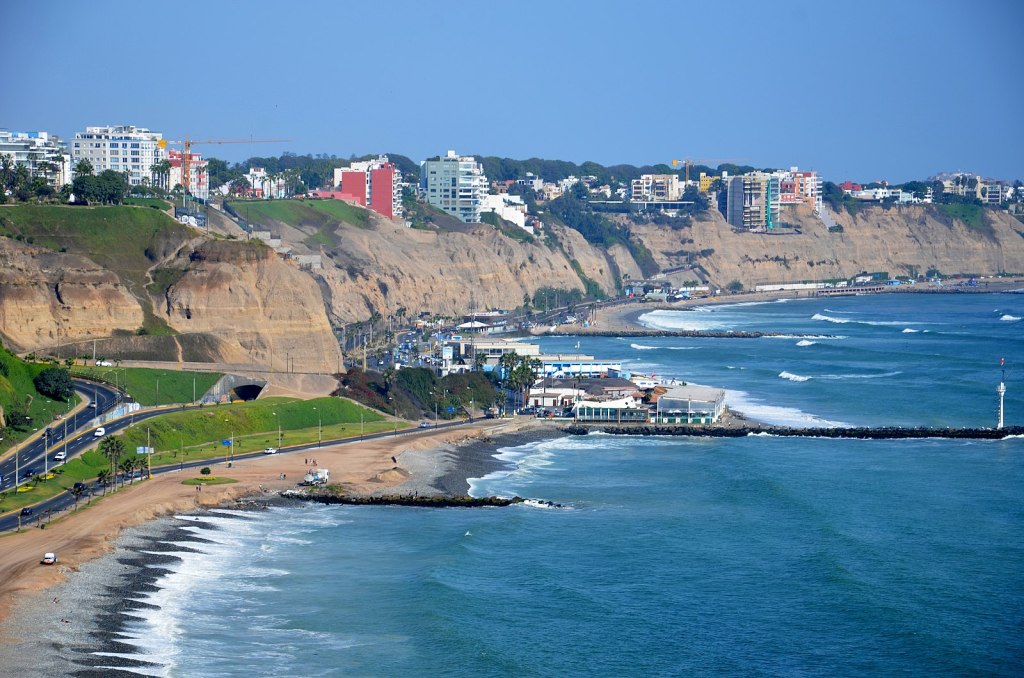
Lima. Courtesy: Creative Commons

The rich golden-brown skin peeled off easily to expose the pink flesh underneath. The ‘frita’ was a perfect symphony of flavours with every note being in the right place. I enjoyed the entire fish including the bones and the head. I was having a ‘trucha frita’ (fried trout) at a restaurant in Magdalena del Mar, Lima, Peru. The fish was large and had been fried without much oil. Peru is known for its food, and I enjoyed my lunch (almuerzo) throughout my visit. Lunch is the major Peruvian meal. There were special lunch menus and for around 8 nuevo soles (around 2 US dollars and fifty cents). I got an entrada (usually a soup or a salad) and a segundo (seconds with a big variety of dishes) with a drink and often a dessert.

I landed at Lima’s Jorge Chavez International Airport late at night late in September. The airport is not very large by international standards but functions quite well. Taxi fares from the airport are on the higher side. I had taxi-hailing apps on my phone, but they did not seem to work at the airport. Lima is a city of around 11 to 12 million people. About a third of Peru’s population lives in the capital. There has been a recent influx of Venezuelan refugees to the city. The city is crowded but most of it is well-planned with squares, roundabouts, parks, and sidewalks.

I liked Lima. For a large city, it is not very polluted though some areas are dusty. The city is usually covered by haze or fog till late in the morning. The weather is usually cloudy though it rarely rains. About 40% of Peru’s population lives in the arid coastal region (la Costa). You see a lot of cambios or shops where you can change money. You also see a lot of restaurants. Lima is the third largest city in Latin America and recently has gained a reputation for its food. Peru has a lot of Japanese and Chinese immigrants (most of whom arrived at the end of the nineteenth and beginning of the twentieth century) and may be the most ‘Asian’ country in Latin America. Many Chinese run Peruvian Chinese restaurants called ‘chifas’.

Lima gained in importance during the Spanish rule and was the capital of the viceroyalty of Peru which included parts of modern-day Ecuador, Colombia, Bolivia, Chile, and Argentina. The city became very wealthy. During my different visits, I stayed in three different parts of the city — Pueblo Libre (Free town), Magdalena del Mar, and Jesus Maria. Lima is divided into several municipalities.

In Pueblo Libre, I stayed near the Plaza de la Bandera (Plaza of the Flag), a huge roundabout. The archeological ruins of Mateo Salado were nearby. Peruvians take great pride in their rich heritage. Following the Spanish conquest, the pre-Hispanic religions and cultures were violently suppressed by the Spaniards. They do continue to influence modern Peru in several ways but there is a stark discontinuity.

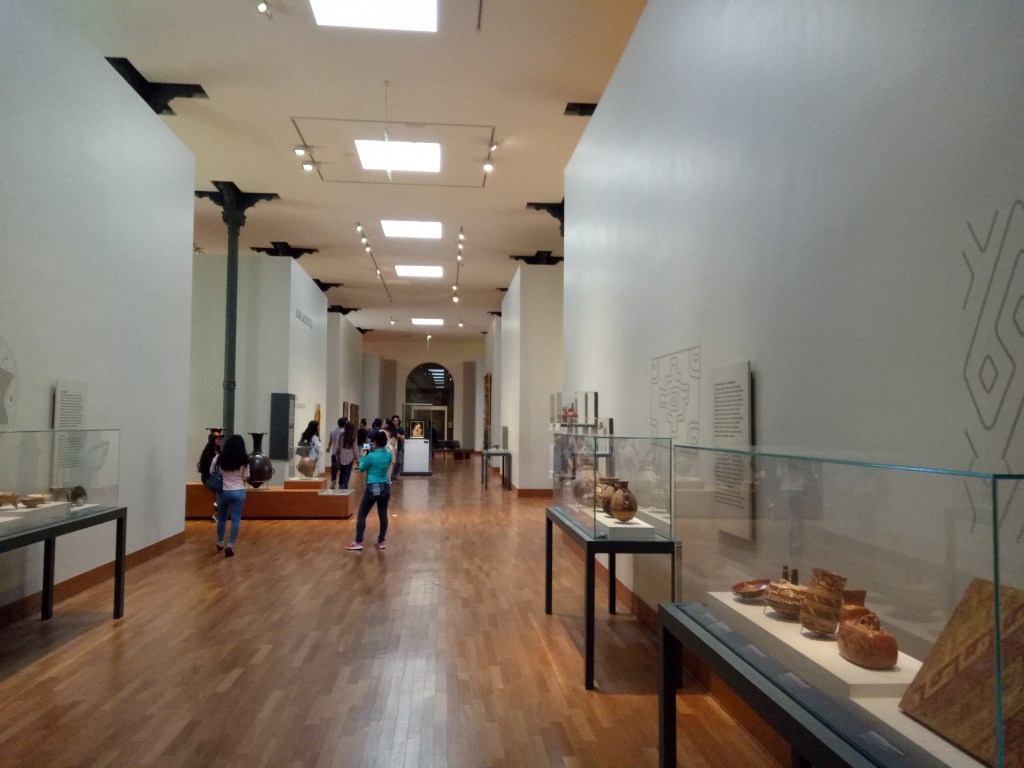
The Larco Museum is one of the many fine museums in the city. The museum has a rich collection of pre-Columbian art, is well-maintained, and is very appealing to the senses. Many civilisations took root on the arid coast. The Paracas and Nazca civilisations were prominent. The population had to learn to harness and use water from underground sources. The Anthropology Museum was under renovation, and I could only see the section commemorating the life of the liberator, Simon Bolivar. Bolivar is very popular in South America with several streets and buildings named after him. There is even a detergent named after him.

The Parque de la Leyendas (Park of Legends) is the zoo. The zoo is huge and is structured according to the three regions of Peru, the coast (costa), the mountains (sierra), and the jungle (selva). The Amazon rainforest constitutes the largest part of the country by land area. The largest city, Iquitos, can be reached only by boat or by air. The zoo also has a huge garden with plants from all over the world and a huge archeological site.

Plaza de Armas

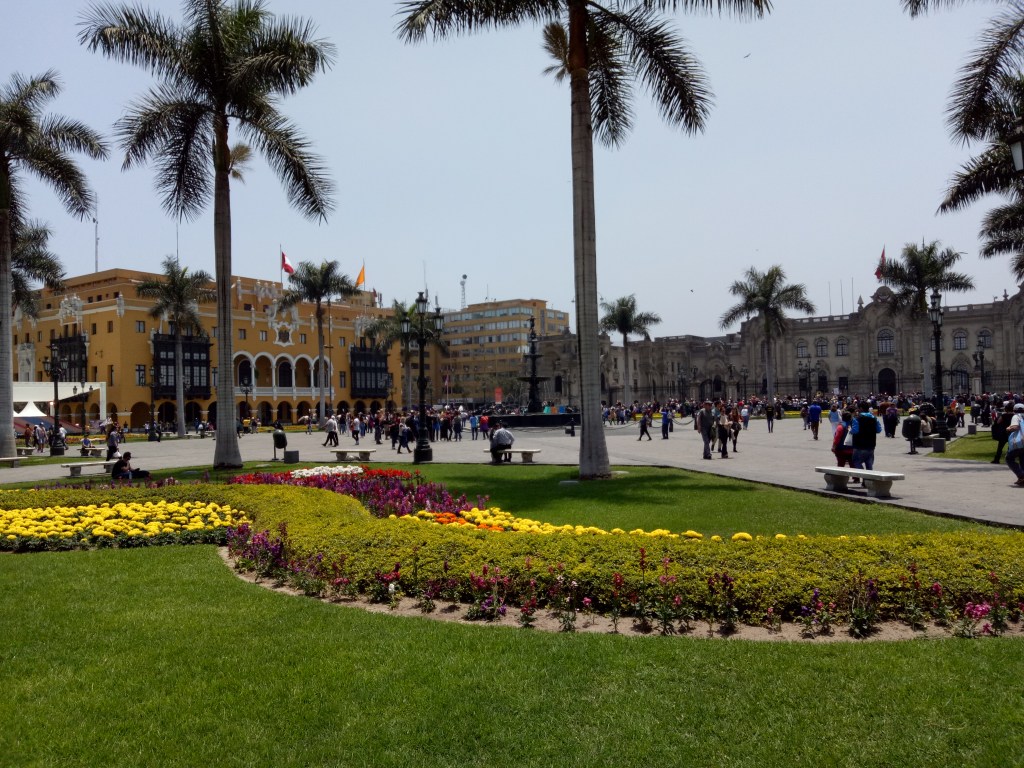
Plaza de Armas de Lima (Plaza Mayor lof Lima) is the main square of the city surrounded by fine Spanish colonial buildings. Every town in Peru has a Plaza de Armas. Town planning is mostly good with numbered sectors and streets within the city. I was fortunate to see the changing of the guard at the Presidential palace which takes place around noon. What a show of pomp, colour, and pageantry on horseback! The synchronisation was perfect. The cathedral of Lima, the municipal palace, and the palace of the Union are major historical buildings.

Changing of Guards

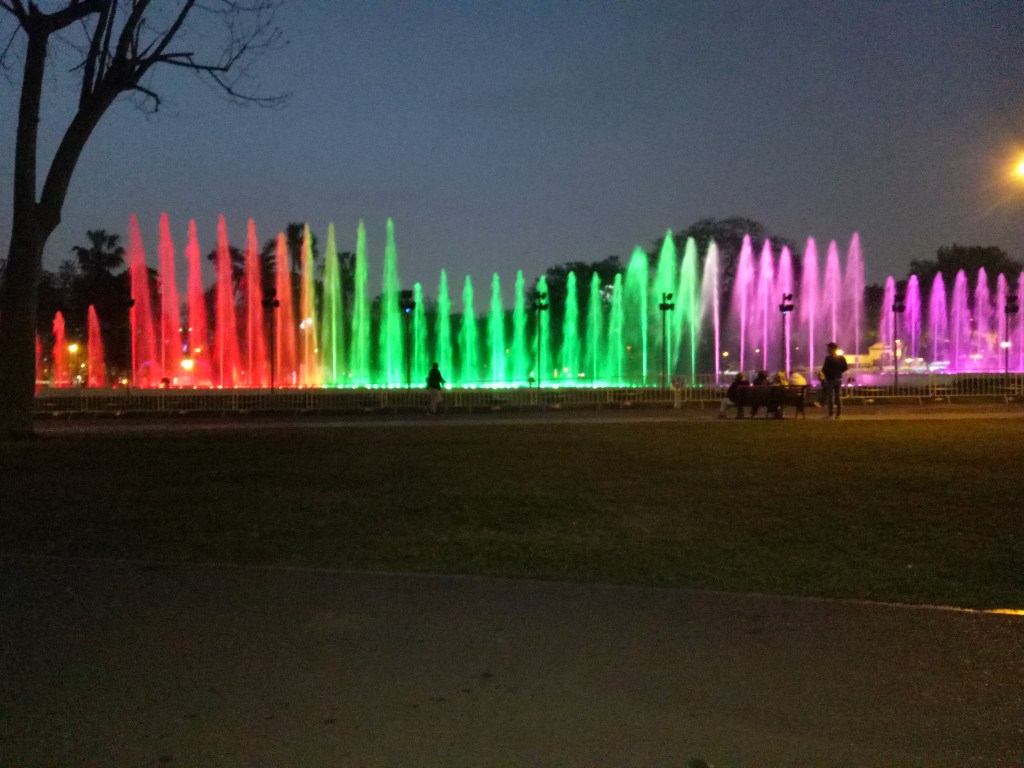
I had heard and read a lot about one of the more recent attractions of Lima – the magical water fountain. The Circuito Magico de Agua creates magic with water. I reached the place mainly known for the spectacular fountains around 5 p.m. You can walk underneath a tunnel of water. As the sun began to set the lights were turned on. The lights at the main fountain could reproduce an extravagant palette of colors and different scenes were created in tune with the music. There was a light show at 7.15 pm. Crowds began to gather around the main fountain. The light and sound show using lasers and lights was spectacular and provided a brief introduction to the rich tapestry of Peru.     

Magical Fountains

Chicha morada is a drink from the Andes region and is made from purple corn. Rich in antioxidants, the drink is refreshing and healthy. Chicha morada is smooth and beautifully complements various Peruvian dishes. The alcoholic variety plays an important role in different religious and other ceremonies from ancient times to the present day. There is a legend about the corn (mama jora, mother corn) plant from which these drinks are derived.

The legend about the chicha[1] is especially popular in Cuzco, the ancient capital of the Inca empire, and also in other cities in Peru. In ancient times the God Viracocha (the creator) saw people working hard. He wanted to help them, so he came down from Hanaq Pacha (the world above) to place in a single plant the powers he wanted to give humans.  He chose a weak plant that struggled to grow amidst spiny weeds. To give his power to this plant, Viracocha took from his bag a sliver of huaranguay wood, a puma hair, a condor feather, and the fox’s brain.  He put them together and placed them on the small plant.

The city that treats visitors like kings with its sumptuous meals and friendliness, creates mystery with magical legends, like the one about Viracocha. Perhaps, that is why a sense of lingering longing and gratitude fills my being as I think of the colourful capital of that distant country on the other side of the globe.

Acknowledgment: Senor Fernando needs to be thanked for his hospitality and help during my visit — Dr P Ravi Shankar

[1] The legend is mentioned in a blog article by WC Morveli titled ‘Drink chicha to become wiser than a fox’ (https://cuzcoeats.com/drink-chicha-wiser-fox/)

  1. Unless otherwise stated ↩︎

Dr. P Ravi Shankar is a faculty member at the IMU Centre for Education (ICE), International Medical University, Kuala Lumpur, Malaysia. He enjoys traveling and is a creative writer and photographer.

.

PLEASE NOTE: ARTICLES CAN ONLY BE REPRODUCED IN OTHER SITES WITH DUE ACKNOWLEDGEMENT TO BORDERLESS JOURNAL

Click here to access the Borderless anthology, Monalisa No Longer Smiles

Click here to access Monalisa No Longer Smiles on Kindle Amazon International