Categories
Musings

Of Dreams, Eagles and Lost Children

By Aysha Baqir

Conceived in the twilight dreams of poets, philosophers, and political activists, you blazed in the dulled and drugged minds of millions caged and enslaved in the divided and ruled subcontinent. Inspired by the Divine word, Iqbal sought your freedom in his poetry and prose, and likened you to the Shaheen— the king of birds– and exhorted you to soar to freedom. He died nine years before your birth, but his figurative verses, by design or fate, fashioned you into the shape of the sublime and magnificent eagle.

Today, perched on the peak of the Arabian Ocean, you struggle to soar. Designed to defend and fortify your power, your predatory hand claws fetter and numb your mind and movement. You stretch your neck towards the east and tilt your hooked head. Your forward-pointing eyes boasting of binocular vision are fixed towards the rising sun for a glorious future, but you are blinded by fear and greed. Your blood vessels pulses with power and rhythm but you hunch, clench your long spiked wings, unable to spread them, stroke the wind, and take your place in the skies. Immobile and unable to nurture, you attack your own — the most vulnerable and the weakest.

Agreed that your birth, doctored by a misguided and designated cartographer, was both cruel and chaotic[1] The impatient foreigner, recklessly ignoring centuries of daily human connection, the age-old water ways, and land markings, fleshed you out from outdated maps and census reports. Fearing a dangerous rebellion that brewed in the burning summer and desperate to flee the threatening chaos, the imported white-man culled and cut the eight hundred thousand square kilometres of you in thirty-six days. You burst on the world map in the muggy, sweat-drenched August of 1947, soaked in blood and roughly clumped in the likeness of Iqbal’s eagle.

But with creation, there is demise – and your birth slit a wound that festered a carnage. Within days, unprecedented violence tore neighbourhoods and communities apart. Friends-turned-foes, looted, plundered, burnt down villages and raped and hacked thousands of innocent women and children to death. Lit by the hope to reach their new homeland, fifteen million Hindus, Muslims, and Sikhs, fled across the jagged border, but two million succumbed to death. Traumatised by your birth, you continue to kill and slaughter. Seventy-six years later, you deceive and double cross your ‘wajood ki wajah,’ your reason for existence, and with it, the spirit of your independence, idealism, and self-actualization.

Trapped in mnemophobia of suppression, you deny and desecrate the creed that your founder, Mohammad Ali Jinnah gifted you, i.e., the land and its freedom. “You are free to go to your temples, you are free to go to your mosques or any other place of worship in this State of Pakistan. You may belong to any religion or caste or creed, that has nothing to do with the business of State.”[2] Did Jinnah fight for your independence to lose you to your fanatical oppression of others? Did God gift you the cradle of fertile plains, the vast web of waterways, fortress-like mountains, havens of harbours, and mines of minerals so you could abuse your own?

In the wild, your namesake, the king of birds, knows better than to turn on its young. Driven by an intrinsic parental instinct, it patches a nest high in the branches and cliffs, secure from the sight of predators. Both parents, in turn, incubate the eggs until they hatch, nest their eaglets, spread their wings to protect them from cold and heat, and tear off the hunted meat to hold it close to the beaks of their young. In face of approaching danger, the male and female defend their young aggressively. They nurture their eaglets for weeks, teaching them to hunt and survive until the little ones can fly off to seek their food and future.

A parent to over ninety-five million children, how do you compare? Millions of your young ones live and work on the streets every day. They feed off garbage dumps and stray barefoot and in rags, unprotected from the onslaught of the harsh climate and the criminals, while you guard your pastures of livestock, fields of crops, and fruit-filled orchards. Yet, you choose not to feed your children – and only a chilling low of 3.6 per cent, aged six to twenty-three months, consume a minimum acceptable diet[3]

Abused and violated every day, the children are forced into selling drugs, prostitution, and trafficking, and many succumb to accidents or fatal diseases. More than half a million of your children are raped, assaulted and killed in one year – not by anyone else, but by you[4]. Over half of the little ones do not have access to health, hygiene, clean water, food, and more than forty million minds wither out of school[5]. When they turn into criminals you blame them for their condition. You hoard your wealth inside mansions, factories, banks and vaults outside the country and shackle millions of your children to hard, gruelling and unpaid labour. There are no laws enforced to protect the children, and according to leading experts an “eighty-eight per cent are subjected to violence and physical abuse within their homes regularly”[6]. After the catastrophic floods that ravaged your lands last year, more than four million of your children continue to drink the contaminated and stagnant waters[7].

You make laws to break them, sign treaties, pacts, and MOUs to betray them, print signs, banners, and pamphlets to tear them, and host meetings, dialogues and conferences to applaud your resounding lies while a frightening number of your children perish every day[8]. Is your independence a construct of borders and boundaries to keep others out, while you molest your own? Is your independence a construct to suppress, violate, and annihilate the weakest? Is your independence a construct to kill your children? If independence profits and feeds off the flesh of others, it is only a fool’s fabrication. Like a chain, a nation is only as strong as its weakest link. When you celebrate your independence, remember that you are only as strong as your weakest – the  malnourished and uneducated — forty-five percent of you. Thousands of your children will sleep shivering and starving tonight and some will not open their eyes tomorrow. One day you might not too. 

[1] https://www.telegraphindia.com/culture/a-sloppy-surgery-how-cyril-radcliffe-carved-the-indian-subcontinent/cid/1697854

[2] Presidential Address to the Constituent Assembly of Pakistan 11 August 1947. https://pakistan.gov.pk/Quaid/quotes_page2.html

[3] https://www.unicef.org/media/136311/file/Pakistan-2022-COAR.pdf

[4] https://www.thenews.com.pk/print/1005427-over-half-a-million-children-raped-in-pakistan-annually-but-most-cases-go-unnoticed-experts

[5] https://www.unicef.org/media/136311/file/Pakistan-2022-COAR.pdf

[6] https://www.thenews.com.pk/print/1005427-over-half-a-million-children-raped-in-pakistan-annually-but-most-cases-go-unnoticed-experts

[7] https://reliefweb.int/report/pakistan/4-million-children-pakistan-still-living-next-stagnant-and-contaminated-floodwater

[8] https://tribune.com.pk/story/2407303/child-sexual-abuse-up-by-33-in-2022-report

Aysha Baqir is an author and activist on a mission. She founded a pioneering not for profit economic development organization, Kaarvan Crafts Foundation, in 2004 to alleviate poverty.  Her novel Beyond the Fields was published in January 2019 in Singapore and 2022 in Pakistan and shortlisted for best-Debut English at the 9th UBL Literary Awards. She is an Ashoka Fellow and recipient of Vice Chancellor’s Alumni Achievement Award from LUMS. She is working on her second project.

www.ayshabaqir.com

.

PLEASE NOTE: ARTICLES CAN ONLY BE REPRODUCED IN OTHER SITES WITH DUE ACKNOWLEDGEMENT TO BORDERLESS JOURNAL

Click here to access the Borderless anthology, Monalisa No Longer Smiles

Click here to access Monalisa No Longer Smiles on Kindle Amazon International

Categories
Stories

I am Not the End

By Aysha Baqir

Courtesy: Creative Commons

Inside the ancient haveli [1]a young girl, the great granddaughter of a Mughal nobleman forced into Her Majesty’s Service, moved slowly as if she sensed my presence.

The city had fed on the foam-white sprays of the surging Himalayan waters, and swelled from the invasions and intermarriages between the Persians, the Arabs, and the Mongols. By the time the British arrived, a fortress of thick walls hid a maze of winding lanes jammed with narrow red-brick, stone, wood-worked havelis and long, deep stalls of silks, spices, silver, gold, and gems. Time pushed forward relentlessly, tides receded, wars were fought and lost, and the river shrunk and shrivelled into grey, brown sludge promising revenge. The shaded streets of the bazaars darkened and despair closed in like a swarm of locusts. The dwellers with means and motives, packed their belongings, and struck out towards concrete and glass housing schemes. Some tottered and fumbled like drunkards, unsure whether to venture out or hide within.

Every day, except Sunday, the girl woke up early for the call to prayers. She scrubbed, washed, cleansed, and dressed for her last prayer of the day. She ignored the rubbery slice of white bread and the blob of blood-red jelly on the dusty breakfast table, pocketed her mother’s medicine prescription and slipped out of the door with a backpack and a day bag. Hidden under the burqa, she walked swiftly and left the winding lanes behind in minutes. A grey car with tinted windows waited for her at the deserted crossing. She sat in the car and pulled out her phone. When she connected, I tapped into her.

Half an hour later the car stopped. The girl squinted at the tall glass tower that caught molten fire from the morning sun. She stuffed the burqa in her backpack before alighting. She wore a smart black and white suit, something she had picked out from one of the swanky mirrored shops in the mall. When she snapped a selfie, I saw and saved it.  Whatever was online, was mine.

The girl had made herself up to please. Her round hazel eyes, set off by a dark liner, glinted under the bronze shadow. Her lips were pale but glossy. Her thick straight hair brushed her shoulders. She had cleared the six-month training with the highest score. No one could tell she wasn’t a bank executive.

She climbed up the wide marble stairs and the glass door with a metal latch sprang open. She cleared the security designed to recognise her thumbprint. There was no room for breach, not in this business. She entered the massive foyer adorned with wall mirrors and glossy planters, turned left, and pressed the button down to the basement. In a few minutes, she strode down a passageway and opened another door. The dim lights and murky matting matched the nature of the business, but she would have worked here for free to hide from the changing moods and madness of the city. 

The room was mostly empty except for a few men behind the glass cabin who never left the office. She made her way to her workspace. It was bare. She had no mugs, photographs, or other belongings.  The less people knew about her the better. The only equipment that sat on her desk consisted of one dark screen and the worn out keyboard. She pulled up her chair and pressed the button.

I sprang up, awake and alert. She fed in her details and hit enter. A vibe. A buzz. The girl jumped back feeling a current, something alive that pulsed and circled her. I smiled when she frowned. She felt me. I wanted her to feel my power. Within seconds her work order popped up, generated every morning at 6 AM for the morning shift and 6 PM for the evening shift. She had a busy day. She had to cover three areas, one park, one school, and the sabzi mandi, the wholesale vegetable market.  The numbers rose and the lines of poor grew every day, and some even bribed to jump the cue. Who wanted to work when there was an easier way to make more money?

Her boss, Mr. K Shah, boasted of the brainwave he had while attending a six-week training on social entrepreneurship at a global leadership institute. Before sending him on the course, his father had urged him to make a difference to his constituency, his ancestral lands, and to uphold the honour of his ancestors, the revered Sufis who had travelled from Iran to the Subcontinent. 

Karim Saab quickly grasped that there was opportunity in the chaos that fed upon millions of poor in his country.  He discovered a win-win. For him, for his company, and the poor. In that order. He had asked himself three questions. How much money did the country make? How much of it was lost on the streets? How much  could he get back?

He had returned to his country and funded an algorithm and business to do exactly that. He housed the business in the basement of the company he owned, and rumours ran that he made more money in the basement than in the bank. The business harnessed the poor across the city and then set them out on the streets. It ran upon a network of the drivers and guards belonging to the few hundred of the flagrantly wealthy and upon the millions of beggars, runaways, and ragpickers. The business model was built on detailed, precise communication and organisation in which the company excelled. The poor were happy to get a fixed income each day — three times higher than the national minimum wage. The calculations made sense even as the economy crashed, and the terror escalated. Even on the darkest days the numbers made sense. The more the people lost, the more they feared, and the more they gave.

The girl’s mind ran over the calculations. Fifty some beggars in one area per shift, add two shifts per day and then multiply it by over two hundred and fifty areas in the fast expanding city and the numbers swelled to a grand total of twenty-five thousand beggars per shift. With the average earning per beggar per shift coming to over two hundred rupees even on a bad day the total company revenue rocketed to over five million rupees per day. The costs were minimal.

There were problems. Sometimes, the children went missing. Part of running the business, shrugged Karim Saab. There were many more to take their place. The girl pushed back her chair and glanced around the empty, endless rows. In another few minutes they would be full. There were three rooms in total, one for each business. The model spared no one, not even the very young. There were rumours of a project up for a bid.  Karim Saab said they had to keep innovating otherwise others would catch up. So now they focused on street children. The city that once exported cotton, silk, and gems, now sold something else.

[1] Palatial house

Aysha Baqir founded a pioneering not for profit economic development organization, Kaarvan Crafts Foundation, with a mission to alleviate poverty by providing business and marketing training to girls and women in low-income communities. and has authored a novel based on her experiences called Beyond the Fields.

PLEASE NOTE: ARTICLES CAN ONLY BE REPRODUCED IN OTHER SITES WITH DUE ACKNOWLEDGEMENT TO BORDERLESS JOURNAL. 

Categories
Review

‘Women are Born Free, But Everywhere they are in Chains’

Book Review by Rakhi Dalal

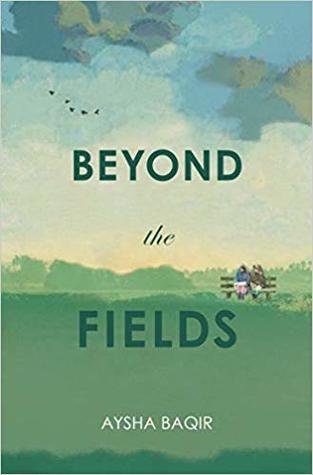
Title: Beyond the Fields

Author: Aysha Baqir

Publisher: Marshall Cavendish International, 2019

Recently, an instagram handle questioned women: “No Men for One day — What if there were no men for 24 hours?” Majority of the women replied that they would go for a walk alone. And this is the year 2020. We are living in a so called modern world where women are now freer than ever to pursue their ambitions and make a life of their own. But what does this fear of going out alone, for such a small task as an evening walk alone, tells us about our social system. If educated, independent women feel uneasy venturing out of their houses alone in advanced societies, then it isn’t difficult to imagine what women in socially and politically repressive systems go through.  

In her debut novel, Aysha Baqir steers the reader’s gaze to a small village in 1980’s Pakistan, chronicling the lives of rural women whose existence was sanctified by the written and unwritten rules of the society. It was the time of Zia-ul-Haq’s reign and much controversial Hudood Ordinances.

Baqir grew up in Pakistan. After graduation, she won a scholarship to Mount Holyoke College where she studied International Relations. In 1998, she founded a pioneering not for profit economic development organization, Kaarvan Crafts Foundation, focused on poverty alleviation through the provision of business development and market-focused trainings for girls and women of rural Pakistan. Perhaps meeting those women and hearing their stories prompted Baqir to recount such stories of courage and defiance, even in the face of repression, which may become beacons of light for generations to come.

The narrative follows the life of a young Zara and her twin Tara. Poles apart in nature, they are bound by a sisterly affection for each other. Tara is the beautiful, fairer and obedient one from the duo who resigns herself readily to her mother’s desires and ideas. She is ready to get married as and when it pleases her parents. Zara, on the other hand is the rebel, who insists on studying though girls are not given education in their village. She is born in a society where more education for women is a matter of shame. If a woman reads or writes, would she be a good obedient housewife, good mother to her children? Would she be any good for the community?

Zara wishes to live her live abundantly, run amok in fields, eat Kairis from the trees, play outside, and study like her brother. It infuriates her, when more restrictions are imposed on her and Tara with the coming of age. That meant no going out alone and no playing and veiling themselves with burka even when stepping out with parents. Zara believes that she and her brother are equal, but for a life changing incident which brings her life to a halt.

It brings forth to her the reality of being a woman in her community — the brutal rape of her sister, the conduct of her parents in hiding it because it would bring shame to the family, their unwillingness to file a case because of Hudood ordinance in practice and then her subsequent marriage to someone in haste to veil the shame. When they lose contact with Tara and fear an unfortunate happening, it becomes too much for Zara, but she decides to find her sister.

This novel is the story of Zara’s grit and determination, her belief in the power of women in an unbalanced society, her conviction that she is not merely the body she inhabits but also the mind she possesses. She follows her sister to city, after convincing her parents, and plunges into the dangerous world of prostitution to bring back her sister.

Through this novel, the author attempts to bring forth the tribulations of women in such an oppressive system where it is not only the men but also women who play the agents of repression, to keep the system intact by inducing fear and shame in those who go wayward or rebel. In such systems, women are made subservient to imposed rules so much so that they accept them as code of honour even if adhering to them means hurting loved ones and acting against them.

Perhaps nothing could be more startling than the shaming of a rape victim or vilifying a woman who dares to fall in love. It is a system where the birth of a woman, in itself is a burden to family and a mother’s most important role is to suitably prepare them for marriage, to collect their dowry and start looking for prospective grooms when they come of age. Their propensity to literally dispose the girls as soon as possible, even takes over the maternal love which they only express by trying to put restrictions on their beloved daughters.

Baqir writes in a discreet manner and her narrative bears testimony to the amount of research and hard work which has gone into writing the book. For a reader from a neighbouring country, this book brings familiar sounds and smells which makes it more relatable. Local flavours are induced with the usage of Punjabi words. Word pairs are used to evoke the sense of belonging to familiar lands – playing on the concept of twins separated at birth. The ideas of women’s honour, shame and their bearing on family are comparable to that in India.  

Though changes are questioning patriarchal mindsets, women’s emancipation continues still to be a tough battle. Beyond the Fields is an effort to highlight the struggle of women and an entreaty to be on the side of humanity, to break the shackles which stifle women who are born equal to men but are made to feel inferior by the rules of society.

.

Rakhi Dalal is an educator by profession. When not working, she can usually be found reading books or writing about reading them. She writes at https://rakhidalal.blogspot.com/ . She lives with her husband and a teenage son, who being sports lovers themselves are yet, after all these years, left surprised each time a book finds its way to their home.

.

PLEASE NOTE: ARTICLES CAN ONLY BE REPRODUCED IN OTHER SITES WITH DUE ACKNOWLEDGEMENT TO BORDERLESS JOURNAL.