Categories
Slices from Life

From Diana to Daayan

Rajorshi Patranabis shares the philosophy and lore of Wiccans

What, if I say that 68% of the universe is dark? Well, this is not my statement. This is a scientifically proven fact. What is there inside the darkness? Sceptics will say, let science find it out. The spirituals will say there’s mysticism. A Wiccan will say there’s mystical magic. Magic, as in common parlance is entertainment, in Wiccan philosophy, it’s the basis of existence. Magic can be best explained as something that’s occurs yet cannot be fathomed.

The term, Wicca, came was popularised by Gerald Gardiner with his books. Many said, it was misogynistic. To be fair to him, 1925 was not as open as it is today, as far as societal norms were concerned. It is more accepted today. I, a practicing Wiccan, follow a way that is more open, more aligned to nature, supernature and the supernatural. What I follow was introduced into India by Ma’am Ipsita Roy Chakraverti.

While this movement may well be termed as historically the first ever feminist movement, the pagan practices involved are more than a thousand years old. Ritualistic worshipping of nature is seamlessly integrated into Wiccan practices. The ancient knowledges that had trickled down through generations are put together in the modern Wiccan practices. Wicca is a philosophy, and I detest calling it a religion. Here, we don’t believe, we seek. We use the knowledge to try and to unfathom mysteries that lie within the dark spheres of nature. Albeit, a miniscule bit, but we do delve into that 68% of darkness, once in a while.

From shamanism to voodoo, from the ancient Egyptian ways of healing to the 64 yoginis, this school covers every way by which the human soul and body can be healed. They say the basic apothecary of life is to align oneself to the directions given by nature. Manifestation of the female power of nature (shakti) forms the essence of this philosophy. The mind, the body and the soul form the complete sphere of the universe. Wicca believes that nothing is inanimate and that everything has a consciousness draped in a veil of conscience.

Everything that’s around us has been derived from this planet, and if this planet is living, Mother Earth is living, then, everything that comes out of it is also living. As the Law of Conservation of Energy says, the total energy is constant, it can neither be created, nor be destroyed. Hence, the body might change, the forms change but the energy remains. Energy is eternal. The metamorphic energy inside a human body that has derived its form mostly from the magnetic or the electric energies of this planet is called the soul. The soul thinks and decides with the mind and the body giving them a presence. A purified soul is the spirit and when this spirit raises itself to survive in unison with the nature, we call that person spiritual.

Chakraverti says every strong woman is a witch. The word ‘witch’ comes from the old English word ‘wik’, which means wise. A female spirit is more nuanced, stubborn, flexible and erudite. A witch is that wise woman who takes on her challenges head on. A witch or a wizard work on the same footing of aligning mankind to the deluges of nature to heal the spirit, the mind, which in turn takes care of the body. Historically, a Wiccan considers Joan of Arc, Robin Hood, Noor Jehan as witches / wizards. Witches were killed at a point due to patriarchal fears of powerful women. These women had been portrayed as negative women in many of the kindergarten folklores.

The Greek goddess, Diana, was worshiped by Wiccan by Budapest Wiccans. Did she metamorphose to Dayaan[1], when she travelled east? Dayaans were to be feared, to be killed if possible. We have come a long way, no doubt, but sporadic news of such killings are still rampant.

There are also certain myths about witches, one being, flying on the broom. The broom is symbolic of cleanliness — cleaning a society of the cobwebs of false beliefs and weak minds. Broom becomes synonymous with power. Flight is of the spirit. A potent spirit reaches places in such time that the body can never think of. There are innumerable examples of saints and sages being spotted at two or more places at the same time. Advanced Wicca philosophy is inclusive of the powers of Hatyoga and Tantra.

Wiccans are the worshippers of the mother Goddess Isis of Egypt. She’s the moon Goddess and the wife of Lord Osiris, the lord of the dark world. She’s the quintessential witch, the Goddess of magic, the Goddess of strength. Indian Wiccans are influenced by forms of Shakti known as Kamala and the Bhubaneswari.  The most ancient traces of worship of the raw female power of nature can be found in Kali.  Wiccans are also influenced by the Tibetan Tara and the concept of Dakini (the divine witch).

The basic Wiccan principle of worship is through sound vibrations. Chants take the centre stage. Chants of Buddhism are also regularly practiced as are those of Vodun faith with drumbeats. Healing is practiced with chants, as was a common practice in ancient Egypt. The sound of the singing bowl is potent in helping heal.

They have tools that help focus energies of the Earth. Some sound like falling rain. Then there are stones, as in a crystal, a rose quartz, an obsidian, the lapiz lazuli and so on. But the most important tool is the Athame. This is a blunt long knife that is charged and is used to tap the powers of the nature.

One of the oft asked questions is do Wiccans delve into the ‘other dimension’? Physicists have claimed for long, the existence of a celestial plane. Scientists have even said, that, there is a time difference between the celestial and the terrestrial plane. Dreams are said to be in the celestial plane, and hence, time moves differently in dreams. But in effect all humans would have had a brush with the two worlds through dreams. Wiccans believe the veil between the two worlds becomes very thin in autumn. Thus we have All Soul’s Day, Halloween, Bhoot Chaturdashi (holy night of the ghosts) all around the same time, in the autumn of the Northern hemisphere.

I would like to share a few supernatural experiences that I have had myself. These are all first-hand experiences, and I share them with no intention to influence the readers.

A psychic expedition at the Rabindra Sarovar Lake in Kolkata at around 9.30 am on a November morning revealed a figure in my camera. The lake was the psychiatric hospital for the American Soldiers during the 2nd world war. The spirit communicated with us and what could generally be fathomed was, ‘ 1942, Michael James, Death nail through my heart’.

Another time, I rode in an e-rickshaw with someone who had crossed over 20 years before. The driver was very much in congruence with my story when he said, he takes a ride every other evening. This place is a traditionally haunted village in East Midnapore district of West Bengal, India. And yet again, at one of the famous 5-star hotels in Delhi, I could feel someone removing the sacred thread[2] from my body.

I can go on and on. But when it’s Wicca, it’s the strength of  Isis that needs to be manifested for healing. And as a true Wiccan, I take leave with, Tebua Netr Anset (You’re the Isis, we know).

.

[1] Witch in Hindi

[2] A thread worn by Brahmins after they go through an initiation ceremony in their teens.

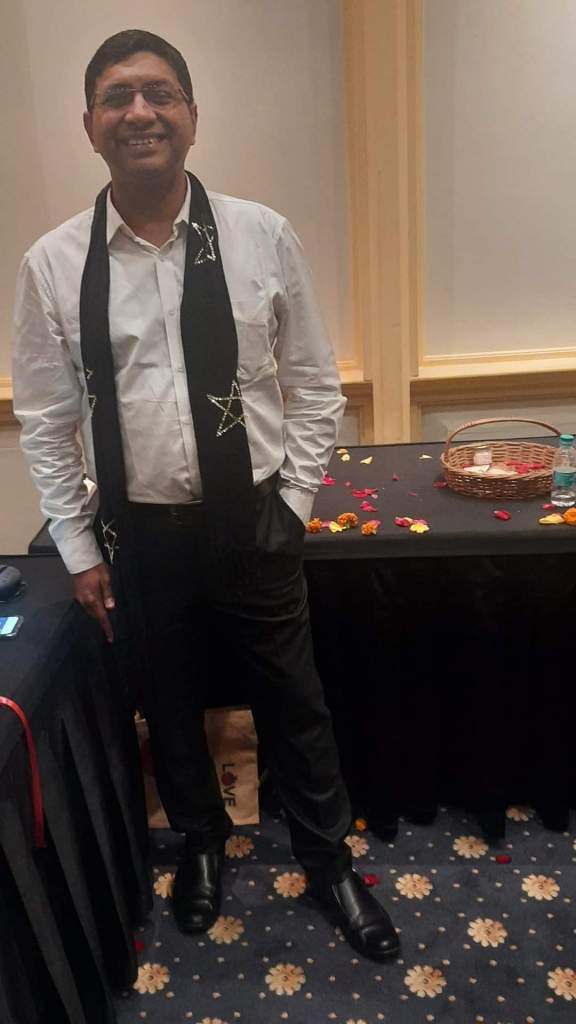
Rajorshi Patranabis is a poet, critic, reviewer and translator. A Wiccan by philosophy and belief, he is a food consultant by profession with 10 books of poetry and 4 books of translation.

.

PLEASE NOTE: ARTICLES CAN ONLY BE REPRODUCED IN OTHER SITES WITH DUE ACKNOWLEDGEMENT TO BORDERLESS JOURNAL. 

Click here to access the Borderless anthology, Monalisa No Longer Smiles

Click here to access Monalisa No Longer Smiles on Kindle Amazon International

Categories
Slices from Life

Welcoming the Dark Half of the Year

By Candice Louisa Daquin

Halloween is one of the oldest fire festivals in the world, perhaps because it considers the relationship between the living and the dead and that has been a primal theme in all human’s lives. Ancient people were more connected to the changing of seasons because their lives literally depended upon it in a way many of us cannot understand today. Most festivals have their origins in food and seasons for this reason. Ancient observations of the dead exist in nearly every recorded culture. Where I live Dias De Los Muertos is as popular as Halloween because we have a 70 percent Hispanic population. Some (though it’s growing smaller) groups of Christians refuse to celebrate Halloween as they feel they are celebrating something Pagan.

True, the celebrations held on October 31, known to exist as far back as the 5th century, were traditionally a Pagan ancient Celtic festival called Samhain. Samhain was not some Devil worshipping name as was incorrectly assumed, but actually ‘Summers End’ in Celtic. The tradition of “dumb supper” included eating but only after inviting ancestors to join in, giving families a chance to interact with people they knew who had died and returned that night as spirits. Children entertained the dead with games while adults would update those who had passed with news. On that night, doors and windows were left open for the dead to eat cakes that had been left for them.

This night was also when people would light bonfires and wear costumes to ward off ghosts. In many ways sharing the idea of remembering the dead with Dias De Los Muertos. Most ancient cultures bred superstition alongside remembrance into a festival of some kind. If you’ve ever been to New Orleans, you’ll know about All Saints Day (and martyrs) which began during the eighth century when Pope Gregory III decided November 1 would be a time to honour all saints who did not have their own holiday. This Catholic holiday caught on in New Orleans in America and is still celebrated today. Many believe the Christian church was deliberately supplanting Pagan festivals of the dead with Christian ones that emphasised more church-related themes. The evening before All Saints Day (el Dia de los Inocentes in Mexico was day of the children also held on November 1) had been known as All Hallows Eve, and later became Halloween. All Hallows came from Middle English with Alholowmesse meaning All Saints’ Day.

Samhain traditionally marked the end of summer and the beginning of winter, which back then was often associated with human death. Harvest was considered a thriving time, Winter, the dying before Spring. Ancient Celts believed Samhain was a special night where the boundary between the worlds of the living and the dead was closer together and the ghosts of the dead could walk the earth. This is where we retain the fearfulness of subjects like death and ghosts in modern times.

Sacred festivals and rituals were part of many Pagan cultures, and Samhain was no exception. The fearfulness was countered with large bonfires (the name bonfire comes from ‘bone fire’ which related to the slaughter of cattle and burning of their bones at this time of year) and druids warded off evil spirits with sacrifices. As blasphemous as that may seem to some modern religions, it was the way ancient people understood things and brought them a sense of control. Not so different really when all things are considered. It is human nature to observe or remember the dead, it is also our tendency to wish to see them again, which is ideal in this ‘thin time of year’.

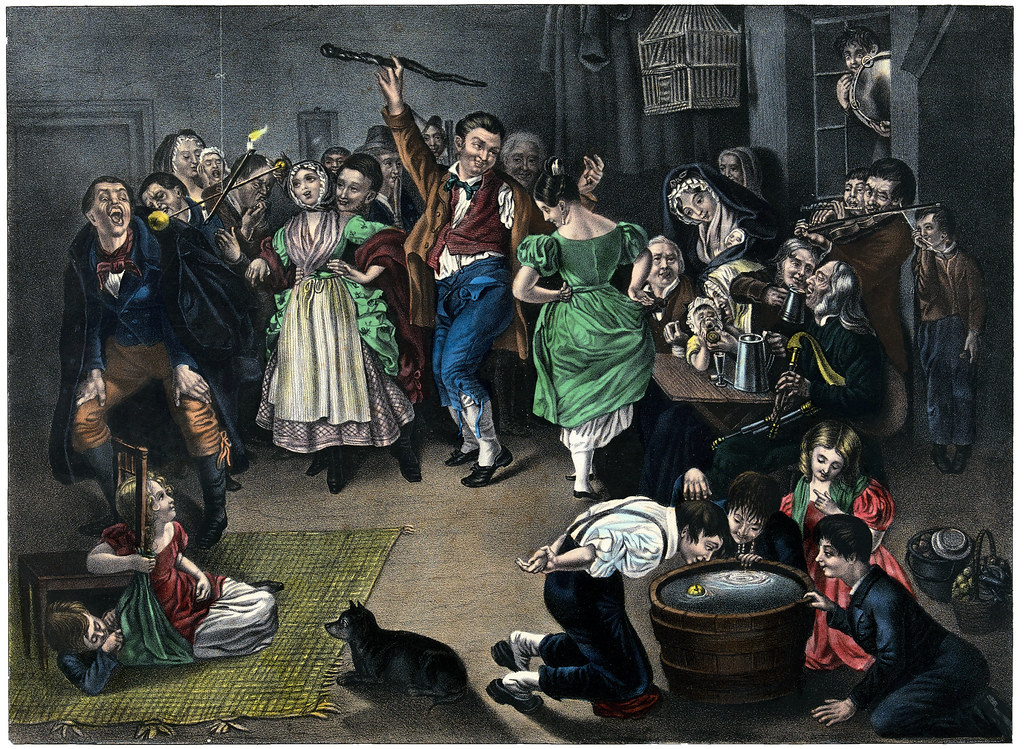
The Roman’s had celebrated Feralia which was traditionally a commemoration of the passing of the dead, Lemuria, placating the restless dead and Parentalia, honoring the spirits of ancestors. Combining these with Pomona who was the Roman Goddess of fruit and trees, they melded their traditional festivals with more Dias De Los Muertos themes and added apples, which we now incorporate with apple bobbing at Halloween. Apples are also historically connected to the ‘otherworld’ throughout history. It’s fascinating to know these extremely ancient practices are still practiced today, even as we may not know why.

Although we think of modern Halloween as originating from America as modern Christmas (Father Christmas and Christmas fir Trees) from Germany, the truth is American’s got many of their Halloween ideas from ancient European traditions, including ‘trick or treating’. But America definitely made those traditions wide-spread and thus, known worldwide. In the end, it was from America the rest of the world got their cue.

Scottish poet Robert Burns’s poem of the same name helped popularize the actual word Halloween in his poem of the same name. The modern name is two words pushed together. “Hallow” — or holy person — refers to the saints celebrated on All Saints’ Day, (November 1) and the “een” is a contraction of “eve” — or evening before. Thus, the evening before All Saints’ Day.

The Puritans of New England, refused to observe any holidays which might be associated with pagan beliefs – including Christmas, Easter and Halloween, but the Irish, who had always celebrated, shifted North America’s idea of Halloween when they arrived in large numbers after the Potato Famine. The jack o’ lantern which became our carved pumpkin originated from the Irish folk tale of Stingy Jack, a drunk and man who fooled the devil into banning him from hell but due to being a sinner could not enter heaven. When he died, he roamed the world carrying a small lantern made of a turnip with a hot ember from hell inside to light his way. People carved pumpkins or similar to ward off the ghost of Stingy Jack.

Halloween today is a giant commercial day, with companies selling more confectionary on Halloween than any other period in the year. Costumes and parties abound and adults now get into Halloween as much as children. Films specifically for this time of year are made and people relish the more secularised version of Halloween that doesn’t stand for anything that would threaten a family’s value system.

‘Trick or treating’ might have come from an English tradition on All Soul’s Day of giving soul cakes to those who promised to pray for the dead. Churches also gave out food, by way of appeasing spirits, and children would visit houses on Halloween and receive food or drink. Perhaps because food and drink were often scarce in the olden days, this was akin to eating pancakes on ‘Fat Tuesday’ before fasting. The value of food cannot be unappreciated and it features in every festival in some way, irrespective of culture.

The wearing of masks was to make oneself unrecognizable to those spirits who might return on Halloween. Originally called ‘guising’ (later, disguising) people used ash and then later, made masks. A disguise would ensure the Aos Sí, (fairies/spirits/ghosts) wouldn’t take you back with them to the ‘otherworld.’ Many cultures offer food to the dead as a way of respecting them or keeping them from taking the lives of the living.

Mumming, was the art of dressing up, often to act in skits to entertain others. Using anything available, people dressed up on Halloween to disguise themselves and ask for food. In later days, both at Halloween and other events, some people spent a lot of money on elaborate costumes. Like with anything, this was a status symbol, though the core remains the same; dressing up for fun. Allhallowtide was the old name for the originally three-day festival where such things occurred. Allhallowtide included All Saints’ Eve, All Saints’ Day, and the subsequent All Souls’ Day.

Black cats are often not sold at Halloween for fear of people purchasing them for sacrifice or mistreatment. The fear of black cats actually goes back to times where those deemed witches were thought to be able to turn themselves into a black cat. It’s a horrible stigma on innocent creatures, who have often found themselves tortured for the colour of their fur.

A revival of Samhain began in the 1980s with the growing popularity of Wicca. Modern Pagan’s and Wiccans today also observe Samhain as part of their faith. Celtic Reconstructionists celebrate by creating an altar for the dead where a feast is held in honour of loved ones who have died. It is not devil worship but far more an observance of an ancient time of transformation and understanding of the relationship between life and death. Samhain was never about worshipping death or evil. It was about the changing of seasons and preparing for the dying and rebirth of nature as the seasons changed. Through time ancient festivals held around this time of year influenced one another until they merged together and modern times developed the theme commercially. It’s a nice idea to imagine when we send our kids out trick or treating, we’re not worshipping Devils but we are remembering ancient rites held thousands of years ago.

Candice Louisa Daquin is a Psychotherapist and Editor, having worked in Europe, Canada and the USA. Daquins own work is also published widely, she has written five books of poetry, the last published by Finishing Line Press called Pinch the Lock. Her website is www thefeatheredsleep.com

.

PLEASE NOTE: ARTICLES CAN ONLY BE REPRODUCED IN OTHER SITES WITH DUE ACKNOWLEDGEMENT TO BORDERLESS JOURNAL