Categories
Poets, Poetry & Rhys Hughes

Said the Spook

(Christmas Edition)

“I don’t believe in ghosts,” said the spook.

“But it’s Christmas!” gasped the werewolf.

“Why does that matter?”

“Everyone should believe in ghosts at Christmas. It’s a tradition. Just think of A Christmas Carol, for instance.”

“I don’t care. I still don’t believe in them.”

“So you don’t believe in yourself?”

“Don’t be silly,” said the phantom, “a spook isn’t the same thing as a ghost. Not the same thing at all…”

“I was a ghost once,” sighed the vampire.

“What happened?” cried the ghoul.

“Well, it was like this…” began the vampire, and he proceeded to tell a garbled account of how he was once a poor traveller in an earlier century who was attacked by bandits in the forest, then his spirit rose out of his body and proceeded to haunt the bandit chieftain, making the rogue’s life a misery by possessing him and forcing him to act against his will.

The skeleton rapidly tapped an impatient foot.

“Shh!” hissed the ghoul, “you sound like a xylophone, and I am trying to listen to the vampire’s narrative.”

“Yes, but he’s drawing it out a bit, isn’t he?”

“That’s his privilege, of course.”

“How come he gets your respect and I don’t?”

“He’s a Count, but what are you? Without a shred of flesh on you, I’d say you were merely a subtraction.”

“That’s a really bad play on words,” sniffed the skeleton.

“So what? It’s a good insult…”

“Stop bickering!” growled the werewolf.

The vampire was oblivious to all this fuss. He was explaining how his ghost possessed the bandit chieftain by entering into his brain through his nose, then he would force the miscreant to dance and sing in a very silly manner and do all sorts of humiliating things. The other bandits soon abandoned their leader in dismay and went elsewhere.

“Unfortunately,” continued the vampire, his fangs gleaming in the pale moonlight, “I got trapped inside his brain. I lost my way among the tangle of synapses and couldn’t get back out!”

“That sounds scary!” remarked the phantom.

The vampire nodded and his cape swished in the night breeze. “It was absolutely terrifying, I can assure you. I rushed hither and thither, trying to escape my prison, but I was stuck for good. So, I decided to accept my fate and things got easier. I settled in and was gradually absorbed by the host body, until I became the bandit. Once this happened, I ventured forth and returned to my old ways, robbing travellers in the forest. I was satisfied. But one dark night I chanced on the wrong victim.”

“Who was it?” asked the spook.

“A werewolf! And he attacked and bit me!”

The werewolf looked sheepish. “Don’t swivel your heads at me, I had nothing to do with it, honestly.”

“No, it wasn’t you,” said the vampire.

“Maybe one of my cousins?”

“I have no idea who it was, but I only just managed to escape his teeth and claws before he devoured me, yet I was now infected, and so I turned into a werewolf myself every full moon. I guess it was fun, in a way, but finally I was tracked down by a monster hunter.”

“Did he shoot you with a silver bullet?”

The vampire nodded. “Yes, he did. But when a werewolf dies it turns into a vampire, a fact that humans keep forgetting, and I soon got revenge on him! And that’s who you see before you now: a vampire who was once a werewolf who was once a bandit chief who was once a ghost who was once a poor traveller…”

There was a long pause. The spook cleared his throat.

“So, you believe in ghosts then?”

The vampire clucked his tongue. “Of course!”

“I still don’t,” said the spook.

“You don’t believe what happens to be true?”

“No, I don’t. Why should I?”

The spook and vampire glared at each other. Before they started to bicker seriously, the phantom laughed to lighten the mood and said, “I knew a man who was the opposite of that.”

“The opposite of what?” prompted the ghoul.

The phantom adjusted his ectoplasm.

“Opposite in attitude, I mean. He had no evidence about the existence of ghosts, but he was a firm believer in them. His friends were sceptics and mocked him and so he needed to obtain proof to silence them. But in fact, he required that proof for himself even more. His name was Mr Gaston Gullible, and he did everything possible to meet a ghost. He slept in old churchyards, went for midnight walks in lonely forests, used Ouija boards in the hope of contacting the departed.”

“All without success?” asked the werewolf.

The phantom rolled his insubstantial eyes in his wispy sockets, nodded and sighed. “Nothing ever worked.”

“That’s a shame,” remarked the skeleton.

“One night, it was Christmas Eve in fact, he was sleeping in his bed when the curtains began swishing. The window wasn’t open, there was no breath of wind in his room. The rustling woke him and he sat up and blinked in the gloom and when his eyes had adjusted he saw that the curtains had bunched themselves into the shape of a person, the shape of a woman, and she raised a fabric arm and pointed directly at him.”

“What did he do?” cried the werewolf.

“He died of fright and slumped back onto the bed. Then the ghostly woman approached him and said, ‘I have waited centuries to meet the right man. You will be my husband in the next world,’ and his ghost rose from his body. She was ready to embrace him, but he shook his head and brushed past her. ‘Sorry,’ he said, ‘but I have stopped believing in ghosts. I believed in them all my life without evidence and I’ve finally come to the conclusion that I was wasting my time. I am now a sceptic, and I don’t believe in you,’ and he passed through the wall and was never seen again.”

“That story had a twist ending,” said the ghoul.

“Yes, it did,” agreed the phantom.

The spook said, “I’ve got a twist ending too.”

“I don’t understand—”

“Would you all like to see it?”

The vampire, werewolf, ghoul, phantom and skeleton exchanged glances. Then they said together, “Why not? Go ahead.”

The spook took a deep breath, extended his thin multi-jointed arms and started spinning. He spun faster and faster, became a blur, a spiral of force, a miniature tornado. Then he whirled away through the trees, laughing and crackling with blue thunderbolts.

“Merry Christmas!” he cried as he vanished.

The others shook their heads. The skeleton shook his head so vigorously that it fell off and he had to bend down to pick it up.

“I didn’t anticipate that,” admitted the phantom.

Rhys Hughes has lived in many countries. He graduated as an engineer but currently works as a tutor of mathematics. Since his first book was published in 1995 he has had fifty other books published and his work has been translated into ten languages.

.

PLEASE NOTE: ARTICLES CAN ONLY BE REPRODUCED IN OTHER SITES WITH DUE ACKNOWLEDGEMENT TO BORDERLESS JOURNAL

Click here to access the Borderless anthology, Monalisa No Longer Smiles

Click here to access Monalisa No Longer Smiles on Kindle Amazon International

Categories
Poets, Poetry & Rhys Hughes

Nomads of the Bone

A Poem Of Unsuccessful Excess

Art by Paul Nash (1889-1946)
Ogden Nash is the finest.
The snobs who dismiss his work
are knobs and jerks
whose heads should be examined
and given an F minus.
Of his talent they have not a tenth.
I mean, flipping heck!
Lacking depth is his strength.

And
now for some
HAIRY QUESTIONS…
Werewolf?
Whywolf? Howwolf?
Whenwolf? Whatwolf? Whowolf?

Questions like those never can
be answered
because the facts are tactless
and the fangs
will leave you gutless on nights
of a full moon.
The lycanthropic topic is one
best avoided
and thus I will always avoid it.

I made myself a sandwich.
I made it for my health.
I am a self-made man
despite my lack of wealth.

I made myself a promise
I would be a bitter gourd
cut into fancy segments
by an even fancier sword.

Unlike okra I’m not slimy.
If you ever dare to try me
I’m a vegetable Cockney,
I must say, “gourd blimey.”

Is that all?
No, it certainly isn’t.


Lady Rickshaw claims
we are all ghost ships
on the streets of cities,
drifting here and there.

That’s modern civilisation
for you: please join the queue
for the time machine.

But in more barbaric times
in chillier climes…

Our cavemen noses
glow in the cold.
They never grow
when we are old
but snowmen’s noses
linger for longer
and their nostrils
resemble craters.

The comet made from ice,
interstellar, vast,
oblivious, very fast,
will strike that fellah dead
when it hits his head.

And now
let’s take a trip to
ANCIENT GREECE

A gorgon’s internal organs
must be clever forgeries.
She turns heroes to stone,
in pairs or if they’re alone,
and when destiny calls
and Greece finally falls
those statues will be taken
to Rome, their new home.

But the gorgon’s heart
will never beat a rhythm
you can dance to.
It won’t thump like
a man-bull’s hoof-shaped
shoes, that’s true.
No swirling sonic brews
amuse our motley crews.

I’ve had better days
lost in this maze:
one time I almost
found my way out,
said the Minotaur…

Fenugreek Mythology
featuring Hercules
and Coriander leaves,
Turmeric and Ulysses,
Centaurs and Bottle Gourds
on a bed of saffron rice
is nicer to devour than plain
old Greek mythology.

Tell me honestly:
have you ever seen
A GHOST?

Death’s anniversary,
is a ghost’s birthday:
blowing out cake candles
with supernatural breezes
he teases the ectoplasm,
a professional phantasm.

Are spooks international?

I am turning Japanese
after a sneeze
because some wasabi
went up my nose.
Kimonos are my clothes.

Also, I play shogi
with my toes. (Shogi is a
kind of chess: I’m glad to
get this off my chest).

Now let’s have a
SELF-REFERENTIAL HAIKU

Counting syllables
when confronted with haiku
ruins the effect.

That’s done.
Where else can we find our fun?


Do you know the tale of
Patriarchy and Mehitabel?
Do you know the tail that
twitches on the windowsill?

The proof is in the pudding,
or so they say,
but I think I know a better way:
the waterproof
is in the puddling duck.

A vestige of a visage?
My face is the place
where my luck never runs out.
It may lack grace,
a waste of features
belonging to other creatures,
but each to their own.

The philosopher doesn’t like
my tone: he tells me
to ponder harder
but not to think about
swamp imps named Marsha.
Easily done: I don’t
know anyone with that name.

Harsher, he calls me timid,
says I am a coward.
Coward? But how?
I don’t know the meaning
of that word
but I can work it out
and applied to me it’s quite absurd.
It means to move
in the direction of a cow,
or many cows, a herd.

Have mercy if you’re thirsty.
Be ruthless if you’re toothless.

Do farm girls
grow on you over time,
seasonally?


A question I can’t answer
because I am a scarecrow.
No one planted me,
I do not grow. I do not know
a single thing.

But I can take a guess
about the mess
made by guests at dinnertime.
Billabong Monkeys
dunk their feet in the soup
in groups much larger
than gorillas are long.

Is that a SONG?
Somehow, I don’t think so.


And now
let’s have some
Soliloquies for Stringless Guitars.


Kiss her through the mask.
Miss her through the cask.

Foxglove Alley.
Weasel Stockings.
Garter Snakes, real and fake.
Rotten Shed and Rusty Rake.
I venture down
the Cul-de-Sac of Frogs.
I lost my way in the fogs.

That isn’t fog: it’s sand.
That’s no frog: it’s a panda.
Are you an understander?
There is no great demand
for sand disguised as mist
and so we insist you redo
the list of things you wish
to purchase in the sopping
shops that underwater lie.

Swinging on a garden gate,
it’s far too late
to palpitate at sunset
but the day’s still too early
to fly away and so you may
barbaric be,
barbaric bee, barbaric beer.

Beer comes in at the mouth.
Jokes come in at the ear.
Foam comes out of the nose.
POOR ATTILA lost his clothes
during a drunken stupor.
It’s not ideal but he is super.

Attila was very short.
Only one metre tall
and nocked with battle scars
at one centimetre intervals.
No wonder he was such
an effective ruler!

He wanted his wife
to call him ‘Darling’
in the marriage bed
but she insisted on
calling him ‘Hun’ instead.

Oh dear!
Have no fear:
King Lear has shed a tear
that splashes
on the lashes of the whip
that thickens cream
in dreams.

When I was younger
I had a narrow mind
and only thought of
narrow things:
tight corridors,
blocked canals,
mountain ledges,
malnourished gulls,
ladders designed
for stick insects,
crevices into which no
man could fall.

But now I am older
and think only of
wide things like
canyons and gulfs,
the open mouths that
shout bravo at gigs,
the taste in literature
of well-read people,
the square bases of
the mighty steeples
perched on churches
in historical towns,
the flapping gowns
of aristocratic vamps,
the pipe bowl of my
eccentric gramps and
the prehistoric snouts
of pigs snuffling for
unripe but fallen figs.

Listen closely, my dear…

My love for you
might sound hyperbolic
to hyperactive alcoholics.
But it will sound
perfectly fine to
good romantic folks.

Now here’s a thing:
sea roofs on the inside
are called sea lings.

Freshwater otters in Goa.
Salty authors in the shower.
Both are so clean
but only the latter dare dream
of rivers of cash.
The former dream only of fish.

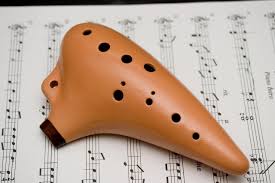
FOR A FLUTE?

Love
for a flute
is holy love
because a flute without holes
is a stick
and love for sticks
makes me sick
but flutes have holes
thus my stomach will settle
at the base of the kettle
and I will laugh:
tea-hee cough-hee.

The frozen lion
thaws before he roars.


A thaw in the old ball bearings
and the machinery of his desire
began working again.

The machine marks time
like a strict examiner
puffing out his metal cheeks
in the weeks
before the summer holidays.

Do machines
really play the drums?


As a rule of thumb, yes!
Keeping the beat with steel feet.
How neat. What a treat.
The soul of the dance
is deep in the soles.
The heels heal the heart.

We have
our whole lifetimes
A HEAD of us
in which to try out
new hairstyles, she said.
She knew what
she was talking about.
The barber’s wife.

Mourning becomes Electra.
Evening becomes etcetera.

The gentle love drizzle
puzzles the riddler.
The lion is sizzling
in the meri jaan frying pan
over the fire
of our heartfelt desire.

And that’s
the end of the line
for the wandering rhymes
and the Nomads
of the Bone will soon end
up back home.

*meri jaan is an endearment in Hindi meaning my life

Rhys Hughes has lived in many countries. He graduated as an engineer but currently works as a tutor of mathematics. Since his first book was published in 1995 he has had fifty other books published and his work has been translated into ten languages.

.

PLEASE NOTE: ARTICLES CAN ONLY BE REPRODUCED IN OTHER SITES WITH DUE ACKNOWLEDGEMENT TO BORDERLESS JOURNAL

Click here to access the Borderless anthology, Monalisa No Longer Smiles

Click here to access Monalisa No Longer Smiles on Kindle Amazon International
Categories
Poets, Poetry & Rhys Hughes

Night in Karnataka: A Play by Rhys Hughes

Photo provided by Rhys Hughes: From public domain
NIGHT IN KARNATAKA

Night in Karnataka. And the chapatti-flat pointy faced chap taking a nap on the lap of the cool breeze, spearlike chin piercing the caps of his hard knees, finally wakes...

My nap was nipped in the bed…
I mean bud, he said.

And he yawns in an hour long before dawn. Soon she will return and he will sing:

Yours were
the tamarind tipped mammaries
from which I sipped
with my lips
without pause.

Already he can hear her footsteps as she walks along the path next to the river. O! night in balmy Karnataka! Mango fandango and guava palaver. She croons the following:

I will strip you down and kiss you
all over. And tickle you with my
sweet tongue on the sides of your
ribs.
Then I’ll pluck one of your
ribs and make a woman. A rib-cage
ready-made maid.

HE: She can cook for us?
SHE: Yes, but you must pay her well.
HE: With what? I am penniless and feckless, a freckle-cheeked pointy faced chap, brow-beaten and lacking grace, who clearly hasn’t eaten for several days.
SHE: I have brought you a coconut. We will eat it together inside the hut. A rhyme will fill us up until then, will it not?

(She dances alluringly)

Coconut husk or husky voice.
We have no choice
but to enjoy the coconut milk
of human kindness.

HE: There is no tool to open it.
SHE: Crack it with your chin, O pointy faced chap! Thwack it once or twice or even thrice and don’t be such a fool.
HE: I know that a man in love is like a glove without a hand. I am that glove and I need a hand with the gift that you bring. To crack a nut as big as that requires more than a simple chin. It would damage my heavenly head and to be well fed I am not inclined to sin. I am feckless but clearly not reckless. That shell would be hell for my infernal chin.

And then she says:

Wary of shells
you are. I wear
tinkling bells on
my ankles. Can
you hear them from
afar? O! pointy
faced chap you
should clap your
hands and tap your
heels to keep the
fine timing of this
rhyme, to keep the
sublime rhythm
of this auspicious,
meretricious, quite
delicious song.

HE: I will clap and tap as I am bid.

(An hour or two goes by)

From his rib she makes a maid but he is afraid something will go wrong. And it does. The maid has no desire to work like a slave. She plucks one of his other ribs and makes a man before they can stop her. The maid and the new man sing an amorous duet before eloping:

Robbed of ribs he rubs
his chest. We must
confess that we
would take
any part
of his
body that was required for
us to
achieve
our desire.
A ready made
maid and her bony
beau. Off we go to set
up house together…

(No matter the weather, they flee.)

HE: They are eloping on a horse. There are no horses here. I don’t understand!
SHE: O! pointy faced chap. The coconut halves are hooves and this proves that nothing but nothing is an obstacle to true love.
He: Nothing but nothing? Now then. What is this second nothing of which you speak? Tell me quickly and kiss my cheek.
SHE: Pay attention then! Pay it with any amount of rupees you please. Pay with the coin-like reflections of stars on your knees.

O!
That is
the nothing
of the void that
we must avoid for as
long as we can. We squeak
when we contemplate
it, for it’s a void
that sits on
the chair
of our souls. Be bold! Forget
the ways of the old, we have
each other. Closer than sister
and brother, you and I. Never
before in history has a pointy
faced chap quite as daft been
so truly adored….

And they embrace each other and she sinks more deeply into his chest than usual, for he is missing two ribs. Dawn has broken but love has been mended. And there will be other nights when they will sing the simple refrain:

O! night in Karnataka!

Rhys Hughes has lived in many countries. He graduated as an engineer but currently works as a tutor of mathematics. Since his first book was published in 1995 he has had fifty other books published and his work has been translated into ten languages.

.

PLEASE NOTE: ARTICLES CAN ONLY BE REPRODUCED IN OTHER SITES WITH DUE ACKNOWLEDGEMENT TO BORDERLESS JOURNAL

Click here to access the Borderless anthology, Monalisa No Longer Smiles

Click here to access Monalisa No Longer Smiles on Kindle Amazon International
Categories
Poets, Poetry & Rhys Hughes

Soaring with Icarus

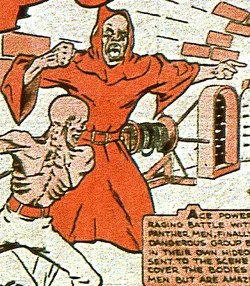
The Fall of Icarus by Peter Paul Rubens (1577–1640). From Public Domain
ICARUS

Your wings soared
to foolish heights
once only;
the wax slipped away
from an angry sun,
sealing your fate
on the waters below
with your own
mortal stamp.

Few feathers
remained to fall
in your wake;
most, caught by currents
of air, circle the globe
and fall over
our cities even now.
I found one
in my gutter.


COUNTY HALL VISTA

The fountains are silent
the fishermen hunch
in the rain
After lunch, the workers
greet the day again
mayonnaise on their lips
stretching weary limbs
while the aged heron
skims low with
ponderous dignity
across the bay
beak soured in oil.

Senile Pagoda
lonely as the fishermen
who line the wharf
stuffed full with
intentions pending
never ending bureaucratic
mockeries of a system
At lunchtime the
workers feed;
I watch them through the
canteen window.

Rhys Hughes has lived in many countries. He graduated as an engineer but currently works as a tutor of mathematics. Since his first book was published in 1995 he has had fifty other books published and his work has been translated into ten languages.

.

PLEASE NOTE: ARTICLES CAN ONLY BE REPRODUCED IN OTHER SITES WITH DUE ACKNOWLEDGEMENT TO BORDERLESS JOURNAL

Click here to access the Borderless anthology, Monalisa No Longer Smiles

Click here to access Monalisa No Longer Smiles on Kindle Amazon International

Categories
Poets, Poetry & Rhys Hughes

From the Vale of Glamorgan

Tinkinswood Burial Chamber from Neolithic times. From Public Domain
TINKINSWOOD BURIAL CHAMBER

Frost shells the pitted stone
glittering like winter stars.
The early sun warms knees
of rock, the slabs that
hold the past in place.
In spring warm rain will crack
the seeds of life: tangled
roots will grow free again.
The dying echo of long ago
alone will stay the same.
But when the year is middle-aged
balding on top and tired below
though the leaves wither and die
this echo will remain.


VALE OF GLAMORGAN

On the coast
of the Vale
it avails us not
to think a lot
about passing time.

The towering cliffs
are gracious hosts
to the fossils of species
that never failed
to endure in stone.

Ammonite spirals
no longer turn
like bicycle wheels:
the past is real.
Chains of Time were frozen
when ancient brakes applied.

The tone of eternity
is a broken drone:
our minutes, our hours
are petrified flowers
in the littoral garden
of prehistory.

They die: we harden,
embedded for certain
in mineral infinity.
Vale of Glamorgan where Rhys Hughes grew up. From Public Domain

Rhys Hughes has lived in many countries. He graduated as an engineer but currently works as a tutor of mathematics. Since his first book was published in 1995 he has had fifty other books published and his work has been translated into ten languages.

.

PLEASE NOTE: ARTICLES CAN ONLY BE REPRODUCED IN OTHER SITES WITH DUE ACKNOWLEDGEMENT TO BORDERLESS JOURNAL

Click here to access the Borderless anthology, Monalisa No Longer Smiles

Click here to access Monalisa No Longer Smiles on Kindle Amazon International
Categories
Poets, Poetry & Rhys Hughes

Did He Ever?

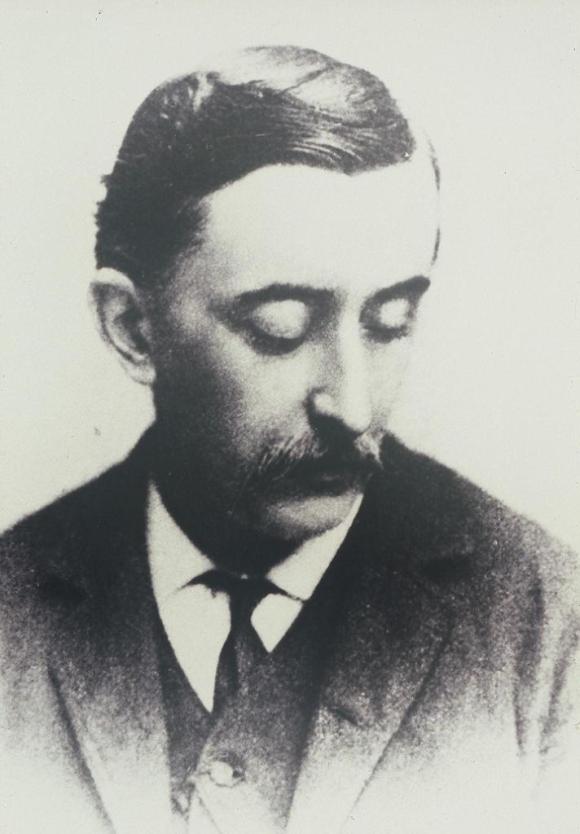
Lafcadio Hearn (1850-1904) was a British-Japanese national of Irish-Greek descent. Also known as Koizumi Yakumo, he was a writer, translator, and teacher who introduced Japanese culture to the West. From Public Domain.
Did Lafcadio Hearn
ever write about a worm
that went to
university in Tokyo?
I don’t think so.

Did he write about a fright
that coughed all night
in the loft of
a barn in Uzbekistan?
No, he didn’t.

Did he ever tell a tale
about a purple whale
who drank tea
with Yukio Mishima?
Of course not.

Did he dance
in France with a pig
named Nancy
in a fancy club in Nantes
while wearing a wig?
Even if he did,
I care not a fig.

Did he fancy Albert Camus
and take him
to a fair where he gambled
his underpants
for the chance to win a pear?
How should I know!

Did he surf with a flea
or row with a gnat
on tempestuous seas
while thunders boomed
and blunders
loomed in a volatile sky
that resembled a curtain?
Impossible
to be absolutely certain.

Did he acutely applaud
a cute fruit bat
that loved to sing songs
and bash gongs with twigs
in twilight hours
while the sleepy flowers
shut their petals
like silky eyelids? Beats me!

So what did he do?
What about him isn’t untrue
but genuinely odd?
Did he cavort with a frog or
plot with a toad
to overthrow the lords
of chaos and dismay?

Did he rummage his way
through the remains
of the day,
barking like a dog
balanced on a log
that is floating down a river?
I suspect not.

That’s the most curious thing
to learn about
Lafcadio Hearn: no one ever
finds anything
definite to say
about his strange experiences.

I don’t even know
if he ever kissed a ghost
on the lips
or played billiards
with a host who turned out
to be a vampire
or ate toast burned to a crisp
by dragon breath
and thereby ruined the health
of his breakfast.

Confirmation is hard to find.
Sometimes I think
that all these events are just
in my mind.

Rhys Hughes has lived in many countries. He graduated as an engineer but currently works as a tutor of mathematics. Since his first book was published in 1995 he has had fifty other books published and his work has been translated into ten languages.

.

PLEASE NOTE: ARTICLES CAN ONLY BE REPRODUCED IN OTHER SITES WITH DUE ACKNOWLEDGEMENT TO BORDERLESS JOURNAL

Click here to access the Borderless anthology, Monalisa No Longer Smiles

Click here to access Monalisa No Longer Smiles on Kindle Amazon International
Categories
Poets, Poetry & Rhys Hughes

Three Gothic Poems


THE CLOCK DEMON


The demon in the clock
haunted the early hours
of the heir
to an estate
so old that
all the hate
of countless generations
had faded
to a murmur in the walls.

The face behind the dial
was as melancholy, vile,
as the iron
crocodile
in the room
below the
passage where the gloom
had grown
much louder than a shout.

But this demon was silent
throughout the long nights
of winter
when the
freezing
mansion
reversed a grim expansion,
wheezing
in a manner not displeasing.

The clock: it is a guardian,
charged by aeons archean,
to chime
to death
the heir
bearing
ghoulish responsibilities
nowhere
without ceremonial fury.

They claim the creature
trapped there, not daring
to beware
will stare
at forever
resentfully
until those who truly care
decimate
the new legions of eternity.

And still the hours pass,
the demon tries a laugh,
cascading
the shades
of certain
odd hues
into a tone that you alone
will adore
if cosmic doors slam shut.


THE BEGGAR

The beggar
remembers a time
when he drank the rarest
wine from a goblet
and sprawled
on a couch, eyes hooded.

Then one day
an uninvited guest
arrived at his house, worn out,
a man in rags,
eyes ablaze, his tongue hanging
like a vast flatworm
from the lower lip of a blistered
mouth: or like a flag
drooping from a derelict ship
one evil afternoon.

The stars had shuddered
over him: the moon had juddered
high like the jawbone
of a slain man, crescent shattered
by a twisted club
and hurled into the sky.

The rich man spilled his wine
and demanded
without quite knowing why:
Are you me? A future vision
of what I will become?

And the stranger answered:
No, you are me. The future image
of what I will be
when I am no longer just a beggar
but the subject
of nostalgia: the figure in a memory.
When you become
a beggar yet again, the circular path
that pretends to be
a shady lane
may reveal itself to be a spiral chute
leading to the centre
of a brute tormentor’s awful domain.

This paradox is painful, the irony
stabs the beggar’s side
like the barbed tip of a javelin.
From rags to riches
and back to rags:
pain, bliss, and then more agony,
tragedy, comedy,
an inevitable turn of the axletree.

And so he sips his cheaper wine
philosophically,
hunched in the inadequate
shelter of the leaning tombstone
he now calls home.


THE ROTTEN DUNGEON

The dungeon rotted away:
stones crumbled,
iron rusted,
slime evaporated,
heavy keys in grim locks
melted: even
the sense of despair faded
until nothing
was left but stubborn bones.

And the archaeologists say:
there is nothing
here worth excavating.

But the screams
still radiate, propagate,
through the interstellar dust
between nebulae:
extinct at source, of course
they persist elsewhere,
swirling unknown particles
in waves of fear.

The dungeon,
a sullen impression, appears
to have done its work well:
degradation
broadcasting itself as a type
of Hell among
the brimstone constellations.
From Public Domain

Rhys Hughes has lived in many countries. He graduated as an engineer but currently works as a tutor of mathematics. Since his first book was published in 1995 he has had fifty other books published and his work has been translated into ten languages.

.

PLEASE NOTE: ARTICLES CAN ONLY BE REPRODUCED IN OTHER SITES WITH DUE ACKNOWLEDGEMENT TO BORDERLESS JOURNAL

Click here to access the Borderless anthology, Monalisa No Longer Smiles

Click here to access Monalisa No Longer Smiles on Kindle Amazon International

Categories
Poets, Poetry & Rhys Hughes

Midnight Tonight

MIDNIGHT TONIGHT

Midnight tonight
won’t be just any night.
Midnight tonight
will be just right for frights.

The shrivelled mummy
lumbers his doom
from the room in his tomb
to the outer gloom,
unwraps himself like god’s
gift to ghouls.

Vampires and werewolves
and men who are half bulls
wander the maze
of mythical days like fools
stuck in a funhouse.

As for Faust, he summons
the Devil in order
to revel with beautiful girls,
tumbling curls
and long legs included.

Denuded of armour, the hasty
knight swipes at
the hungry dragon who finds
him tasty after a lick
but later the bones will make
him sick. Heartburn!

Every day I learn something
new about the terrors
of specific midnights. Behind
the funeral parlour curtain
there is a monster certain
to pull your head off
if you draw back those drapes.

A witch doctor has arrived
in town, a wizard
in a gown made from toad
skins: he is thin
and radiates weird despair
from the stare
of his sorcerous spiral eyes.

Who among us dares ignore
the wise words
of scholarly mythographers
who caution us
to avoid minotaurs and men
with paws and claws instead
of normal hands?

There are ghosts who love to
spread themselves
thick on the toast of our sixth
sense: we shudder
inexplicably when, wickedly,
they tickle us
spookily right from the inside.

Now I want to talk about the
cobwebbed bottles of black
wine in the cellar where
ape skeletons wear dresses
decayed into tentacular nets,
fibrous, phantasmagorical.

But
let me pause for a moment
to re-read what is written
in these lines…

I think the knight and dragon
in this poem are out of place
among the entities
of gothic nightmare elsewhere
found here. On the
face of things they bring down
the eerie quotient,
ground the horrors in whimsy.

The face of things? A hideous
visage indeed
connected to a grotesque head.
And now I just need to repeat
the first stanza
and we can all go to bed.

Midnight tonight
won’t be just any night.
Midnight tonight
will be just right for frights.

Rhys Hughes has lived in many countries. He graduated as an engineer but currently works as a tutor of mathematics. Since his first book was published in 1995 he has had fifty other books published and his work has been translated into ten languages.

.

PLEASE NOTE: ARTICLES CAN ONLY BE REPRODUCED IN OTHER SITES WITH DUE ACKNOWLEDGEMENT TO BORDERLESS JOURNAL

Click here to access the Borderless anthology, Monalisa No Longer Smiles

Click here to access Monalisa No Longer Smiles on Kindle Amazon International
Categories
Poets, Poetry & Rhys Hughes

Two Pizza Fantasies

I can’t quite remember the first time I ate pizza. But I do remember that it came as a revelation. What a marvellous invention! The circular kind seems superior to the square or rectangular style, I don’t know why, and thin crust is better than deep pan, again I am unable to offer an explanation for this truth, though I guess mathematics definitely plays a role. But why a thin circle should be tastier than any other shape is beyond my understanding. No matter! The important thing to know about pizzas is that there are very few official variants, all vegetarian. It is a Rule of Naples that this should be so, Naples where pizza originated, and who are we to violate the ancient laws of a distant land? There is the margherita and the marinara, both simple and delicious. I don’t know if any other variations are acceptable. I am a pizza eater, not a pizza pundit. Let us be satisfied with those two types. And now allow me to present a story and a poem both themed around this most delectable of cheesy meals!

Down in the Park

There had been another report of a flying saucer over our town and this time I believed it. I saw it with my own eyes, not with anyone else’s, because I generally use my own eyes to see things. How about you? Maybe you use the eyes of your best friend, borrowed when he is sleeping, but I don’t do that. Messy and inefficient.

Anyway, I saw the flying saucer when I rose in the early hours to fetch a glass of water back to my bedside table. Flashing lights, weird flight path, eerie low drone and no sign of any trickery at all. Actually it wasn’t water in my glass. It was neat brandy and it was in a bottle, but I don’t want you to think I’m an alcoholic. I don’t want you to think I was drunk when I saw it. I wasn’t drunk.

I was as sober as an octopus. A postgraduate octopus.

The flying saucer hovered above my garden briefly, as if waiting for something, but I didn’t run out in my pyjamas; the grass was wet and I couldn’t find my slippers. I suppose you would have worn waterproof shoes made from the stitched skins of watermelons? That’s the kind of person you clearly are, but I’m not, no sir.

So I forsook the opportunity of getting a closer look. Too bad. Too bad is what you are. A scoundrel.

The next morning, I met Clive in the bakery. I was buying iced buns and so was he, but to my mild surprise he also bought a pizza, vegetarian, with a topping of extra olives.

I have to stress that my surprise really was mild. It’s not as if he was buying a machine gun made from bread or a cake in the shape of a centaur’s elbow.

“Did you hear about the—,” I began.

“Yes, Douglas, yes; I saw it myself and I stood and wondered. It hovered above many gardens, that flying saucer thing, including mine, and then it moved on. What purpose did it have? I pondered long and suddenly I realised!”

“You did what?” I croaked.

“I realised the truth about them, about the flying saucers. I know what they are and why they come here. I’m going to the park now and if you accompany me there, I’ll explain everything to you. Even though you aren’t as intelligent as me, I feel sure you will be able to understand the meaning of my words.”

The chance was too good to miss, so I followed Clive along the street that led to the nearest park. When we got there, we gravitated to the lake, as always, and watched the ducks. Some men watch women in the park, but not me. I watch ducks. That’s just the way it is.

I munched on an iced bun and cast my spare crumbs into the ripples. I often do that. I cast crumbs. I am a crumb caster. What the heck are you?

The ducks were happy to eat the morsels I offered them, but Clive held my arm in a powerful grip, most unlike him, because even though he is a strong man he is a bit of a simpering clot, and he prevented me from casting more pieces.

“Watch this!” he cried, so I did.

I often watch things when asked to do so.

Sometimes even when I’m not asked, I will watch.

I am a crumb casting watcher.

Like a discus thrower, Clive rotated on the spot and threw his pizza as far as he could. It was still warm, that pizza of his, and the olives glittered like crystals, and steam rose from the tomato paste as it soared over the waters. I know little about the aerodynamic properties of Italian cuisine, but it seemed to hang in the air for ages.

Then it dropped into the lake and sank.

“I was expecting it to float,” I remarked feebly.

But Clive was ecstatic. “Did you see? The ducks misunderstood it! They simply didn’t know what to make of it! They didn’t recognise it as food and why should they? They don’t know what a pizza is. That proves my point!”

I frowned. “You mean that—”

“Yes, Douglas, yes! Flying saucers are scraps of food that are being thrown to us by aliens from outer space. It’s so obvious! Why has no one thought of this before? We throw food for ducks; the aliens throw food for us. It’s a perfect analogy! Flying saucers are alien pizzas!”

I didn’t believe him, and I told him so. But that same night I moved my dining table and a solitary chair into my garden and sat there, expectantly, with a knife and fork.

I’m still there, waiting. And I’ve drunk all the wine.

So I’ve started on the brandy…

And I am wondering what the aliens are like.

Maybe they are like you.

In fact, I now think that you are one of them.

You cosmic rascal!

TAMPERED WITH 

The evidence
was tampered with
in Tampa.
I read about the case
in the Italian newspaper,
La Stampa.

But why was a crime
committed
in far flung Florida
considered
so newsworthy in Naples
and Rome
when there were horrider
cases much closer
to home?

It’s because of the man
suspected
of being behind the scam,
Don Avidograsso,
the celebrated mafioso.

He had defrauded a bank
of millions
one quiet morning
with a few trusty minions.
But he had made
a fatal mistake:
leaving behind the pizza
he’d baked
for his lunch, a margherita.

This delicacy was taken
and placed
in storage for forensic
examination.
Undigested, it would
provide a clue
as to who
should be arrested.

Everyone knows that Don
Avidograsso is
obsessed with margheritas.
No other pizza
is to his taste, but in haste
to flee the scene
he had abandoned it like a
discus in a dream.

Aware of the danger
he was in,
Don Avidograsso forced
entry into
the storage facility
one night
to alter the incriminating
pizza by
adding toppings regarded
as rotten
by his unforgiving culture.

Pineapple slices, no less!
And now
let me confess
that I never could assume
that a purist
such as Don Avidograsso
would ever
find room in his stomach
for the Hawaiian
variety of pizza, a travesty
to his way
of traditional thinking.

Such evidence would be
inadmissible
in court! But he was seen
and caught
by an alert guard not hard
of hearing.
Don Avidograsso’s belly
gave him away,
rumbling and grumbling
all the way
like thunder over the sea.

His pizza tampering failed
and now he waits in jail,
hungry and gaunt,
the same way
we wait in this restaurant.


Rhys Hughes has lived in many countries. He graduated as an engineer but currently works as a tutor of mathematics. Since his first book was published in 1995 he has had fifty other books published and his work has been translated into ten languages.

.

PLEASE NOTE: ARTICLES CAN ONLY BE REPRODUCED IN OTHER SITES WITH DUE ACKNOWLEDGEMENT TO BORDERLESS JOURNAL

Click here to access the Borderless anthology, Monalisa No Longer Smiles

Click here to access Monalisa No Longer Smiles on Amazon International

Categories
Poets, Poetry & Rhys Hughes

Dylan on Worm’s Head

Worm’s Head. Photo Courtesy: Rhys Hughes

When I learned that the poet Dylan Thomas had spent an uncomfortable night stranded on a headland called Worm’s Head I wondered what thoughts, if any, had gone through his mind at the time. The headland in question is the furthest westerly point of the Gower Peninsula.

I know Gower well. I have often hiked the coastal path that winds around this spectacular wedge of land that juts into the sea. I have climbed on Worm’s Head, though I have never been marooned on it. The headland consists of three small islands connected by causeways.

The main causeway linking the formation with the mainland is covered when the tide comes in. In fact, it is only accessible on foot for two and a half hours either side of low tide. This means it is very easy to become stranded on the headland, to be alone on the Worm.

It is perilous to attempt to swim back to shore. Many people have come to grief in the endeavour. Official advice is to remain on the Worm until the tide turns. That is what Dylan did. He described the headland afterwards as “the very promontory of depression” but before his unsettling experience as a temporary castaway, he was fascinated by its contours, the air of mystery surrounding it, a feeling almost of some ancient magic.

The headland has a distinctive shape, rearing out of the sea like the dragon it is named after, for ‘Worm’ originally was ‘Wurm’, a Viking word for dragon, and has nothing to do with wriggly soil-dwelling terrestrial invertebrates. It is a fossilised monster, a petrified myth, an undulating geological feature that seems poised to dive down into the depths.

Dylan scrambled over the rocks with a book and a bag of food, and when he reached the ultimate point of the Worm, the head itself, he made the classic mistake of falling asleep in the sun. When he was awakened by chills, he saw that it was sunset, the tide had come on, he was cut off. And so, he huddled on the coarse grass, frightened of “the things I am ashamed to be frightened of,” and waiting for the tide to go back out.

What things scared him on that little adventure? The ghosts of his fraught imagination? I know from experience how our senses can deceive us when we are in similar situations. I have bivouacked on enough beaches and islands to understand that the slap of the sea on reefs, the rolling of submerged pebbles, the cries of nightbirds, the breath of the breeze, can sound like the footsteps of goblins, demons, imps, the whisperings of phantoms, the groanings of ghouls. And so I wrote a poem for Dylan and the Worm, a poem in the form of three islands, each linked by narrow causeways…

Dylan

on the tiny hill

at the end of the causeway,

stranded by high tide and waiting

for it to recede again so he might escape

back to normality. But there’s no

normality in the whole land,

only the devilish

night

&

those

gusts of icy wind

that bite the exposed flesh

of wrists and throat that poke out

of cardigan warmth. Next time he’ll check

the tide times and plan a crossing

with more care, he’ll boast

appropriately and

laugh

a

brisk

laugh that’s more

like a dragon’s bite in the

way it sounds, a legendary snarl,

but now his knees are drawn up and fears

gnaw gently on his spirit’s bones,

a man alone, far from home,

musing on a stone

skull.

Worm. Photo Courtesy: Rhys Hughes

Rhys Hughes has lived in many countries. He graduated as an engineer but currently works as a tutor of mathematics. Since his first book was published in 1995 he has had fifty other books published and his work has been translated into ten languages.

.

PLEASE NOTE: ARTICLES CAN ONLY BE REPRODUCED IN OTHER SITES WITH DUE ACKNOWLEDGEMENT TO BORDERLESS JOURNAL

Click here to access the Borderless anthology, Monalisa No Longer Smiles

Click here to access Monalisa No Longer Smiles on Amazon International