As the sea breeze brushed through my eyes, cleansing my nostrils managing to whisper into my ears, I smiled in an exulted exuberance. It had been a journey of colours from blue to green to violet and so many more.
"How much do you know me?"
" Well, for hundreds of years... "
" How do you say this?"
portals of mellowed concentric reconstructions
This journey has hopes of culminating into the next one. I wait. Recluse.
DEMISE
I write about you. A story with oxymorons of ecstatic numbness peeps into my lost longing. I die again to live with your happiness.
demise -- rekindled hopes dance to breath
I sustain to be the carcass of your pains.
DESTINY
I looked around in dismay. A ditch of my own catastrophic recklessness.
Did I hear something?
No, I didn't... Maybe, I did.
Did I hear him call "Radha"?
They say, I fell for a dark God. They also say, that he loved me dearly too.
destiny -- pickled in greasy detriments blissful pain
He belongs to all. I belong to Him.
BURNT ICE
Yamuna is puritan and so am I. She's polluted and so am I. But how's it so, that, she keeps on flowing and I struggle to move? And, moreover, she's the lifeline of Vrindavan, while, I am a piece of destitution, a sympathy for some, a joke for others.
Why?
And you say, You're God. You are a liar, a debauch.
ripples
flashed purges of divine
mouth reincarnates
I know, and you know too... Molten snow is Yamuna --
Burnt ice is Radhika.
PRONOUNCED
It was an afternoon of awkwardness and the rains called our shots. It was that stubborn stone, with imprints of holding hands. Your Radhika has blocked herself now.
return righteous scoops of time wait
You lived to love again, I was pronounced death -- till I die.
Rajorshi Patranabis is a multilingual poet, editor, translator, reviewer and nonfiction essayist dabbling into different forms of poetry. He has this knack of writing in fewer words with a lot for the readers to ponder about. A Wiccan by philosophy, he has eleven collections of poetry (ten in English and one in Bengali) and four collections of translations. He is also credited with the first ever collection of Gogyoshi titled Checklist Anomaly by a single author in English. Gossips of our Surrogate Story is his collection of Wiccan poetry published in January 2025.
.
PLEASE NOTE: ARTICLES CAN ONLY BE REPRODUCED IN OTHER SITES WITH DUE ACKNOWLEDGEMENT TO BORDERLESS JOURNAL
This is where we draw the line between the etch and sketch of happiness
all up and down the mountain scrawled on cave walls
OF TORN LIMBS AND TARGET PRACTICE
Getting closer then casting off
we’ve been in the pull of waves and woes for ages
but inhalation precedes an exhale
and entropy follows creation before the next spin of spiral
cushion the blow expansion in shade of cover
expulsion of the venom by my own syringe inserted
softening the thorny scales a salve upon peeling flesh
help soothe this boil alkalize the primal pulses
the torch is scorching fingertips, held like a cockroach at the last burning
only wizened sorcerers enter the portal without hesitation
one misstep of paranoia and you’ll become a hobbled sheep in the herd primed for slaughter
OF PAWNS AND BOILED PEANUTS
mounting pressure cauldron bubbles
the portal was opened even before you begged at the altar
plasma intuitively folds into necessary creases
we’re in the humble process known as smoothing over
often cited following acts of love and war
condolences to all the egos scattered in the wake
Scott Thomas Outlar originally hails from Lilburn, Georgia. He now resides and writes in Frederick, Maryland. More about Outlar’s work can be found at 17Numa.com.
.
PLEASE NOTE: ARTICLES CAN ONLY BE REPRODUCED IN OTHER SITES WITH DUE ACKNOWLEDGEMENT TO BORDERLESS JOURNAL
Our bags stay forever packed
Notwithstanding any setbacks
We are struck with wanderlust.
Travelling is just part of who we are.
Sure, the world may be in chaos
But our knees and minds never dither
When travel is on the cards.

“Too old!” they say.
“Stay home. Be sensible!”
Honestly, such needless wisdom
Falls on deaf ears.
For us, who never tire of seeing new skies,
Stocked with coloured pills of different sizes,
We boldly step outside.

We’ve trekked through Roy's Peak Track,
With sanitiser bottles attached to our backpacks.
On the way down, our knees did protest,
Friendly hands did the rest.
Travel, they say, brings out the best.
Indeed, we have been through such tests.

“There's climate change!” experts declare,
But we still carry the attitude of Columbus
Questing for the unexplored, undiscovered,
Where the adventurous and the young are bound.
One little hiccup in Baku this May?
Did we let that stop us? Not a chance.
We’re off again soon to the seas
This time, to savour Goan Feni.

So let the sceptics scoff and frown,
We are the new age septuagenarians
Those who refuse to slow down.
With maps in hand, excitement in our hearts,
Somewhat dented, broken in body parts,
We continue to travel against all odds.
Snigdha Agrawal (nee Banerjee) has published five books, including Fragments of Time, her deeply personal memoir. A lifelong lover of storytelling, she blends fact and fiction with a keen eye for detail and emotion. Her works span diverse genres, reflecting her rich experiences and insightful observations.
.
PLEASE NOTE: ARTICLES CAN ONLY BE REPRODUCED IN OTHER SITES WITH DUE ACKNOWLEDGEMENT TO BORDERLESS JOURNAL
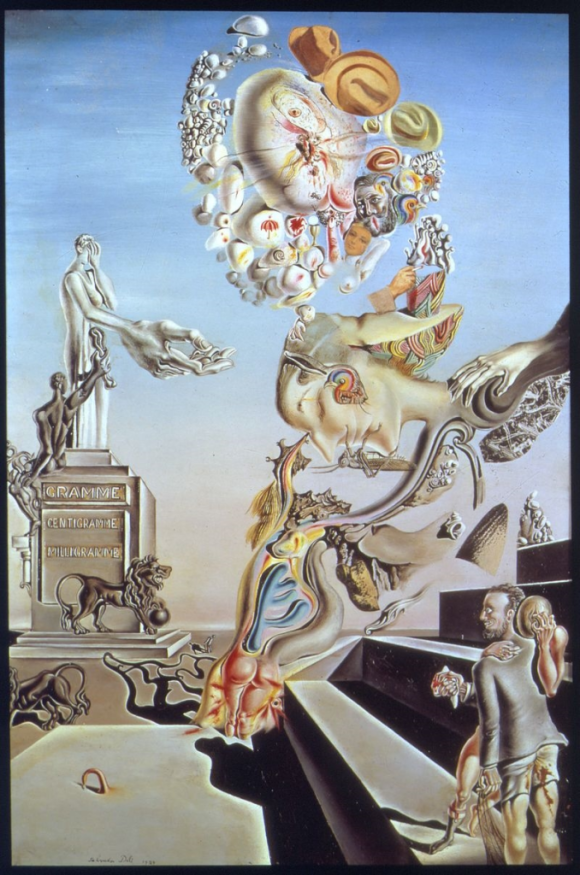
The Lugubrious Game by Salvador Dalí (1904-1989). From Public Domain
RIPPED NEUROLOGY

Humanity has succumbed
to a state of severe brain damage
The scariest part is the people revel
in the bramble of their thorny shackles
and shambles—in celebration
of a negative freedom tolling
in a resonance of an oncoming Oligarchy.


ODE TO NON-EXISTENT SPRINKLER ROOM

Tonight, the movie theatre’s essence has overdosed on the poisonous Simulacra it spits like the sprinkler room that is not located here—it's located somewhere else. There is also a mentally ill duck-billed platypus that is not currently here. There's a lot of things not currently here—but mainly the what's not here is the sprinkler room, tolerance, mercy, or empathy.


EMPTY SPACES

Nothing is more
eternally togetherly alone
than a parking lot at midnight.


VOIDED MORNING

You open
your door
to hear the doldrumesque dirges
of the Gasmask Choir.

Time to put toxins upon toxins.
Time to be outsmarted
by soulless artificial idiocy.


PEARL

Hold onto the silk
and satin you emanate.
Stay up on your rise.
Don’t let the omnipresent
negativity pierce your soft
skin with its cancerous
vibrations. Look for, and find,
the bright-bright white void
of evil. You are the virgin in the cesspool
and always will be. Stay
robed in the gossamer gown you created
and keep an open ear
for the Universe has something
it needs to tell you.
Heath Brougher is the Editor-in-Chief of Concrete Mist Press. He has published twelve books and after spending the last five years editing the work of others is ready to get back into the creative driver seat.
.
PLEASE NOTE: ARTICLES CAN ONLY BE REPRODUCED IN OTHER SITES WITH DUE ACKNOWLEDGEMENT TO BORDERLESS JOURNAL
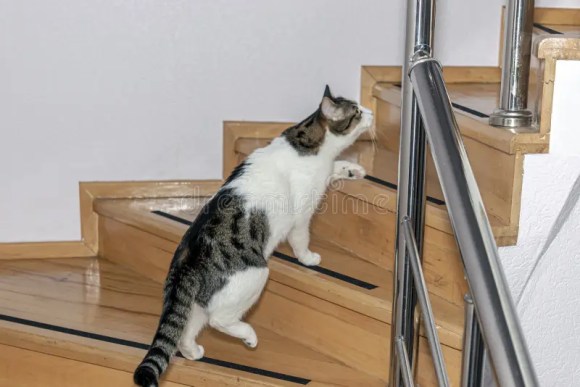
At home, I was thinking about what it would be like to travel without a suitcase. When I reached my destination, I would lie still, let the water from the hotel faucet run between my fingers, washing off the stains of the journey. I would still carry in my wallet, like forgotten coins, my cat's footsteps on a spiral staircase, unfinished chores, buried secrets, clothes that no longer fit, a dying plant, many conversations pressed between lips like lettuce in sandwiches. My luggage is heavy, like a hangover from cheap wine.
Laila Brahmbhatt, a Kashmiri/Jharkhand-rooted writer and Senior Immigration Consultant in New York, has published haiku and haibun in several international journals, including Cold Moon Journal and Failed Haiku.
.
PLEASE NOTE: ARTICLES CAN ONLY BE REPRODUCED IN OTHER SITES WITH DUE ACKNOWLEDGEMENT TO BORDERLESS JOURNAL
Five poems by Aparna Mohanty have been translated from Odia by Snehaprava Das
Aparna Mohanty
STAR

A tiny star watched me
As I groped my way in a blinding darkness
Nudged to tears.
It sparkled white
Exactly the way my mother’s face did.
The tiny star was about to climb down
When I saw it and waved, stopping it.
I knew it could easily understand
My unvoiced pleading.
So, I closed my eyes and beseeched,
“Go back! This is no place
For a star that holds such
 Pure whiteness in its soul.
 See, how pride and ego here
Hiss and howl
Cloaked in a guise of false modesty.
 ‘Selfishness’ is brokering deals
 In the trade-fair of power
 Pretending redressal and help.
 Truth is ineffectual here,
 So is love!
Go back, dear
My little lodestar
Because I can’t bear to see them
Smudge your serene whiteness,
Defile you and seat you
On a dazzling platform of deceit,
And announce
‘Here is one of our bright ancestors
We borrow our light from!’”

IN JUST AN INSTANT

Do not hold her
in your devouring desire.
Hold her in your soul
Let the woman be safe.

Do not take her as a prize won,
Treasure her with love.
Let the woman be happy.

Make her not a commodity.
Treat her as a virtue.
Let the woman feel elevated.

Just as much—
Assure her of
Security, happiness
And elevation,
A vast world of love and compassion.
Free from terror and savagery, she
Thrives on just that much assurance!
Wombs await great souls
And there is a promise of
A healthy, wholesome future
That carries pictures of a million hearts
Steeped in love.

Just for once,
Unfetter a woman’s body
From the scaffold of lust
And put it on the altar of worship.
You will then see
How in more than half of the world,
Shrines of love will come up in
just an instant.

FEAR

Too many restraints,
Numerous forbiddances.
“Do not sit here
Do not laugh like this
Don’t ever dare enter the forest
To taste the mangos,
There the tiger sits stalking,
 Fear the tiger!”

I wonder if ever my movements
Were easy and unrestricted
Like nature.
I wonder if the constraints
Were ever chosen by
An individual autonomy.
 I am a soul deprived, and
Defined in obedience.
I drag myself on by your will
Slouching under the load of your
Approval and disapproval.
I lie burning on an untimely pyre
At every intersection of the streets,
At every city center,
Where animal-howls echo
day and night.
Who knows better than you
The trick of championing self-interest
Through a pretense of love?
You lock me in your embrace
To mould me in a pliable shape,
Render me spineless,
Leaving no strength in
My arms to protest.
You gift me a heart that wallows
In fear and defeat every moment.
Why do you hold my
Easy growth in check?
What are you afraid of?
Do you fear that the arms of
All the Dusshasanas*
will be attracted
once I let my hair loose?
Do you fear that the spear will pierce
the chest of many a Mahishasura*
once I let my clothing drop?
Do you fear that many a ‘Lanka’ of gold
will burn to cinders
once I step beyond the
‘Lakshaman Rekha’?

*Dusshasana was Kaurava from Mahabharata who disrobed Draupadi, the wife of the Pandavas.
*Mahisasura is an Asura or demon who was killed by Durga
*Lakshman Rekha(line) in Ramayan was the circular border drawn by Lakshmana to keep Sita safe. Once she stepped beyond the border, she was kidnapped by Ravana.

THE WOMAN IN THE LAST ROW

The woman sits in the last row
lost in some strange
unhoped for possibilities.
Light and shadow
play hide and seek on her face
like scenes shifting alternately between
a verdant paddy field of Bhadrav*
and a gloomy Ashwina* sky.

The lines of mirrors in her front
never catch her reflection
inside their gilded frames.

Neither has she the time nor the wish
to adjust her image in varying postures
at every little maneuvering of her body,
She just sits there lowering her face,
her eyes downcast,
speaking to herself,
playing with herself,
contented in her own company.
The woman
who sits at the extreme back row
could hold anyone’s hand and
pull that person to
the delicate loneliness of her playhouse.

And, when the meeting disperses
amidst accolades and applauses,
the great ones stand up
weaved in blandishments
like mountains tangled in the
creepers of Malati*
raising their proud heads.
Not a single glance is flicked
at the last row.
No one would know when
the woman in the last row
had disappeared,
stealing the silence from there.
 No one might believe
a river flowed there
just a while before.

*Bhadrav—August-September
*Ashwina – September -October
*Malati – a creeper with pink and white flowers

A SONG FOR THE LITTLE GIRL

The day my little girl
Climbed the steps to her green age
And reached out to pluck
The loveliest flower of Phalguna*
And the sweetest berry of Chaitra*,
I cried out “Don’t” from below,
Stopping her.
She heard me and came down
To where I stood.
Since that day, questions
Like the swelling waves
Of an unseasonal flood
Crash at the edges of her eyes --
Why such prohibitions, why?
 And I thought, why indeed…
 My movements would be
Held in check.
Why must always pain and forbearance
 Come in my lot?

I am a mother, after all
Like all mothers,
The spells of Sravana*-showers
In her eyes
Swept me away in its current…
But, will it do if I let myself be tossed away
In the rushing flow
 Of her questions?

I am not a little girl like her.
I am rather trapped perpetually
In the role of a culinarian
That cooks on a holy hearth to
Feed the custodians of morals.
So now,
It is the time to cut and dress my little girl,
Cook her to a savoury dish
Of her father and her husband’s choice
And serve them on a gold plate!

 *Phalguna – February-March
*Chaitra – March-April
*Sravana – July August
Aparna Mohanty(1952) is a conspicuous voice in modern Odia poetry. Her poetry, with its feminist overtone, boldly asserts the significance a woman’s role in the family as well as in the society. They strongly defend the woman against the derogations perpetrated on her by a male-dominated society and defy the societal restraints imposed on her that curb her freedom. Aparna Mohanty has received several accolades for her contribution to Odia literature including the prestigious Odisha Sahitya Akademi Award.
Dr.Snehaprava Das, is a noted writer and a translator from Bhubaneswar, Odisha. She has five books of poems, three of stories and thirteen collections of translated texts (from Odia to English), to her credit.
PLEASE NOTE: ARTICLES CAN ONLY BE REPRODUCED IN OTHER SITES WITH DUE ACKNOWLEDGEMENT TO BORDERLESS JOURNAL
Rosencranz and Guildenstern are characters from Shakespeare’s Hamlet (1599-1601), also revived in 1966 in an absurdist play by Tom Stoppard (Rosencranz and Guildenstern are Dead). From Public Domain.
The world is filled with them.
They file through the streets and into
our courtyards. Well-dressed, respectful,
they ask leading questions, smile politely
and walk away.
Who are they and why do we
suffer them? Hardly princes,
mad or not, we give up our secrets
or lie outright, send them
on their way.
Someone is collecting a file on us,
grist for a data bank, an all-knowing
intelligence in the blue ether.
They can only plot our demise,
total destruction. Their questions
are simple tools in a mad
King’s hands. Something is rotten
in the state of everywhere
and all of us will stand for judgement.
in front of a review board,
our files opened and reviewed
with bureaucratic heartlessness,
a final assessment typed and filed away.
Paranoids, even paranoids,
have real enemies.
William Miller’s ninth collection of poetry, Under Cheaha, is forthcoming from Shanti Arts Press in 2025. His poems have appeared in many journals, including The Penn Review, Shenandoah, Prairie Schooner and West Branch. He lives and writes in the French Quarter of New Orleans.
.
PLEASE NOTE: ARTICLES CAN ONLY BE REPRODUCED IN OTHER SITES WITH DUE ACKNOWLEDGEMENT TO BORDERLESS JOURNAL
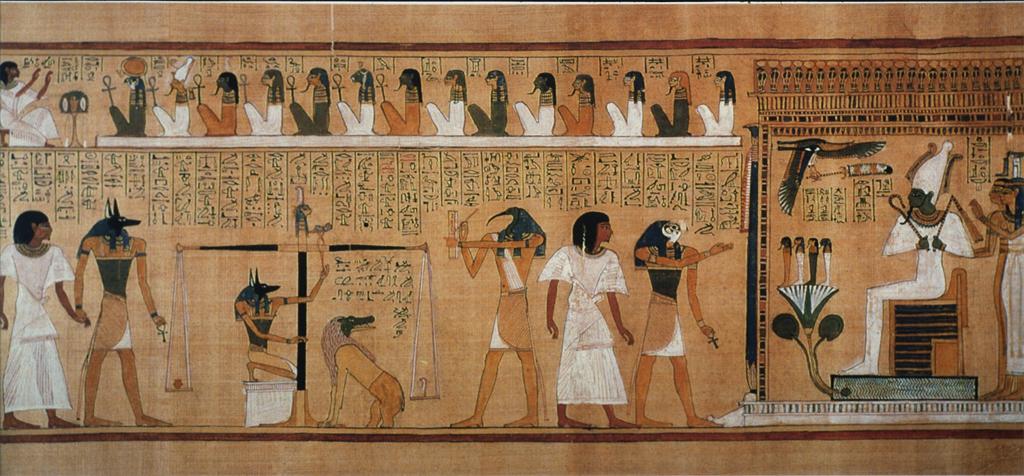
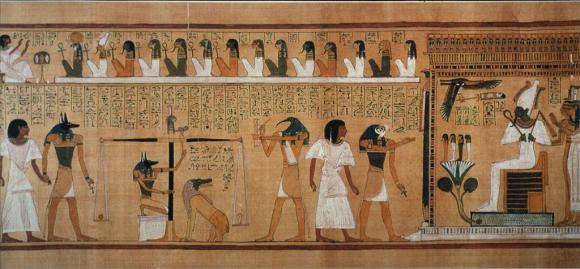
Book of the Dead (c. 1317-1285 BCE). From Public Domain
AS THE HOURS SPEED BY

Time is as definite as death,
but life is more mysterious
than the depths of the sea.
When I look in a mirror,
I know I’m looking at me,
but I don’t recognise what I see.
I see a symbolic elegy.
Is my sleepy cat resting serenely?
I doubt it, but I can’t tell you
what his thoughts are.
Animals are often comfortable
avoiding humanity.
About time we’d likely disagree.
Embedded in nature,
while my cat sleeps peacefully,
time urges me to hurry
to get somewhere,
but I don’t know where,
and when I look for a reason,
sadly, one isn’t there.
Is it me or my cat,
or just life, that isn’t being fair?


MOURNING SONG

I sleep in my comfortable bed,
and dream I’m a cloud,
drifting over spring flowers,
then pain overwhelms me.
Last night, I saw things
as if I were looking at a distorted mirror.
Today my vision is clearer.
Daffodils sway in a calm breeze.
Are they beautiful or ugly?
They mean nothing to me.
I drink my coffee
with an aching head.
My tongue is in shreds.
I stare at this new day,
and want to return to my bed.
I don’t know where you are.
I only know you’re dead,
and you are very far away.
George Freek’s poetry has recently appeared in The Ottawa Arts Review, Acumen, The Lake, The Whimsical Poet, Triggerfish and Torrid Literature.
PLEASE NOTE: ARTICLES CAN ONLY BE REPRODUCED IN OTHER SITES WITH DUE ACKNOWLEDGEMENT TO BORDERLESS JOURNAL
I am not young anymore. In the evening, I stay home. I have no bouquet of flowers to offer for any beautiful girl.
In the evening, I keep to myself. I buy no roses for anyone. I write no love poems. I do write a few for the birds.
I prefer a silent evening. I prefer sleeping a little too much. The birds sing me to sleep. Their song pushes through my window.
I am not young anymore. I pick at my scab I got from picking oranges, not from picking flowers for a beautiful girl. If you did not know, the orange tree has sharp thorns.
I LOVE YOU
There is one thing I will never say to you. And if I say it once, I will not say it again. I will not say the one word I want to say to you. There was a time I knew nothing. Even my eyes gave me away. I settle for what we have if it is just for a little while. Let’s face it, a little while might be all I have left. The hourglass has the sand near the bottom. It will not be long when I get too old or sick for you. I watch the sky from my window. It goes from light to grey to black. I am living this life one day at a time. What is lost I will never get back. There is one thing I want you to know. I will not say it to you today or tomorrow.
MY OWN BOOK
I brought my own book for a ride. I took it and stopped at 9th Street pretending it is where it wanted me to stop. I read a few poems to a man that was just got off the train. One line I read made him laugh. He asked me to stop before he threw up.
The man did not like my poetry. He told me not to quit my day job. That thought never crossed my mind, and poetry was never a second job. I got back in my car and drove my own book home and put it away in the bookshelf for the night to sleep.
Born in Mexico, Luis Cuauhtémoc Berriozábal lives in California and works in the mental health field in Los Angeles. His poetry has been featured in Blue Collar Review, Borderless Journal, Mad Swirl, Rusty Truck, and Unlikely Stories.
.
PLEASE NOTE: ARTICLES CAN ONLY BE REPRODUCED IN OTHER SITES WITH DUE ACKNOWLEDGEMENT TO BORDERLESS JOURNAL




 Borderless