Categories
Poetry

Observance & more…

By Michael R Burch

The Poppy Field near Argenteuil, 1873 by Claude Monet. Courtesy– Creative Commons
Observance
 
Here the hills are old, and rolling
casually in their old age;
on the horizon youthful mountains
bathe themselves in windblown fountains . . .
 
By dying leaves and falling raindrops,
I have traced time's starts and stops,
and I have known the years to pass
almost unnoticed, whispering through treetops . . .
 
For here the valleys fill with sunlight
to the brim, then empty again,
and it seems that only I notice
how the years flood out, and in . . .

("Observance" has been published by Nebo, Piedmont Literary Review, Romantics Quarterly, Poetry Life & Times, Verses, Setu, Better Than Starbucks, The Chained Muse and in the anthology There is Something in the Autumn.) 

At Once
 
for Beth
 
Though she was fair,
though she sent me the epistle of her love at once
and inscribed therein love’s antique prayer,
I did not love her at once.
 
Though she would dare
pain’s pale, clinging shadows, to approach me at once,
the dark, haggard keeper of the lair,
I did not love her at once.
 
Though she would share
the all of her being, to heal me at once,
yet more than her touch I was unable bear.
I did not love her at once.
 
And yet she would care,
and pour out her essence ...
and yet—there was more!
I awoke from long darkness,
 
and yet—she was there.
I loved her the longer;
I loved her the more
because I did not love her at once.

("At Once" has been published by The Lyric, Romantics Quarterly, The Chained Muse and Grassroots Poetry)

.

Michael R. Burch has over 6,000 publications, including poems that have gone viral. His poems have been translated into fourteen languages and set to music by eleven composers. He also edits The HyperTexts (online at www.thehypertexts.com).

.

PLEASE NOTE: ARTICLES CAN ONLY BE REPRODUCED IN OTHER SITES WITH DUE ACKNOWLEDGEMENT TO BORDERLESS JOURNAL.
Categories
Poetry

Spring Poems

By Matthew James Friday

William Blake at Felpham, West Sussex

To see a World in a Grain of Sand
And a Heaven in a Wild Flower,
Hold Infinity in the palm of your hand
And Eternity in an hour.

From ‘Auguries of Innocence’, 1803

An unfurled question mark 
answers the point where infinity begins.  
Standing on the beach at Felpham, 
studying the way the sea scars the horizon,
clouds pouring out in smoky angles,
cracks creating all kinds of illuminations; 
shafting bolts of light and gloom. 

No wonder Blake stood here 
and thought the sea was talking to him,
tongues of sunlight and wind and cloud 
fluttering through his mind. Here 
at this unremarkable, passable place
where Human and Nature face each other, 
taking turns to question and yawn,

the world turning under you, tides tugging 
at that grander part that belongs
to something renewed every day, before
being, waves pounding, reeling 
back again, a swell and releasing gift
unknown in its giving. Gulls cry you 
back to when you saw worlds in the sand,

an eternity of assembling castles by hand,
then the cheering grief of waves taking
away your creation. Here is the heavenly 
line drawn between times, stretched beyond, 
suggested in the shallowest of curves. 
The future remains uncertain, questionable  
For now the horizon is enough.


When The Flowers Return

Those first snowdrops spearing coyly,
the speckled smiles of daisies, winks 
of colour on leaf-laden forest floors.

Seeing them you are suddenly relieved
of your guilt: the thought that empty
fields will harden, deadened skies

be your last mirror, the spindly creak
of declining conversation, no summer
to talk of. You can be rejuvenated again

and pretend Nature does this for you,
that your witness is what gives worth,
that a poem is what spring needs.

Universal Knots

This is a struggle worthy of any split atom.

You’ve probably forgotten
how many fingers you needed,
how many hours of quantum patience
lost looping those string universes
around each other 
only to end up entangled.

It’s a bit tricky, says a Kindergarten girl
and then she almost gives up.
Luckily, Mom is there to keep
the orbs moving: nearly there!

For what galactically important purpose?
So you could wear tied shoes?
You never asked your gods for that.
So Mom or Dad would stop stooping down
to your level, enter your orbit.
Who wants to grow up?

A Kindergarten boy starts with one shoe
and starts to bow the skill
around the black holes of immature
fingers. Getting there, says Mom.

Einstein had to learn.
Here is E=MC2 perseverance.

Both Moms ask their stars
how is it going?
Thumbs up, Milky Way grins.
Optimism, the gravity of learning. 


Matthew James Friday has had poems published in numerous international magazines and journals, including, recently: All the Sins (UK), The Blue Nib (Ireland), Acta Victoriana (Canada), and Into the Void (Canada). The mini-chapbooks All the Ways to Love, Waters of Oregon and The Words Unsaid were published by the Origami Poems Project (USA).

.

PLEASE NOTE: ARTICLES CAN ONLY BE REPRODUCED IN OTHER SITES WITH DUE ACKNOWLEDGEMENT TO BORDERLESS JOURNAL. 
Categories
Poetry

Equation

By Ihlwha Choi

A bird intending to leave flies away.

If you fail to catch a bird fluttering,

If you miss a ball ready to bounce away,

That's because a bird has its own soul,

Also, because a ball has its own freedom.

A bird's soul and a ball's nature must be respected.


If you want to confess your love,

You must keep the right time.

Just as there is a time when a poem is to be born,

There is a time when a bird will hatch.


A bird willing to be with you, finally sits next to you.

If you catch a bird ready to flutter away,

You would catch only a shabby feather-deprived thing.


That's not an answer to the equation.

Ihlwha Choi is a South Korean poet. He has published multiple poetry collections, such as Until the Time When Our Love will Flourish, The Color of Time, His Song and The Last Rehearsal. 

.

PLEASE NOTE: ARTICLES CAN ONLY BE REPRODUCED IN OTHER SITES WITH DUE ACKNOWLEDGEMENT TO BORDERLESS JOURNAL. 

Categories
Humour Poetry

Kissing Frogs

By Rhys Hughes

Kissing frogs is
sometimes a wise thing to do
but mostly no,
it’s not. They may
turn into a prince, true,
or they may turn into
something different, a thing
that will make you wince.
Who knows? I don’t.

A romantically inclined girl
with amorous curls
tumbling over her shoulders
was picking her way
one day along a narrow track
liberally strewn with
boulders. Unhappy was she
with her family and desperate
to move out of her home
and so she liked to roam
while daydreaming
of magical encounters.

On the rim of a pool
she spied a frog sitting
on a log and she said
to herself, “If I kiss his lips
maybe my wish will be granted.”
With excitement she panted
and supposed that this amphibian
had been sent by a god
slanted in her favour
so right on the meridian
of his mouth she planted a smacker
with a passionate flavour.

Oh dear! Expectations
are often thwarted and when all the
mistakes of humankind are sorted
and noted down
the assumption that a kissed frog
will always turn into a prince
must certainly be somewhere on the list.
It was the girl who changed!
Her personality remained the same, yes,
but her outer form
became perfectly frog-like
and now the frog on the log
who had long been alone
had a female to call his own
and he kissed her lips
to express his amorous nature.

But the lips of a frog
have a magical force and no sooner
had the kiss been delivered
than his bright green darling turned
into a handsome prince. He winced
if frogs can be said to wince at all
and his disappointment was evinced
by the fact he hopped away.
What use is a prince to a frog?
Let’s take this absurdity no further.
The prince turned on his heel
and went back along the difficult track
to reconcile himself with
a very surprised mother and father.

Rhys Hughes has lived in many countries. He graduated as an engineer but currently works as a tutor of mathematics. Since his first book was published in 1995 he has had fifty other books published and his work has been translated into ten languages.

.

PLEASE NOTE: ARTICLES CAN ONLY BE REPRODUCED IN OTHER SITES WITH DUE ACKNOWLEDGEMENT TO BORDERLESS JOURNAL. 

Categories
Poetry

Ri-Ri’s Brushes

By Vatsala Radhakeesoon

On a faraway island,
all blue and green,
loosely tied to the colossal continents,
there lived an artist.

Her name was Ri-Ri
and in her pink pearls’ cave,
she hid a pair of brushes;
She often called them “peculiar”
but to the inhabitants they were just 
twin fan brushes glued together.

One night, three brown bats
lazing on the litchi trees
started to make fun of the painting tools;
They called them “ugly”, “grotesque”, “useless”
and threw  half-eaten fruits on  Ri-Ri’s windowsill.

The moon frowned,
The stars were startled,
Thunder tore the clouds,
The bats fidgeted on fragile branches.

Swirls of silvery, golden and  turquoise light
sparkled  around,
The fan brushes gracefully performed the circular dance,
They transformed into soft plumage of all white,
and  a confident beak all  yellow;
A pair of feet sang History to the night.

Amidst Ri-Ri’s garden,
stood a Dodo relishing the summer
of its native land,
Ri-Ri hugged it and in her local language
whispered to the bats,
“Samem mo ti sekre.”*

* Samem mo ti sekre (from Mauritian Kreol ) – That’s  my little secret.

Vatsala Radhakeesoon is an author/poet and artist from Mauritius. She has had numerous poetry books published and she is currently working on her flash fiction/short stories book. She considers poetry as her first love and visual art as a healer in all circumstances. Vatsala Radhakeesoon currently lives at Rose-Hill, Mauritius and is a freelance literary translator and an interview editor of Asian Signature journal.

.

PLEASE NOTE: ARTICLES CAN ONLY BE REPRODUCED IN OTHER SITES WITH DUE ACKNOWLEDGEMENT TO BORDERLESS JOURNAL

Categories
Poetry

Grandad’s Other Language

By Jenny Middleton

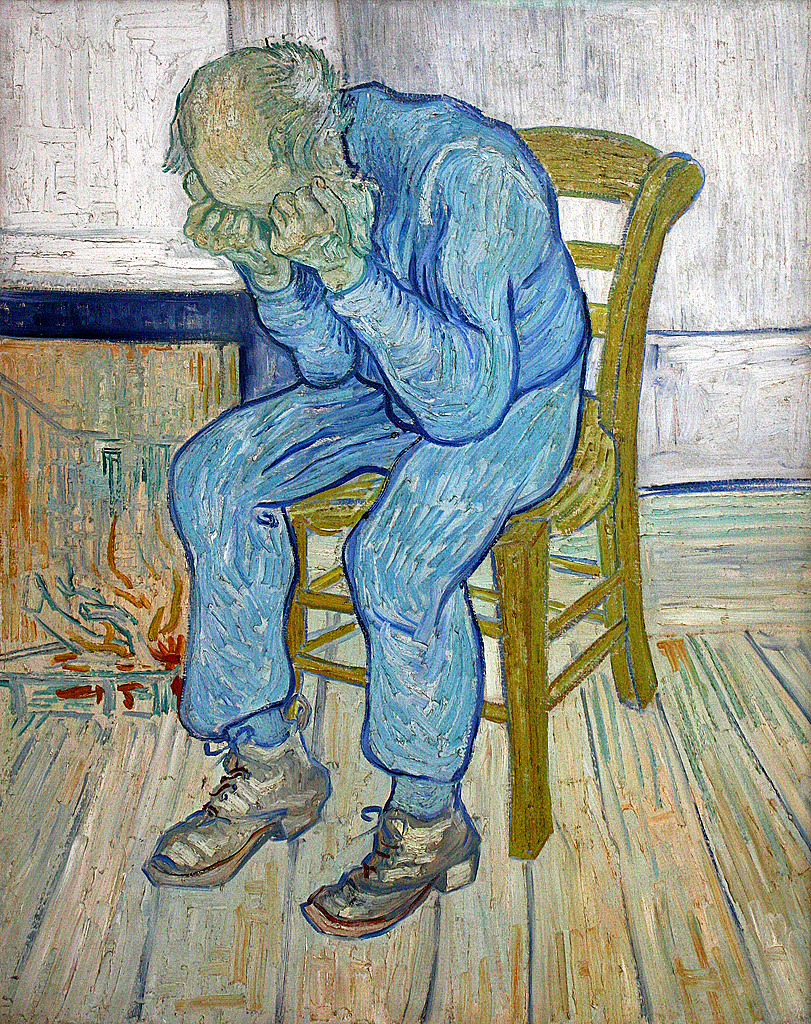
Old Man by Vincent van Gogh. Courtesy: Creative Commons
Grandad’s Other Language

My Grandad spoke Irish

not to us, but with

the soft sky thudding

piano clouds above


pulling wispy cotton vapours thin

in their gusts across the sea

unknotting rain to fall with his speech

garnered and carried with the lulling songs

of other isles rich with other airs.
 

Or else he listened, late at night,

to a radio’s report

relating today’s news with voices

from childhood’s yesteryear

new sprung
 

with lush grass, buttercups and clovers

grown long and pressing damp leaves

to whorls trapped under

the glassy, musty confines

of a London terrace and its red brick moods
 

as he murmured Latin prayers beneath

an English service to petalled oracles,

crooning untranslated lore

from the webbing undulations

of Thames Valley’s silt strewn soil

till they were a-fleck with meadowy

Ballycolgan smiles.


Jenny Middleton has written poetry throughout her life. Some of her writing has been published in hard copy anthologies or on online poetry sites, including ‘The Blue Nib’. Jenny is a working mum and writes whenever she can  amid the chaos of family life. She lives in London with her husband, two children and two very lovely, crazy cats.  You can read more of her poems at her website  https://www.jmiddletonpoems.com 

.

PLEASE NOTE: ARTICLES CAN ONLY BE REPRODUCED IN OTHER SITES WITH DUE ACKNOWLEDGEMENT TO BORDERLESS JOURNAL

Categories
Poetry

Fresh Breath

By Aparna Ajith

A miniature version of myself
began to grow inside me.
A new spring will welcome my offspring.
 
Your movements give me sleepless nights.
Your invisible presence brings contentment.
You move slowly and silently within me,
I yearn to see you move around me.
 
During my monthly check-ups, you remain silent.
When I get back home, you assert your presence.
I began loving you right from the start.
I long for the joy of watching you play.
 
Counting days to my unseen one’s arrival,
Craving to hold, to see, to touch, to feel,
My whole world waits to welcome you.

Dr. Aparna Ajith serves as an Assistant Professor in English at Sree Narayana College For Women, Kollam, Kerala. Being a freelance journalist, she writes and translates articles for the Information and Public Relations Department, Government of Kerala. Her creative pieces have found space in ezines and blogs.

.

PLEASE NOTE: ARTICLES CAN ONLY BE REPRODUCED IN OTHER SITES WITH DUE ACKNOWLEDGEMENT TO BORDERLESS JOURNAL

Categories
Poetry

Legends in Verse

By Jared Carter

Sarcophagus with the myth of Protesilaus and Laodamia. Here, Laodamia grieves for the loss of her husband Protesilaus in the Trojan War. From a tomb along the Via Appia Nuova, ca. 160-170 CE: Creative Commons
Laodamia to Protesilaus

If you were lost, how would I find you,
what path take along dark streets, through
damp vaults, how untangle those choices
far underground, those myriad voices?

If I were gone, you could no longer follow
through great spillways, or deep hollows
in that world. My footsteps would fade,
there would be no echo, no light or shade.

Still, somewhere your presence ahead
would call, through realms of the dead,
through time imploded and turned back,
platform deserted, abandoned track.

No pause in this long pursuit, this seeking
that has no end. Neither of us speaking,
or able to break the spell – neither chase
nor surrender. Only the lost, familiar face.

(First published in The Raintown Review.)


Resurrection

The body rises up at last,
          it cannot keep
Its distance from what comes to pass,
          when more than sleep

Is beckoning. To bid adieu
          and still to bless,
Savonarola reached out through
          the flames; and pressed

Against them, Frida Kahlo sat
          upright, as though
Awakening at last from what
          is merely show.

(First published in Clementine Unbound.)


Jared Carter’s most recent collection, The Land Itself, is from Monongahela Books in West Virginia. His Darkened Rooms of Summer: New and Selected Poems, with an introduction by Ted Kooser, was published by the University of Nebraska Press in 2014. A recipient of several literary awards and fellowships, Carter is from the state of Indiana in the U.S.

.

PLEASE NOTE: ARTICLES CAN ONLY BE REPRODUCED IN OTHER SITES WITH DUE ACKNOWLEDGEMENT TO BORDERLESS JOURNAL

Categories
Poetry

Poems from the East

By Sekhar Banerjee

Lataguri East Cabin, south of Nepal


Did I ever tell her– Moon always looks good 
where rail tracks intersect and depart near the woods?

She never found a moon over the rail tracks south of Nepal;
for that you need to have a railway cabin near the woods –
a crossing, and rail tracks that are resolute 
yet unmindful
Because all rail tracks are cartographers 
on vacation, like us 
Rail tracks have established their claim, as if, to be set up
near the woods and settlements
They know the shortest route 
to stations, home, the woods
and the location of an honest full moon

I should have also told her 
how it feels to be a forlorn railway track near home 
where only two trains pass to measure each other every autumn 
when the leaves of shimul trees float mid-air,
and descend slowly on railroads to feel the warmth 
of ballast and metal 

It is simple and cryptic, when tracks meet and change path
like baffled lovers; they depart –
changing towns, stations and homes but locked 
permanently in intersections 
near a full moon somewhere over Lataguri East Cabin, 
south of Nepal 


The Middle Path


You look at your own room – 
it is your last hypothesis on earth
The middle path
Your inertia of taking a side, left or right,
is the wisdom of a carpenter
who knows how the saw goes straight
like a judgment 
and it saves half of the continents, 
skin of an orange,
dolls from China, notebook from Bhutan, 
while giving you options 
to take a U-turn, to give up or to start
and proceed straight like a termite 
in a labyrinth inside a piece of driftwood
where there is no side like a Murakami book
on your table which, in the third chapter, deals with
cherry blossoms and music  

Your room is now almost Buddhist 

Sekhar Banerjee is an author.  He has four poetry collections and a monograph on an Indo-Nepal border tribe to his credit. His works have been published in Indian Literature, The Bitter Oleander, Ink Sweat and Tears, Kitaab, Borderless Journal and elsewhere. He lives in Kolkata, India.

.

PLEASE NOTE: ARTICLES CAN ONLY BE REPRODUCED IN OTHER SITES WITH DUE ACKNOWLEDGEMENT TO BORDERLESS JOURNAL

Categories
Poetry

Memory

By Achingliu Kamei


In a former life…

I was a bird soaring above the clouds,

My wings fresh and strong,

My feathers rippling in the breeze.

I was an orchid bringing glory to the tree,

A sea heart*-polished ebony, 

A weaver, a potter, a tiller, a storyteller.

I was a grey cloud, a gust of wind,

A medicine maker, a healer. 

I was a memory, an ember, a hearth,

The beginning, the story.

I was a bud, a flower,

A dormant volcano, a river current, the waves.

I was the smoke, the spark, the flame,

The bamboo that would not break.

When I was born, my bed was of soft petals,

My food the flower’s nectar,

Soft, fragile, flimsy, sweet,

Bloomed for a season. Like the fireflies,

Soon gone,

A speck of dirt blown away.

A butterfly that flitted briefly,

I gave wings and roots to the next unborn.

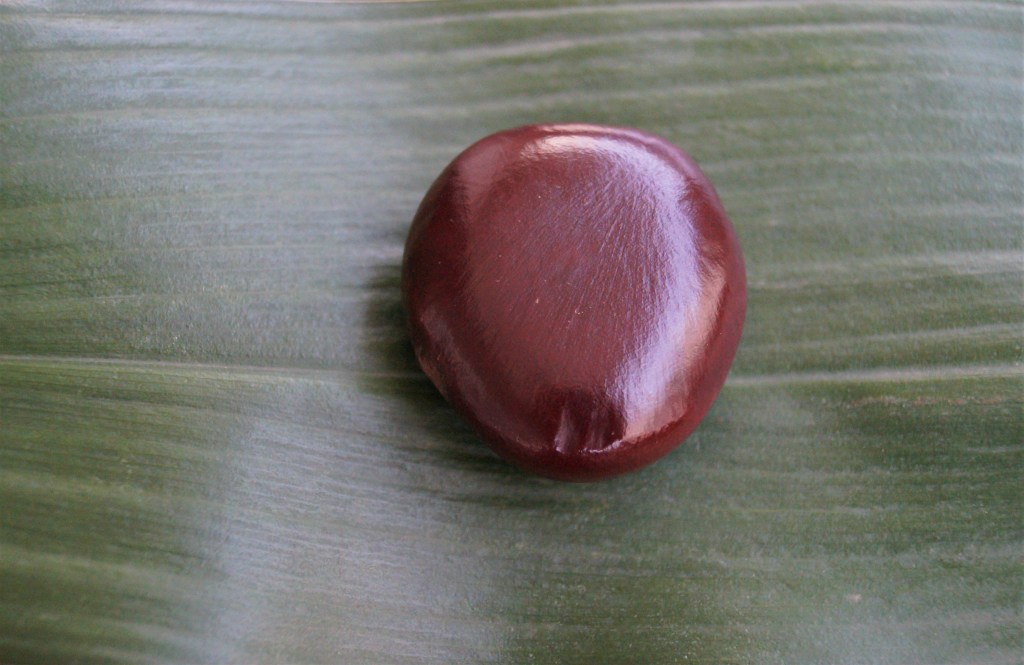
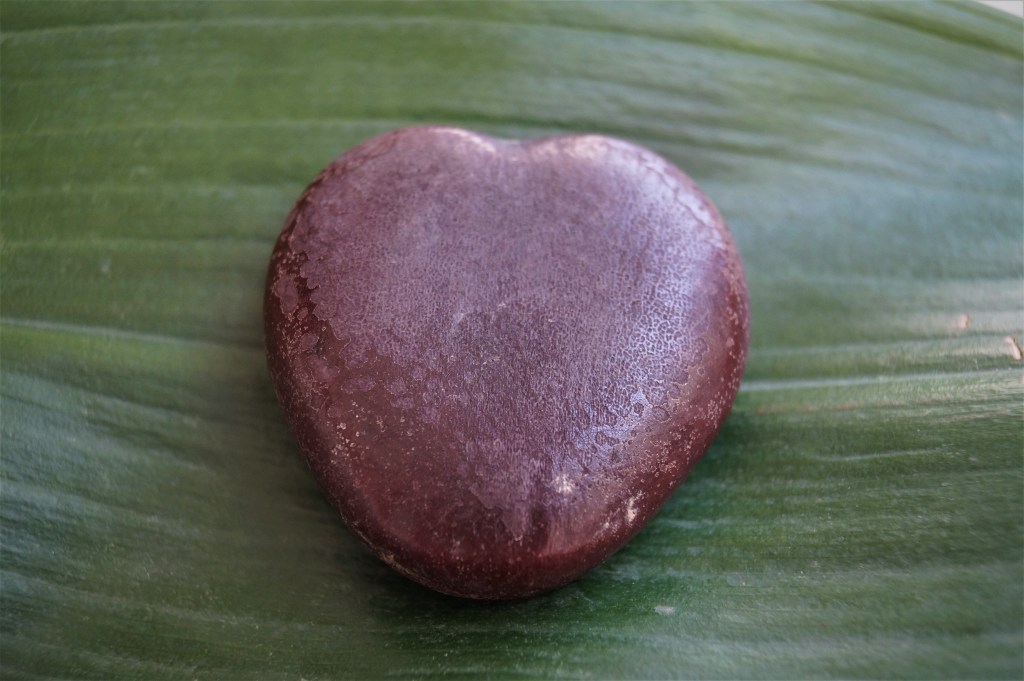
*The sea heart is a round brown smooth seed and has cultural significance for some of the Naga tribes who live in India. It is used as a core on which the weaving yarn is wound by the dexterous hands of womenfolk.The sea heart also lends itself as an equipment for the only traditional game the womenfolk were allowed to play in the past.

Achingliu Kamei is a short story writer, poet, and an ultra-runner. Her work has appeared in international journals and anthologies. She is currently residing in Delhi, India, with her husband, two daughters, and Haru, the cat.

.

PLEASE NOTE: ARTICLES CAN ONLY BE REPRODUCED IN OTHER SITES WITH DUE ACKNOWLEDGEMENT TO BORDERLESS JOURNAL