Categories
Nostalgia Slices from Life

The Corridors of the Mind

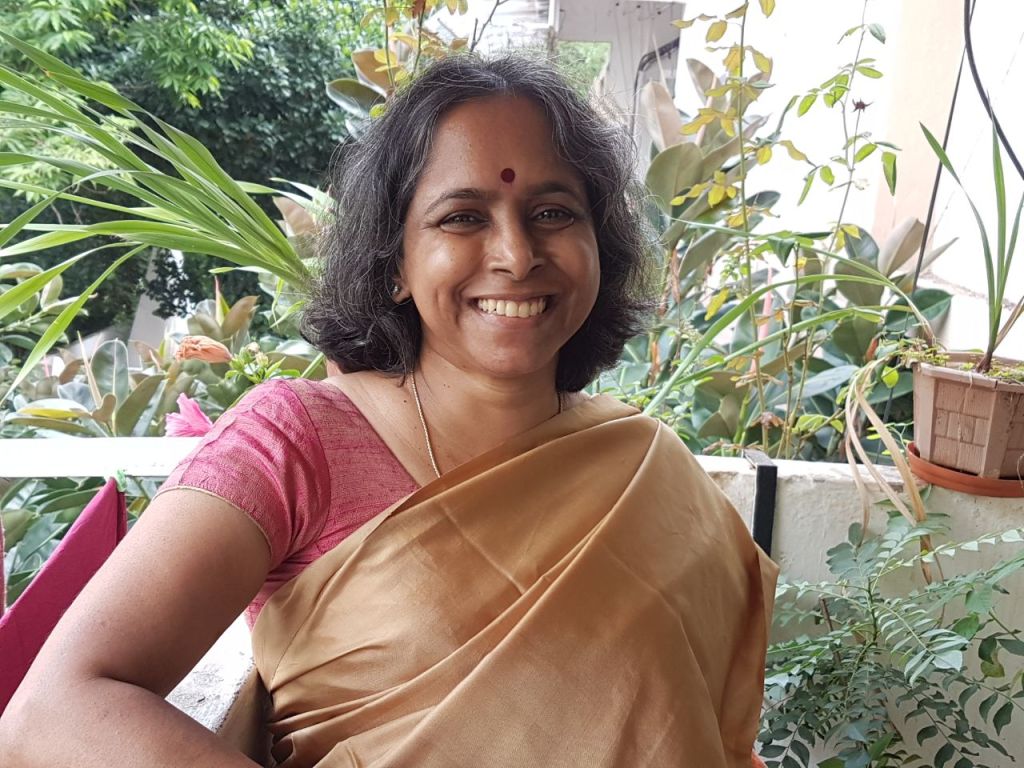
By Anasuya Bhar

In the beginning it didn’t seem very serious. Actually it was a relief from a schedule that was really taking a toll on my health, both mentally and physically. And seriously, I was just imagining a kind of welcome break, like we have as an extension to the summer holidays in schools and colleges, in our state. Only that it wasn’t summer yet, then. But the first fortnight blended into a strange and unknown phenomenon called the lockdown.

We had started stocking up on our essentials and after the first panic attacks, were slowly settling in to a household sans working people, sans the exigencies of school, college or office, even sans visits that were occasional. The house around me slowly endeared itself anew as our home, corners were noticed, the covers of dust gone and gradually I began to feel a new sense of belonging.

This was a place that I had actually neglected in the mad rush of everyday life. But even walls, pictures, bedsteads, floors and cupboards have stories to tell. The ensuing silence, apart from the urgency of the patrol car or the daunting ambulance cries, had a general vacuous quality about it. Nevertheless, in that apparent vacuum, people like me, who settle in somewhat well to a walled calmness and insularity, often got lost in the years gone by. The wall was almost necessary to get away from the soaring statistics or unnerving pictures of death. Horror was, and is, all around, but if one needs to maintain sanity, one must, simply must look elsewhere.

The past few months have been a time for pleasant ruminations. I was going through my father’s memoirs. My father is an artist by profession, and has almost reached his eightieth year. What was happening effectively, through the reading process, was that the memories made me go back to a past where I too, was no less a protagonist than my father. When I was born, my father had already toured half the world in connection with art education, or even by dint of exhibiting his own works, and I featured midway into the story. For me the exercise was proving to be rewarding in a different manner, it reminded me of those incidents which were now so far away. Like the corners of my home, it seemed that the corners of my mind, and most gratuitously so, were being lit up, quite vividly. And now I too have a story to tell.

I was born into a world where colours, canvasses, the easel, spatula and brushes were as integral to my existence as food, or toys or stories. Ever since I can remember, I remember my father engrossed in his work-table with his creations.

In Pune, Maharashtra, where my earliest memories were founded, Baba* began experimenting with pencil. He made small drawings, sometimes realistic, sometimes fantastic, sometimes abstract. A part of the dining table, in a largish kitchen, served as his studio space in an otherwise cramped household with a toddler. He came home from work and after a quick dinner worked till the late hours of night. This same pattern continued for a long time well into the years when we returned to Calcutta in the eighties of the last century.

By then I had grown up and would watch him from a distance. He would be so engrossed in his work that he would hardly be conscious of anyone’s presence beside him. He usually made a ‘layout’ for his drawings. Usually, a layout would be a rough sketch on white paper with a blue or black ball point pen. He would sometimes, make several copies of this, in various proportions, sometimes singling out details or magnifying and diminishing other aspects as his temperament suited. At times he even cut and pasted paper into the layout in order to produce a collage as well as to get the feel of totality of a big picture. This was then, generally his working method, where the layout study would almost be a miniature of the original work.

In case of pencil drawings he would next take a large ivory board, of the Japanese variety, usually procured from G.C. Laha, or Kalpana, a shop in South Calcutta. The layout would be reproduced on this ivory board with such expertise that I would watch spell bound. Effortlessly, the lines came out in dark graphite pencils on the white board. The eraser had no role in this performance. The bold outlines would take shape intensely, while Baba poured over them for several hours. When there was much detailing to be done, he took a few days to finish one work.

Lines have always been very important in Baba’s works. The lines have to come correct; only then would the form emerge. That done, the other details would be worked upon, the folds of the apparel, for instance, the drapes. Years later, while studying Aristotle, I realized the truth of this same analogy while the philosopher said that plot was more important in theatre than the character.

Baba’s canvasses usually came home framed. Very rarely did the rolls and the frames arrive separately and we sprawled on the floor trying to get them stapled together! The first thing that Baba did with the canvasses was to fill them up with basic colours like red, green, blue or yellow, covering the white surface totally. He said that this would give the canvas a ‘body’ to support the colours of the painting, later. Once dried, he would begin, mostly one canvas at a time, perhaps two, but never four or five at a go. He would first make the line drawing, with a bold brush. He would then fill up the form, whether of a human figure or an animal, with basic blurbs of colour, in a flat unidimensional surface. The detailing, the shades, the lights, the perspectives would come much later. Baba has generally worked in the realistic, at the most cubist tradition in oils, never in the impressionistic mode.

An oil painting usually takes days to complete, trying to arrive at the exact form and thickness. In his works, he sometimes left faces without the regular features of eyes or the nose, or ears, or even the mouth. A naïve viewer, I often asked him, ‘why did you not draw the eyes, nose or mouth?’, to which he answered, ‘No, it is better to imagine them.’ And so one can. The form is so powerful that one has no difficulty in imagining the features in a blank face; it also gives the viewer an autonomy and freedom that is very different from the coercions of an imposed reality. Baba had the habit of changing his oil paintings several times. He still does; he ‘touches’ them up in efforts of improving them. Sometimes, a drawing would be wholly disowned and consigned to the basket, and a painting would totally be wiped off. Such works are totally lost to the world now.

One such work was the painting of a tramp. Cast in realistic mode, and dressed in western wear, the tramp was one who materialized slowly and painstakingly, in front of me. I grew to like it through the many alterations it suffered, through the several changes of its attire, until, finally I discovered, much to my chagrin, that the painting had been totally wiped off to make place for a completely new one! I felt rather sad at this unexpected end of the tramp, although the painter never rued his loss. In fact, the world would never come to know of the tramp’s existence beyond my memory or Baba’s.

To see a painter work, without intruding on his ways, gives a very different perspective to his art; different from the viewer, the collector or the critic. Here one gets to see the formation, which suffers several changes, and many revisions. A painter’s craft is always in flux and chaos, it only evolves through considerable pain, and is replete with the pangs of childbirth. The painter’s craft is hardly visible to the world, in art galleries or in the collector’s rooms; neither is it ever written down. The painter’s craft is perhaps revealed, occasionally to a simpleton like me, who found myself staring in awe at whatever he did. I hardly ever tried my hand at it. Now having migrated further off from the painter’s studio, both literally and figuratively, all I can do is to visit the corridors of my mind to reconstruct those once familiar, abundant and dear images.

Anasuya And her Baba

*Baba is my father Tapan Ghosh, a veteran artist and continues to paint and write in his Salt Lake home at Kolkata, India.

Dr. Anasuya Bhar is Associate Professor of English and the Dean of Postgraduate Studies in St. Paul’s Cathedral Mission College Kolkata. Dr. Bhar is the sole Editor of the literary Journal Symposium http://www.spcmc.ac.in/departmental-magazine/symposium/, published by her Department. She has various academic publications to her credit. She is also keen on travel writing and poetry writing. She has her own blog https://anascornernet.wordpress.com/.

.

PLEASE NOTE: ARTICLES CAN ONLY BE REPRODUCED IN OTHER SITES WITH DUE ACKNOWLEDGEMENT TO BORDERLESS JOURNAL.

Categories
Nostalgia Poetry

Four Poems

By Matthew James Friday

Her Prize

Our Nan Connie had inexplicable luck,

she could win a prize in any raffle. A randomly

plucked ticket always struck silver or bronze.

.

My mother had no such luck. We laughed

at her leaden tokens, while Nan piled up

perfumes, food baskets, ribboned condiments.

.

One fabled day at the seaside arcades Mum’s luck

finally cashed-in. A year’s bottled tuppences fed

into the game that tongued them over lips,

.

some back, most gulped down. It was the taste

of luck we slobbered over. 20p for three goes

on the hand-grabber game, the slippery claw

.

that always let slip. Mum’s last attempt: clunk!

The claw suddenly snaps off its arm and crashes

to the base, flailing fingers in the collection tray.

.

Giggling, Mum handed the limp claw to a teenage

manager, his eyes widening with wonderment.

Mum claimed her prize: a lasting family myth.

Winning Hands

Sometimes the most fun we had at Christmas

was when every tipsy adult could be coerced

into a seat at the table for card games. Nan

and Mum presented their collections of two

pences, gestated by months of quiet collecting.

Nan shuffled the cards, revealing hidden talents.

Grandad prepared his pint and promised not

to cheat, which he did, outrageously. So funny

to my brother and me, but less as we grew up

and he played less despite our begging. Back

to the card games. Pontoon was the favourite

and could last hours, bronze coins shuffling back

and forth, cards hiding under the table, a break

for cake. For a few priceless years, we prayed

for 21, always laughing – that was the best hand. 

Years on we continued to play but the table

featured fewer players as life’s random gambles

took its toll: ageing adults and evening fatigue,

sudden cruel illnesses, empty chairs. No chance

now we can ever be reunited for another game

though my childhood was dealt a winning hand.

Blue Curacao

For Glynn

‘Go on boy! Go on!’ cries the butcher

waiting nervously at the winning post,

punching the air as his greyhound,

Blue Curacao, streaks along the arterial

track. ‘Go on! For me, boy, for me.’

.

All week he’s up to his elbows in joints,

loins, portions, quick cuts, friendly manner;

as tender to customers as he is to meat.

The betting slip in his bony hands drips

with sweat. ‘Come on! For your old man!’

.

Suddenly the crowd cries. ‘Come on boy!’

The butcher’s heart thumps hard.

Here come the hounds. ‘Come on boy!’

Voice hoarse, lungs straining for air.

Here they are. Blue Curacao’s in the lead!

.

Like a flash of steel, the sliver of meat

and hard muscle pumps past Glyn.

‘Come on boy! For your old man! For me!’

Blue Curacao slices through the finish line.

The butcher chops the air triumphantly.

Birdman

School assembly we flocked

to the fanfare of a rare treat:

Birdman. Superhero simplicity.

.

Perched on stage in armoured

overalls, behind a line of cages,

beaks poking out. No memory

.

of the actual man – a beard,

perhaps. It was all about birds

of prey: the hawk on his arm

.

with its hungry globes, slowly

creaking beak, tensing claws.

Volunteers called up. No way.

.

Most impressive were the owls.

We learned of how stories misled

us to believe in too-wit-too-woo.

.

We oohed at the snowy owl

as she arced her white head

all the way around childhood.

.

When her white wings opened

and she flew across the hall,

everyone ducked like mice, cries

.

of glaciated fear. Mrs Hanlon,

shaking her sensible headmistress

head, but the damage was done.

.

I would always love owls now.

Birdman packed up the birds,

squawking protests from us all as.

.

We flapped out to the playground,

waved Birdman away and became

the hawks and owls of stories. 

.

Matthew James Friday has had poems published in numerous international magazines and journals, including, recently: All the Sins (UK), The Blue Nib (Ireland), Acta Victoriana (Canada), and Into the Void (Canada). The mini-chapbooks All the Ways to Love, Waters of Oregon and The Words Unsaid were published by the Origami Poems Project (USA).

Website:      http://matthewfriday.weebly.com

.

PLEASE NOTE: ARTICLES CAN ONLY BE REPRODUCED IN OTHER SITES WITH DUE ACKNOWLEDGEMENT TO BORDERLESS JOURNAL.

Categories
Nostalgia Poetry

Songs of Seasons

By Amita Ray

Mahua Tree
Spring Revisited

Memories barge in wayward spree of renewal

tipsy with fragrance of Mahua

wrapped in indolent leisure

i inhale spring at sunset’s brink.

Palash Tree

The Palash tinged days, hyphenated silence

scroll down in ebullient patches,

a distant cuckoo’s note

overpowers a grove of Neverland

diffusing vignettes of joy

in constant ebb and flow—

the sprawling backyard of my eyes enlivens

stealing shades from pristine palette.

.

          The spring in me lives

       a framed glow of Gulmohar


Gulmohar Tree

*Mahua : An Indian tree which has nectar rich flowers blooming in spring from which an alcoholic drink is made.

*Palash, Gulmohar: Trees with blooms of red and orange respectively.

A Monsoon Song

A day long pitter patters on my window pane

alternate cascading torrents battering down

occasional lulls,

a ‘plop’ here,

a ‘splash’ there,

a perfect diurnal sonata.

.

Night descends, darkness looms

the rain hums a mild cadence at midnight

in keeping with rhythms

‘chirp chirp’

‘croak croak’–

drunk in nonstop sedative I tip toe

reach the riverbank

my paper boat anchored

the river in spate

long washed away a childhood

in deluge of tear ravaged survival.

.

 Amita Ray is a former associate professor in English based in Kolkata.  An academic of varied interests she is a published translator, short story writer and poet. She has two books of translations to her credit.  Her short stories have been published in The Sunday Statesman, Cafe Dissensus, Setu and other on line magazines. A collection of her short stories is due to be published soon. Her poems have been widely published and  featured in anthologies. 

.

PLEASE NOTE: ARTICLES CAN ONLY BE REPRODUCED IN OTHER SITES WITH DUE ACKNOWLEDGEMENT TO BORDERLESS JOURNAL.

Categories
Nostalgia Stories

How Blue is your Sapphire

Relive the terror of the 2008 Taj Mumbai attacks in this gripping nostalgic retelling by Bhavana Kunkalikar

I wish I could turn back the clock and bring the wheels of time to a stop. Turn it back to the days before the nightmare began; a nightmare that lasted three dreary days.

It was my parents’ 25th wedding anniversary. To mark the occasion, I booked for them a special dinner and an overnight stay at the Taj Hotel.

Over the last few days, food and water and sleep ceased to be the needs for survival as I sat glued to every fragment of the television news which named all the victims of the hostilities. My parents were famous local authors and often in the news, but this was probably the only time I did not want to hear their names on television.

Also, over the three days came numerous phone calls from all my relatives, asking whether we all were safe from all the inhumanity. Unable to face my parents’ absence, I reassured them.

“How sad is all this! These terrorists will be cursed to hell, I tell you. What have we Mumbaikars done to these Pakistanis? A three-day siege! How sad is that! I haven’t even eaten anything since this has started, you know.” said an aunt as a pressure-cooker whistled in the background and I hung up.

Today was the third day of the siege. The early morning news promised the capture of the attackers. A ray of hope finally. I obviously knew that this would have an end but the feeling that it was all happening and finally I would meet my parents was heartening.

As our troubles now seemed bleak, I made a much-needed cup of coffee for myself.

According to my mummy, coffee was a wonder-drink. It worked again.

I moved back to the armchair with my coffee and covered myself with mummy’s blanket. This armchair was dad’s “favorite place to be” and was hence out of bounds for anybody else. Thus, in his absence, I and mummy would take turns to sit on it. Not because the armchair was anything special but probably because forbidden fruits are tastier.

And even today in his absence I had spent a good three days on this chair. Only half-hoping to see dad storm through the door and ask me to “leave the chair alone!”

And the blanket smelled heavily of mummy — as if it still had a piece of her in it.

Soon but not enough, the TV headlines blared “It’s over!” signifying the capture of the last of the attackers.

Well, it wasn’t over, was it? Uncountable lives and families were disrupted in a matter of three days by a bunch of men who claim to do this in the name of their religion. A war they started to “protect their God”. It really wasn’t over.

But now wasn’t the time to deal with that. Now was the time to leave the warmth of this house and face the heat of those enemies. It was time to confront the destruction suffered by the city I grew up in. It was time to finally discover the voices behind all the screams I heard those nights. But all this was what I was frightened of.

And yes, it was also time to get my parents back home.

I changed from my pajama suit to the ever-duty jeans and t-shirt and shut the television in what must be the first time in three days. Gulping down the cold coffee in one sip, I rushed to the door.

The slight sway of the armchair just before I locked the door shut, made me feel the armchair was worth nothing without them. The house could never be my home without them. I was nothing without them. We all needed them.

And I did not need to spend another night enduring those screams without them.

As I hit the road with my scooter, a gloomy winter sky welcomed me. At 8.30am, the sun did not shine as brightly. It somehow seemed as if it did not have the need to shine anymore. As if the happenings of the previous nights had left it all hopeless. It seemed to rise only because it had to, not because it wanted to. Even the sun had run out of options.

This train of thoughts ended abruptly as I brought the scooter to a sudden halt. I had nearly missed hitting a dog as it scampered away screeching.

My gasp of surprise stayed stuck in my throat. Hurting another innocent being even unintentionally was a shuddering thought.

And there they were. Having a “well-deeded” massacre.

After twenty minutes of what seemed to be an obstacle-less ride, I reached the hotel. And the sight there was spine-chilling.

One of the floors of the building stood ablaze. Ablaze not in fire, but in smoke. The pictures of the burning building doing their rounds on the television news left little to the imagination.

One couldn’t help but wonder. What must it have been like to be there? Enjoying a lovely meal and to be suddenly attacked and shot at by complete strangers? What must it have been to realise that this would be the last minutes of one’s life? A topsy-turvy life to be ended by a reckless bullet?

What would it have been like to shoot all of them down? Did the attackers not think of how those ‘hostages’ had a family to go back to? Could they not imagine how it would feel if a bunch of strangers were to kill one’s family?

Tearing away my gaze from the day-old smoke, I saw a group of khaki-clad men trying their best to protect the building’s entrance. Policemen.

Another group of people, a definitely larger one, were trying to force their way in. A wave of immense grief seemed to run through this crowd. Crying and howling with sudden angry outbursts, they appeared to push against the policemen with all their strength but not quite. The victims’ families.

More hopefully, the survivors’ families.

The atmosphere was tense with these opposing forces. Even with all the noises around, the air weighed heavily of deafening silence.

It took me a moment or two to realise that I stood surrounded by striking contrasts.

As I stared wide-eyed at the scene around me, I noticed a young lady in the crowd. Must have been about the same age as me. She had just stopped in her attempts to be heard, to catch her breath and wipe her rolling tears away. As she did so she caught my eye. Something about my face made her give me a sympathetic smile before she continued with her protests. Instinctively, my hands searched my face.

I was crying.

With my spent tears I made for one of the benches. With my back to the Gateway of India, I knew that this bench, like most people, had experienced happier memories; much unlike this new one.

Quite a few years ago, when I was ten years old and when we were financially not so comfortable and when even a breakfast in Taj would be an unaffordable luxury and when mummy’s coffee obsession had just started, my parents and I had come to visit this place. It was their twelfth wedding anniversary then.

I loved balloons. And I still do. And a visit here bought me loads of them. When I say ‘loads’ I mean one each for me, mummy and dad. I had then thought that they would get those balloons for themselves because they liked playing as much as I did. The fact that I was the only one who’d play with all those three balloons was a different matter.

That particular winter evening, the winds were at their strongest. A few gusts later, the balloon in my hand flew away and drifted away into the wind. I ran after it as my parents ran after me. But the balloon turned a deaf ear to all my yells and was soon out of sight.

As I gave up the chase and stood in sadness, a hand with another balloon came in front of me. I looked up to see it was dad with his balloon.

“Take this,” he said.

“But it’s yours,” I replied.

“We’ll share it then!” he said immediately as his twinkling eyes closely resembled his sapphire finger ring.

Being under the impression that dad too must love his balloon a lot, this offer seemed like a big sacrifice to me. I mean, there was no way I would share my balloon with anybody. This made dad’s action a generous one for me then.

That’s probably what they meant when they said, ‘sharing is caring’.

The sapphire ring? Dad says he inherited it from his father who got it from his father. As I was the only child, the sapphire would next be mine.

“You’ll have it when the time is right,” is what Dad would say whenever I’d ask him about the ring.

Dad had his own unique way of seeing things. To him, everything and everyone had some mysterious air around them. To me and most people who knew him, Dad himself was worth a secret or two.

The sapphire ring was amongst the many objects of fascination for me.

“This ring, you see? It dates back to my great-grandfather. Some say he was gifted the ring by a king of his times. Others say he won it in some gambling game. But no one knows for sure. But what we do know is that sapphires of this shade are quite rare. Worth a fortune maybe. They say that darker the stone, the heavier it is. And impure too. The brighter it is, the lighter and purer it gets; that goes without saying. It’s pretty much like our conscience, you know.” Dad would often say.

Holding back my response, “No Dad, I don’t really see”, I would simply nod and further admire the ring.

It was beautiful. And it was indeed a spectacular blue. A blue so bright that it would put the best of skies to shame. And the cuts at the stone’s edges only helped the brightness furthermore. One could see directly through the stone which was considered a proof of its purity. But it also would reflect some amount of light. It truly was beautiful. But in no way did it represent the “conscience” to me, no way.

As a tiny smile lit up on my face, a harsh cry snapped me back to reality.

After another thirty minutes of unyielding wails, the crowd dispersed and settled down on the benches around me. As minutes passed, the cries reduced to occasional sniffles.

On the nearby benches sat a man in a prayer topi while another elderly woman was fiddling nervously with her rosary beads.

But that makes no sense, does it? Those terrorists and their organizations have always claimed that their “works” were to protect their God, their Allah. Attacking people of his own “clan”, like that topi-wearing fellow’s family, is what makes no sense at all.

In fact, I think this whole discrimination thing is all nonsense. Discrimination amongst religions and castes, I mean. But no — I’m not against religions, not at all. My religion makes me who I am; our religions, faiths make us who we are. The problem, I daresay, is that we tend to think that our religion is better than any other.

Because it’s not.

Everyone’s religion is just as good, or as bad as any other. That’s probably what they meant when they spoke of ‘equality’ then.

Yet another howl brought me out of my trance. Except this howl was a happy one.

The policemen had finally given us way inside the Hotel.

We all ran towards the entrance but were suddenly halted by the scene inside. The usual cheerfully well-lit area was replaced by a dull, bloodshot scenario. The air in here was even heavier.

One step at a time, the crowd dispersed, following its own direction.

Detaching from the crowd, I wandered pointlessly amongst all the expensive debris. It was then that I noticed it.

A few feet away from me on the floor something sparkled brightly, reflecting most of the light that came through a broken window.

Half-knowing what it was but half hoping it wasn’t, I walked towards it. And I picked up the sapphire ring.

Just then a scream echoed in my ears; the scream that’s been haunting me the following three nights. Only then did I realise. It was my mother’s scream.

I looked around to see the members of the crowd wandering as pointlessly as I did. Neither of them even showed any signs of having heard anything.

The heart denies what the brain already knows.

Pocketing the ring, I wordlessly left the building and came back to my scooter.

After one thoughtless moment, I wore the ring on my left index finger. This was NOT the right time I was waiting for.

Like the conscience, he’d said. Our conscience shouldn’t be impure, to say the very least. If the conscience has its taints it gets heavier, which makes living quite uncomfortable. Agreed. One’s conscience should be transparent, yes. Nothing to show, nothing to hide. Very true. But reflective? By taking inside all the goodness and also giving back the goodness received. Maybe that’s what he meant. Maybe I do see.

As the noon sun now poised itself, the warm winds ruffled my hair and tears on my ride back home. All I could do now was to keep hoping; hope that I’ll live with a gaping void, hope that justice will be finally served, hope that I would never let the sapphire darken.

Because that’s what mummy and dad would want their Afreen to do.

Bhavana Kunkalikar, a pharmacy graduate, juggles between writing and her career.

.

PLEASE NOTE: ARTICLES CAN ONLY BE REPRODUCED IN OTHER SITES WITH DUE ACKNOWLEDGEMENT TO BORDERLESS JOURNAL.

Categories
Musings Nostalgia

Paper Trail

by Julian Matthews

I remember when I was eight or nine, dad bundled us children into the Morris Minor 1000 and drove us to Port Klang. We were sending back a distant relative — an uncle with white hair — to Sri Lanka, an uncle my mother never liked hosting. She cursed him under her breath for being a kanjan,  a word which even I knew back then meant stingy.

But we kids were excited to see the M.V. Chidambaram, an ocean liner, the size of which, we were told, was “several football fields” in length.

We were in good spirits, trying to pronounce the multisyllabic Chi-dam-bar-am with fake Indian accents and exaggerated headshakes, giggling excitedly like schoolboys did when the ice-cream man showed up outside the school gate; despite knowing that two adults and five children in a car no larger than an oven on wheels — and just as hot without air-conditioning — would stifle us to near-death even before we reached our destination. Unlike the Titanic, I thought, there would be no iceberg to end the suffocating mugginess of being squished like proverbial sardines in a tin can with the added ambiguity of a crowing cockerel on it. Perhaps it too was signalling to be freed from its labelling, as if to say: “No chickens in here, just us sweaty fish!”

(Ironically, the ship Chidambaram, which boasted of air-conditioning, was decommissioned a decade or two later after a fire broke out onboard fatally killing some crew and passengers before limping into a port in India)

The journey to Port Klang was uneventful — maybe we stopped for a fresh coconut respite — but what was memorable was turning the corner and gasping at the sheer size of the ship when it first came into view as dad parked the car. We tumbled out in awe.

By size, it was the closest thing to the Titanic, albeit less grand, but colossal by any measure, even bigger than the Seaview submarine in “Voyage to the Bottom of the Sea, a show on our tiny black-and-white TV back then. I wondered, deep within its bowels, if the ship might still contain a Flying Sub that could pop-out and fly, like its name implied, out of the sea and into the sky with the oh-so-cool David Hedison as Captain Crane in the helm.

David Hedison as Commander Crane

I remember my paper-folding skills were quite advanced back then and I could make a flying sub, apart from cranes and sampans, from watching Origami With Robert Harbin every Sunday.

Unfortunately, I was not allowed on board, to find the flying sub, although we did get up the gangplank, like pirates off to a raid,  only to be shooed away for being too small, or maybe, not fulfilling some height requirement — as while boarding a Ferris wheel at a funfair.

 Or, maybe, there were just too many of us and the captain was worried we would cut ourselves with our cutlasses — and fall overboard.

We were reduced to just waving from afar portside to our departing relative — just like at the Subang Airport in the 1970s — but with one exception. I was introduced to the odd tradition of holding onto a roll of toilet paper. Yes, people on board were flinging toilet paper at us, while they held on to one end of the roll, by the ship’s rails.

I was allowed, tentatively by my older siblings, to hold on to a rapidly uncoiling roll as the ship pulled away, making sure it rolled off uniformly — like fishing lines tied to the end of a kite that picks up in the wind — although much more fragile. The slightest tug and it would snap. I held on gingerly until it sped up and reached the roll’s end and, with a final sad tug, did snap. And I watched as other rolls around us snapped, one by one, the ends curling in the wind in almost slow-motion waves signifying the metaphorical link that bound those on land and those on sea were now temporarily cut. With a turn, the giant ship, its foghorn bellowing like a hoarse whale, was gone. We then gathered the remnants of the paper, as I recall, half of it already in the waters, and discarded it at a nearby bin. Or maybe, we were delinquent and just left it. Environmental concerns were not top priority those days.

I was reminded of that tenuous, unfurling link of paper, as we viral-vulnerable humans on spaceship Earth today, hold onto the threads of this unfolding drama before us. Like the ship of those days, Life is floating away, severing our ties to the past and snapping us into a New Norm. Our carefully paper-parcelled lives up to this point, which was always anchored to some reality, even though we indulged in escapist divergences or substance-fuelled partying, are now losing its moorings as days float into weeks and weeks submerge into uncertain months. We are now unravelling like so much toilet paper, untethered from somewhat stable ground, into a surreal journey to unknown ports. Even the onboard entertainment has started to repeat, and the binge-fest of  “free” entertainment has lost its novelty.

There is a quiet panic in the pandemic and I-told-you-so environmentalists are tut-tutting like lizards on the ceiling of our caged abodes, as if to say we are now paying for the sins of decades of single-use waste for all those portside farewells.

Hoarding toilet paper is now shamed online and deemed criminal. Even paper money has been dethroned so much so all delivery must be served “contactless” — as if that were even possible. And we must stand a reasonable six feet away from each other, or two meters if you prefer, the 17.12 additional centimetres making all the difference, or microdroplets will kill us.

We risk collapsing social distances through free Zoom-ing screens, even though we knew all along anything free — free lunch, free email, free wi-fi — always came with strings attached.

We connect relatives at new births, or funerals, through Facetime, changing the paradigm from womb-to-tomb to cradle-to-iPhone-to-iPhone-to-grave.

But when you cry, you still cry alone.

All “meetings” are oxymorons, even though the same persons keep showing up. But at least they aren’t breathing the same oxy-gen. In fact, they never did.

Some of us are on the verge of snapping, for real, and yearn for an avenging glove to restore our old masks. We harbour hopes — outdated pre-snap, pre-pandemic, even pre-pubescent beliefs — like nostalgic fools hanging onto false memories, that things would somehow return to the way it was.

But this ship has left the pier. The ground below us has shifted. The shore has permanently changed.

We look to the stars for navigation but they have faded and lost their lustre. Even the moon has paled and gazes at us and sighs. We can never, ever go back in time to fix the broken promises to ourselves — our fragile humanity — and to Mother Earth who hosts us.

Like that distant relative, we are overstaying guests who have lost our welcome.

We can only move forward by paying it forward.

Nature calls, and yes, we’re out of paper.

Julian Matthews is a former journalist and trainer currently exploring expressing himself in poetry, fiction and essay forms. He is based in Malaysia.

.

PLEASE NOTE: ARTICLES CAN ONLY BE REPRODUCED IN OTHER SITES WITH DUE ACKNOWLEDGEMENT TO BORDERLESS JOURNAL.

Categories
Nostalgia Poetry

The house that let us go

                                           By Geetha Ravichandran

The house that let us go

The goat would sneak in through the fence

and chew up a bunch of honeysuckle flowers.

But we had to open the gate

to show it the way out,

as it would bleat on — clueless.

The rose, just didn’t want to grow there,

and had to be given doses of strong coffee

till it was coaxed to put out a single bloom.

.

The brood of banana trees

thrived, although neglected

and would anyway end up on the plate,

as a boring meal.

The mangoes appeared every summer

but were so sour,

that they had to be pickled and put away,

even the fruit thieves would have none of it.

.

There were seven coconut trees,

planted at an auspicious hour

their great fronds, grim and ghostly

in the sticky, brooding night air.

It was the jasmine that climbed up a trellis

blooming every evening,

its fragrance –lilting like a melody,

that made the house special.

.

But still the house was a trap,

in which we were buried by expectations

of well-meaning parents.

The sharp-tongued women next-door,

peered over walls and ticked us off

for playing cricket on the streets.

Escape we did – vaulted to freedom,

fuelled by our whims, aided by liberal market winds.

.

Now, the old squat house, built on a shoestring,

has been gobbled up by a sleek building

and a cosmetic patch of periwinkle flowers —

graveyard flowers — as father would say,

is the only product of the soil.

The beauty, that we had barely acknowledged

now appears in streaks of memories.

We are gentler, when we breathe free. 

.

Homecoming                                                                                                                                                                                                    

What have you done to the room?

A row of silver and another of golden lights

glittering through a wooden panel,

in manic eagerness to welcome me,

shelves filled with a display of a fleet of ships,

as if to jolt my memory to the spells of sea-sickness.

Where are my plants by the window,

my low chair and the filigree silver peacock?

.

So many things I love,

have been swept into a mound of dust

and with it go my carefully crafted thoughts

of putting aside, the quarrels of the past.

Nothing has really changed,

it has only disintegrated into a bigger mess.

.

And then suddenly, springs the fragrance of white lilies,

stuck hurriedly in a vase, looking thoroughly sheepish.

.

There is promise in the morning air,

as I sit down to drown my thoughts

in calming breaths, when you come up

attempting to mask your boss -of –the- house stride

and as your first compromise,

to the worthy goal of joint-decision-making

ask helplessly- ‘This bottle of medicine is empty,

shall I throw it out?’

.

Geetha Ravichandran is a bureaucrat, presently posted in Mumbai. It is writing, that she most enjoys doing. She has written contemplative articles for Direct Path and middles for Deccan Herald. Her recent poems have appeared in Reading Hour and Mountain Path. One of her poems has been included in the recent anthology, Hibiscus published by Hawakal publishers.

.

PLEASE NOTE: ARTICLES CAN ONLY BE REPRODUCED IN OTHER SITES WITH DUE ACKNOWLEDGEMENT TO BORDERLESS JOURNAL.