By Meenakshi Malhotra
Whose story are we recounting when we attempt to narrate history? An unexamined acceptance of anthropocentric biases have placed man at the centre of historical narratives and historical accounts. The time has come when this assumption of man’s centrality is being challenged and overturned. Both posthumanism, a concept that directly challenges man’s centrality and planetarism[1], which sees the interconnectedness of the natural, animal and human, have displaced the human entity from its position of unquestioned and unquestionable centrality.
Amitav Ghosh’s latest novel, Ghost Eye(2025), made one go back to the earlier novels in the series with a similar cast of characters, Gun Island (2029) and The Hungry Tide (2004). Like many of his other novels, these works also encapsulate the themes that Ghosh communicates with increasing urgency in successive novels-climate change and man’s hubris which has catapulted mankind into an increasing tailspin hurtling towards ecological disaster.
In Gun Island, Ghosh asks a whole series of questions which make us look at history differently. What if history is understood through the lens of migrations and mass movement or natural disasters, through unexpected bird migrations, beaching of dolphins and the shifting movement of oceanic boundaries? Is there a pattern to extraordinary events, coincidences or are they a matter of pure chance? Is time always linear? What if temporality works in a loops? What happens when we are faced by recurrences and presentiments?
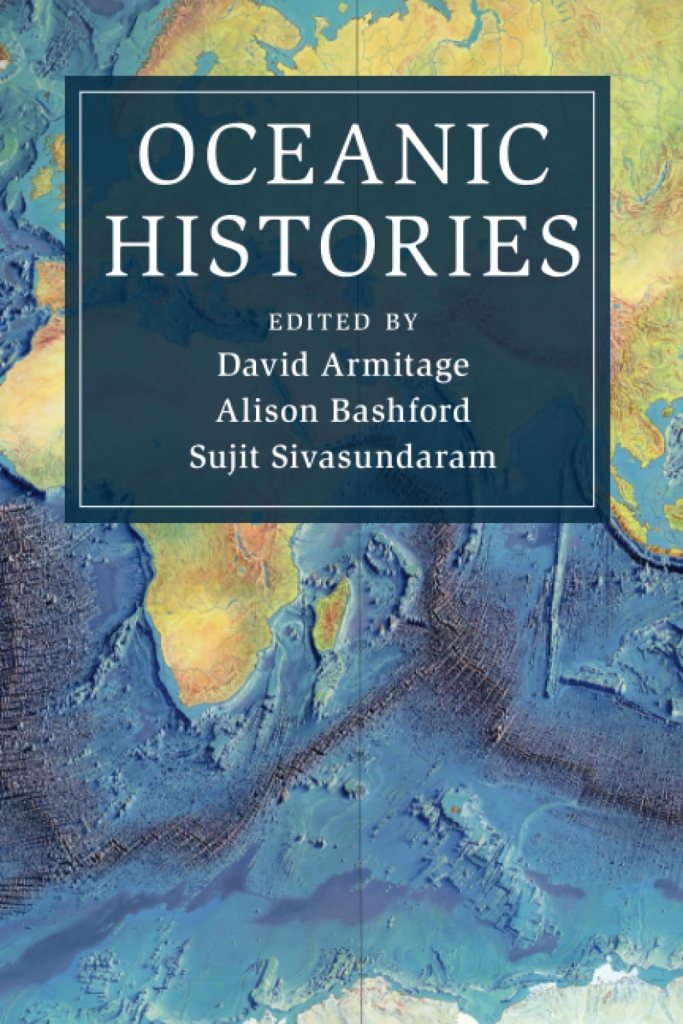
What if we review and revisualise history not as bounded by national boundaries but a more fluid and flowing substance — water, sea and water bodies? Some contemporary books like Oceanic Histories (2017)offers the first comprehensive account of world history focused not on the land but viewed through the seventy per cent of the Earth’s surface covered by water. Tracing the histories and the historiographies of the various oceanic regions, the book highlights the links between human and non-human history and the connections and comparisons between parts of the World Ocean. If history is a set of geo-political narratives centred around land and its acquisition, why can’t we have histories of waterways? As a life-giving but also potentially destructive substance, water occupies a prominent place in the imagination. At the same time, water issues are among the most troubling ecological and social concerns of our time.
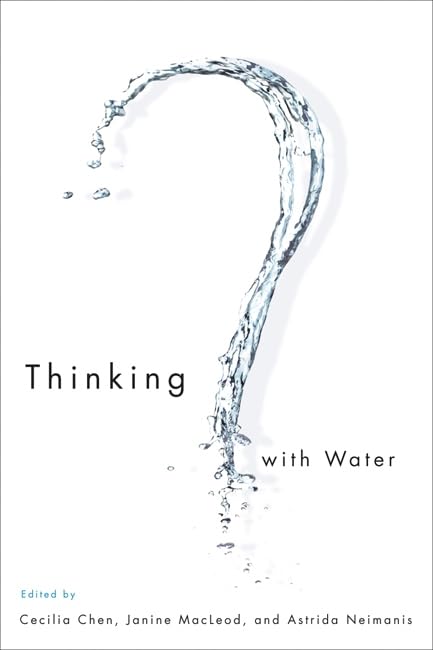
Water is often studied only as a “resource,” a quantifiable and instrumentalised substance. Thinking with Water instead invites readers to consider how water — with its potent symbolic power, its familiarity, and its unique physical and chemical properties — is a lively collaborator in our ways of knowing and acting. What emerges is both a rich opportunity to encourage more thoughtful environmental engagement and a challenge to common oppositions between nature and culture.
Thinking about history brings me to women’s history and the issue of international women’s day, which falls on March 8th. While the question of women’s day maybe a matter of individual opinion, the question maybe rephrased as “do we need a woman’s day” or “why do we need a woman’s day”at all?
Do we need it as a kind of affirmative action? Given the historic lack of a level playing field, it is perhaps a reparative action? Or is it a needed inclusive action, that reflects changes in social policy? Much as we would like to think along positive lines about women’s development and empowerment, the picture across the world is a grim one.
For those who feel that everyday is women’s day, we could perhaps recall the broader historical context. The IWD originated from early 20th-century labour and suffrage movements in North America and Europe, demanding better pay, shorter working hours and better working conditions.
Ideally , women and girls should have equal rights under the law, rendering them safe from violence, with rights to access education, livelihoods, resources, and justice on equal terms. When these rights are realised, the impact extends far beyond individual women and girls to their families, communities, and society as a whole. Research shows that gender equality delivers better outcomes across economies, health systems, peace processes, and democratic resilience. In this context, 8th March provides an occasion to recall how far we have come. It is also a necessary reminder of how far we still have to travel in order to ensure that women and other oppressed minorities get their fair share on earth, rather than direct their eyes to heaven.
It may seem a form of tokenism to earmark one day out of 365 days in the calendar as women’s day, but at least it’s a beginning where we could begin to reassess how much we take women’s roles as caregivers and nurturers for granted. Many descriptions of women are couched in a familiar vocabulary which views women as daughters ,wives and mothers, who are the backbone of the family, pillars of society, the glue that binds communities to each other and models of resilience and endurance. Yet this idioms of approbation do not protect women from harassment , abuse and gendered violence of many kinds; in Catherine McKinnon’s words , they are rendered less than human. When we begin to recognise women as human beings with agency, legitimate claimants of human rights and deserving gender parity and justice, we will probably not need International Women’s Day.

[1] A new subject that deals with the health of the planet
Meenakshi Malhotra is Professor of English Literature at Hansraj College, University of Delhi, and has been involved in teaching and curriculum development in several universities. She has edited two books on Women and Lifewriting, Representing the Self and Claiming the I, in addition to numerous published articles on gender, literature and feminist theory. Her most recent publication is The Gendered Body: Negotiation, Resistance, Struggle.
.
PLEASE NOTE: ARTICLES CAN ONLY BE REPRODUCED IN OTHER SITES WITH DUE ACKNOWLEDGEMENT TO BORDERLESS JOURNAL
Click here to access the Borderless anthology, Monalisa No Longer Smiles
Click here to access Monalisa No Longer Smiles on Amazon International
 Borderless