Odbayar Dorj writes of celebrating the start of the new school year on September 1st in Mongolia and of their festivals around teaching and learning…
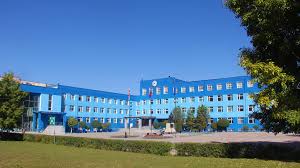
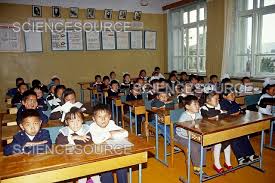
Mongolians are a people who celebrate festivals wholeheartedly and work with the same kind of enthusiasm. Among our many traditions, one of the most beautiful and meaningful to me is the way we welcome each new school year. In Mongolia, September 1st is not just the beginning of classes—it is a joyful national celebration for teachers and students. On this day, schools across the country hold ceremonies to mark the opening of the academic year. Students eagerly wait for this day, dressed in clean uniforms, their faces full of excitement. Traditionally, the new school year officially begins with a special lesson taught by the President of Mongolia, often about Mongolian script or history, which symbolises the importance of education and cultural heritage.
My own memories of this day are filled with music, excitement, and warmth. Unlike in many countries, Mongolian schools do not separate students into different buildings for primary, lower secondary, and upper secondary levels. Instead, everyone studies in the same school building, simply moving from classroom to classroom as they grow older. This creates a strong sense of community—older students and younger students share the same space, the same celebrations, and the same traditions. The ceremony usually begins with a speech from the school principal, followed by short performances by younger students. Songs about schools and teachers are sung, and the gentle melodies of the morin khuur—the traditional horsehead fiddle—fill the air. We sing, dance, and perform music to welcome the new academic year. Sometimes, I wonder how many other nations celebrate the start of school with such joy and artistry.
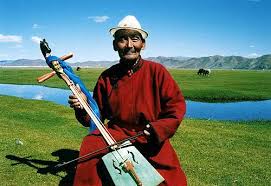
One of the most touching parts of the ceremony is the first bell ringing. This moment marks the official opening of the school year. First graders who are starting school for the very first time are given the honor of ringing a small handbell, while teachers line up their classes and lead them ceremoniously into the building. To ring the bell is considered a great honor, both for the child and their family. I will never forget the day my daughter entered first grade. She was chosen, together with a little boy, to represent all first graders and ring the bell. It was a chilly September morning, as it usually is in Mongolia. With one hand tucked into her uniform pocket to keep warm, she raised her other hand high to match the boy’s height and rang the bell. She was one of the smallest children in her class, but in that moment she seemed so brave and proud. That image remains clear in my mind even now—such memories stay with us forever.
For Mongolians, bells carry deep meaning. We even call our graduation ceremonies “Bell Ceremonies”. These are held for students finishing 5th grade (primary), 9th grade (lower secondary), and 12th grade (upper secondary). For 12th graders, the final bell has special significance: it is the last time they will hear the school bell as students before moving on to university or the adult world. That sound marks both an ending and a new beginning.
For teachers, September 1st is a day of joy. It is the moment we reunite with our students after the long summer break and see how much they’ve grown and changed in just three months. For students, it’s the thrill of seeing their classmates again. The entire month of September is a period of readjustment to school life, and it is followed in early October by Teacher’s Day, one of the few days in the year when teachers can celebrate their profession. Another beloved tradition in Mongolia is “Student Day.” On this day, graduating students—or, if the class is small, students from other classes too—take on the role of teachers for one day, while teachers become students. It’s a playful and meaningful role reversal that leaves deep impressions on both sides.
I still remember my first Student Day vividly. I was in 9th grade when my Mongolian language and literature teacher selected me to become a teacher for the day. It was the first time a lower secondary student had been chosen. I was nervous, especially standing alongside the older students from upper secondary school. I spent the entire night preparing, determined not to let my teacher down. On that day, I taught a 9th grade literature class. I was frightened at first, but the time passed in a flash, leaving me exhilarated.
The following years, I was chosen again—first as a biology teacher in 10th grade, then as a Russian language teacher in 11th grade. I participated as a student-teacher for three consecutive years. I especially remember the biology lesson; that day, I felt a special joy and excitement, a spark that would later lead me to choose teaching as my profession.
Years later, after graduating from university, I returned to school as a real teacher. During my first year at a public school, Student Day came again—this time, from the teacher’s side. My 12th
grade students drew lots to choose teachers, and a sweet girl named Khulan was selected to teach English in my place. She told me with a smile, “Teacher, you probably don’t have a student uniform anymore, so you can borrow mine tomorrow and join our class as a 12th grader.” The next day, the 12th graders handed us invitations, asking us to come to their class as students. Attached to each invitation was a class schedule for the day. When I put on the school uniform again, it truly felt as if I had traveled back in time to my childhood.
As a student, I used to think, “I can’t wait to grow up and start working. I’m tired of wearing this uniform.” But as a teacher, wearing it again brought back a wave of nostalgia. Returning to the classroom as a student for one day became one of the most unforgettable experiences of my life. On Student Day, everyone—teachers, administrators, and staff—puts on uniforms and attends classes together as “students.” The day is filled with laughter and playful mischief. Some pretend to be naughty students: interrupting class, asking silly questions, teasing each other. We laugh and call each other “bad students”.
At the end of the day, both the student-teachers and teacher-students gather to share their thoughts. This is always a moving moment. Older students often talk about how difficult it is to teach large classes and apologise for times when they had been troublesome. They express a newfound respect for their teachers, having experienced the challenges themselves. For us teachers, hearing this is incredibly rewarding. If there were a train that could take us back to our childhood, I think everyone would want to ride it. For teachers, Student Day is exactly that—a once-a-year chance to return to childhood.
For the past three years, I have spent September 1st, Student Day, and Teacher’s Day far away from Mongolia. At first, when I saw my friends’ photos and posts on social media, I felt a quiet envy. But at the same time, remembering these traditions filled me with warmth, pride, and a deep love for my profession. Throughout my life, I have met many wonderful teachers. Thanks to them, I have continued to learn and grow, always inspired by their example. These traditions, these bells, these memories—they are not just part of my past. They are part of who I am, both as a former student and as a teacher.
No matter where I am in the world, once a student, once a teacher—those identities live within me, carrying the echoes of September bells wherever I go.
.
Odbayar Dorj is an international student from Mongolia currently studying in Japan. Her writing reflects on cultural identity, personal memory, and the power of connection across borders and generations.
.
PLEASE NOTE: ARTICLES CAN ONLY BE REPRODUCED IN OTHER SITES WITH DUE ACKNOWLEDGEMENT TO BORDERLESS JOURNAL
Click here to access the Borderless anthology, Monalisa No Longer Smiles
Click here to access Monalisa No Longer Smiles on Amazon International
 Borderless