By Farouk Gulsara
The question is, why are we here? What are we doing, and what is expected of us? Is the purpose of our existence merely to continue the propagation of the species? Is there a higher calling to elevate our souls? Can we correct our karmic order to a better footing? Unfortunately, if only we knew where we went wrong last time, we could fix our past mistakes. Sadly, we do not. Is our presence on Earth to raise our species a level higher, whether intellectually or technologically, than a generation before? Is there a greater plan in the pipeline, to consume more and more, heading towards entropy? The less wise among us will be sure of their existence, convinced that this is a testing ground for more magnificent things to come.
Among the lower orders of species, it is a given that the biological reason for their existence is the perpetuation of DNA and the selection of the fittest. Most animals die shortly after laying eggs. Some, like praying mantises and black widow spiders, kill their mates after sex. Salmons lay eggs once in their lifetime, after enduring life-changing experiences to swim upstream, conserving all their energy for their one final trip to lay eggs and then die[1]. At this level, it seems that their raison d’être is to procreate. That is all.
As we climb the pecking order, women evolve to live longer. Some even reach a phase of life way past the cessation of ovarian follicles, a period called menopause. Only in a few species do the females have the luxury of relieving themselves of childbirth and caring for the young towards the latter part of their lives. Formerly, it was thought that only humans go through menopause. Now, we know that besides humans, whales, orcas, and chimpanzees also spend a significant part of their lives in the postmenopausal period[2]. Thinking about it, if the main purpose of life is to pass on DNA and then move on, why do they stay so long without trying to improve or spread the gene pool? It seems like a waste of resources. If it were only for procreation, it would clash with the purpose of existence. They might have to compete for limited resources.
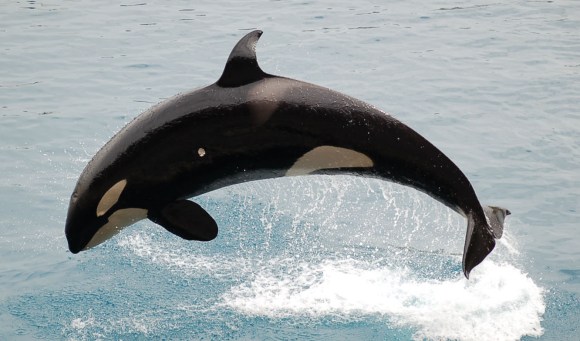
Behavioural scientists who have studied orcas and whales suggest that their pod structure is matrilineal[3]. The older members care for the ‘grandchildren’ to promote survival. Indirectly, they help ensure the continuation of the species. This is known as the ‘grandmother hypothesis’. Their presence leads to healthier and stronger calves for future generations. These older postmenopausal orcas possess a wealth of knowledge to guide the pod in making life-changing decisions such as where to hunt juicy salmon and where to relax in peace.
Elephants that live for a long time, up to around 80 years, can still reproduce quite late, even as late as a 65-year-old female. One may wonder whether inbreeding is a possibility since they live in communities. Fortunately, nature provides a solution for them. Bull elephants, after reaching adulthood, leave their community tribe — a practice called dispersal. They then join their bachelor friends and roam around sowing their seeds. Female elephants remain with their birth herd for their entire lives and do not go through menopause[4]. In the chimpanzee community, dispersal is carried out by the females. They leave their troop when their hormones surge to avoid inbreeding.
So, where does that leave us as humans? Are we evolutionarily programmed to spend a long time in the postmenopausal state? After all, our ancestors rarely reached menopause. Even as late as the 18th century, the life expectancy of a woman was between 35 to 40. Advances in medical care and safe childbirth have extended our lifespan beyond the expectations of our ancestors. It might be an evolutionary accident, but we have adapted to it. It also prevents intergenerational reproductive conflict, as we avoid competing with our daughters for limited resources and reproductive opportunities.[5]
If the continuity of a species is the primary goal of life, then postmenopausal women have fulfilled their mission early in life. Life in old age should be regarded as a bonus. Without a role in transmitting genetic material, they may indulge in pursuits that bring them happiness. They might be catching up on activities they could not pursue during the demanding years of motherhood. The vast wealth of life experiences and street-smart wisdom can be passed on to their children, if the young are willing to listen. They could also revisit their carefree teenage years, which were cut short by hormonal surges during youth and the burdens they carried.
Recently, it has been suggested that living in an extended family can help ease the burden of caring for children with neurodevelopmental conditions. While it does not prevent ADHD or autism, grandparents can be valuable for providing emotional support and practical assistance.[6] They can offer a listening ear to understand the child’s unique needs. Better outcomes have been observed when grandparents live with their grandchildren.[7]
On a philosophical and existential level, it is difficult to precisely define what life is all about. We can discuss endlessly, like a philosopher, until the cows come home and then go grazing again. From a biological perspective, there is no doubt that it is not merely about the propagation of chromosomes. There is also room for acquiring knowledge, disseminating it broadly, and offering a helping hand to make the world a better place.
[1] https://www.britannica.com/science/Why-Do-Salmon-Die-After-Spawning
[2] https://www.nationalgeographic.com/science/article/why-killer-whales-go-through-menopause-but-elephants-dont
[3] https://radiolab.org/podcast/the-menopause-mystery
[4] https://seaworld.org/animals/all-about/elephants/longevity/
[5] https://pubmed.ncbi.nlm.nih.gov/11223885/
[6] https://link.springer.com/article/10.1007/s10803-024-06537-6#citeas
[7]https://www.sciencedirect.com/science/article/abs/pii/S0190740919314380
.
Farouk Gulsara is a daytime healer and a writer by night. After developing his left side of his brain almost half his lifetime, this johnny-come-lately decided to stimulate the non-dominant part of his remaining half. An author of two non-fiction books, Inside the twisted mind of Rifle Range Boy and Real Lessons from Reel Life, he writes regularly in his blog, Rifle Range Boy.
PLEASE NOTE: ARTICLES CAN ONLY BE REPRODUCED IN OTHER SITES WITH DUE ACKNOWLEDGEMENT TO BORDERLESS JOURNAL
Click here to access the Borderless anthology, Monalisa No Longer Smiles
Click here to access Monalisa No Longer Smiles on Kindle Amazon International
 Borderless