Suzanne Kamata writes from Rwanda
As we exit Kigali International Airport, the first thing I see are trees festooned with bright pink blossoms alongside the walkway. Everything is tidy; not a speck of litter in sight.
My companions and I – one other professor from the small teacher’s college in Japan where I work, and two graduate students – are met by Eugene, the Rwandan driver hired for this trip. He and my colleague exchange greetings, and we climb into the black Toyota Prado already parked at the curb.
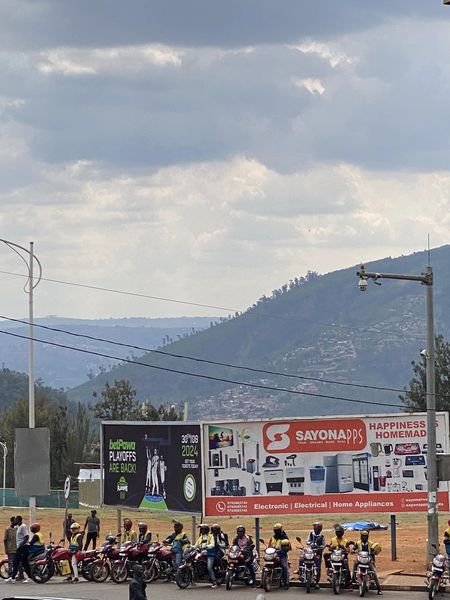
As we head for the city, I can’t help noticing the many motorcycles zooming through the streets. Eugene tells us that they are moto-taxis. Apparently, you can hop on the back and get a ride somewhere for about a dollar. I notice that the passengers don’t put their arms around the waist of the driver, but carefully balance themselves on the back of the bikes.
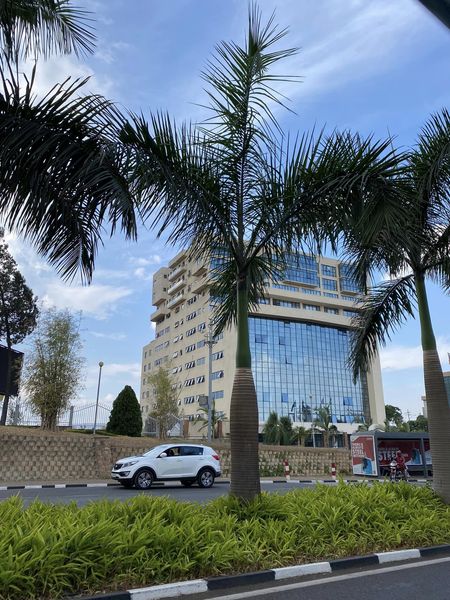
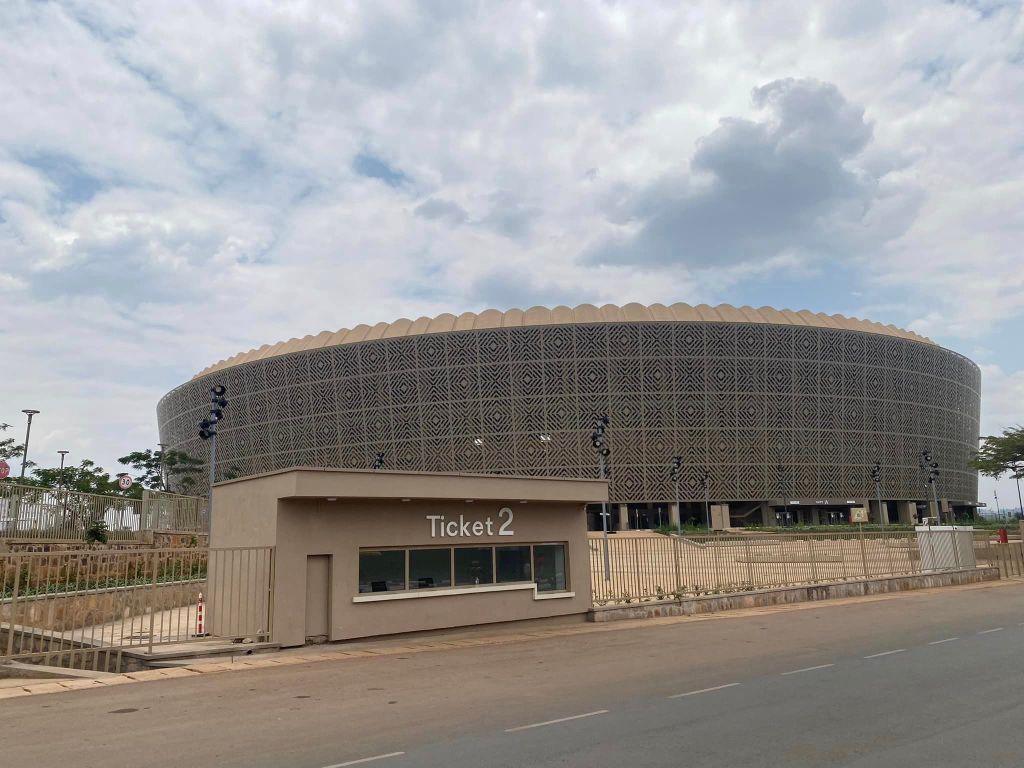
Eugene points out various sites along the way, including a new soccer stadium, various international banks, and a convention center styled like a traditional Rwandan dwelling. In addition to the modern, attractive buildings, greenery is everywhere.
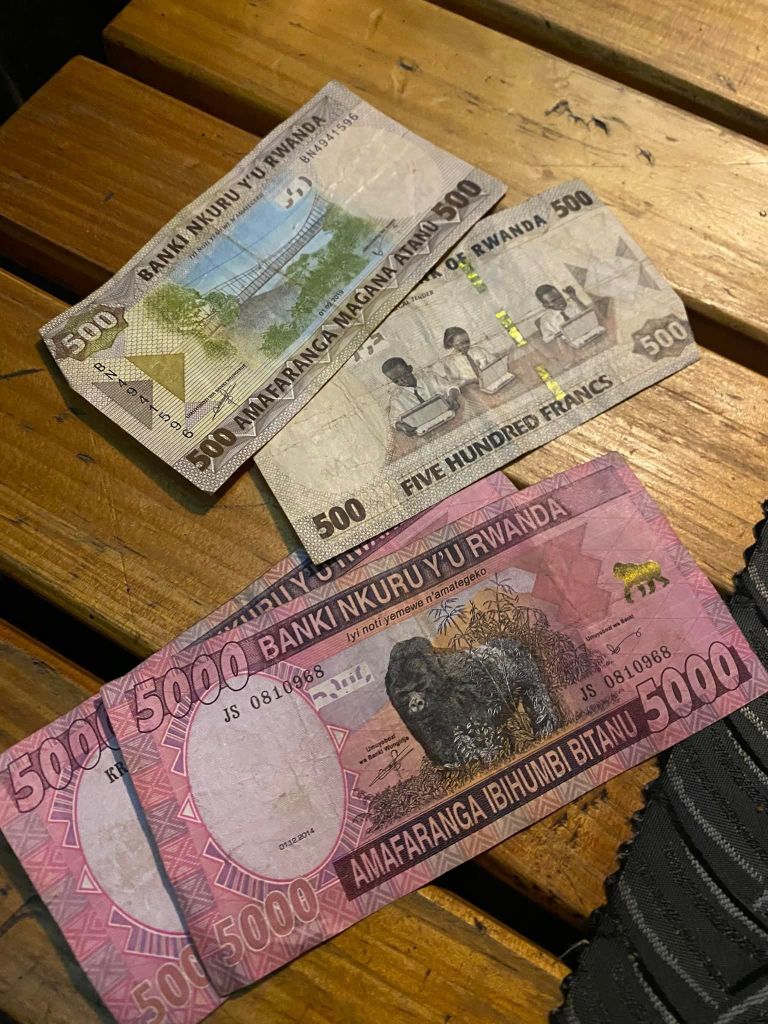
We make a couple of stops to change American dollars into Rwandan francs, and to get Sim cards for phones, and then go to lunch.
I’ve been wondering what we will eat in Rwanda. In the memoirs and stories of native daughter, Scholastique Mukasonga[1], people are always drinking banana beer and eating sorghum and mealie meal. However, once we settle into our seats at the Umut Café, I find none of these things on the menu. Instead, we are offered hamburgers, wraps, and pizza margherita. The most African-sounding item listed is a peanut butter smoothie. I order a chicken wrap as the latest Billie Eilish song pours out of the sound system’s speakers.
We are here in the Land of a Thousand Hills for a one-week research trip during which we will visit schools in rural areas and learn about the 1994 genocide. In one month, around a million Tutsis and their sympathisers were systematically and viciously slaughtered by members of the Hutu ethnic group following government directives. This “final solution” was not enacted in gas chambers away from the eyes of ordinary citizens as in Nazi Germany, but via machetes and spears, often by classmates and neighbours. Just about everyone in Rwanda was affected by the horror in some way. Our driver will tell me later that his father, sister, and brother were murdered at that time.
The animosity between two ethnic groups may be traced to the colonial period, when Belgians favoured the Tutsi, who typically had tall, slender bodies, high foreheads, and narrow features, for prestigious positions and privileges. Periodic violence against the Tutsis began in the 1950s and continues to this day, but Rwandans have made great efforts to insure that the events of 1994 never occur again. Peace education is an important part of the curriculum in Rwanda, as in Japan, where students go on field trips to Hiroshima and Nagasaki to learn about the atomic bombing of those cities. On the following day, we are going to hear from members of one of many rural communities where Tutsis were gathered in a Catholic church and then killed.
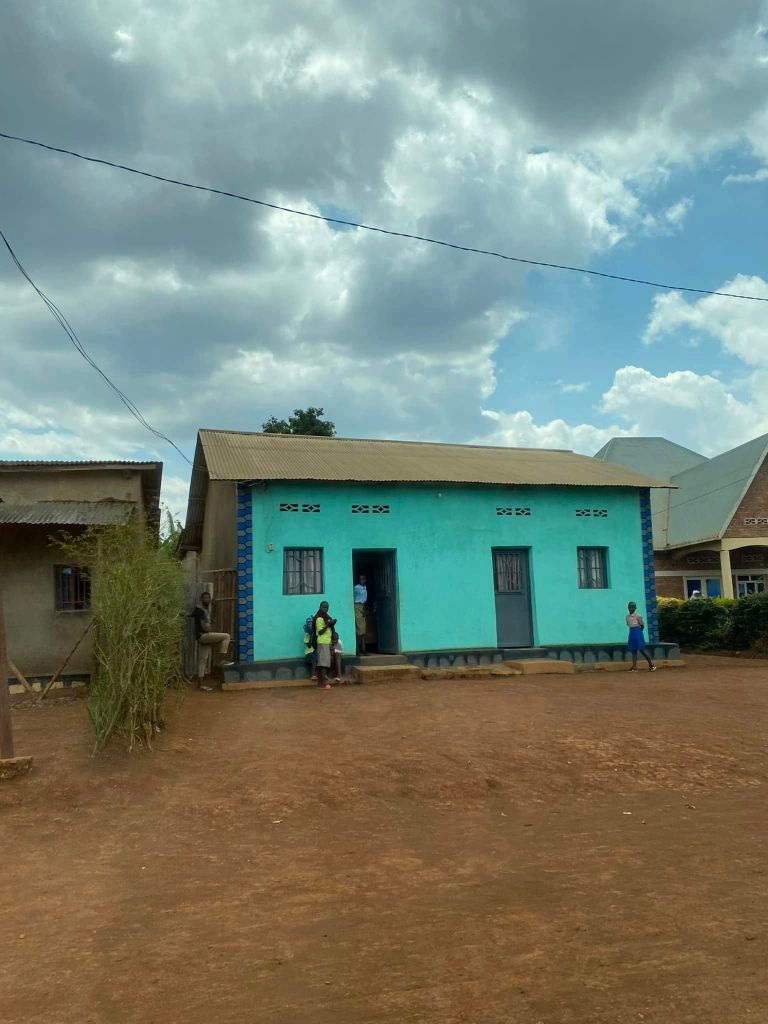

After our late lunch, we climb back into the Prado for the two-hour drive to the Kayonza District in Eastern Rwanda. Outside the window is a blur of banana trees, goats, cows, and red dirt. Many of the houses have intricately-paned windows. It’s a Sunday, and as we get farther and farther from the capital city, we see people in fine clothes, often made of brilliantly patterned kitenge cloth, walking home from church. People lug plastic yellow jerry cans to the river for water, others push bicycles laden with bunches of green bananas. Some are working in the fields with nothing but hands and hoes. As I take in the scenery, I can’t help thinking, this is where it happened; up in those forested hills is where people ran to hide.

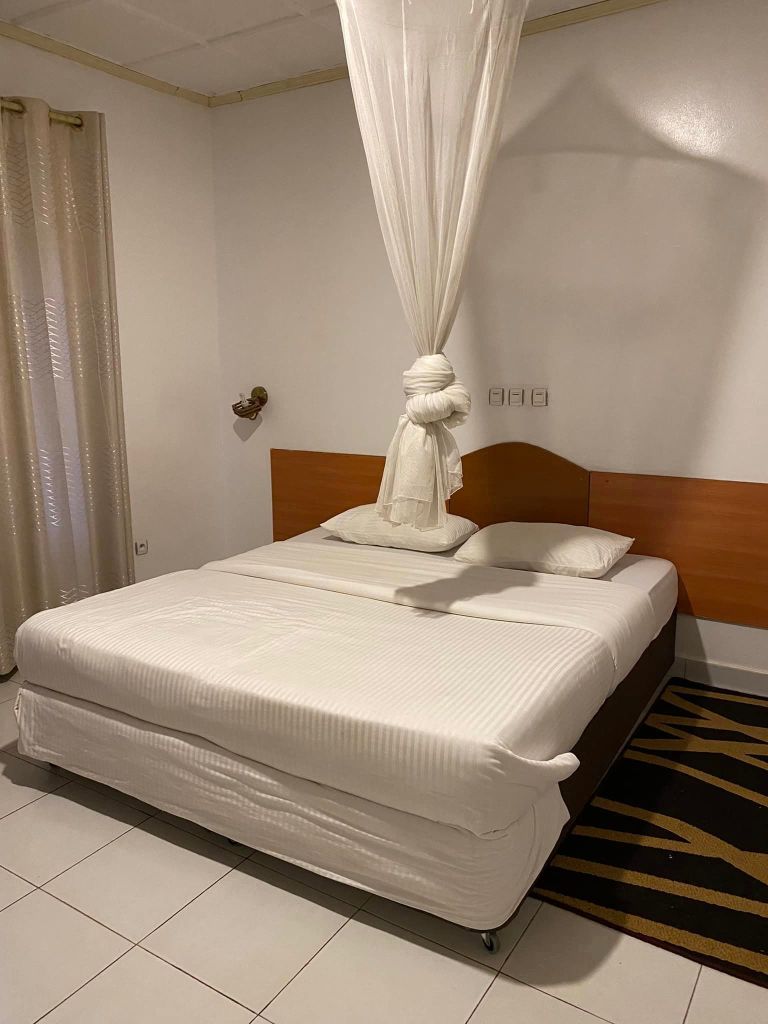
We finally arrive at the Eastern Country Hotel, which seems to be run entirely by women. Two come out to welcome us on arrival including a pretty young woman in a pink shirt and a retainer. An older woman takes command of my heavy suitcase and leads me to the desk for check-in, where I write my details by hand in a notebook. She then shows me to my room, which is on the second floor. I hand her a tip, but I have no idea if it is enough. She recites the Wi-Fi password, and I scribble it on a piece of paper.

The room is clean, simple: a bed with a mosquito net, a small desk, a TV. From the window, I can see a garden with palm trees, pink flowers, and shrubs trimmed into vase-like shapes.
A little while later, when I am towelling my hair after my shower, there is a knock on the door. The young woman in the pink shirt brings me a lamp to deter mosquitoes. She returns again several minutes later with the breakfast menu. I ask about an unfamiliar item on the menu. She tells me that it’s African, but I can’t figure out what it’s made of, so I order the omelet and chapatis, and “just a little bit” of the agatogo[2].
The sun is setting, and after our long journey from Tokushima via Tokyo, Seoul, and Addis Ababa, I am exhausted and ready for bed. I drape the netting around me and climb under the covers.
As I wait for sleep to come, I can hear frogs, or maybe crickets. Boisterous voices float from outside, perhaps from the wedding celebration we passed on the way here, or the boarding school on the other side of the road. There is laughter, but at times, it sounds like another kind of ruckus. Sometimes, I think I hear people screaming.

[1] A French Rwandan author
[2] A Rwandan dish with plantain, meat and spices
Suzanne Kamata was born and raised in Grand Haven, Michigan. She now lives in Japan with her husband and two children. Her short stories, essays, articles and book reviews have appeared in over 100 publications. Her work has been nominated for the Pushcart Prize five times, and received a Special Mention in 2006. She is also a two-time winner of the All Nippon Airways/Wingspan Fiction Contest, winner of the Paris Book Festival, and winner of a SCBWI Magazine Merit Award.
PLEASE NOTE: ARTICLES CAN ONLY BE REPRODUCED IN OTHER SITES WITH DUE ACKNOWLEDGEMENT TO BORDERLESS JOURNAL
Click here to access the Borderless anthology, Monalisa No Longer Smiles
Click here to access Monalisa No Longer Smiles on Amazon International
 Borderless
One reply on “Among Ghosts in the Land of a Thousand Hills”
The country is, so rich in history, worth exploring, I hope that you will, find spare time to, go off on your own, that you can, get to know the culture, instead of, solely focusing on work, because that would be, such a shame, to not, utilize the opprtunity of you visiting Rwanda for work, to get to know the, country and its culture better.
LikeLike