Categories
Poetry

Sundog and more

By Dr Ajanta Paul

The Sun Dog

The sunlight lay sprawled on the ground

Like a dog with its forelegs out

Panting slightly, with the respiring breeze

Gently altering its shape.

Trampled beneath a thousand trudging feet

It somehow remained complete,

As somewhere deep in its molecular marrow

It clung to the faint memory

Of its cosmic source

With its all-consuming heat.

And its own skipping, slipping descent

Down the spatial gradient

To flop down

On that patch of ground

To rest at last,

Before it’s ancestral measure

Changed at whim 

Cutting short its leisure

Banishing it to another clime.

.

A Passing Wish

I know you don’t care for me

Anymore than I do for myself.

It’s not funny

.

As I contend 

With life’s paltry patrimony.

Yet somewhere in the crude funfair

.

Of taxicab rides and tramcar jaunts,

Between exigency and etiquette,

And the tossed reach of the trawling net,

.

The thought rises and haunts

Me that I perhaps have had

More than my share

.

Of ups and downs

Crinkled up in history’s frowns

And now could do

.

With a level playing field,

My own and buoyant trampoline

Where with childish glee

.

I may forget my pains

And be forever free!

.

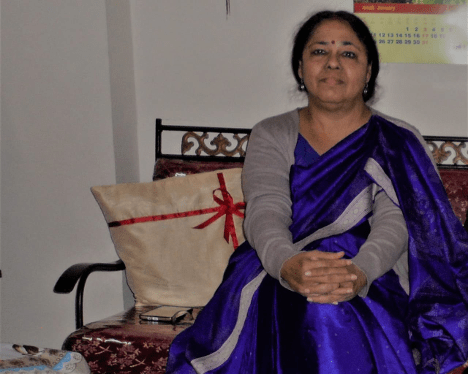
Dr. Ajanta Paul is an academician, administrator, critic, poet and author, currently Principal & Professor of English at Women’s Christian College, Kolkata, India. She has published several books of criticism and imaginative literature including The Elixir Maker and Other Stories (Authorspress, 2019). Dr. Paul has been featured in print magazines and online journals including Youth Times, The Telegraph Colour Magazine, The Statesman, The Bengal Post, Setu Bilingual Journal, Teesta Review: A Journal of Poetry, Millennium Post, Indulge Express, Indiablooms, Transworld Features and Magic Diary Initiative.

.

PLEASE NOTE: ARTICLES CAN ONLY BE REPRODUCED IN OTHER SITES WITH DUE ACKNOWLEDGEMENT TO BORDERLESS JOURNAL.
Categories
Poetry

The Blue Door

By Anuradha Prasad

Coats of cobalt,
interrupted by brass –
a knocker with a lion’s
roaring head, give
the door a solidity
it doesn’t possess –
in a kick it would
splinter but she knows
it’s about appearance.

.

The grass bristles on
the side, her forgetfulness
untames beauty, a spurt
of coarse laughter
in bleached green.

.

You’ll know her
anywhere, icy gaze,
gray peeking where
the hair has gained inches
escaping the indigo grasp
of a hair dye, its dark rinse
dripping into drain. Forgive
me dear, she often says,
she only just remembers
her name.

.

Anuradha Prasad is a freelance writer based in Bangalore. She writes poetry and short fiction. Her work has appeared in Literally Stories, Muse India, and The Bangalore Review. 

.

PLEASE NOTE: ARTICLES CAN ONLY BE REPRODUCED IN OTHER SITES WITH DUE ACKNOWLEDGEMENT TO BORDERLESS JOURNAL.

Categories
Stories

Chewing Gum

By Vipin Nair

“Two, two, two,” Uday yelled as they crossed each other in the middle of the pitch.

Nikhil wasn’t so sure about it. The ball hadn’t been timed too well, and the Reds fielder stationed at square leg was almost upon it. Still, Uday was his friend, the better batsman, and the captain of the Blues team. He didn’t want to be ridiculed later for refusing a risky run. He tapped his bat inside the crease and turned.

The folly became apparent to him ten yards into the second run. Uday was still rooted to the crease at the other end, his hand held up to indicate a change of plans.

S-m-a-c-k. The sound of ball knocking over the stumps felt like the crack of a whip on a horse’s behind. After a confident forty-nine, studded with eight glorious hits to the fence, Nikhil Tiwari was out.

Uday made a helpless face as Nikhil passed by. “You should have looked, duffer.”

“You should have shouted, you oaf,” hollered back Nikhil. Tears welled up in his eyes. The skin on his forehead crinkled. His chewing gum lost all its saccharine integuments and tasted for what it was: a strip of rubber that corroded the tongue.

For all practical purposes, a half-century in gully cricket was like a century in other formats of the game. That is to say it was rare to get one. And he had missed it by one run. One run. And that too on his birthday. His stomach churned at the injustice of it all as he walked back to the edge of the playground –- the pavilion, they called it, though it was merely a wooden bench stacked against the community water tank.

As he sank unto the bench, he caught Avani’s gaze upon him. She was watching the boys play from her verandah on the first floor. Had she seen him make a fool of himself just moments ago? A sullen prickle wormed its way up his throat as he considered the possibility. He averted his eyes.

Moments later, a few claps went around the ground as Uday brought up his half-century. Watching him raise the bat in celebration, Nikhil felt a wave of indignation sweep through himself.

The idiot always evoked mixed feelings in him.

Sure, Uday was the closest thing Nikhil had to a best friend, at least as far as Bengaluru was concerned. He had, in fact, readily taken Nikhil under his wings and often looked out for him. But the boy was also exceptionally skilled at driving those around him up the wall. Small, loyal acts of friendship would unfailingly be followed by some selfish, indefensible absurdity. He was incorrigible when it came to that.

For example, he’d always pick Nikhil in his team when it came to playing carrom, even when better players were available. But then he’d proceed to dominate the play in such a way that most of the coins were netted by him alone. Nikhil would simply end up providing assists.

Similarly, Uday would never say no when Nikhil sought him out to fly kites. But he’d insist on helming the string all the time. Cribs would spew forth from his mouth like latex from a lacerated stalk of the jack tree were the firki* ever thrust into his reluctant hands.

He was double-edged at school as well. He’d pick fights with other kids on Nikhil’s behalf for the silliest of reasons. But he also expected to be compensated for this loyalty by way of food. Lots of it, actually. This was a particularly difficult condition to fulfil on the days Mummy packed Nikhil her special three-cheese sandwiches for lunch. But Uday wouldn’t have it any other way.

And today, it had to be said, his Janus-faced tendencies had come to a boil.

It was obvious that Uday had purposely run Nikhil out. Having called for a second run and despite seeing that Nikhil was halfway down the pitch at his beckoning, he had chosen to stay put in his crease. Even the fact that it was Nikhil’s birthday had not prompted any altruism in him. In a similar situation, Nikhil would have gladly sacrificed his wicket for Uday. But such displays of large-heartedness were not for Uday.

Maybe he didn’t want Nikhil to score that half-century. Maybe he wanted to hog the limelight all alone. Maybe, just maybe, it had something to do with Avani observing the game.

Oh, how Nikhil hated Bengaluru! Uday was just one of his many vexations in this darned city.

Things had been so different in Delhi. He had friends there – real friends, and not just the ones he made do with, like was the case over here. He had doting relatives who would fawn over him all day. And he had Daadi, his grandmother, with her reams of stories and never-ending stack of sweet pinnis. His school had been so much nicer. Larger playground, better chemistry lab, that sort of thing. The teachers had been nicer too, more authentic accents and all. Heck, it was even easier to buy an ice cream, what with dozens of vendors hanging around the colony like wasps whizzing over water lilies, unlike here where everything was far from home and difficult to get to. If only Papa hadn’t gotten transferred! If only!

“Are you daydreaming?” The question snapped Nikhil out of the reverie. It was Uday. The match was over, and the leading run-scorer of the day had returned to the pavilion, victorious, bat held aloft.

Nikhil didn’t reply and merely shifted a little to the right to allow him to sit on the bench.

“Then? Are you jealous?” Uday’s eyes were fixed on Avani, who was pacing up and down the long verandah, trying to memorize something that was printed out on the paper in her hand.

“No,” replied Nikhil, mournfully.  “Why should I be?”

“Sorry, yaar(friend). It happens.”

“I know. Never mind.”

“I wish you had gotten your fifty.”

Nikhil glared reflexively at Uday. So the missed opportunity for him to score a half century had crossed the moron’s mind. Roiled and unwilling to prolong the conversation, he sprung to his feet. “See you at the party.”

Walking off, Nikhil distracted himself with happier thoughts such as the new shoes Mummy had bought him. The fit him snugly like a warm glove. He’d always wanted a pair of red sneakers, and now he finally had them. He’d wear them to the party. Avani was going to be there, and he’d like her to notice them.

***

When the doorbell rang, Nikhil was still to change into the new clothes Mummy had bought him on the previous weekend. It was Uday.

“Happy birthday, big fella” said Uday, holding forth a bar of chocolate. “I thought I’ll help with the arrangements. Must be hard to do it all yourself.”

A barely-concealed pall of disdain descended upon Nikhil. A regular-sized Dairy Milk? That’s the birthday gift? Cheapskate. Also, did Uday’s last-minute offer to help with the arrangements mean anything at all? Most of it was done anyway.

The furniture in the hall had been rearranged to open up more space for the guests to move around. The board games and jigsaw puzzles had been brought out into the living room. Mummy had made four different kinds of savouries, baked a banana cake and checked on the status of the order with the caterers. A bucketful of milkshake had been prepared and stowed into the fridge. Papa had even sent an office-boy home to help put up the fairy lights and attend to other handyman jobs. Only the return gifts remained to be placed in the paper bags.

“Thank you for coming, Uday,” said Mummy, as she came in from behind. Upon hearing of Uday’s offer to help with party arrangements, she suggested that they pick out some comics for the smaller kids who might show up.

“Good idea,” exclaimed Uday as soon as she finished talking and trotted off to Nikhil’s bedroom which housed the bookshelf. Left with no option, Nikhil followed suit.

As they pulled out old issues of Asterix, Tintin, Tinkle and Spiderman from the bookshelf, a frayed copy of Ouran High School Host Club caught Nikhil’s eye. It was the only manga series in his collection. Knowing that Avani was an avid manga fan, he quietly slipped it into his stack, careful not to attract Uday’s attention.

The duo had barely finished setting up the comics on the corner table when the doorbell rang again. The evening’s guests had begun showing up.

Over the next hour or so, the rest of the invitees too trickled in, some with their parents, some with their younger siblings, carrying gifts of varying sizes. The cricketers, the Reds as well as the Blues, turned up in full strength. A couple of classmates from school dropped by as well. At some point, Avani walked in, dressed in a checked pinafore dress, with her younger brother for company. Nikhil’s father, the busy corporate honcho that he was, was one of the last ones to arrive.

The evening swung along fairly expected lines, like birthday celebrations of twelve-year-olds tended to.

The parents huddled together with their favourite poisons in two groups, the men in the verandah and the women around the couch, exchanging notes and being silently dismayed by each other’s enfant terribles. The kids spread themselves more democratically around the house and played every newly-discovered game twice over. Some food spilled onto the carpet. A few pieces of the jigsaw puzzle went missing. A bawling infant somewhere wetted his mother’s saree. The milkshake ran out. Eventually, everyone came together and sang Happy Birthday to Nikhil. The cake was cut, photographs were taken and dinner was served to the guests.

At an opportune moment after the cacophony had died down somewhat, finding Avani sitting alone flipping through a magazine, Nikhil approached her.

“Do you like manga?” he asked, holding out the copy he had picked from the bookshelf.

“Oh, I love it,” she replied and pounced on it like a kitten served with slivers of dried fish. Wasting no time, she riffled through the pages, causing Nikhil no little exultation.

“You can keep it,” he said without trying to sound desperately magnanimous, prompting Avani to smile. Her eyes sparkled. “Can I really? Oh, that’d be so cool. Thank you!”

All of a sudden, a sharp voice to their left put paid to the jolliness. “It’s not for kids.”

Both Nikhil and Avani turned their heads in unison to look. It was Uday. He was licking the last driblets of chocolate sauce off the ice cream stick, and staring at them.

“Of course, it is,” retorted Nikhil, his eyebrows bunched together in exasperation. Why, oh why, did this imbecile have to show up!

“Well, my mum says it isn’t.” Uday walked over and flumped down on the futon right besides Avani. “Certainly not for girls.”

“I am just one frigging year younger than you,” sneered Avani. The peeve showed on her face.

“Never mind that.” Adjusting his spectacles, Uday turned to face Nikhil. “You are spoiling her, you know?”

For the second time in the day, Nikhil glared at Uday but to no avail. Unsure of what to say or do next, he just stood there, immobilised and aware that despite the red shoes and the manga series, the bird had been chased away by the scarecrow.

No sooner had the realization dawned on him, Avani kept the manga comic aside and got up. “I guess I’ll go. Bye, Nikhil.”

Nikhil waved weakly as she marched across the room towards her little brother who was still piecing the jigsaw puzzle together in the company of younger kids. A few minutes later, the siblings made their way out of the front door, and Nikhil could only look on, lament written large on his face.

With the clock pushing past ten, other guests began leaving as well. By eleven, nearly everyone had left including Uday, whose cheer seemed to have multiplied since the scuttling of Nikhil’s prospects.

When an exhausted Nikhil slipped into bed that night, all he could think about was the smile Avani threw him right before Uday showed up and poured cold water over everything. It was a dreamy smile, one that pulled at the ripcords of something unexplained within him. It could have meant something, something he didn’t quite understand, had the moment been allowed to extend itself. A sigh escaped him as the moment replayed in his head. He finally drifted off to sleep only a good hour or so later, tired of all the cogitation.

***

At the playground, it was business as usual. The Reds, having won the toss, chose to bat and the Blues spread themselves around the field. Nikhil positioned himself at the boundary. Uday brought himself on to bowl. Avani peeped from between the curtains of her bedroom from time to time.

Unusually for a team that liked to hustle from the word go, the Reds got off to an ennui-inducing start. The openers got out cheaply and the rest of the batsmen simply plodded along. The ball wasn’t hit in Nikhil’s direction for nearly all of the first fifteen minutes, and soon he found himself bored.

Just as he was beginning to stifle a yawn, the persistent cawing between the parked cars to his side caught his ear. The birds had been at it for a while now and seemed to be in no mood to let up. He walked over to check.

There were three, maybe four of them, swooping down from the weather-beaten tamarind tree, along an arc of agony, investigating some kind of disastrous predicament on the ground. In that split-second of distressed flight, there was a clumsy grace that was seldom associated with these birds otherwise. The urgency of the hour seemed to lend them rare agreeableness.

Nikhil watched them from a distance, beguiled.

He hadn’t been required to wrap his head around something like this before. Owls were wise. Peacocks were pretty. Parrots were loquacious. Doves were peaceable. Eagles were sharp and cuckoos, sly. But crows? What were they supposed to be except unlucky, unwelcome, pestilent?

Well, he was beginning to find out.

They first began pecking it with their beaks. The one on the right went at it first, and then the others followed suit. Not too long after that, they began clawing it. It started with a nudge and quickly exacerbated into an amateur avian contact sport. The noise from their incessant cawing gradually rose. One by one, tirelessly, they took turns to goad it astir. They hovered around it, switching directions and swapping positions, flitting their wings about as they infused more vigour into every appeal of theirs.

With every failed moment of persuasion, their desperation grew direr. The cawing transformed into a ceaseless clamour. The pecking turned more furious. At some point, the clawing resulted in the ripping of the hapless creature’s skin and revealed the red flesh beneath. But nothing seemed to help matters. Nothing roused it from its final slumber.

The watchman’s pet mutt came strutted in out of nowhere, and dispersed the winged belligerents. Otherwise timid and respectful of the tiniest of birds, the prospect of a tasty snack seemed to have enkindled in it some latent courage.

The crows flew up to the tamarind tree and looked down at their fallen cousin. The dog pawed the dead bird, and upon ascertaining a satisfactory lack of response, gathered it in its mouth. It then looked at Nikhil for the faintest part of a second, and then trotted off, tail wagging and the prized trophy firmly ensconced in its jaws.

As if on cue, Uday called out to Nikhil. It was his turn to bowl.

On his way into the middle to take the ball, the fog lifted in Nikhil’s mind.

Even a guileless dog, he realized, will feast on a bird that has stopped flying. He had settled for the first hand of friendship extended to him. He was a bird; he belonged to the skies and with other birds. As one grows up, as he was discovering now, the rules of friendship change. One gets to choose one’s friends. And not everyone can be befriended.

Nikhil spat out the chewing gum. Who knew that crows and canines could teach so much?

***

Vipin Nair is a late bloomer on a born-again creative quest. Have survived seven cities, two major earthquakes and a dozen Zumba classes. Occasional marketeer. Compulsive alliterator. Passed out of Mudra Institute of Communication Ahmedabad once although exactly why remains a mystery. His work has been published in The Ken, The Times of India and The India Film Project’s short film anthology.

.

PLEASE NOTE: ARTICLES CAN ONLY BE REPRODUCED IN OTHER SITES WITH DUE ACKNOWLEDGEMENT TO BORDERLESS JOURNAL. 

Categories
Poetry

Who Am I?

By Andrée Roby

Am I good? Am I bad?

Am I just going mad?

Not sure what good is that

You forever saying I’m bad?

I am lost, I am confused.

At times, I felt abused,

Too frequently being accused!

Am I that bad? I’m bemused.

My rage erupts like a volcano.

No, I will no longer swallow

The hurt nestled deep below

Where love can no longer flow!

Who was I? I used to know.

Who am I?  Better ask my fella

Apparently, more than me, he knows.

Who have I become? Someone full of sorrow.

So feel free to move on and let me, once again, glow….

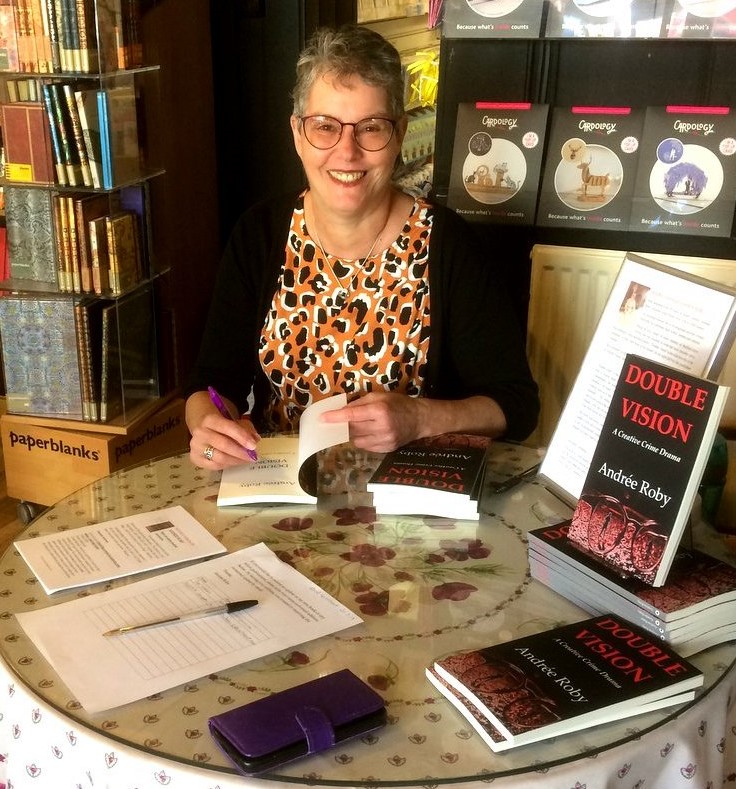
Régine, writing under the pen name of Andrée Roby, after spending over 35 years in South London, originally from France, now lives in West Sussex. Her pen name is a tribute to her father (André) and her uncle (Roby). Having studied philosophy and Latin at a Lycée in Paris, France, Régine believes that these two subjects gave her a passion for the words. Since living in England she has developed her love of languages which led her to teach French and Spanish. Her published books include ‘Double Vision‘ a crime fiction (novel) and A to Z of original poems, flash fiction and short stories.

.

PLEASE NOTE: ARTICLES CAN ONLY BE REPRODUCED IN OTHER SITES WITH DUE ACKNOWLEDGEMENT TO BORDERLESS JOURNAL. 
Categories
Poetry

Two Poems

By Pervin Saket

In The End What Separates Us

In the end what separates us,

Are not the words we hurl in cannonball pain

Or accusations posing as impassioned interrogations

But the foetal moments we keep shuttered

Too closeted, too crouched

Too tender to look the sun in the eye.

.

In the end what separates us,

Are not distinct childhoods of city and scenery

Rivers turning into chasms, and bridges morphing into borders

But cloistered ghettos of right and good

Too squelched, too certain

To dance in the flickering twilight of wonder.

.

In the end what separates us,

Are not careful plans of distribution and dissolution

Somber clauses in reasonable, measured jargon

But hope forbidden, unable to transcend

Today, tomorrow

To unite our separate stories and their sovereign griefs.
.

Thresholds

The one thing we’re united about

is how to tell the children.

Gathering them on an evening hung and heavy,

we measure out the practiced phrases,

and bore keenly into their expressions.

But they shrug off our grimness;

they have always known.

My children have already seen me

standing at the door,

all dry-eyed and combed

(the strain mustn’t show)

fidgeting with the car key

and planning how to squeeze my world

into the week allotted for me.

.
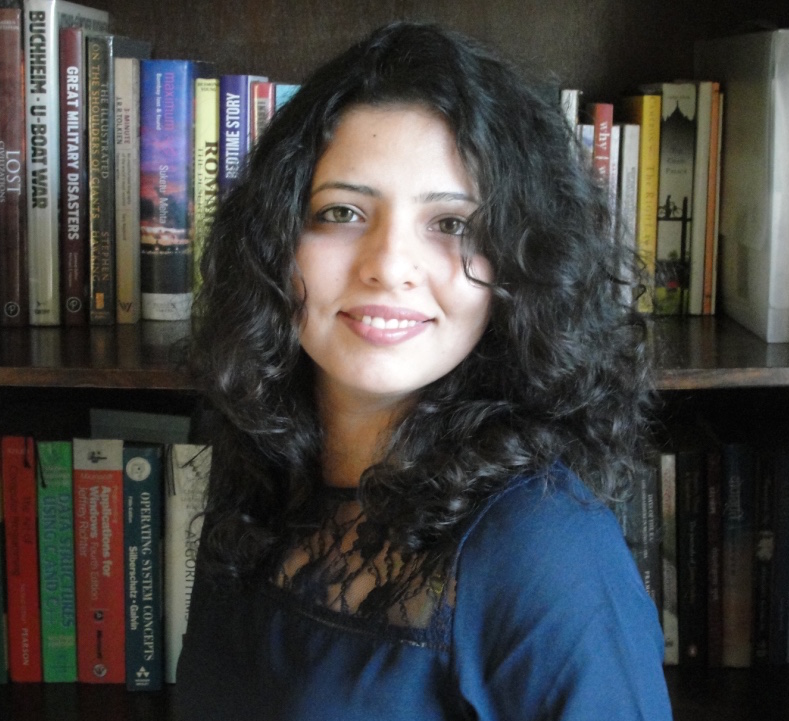
Pervin Saket is the author of the novel ‘Urmila’ and of a collection of poetry ‘A Tinge of Turmeric’. Her novel has been adapted for the stage, featuring classical Indian dance forms of Kathak, Bharatnatyam and Odissi. Her work has been featured in ‘The Indian Quarterly’, ‘The Joao-Roque Literary Journal’, ‘Paris Lit Up’, ‘The Madras Courier’, ‘The Punch Magazine’, ‘Cold Noon’, ‘Earthen Lamp Journal’, ‘Breaking the Bow’, and others. She is co-founder of the annual Dum Pukht Writers’ Workshop held at Pondicherry, India.

.

PLEASE NOTE: ARTICLES CAN ONLY BE REPRODUCED IN OTHER SITES WITH DUE ACKNOWLEDGEMENT TO BORDERLESS JOURNAL. 
Categories
Review

Resonating Diversities that Unite

Book Review by Gopal Lahiri

Title: Resonance- English Poetry from Poets of Odisha

Editors: Chittaranjan Mishra, Jaydeep Sarangi, Mona Dash

Publisher: Author Press, 2020

Poetry to many of us, appears as a process of illumination– as much for the poet as for the other and connects one person to another, one time to another. ‘Resonance’ the collection of English Poetry from Poets of Odisha explores the modern narrative; and a meditation on literary form, and how the modernist poem might look through a contemporary lens.

It is to be mentioned that in the last three decades, Indian Poetry written in English language has progressed considerably. English Poetry from Poets of Odisha is no exception. The diverse styles and uninhibited approach, the magical word-play and the innovative ideas of the poets of Odisha have expanded the Indian English poetry province to a large extent.

Chittaranjan Misra, Jaydeep Sarangi and Mona Dash, the editors of this poetry collection, in their Introduction have elucidated, “The sense of location that the Odia English poets construct are not in consonance with idolatry centred on nationalism or regionalism based on bigotry. It is about cultural specificity refracted through poets’ sensibility and power of fashioning imagery.”

Poetry, too, has the power to transform. This fascinating collection includes English poems of thirty-two Odia poets and explores many things in life that is extensively rephrased. It is a book that invites readers to share the poet’s vision of experiences: sorrow, pain, love, desire, joy, longing, the exposure to art, and transience.

The collection contains a polyphony of voices and language and imagery that draws at times from sources as various as the Hindu scriptures and folklores. It evokes the complex multiplicity of Odisha’s cultural landscape, a result of the states long history of culture, heritage and migration. Many of the poems’ opening lines immediately grab your attention and you feel recontextualized, born anew.

Professor Himansu S. Mohapatra has rightly pointed out the intricacies of the choices based on language and identity, “Odia-English poetry does not disappoint here. Poets from Jayanta Mahapatra and Bibhu Padhi to Shanta Acharya and Rabindra K. Swain have paid attention to the diction of their poetry. They have perfected idioms which are supple and resonant.”

Jayanta Mahapatra, the iconic poet from Odisha has observed, “I don’t think there is one India, Odisha is one India, Bengal is another. Maharashtra, Kerala, Kashmir– all these are different Indias. It is easier to relate yourself to a particular region than to talk about the whole of India as a construct.” His solitary poem ‘The Road’ in this book, has reflected an honest examination of language, gravities, crosscurrents of time.

Eternally thirsty the road has freed itself

From the pull of the earth and the empty garden

Of graves But its spirit is heavy

With reasons for killing one another.

Bibhu Padhi is another outstanding poet from Odisha. His poems are always marked with quiet wisdom, cadence and elegant images. Deploying the qualms and opacities of language, he attempts to construct bridges of meaning that might at any time prove deceptive. He has an eye for the vivid image, allowing him to bring nameless island into sharp focus as in the following poems,

‘Everything stays.

Nothing moves.

And there is only this fear

of being pushed towards

a nameless island I quietly left

without being noticed, long ago.

‘Finding and Losing’

or

perhaps someone lean and weak

is struggling with life, with death,

in an island of his own.

— ‘Night Sounds’

Shanta Acharya is among the most acclaimed poets of Odisha whose works have been published worldwide. There are several jewels in ‘Vigil’ that everyone should read and the poem is a poignant familial recollection evocative, in its conciseness and detailed imagery.

I half-dream though half-awake

Of you in exquisite colours,

Rich hues of maroon, golden, purple,

Memories quivering like fanned tails of peacocks.

‘Vigil’

With astonishing maturity, Prabhanjan Kumar Mishra weaves together contents, images, and stories with ease and his finely carved, magical poems invite the readers into the quarter of inwardness. ‘Konark by Night’ is a gem of a poem that veer towards the poetic equivalent of stone art that matches like the snapshots of nightly intimacy and the rise of the legend rooted in culture specificity.

Tonight we put our souls together

to sculpt the legend again

out of the dark’s flesh

attune our desires

to the body’s waves and stones,

and plant a seed lovingly

to take back home

a souvenir, joyous and poignant’

Rabindra K Swain’s poems are marked by a firm technique and sense of distancing. The poet is often able to find ideas and meaning and manages to find images suitable to the task of telling that this is the human life. It is the permeability in his poems that absorbs the words and sentences and the measurement of ease in the flow is strikingly evident.

It sensed your despair

and dropped its quills.

failing to get its hint you sulk and then wilt.

dawn is petals; dawn is quills.

‘What you Miss’

Chittaranjan Misra is one of the most compelling poetic voices from Odisha and his poems often interrogate the difference in the society. At times, they are moving and wise, going beyond the mere philosophical questioning of life. The following poem validates the poet’s curiosity and the fineness of his words.

I am fluid, a solute

Waiting to be dissolved

To lose all bodies

To lose all beings

–‘Self’

Jaydeep Sarangi is a well-known bilingual poet. His poetry is assured and he uses language with a wonderful ease and elegance. His work has always retained intimacy, longing and directness. He writes from life, rarely relying on anything else. That’s what makes his poems so immediate – the life is there while he writes.

my forgotten chapter of memory

Sculpted on the walls of Kanakdurga temple

My lines are straight

Arrows fixed up, DNA stitched

Odia veins spark.

–‘Love and Longing at Jhargram’

Mona Dash combines disarmingly plain diction with a familiar quirkiness. It is true that there is no sentimentality and her poems have a quiet acceptance.

The words nestling in my heart

Released in my breath go

Missing.

I hold up my hands

In the air, to find the very air is

Missing.

–‘What is lost’

There is a productive oddness to Durga Prasad Panda’s poems, finding surprise and profundity in unpicking objects, phrases and words. On the whole his writing is both rare and laudable for attempting to balance the openness with acumen.

I live in the city

Of snakes.

In my courtyard lies a snake.

From above the door hangs a snake.

On my bed stretches flat a snake.

On my rooftop sunbathes a snake.

From within the skull’s eye sockets

Winks a snake.

–‘Snakes in the City’

Chinmay Jena’s beautiful poems featured in this collection are remarkably fluent, lyrical and assured. The poet strikes the balance between silence and word in a seamless manner.

I see the flakes of apathetic clouds

Mirroring myself

Drift in the northerly wind

The moment prepares me

For yet another tryst with winter

–‘October’

In Nandini Sahu’s poetry, there is an urgent passion for the language. She dissects the world with a wondering discerning eye. Her poems in this collection is deep, engaging and sharply articulated.

Who says death is the only truth?

See, your body of fog is still seated on the throne.

You still shine in the firmament of stars.

–‘Who says Death is the Only Truth?’

Mamata Dash is always in control of weaving words and images. So many lines in this poem shimmer with somewhat ironic discovery — a straightforward gazing-down at intimacy and closeness.

Remember that day

I created a beehive for you

From my nerves, senses and veins

And hung it

On the bench of a tree nearby your window.

–‘The Letter’

Prahallad Sathpathy’s ‘Eternal Verse of Love’ reflects a landscape of elusive words. His love poem feels intensely familiar yet disquietingly inexplicable,

Your lips give birth to poetry

When my lips touch yours

Your eyes become a torch when my words fumble in the dark

I bite your earlobe and feel the sensation of poetry’

–‘Eternal Verse of Love’

Ramakanta Das’s poem appears to be more incandescent, emotive and assured in simplest forms, not wrestling with grand themes and contents.

A silhouette of greenery

Laced with a silver lining

Visible to me from horizon

Throws distinct hints of a sprout-tender dream’

–‘Hints of a dream’

Deba Patnaik, Saroj Padhi, Shankarshan Parida, Shruti Das and a few other poet’s works are also featured in this collection, extending the vistas of English Poetry and they are certainly worthy of notice.

There is no denying that the contemporary Indian English language poets make themselves heard in recent times. Here is a luminous collection of poems from Odisha intent on expanding poetry’s sphere. The voices are always in harmony while exploring the inner landscape of life’s promise, locale and unpredictable strangeness. One of the pleasures of this book is in the shifts of tone that reflect each poet’s sensitivity to his or her inspired form and the creative content without any regional bias. A delightful anthology revelling in the diverse similarities!

.

Gopal Lahiri is a Kolkata- based bilingual poet, critic, editor, writer and translator with 21 books published mostly (13) in English and a few (8) in Bengali, including three joint books. His poetry is also published across various anthologies as well as in eminent journals of India and abroad. He has been invited in various poetry festivals including World Congress of Poets recently held in India. He is published in 12 countries and his poems are translated in 10 languages.

.

PLEASE NOTE: ARTICLES CAN ONLY BE REPRODUCED IN OTHER SITES WITH DUE ACKNOWLEDGEMENT TO BORDERLESS JOURNAL. 

Categories
Poetry

A House Divided

By Kavita Ezekiel Mendonca

A poem for those who suffer the pain of separation

 As we approach freedom in my birthplace, once more,

 I imagine a dividing line, parting my house in two

This is no Red Sea, with no dry land on the other side.

The road is dusty, with cattle hooves and wheels of carts.

.

My daughter is dancing in her basement studio

An arm and leg, some waist, one hip

Flung towards the five mirrors shattered in two

Pieces of wall cling feverishly to broken glass

The remaining parts of her body balance her twisting form,

The other side of the dance floor, partitioned artistically by a floral divider.

She calls to me to watch the dance, a split image, only in imagination.

.

The black and white cat gulping fresh air by the back door

Stretches out a paw to his companion, the golden-haired tabby.

The paws grasp empty air. When checked with fresh eyes,

Both cats slumber peacefully, on the cat tree.

.

My notebook of poems fling pages onto lurching bullock carts

Piled high with my worldly belongings and my grandmother.

Some epiphanies remain to be written

In a new and strange country.

I touch the desk where my poetry is shaped

Its solid wood in one piece, the epiphanies may be composed.

Now, here where I am, the toy train in The Heritage Park

Sounds the horn which I hear from the kitchen windows

Laughing children wave happily in a country that never has paid Freedom her price

They will return home in the same undivided country.

.

This house I call home, is old but standing

Freedom has paid its price before my birth in both countries

The closets can hang clothes on hangars and shoes in shoe racks.

The divided houses in divided countries

Draw imaginary lines in the blowing sand

Of my imagination.

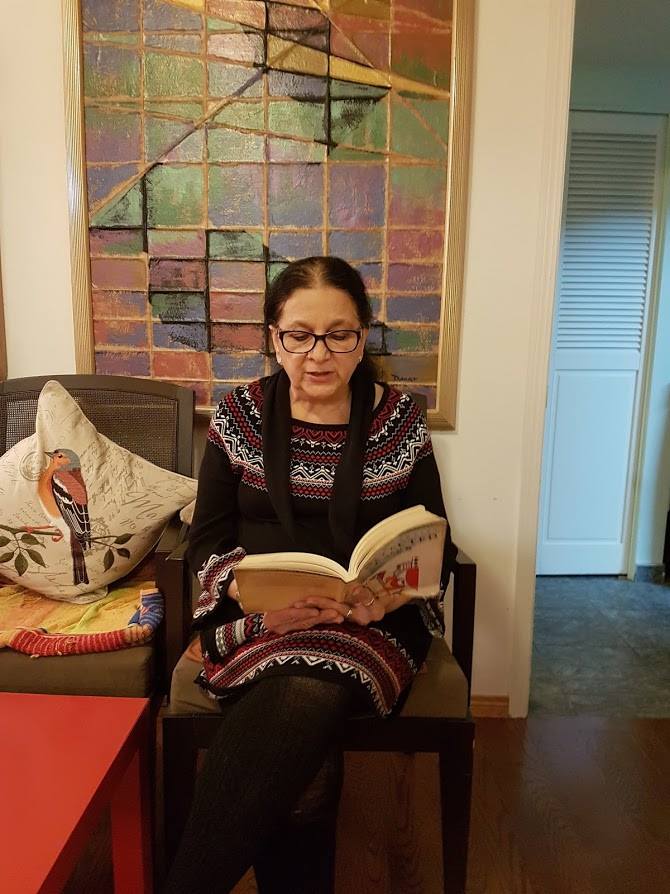
Kavita Ezekiel Mendonca was born and raised in a Jewish family in Mumbai.  She was educated at the Queen Mary School, Mumbai, received her BA in English and French, an MA from the University of Bombay in English and American Literature, and a Master’s in Education from Oxford Brookes University, England.  She has taught English, French and Spanish in various colleges and schools in India and overseas. Her first book, Family Sunday and Other Poems was published in 1989, with a second edition in 1990. She manages her Poetry page at https://www.facebook.com/kemendoncapoetry/

PLEASE NOTE: ARTICLES CAN ONLY BE REPRODUCED IN OTHER SITES WITH DUE ACKNOWLEDGEMENT TO BORDERLESS JOURNAL. 
Categories
Uncategorized

The Girl in the Painting

By Shyamasri Maji

The Girl in the Painting
The sky and the sea do not mate, yet they have a child of their own
It plays across the city tonight like a painter's whimsical brush
on the open edges of a black canvas with eyes wide open and says,
“Look! The pink flowers on the huge hoarding of a five star hotel
are apologising to a bar dancer, for whom nobody clapped today.”
I saw the flowers, I smiled at the bar dancer smoking in a red cab and                                                              gazed at the malls drizzling specks of light like the crackers in Deepavali,
The streets flowed like rivulets in the faraway hills I visited in kindergarten: 
Little heads danced like a huge caterpillar in the season of Spring festival                                                                           The blue bird sang to a pickpocket leaning against a sparkling sedan car.
Under the noisy shed of a tea stall, I waited for you with black and white patience!
The painter smiled and bent my left arm to thrust an umbrella in my pencil hand                                                                He said, “Girl! Why do you stand under the grey shed of turpentine imagination?”
The thunder struck yellow, the river Nile spilled all over my trembling contour
I tried to recall your telephone number in the blue folds of my wet salwar kameez ,                                                 But, like an unclaimed bicycle in an olive-green lane of a closed factory town                                                                                                                     I had to walk in the splashing streets of muddy pain, all alone in the wooden rain.

Shyamasri Maji is an Assistant Professor in English at Durgapur Women’s College in West Bengal. She completed her MA, M.Phil and PhD in English from the University of Burdwan. She wrote her doctoral thesis on ‘Anxiety of Representation in Select Anglo-Indian Writers.’ She writes poems and short stories on the experiences of Indian women. Her stories have been published in ‘Unish Kuri,’ Muse India, Six Seasons Review and The Story Mirror. Her poems have been published ‘Setu,’ ‘Kolkata Fusion’ (blog) and ‘Indian Periodical.’  

.

PLEASE NOTE: ARTICLES CAN ONLY BE REPRODUCED IN OTHER SITES WITH DUE ACKNOWLEDGEMENT TO BORDERLESS JOURNAL. 

Categories
Poetry

Windows

By Prithvijeet Sinha

There are some windows,

like the one Manani* stood by,

with her sweet morning voice calling birds from all the surrounding trees,

to feed them her open heart’s musings

and a little bit of the loneliness she felt,

perched up here on the topmost floor.

.

She was a bird herself,

frugal and simple to a fault,

opening windows to the eastern sky

when the sunrise came to her inner eye

like the first stroke of the universe,

so essential to her at that age.

Living in two spare rooms,

with a prominent prayer house and a central kitchen,

her own birdhouse of sorts.

Just enough for her,

guarded most securely by a balcony and the worldwide open,

free and independent like her.

.

Her window to the world,

her soul left open to be free,

like the leaves and a cluster of beloved sparrows close to her feet

as they kept all her last wishes and secret correspondences in their tiny bosoms.

They sat with her at noon everyday,

peeking at each form and shade of clouds,

as she seemed to imitate the arch of that nose or the impression of that face,

from her family tree in the sky.

**

They come to me by this same window today,

tiny heads poking in and searching for a manifestation of her spirit.

She has simply flown out from here, l tell them,

with no inkling of her final moments or a destination.

.

She came to me with a whiff of the winter chill,

in my windowless room,

by the open partition between roof and yard,

as if arrived to say that her pulse had fallen,

that she had prepared her final prayers before her bath,

and her crop of falling, open hair was her only garment and adornment in that image,

on that fateful day.

.

She was here to say,

she had come out of her two rooms,

out of that forever open window,

held up by her coterie of birds,

right into the soft trillings of my heart.

.

Now I’m here,

vacating her sparse space

and the soul of her freedom

as a solitary sparrow comes to me,

staring at me with a slight right tilt of her head,

just like you always did when in joy.

Something tells me the myth is correct,

you have become one of your own

and come as a winged messenger,

telling me you will always be here.

.

And I’m glad it happens to the soul in flight,

the window of your spirit forever open for correspondences.

For there are some windows which trace our ancestry of memories,

from one distant line to our loved ones in heaven.

.

NOTE : * the term of endearment ‘Manani’ used in the second line of this poem refers to the Indian compact of mother and maternal grandmother, Ma+ Nani, with which I called my grandmother. This poem is written as a tribute to her and the window of memories she has left open for me ; the details here are all culled from real life observations

.

Prithvijeet Sinha is from Lucknow. He is a post graduate in MPhil, having launched his writing career by self publishing on the worldwide community Wattpad since 2015 and on his WordPress blog An Awadh Boy’s Panorama besides having his works published in several varied publications as Gnosis Journal, Reader’s Digest, Café Dissensus, Confluence, The Medley, Thumbprint Magazine, Wilda Moriss’s Poetry blog, Screen Queens, Borderless Journal encompassing various genres of writing ,from poetry to film reviews, travel pieces, photo essays to posts on culture . His life force resides in writing and poetry is his first and only love.

.

PLEASE NOTE: ARTICLES CAN ONLY BE REPRODUCED IN OTHER SITES WITH DUE ACKNOWLEDGEMENT TO BORDERLESS JOURNAL. 
Categories
Stories

The Nefertiti Diamond

By K.N. Ganguly                                        

I live in a small flat in London. I teach in a school here, the students of which are mostly of Asiatic and Caribbean origin. Every morning I leave my flat after breakfast, which I make myself. I dine out and return to my flat around ten every night. I have very few friends but I know quite a few Indians who come to London regularly on business or on holiday.

It was a Sunday morning. I was still lolling in bed, soaking in a mixture of laziness and fresh air, when my telephone rang.

I picked up the receiver sleepily and said, “Hello?”

“Monty, this is Jhun Jhun,” came the reply. “I want to meet you just now.”

I became alert at once. “Jhun Jhun, what is it about?”

“It’s something serious, really serious. I am in deep trouble. I’ll tell you everything when I meet you.”

“Come along, then,” I said. “I’ll be waiting for you.” Jhun Jhun’s real name was Rajesh Jhunjhunwala. He was a diamond merchant. We knew each other from our school days, and we were good friends. He made it a point to look me up when he came to London. Occasionally, we spent weekends together on the seafront. Jhun Jhun owned a small bungalow outside London.

I had just got dressed when a cab stopped outside my flat. Jhun Jhun paid the cabbie, then hurried in, but paused a moment outside the door. As soon as he entered the flat, he locked the door, then peered through the roadside window. His podgy face certainly looked disturbed. I made him sit on a sofa. Then I gave him a cup of tea and asked him to tell me his story.

“Well, it’s a long story. As you know, I’m in the diamond business. It’s a small firm really, and I thought I could do better if I tied up with some other diamond merchants. So, about six months ago, I posted a notice on my website seeking business contacts with other diamond firms. There was hardly any response, but that was only to be expected. The diamond trade is controlled by cartels which fiercely guard themselves against poaching by outsiders. And then, I got a pleasant surprise. Someone who introduced himself as Nobles contacted me. He promised to give me tips about family jewelry held as heirlooms by old and noble families, now impoverished and eager to dispose them off secretly. He also expected similar gestures from me, which I promised to do.

“I didn’t hear from Nobles again till last week. He said he would send me a diamond for valuation. But there was no real hurry. I could keep the diamond with me, a la ‘The Purloined Letter’ by Edgar Allan Poe. He would collect it from me, and of course, there would be a consideration for my services. I had read the story of  ‘The Purloined Letter’ in school. I understood that Nobles wanted me to keep the diamond in an easily accessible place rather than in a safe, so as to hoodwink criminals if they got wind of it.

“That very night around 3 a.m., my doorbell rang. As I opened the door — you know, I stay alone in my house — I saw a man with a moustache wearing a hat and dark glasses. He drew out a small packet from the inside pocket of his coat, gave it to me and vanished. All this happened so fast that I hardly noticed the face of the man or his general appearance.

“Anyway, I locked the door and went to my bedroom. When I opened the packet, I was simply dazzled. I had never seen a diamond of this size. It sparkled from all angles. My immediate assessment of the value of the diamond was between one and one-and-a-half million pounds. However, I left the diamond in a tin box containing buttons, skeins of thread and needles.  Surely no one would look for a priceless diamond in a tin box left on the dressing table. Every day I checked the tin box to assure myself that the diamond was still there. But last night, to my horror, I found the diamond missing.

“My first thought was to call the police, but I immediately checked myself. I didn’t know the antecedents of Nobles. Besides, how could I be sure that it was not a stolen diamond? On the other hand, Nobles was bound to hold me responsible for the loss of the diamond. He might even suspect that I had caused the loss intentionally with the help of my associates.

“So here I am, Monty. I am not even able to think anymore. I have many acquaintances in London, some in high places. But you are the only one to whom I could confide a matter like this.”

I understood the seriousness of the problem but managed to stay calm. Suddenly I remembered my schooldays’ hero. “Eureka!” I shouted. “Come on, let’s go to Sherlock Holmes!”

“Sherlock Holmes? Are you mad, Monty? Holmes will have been dead many years now!”

“How do you know? Vitamins and medicines can rejuvenate and prolong life. Well, he may not be active now, but it is the mind that matters. Let’s find out from the telephone directory.”

I looked up the Telephone Directory and was happy to find in it, Holmes, Sherlock, 21B Baker Street.

“Come, we’ll catch him now”, I said and simply dragged my friend out of the house.

When we arrived at Holmes’ address, we found it was a very old, rather shabby building. We pressed the bell at the entrance door and within a few minutes, the door was opened by an old and wizened woman wearing an apron and a very pleasant smile. “Good morning, gentlemen. Do you want to see Mr. Holmes on some very urgent business? Well, please come in.”

We were ushered into a large sitting room. The floor was covered with an old, worn-out carpet. There were a couple of sofas, several easy chairs and a rocking chair. At one side of the room, there was a marble-topped table with a pipe, an umbrella and a violin on it. There was a grand piano at one end of the room and photographs of Sherlock Holmes covered practically all the walls. I was taken aback. Was it a Sherlock Holmes Memorial and was the old woman merely trying to tease us? Just then, two middle-aged gentlemen entered the room—one, tall and gaunt with clean features, the other a bit swarthy and portly. The tall gentleman said, “I am Sherlock Holmes, and this is Dr. Watson. Those are my grandfather’s memorabilia that you were looking at. Dr. Watson is also the grandson of my grandfather’s friend.” At this stage, Dr. Watson came forward and shook my hand. “I am Anil Watson,”he said.

“Anil or O’niell?” I asked. “Anil is an Indian name.”

“Yes, I am part Indian,” he replied. “You see, my father, also a doctor, married a fellow-student who happened to be an Indian. My mother named me Anil.”

We introduced ourselves. “I am Montu Gangaur, Monty Gang for short. This is Rajesh Jhunjhunwala, better known as Jhun Jhun.”

“Fine. Well, gentlemen, I know you have come to see me on a specific problem of yours. We will get down to business shortly, but before that, I would like to indulge in a game, as was my grandfather’s practice. You may call it a guessing game, but it helps sharpening the intellect. Now, Watson, please take a quick look at Mr. Monty Gang’s face and tell me what impression you get.”

“Well, it’s a round face, evidently his eyes are weak, his thick glasses give that away. He is bald as a pumpkin, it’s likely that baldness runs in his family. Also, he frowns from time to time. That implies impatience. Besides, he likes to hear his own voice more than that of others’. Well, that’s about all.  I hope you haven’t taken any offense, Mr. Gang?”

“Of course not,” I said.

“Excellent, Watson,” said Holmes. “That was a very good exposition. But didn’t you notice that the colour of the skin above his brow is slightly lighter than that of the rest of his face? Then, watch his eyes. Did you notice that when Mr. Gang was looking at the marble-topped table to his left, his head had turned completely to the left. Had his left eye been functioning, he wouldn’t have done that. But his left eye is not completely sightless. Watch him closely, Watson. Well, Mr. Gang, what did you think of my deductions?”

I was startled. “You were simply marvelous, Mr. Holmes. Yes, I was involved in an air-crash, which left burns on my scalp and my left eye is severely damaged but not sightless.”

Holmes now looked at Jhun Jhun, who was sitting quietly, puffing away at his cigar. “Now, Mr. Jhun Jhun, you’re a diamond merchant, aren’t you? And you have close connections with South Africa — Johannesburg, to be precise. Would I be correct in saying that the cigar you are smoking is a gift from your South African principals?”

Jhun Jhun was visibly surprised. “Well, Mr. Holmes, how did you know that I am a diamond merchant, or that this cigar was a gift to me from the diamond merchants of Johannesburg?”

“Quite elementary, Mr. Jhun Jhun. If you smell your cigar smoke, you will find there is a very slight rose scent in it. This unique variety of tobacco was produced by a Spanish planter in Cuba about two hundred years ago by crossbreeding tobacco and rose plants. His African slave killed him in a fit of temper, destroyed his plantation and ran away with a few specimens. Ultimately, he found shelter in Johannesburg and sold the secret plants to a diamond merchant. From then on, this variety of tobacco has been grown by that diamond family and used exclusively for business promotion.”

Jhun Jhun did not know what to say. His first reaction was that Holmes must have learnt of it from some of his friends. Then he realized that was absurd, as no friend of his, not even I, knew about the origin of that cigar. “Well, Mr. Holmes,” he mumbled, “you are a genius.” Holmes puffed his pipe and looked at Watson. Then he smiled and said, “Well, now let us get down to business.” Jhun Jhun repeated what he had said to me. Holmes asked him, “On which day did you get the diamond?”

“Wednesday night or Thursday morning, whatever you choose to say.”

“And it disappeared yesterday, that is on Saturday.” He closed his eyes and puffed away for some time, then dialed on his telephone.

“Inspector Wilson?” Holmes said. “This is Sherlock Holmes. I read in the papers about the theft of Baroness Rothschild’s Nefertiti diamond. I also know that the French diamond thief Charles Dupin came to London a few days ago. Have you thought about the obvious link between the two events?”

The reply from the other side was quite audible. Wilson was saying, “Look here, Holmes, it seems you are as pompous as your so-called famous grandfather. Do you think we are so dim-witted we wouldn’t turn the heat on Dupin? In fact, my men have been tailing him constantly since the disappearance of the Nefertiti diamond. Let me tell you, Holmes, Dupin seems to be a reformed man. He said he had come here as a tourist. We found he basked in the sun in Hyde Park, fed the pigeons at Marble Arch, even watched the Change of Guards at Buckingham Palace. He is a well-read man and can be quite witty. Despite all this, we made a thorough search of his hotel room and even brought him to the Yard for a further personal search. Well Holmes, there was nothing—absolutely nothing—incriminating on him.”

“Look, Wilson, I have no time to argue with you. Right now, I have enough evidence that proves his complicity. He must be on his way to France, but you may yet be able to catch him if you make an all-out effort straightaway. I would also suggest that when you get him, do not leave anything — pen, wrist-watch or cigarette lighter — out of a minute scrutiny. In particular, a cigarette lighter would provide ample scope for hiding a diamond in a special compartment. Well, I leave you to your job now. Don’t forget to inform me when you have retrieved the diamond.” All of us were watching Holmes, who quietly put down the receiver and said, “Gentlemen, we are all very hungry. Let us walk down the Strand and find a good restaurant.”

It was lunchtime. Most of the restaurants were crowded, but we found a quiet corner in a small place. Holmes asked Watson to place the order for all of us. I noticed he was somewhat edgy. And then his cellphone rang. “Holmes? This is Wilson. Thanks for the tip. We were able to catch Dupin just when he was about to leave the hotel. Well, your guess was right. The diamond was concealed in his cigarette lighter. You know, Holmes, he had cupped the lighter and was pretending to light a cigarette. Looked very natural. But I remembered your warning and grabbed the lighter. Indeed, there was a compartment at the lower end of the lighter and inside it lay the diamond.”

After lunch, we exchanged pleasantries and returned to our respective places. Next morning, we again went to meet Holmes to find out whether there was any suspicion on Jhun Jhun. Holmes was very pleasant. He asked us to join him at breakfast and then said that Jhun Jhun was absolutely in the clear, as there was no evidence against him, nor had Dupin mentioned his name. Just then, the doorbell rang, and the old maid went to answer it. She came back shortly, accompanied by a liveried chauffeur. “Baroness Rothschild’s compliments, Sir,” said the man and handed Holmes a small packet. Holmes unwrapped it slowly, and inside was a velvet case containing an exquisite diamond ring for all of us to see.

“Well, well! Wilson is not a bad fellow after all! He must have mentioned my name to the Baroness, instead of taking the credit himself.”

Holmes was standing with the gift. It was clearly time for us to leave. We stood up. “Mr. Holmes, we are grateful to you for all the help and courtesies extended to us. Jhun Jhun is now a relieved man, and as his friend, I also share his relief. I have read so much about the exploits of your legendary grandfather, but I think the grandson’s brilliance is not a bit less.”

Holmes looked a bit embarrassed. “Your compliments flatter me, Mr. Gang. I see you are ready to leave now, but I have a feeling you would like to hear the whole story, as the snatches you have heard so far leave many gaps.” Holmes then led us to the sitting room. “Please sit down, gentlemen”, he said, and then sat down on the rocking chair. He took some time to take out his pipe, fill it carefully with tobacco and light it. “Well, gentlemen, here is the full story. But let me caution you beforehand. In the absence of hard facts, I had to depend equally on conjecture and logic. The whole truth will no doubt come out after the police have finally interrogated Charles Dupin, but I am sure it will not substantially alter my story. Here it is then.”

“As I told you before, the Rothschild clan is spread over several continents and countries. They started about two hundred years ago as bankers but over the last century, they moved into shipping, industry, mining, real estate, etc. and acquired immense wealth. It is said that the Nefertiti diamond also came into the family a little over a hundred years ago. The clan members — at least the majority of them — believe they owe their sharp rise to prosperity to this diamond and therefore look upon it with reverence. Traditionally, Baron Rothschild is regarded as the head of the clan, and therefore is the custodian of the diamond, which is kept in a special vault in Lloyd’s Bank. However, the clan holds an annual banquet in Baron Rothschild’s mansion, which is attended by representatives of all its branches. Evidently, a banquet was held last Saturday. It is customary for the Nefertiti Diamond to be kept in the Rothschild mansion hall for two days, prior to the banquet for viewing by the clan members. The diamond should therefore have been on view from Thursday last week and brought to the mansion from the bank on the previous day, that is, Wednesday. As per Mr. Jhun Jhun’s statement, it was handed to him at around 3 a.m. on Thursday morning. Assuming the diamond was taken out of the bank at about 4 p.m. on Wednesday, the theft should have occurred within the next ten hours or so. But who could have stolen it? Obviously, Dupin could not have had access to the mansion, or known precisely where it was kept. There would also be family members and domestic staff all over the place and a stranger would be easily spotted. No, I don’t think it was Dupin, it must have been an inside job. But the person was Dupin’s accomplice, for he took the diamond to Jhun Jhun’s place as per Dupin’s plan. The insider could be a family member or a domestic help.

“Baron Rothschild’s second son is known to have a dubious reputation. He seems always to be involved in one scandal or the other and his name appears on the gossip columns of the newspapers more than once a month. However, I can’t imagine him as an accomplice of Dupin, because the risk would be too high for him, and also, one or two credit him with some loyalty to the family.

“Then come the domestic staff. Since the diamond would be removed to the hall the next morning, I would presume the Baron would keep it in his personal suite on Wednesday. Normally, only senior staff members like the valet or the senior maid would have access to the Baron’s suite, and I wouldn’t expect any of them to be foolish enough to indulge in such a job and risk their careers and reputation. It is more likely that Dupin’s accomplice joined the staff as a junior member — there would always be a need for an extra man or a substitute, for instance, when the valet wants a day off for temporary relief or they need a replacement. I’m sure Dupin would have found a man, pleasant-looking and well-behaved, with a few forged references. A place in the mansion would not be difficult to find.” Sherlock Holmes stopped for a while to re-light his pipe. I wanted to know a little more about the diamond ritual. “Did you ever attend any of these banquets, Mr. Holmes?” I asked him.

“I’m afraid not, but my grandfather did. And there’s a lovely bit recorded by him about this ritual. Wait, I’ll read it out to you,” Holmes said, and went to one of the bookshelves lining the wall. He pulled out a leather-bound volume and thumbed through the leaves. Then he found the right page and returned to us with the book in his hand. “Now, listen to this –

‘Sherlock was sitting quietly in his rocking chair smoking his pipe, seemingly lost in thought when Watson walked in. “Good morning, Holmes,” he said. “You seem to be in a pensive frame of mind. Did anything go wrong at yesterday’s banquet? Or perhaps the food didn’t agree with you!”

 ‘“Oh, no, no! The arrangements were excellent, the party was exhilarating, and the food was indeed very good. It was really the spectacle of the Nefertiti diamond ritual that moved me. As you know, the annual banquet at the Rothschild mansion is meant for the members of the Rothschild clan. But many distinguished people like writers and artists, eminent in their own field, are invited. I had the good fortune to attend the banquet a few years ago. Before the start of the banquet, the guests were taken to a large hall, at one end of which there was a glass case on a heavy rosewood table fixed to the floor. The glass case had a wooden frame which was screwed to the table. Inside the case lay the famous Nefertiti diamond on a velvet cushion.

‘“When I looked at the diamond, my whole being was filled with awe. It was a brilliant diamond sparkling from all angles. It was something like a brilliant star. Well, the sun is also a star, but when you look at the sun, it not only dazzles you, but also burns your eyes, so to say. But imagine a star shining with as much luster as the sun, but its sparkling rays as soothing as the spouting waters of a fountain. Then, I watched a strange spectacle: a row of clan members passing by the glass case mutely and reverently as if it were some holy object. I don’t know Watson, whether you will believe it. Suddenly it seemed to me that I was standing in front of the glass coffin of the magnificent Queen Nefertiti in ancient Egypt and rows of noblemen were passing by it in deep veneration. You know, Watson, it left in me a feeling of awe. Somehow, I’ve not been able to overcome it. You might say, I’m still in a trance,” he laughed.’

“I hope you will now be able to understand the value of this diamond to the Rothschilds, and the deep shock they must have gone through after its disappearance.”

I said, “Mr. Holmes, I have a complete set of Sherlock Holmes stories which I read and re-read in my childhood and also when I grew up. Strangely, I don’t recall having come across the passage you read out to us just now. I always thought the original Sherlock Holmes was a pragmatist, and that his driving force was logic and reason. But now I know there was also a romantic trait in him. But now, let’s go back to the rest of the diamond case. One thing that intrigues me is how you guessed that Dupin would have kept the diamond concealed in his cigarette lighter.’

“Oh, that’s quite a simple guess, isn’t it! You see, practically everybody carries a pen and a watch. A smoker also carries a cigarette case and a lighter. Normally these are used openly, and one wouldn’t suspect them to be hiding places. A cigarette case is in any case quite inappropriate, because it doesn’t have any place to hide anything. A watch or a pen would be quite inconvenient for hiding a diamond. So, I thought the lighter would be the most likely object. It was only an inference after all, but it clicked. Any more questions, gentlemen?”

I looked at Jhun Jhun. He nodded his head as if to signify he had none. I said to Holmes, “I think our curiosity has been satisfied. No, we have nothing further to ask you. You have given us a lot of your time and your patience is limitless.”

Holmes stood up. “It has been my pleasure,” he said and shook our hands warmly.

When we came out of the house, Jhun Jhun said, “The old man Sherlock Holmes was an amazing man, wasn’t he? I wish we had someone like him in our diamond business. There is such a lot of cheating and forgery in the business and there is none to protect an honest man!”

.

Mr. K.N. Ganguly was born in 1924, did his schooling in many of the smaller towns of undivided Bengal, and then Calcutta. He graduated with Honours in History, from Presidency College. He then joined Law college but did not attain the degree as he joined the Calcutta Port Commissioners (today’s Kolkata Port Trust) in 1945. He retired from the Port in 1982, after a long career which witnessed many changes in his city and country. An avid reader, his interests covered many genres, ranging from fiction and crime fiction to biographies, travelogues and political essays. He is not a published writer but has always been fond of writing.

.

PLEASE NOTE: ARTICLES CAN ONLY BE REPRODUCED IN OTHER SITES WITH DUE ACKNOWLEDGEMENT TO BORDERLESS JOURNAL.