By Prithvijeet Sinha

In Lucknow, there’s a peculiar yet quintessential fascination with preserving the dead, ensuring that monuments to revere them are not only easy on the eyes but also constructed with a certain soulfulness. The sublime, inevitable poetry of mortality is hence the reason why multiple Imambaras and Maqbaras (resting places and tombs) eulogise the architects of a region that led the charge by invigorating secularism, architecture and employment to the masses.
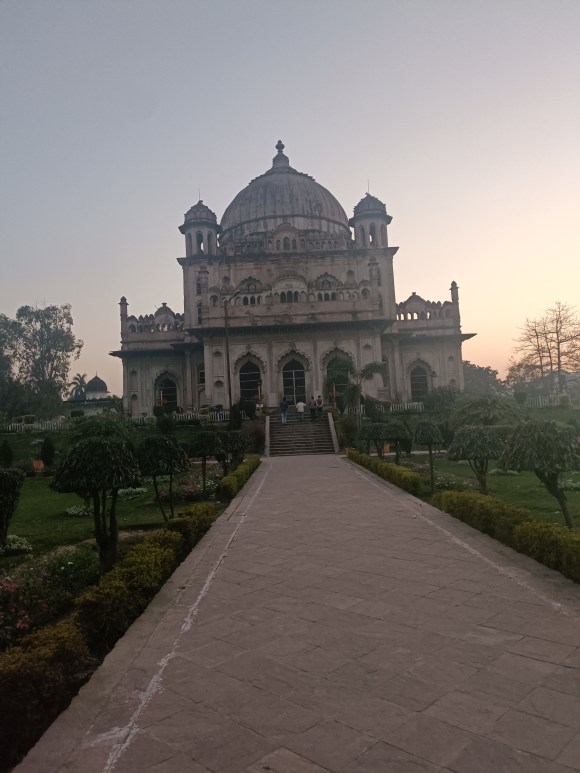
The stunning Saadat Ali Khan tomb testifies to all these features with poignant grace till this present era. Built by Ghazi-ud-Din Haider, the crowned King of Awadh in the early years of the 19th century in memory of his father, the eponymous Nawab Wazir of Awadh, Saadat Ali Khan, it was a palace of refined craftsmanship that took on the sombre hues of remembrance and eternal memory by being rebuilt as a tomb. Such is the fervour of familial legacies. Those eternal memories of wives and children now rest in the vaults that have been preserved in the inner chamber of the structure in its rear end.
On his part, Ghazi-ud-Din Haider (1769-1827) was a man of poise and taste. But he was also operating at a time when colonial powers were shareholders of Awadh as much as any other part of the country. Being a ruler may have been as much a nominal position for him as it was for his father, Yameen-ud Daula Saadat Ali Khan II Bahadur (1752 – 1814). But they both walked on common ground as they ensured that administrative duties fuelled by colonial interests didn’t usurp the spirit of their homeland. Lucknow was much more to Ghazi-ud-Din Haider and his father than just a city. Hence, their architectural aesthetics came into play to build a monumental legacy. If father Saadat Ali Khan was the mind who gave Lucknow a large number of memorable monuments between the city’s fabled Kaiserbagh and Dilkusha corridor then son Ghazi was no flash in the pan himself. The majestic Chattar Manzil, the quietly captivating Vilayati Bagh (built in memory of his beloved English wife Mary Short/ Padshah Begum) and the impressive Shah Najaf Imambara (modelled after the holy Shia site of Najaf in Iran) are all beholden to his vision. They all occupy pivotal central areas of the city today and are a visitors’ delight. He was also the pioneer behind a printing press, employing English and local scholars who were versed in multiple languages and enriched his court with the compilation of an extensive Persian dictionary.
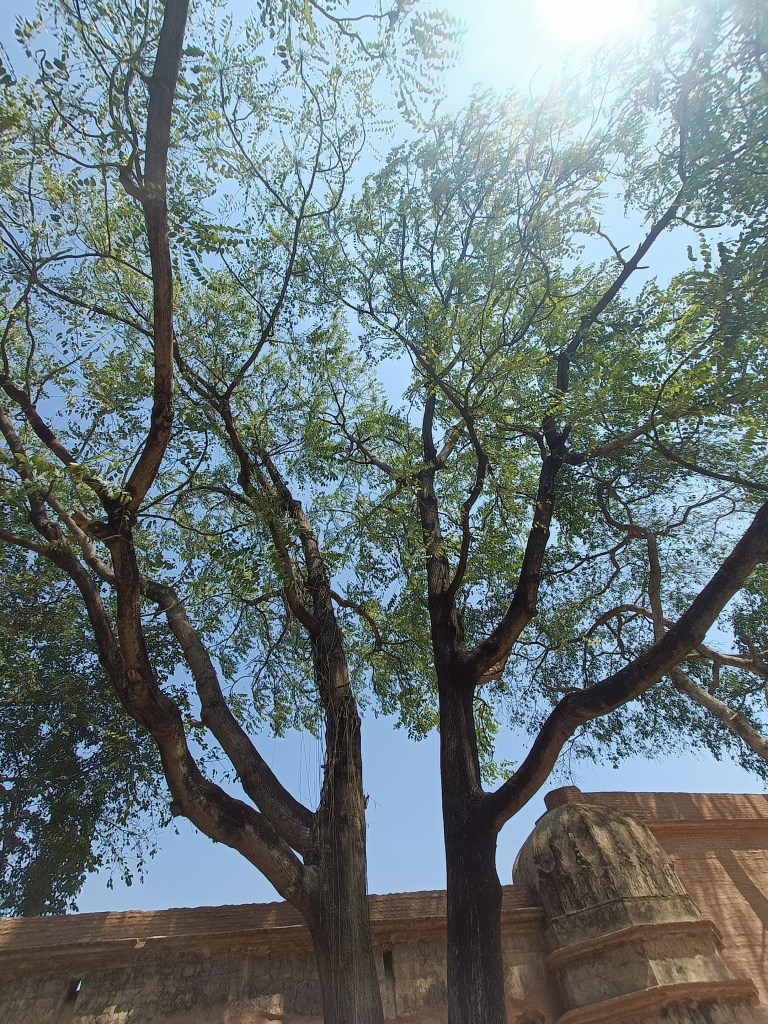
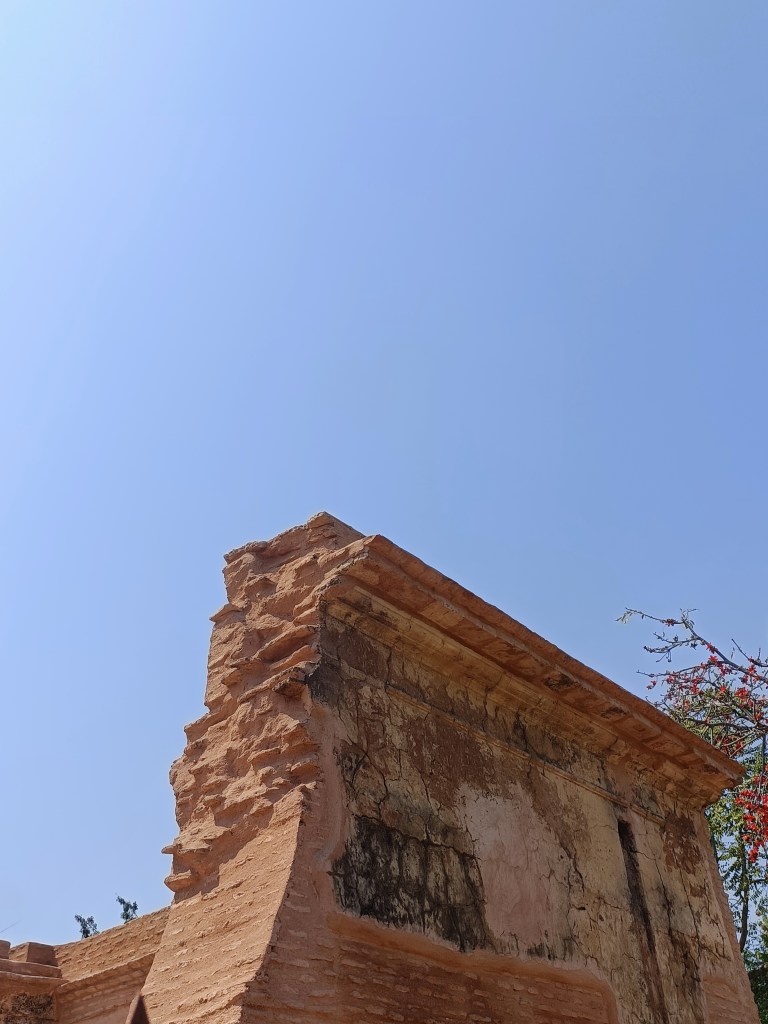
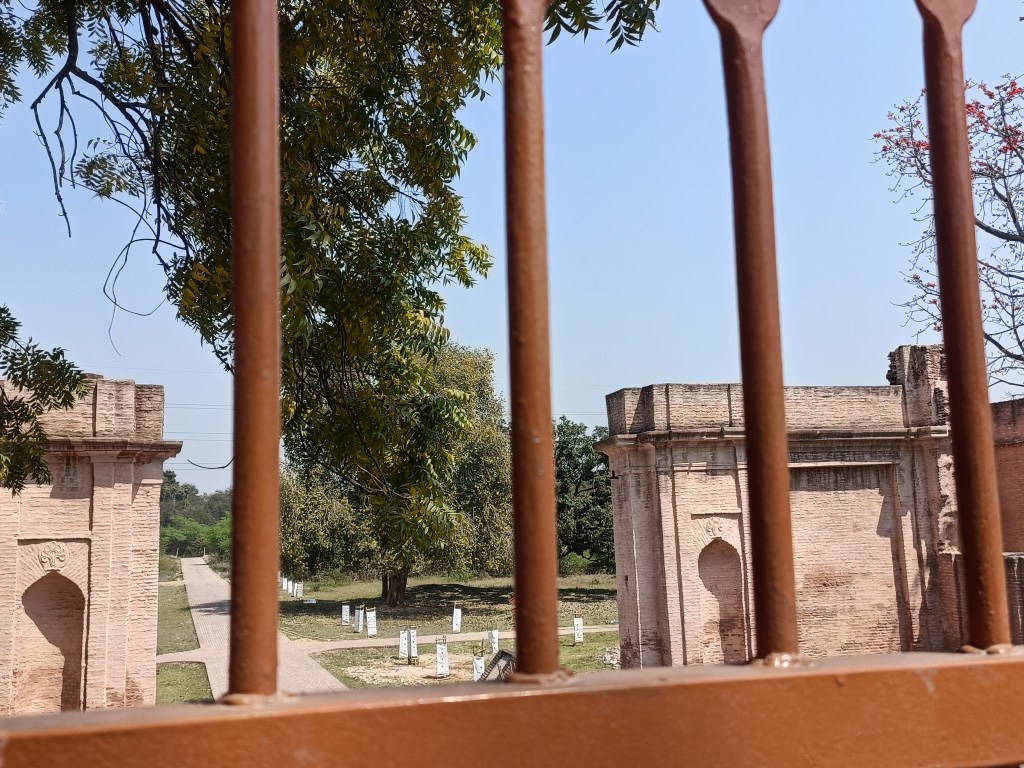
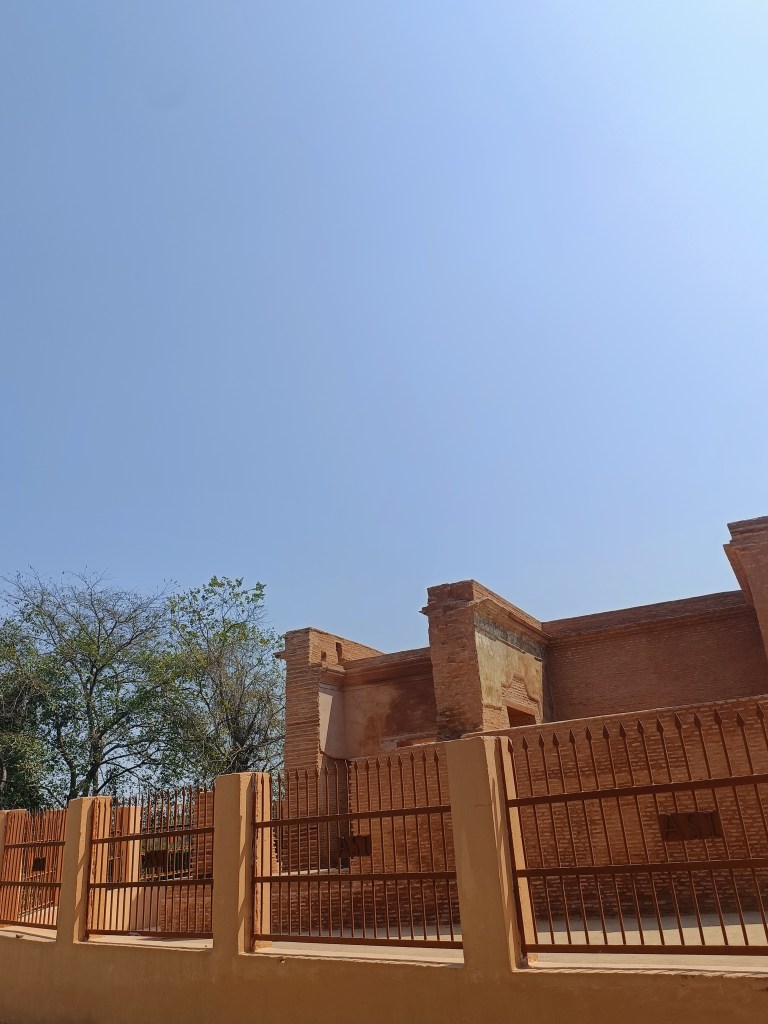
Saadat Ali Khan’s Tomb extends his legacy, it’s a stunning architectural design of a palace turned resting place for dearly departed retaining Lucknow’s exquisite stamp. The magnificent dome, arches, unbridled calligraphy of designs, decorative motifs and the pillars echo with two hundred years and more of all that the structure represents. The distinctive wash of yellow, brown and sometimes bleached lemon in the building are all captivating to discerning eyes. Under this dome and the parapets, one walks in circles and picks up the nuances of beauty that surround it. Chief among them being huge windows framed with nets, galloping squirrels and various potted plants covering the expanse.
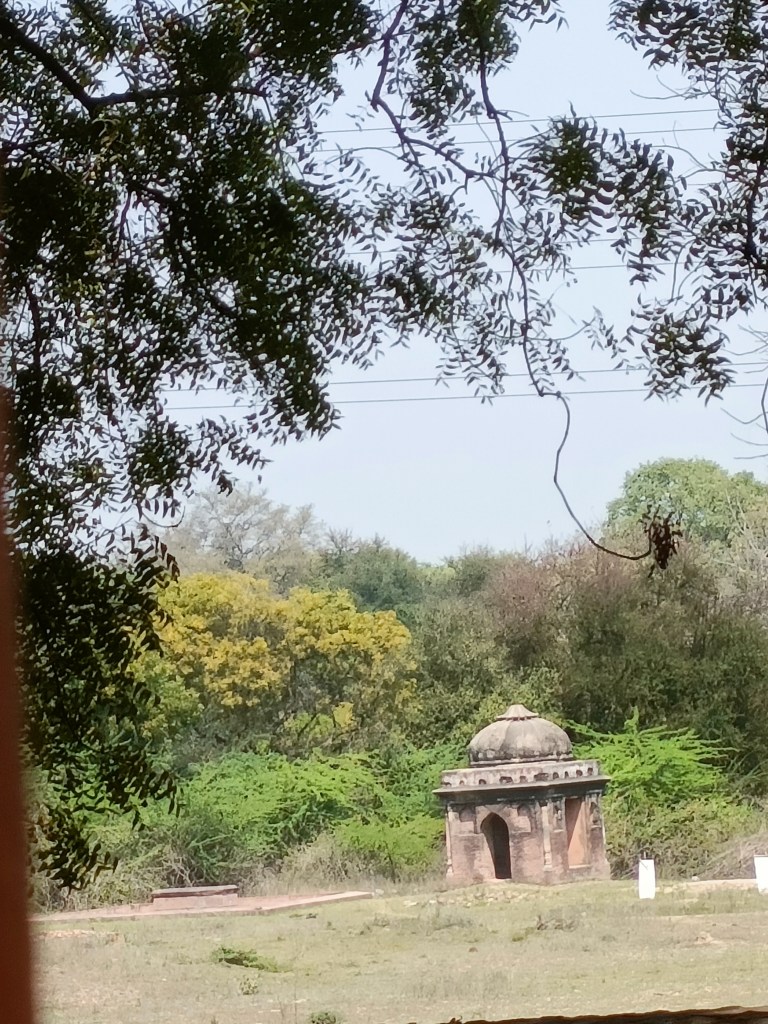
Even more wonderful is the tomb of Mursheer Zadi, Saadat Ali Khan’s beloved wife, that stands parallel to his tomb. With its similarly constructed structure and darker tones, the confluence of dome, spires, parapets, inner chamber and decorative motifs become breathtaking. If the morning reveals these structures as enchanting dual partners, afternoons suffuse them with a time-honoured glow while the evenings bathe them with shades of devotion to this cityscape.
Visitors people the verandahs that surround it. At the Saadat Ali Khan Tomb and Garden, we relive the permanence of smiling flowers, the majestic architecture and the surreal power of its mystique. It’s a structure that seems to literally rise out of the earth and court the sky in reverence to both. We, in turn, understand its juxtapositions of mortality and muted grandeur as die-hard Lucknawis.
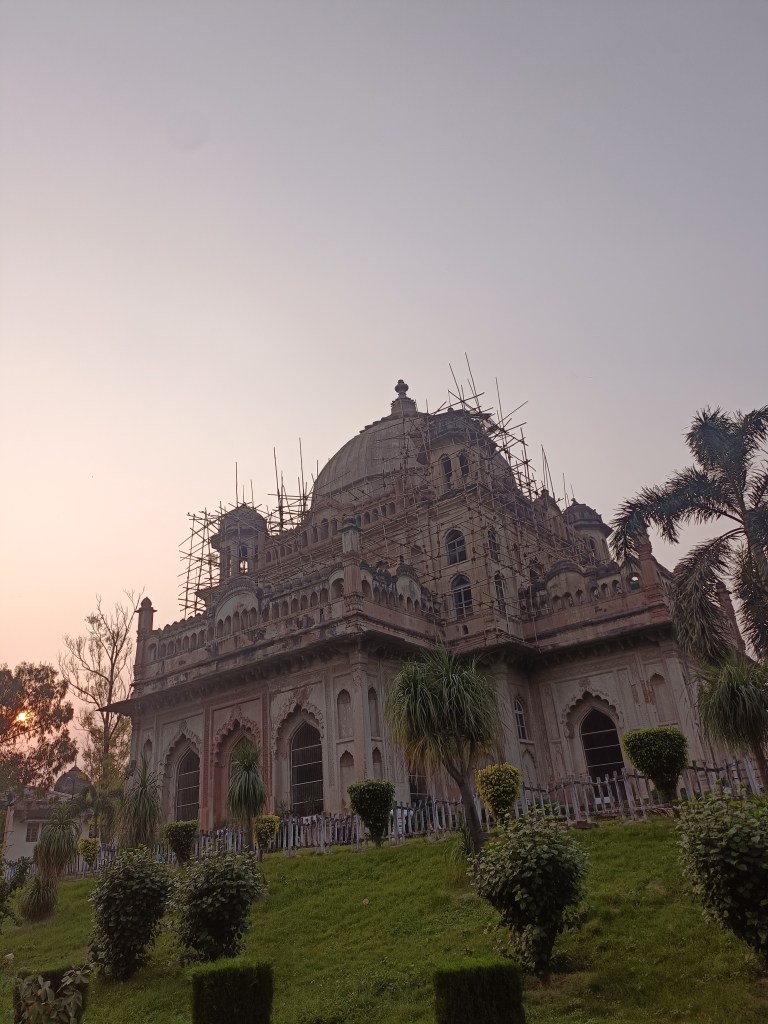
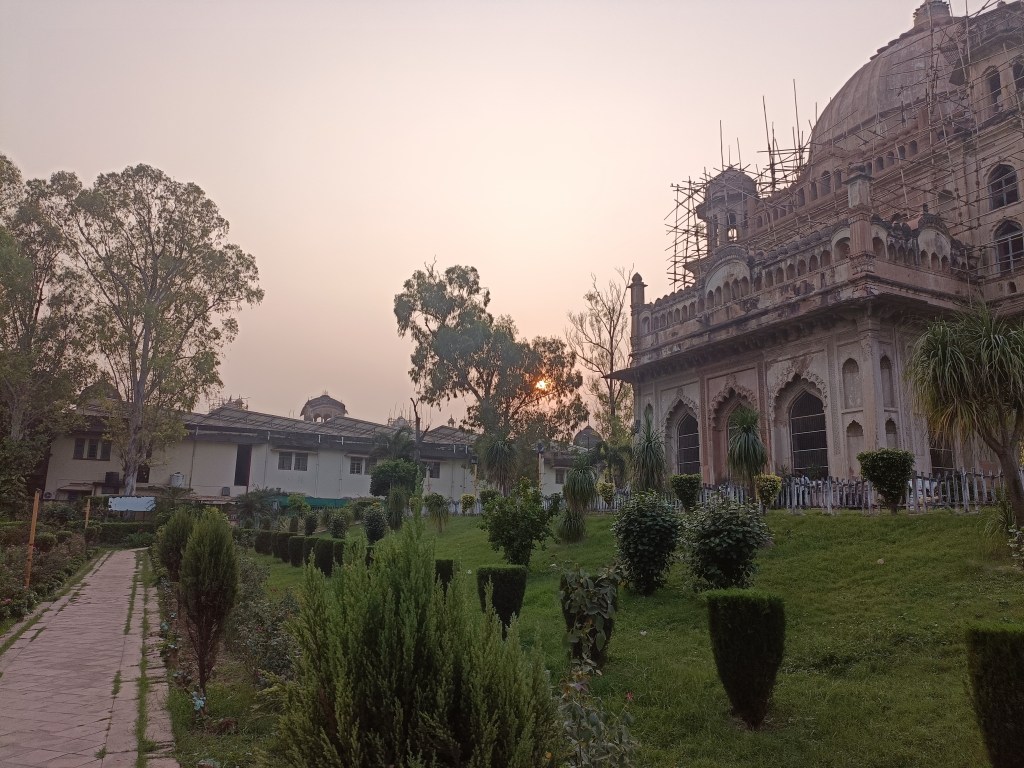
As scaffolds populate the tombs and restoration work ensures more renewed glint for its overall structure in the new year as also for its neighbouring Chattar Manzil, this site becomes the classical storyteller it has always been. Its saga is continuous, eternal. Its haunting understories are as soaked in legends and myths as is the wonderful city of Lucknow. The dead don’t just rest in peace here, they converse in whispers that become the wind and birdcalls.
Prithvijeet Sinha is an MPhil from the University of Lucknow, having launched his prolific writing career by self-publishing on the worldwide community Wattpad since 2015 and on his WordPress blog An Awadh Boy’s Panorama. Besides that, his works have been published in several journals and anthologies.
PLEASE NOTE: ARTICLES CAN ONLY BE REPRODUCED IN OTHER SITES WITH DUE ACKNOWLEDGEMENT TO BORDERLESS JOURNAL
Click here to access the Borderless anthology, Monalisa No Longer Smiles
Click here to access Monalisa No Longer Smiles on Kindle Amazon International
 Borderless