By Snigdha Agrawal
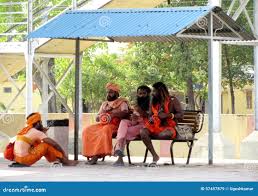
The sun beat down mercilessly on the railway platform of Karwar Railway Junction, where a group of rotund, saffron-clad priests huddled together, fanning themselves with cardboard pieces ripped from cartons. Their expressions were grim, their bellies noticeably less jolly than usual.
“It’s the end of an era, brothers,” sighed Pandit Upadhyaya, his triple chins wobbling like unset strawberry Jello. “First, they replaced bulls with tractors. Then, they put machines in our post offices. And now; NOW, they have brought AI into our temples!”
The sacred threads worn over their left shoulder, diagonally across the body, seemed to protest against their protruding bellies, yellowed and stringy, yet proudly declaring the caste hierarchy would soon be rendered null and void. The looks of concern on their faces screamed, “Not fair…not fair at all”.
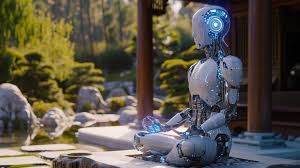
“I still cannot believe it!” moaned Pandit Shastri, wiping his forehead with the end of his dhoti[1]. “A robot priest? Is this then the end of the Kalyug [2]? Else, how can a machine do what we do?”
“They say it chants flawlessly,” added Pandit Joshi, shaking his head. “Not one mispronounced shloka[3]! No breaks for tea or chewing on betel leaves! No accidental burps during the aarti[4]!”
“Profaneness!” chorused the group, clutching their prayer beads in outrage.
“I even heard,” Pandit Sharma whispered conspiratorially, “that the AI priest does not accept dakshina[5]! No envelopes, no fruit baskets, no ghee-laden sweets. What kind of priest didn’t accept gifts?” they nodded looking puzzled.
Pandit Upadhyaya lamented. “What is our next recourse? If these AI priests take over, who will feed us? Who will drape us in silk? Who will offer us ghee-laden sweet boxes?”
A train pulled into the station just then; the platform transformed with the usual activity commencing on arrivals. Passengers stuck their heads out, looking around for tea and snacks. Pandit Sharma suddenly came up with an idea. “Not all is lost yet.”
“Meaning?” asked Pandit Joshi, narrowing his eyes suspiciously.
“We shall sell tea! But not just any tea—Prasad[6] Chai! Sacred! Blessed! Tea infused with the wisdom of the Vedas!”
The priests considered this. It was true. If there was one thing, they were experts in, it was making offerings with dramatic flair. Why not apply that skill elsewhere?
Within weeks, they set up stalls on the platform, offering passengers their special chai. As trains pulled in, the platform echoed with the chorus…”Om Chai Namah![7]” “Divine Masala Chai. Guaranteed to bring you good karma!” “Blessed by Brahmins, brewed with bhakti[8]!”
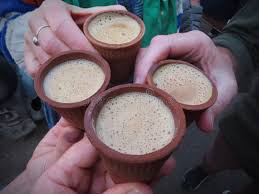
Soon enough, their stall was milling with passengers keen to taste this unique concoction, prepared by none other than the four Brahmin Head Priests. The spectacle of their tea-making performance, with dramatic gestures, had everyone gawking. Served in earthen cups, each sip elicited murmurs of appreciation from the passengers. The “Jai Ho” brand of tea didn’t take long to become a hot success.
Word spread like wildfire in the temple town. Business boomed. The tea, laced with just the right amount of saffron, cardamom, and sacred nostalgia, had an irresistible charm. Soon, the platforms were buzzing with satisfied sippers. Every train passing through the station had passengers stepping out to sip on this special tea.
As they counted their first earnings, Pandit Upadhyaya sighed, “Brothers, who knew AI would push us into a more profitable business?”
But then, one day, a group of railway officials swooped down on them in their khaki outfits with officious looks on their faces. One of them, a spectacled man with a voice that needed no loudspeaker, spoke, “Pardon me, Swamiji’s, but we’ve received some complaints. Your tea business is so blessed that passengers are delaying boarding their trains. This is causing major delays and loss of revenue to the railways. Moreover, it’s illegal to do business on the platform without a licence from the authorities. Can you show the vendor licence?” he asked hesitatingly.
The priests exchanged guilty glances.
The official adjusted his spectacles, “Of course, we can set that right, as we have received a special request from the high command. The Railway Ministry wishes to introduce your “Jai Ho” chai at all major railway junctions!”
Jowls dropped, mouths agape, the priests couldn’t believe they heard right. The tufts of hair on the back of their shaved heads stood erect in surprise.
Pandit Upadhyaya beamed, “Brothers, the Gods have truly blessed us! It no longer matters that non-humans have overtaken our profession, we continue to gain from selling the brew the Gods’ drink!”
As they sipped their divine brew, laughing heartily, they looked up at the temple in the distance, where the AI priest continued chanting slokas flawlessly.
“Well,” chuckled Pandit Sharma, “at least that machine can’t make chai!”
And so, from AI adversaries to tea sellers, the priests of Karwar found their unexpected salvation—not in temples, but in terracotta cups of steaming, saffron-infused chai.
[1] A loose piece of cloth wrapped in the lower half of the body
[2] The current age according to Hindu eras, supposed to be dark.
[3]Sanskrit chants
[4] Holy offerings
[5] Honorariums
[6] Offerings blessed by Gods
[7] Bow to the blessed chai
[8] Devotion
Snigdha Agrawal (nee Banerjee) is an author of five books and a regular contributor to anthologies and e-magazines. A septuagenarian, she has recently published a book of memoirs titled Fragments of Time, available on Amazon and Flipkart.
PLEASE NOTE: ARTICLES CAN ONLY BE REPRODUCED IN OTHER SITES WITH DUE ACKNOWLEDGEMENT TO BORDERLESS JOURNAL
Click here to access the Borderless anthology, Monalisa No Longer Smiles
Click here to access Monalisa No Longer Smiles on Amazon International
 Borderless