By Bhaskar Parichha
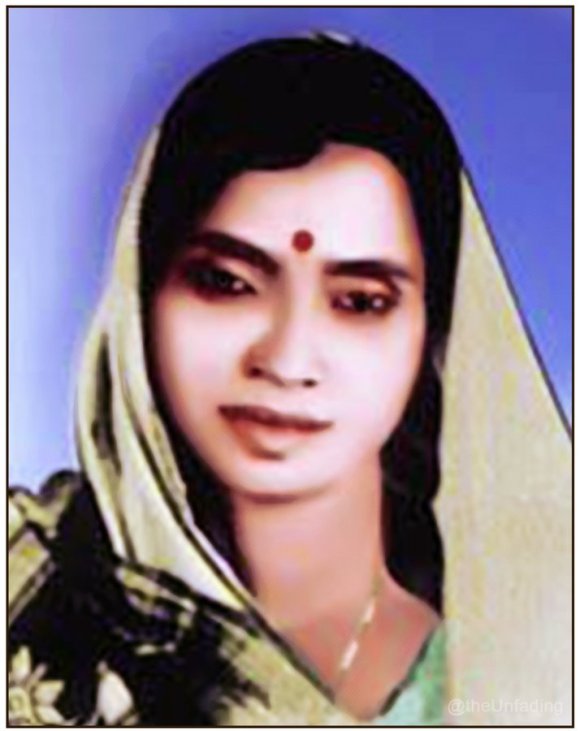
Bidyut Prabha Devi (1926 – 1977) is celebrated as one of the most prominent female poets in Odia literature. Hailing from Natara village in the Kendrapara district, she was the second daughter of the esteemed writer, Nimai Charan Das, and Rekha Devi.
Raised in a traditional family in Bamphisahi, Cuttack, she received most of her education independently, attending Ravenshaw Girls’ School until the ninth grade. Inspired by her father and notable Odia poets like Nanda Kishore Bal and Kunja Bihari Das, she began her journey into poetry in 1940.
Her first collection, released in 1944 when she was merely 18 years old, featured patriotic poems that celebrated the cultural and natural heritage of Odisha. It highlighted her early ability to create vivid imagery and convey emotional depth, drawing from her rural background and the literary traditions of Odia.
Her 1950 collection, Utkal Saraswata[1], was recognised as a significant contribution to education, being included as a poetry textbook at Utkal University. In addition to poetry, she also wrote for children, for which she was awarded by the Government of India in 1955, acknowledging her impactful contributions to children’s literature.
Bidyut Prabha’s poetry explores the challenges faced by women, societal limitations, and the theme of empowerment, weaving together both personal and universal experiences. It embodies her feminist viewpoint, tackling matters such as gender inequality within a conservative framework, all while preserving a lyrical and approachable style.
She authored numerous plays, although specific titles are not extensively recorded. Her theatrical pieces frequently conveyed social messages, resonating with her socialist and feminist principles. Her writings were recognized for their clarity and moral depth, rendering literature accessible to younger audiences. Some of these later works are less documented but showcase her reflective and philosophical nature.
Influenced by socialist principles, her poetry examined social disparities and advocated for the marginalised. Her self-taught approach was characterised by clear and evocative language, rendering her work both relatable and profound.
Bidyut Prabha’s writings were revolutionary for their era, especially in their focus on women’s issues within Odia literature. Her son, Sachidananda Mohanty, a distinguished educationist and litterateur, has translated her works, thereby preserving her legacy.
Writes Sachidananda Mohanty[2]: “In recent decades, feminist historiography in eastern India has paid welcome attention to issues of education, creativity, and sisterhood across linguistic barriers. It has recognised women’s pivotal role in shaping the public space at the intersection between feminist history and literary creativity. Scholars like Judith Walsh, Tanika Sarkar, Malavika Karlekar, and others have brought to our attention forgotten life-narratives of literary women of the region who have created a tradition of their own. Bidyut Prabha Devi, recognised as a major female voice in pre-modern Odia poetry, belongs to a poetic tradition represented by an illustrious sisterhood, comprising Reba Ray, Kuntala Kumari Sabat, Haripriya Devi, Debahuti Devi, Nirmala Devi, Tulasi Das, and Brahmotri Mohanty, among others.
“While Bidyut Prabha may be known in Odisha, her feminist poems, based on her deep understanding of domesticity and patriarchy, have not been sufficiently read outside the state. Even in Odisha, her ‘romantic poems’ are widely anthologised at the cost of the more powerful compositions that address the woman’s position and identity in terms of the entrenched power structures in society.”
According to Mohanty, Bidyut Prabha’s feminist poetry stands out distinctly from the prevalent ‘Advice-for-Women’ genre in the region. She bases her work on her own life experiences and resonates with the growing feminist consciousness in Odisha, which is championed by literary feminists and social reformers like Sarala Devi[3], who played a pivotal role as a mentor to Bidyut Prabha. This journey was marked by its transnational influences. Sarala Devi had a strong connection with poet Annada Shankar Ray, a key figure in the Odia Romantic movement.
Her impact on Odia literature is significant, particularly as one of the earliest notable female poets in a predominantly male literary environment. Her contributions are rooted in her capacity to merge lyrical elegance with social critique, enhancing the inclusivity, reflection, and cultural relevance of Odia literature. Her work continues to serve as a foundational element for feminist and regional narratives in Odisha.
She was married to Panchanan Mohanty. Following health challenges in 1966, her literary output took on a spiritual dimension, shaped by her connection to the Sri Aurobindo Ashram, Pondicherry. Unfortunately, she took her own life.
Bidyut Prabha Devi’s poetry, deeply rooted in feminist and socialist ideals, continues to motivate and inspire, with her centenary of birth being commemorated in 2025 as a representation of women’s empowerment in Odisha.
.
[1] Odia Literature
[2] A literary sisterhood, Vol. 65, No. 6 (326) (November-December 2021), Published By: Sahitya Akademi
[3] Sarala Devi (1904-1986) – Odisha’s first Satyagrahi, first female legislator and first feminist writer.
.
Bhaskar Parichha is a journalist and author of Cyclones in Odisha: Landfall, Wreckage and Resilience, Unbiased, No Strings Attached: Writings on Odisha and Biju Patnaik – A Political Biography. He lives in Bhubaneswar and writes bilingually. Besides writing for newspapers, he also reviews books on various media platforms.
PLEASE NOTE: ARTICLES CAN ONLY BE REPRODUCED IN OTHER SITES WITH DUE ACKNOWLEDGEMENT TO BORDERLESS JOURNAL
Click here to access the Borderless anthology, Monalisa No Longer Smiles
Click here to access Monalisa No Longer Smiles on Amazon International
 Borderless