Categories
Musings

Beyond Horizons: A Love Story

Narrative and Photographs by Sai Abhinay Penna

 As the first rays of the morning sun arose from beyond the distant hills, their gentle touch painted the sky with hues of warm gold, igniting a symphony of colours that kissed the vast canvas of the mist-laden valleys of Chikmagalur.
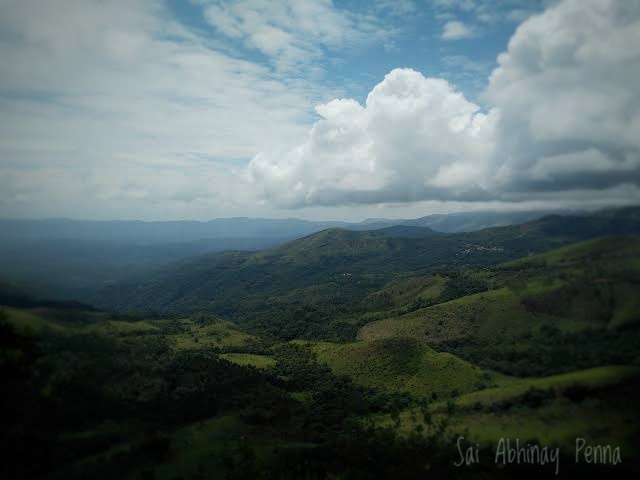
Mist laden valleys of Shishila

Veiled within the ever-shifting embrace of the drifting clouds, the resolute peaks of the Kudremukh Mountains played a tantalising game of hide-and-seek with the heavens. Each passing moment held the promise of a fleeting revelation as I embraced nature’s games.

Shishila Valley

All at once, like an artist’s brushstroke on nature’s canvas, the Shishila Valley appeared from its shroud — a spectacle sending a shiver of awe through my being.

As I walked through the winding paths lined with coffee plantations, the rich aroma of the beans seemed to be woven into the very fabric of the place and filled the air to the brim. The scent, as I stepped through the intricate trails of the estate, thrilled the heart of a coffee maven like me.
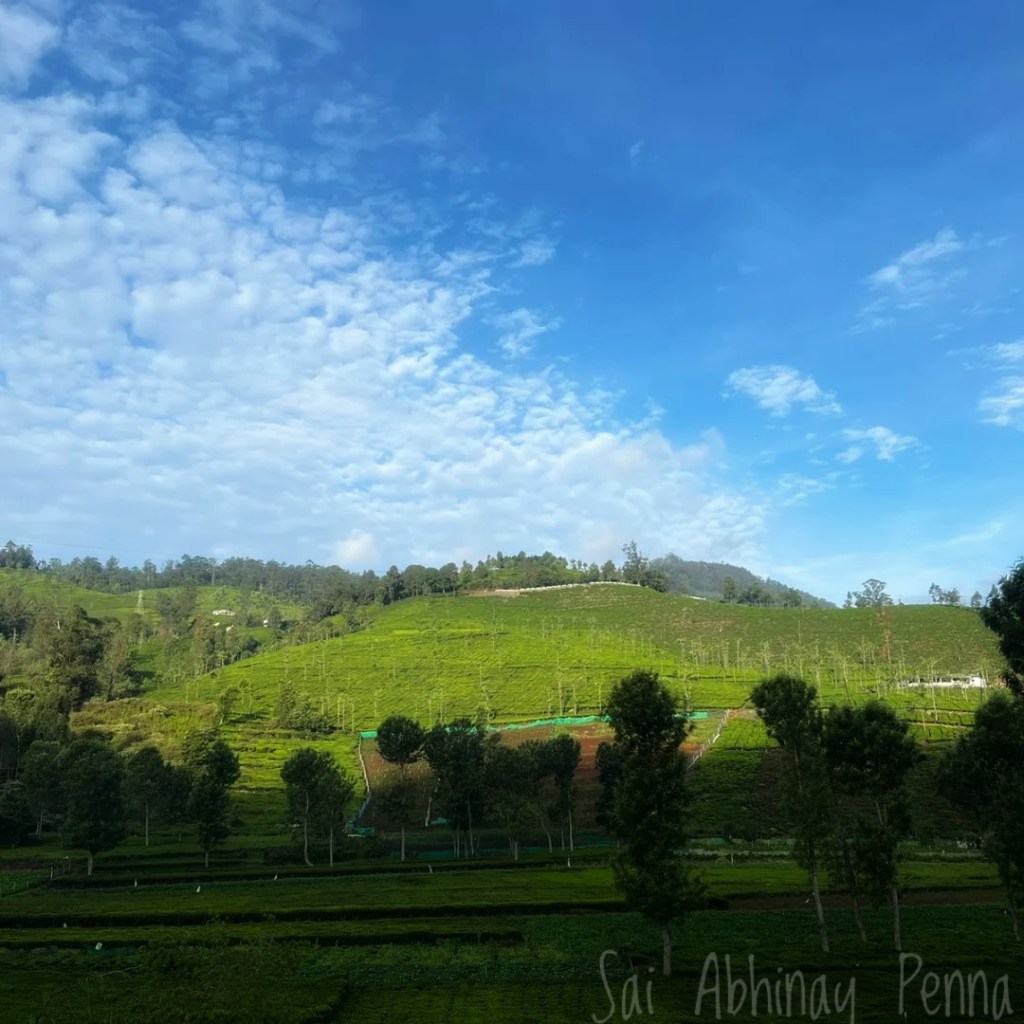
Coffee plantations with varied shades of green

The emerald leaves of the coffee plants glistened with dewdrops that captured the sun’s rays, resembling precious gemstones. Each step was an immersion into a world where nature’s palette had painted every hue imaginable.

From the coffee plantations, I trekked through the unexplored trails of the long-lost Ballalarayana Fort built in the twelfth century. In the heart of the wilderness — I found myself surrounded by the rhythmic symphony of the forest.
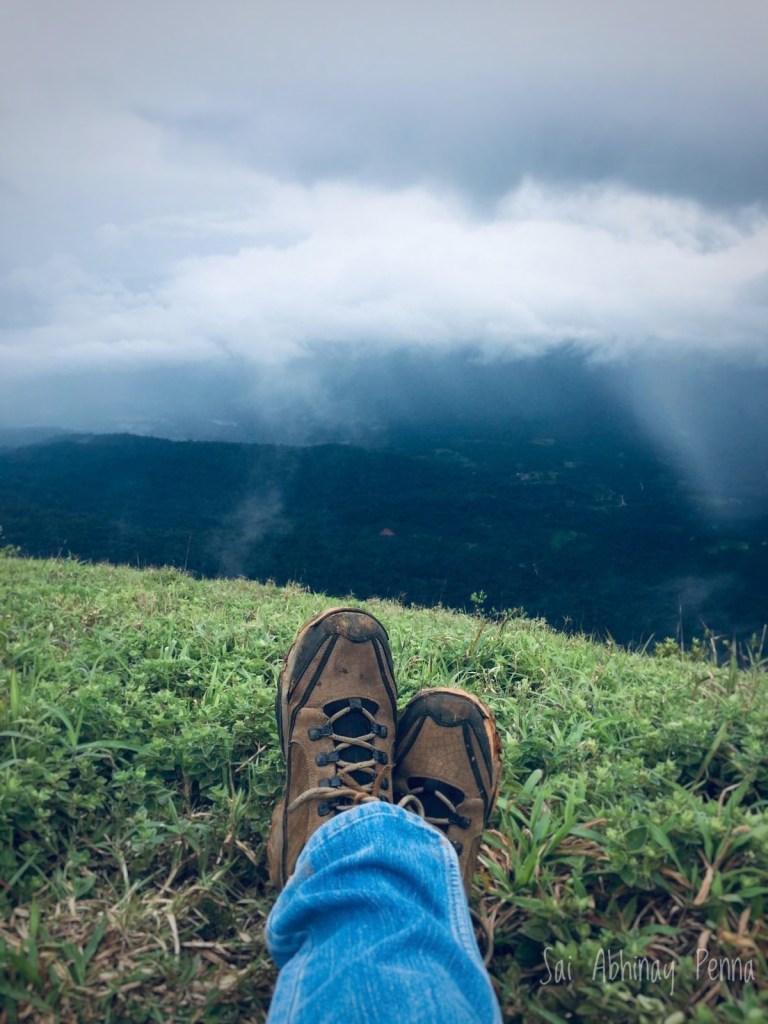
Ballalarayana Fort trail

The dense vegetation enveloped me like a shroud of mystery, and the air carried the earthy scent of history as if the very soil held the secrets of generations. The crumbling stones and weathered walls of the fort emerged from the undergrowth, standing as silent witnesses to the passage of time. Here history seemed to come alive, the stones carrying the burden of stories now carved into every crack and crevice.

As I ascended the rugged trail, the panorama that unfolded in front of my eyes was breath-taking. Rolling hills, verdant valleys, and mist-shrouded peaks stretched out in every direction — the lines between earth and sky were thin. I felt like I was one among the clouds.

The feeling of being suspended in this vast expanse was humbling and revitalizing.

Descending from the highest peak of Karnataka, I ventured into Baba Budangiri, the sacred mountain with its mystical aura that captivated me to surrender myself to its embrace.

The shrine of Dattagiri, nestled atop the hills, stood as the tangible proof of the spiritual sanctity of the place. A small conversation with the priest from the Dattagiri shrine opened my eyes to the history behind this place. The shrine has been made to resemble a meeting place between Sufism and the Hindu Avudutha tradition.

As I humbly paid my respects, the echoes of devotees’ chants intertwined with the tranquil symphony of nature, weaving an ambience of enlightenment that seemed to touch the very soul of the surroundings.

The lake’s surface transformed into a canvas of reflection, capturing the heavens above as if they had found their home in its depths. Hirekole Lake in the evenings was a sanctuary of tranquility, a haven; where the world seemed to hold its breath, inviting me to step away from the rush of life and savour the sheer magic of the present moment.

The author at the lake. Photo provided by the author

The ambience was one of unhurried contentment as if time had chosen this place to slow its pace, allowing all the on-goers to submerge into that beautiful moment.

As I navigated the winding pathways through the dense woods, my anticipation grew with every passing curve. The whispering leaves and dappling sunlight seemed to guide me toward the elusive waterfall, the Hebbe Falls.

As I walked towards the waterfall, the distant murmur of cascading water gradually intensified, and it felt like a symphony of nature’s melody in my journey. Nature’s music, I must say.

Finally, as the foliage parted, I beheld the spectacle: a magnificent cascade of glistening white that descended like a celestial curtain. The mist kissed my skin, carrying the essence of the falls, and I couldn’t help but marvel at the timeless masterpiece sculpted by nature’s patient hand.

Hebbe Falls

In a final blaze of glory, the sun slips beneath the edge of the Shishila Valley, leaving behind a trail of stars, a full moon, and a sky that glows with the memory of its fiery embrace.

 As the star-studded canopy, a symphony of crickets and the soft murmur of rustling leaves painted the air with an orchestration of nature’s melodies. It was as if the very fabric of the night had come alive, crafting a captivating masterpiece for my senses.

A myriad of stars shimmered like diamonds carelessly strewn across the inky canvas. The mountains stood as solemn sentinels, their peaks silhouetted against the night sky, seemingly whispering secrets to the heavens. A gentle breeze carried whispers of pine and earth, infusing the air with an invigorating freshness, and the faint fragrance of wildflowers lingered, an exquisite freshness that filled my lungs.

In the embrace of Chikmagalur’s undulating hills, veiled valleys, calming lakes, and tranquil panoramas, I uncovered a profound truth: the odyssey that stretches beyond familiar vistas is not merely a voyage of the body but a stirring expedition of the soul.

.

Sai Abhinay Penna is a professional cricketeer and writer based in Chennai.

.

PLEASE NOTE: ARTICLES CAN ONLY BE REPRODUCED IN OTHER SITES WITH DUE ACKNOWLEDGEMENT TO BORDERLESS JOURNAL

Click here to access the Borderless anthology, Monalisa No Longer Smiles

Click here to access Monalisa No Longer Smiles on Kindle Amazon International
Categories
Review

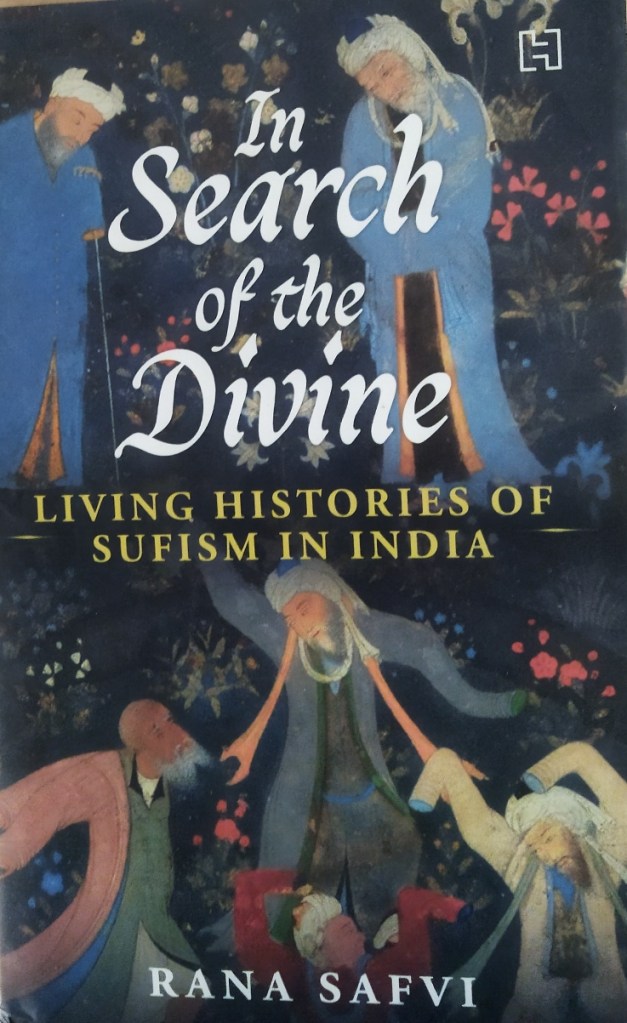
In Search of the Divine

By Bhaskar Parichha

Title: In Search of the Divine: Living Histories of Sufism in India

Author: Rana Safvi

Publisher: Hachette India

Sufism was a liberal reform movement within Islam. It had its origin in Persia and spread into India in the 11th century. Most of the Sufis (mystics) were persons of deep devotion who disliked the display of wealth and degeneration of morals following the establishment of the Islamic empire.

 The word ‘Sufi’ is derived from ‘suf’, which means wool in Arabic. It also means ‘purity’.Sufism or mysticism emerged in the 8th century, The early known Sufis were Rabia al-Adawiya, Al-Junaid, and Bayazid Bastami. It was a well-developed movement by the end of the 11th century. Al Hujwiri is regarded as the oldest Sufi in the sub-continent. By the 12th century, the Sufis were organized in Silsilahs.

In Search of the Divine: Living Histories of Sufism in India by Rana Safvi is by far the most comprehensive history of this belief system. As a scholarly book, it does more than just explain Sufism. The book elucidates how the practice is influential and yet possesses a quiet dignity. The general perception of Sufism for those uninitiated is perhaps reduced to paintings and images of saints, in cascading gowns steeped in reverence for the Almighty. The images, while powerful are deeply reductive. Like with most other things, Sufism has been reduced to images, motifs, and symbols of faith.

Says the blurb: ‘Sufism, called the mystical dimension of Islam, is known for its inclusive nature, as well as its ethics of love and compassion, its devotional music, art, and architecture. In India’s syncretic culture, Sufism developed a distinct character, and harmoniously embraced the Bhakti traditions of North India.’

A renowned writer, scholar, and translator, Rana Safvi is a passionate believer in India’s unique civilisational legacy and pluralistic culture which she documents through her writings. Author of nine books on the culture, history, and monuments of India, her A Folk Tale and Other Stories: Lesser-Known Monuments of India is a commendable book.

Safvi writes, “As numerous mystics came and settled in the subcontinent, they drew from local Hindu influences and developed a unique form of Sufism here. There was a great and constant refertilisation of ideas. With their understanding, acceptance, and integration of local customs and influences, they carved their own unique space in the hearts of locals of every faith, class, and caste. They could speak the local language, and dialects and as tales of their Karamat (miracles) grew, so did their followers.”

She delves into the fascinating roots of Sufism, with its emphasis on ihsan, iman, and akhlaq[1], and the impact it continues to have on people from all communities. Safvi relies not only on textual sources but also on her visits to dargahs across the country, and the conversations she has with devotees and pirs alike. 

Safvi says dargahs aren’t spaces meant to accommodate the Muslim community alone. Sufi saints insisted on religious harmony. In the 18th chapter of the book titled Celebrating with the Saint, she quotes an oral account of tolerance and acceptance.

“Some Muslims were once passing through an area where Holi was being celebrated. Perhaps as a shararat (mischief), perhaps unwittingly, the Muslims got Holi colors on their clothes. This led to a flight among Hindus and Muslims. The news reached the darbar (court) of Hazrat Nizamuddin Auliya. The Muslims complained that they had been defiled.

“How would they offer namaz now?’ said Fareed Bhai.

“Hazrat Nizamuddin Auliya told them: my people, all colors come from Allah. Which color is that that does not come from Allah?

“Then Hazrat Nizamuddin Auliya told Hazrat Amir Khusrau to capture this in a couplet. And Hazrat Khusrau wrote the (following) lyric:

Aaj rang hai ri

Mere khwaja ke ghar rang hai ri, aaj rang hai[2].”

The book suggests in intense detail the sacred atmosphere she encountered: the reverent crowds, the strains of qawwali, and the fragrance of incense, as well as highlights the undeniable yet often forgotten contributions of women in Sufism. The wide-ranging study is contemporary and also a tribute to the rich and textured past.

The book doesn’t just explain Sufism to the lay reader, it coagulates the affinity shared between Sufism and Islam. Safvi’s book lends dignity to the millions of worshippers who otherwise inhabit an Islam-loathing world.

Apart from a historical account, the books deal with the oral narratives, the status of women, and the Prophet’s family who laid the foundation for faith as Muslims know it. The elegant study emphasises the power of faith, not just in a universal capacity but also as a personal one. Along with the book meant for review, Safvi writes in a note, “This book has been a deeply enriching experience for me.”

Safvi’s work does not make the case that Sufism is independent of Islam. She says it was a myth solidified by western academics. She clarifies that a lot of Sufi followers do consider Prophet Muhammad to have spearheaded the practice. The connection with Islam is unmissable and yet it took on the shades of other faiths in praxis.

Her exploration isn’t in any way, a means to legitimise Sufism. Safvi is humble enough to recognise that she doesn’t need to do that. If anything, her writing is to shed light on values of peace, austerity, and benevolence which often miss the eye’s mark when religion is discussed in a politically charged world.

Rana Safvi’s In Search of the Divine is dignified, powerful, engrossing. Weaving together facts and popular legends, ancient histories and living traditions, this unique treatise running into more than four hundred pages examines core Sufi beliefs and uncovers why they might offer hope for the future.


[1] Spiritual excellence, faith, act of goodness or virtue

[2] At my Khwaja’s home, there is jubilant colour
Today there is jubilant colour

Bhaskar Parichha is a journalist and author of UnbiasedNo Strings Attached: Writings on Odisha and Biju Patnaik – A Political Biography. He lives in Bhubaneswar and writes bilingually. Besides writing for newspapers, he also reviews books on various media platforms.

.

PLEASE NOTE: ARTICLES CAN ONLY BE REPRODUCED IN OTHER SITES WITH DUE ACKNOWLEDGEMENT TO BORDERLESS JOURNAL

Click here to access the Borderless anthology, Monalisa No Longer Smiles