Categories
Bhaskar's Corner Tribute

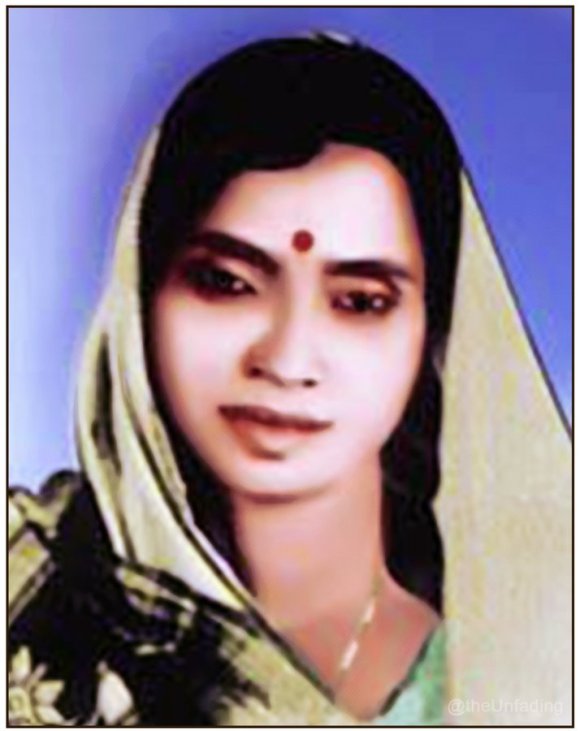
Bidyut Prabha Devi – The First Feminist Odia Poet

By Bhaskar Parichha

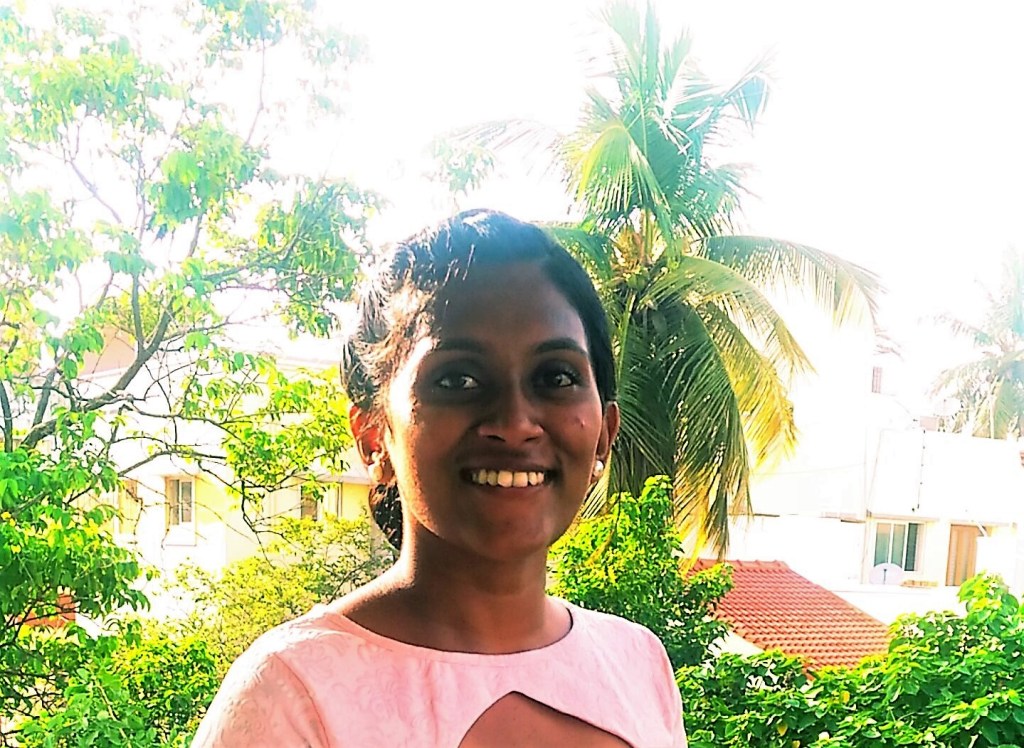
Bidyut Prabha Devi

Bidyut Prabha Devi (1926 – 1977) is celebrated as one of the most prominent female poets in Odia literature. Hailing from Natara village in the Kendrapara district, she was the second daughter of the esteemed writer, Nimai Charan Das, and Rekha Devi.

Raised in a traditional family in Bamphisahi, Cuttack, she received most of her education independently, attending Ravenshaw Girls’ School until the ninth grade. Inspired by her father and notable Odia poets like Nanda Kishore Bal and Kunja Bihari Das, she began her journey into poetry in 1940.

Her first collection, released in 1944 when she was merely 18 years old, featured patriotic poems that celebrated the cultural and natural heritage of Odisha. It highlighted her early ability to create vivid imagery and convey emotional depth, drawing from her rural background and the literary traditions of Odia.

Her 1950 collection, Utkal Saraswata[1], was recognised as a significant contribution to education, being included as a poetry textbook at Utkal University. In addition to poetry, she also wrote for children, for which she was awarded by the Government of India in 1955, acknowledging her impactful contributions to children’s literature.

Bidyut Prabha’s poetry explores the challenges faced by women, societal limitations, and the theme of empowerment, weaving together both personal and universal experiences. It embodies her feminist viewpoint, tackling matters such as gender inequality within a conservative framework, all while preserving a lyrical and approachable style.

She authored numerous plays, although specific titles are not extensively recorded. Her theatrical pieces frequently conveyed social messages, resonating with her socialist and feminist principles. Her writings were recognized for their clarity and moral depth, rendering literature accessible to younger audiences. Some of these later works are less documented but showcase her reflective and philosophical nature.

Influenced by socialist principles, her poetry examined social disparities and advocated for the marginalised. Her self-taught approach was characterised by clear and evocative language, rendering her work both relatable and profound.

Bidyut Prabha’s writings were revolutionary for their era, especially in their focus on women’s issues within Odia literature. Her son, Sachidananda Mohanty, a distinguished educationist and litterateur, has translated her works, thereby preserving her legacy.

Writes Sachidananda Mohanty[2]: “In recent decades, feminist historiography in eastern India has paid welcome attention to issues of education, creativity, and sisterhood across linguistic barriers. It has recognised women’s pivotal role in shaping the public space at the intersection between feminist history and literary creativity. Scholars like Judith Walsh, Tanika Sarkar, Malavika Karlekar, and others have brought to our attention forgotten life-narratives of literary women of the region who have created a tradition of their own.  Bidyut Prabha Devi, recognised as a major female voice in pre-modern Odia poetry, belongs to a poetic tradition represented by an illustrious sisterhood, comprising Reba Ray, Kuntala Kumari Sabat, Haripriya Devi, Debahuti Devi, Nirmala Devi, Tulasi Das, and Brahmotri Mohanty, among others. 

“While Bidyut Prabha may be known in Odisha, her feminist poems, based on her deep understanding of domesticity and patriarchy, have not been sufficiently read outside the state. Even in Odisha, her ‘romantic poems’ are widely anthologised at the cost of the more powerful compositions that address the woman’s position and identity in terms of the entrenched power structures in society.”

According to Mohanty, Bidyut Prabha’s feminist poetry stands out distinctly from the prevalent ‘Advice-for-Women’ genre in the region. She bases her work on her own life experiences and resonates with the growing feminist consciousness in Odisha, which is championed by literary feminists and social reformers like Sarala Devi[3], who played a pivotal role as a mentor to Bidyut Prabha. This journey was marked by its transnational influences. Sarala Devi had a strong connection with poet Annada Shankar Ray, a key figure in the Odia Romantic movement.

Her impact on Odia literature is significant, particularly as one of the earliest notable female poets in a predominantly male literary environment. Her contributions are rooted in her capacity to merge lyrical elegance with social critique, enhancing the inclusivity, reflection, and cultural relevance of Odia literature. Her work continues to serve as a foundational element for feminist and regional narratives in Odisha.

She was married to Panchanan Mohanty. Following health challenges in 1966, her literary output took on a spiritual dimension, shaped by her connection to the Sri Aurobindo Ashram, Pondicherry. Unfortunately, she took her own life.

Bidyut Prabha Devi’s poetry, deeply rooted in feminist and socialist ideals, continues to motivate and inspire, with her centenary of birth being commemorated in 2025 as a representation of women’s empowerment in Odisha.

[1] Odia Literature

[2] A literary sisterhood, Vol. 65, No. 6 (326) (November-December 2021), Published By: Sahitya Akademi

[3] Sarala Devi (1904-1986) – Odisha’s first Satyagrahi, first female legislator and first feminist writer.

.

Bhaskar Parichha is a journalist and author of Cyclones in Odisha: Landfall, Wreckage and ResilienceUnbiasedNo Strings Attached: Writings on Odisha and Biju Patnaik – A Political Biography. He lives in Bhubaneswar and writes bilingually. Besides writing for newspapers, he also reviews books on various media platforms.

PLEASE NOTE: ARTICLES CAN ONLY BE REPRODUCED IN OTHER SITES WITH DUE ACKNOWLEDGEMENT TO BORDERLESS JOURNAL

Click here to access the Borderless anthology, Monalisa No Longer Smiles

Click here to access Monalisa No Longer Smiles on Amazon International

Categories
Poetry

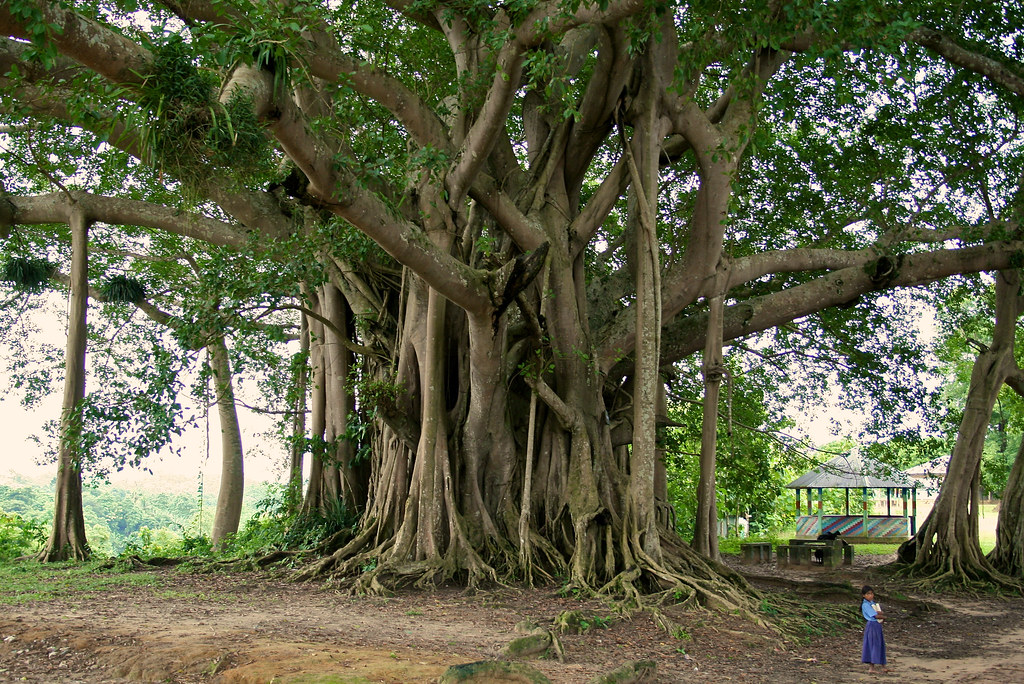
You Tree

Poetry by Gayatri Majumdar

Courtesy: Creative Commons
YOU TREE

You tree
when everything else dissolves the rain – 
traffic lights flash in my eye
watering fences, madness and chanting.
I stone, defenceless.
You are tree to me – 
gentle reminder: this is human love.
small change – something unlike bliss – 
I’m breathless, 
                      but alive
as much as a human can be.
I confess I asked for this – oh,
so many times over,
the sour-curb side of the mouth,
the pickling of the heart,
the moon’s slow-curl down the spine
unlike death – 
                    the rigor mortis setting in.
You green about me 
– my fingers and hair – toes rooting,
                     you remain unmoved.
I asked for this?
You are the tree in me
struggling, uncertain amidst the trouble of unfear – 
that definitive light falling in your Neptunian eye …
		this hypothermia
preserves me.
I am ready to sink lower than this;
slow-grounding, 
                   tasty bites for the night’s merry-makers.

Gayatri Majumdar, the founder of The Brown Critique(1995–2015), has authored six books. She co-founded ‘Pondicherry Poets’ and curates numerous poetry/music events. Gayatri is associated with Sri Aurobindo Society in Pondicherry

.

PLEASE NOTE: ARTICLES CAN ONLY BE REPRODUCED IN OTHER SITES WITH DUE ACKNOWLEDGEMENT TO BORDERLESS JOURNAL

Categories
Poetry

Love Poetry by Gayatri Majumdar

Courtesy: Creative Commons
I'M YOURS

If you must,
	consume me in totality 
		leave no trace – 
no fragrance, no rain,
not even whisperings
	among seeds bursting to ground
and shed-music of falling meteors – 
find me that obeisance rest of your red honeysuckle
	agreeing with the sweet daft.
Slay me, if you must,
	for I am yours,
but spare me the brutalities 
of certain birthing, happy endings.


LOVE

As I fall into your arms,
I can hear the distinct click of the jail door 
in a rusty corner of the galaxy.

You, my lover, were impatient for this precise moment
dispersing me to light
the night’s jazz fused with cosmic dust and saxophone. 

You steady your gaze, 
your belief in me unwavering
even as I
howling to moon and street lights,
grapple with my weakening knees
– tremble, unable to pin the ‘pain’.

You, my lover, were certain this would be the precise moment 
when I’d return your gaze – 
broken, wanting all the love your petalled heart can hold
– demanding, dissolving 
into the light-substance of your presence,
this night’s other delights 
twigging, drumming to my heartbeats.

I marvel at the precision of your timing,
just when I thought all that is not there, seems lost;
You appear, materialise
Stuck as you are, in me,
in this garden
of crooked pathways, wayward roots whispering – 
sleep hours of creatures and last sips of tea.

This time I’m certain,
your departure is imminent – you take with you the night’s last melody – 
the seasons will change
as the ethers of your blues ache,
return those lost hours to me . . .

You begin to perfect the tribhanga*,
your flute wafting the stones and trickery. 

*Krishna’s tribhanga (“three parts break”) pose.

Gayatri Majumdar, the founder of The Brown Critique (1995–2015), has authored six books. She co-founded ‘Pondicherry Poets’ and curates numerous poetry/music events. Gayatri is associated with Sri Aurobindo Society in Pondicherry

.

PLEASE NOTE: ARTICLES CAN ONLY BE REPRODUCED IN OTHER SITES WITH DUE ACKNOWLEDGEMENT TO BORDERLESS JOURNAL

Categories
Poetry

Poetry by Gayatri Majumdar

Gayatri Majumdar
SURRENDER
Tiny fish shift the fluorescence of your eye,
the red, yellow, fuchsia gaze of flowers
remain the same.

You would think tonight the moon
would chase a random supernova
exploding your heart

With a sky lowered spooned by a sea,
butterflies leave patterns marbling time
yellow, black and moss

Your hair falls into the eye of an impending storm
shifting about mauve lily leaves to the edge of sleep,
Pothos giants scaling the green fever of silence – 
sometimes too much can be said.

Now then beside the chipped bricks of last millennia’s debris
against myths and homes of owls, parrots, geckos, baby squirrels

Inevitably jump-start 
                           from light portals around leaves and deep hurts
to lost causes and terracotta bells.

With great difficulty the bees on your grey-striped shirt, escape – 
tonight they plan to make nectar

And this red staircase – damaged, broken – climbs nowhere

Stuck in forever

Which is now cupped in the palms of your heart
held out to pray.

Water-green dragonflies force the lilies coming out
as the night’s Indian lilacs, rusty leaves crackling 
carpet this page white – their fragrance rhapsodic – 
how will this inebriated night end

Spinning as it is with make-believes, fights over territories,
creepy crawly things?

Gayatri Majumdar, the founder of The Brown Critique (1995–2015), has authored six books. She co-founded ‘Pondicherry Poets’ and curates numerous poetry/music events. Gayatri is associated with Sri Aurobindo Society in Pondicherry

.

PLEASE NOTE: ARTICLES CAN ONLY BE REPRODUCED IN OTHER SITES WITH DUE ACKNOWLEDGEMENT TO BORDERLESS JOURNAL

Categories
Musings

The Road to Freedom

By Kanchan Dhar

Freedom. A clichéd status today. So many on social media, in books, in organisations promote it, debate it, but what is it really? It’s not a concept, it’s a journey, the outcome of which is the absolute liberation of the soul. Freedom doesn’t come easy. I feel that it’s a luxury you toil a hundred years to attain and another hundred to enjoy. Pain, blood, tears are some of its usual companions. Freedom also means you value your breathe, your moments so fiercely that you would be ready to flout every ridiculous postulation of society. The road to freedom is a trek to a Himalayan peak; you might stumble on the ragged terrain, roll down, lapped in snow, or lose breathe and muscles on the way; you might also successfully make it to the peak, a little battered but euphoric, perhaps even end up paving a safer path for another. Leave a trail for a fellow neighbour. Is it not worth a try?

I won’t say I have attained freedom, but the journey has started most certainly. And I won’t lie, it’s been so painful. It’s a lonely path, since you have to let go of so much, the baggage that society or your family loads on your little head right at birth. You must let go of it because you cannot possibly trek with a heavy weight without breaking your back. You only backpack what you really need, the basics to survive, so that light-hearted, you can enjoy your journey despite the challenges. In my case, I had to let go of an insensitive husband, an abusive father and his “home”, a dream career, the promise of an elite degree, cities that had briefly been my happy home. Every now and then a painful memory, a verbal trigger, a photograph lodges a rock so heavy in my heart, it takes days to unload it. I welcome the breaks and move again. You can never trek without the necessary pauses; you need them to strategise and recharge, plan the next mount.

As the pain grazes my skin and departs, I grow a little more than before; I have lately begun to worship my spirit, for recognising my worth; my eyes, for daring to witness a marvel; my feet, for leading me on. I have grown to become a devotee of life itself from a consumed, scorned lover. The transition amazes me! The peak is far still, but what keeps me going in spite of the hurt and the pain is the fact that I am tasting freedom in the air already. Its fresh, embracing, cool, and motherly. It’s the thrill of my gut, the strength of my footsteps, the magnificence of life that envelopes me in many shades, as I constantly push myself towards something better. The goal high up the mountain comprises of scented meadows draped with rhododendrons, an unnamed tributary of the Ganga, birds that squeak wild, butterflies flitting about seasonal blossoms in sensual glee, perhaps even a temple of a Himalayan goddess right on edge of the spur with clouds for a backdrop. A personal definition of a Turkish delight!

But am I really alone in this? What about the whispers that reach my ears from mountains afar, the gusts that willingly breathe stories into my ears? The rocks I walk must have been graveyards to millions of mountain people for eons. What about their memories, their stories that glide invisible along my feet? Every mountain trek is painful, at the same time exhilarating. So is the journey to freedom. To belong to the peak, even for a moment, to earn the oft-forbidden fruit called freedom, I would undertake this journey again and again.

Kanchan Dhar is a writer from Odisha/Pondicherry, India. Her pieces have found places in several anthologies from India and the US. Her debut book, Becoming Himalaya, is currently in press.

.

PLEASE NOTE: ARTICLES CAN ONLY BE REPRODUCED IN OTHER SITES WITH DUE ACKNOWLEDGEMENT TO BORDERLESS JOURNAL

Categories
Poetry

Heredity

By JGeorge

The way a cracker fires up to the sky, and then blooms into scattered pieces of joy;

Like sprinkling water, is exactly how my father’s hand moves in hopelessness.

He raises his hands upwards, a little higher slowly,

and then throws his fingers from its closed bud, to the air opening up,

“Ohh…Onnulla” (Oh! Nothing) ,

with the “Ohh” dragging itself to the top and in “onnulla”, all that agitation and frustration

cracks up open, falling back to his lap.

I really don’t remember how she initiated a hug or being in her embrace,

her, she – my grandmother, his mother;

was it firmer, with left hand holding and right patting, or the other way, I wonder.

But this piece of movement, is so familiar to me, like the signature end note of a musician,

it was hers and now, I see it all growing in you, father.

The lines of worry piling up, just like the ones on your forehead;

how that lips down turn themselves, after nothing (Onnulla) and

how she turns her head sideways away from me.

All in you, I see replicated well, the worry, the anxiety,

the deep sadness dwelling behind those heavy eyelids.

She was sixty when I went to stay with her,

and now, you are in your sixties while I am here for this extended lockdown stay

and maybe it’s this inacqaintance that I notice as a bare connection.

Or maybe all I want to ask you is to open your fingers a little more widely to a hug,

and watch joy sprouting from hope, in a million faint moments around,

something she never understood.

.

JGeorge’s poems appear or is forthcoming in several online and print journals, most recently in “Mookychick”, “The Initial Journal”, “Active Muse”, “TROU Lit Mag”,”Peach Street Mag”, “The Martian Chronicles”, “FishfoodMag”, anthologies of “Boundless”(Rio Grande Valley International Poetry Festival 2019) and “Love, As We Know It” (Delhi Poetry Slam). Currently, she lives in Pondicherry, pursuing research at Pondicherry University.

.

PLEASE NOTE: ARTICLES CAN ONLY BE REPRODUCED IN OTHER SITES WITH DUE ACKNOWLEDGEMENT TO BORDERLESS JOURNAL. 

.