By R Srinivasan
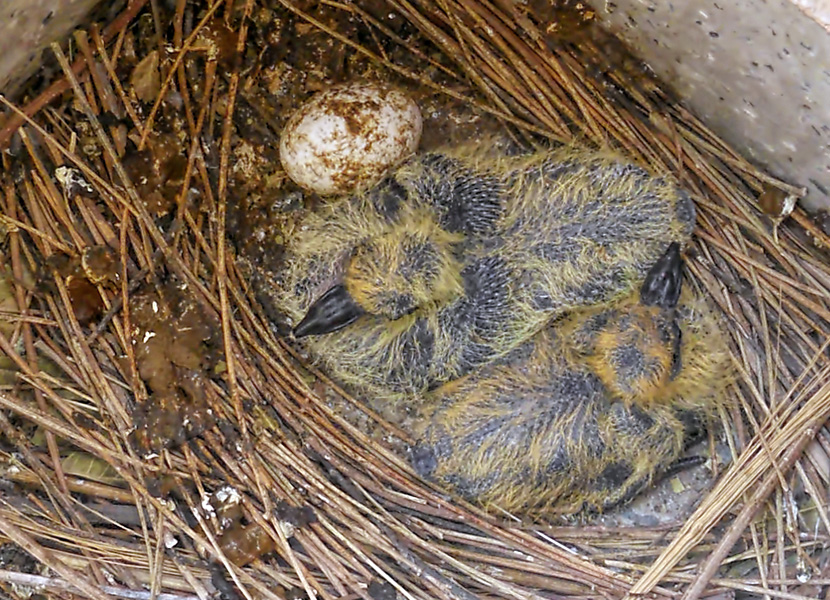
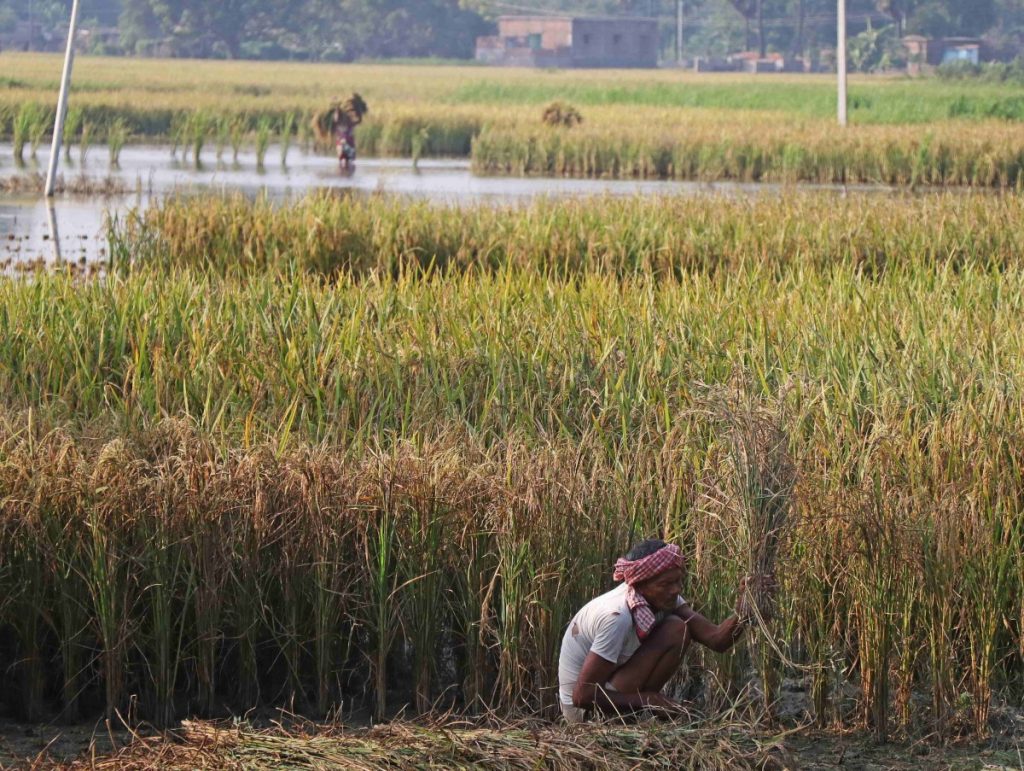
The following story is an intertwined thread of two independent narratives. The odd numbered paragraphs concern the title Pigeons while the even numbered ones are to be read with the title People.
[1] It was in early November that I saw a pigeon perched on our balcony’s sunshade. It was on our neighbour’s sunshade, to be more precise, which adjoins ours. It was an ember breasted grey one. A common variety which I had seen afar many times. Not the one with a fan tail or some exotic racing varieties which were more prized. Soon it was joined by what I assume was its partner. Now, I’m no ornithologist to point out which among the two was the male or female but I can tell you that they wanted to make the barren flowerpots on our balcony their nesting ground.
[2] The farms and fields were lying barren for quite some time. No cultivation had been done on these barren lands for the lack of manpower as most of the folk who had once cultivated it had moved to the cities. So, it was with some interest that I watched the immigrant farmer who had leased these barren lands for cultivation from the council. Now, I’m not familiar with his native land or his native tongue but something about his appearance seemed exotic. Soon he was joined by his partner, and they built a home for themselves on these lands.
[3] The pigeon pair went about their work with alacrity and within a few days they had a nest and the dull looking pigeon, which I rightly assumed was the female, sat on the nest for hours together. The ember breast went about collecting food or doing whatever it is that the male kind of its species do all day. Soon, the pigeon nest was the talk of the house.
“They look stupid to me,” my son said. “Why don’t they talk with us?”
“You want the pigeons to talk to you? Have you tried talking to them instead? “ I told him.
“My friend has a parrot, and it talks to him,” he said.
“Parrots are different, they like humans and are comfortable to handle. These are wild pigeons. Not exactly domesticated.” I told him.
“I don’t like them.” He stated.
[4] The first thing that the immigrant farmer did was to put a fence made of dried thorn bushes around the perimeter of the farm. Locals frowned at the sight of this new fence.
“Why do they have to put a fence?” Their immediate neighbours frowned.
“Good fences make good neighbours I suppose,” I said.
“No one has ever put a fence in the village, not with thorns at least. Grazing flocks may brush up against it,” he said.
“Maybe we should talk to them,” I suggested.
“Can you speak, whatever it is that they speak?” he asked.
“No but you can just mime it and probably they would understand,” I responded.
“Mime? do I look like a clown?” he asked.
[5] The female pigeon soon laid two eggs. As she brooded on her eggs, we soon discovered, to our surprise, that there were now not one but two adult pigeons that accompanied her. Those occupied the adjoining pots, some of which still had healthy plants in them. My wife, who till recently was tolerant of the pigeon family, now started showing signs of uneasiness.
“Did you notice? now there are three? Soon there will be five!” she said.
“Yeah, I noticed. Five? That would take some time,” I said.
“Our maid told me that these things usually take only around two weeks or so from the time they hatch to being fully mature,” she added.
“How does she know? She keeps pigeons?” I asked.
“She’s from the village and she’s more knowledgeable than you are in these things.” She looked at me with scorn.
“So, should I call for help and move the nest while they are breeding?” I asked.
“No, that would be cruel,” She said.
[6] No one in the village had noticed the arrival of the two young men. So, when the neighbour saw them working the fields along with the man, they began talking.
“Where did those two come from?” he asked.
“Probably their sons…” I responded.
“Soon they are going to swarm this place,” he grumbled.
“Swarm a twenty-five-acre farm with four people? Aren’t you overdoing it?” I asked.
“Sam told me that these people are up to no good,” he said.
“Does he know their native land or speak their tongue?” I asked.
“Probably. He’s well-travelled you know, better than you and me,”
“So, should I inform the village committee that we should have a word with them about the fence?” I asked.
“No, they’ve leased land. We will wait and watch.”
[7] When the female pigeon left the nest in short breaks, probably foraging for food, I had a chance to look at the eggs and the nest. Littered within the straw and some unidentifiable earths, were two eggs. Strewed around them were little feathers and the whole nest had a pungent smell. It’s just the way they are — I thought — but the sight of pigeon droppings and small unfinished food lying around made the place a mess.
“Our maid says that it’s going to get worse,” my wife told me when I told her of my inspection.
“It’s better that we keep the balcony door shut,” she continued.
“You want to shut the sun out of the house just because a pigeon built a nest in the balcony?” I asked.
“What if they fly inside the house and don’t know the way out?” she asked.
“Try hanging some signs saying “EXIT” pointing to the nearest door,” I told her as her insinuations irritated me.
“You don’t take these things seriously. What if this thing flies inside the house and gets itself killed by the ceiling fan? I am not the one picking it up.” She raised her voice.
“What do you want me to do? Call the bird gypsies and make them catch these for pigeon biryani?” I could not resist this.
“Chhee[1]! Don’t talk such things at the dinner table. Do what you want. I am not going in that balcony anymore.” She said with an air of finality.
“It will probably fly away once the egg hatches and the fledgelings are able to fly,” I said.
“You wait and see,”she said.
[8] The village councillor knocked the entrance gates of the farm and waited for a response. Seeing that no one answered and since we knew that there were no dogs, we decided to enter. The one storey house was more of a log cabin. The yard leading up to the house was unkempt. Farm tools, a wooden plough, and some odd unidentifiable things were scattered along both sides of the staircase leading up to the front door which was bolted from outside with a lock. An unfamiliar smell of broth came from the kitchen. The counsellor peered inside the house which only had a living room, a bath, and a kitchen. From the signs on the floor, we could make out that animals, probably sheep and poultry, also made their home with the folks inside the house.
“How could they live like that?” enquired the councillor.
“They are probably used to having animals around them.” I suggested.
“What kind of people bring sheep and poultry into the living room?” he wondered. A faint smell at the back of the house beckoned us to that place.
“Is that a dump? That explains why they don’t hand over anything to the municipal garbage van,” he continued.
“There is nothing wrong in composting organic waste. In fact, it’s a good farm practise.” I responded.
“So, you just let your bathroom sewage mix with the kitchen waste and pour the rotting mess in your field?” He pointed towards the heap.
“It’s probably a cultural thing. It may be common practise in their native land. Organic farming, it is called,” I said.
“Well, not here” – He said.
[9] It was late in the evening when I reached home and found that both my wife and son were waiting for me in the hall. Wife was agitated and I could see that my son was scared about something.
“They’ve hatched. The eggs, I mean and now they are five and counting,” my wife started.
“Counting? Are there more in the nest?” I asked.
“Don’t know. Why don’t you go and check?”
“Can’t you or your son, do it? Why should I do everything around here?” I said. The long work hours made me irritable.
“He did and those flying mongrel bats attacked him. See the bruises he suffered? You don’t care about us at all,” She whimpered.
“Bruises? Show me. How did that happen?”I asked my son.
“He went to the balcony out of curiosity and those wretched things attacked him.” My wife sounded upset.
“Attack? Why should they? They are not eagles. He probably scared them or something.”
“It flew right at me, the chic, it jumped out, stumbled and fell down and its father came flying and attacked me!” my son exclaimed. What he failed to tell me was that he went too close to the fledgelings.
“Didn’t I not warn you not go near them? They are young…” I was not allowed to finish.
“And he’s not?” my wife said pointing at my son.
“You don’t seem to take it seriously at all. I’m unable to go the balcony and water the plants. The roses have all but died. We are not even able to use the cloth hangers in that balcony… Look at the mess these things create on the floor and now this attack…” She was at the point of hysteria.
“Listen, don’t shout at me. I’m not a pigeon catcher. Just wait till they are old enough to fly by themselves and they would go away.” I shouted.
“You are not a pigeon catcher, but how do you know that they will fly away after some time? That balcony smells like a… I don’t know what but smells bad and their droppings are everywhere. My aunt tells me that pigeon droppings can cause avian flu. Some kind of insect breeds in it and causes skin irritation and asthma.” She turned pale while saying this.
“Don’t act up. Do all those pigeon breeders drop dead in their scores?” I asked.
“Yeah, keep talking. When I or your son are hospitalised, you will understand.”
I wanted this thing settled so I said, “Okay. I will see what I can do. I will ask the pet shop owner if he can catch them.”
“I want it done by tomorrow,” my wife said.
“Alright. Alright.” I said not wanting to escalate it further.
[10] When I entered the meeting hall, it was already noisy. Most of the village folk had gathered and there was pandemonium everywhere.
“What happened?” I asked.
“Those immigrant rats have blocked the way to the riverbed. How are we supposed to fish?” one of the farmers shouted.
“There are other places to fish too and why should you go through their farm to the river?” I asked.
“What are you saying? Don’t you not know that the fishing pier is on their side of the river? This is trout season and that’s the best place to fish. They are not opening their gates,” the councillor said. What he failed to say was that the immigrant farmers had found out about our visit had refused to open the gates out of fear.
“Did you speak to them about this? I mean that it is not proper to close a public path?” I asked.
“Yeah, we tried and that’s when they attacked us,” one of the farmers said.
“Attacked? Really?” I queried.
“The man shouted some gibberish, and his sons came charging at us,” the farmer reiterated.
“Probably they too did not understand what we were trying to say,” I told them.
“This must stop. Either they come out and mend their ways or they can go back to wherever they came from,” the farmer concluded forcefully.
“I don’t see how we can drive them back. The council has leased the land to them,” I said.
“You care more about them than about your own folk? Why don’t you go speak to them? I want them out and now.” The farmer was now shouting. I could hear a murmur of approval from others.
“They keep animals in their living rooms. Pestilence spreads from animals to humans. Who knows what they carry?” another farmer added.
“Don’t we not keep the very same animals in our farm and tend to them?” I asked.
“Not in the living room. In pens and stables,” the farmer replied.
“Alright, let me talk to the council,” I said.
[11] “It would cost you two thousand rupees,” the pet shop owner said.
“Alright. Just get it done.” I wanted it over.
I told my family that coming morning that the pet shop owner would catch the pigeons and take them away.
“How do you know that they won’t come back? Pigeons have a way of returning to its nests” my wife said.
“Should we change houses then?” I asked.
“No, we need put a metal mesh outside the balcony,” she said.
“Do you even know how much it costs? I don’t have that kind of budget.” I was irritated.
“Okay. Have it your way but when these things come back, you are going to need another two thousand. Why don’t you understand? Spend some more now and protect the house rather than taking such half measures.” She was unrelenting in her offense.
“Alright. I will talk to the metal framer.”
It would cost the upward of twenty-five thousand rupees to fully fence off the balconies with a steel mesh which would allow sun and rain but no pigeons.
[12] “They are willing to let go of their land, but the cost is exorbitant. As per contract, we need to pay them back five years of their lost revenue. But the council has decided to raise taxes and borrow funds to take the land back,” the councillor stated.
“That would only be a temporary measure. How do you guarantee that more such people don’t grab our lands?” a farmer asked.
“Should we put up a barbed fence and a warning sign?” I asked.
“No, we need a law which forbids them from buying or leasing our land.” The farmer’s stance had vocal support from others.
“That needs a bill in parliament. It needs overall approval, and it costs a lot,” I argued.
The counsellor said: “It is better that we spend now to protect our lands than to take some ad hoc measures.”
A bill was later passed in the parliament barring non-natives from buying or leasing cultivable land.
*
A ship load of immigrants just drowned in the channel trying to cross and a flock of pigeons flew southwards trying to find new nesting grounds.
[1] An exclamation of disgust
.
Srinivasan R is an engineer by profession and short story writer by passion.
.
PLEASE NOTE: ARTICLES CAN ONLY BE REPRODUCED IN OTHER SITES WITH DUE ACKNOWLEDGEMENT TO BORDERLESS JOURNAL
Click here to access the Borderless anthology, Monalisa No Longer Smiles
Click here to access Monalisa No Longer Smiles on Amazon International
 Borderless