Categories
Slices from Life

Where Should We Go After the Last Frontiers?

By Ahmad Rayees

It was late evening in the Valley—the kind of dusky calm that usually tucks our village into a blanket of silence before nightfall. But that night, the situation wasn’t peaceful. It was tense, suffocating. A silence not of rest, but of retreat. A silence that echoed with the footsteps of the displaced, the sobs of children, and the distant rumble of a war edging ever closer.

Nestled along the Srinagar-Muzaffarabad Highway, my village (Sheeri) had never imagined becoming a place of refuge. But over the past few days, it had slowly transformed into a shelter—not by design, but out of sheer necessity. It wasn’t a government-built camp or an official safe zone. It was a modest private school—its classrooms stripped of desks, Its walls were painted green, and its floors were covered with modest mats. The blackboard still bore lessons from a world that now felt impossibly far away.

They came by the dozens—families from the frontier town of Uri and other nearby hamlets, fleeing the deadly storm that had erupted along the Line of Control. The shells and gunfire hadn’t spared anyone. Mothers clutching newborns, elderly men barely able to walk, children with dust in their hair and tears in their eyes—each carried with them a fear that couldn’t be packed away. Their homes? Gone or abandoned. Their cattle? Lost. Their belongings? Scattered to the wind. All they had brought with them was survival.

We did what little we could, each small act stitched together into a fragile lifeline—volunteers arriving with rations and essential supplies, neighbours wrapping strangers in donated blankets, and someone rigging a single battery-powered generator in the school courtyard to pierce the darkness—just enough light to charge phones and confirm what we already feared through shaky mobile updates: India and Pakistan were at war again.

Just as we began preparing food that night, the sky above us erupted into unnatural color—bursts of red and orange, glowing like fireworks. For a breathless second, we hoped it was a celebration somewhere far away. But the thunderous roar that followed shattered that hope. These were no celebrations. They were drones. Missiles. Rockets. Tools of destruction lighting up the sky like angry constellations.
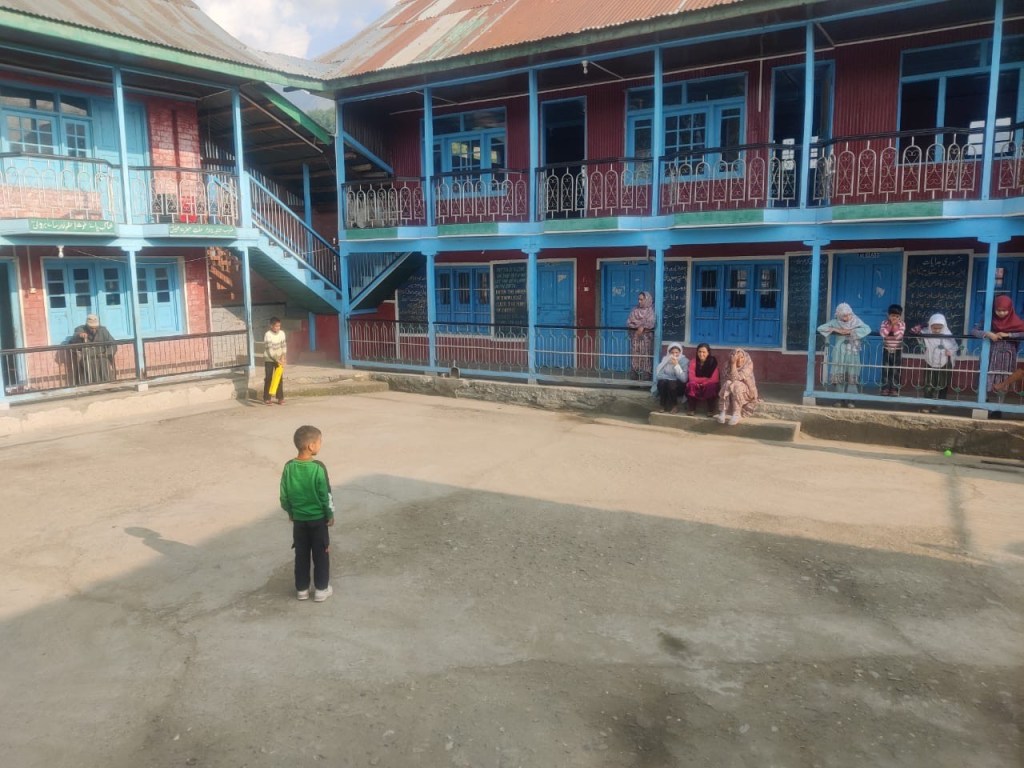
Panic was instant. Some people ran instinctively, nowhere in particular. Others froze. Mothers clutched children closer. Prayers spilled into the night air like smoke. The school—our fragile sanctuary—quaked with fear. And so did we.

I had heard stories of war. I had seen its images in books and on screens. But that night, war had a smell. A taste. A sound. That night, war breathed down our necks.

We stayed awake through the dark hours, huddled close under a full moon that bore witness to everything. The distant mountains glowed—not from moonlight, but from mortar fire.

The explosions echoed back and forth across the valley like angry giants arguing. Sleep was impossible. For many, so was hope.

For four harrowing days, the shelling continued. Relentless. Unforgiving. As India and Pakistan traded fire, villages on both sides were emptied. The front-lines moved like ghosts—never visible, always fatal. Each explosion wasn’t just an act of violence; it was a theft. It stole security, trust, homes, futures.

The ones who suffered weren’t the architects of war. They weren’t the men in polished suits or behind mahogany desks. They were farmers, schoolteachers, shopkeepers, daily wage earners. The ones who raised goats and crops, not guns. The ones who wanted nothing more than to be left alone.

And yet, here they were—broken by a war they didn’t start, begging for a peace that never came.

The soldiers too—barely out of their teens—were casualties in a different way. Sent to defend lines drawn generations ago, they carried weapons they barely understood, defending ideologies they didn’t create. On both sides, the blood spilled looked the same. The mothers’ grief sounded the same.

And as the bombs fell, something else collapsed quietly: Faith. Faith in leaders who promise peace and deliver bullets. Faith in ceasefires that last only until the next provocation. Faith that tomorrow would be better.

When the ceasefire was finally announced, there was no celebration. There were no cheers. Just silence—and not the comforting kind. It was the silence of disbelief, of loss too deep for words. People walked back not to homes, but to ruins. Entire communities had been reduced to ash and rubble. Crops were destroyed, livestock gone, schools turned into shelters or craters.

How do you rebuild a life when all that remains is dust?

These are the questions that haunt the air like the smoke refusing to clear —

Where should the birds fly after the last sky?
Where should we go after the last frontiers?
Where should the plants sleep after the last breathe of air? – Mahmoud Darwish

Ahmad Rayees is a freelance journalist and a fellow at Al-Sharq Youth fellow program. 

.

PLEASE NOTE: ARTICLES CAN ONLY BE REPRODUCED IN OTHER SITES WITH DUE ACKNOWLEDGEMENT TO BORDERLESS JOURNAL

Click here to access the Borderless anthology, Monalisa No Longer Smiles

Click here to access Monalisa No Longer Smiles on Kindle Amazon International
Categories
Review

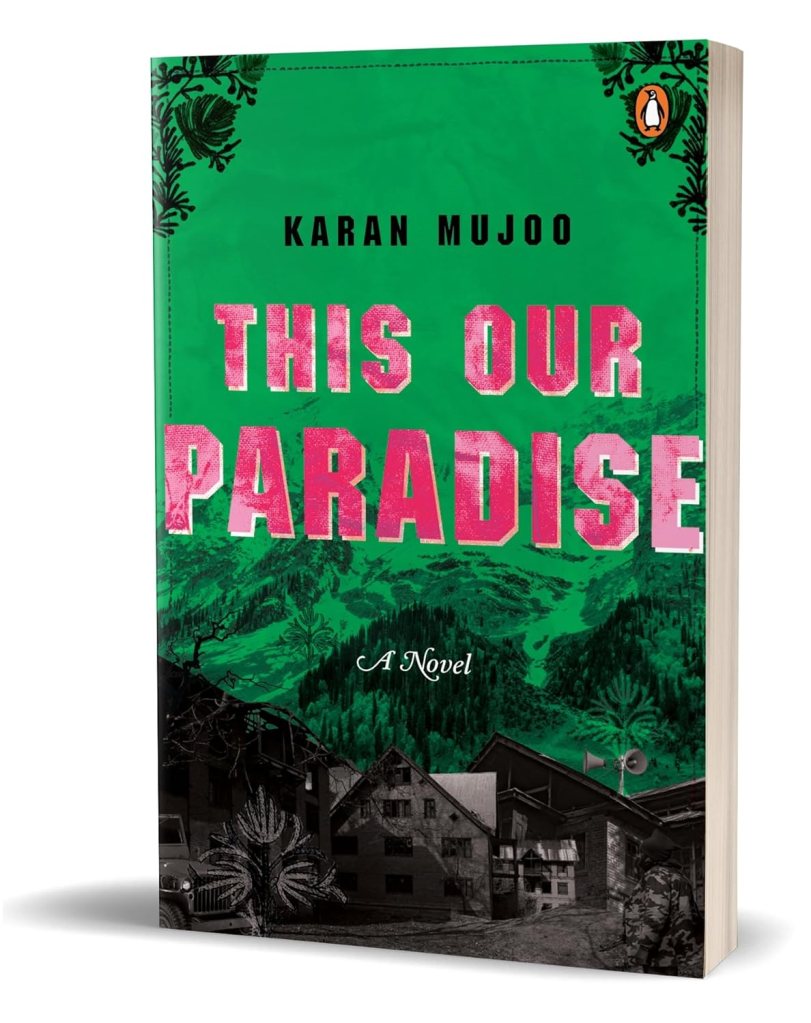
This Our Paradise

Book Review by Somdatta Mandal

Title: This Our Paradise: A Novel

Author: Karan Mujoo

Publisher: Ebury Press (an imprint of Penguin Random House)

A debilitating symptom of exile is unfamiliarity with your homeland” – Karan Mujoo

For ages, Kashmir had been defined as a paradise on earth. However, with the advent of insurgency, political unrest, strife, bloodshed, terrorism and insecurity for the past several decades, this picture of the ideal and beautiful place has been largely shattered. This debut novel by a person of Kashmiri origin, now settled near Delhi, is a moving tale of the ground realities that have been taking place in this region for a long time. Adding the suffix of “A Novel” to the title, the author obviously wants to steer clear of all the controversies that might arise because as he himself states in the “Author’s Note” at the end, “the names and places in this book are a mix of the real and the imaginary… Certain incidents in the novel are based on real events. But their details have been imagined. Hence the names of victims and perpetrators have been changed or tweaked.”

The author was acutely aware of the fact that Kashmir is too large a canvas to be contained in a single book or movie, and so he tells the story of two Kashmiri families, one Hindu and the other Muslim. The stories of both families intertwine tragically in the end. In both cases, the boys are at the mercy of forces much larger than them. Both lose their Kashmir, in different ways. The first story is of a Kashmiri Pandit family who, when the narrative begins, is moving half-heartedly from their house in Bagh-i-Mehtab in Srinagar to their new home in Talab Tillo in Jammu, which was just a dilapidated 12×12 foot hovel with a tin roof and crumbling walls. The patriarch Papaji is a clerk in a food cooperative and his wife Byenji is a homemaker. He is very optimistic that all this is a temporary affair. He still believed in the inherent goodness of people, in ties built over generations and that things would soon turn for the better. The narrator is their eight-year-old grandson who is one of the thousands of children of exile who had nothing to do, nowhere to go. He spent his days playing cricket and climbing the tangkul [1]in the garden. Everything is rosy till 1989. But then, propelled by ISI and the Jamaat, a secessionist movement rises and changes everything. There was gun culture everywhere. For the media, too, Kashmiri Pandits became disposable footnotes in a far greater struggle. Slowly they joined the ranks of the forgotten and became a tragedy that could not be prioritised. At the end of the novel, we find that the idea of exile which harboured within it the hope of return, did not apply to them anymore. They were truly displaced.

Mujoo juxtaposes the earlier story with the story of a Muslim family, set in Zogam, a small village in Lolab Valley. There, after years of prayers, a boy named Shahid is born to Zun and her husband in 1968. Quarantined from everyone else in the village, Sahid’s days passed listening to tales and making them up. As a result, he slowly developed into a shy, quiet boy who found it difficult to mingle with others and liked being with nature. Compared to the slick city dwellers, the people of Zogam seemed like wretched beings with no dreams and ambitions. They were content with their lot because they were not exposed to the luxuries and opportunities life held. Sahid gradually grew up in a society where corruption and unemployment were rife. He made friends with Rashid, who believed that the system had to be dismantled. The trajectory of his life changes when he meets Syed Sahab ― an Islamic theologian and rabble-rouser, who wants to overthrow the Indian state. He brainwashes the young boys into believing that the day they made Sharia their lives, their lives would become Jannat[2]. He preached that Jihad[3] was coming to the Valley soon, and everyone should be ready for it.


The next section takes us back once again to the Pandit protagonists and their life story. The year is 1968 and our young narrator gradually turns worldly-wise when he is taken to different places by his young uncle, Vicky, including the Dal Lake and the Sheikh Colony – a settlement of sweepers, scavengers and tanners who were reviled by all Kashmiris. Believing that education would relieve them of all penury and social ostracisation, Vicky becomes their temporary teacher. Without the knowledge of his parents, he gradually gets enmeshed within other radical ideas and different military groups that had emerged in the city. On the other hand, Shahid realised he could either be a clerk and part-time Jamaat[4]sympathiser or a full-time Jamaat worker. In the end, he opts for the latter and believes that he was no longer a poor farmer’s son from Zogam whose life and death were insignificant.

An interesting section of the narrative told in minute details is how the young jihadis[5] are escorted over the difficult mountain terrain by a Gujjar guide and clandestinely taken across the border to makeshift and rudimentary Pakistani camps in Muzaffarabad. The aim was to indoctrinate the boys in orthodox Islamic ideology and impart basic military training. They were brainwashed into believing that the most important thing was to attack all symbols of India: blow up government banks and offices, kill army and police personnel, murder judges, bureaucrats, teachers, politicians, cripple the state, silence all the voices who oppose the Tehreek[6] and instill the fear of Allah in the hearts of all unbelievers. After they are once again brought back to the Indian side, the boys turn into hardcore terrorists and Sahid is no exception. No matter how hard his parents tried, he had simply become one of the thousands of boys who were ready to fight for the cause.

Without giving out further details of the parallel storylines, we can conclude by stating that through this book Karan Mujoo has tried to ask some fundamental questions. How does a boy become a terrorist? How does society crumble?  What forces a family to go into exile? To serve this need, to create a picture of these chaotic years, he has attempted a certain sort of distillation. He only hopes that the illusion has been marginally successful. Through the vividly drawn characters whose lives intersect with one another, each navigating their own paths through love and life, the author successfully captures the essence of human experience and the eternal yet illusive search for paradise.

We have been reading fictional and non-fictional accounts of the problems in Kashmir for a long time, but the painstaking way in which this debut novelist has tried to give us the entire scenario in a nutshell is praiseworthy. The book is strongly recommended for all readers who would find the universal quest for happiness really moving, and how the author has blended fact and fiction with remarkable ease.

.

[1] A pear tree

[2] Paradise

[3] Holy war

[4] Party, community or assembly

[5] Warriors of Jihad

[6] Cause

Somdatta Mandal, critic and translator, is aa former Professor of English at Visva-Bharati University, Santiniketan, India.

PLEASE NOTE: ARTICLES CAN ONLY BE REPRODUCED IN OTHER SITES WITH DUE ACKNOWLEDGEMENT TO BORDERLESS JOURNAL

Click here to access the Borderless anthology, Monalisa No Longer Smiles

Click here to access Monalisa No Longer Smiles on Amazon International