Narrative and photographs by Mohul Bhowmick
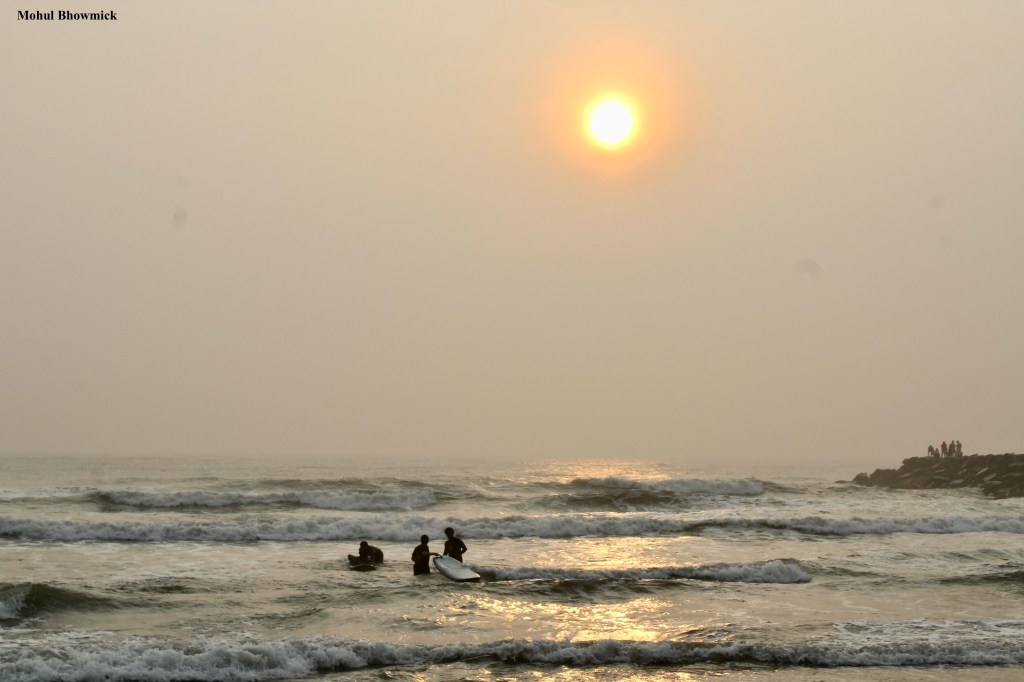
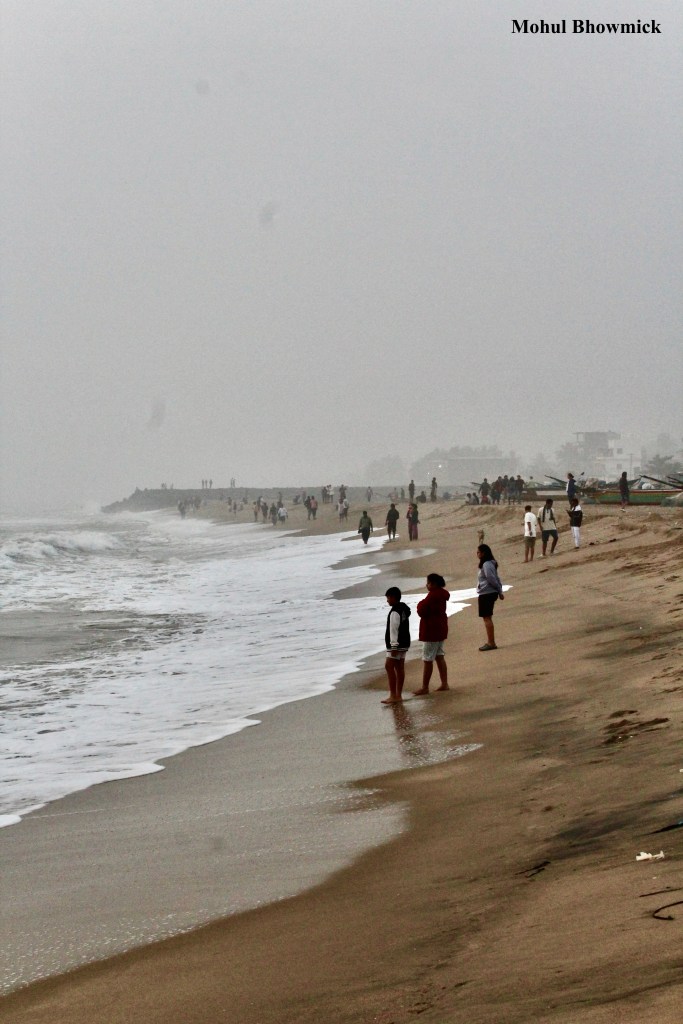
Pondicherry must have been a dream. To co-exist in the halls of history where the French had left their mark was well within one’s capacity, but to thrive in a society where sandwiches were the norm and butter paneer the exception verged on the extraordinary. Every day in Pondicherry merited a visit to Baker Street, whose otherworldly triad of sandwich, croissant and quiche deserved an equally competent pat on the back; to not grow fat, content and happy in this town would have been doing it an injustice.
The Basilica of the Sacred Heart of Jesus, towering above the modest remains of Mahatma Gandhi Road, buffered the excesses that Our Lady of Angels (or Notre Dame des Anges – you tended to pick up lingua colonia in Pondicherry) gracefully bypassed. The ashram of the terrorist-turned-mystic Aurobindo Ghosh sat quietly on Rue Marine. To capture the whiff of spirituality by contact two lanes away on Rue de Dupleix was not to ask for much.
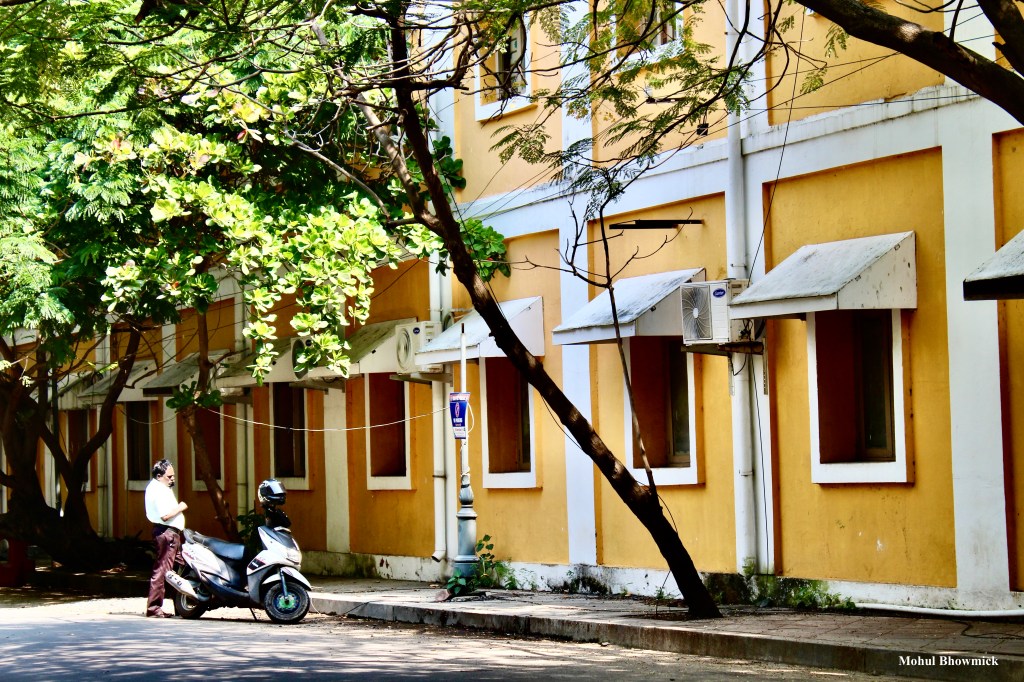
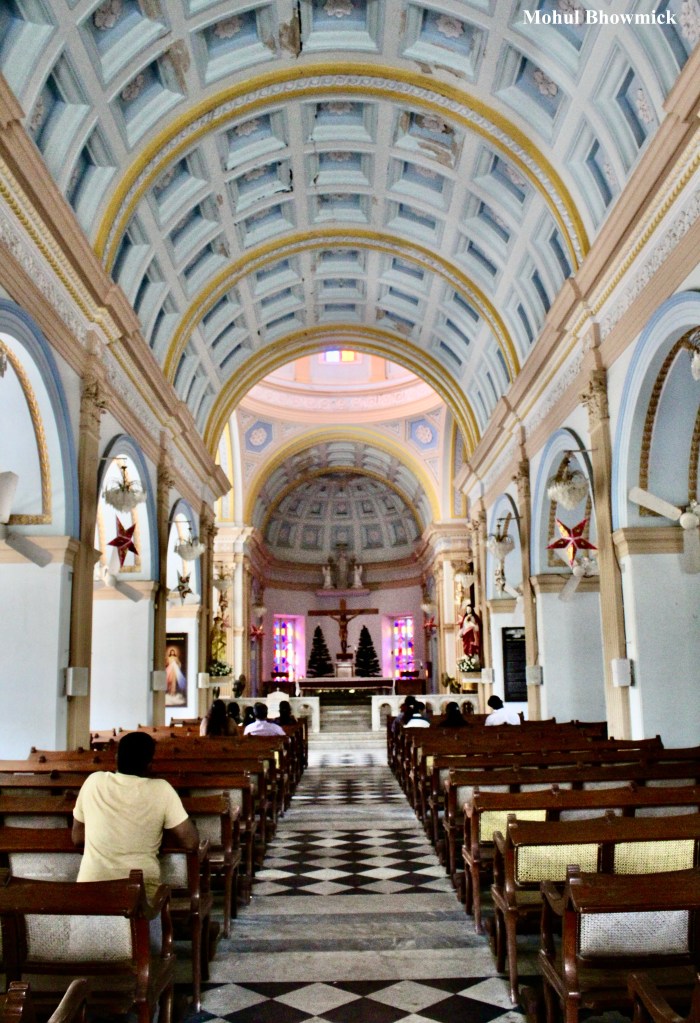
The breath of fresh air that Ananda Adyar Bhavan up the same road promised but did not deliver remained just as it was when I had last come here three monsoons ago; in a stubborn reluctance to offer it anything but importune wisdom, I remembered being carried away by Alexander Dumas’ The Count of Monte Cristo (1846).Yet, it befitted the traveller to note that Rue Dumas honoured the colonialist Pierre Benoît Dumas[1], and not the man considerably greater than him. Of course, the French celebrated Dupleix[2] far more, as evidenced by a huge monument dedicated to him at the end of Goubert Avenue. To them, he was the greatest hero in a world where Napoleon was yet to be born, and where the English did not have Cromwell and the Americans had not seen Washington.
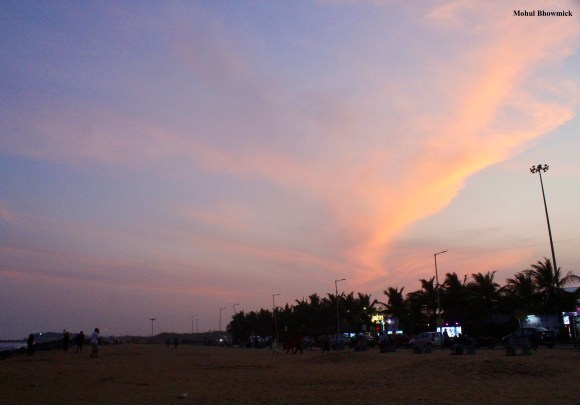
The sun bypassed the graceless winds that set up shop on the Promenade every evening; frequented far more by tourists than locals, it risked losing its sheen as something more than a weekend destination. But the coffee — of course, the coffee — whose aroma one could smell five streets away, was only a tad more appealing than the Pain au chocolat in all the bakeries of Pondicherry, upon whom entire paeans could be written.
To be carried away by such history was a must in Pondicherry; to stay sane, all one had to do was avoid mixing one’s emotions up in the Black Town, and be carried away by scarcity, poverty and destitution while crossing the canal between Netaji Salai and HM Kassim Salai. When I asked a fumbling Frenchman as to why the most significant roads of Pondicherry were named after men who vociferously advocated for self-rule, he told me that he did not know much about de Gaulle, and that his companion, a mild-complexioned young woman to whom being a liberal meant the same as being a libertine, had not read Voltaire.
“In the heart of every Frenchman, there is wine,” I said, quoting Ramanujan, who had been to Strasbourg and Marseille by road, but this only elicited the tiniest of smiles from a pockmarked student from Nantes who had read Hugo, and to whom the world was only just showing its vraies couleurs. It was all she could do not to stand in attention and belt out La Marseillaise under the mid-afternoon sun on Rue de Bussy.
[1] Pierre Benoît Dumas (1668–1745) was the French Governor General for Pondicherry
[2] Joseph Marquis Dupleix (1697-1763), Governor general of French India
Mohul Bhowmick is a national-level cricketer, sports journalist, poet, essayist and travel writer from Hyderabad, India. He has published five collections of poems and one travelogue so far. His latest book, The Past Is Another Country, came out in 2025. More of his work can be discovered on his website: www.mohulbhowmick.com.
.
PLEASE NOTE: ARTICLES CAN ONLY BE REPRODUCED IN OTHER SITES WITH DUE ACKNOWLEDGEMENT TO BORDERLESS JOURNAL
Click here to access the Borderless anthology, Monalisa No Longer Smiles
Click here to access Monalisa No Longer Smiles on Kindle Amazon International
 Borderless