By Aditi Yadav
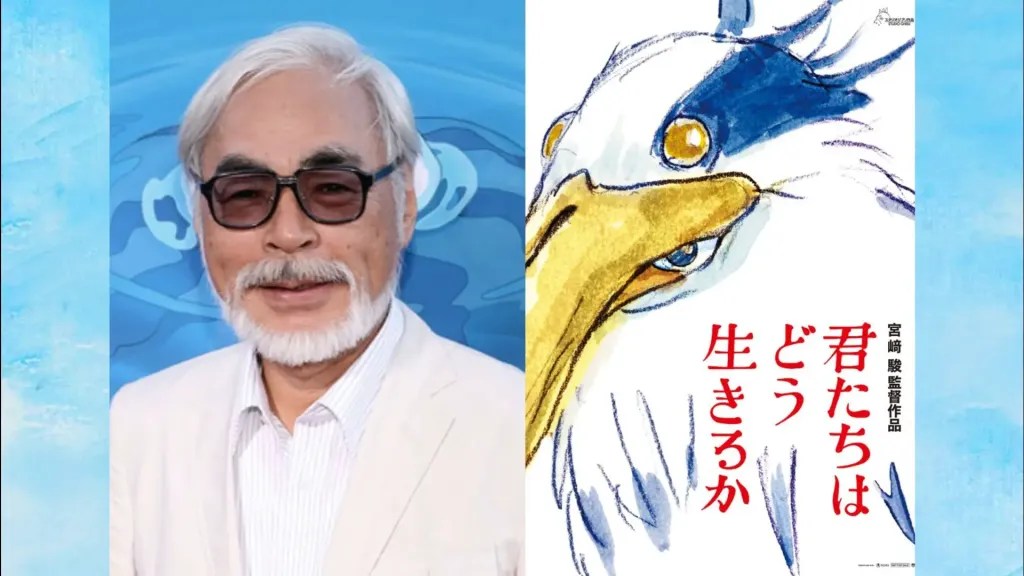
In January 2024, The Boy and the Heron became the first Japanese movie to win the Golden Globe Award for the Best Animated Feature Film. However, when the original movie was released by Studio Ghibli in the summer of 2023 in Japan, it was marketed with ‘no marketing at all’-without any trailers, TV commercials or newspaper advertisements. A minimalist movie poster carrying the sketch of a heron and the Japanese title Kimitachi wa Dō Ikiru ka, was all it took the movie to record the biggest box office opening in Studio Ghibli’s history.
Hayao Miyazaki, the godfather of Japanese animation who celebrated his 83rd birthday in January, 2024, broke a decade long hiatus to give his directorial swansong to the world. The movie is inspired by Miyazaki’s favourite book Kimitachi wa Dō Ikiru ka, written by Genzaburo Yoshino in 1937. This coming-of-age Japanese classic had been tenderly translated into English under the title How Do You Live? by Bruno Navasky and brought out by Penguin in 2021 with a foreword by a writer no less than Neil Gaiman.
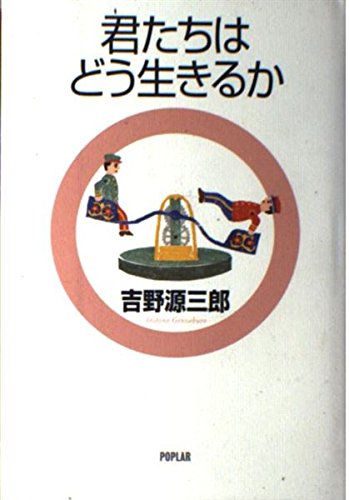
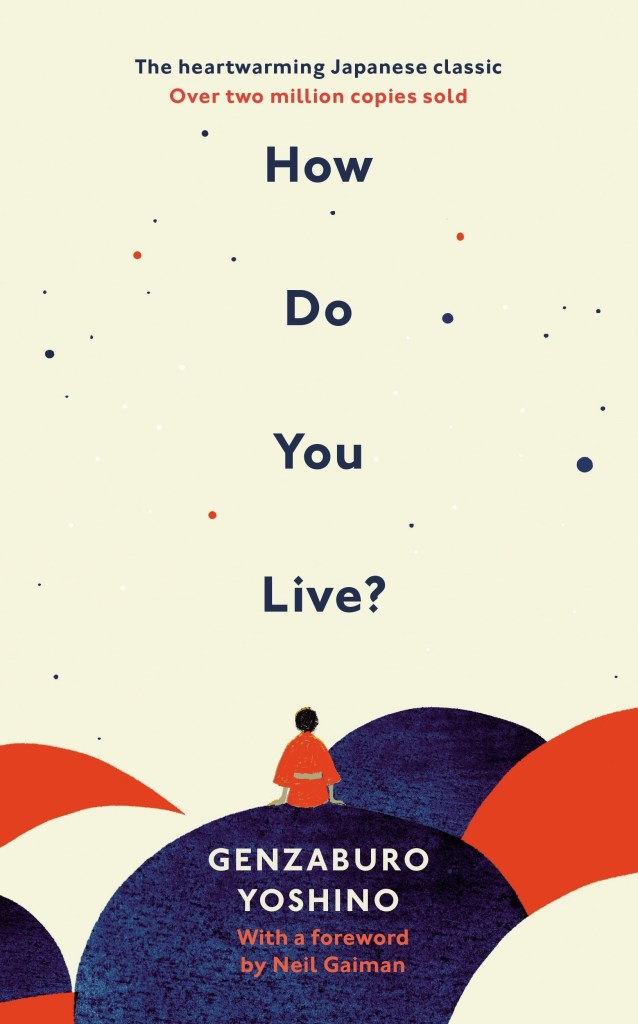
The protagonist of the story is Honda Junichi, a fifteen-year-old boy nicknamed ‘Copper’ after Copernicus, by his uncle. He has a diminutive frame, but his intelligence, bright personality and athletic skills, make him a popular kid at school. As Copper has been raised by a single mother, his uncle, who is a fresh law graduate, is the only male guardian around him. Their bond is an interesting one: not only do they share a warm friendship, but also discuss about the world at large, its history, philosophy, human relationships, so on and so forth.
The book chronicles Copper’s world, his thoughts and day-to-day incidents, in a format that alternates between a third person narrative and notes from the diary Copper’s uncle. Copper’s everyday experiences are similar to those of any other school going child — peers bullying, fighting, discovering class differences, bonding over games, pranking one another, and so on. The book delves into the mind of the adolescent boy, trying to make sense of the world to understand how he’d transition to an adult. He approaches the world with an innocent curiosity, musing how people are ‘a little like water molecules’ in the vast ocean of human society.
His uncle deeply moved by these observations and expressions, begins to pen down about these interesting episodes in his notebook. He also adds facts and references associated with them, that encompass wide range of topics including art, science, economics, history, politics, philosophy and language. He probably thinks that when Copper reads the notebook later on, it would help him see the world better alongside his personal mental and moral evolution. These notebook entries bear sagacious titles like- ‘on ways of looking at things’, ‘on human troubles, mistakes and greatness’, ‘on human relationships’, ‘on poverty and humanity’, etc. However, the words do not intend to preach. They brim with warmth of empathy, and capture the strengths and vulnerabilities of being human: “If it means anything at all to live in this world, it’s that you must live your life like a true human being and feel just what you feel. This is not something that anyone can teach from the sidelines, no matter how great a person becomes.”
Yoshino wrote the book as a part of the “Nihon Shoukokumin Bunko” (Library of books for the Younger Generation) that aimed at disseminating progressive knowledge and ideas to Japanese young adults. The work is a precious one – a classic example of how thoughtful adults can help young children to have a healthy mind and human heart.
Published in 1937, this masterpiece itself is an act of resistance against all regressive beliefs and authoritarianism, as Navasky pens in his Translator’s note, the book is “…particularly valuable to us now, when violence against citizens is on the rise, and independent thinkers are being attacked by their governments”. The book itself was censured several times, before it could be printed in its originally intended form. It’s important to mention here that from 1911 to 1945, Tokubetsu Kōtō Keisatsu (or Tokko), the Special Higher Police, heavily monitored political groups and ideologies that posed a threat to the Empire of Japan. The Peace Preservation Law passed in 1925, expanded the powers of Tokko to suppress all socialist and communist idea in Japan. The heavy-handed ‘thought policing, only ended in 1945 with Japan’s surrender in World War II.
How we live, invariably depends on how we think. The universality of the book lies in how it links thought processes across borders — individual and collective — will have decisive roles in the ideals we follow and the society we construct. Our journey from the primitive caves to modern skyscrapers has been a long and tumultuous one. The prowess of human mind and the resilience of human spirit has brought of this far, but a peaceful society demands empathy and honesty of the human heart. Copper is sensitive enough to realise this, when he jots down–
“I think there has to come a time when everyone-one in the world treats each other as if they were good friends. Since humanity has come so far, I think now we will definitely be able to make it to such a place.
So, I think I want to become a person who can help that happen.”
Charting the ups and downs in the life of young Copper, the book closes on a sunny fulfilling note where our protagonist sees the world with an open heart as his extended family. And so, this timeless classic that touches the heart ends with a deep question for all of us – “How will you live?”
.
Aditi Yadav is a public servant from India. As and when time permits she engages in creative pursuits and catches up her never-ending to-read list. Her works appear in Rain Taxi Review of books, EKL review, Usawa Literary Review, Gulmohur Quarterly, Narrow Road Journal and the Remnant Archive.
PLEASE NOTE: ARTICLES CAN ONLY BE REPRODUCED IN OTHER SITES WITH DUE ACKNOWLEDGEMENT TO BORDERLESS JOURNAL
Click here to access the Borderless anthology, Monalisa No Longer Smiles
Click here to access Monalisa No Longer Smiles on Amazon International
 Borderless