Book Review by Bhaskar Parichha
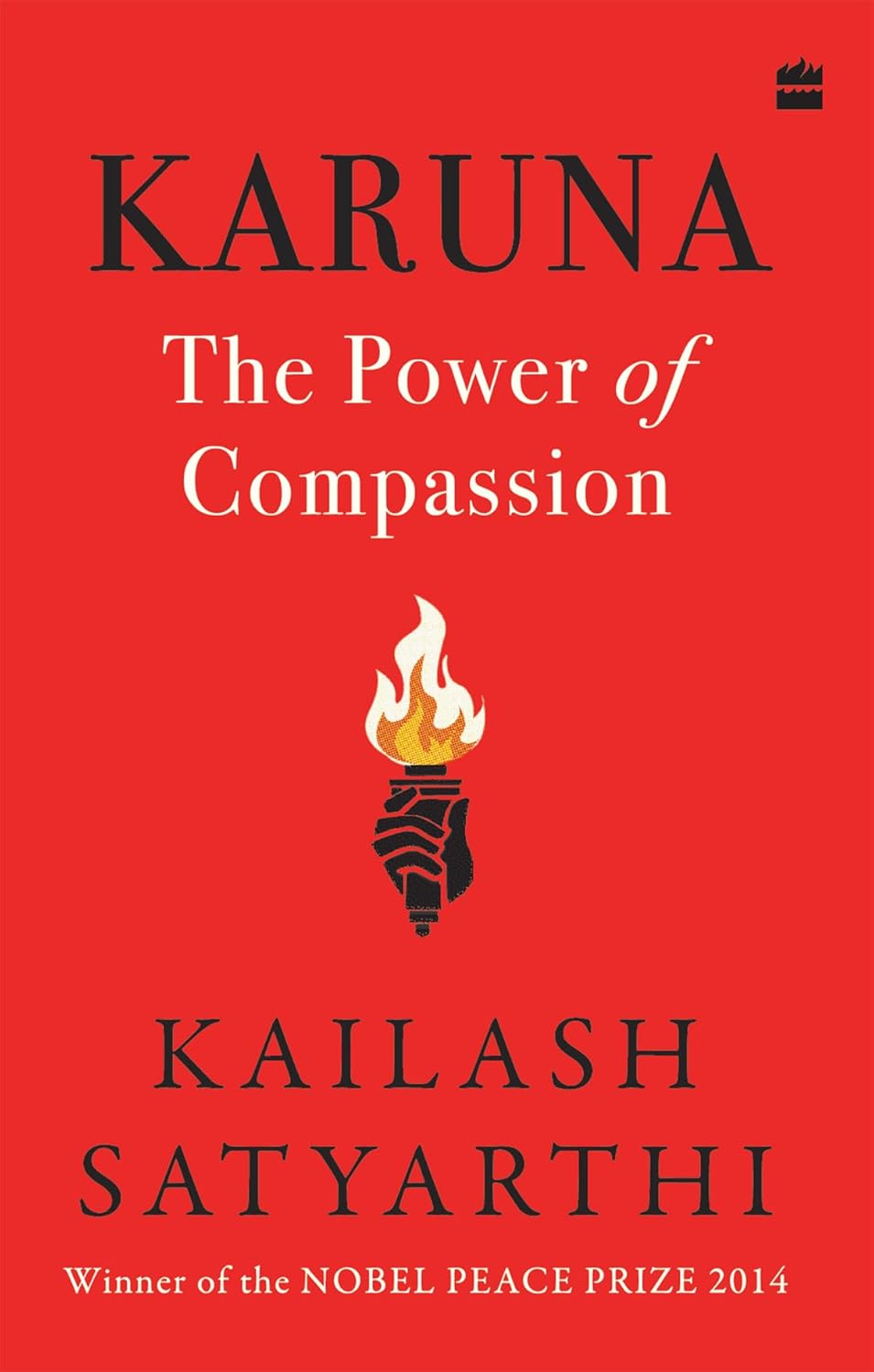
Title: Karuna: The Power of Compassion
Author: Kailash Satyarthi
Publisher: Harper Collins India
Never before has the world been so wealthy, so networked and so saturated with information. And yet, as Kailash Satyarthi points out in Karuna: The Power of Compassion, humanity appears increasingly fractured—by inequality, conflict, ecological devastation and a growing culture of indifference. The paradox, he argues, is not a lack of resources or knowledge, but a moral failure. What the modern world suffers from is not technological deficit, but a deficit of compassion.
Satyarthi’s central intervention is to reclaim compassion from the realm of softness. In popular imagination, compassion is often treated as an individual emotion—gentle, personal, and largely apolitical. Karuna rejects this framing outright. Compassion, Satyarthi insists, is not passive kindness or distant sympathy. It is an active, disruptive force—one that challenges injustice, reshapes institutions and compels moral action.
For Satyarthi, compassion is born at a precise moment: when another person’s suffering is experienced not as an abstract concern but as one’s own. That recognition, he argues, cannot remain inert. True compassion demands a response. In this sense, compassion is not the opposite of power; it is a form of power—ethical power—that has historically driven social movements, expanded rights and forced political change. From struggles against child labour to campaigns for human dignity, Satyarthi positions compassion as the invisible engine behind lasting transformation.
One of the book’s most distinctive contributions is the idea of a “Compassion Quotient (CQ)”. Just as IQ measures cognitive ability and EQ assesses emotional intelligence, CQ is proposed as a way to understand how individuals, organisations and societies relate to suffering and responsibility. For Satyarthi, CQ is not an abstract moral scorecard. It is a practical framework—something that can be cultivated, strengthened and embedded into systems of governance, education and leadership.
The argument is clear: without a high CQ, even the most intelligent or emotionally skilled societies risk becoming efficient but cruel. Economic growth without compassion deepens inequality. Technological progress without compassion accelerates exclusion. Political power without compassion normalises injustice. CQ, in Satyarthi’s formulation, becomes the missing ethical dimension in modern decision-making.
To prevent compassion from dissolving into sentimentality, Satyarthi defines it through four inseparable elements. The first is awareness—the refusal to look away from suffering. Indifference, he argues, is not neutrality; it’s complicity. The second is connectedness—the recognition that another’s pain is not “their problem” but part of a shared human condition. This sense of moral interdependence is central to karuna or compassion.
The third element is deep feeling—a genuine emotional identification with the other, distinct from detached sympathy or charity. And finally, action—concrete, mindful steps to reduce harm and restore dignity. Compassion, Satyarthi insists, collapses if it stops at feeling. Without action, awareness becomes voyeurism and empathy becomes self-indulgence.
When these four elements converge, compassion becomes transformative. It turns individuals—often without formal authority—into problem-solvers, moral leaders and catalysts for change. This is a recurring theme in the book: power does not always flow from institutions; it often emerges from ethical clarity and moral courage.
Satyarthi’s insistence on compassion as a public ethic is shaped by his own life’s work. Over five decades, he has fought for the rights of millions of marginalised children across borders, cultures and political systems. In Karuna, these experiences are not presented as personal triumphs but as evidence of what compassion-in-action can achieve when it is organised, sustained and fearless.
The urgency of the book lies in its diagnosis of the present moment. Satyarthi argues that globalisation has connected markets and technologies, but not consciences. What is needed, he writes, is a “globalisation of compassion”—a deliberate effort to act as if the world is one family. This is not sentimental universalism, but a pragmatic moral stance, especially when addressing issues such as child exploitation, forced labour, displacement, and environmental collapse.
In a political climate increasingly defined by hostility, exclusion and moral exhaustion, Karuna makes a quiet but radical demand: that compassion be treated not as a personal virtue but as a collective responsibility. It calls on citizens, leaders and institutions to rethink success—not merely in terms of growth or efficiency, but in terms of dignity protected and suffering reduced.
Karuna: The Power of Compassion is not a manual for charity, nor a retreat into moral idealism. It is a challenge—to individuals and societies alike—to recognise that the future will not be shaped by intelligence, technology, or power alone. Without compassion as a guiding force, Satyarthi warns, progress itself becomes hollow. With it, even the most entrenched injustices can be confronted.
.
Bhaskar Parichha is a journalist and author of Cyclones in Odisha: Landfall, Wreckage and Resilience, Unbiased, No Strings Attached: Writings on Odisha and Biju Patnaik – A Political Biography. He lives in Bhubaneswar and writes bilingually. Besides writing for newspapers, he also reviews books on various media platforms.
PLEASE NOTE: ARTICLES CAN ONLY BE REPRODUCED IN OTHER SITES WITH DUE ACKNOWLEDGEMENT TO BORDERLESS JOURNAL
Click here to access the Borderless anthology, Monalisa No Longer Smiles
Click here to access Monalisa No Longer Smiles on Amazon International
 Borderless