By Jared Carter
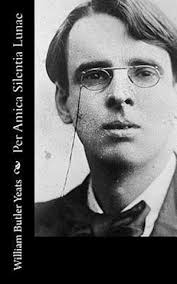
In the last section of that book with the most beautiful of titles, Per Amica Silentia Lunae,[1] the Irish poet Yeats, addressing Iseult Gonne, refers to those moments when he becomes happy – when poetry over brims on the page, and things turn luminous, and time seems to “burn up” in the sense of no longer mattering, no longer having the power to detract or diminish.
He is writing about lyric poetry, of course, and about those special moments that may come upon us at any age or at any time, but which become more recognisable to the poet as he or she grows older, and more experienced and knowledgeable – although they are also becoming, in actuarial terms, more rare.
But perhaps not. Perhaps, with wisdom and insight and acceptance, they actually increase in frequency. Recently I told an old friend, a visitor to my home, that after all these years I have finally begun to understand how to write poems. Put simply, I have gotten better at being patient, and at waiting until they appear. I have learned the necessity of silencing my own thoughts in order to hear the brushing of their wings as they pass overhead.
Or, to change the metaphor – only when the wind dies down can the bee or the butterfly land on the blossom. Genuine lyricism comes only after the self has been quieted. Not put to sleep, or – least of all – “put on hold,” in that ugly modern phrase.
Rather, shifted into neutral. Allowed to drift, and possibly to become something rich and strange.
“It may be an hour before the mood passes,” Yeats writes, in a completely disarming, unexpected passage, “but latterly I seem to understand that I enter upon it the moment I cease to hate.” He goes on to say, “I think the common condition of our life is hatred – I know that this is so with me – irritation with public or private events or persons.”
He attempts to define what he means by not hating, and it is not necessarily loving. Rather, “in those brief intense visions of sleep, I have something about me that, though it makes me love, is more like innocence. I am in the place where the Daimon is, but I do not think he is with me until I begin to make a new personality.”
This new personality is a paradox. Recognisably human – fragile, perishable, transient – it lacks the negative aspects of selfhood. It is no longer selfish or greedy or hateful. It has accepted its present state of being and its eventual death and dissolution.
We are speaking, then, of neither comedy or tragedy, nor their dramatic manifestations in verse, but of the lyric temper in poetry, and of the manner in which the poem is its abode – just as the moth or butterfly, as it seeks to gather up the pollen, finds its momentary resting place in the flower. But there is a dark side to this metaphor, and in any such discussion it cannot be avoided. Even the purest lyric voice is, by its very nature, transitory and perishable.
Honeybees, too, gather up pollen, but these are worker bees, who venture far from the hive, and who overcome all manner of risk in doing so. Within the hive itself, the drones partake of the bounty, but they do nothing to earn their keep. Only one of them will bed the queen. The others, whether they know it or not, are doomed. By autumn, as part of the very nature of things, the workers, understanding that only a finite amount of food is available to see them through the winter, push the drones out of the hive, where they perish amid the thorns and brambles.

The works of many a lyric poet, who has dined the summer long on the ambrosia of the imagination, will eventually be subject to sheer circumstance, and drop away from the hive. Sappho[2]’s main works are lost; Keats[3]’s productive years were pitiably few. Madness overtook Smart[4], Hölderlin[5], Clare[6], and dozens more. We know this, and thus each lyric poem we have managed to preserve from past centuries speaks to us in an especially poignant way. However lovely, however evocative, we know it will not last.
The philosopher and poet George Santayana[7] has summed up the situation: “Even the most inspired verse, which boasts not without a relative justification to be immortal, becomes in the course of ages a scarcely legible hieroglyphic; the language it was written in dies, a learned education and an imaginative effort are requisite to catch even a vestige of its original force. Nothing is so irrevocable as mind.”
This is why lyric poetry retains its power to speak to us, down through the ages: because it is perishing before our very eyes, even as our own eyes are perishing. And yet it does not matter. “I am in the place,” Yeats explains, “where the Daimon is.”
And what might that be – the presence of “the Daimon”? Such a term can mystify, but surely this refers to some fundamental antinomy of human existence, some intuition of paradox that lies at the heart of being. Keats called it “negative capability”; F. Scott Fitzgerald[8] praised “that ability to hold two opposed ideas in the mind at the same time, and still retain the ability to function.”
The two ideas? The notion that art itself, in all its fragility, strives to endure. Perhaps another poet, Edwin Arlington Robinson[9], best described the paradox, in his tribute to Walt Whitman[10]: “When we write / Men’s letters on proud marble or on sand,/ We write them there forever.”
To be with the Daimon, to participate in timeless awareness, is why we write lyric poems, why we return to them – and why we revere the great periods of lyric achievement. Undoubtedly there have been many, in different cultures around the world, but we have managed to record only a few.
We treasure the lyric writings of the Sufis and the Elizabethans. We hark back to the time of Wordsworth and Hölderlin, to the T’ang Dynasty [618-906] and to that amazing stretch from Baudelaire to Mallarmé in the second half of the nineteenth century, a time that included Tennyson, Dickinson, Verlaine, Hopkins, Housman, Hardy, and Yeats himself.
Eventually, in the course of time, all these will slip away and be forgotten, which is why they now seem so lovely and memorable. They are that which has managed to survive and come down to us in spite of everything. Wang Wei knew this quite well. As the glories of the T’ang began to crumble and fall away, he paid tribute to that bittersweet awareness that we have come to know as the lyric temper:
Be not disquieted either by kindness or by insult –
          empty joy or sorrow.
Do not count on good or evil – you will only
          waste your time . . .
And why seek advice from the Yellow Emperor
          or Confucius?
Who knows but that we all live out our lives
          in the maze of a dream?
“Per amica silentia lunae” is a line from the Virgil[11]‘s Aeneid. Yeats translates it as “Through the friendly silences of the moon”. It is a most pregnant line. The moon never speaks; its very essence is change. And yet each of us considers it a friend, and we invariably greet it with our innermost being, each time we see it in the night sky. We have carried on this friendship since childhood. Lyric poetry deals with such verities.
The following is by Witter Bynner[12], taken from his masterful introduction to The Jade Mountain: A Chinese Anthology: “. . . if we will be honest with ourselves and with our appreciation of what is lastingly important, we shall find these very same poems to be momentous details in the immense patience of beauty. They are the heart of an intimate letter. They bring the true, the beautiful, the everlasting, into simple, easy touch with the human, the homely, and the immediate.”
A key phrase in this passage is worth repeating and remembering: “The immense patience of beauty.” Surely it is to this that the poet must surrender if the lyric temper is to be made manifest.


[1] Translates to ‘Through the Friendly Silences of Moon’, was written by Yeats (1865-1939) between January and May of 1917, and consists of a Prologue and an Epilogue for Iseult Gonne
[2] Greek poet (630 – 570 BCE)
[3] English poet (1795-1821)
[4] English poet (1722-1771)
[5] German poet and philosopher (1770-1843)
[6] English poet (1793-1864)
[7] American poet and philosopher (1863-1954)
[8] American novelist, essayist, and short story writer (1896-1940)
[9] American poet and playwright (1869-1935)
[10] American poet, essayist, and journalist (1819-1892)
[11] Roman Poet (29-19BCE)
[12] American poet and translator (1881-1968)
Jared Carter’s most recent collection, The Land Itself, is from Monongahela Books in West Virginia. His Darkened Rooms of Summer: New and Selected Poems, with an introduction by Ted Kooser, was published by the University of Nebraska Press in 2014. A recipient of several literary awards and fellowships, Carter is from the state of Indiana in the U.S.
.
PLEASE NOTE: ARTICLES CAN ONLY BE REPRODUCED IN OTHER SITES WITH DUE ACKNOWLEDGEMENT TO BORDERLESS JOURNAL
Click here to access the Borderless anthology, Monalisa No Longer Smiles
Click here to access Monalisa No Longer Smiles on Amazon International


 Borderless