Categories
Bhaskar's Corner Tribute

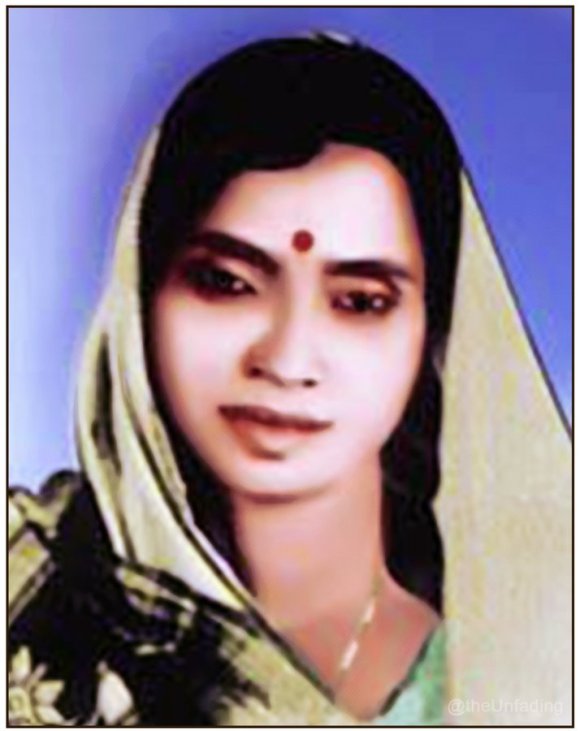
Bidyut Prabha Devi – The First Feminist Odia Poet

By Bhaskar Parichha

Bidyut Prabha Devi

Bidyut Prabha Devi (1926 – 1977) is celebrated as one of the most prominent female poets in Odia literature. Hailing from Natara village in the Kendrapara district, she was the second daughter of the esteemed writer, Nimai Charan Das, and Rekha Devi.

Raised in a traditional family in Bamphisahi, Cuttack, she received most of her education independently, attending Ravenshaw Girls’ School until the ninth grade. Inspired by her father and notable Odia poets like Nanda Kishore Bal and Kunja Bihari Das, she began her journey into poetry in 1940.

Her first collection, released in 1944 when she was merely 18 years old, featured patriotic poems that celebrated the cultural and natural heritage of Odisha. It highlighted her early ability to create vivid imagery and convey emotional depth, drawing from her rural background and the literary traditions of Odia.

Her 1950 collection, Utkal Saraswata[1], was recognised as a significant contribution to education, being included as a poetry textbook at Utkal University. In addition to poetry, she also wrote for children, for which she was awarded by the Government of India in 1955, acknowledging her impactful contributions to children’s literature.

Bidyut Prabha’s poetry explores the challenges faced by women, societal limitations, and the theme of empowerment, weaving together both personal and universal experiences. It embodies her feminist viewpoint, tackling matters such as gender inequality within a conservative framework, all while preserving a lyrical and approachable style.

She authored numerous plays, although specific titles are not extensively recorded. Her theatrical pieces frequently conveyed social messages, resonating with her socialist and feminist principles. Her writings were recognized for their clarity and moral depth, rendering literature accessible to younger audiences. Some of these later works are less documented but showcase her reflective and philosophical nature.

Influenced by socialist principles, her poetry examined social disparities and advocated for the marginalised. Her self-taught approach was characterised by clear and evocative language, rendering her work both relatable and profound.

Bidyut Prabha’s writings were revolutionary for their era, especially in their focus on women’s issues within Odia literature. Her son, Sachidananda Mohanty, a distinguished educationist and litterateur, has translated her works, thereby preserving her legacy.

Writes Sachidananda Mohanty[2]: “In recent decades, feminist historiography in eastern India has paid welcome attention to issues of education, creativity, and sisterhood across linguistic barriers. It has recognised women’s pivotal role in shaping the public space at the intersection between feminist history and literary creativity. Scholars like Judith Walsh, Tanika Sarkar, Malavika Karlekar, and others have brought to our attention forgotten life-narratives of literary women of the region who have created a tradition of their own.  Bidyut Prabha Devi, recognised as a major female voice in pre-modern Odia poetry, belongs to a poetic tradition represented by an illustrious sisterhood, comprising Reba Ray, Kuntala Kumari Sabat, Haripriya Devi, Debahuti Devi, Nirmala Devi, Tulasi Das, and Brahmotri Mohanty, among others. 

“While Bidyut Prabha may be known in Odisha, her feminist poems, based on her deep understanding of domesticity and patriarchy, have not been sufficiently read outside the state. Even in Odisha, her ‘romantic poems’ are widely anthologised at the cost of the more powerful compositions that address the woman’s position and identity in terms of the entrenched power structures in society.”

According to Mohanty, Bidyut Prabha’s feminist poetry stands out distinctly from the prevalent ‘Advice-for-Women’ genre in the region. She bases her work on her own life experiences and resonates with the growing feminist consciousness in Odisha, which is championed by literary feminists and social reformers like Sarala Devi[3], who played a pivotal role as a mentor to Bidyut Prabha. This journey was marked by its transnational influences. Sarala Devi had a strong connection with poet Annada Shankar Ray, a key figure in the Odia Romantic movement.

Her impact on Odia literature is significant, particularly as one of the earliest notable female poets in a predominantly male literary environment. Her contributions are rooted in her capacity to merge lyrical elegance with social critique, enhancing the inclusivity, reflection, and cultural relevance of Odia literature. Her work continues to serve as a foundational element for feminist and regional narratives in Odisha.

She was married to Panchanan Mohanty. Following health challenges in 1966, her literary output took on a spiritual dimension, shaped by her connection to the Sri Aurobindo Ashram, Pondicherry. Unfortunately, she took her own life.

Bidyut Prabha Devi’s poetry, deeply rooted in feminist and socialist ideals, continues to motivate and inspire, with her centenary of birth being commemorated in 2025 as a representation of women’s empowerment in Odisha.

[1] Odia Literature

[2] A literary sisterhood, Vol. 65, No. 6 (326) (November-December 2021), Published By: Sahitya Akademi

[3] Sarala Devi (1904-1986) – Odisha’s first Satyagrahi, first female legislator and first feminist writer.

.

Bhaskar Parichha is a journalist and author of Cyclones in Odisha: Landfall, Wreckage and ResilienceUnbiasedNo Strings Attached: Writings on Odisha and Biju Patnaik – A Political Biography. He lives in Bhubaneswar and writes bilingually. Besides writing for newspapers, he also reviews books on various media platforms.

PLEASE NOTE: ARTICLES CAN ONLY BE REPRODUCED IN OTHER SITES WITH DUE ACKNOWLEDGEMENT TO BORDERLESS JOURNAL

Click here to access the Borderless anthology, Monalisa No Longer Smiles

Click here to access Monalisa No Longer Smiles on Amazon International

Categories
Nostalgia

Remembering Jayanta Mahapatra

By K.V. Raghupathi

Jayanta Mahapatra (1928-2023), (Public Domain)

I’ll begin this brief essay by reflecting on my time in university. There was no paper on Indian writing in English when I was a student at Sri Venkateswara University in Tirupati studying for my master’s degree in English literature between 1977 and 1979. Many English departments were adamant about sticking with a colonial attitude and emphasizing teaching British literature. The teachers (professors), many of whom had returned from abroad, primarily from the UK with highly sought-after PhDs, propagated this notion and fervently supported British literature. They maintained the same colonial perspective and made English departments more English-centric (British) than what is apparent today with more democratisation in the curriculum. Many of these teachers with UK training had a prejudicial perspective on Indian writing in English.

Because it was still in its infancy, these professors with UK training did not support it. The literature that had blossomed in the UK was widely believed to represent what was meant by English literature at the time. They didn’t think much of other English literature works. Within this hostile setting, Professors MK Naik, CD Narasimaiah, and KR Srinivasa Iyengar worked arduously to develop Indian Writing in English (IWE) as a subject and make it an integral part of English departments at all universities. They fervently argued for the cause of Indian writing in English through their writing and publication of several articles and speeches. K.R. Srinivasa Iyengar’s seminal work Indian Writing in English (1984) and M.K. Naik’s Dimensions of Indian English Literature (1984), Indian English Literature: 1980-2000: A Critical Survey (1982), and Studies in Indian English Literature (1987) have strengthened the case for writings in English in India. They were all successful in having IWE included in the study of English literature. Many English departments in the universities didn’t start providing IWE as a course or even as a component of the curriculum until the 1980s. The new group of professors, which included the aforementioned three professors along with Professor P. Lal, who supported IWE, had replaced many earlier professors who had a limited perspective on it. It eventually evolved into an autonomous course over time.

In this light, I’d want to think back on a comparable experience I had in 2011, when I joined the Central University of Tamil Nadu in Thiruvarur as a regular faculty. At that time, a paper on IWE was not offered as part of the MA in English Literature. I had a terrible experience when I asked how the students could graduate from the university with a degree without having studied IWE. I claimed that such a degree lacked credence. In one of the Board of Studies meetings, I passionately argued in favour of it and won approval. The result was that it was transformed into an independent course, integrating with the core curriculum. I taught this subject, which included poems by Jayanta, until my departure from the institution in 2019.

Lal did a fantastic job advancing Indian writing in English. In Kolkata, he founded a publishing house called Writers Workshop, where he encouraged a number of new budding poets to write their works in English and submit them for publication. In his book History of Indian English Literature, M.K. Naik notes that only P. Lal published the first books of contemporary Indian poets who achieved success in Indian and international English poetry. It was true. All of the poets that Lal published under the Writers Workshop imprint became well-known figures around the globe. It was thought that any poet who was published by the Writers Workshop would become well-known in their field. Of them was Jayanta.

As a Post-graduate student, I read and studied only three Indian English poets—Nissim Ezekiel, A.K. Ramanujan, and Kamala Das as well as two novelists, R.K. Narayan, and Mulkraj Ananad. These were all part of the Commonwealth Literature (now New Literatures) paper, which covered the full range of post-colonial texts. This was my first introduction to Indian writers who wrote in English. For reasons best known to the group responsible for formulating the syllabus, Jayanta Mahapatra was excluded from the curriculum. I had no knowledge of Jayanta and had never read any of his poetry. I didn’t read two of his widely anthologized poems, “Indian Summer” and “Hunger,” which are recognized as classics in contemporary Indian English literature, until after I had finished my post-graduation. This served as my initial exposure to Jayanta’s poems.

I was fascinated by his writing after reading these two poems, especially because of the two components of imagery and elegant diction. I looked through other collections of his poems. By chance, I discovered a venerable anthology called Ten Twentieth Century Indian Poets, which was chosen and edited by R. Parthasarathy and published by OUP. At the time, this was the sole anthology on the market, and all universities required students to consult it when discussing Indian poets who wrote in English though other anthologies followed later such as, Indian Poetry in English (1993), edited by Makarand Paranjape, The Oxford Anthology of Modern Indian Poetry (1994) edited by Vinay Dharwadker and A.K. Ramanujan, and Twenty-five Indian Poets in English (1995), edited by K.S. Ramamurti. The poets who were included in the anthology were acknowledged as having achieved popularity and recognition on a global scale. It was a canon-like text for reference. It contained “A Missing Person”, “The Whorehouse in a Calcutta Street”, and “Indian Summer” from Mahapatra’s collection, A Rain of Rites, and “The Logic”, “Grass”, and “Lost” from other anthologies. I eventually had to look for his poetry collections after this reading. Luckily, my hands fell upon his two collections: Svayamvara and Other Poems (1971), Calcutta: Writers Workshop and Relationship (1980), New York: Greenfield Review Press. I read them avidly.

At that point in time, I read Jayanta purely for enjoyment. I wasn’t really taking his poetry very seriously. I never tried to review any of his poetry books or to write an article about his poetry. Despite this, I still thought highly of him, but I never had the chance to visit Cuttack and meet him in person since I was too busy attending to my academic obligations and immersed in my career. The most wonderful news was that I had been chosen for the 2014 Rock Pebbles National Award for Creativity, instituted by the Rock Pebbles Trust, which would be presented to me in Bhubaneswar by the legendary poet Jayanta Mahapatra. I realised that my dream was actually coming true.

He was already 85 in 2014. I arrived at the location considerably earlier in order to see this poet in his physical appearance. I had heard of him and read about him in books up to that point. Now I could actually communicate with him and see him in person. I was watching him approach from where I was standing by the venue’s entrance. He arrived at the location at precisely half past ten, joined by a couple of event organisers. Despite his aged appearance, he was nimble and exuded the assurance that, due to his asthma, he would live for a few more years despite whatever happened. I did not hear any gasps as he was moving. He was hospitalised, but he managed to survive the coronavirus. The ten years that passed between then and August 27, 2023 were a tremendous adventure in his life as a writer in general and as a poet in particular. He was engaged throughout the proceedings and talked for fifteen minutes, albeit a little erratically. Even so, I could understand what he was saying. A poet with a scientific background could sound like an English professor. He had a thorough understanding of Indian poetry, and he spoke with authenticity and assurance. He was distinct from the other poets since he was not a poet from the Bombay school. Over time, he was able to distinguish himself from his peers by developing a serene, peaceful poetic voice of his own.

He acted in this manner, and I was so moved by him that I asked for his blessings at the conclusion. He generously bestowed his blessings upon me, and I was so overjoyed that I continue to treasure them for the rest of my life. I always mentioned his name whenever the topic of Indian poetry in English came up in conversation and discussion. Even though he was a poet par excellence and the recipient of numerous national and international honours, he was such a modest being that he never showed any arrogance or pride. I observed this humility in him, and I had the impression that he could communicate it not just with words but also with his actions. He was so worn out at the end of the event from travelling from his home in Cuttack to Bhubaneswar. Despite my intention, I did not continue talking to him after realising the circumstances. I recognised him, and I felt so happy that I received the award and the honour from his hands. This was sufficient for me, I reasoned. I could learn the rest by reading his poetry! I must express my sincere gratitude to Dr. Udayanath Majhi, editor of the journal, for including me in the celebration and giving me the chance to meet the great poet by conferring me with the Rock Pebbles award and honour, a wish that had been gnawing at the back of my mind for a very long time and was finally realised.

IN MEMORIAM
(A Tribute to Jayanta Mahapatra)

With the muse
who had been
with you over sixty years,
you abruptly 
walked away surreptitiously
leaving the memory behind.
 
You have permanently
migrated to a distant land,
reconciling; 
moved to another world…
leaving behind 
your distinct footprints 
unerasable in your poetry, forever.

Though you were not of the Bombay School
you carved a niche 
distinguishing yourself from your peers 
by creating a serene, meditative lyrical voice
in the world of poetry
‘after a mountain of rejection slips’.

You might be
not present in the form
yet,
I feel 
your poetry
cracks and cackles with vibrant vivid imagery;
a torchbearer for the aspiring…

You have departed for 
Heavenly abode
but somehow as a poet
is always a poet forever
you proved, otherwise
glistening in the firmament 
as an early-morning and evening star
silencing grumbling dark clouds;
and, you still peep out
of a poem 
in the book
of my living room
to ensure
that everything is fine
with Indian poetry in English
in your absence, eternally.

K.V. Raghupathi, A former academic, poet, short story writer, novelist, critic, and book reviewer, has so far published thirteen collections of poetry, two short story collections, and two novels, and edited eight critical works and is widely published and anthologised both in online and print journals. He currently lives in Tirupati. He can be reached at drkvraghupathi9@gmail.com 

PLEASE NOTE: ARTICLES CAN ONLY BE REPRODUCED IN OTHER SITES WITH DUE ACKNOWLEDGEMENT TO BORDERLESS JOURNAL

Click here to access the Borderless anthology, Monalisa No Longer Smiles

Click here to access Monalisa No Longer Smiles on Kindle Amazon International